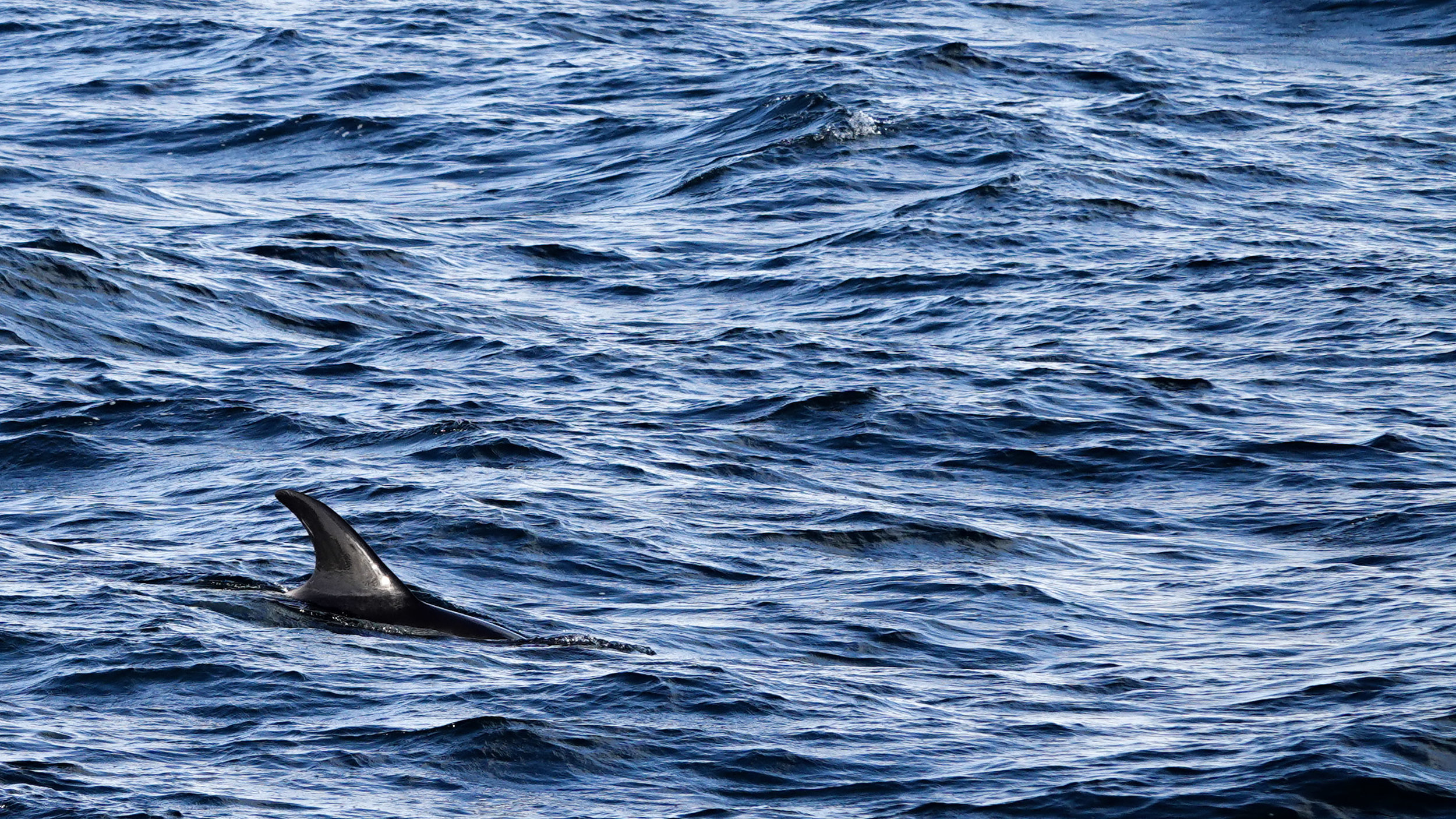
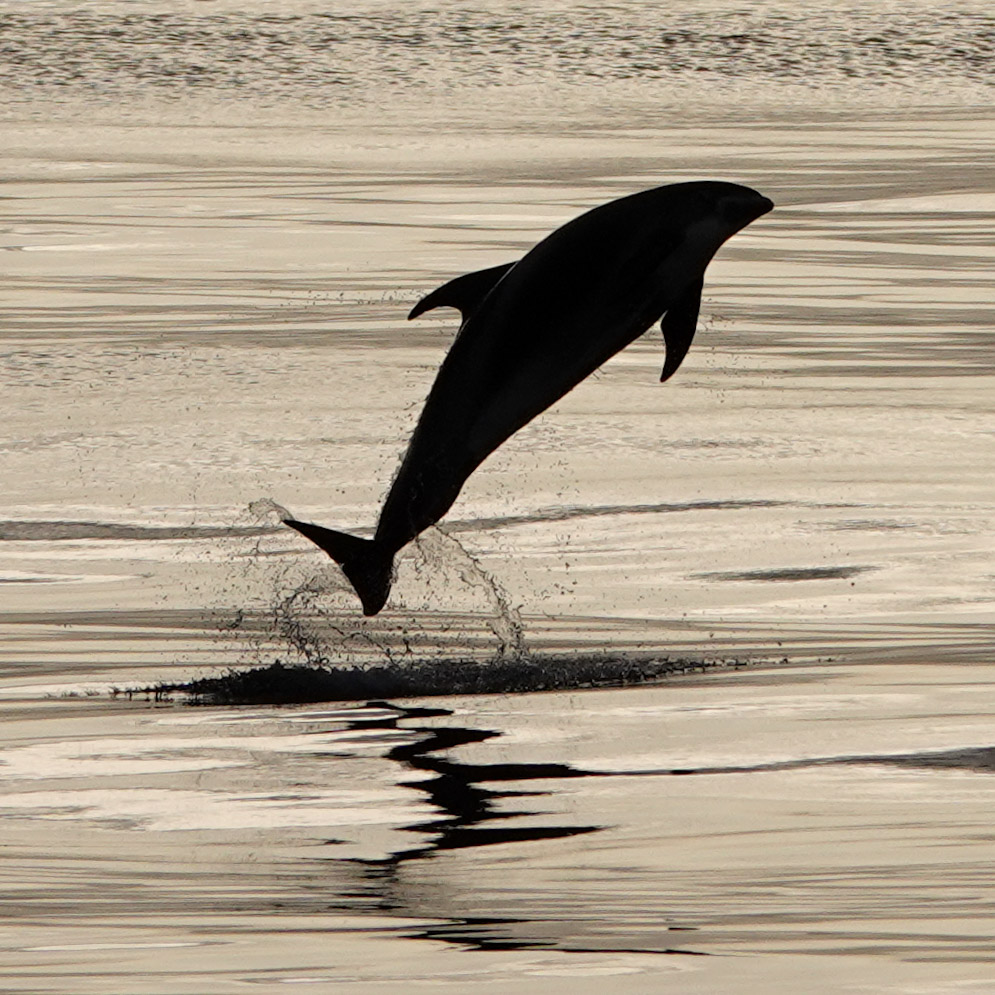
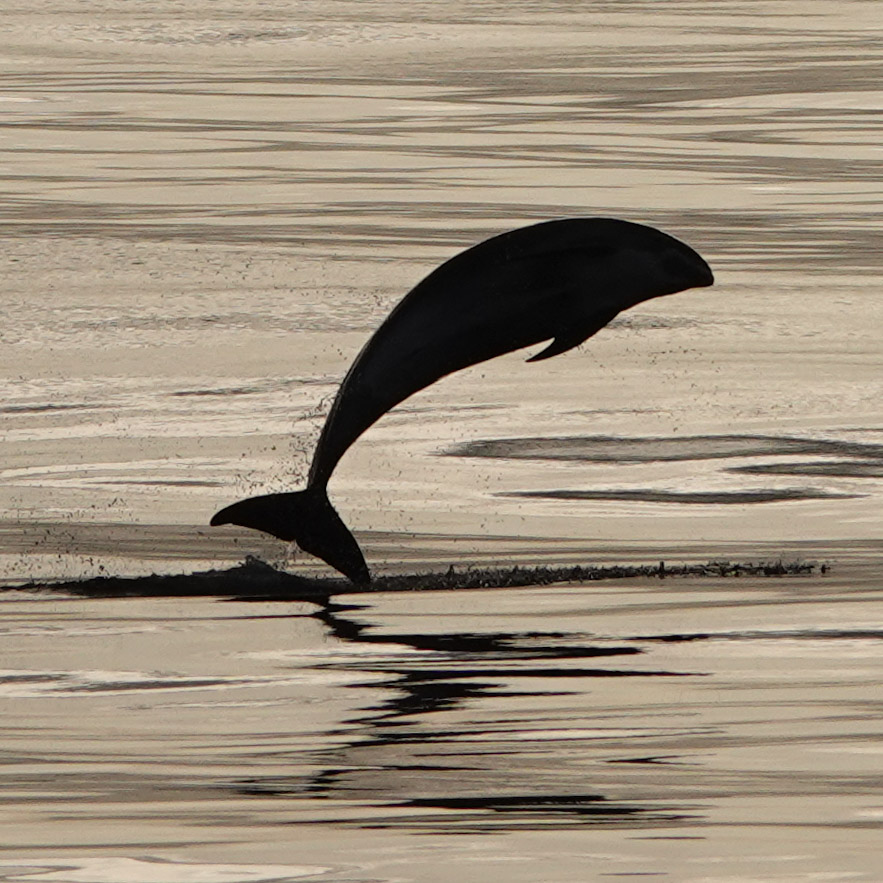
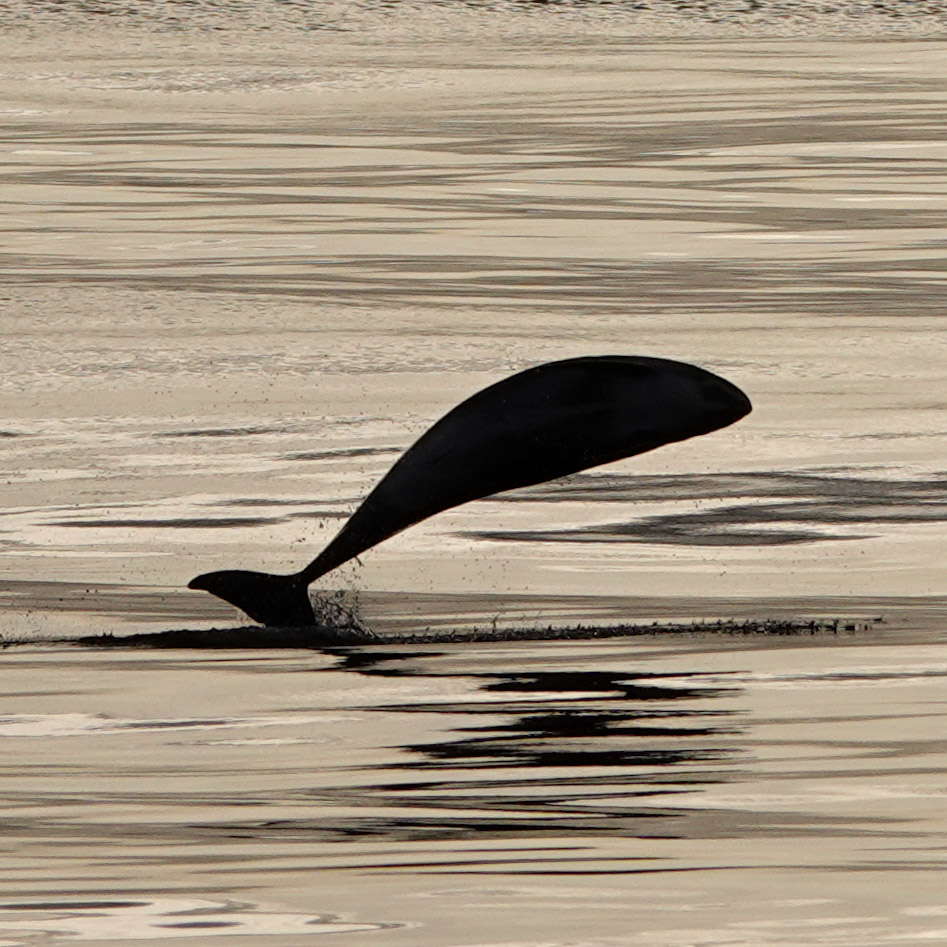
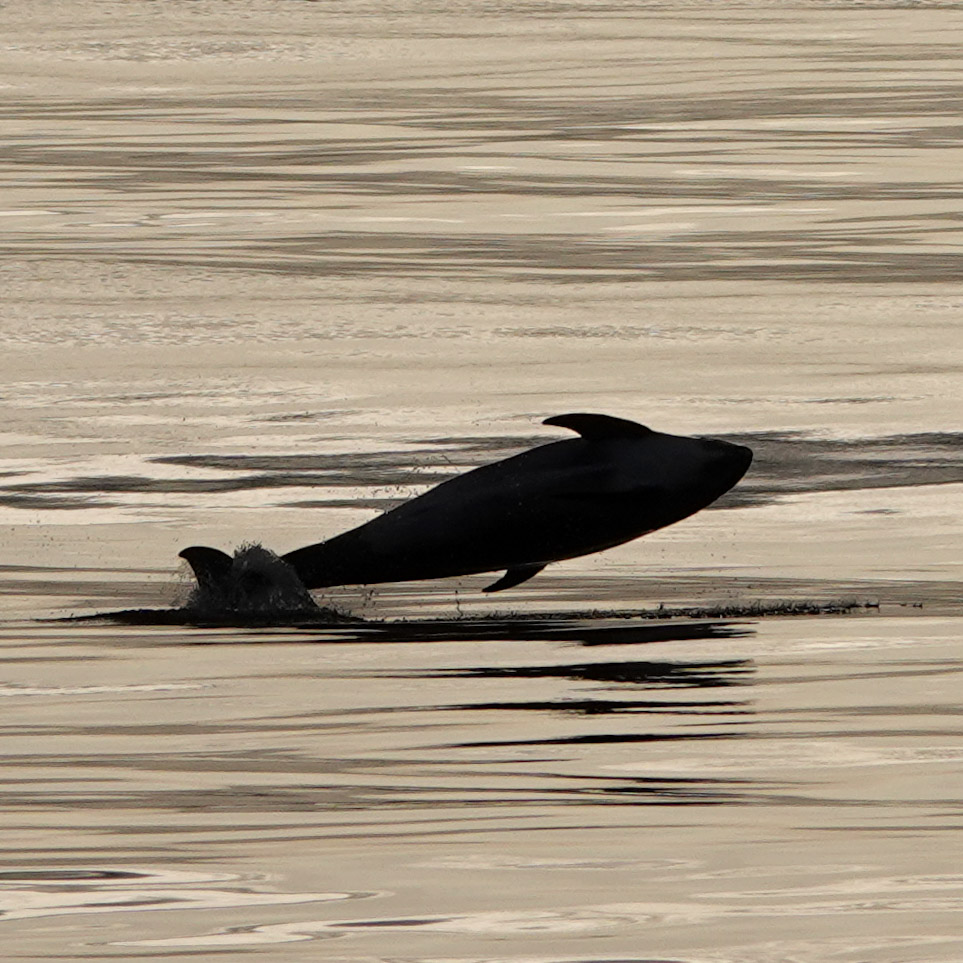
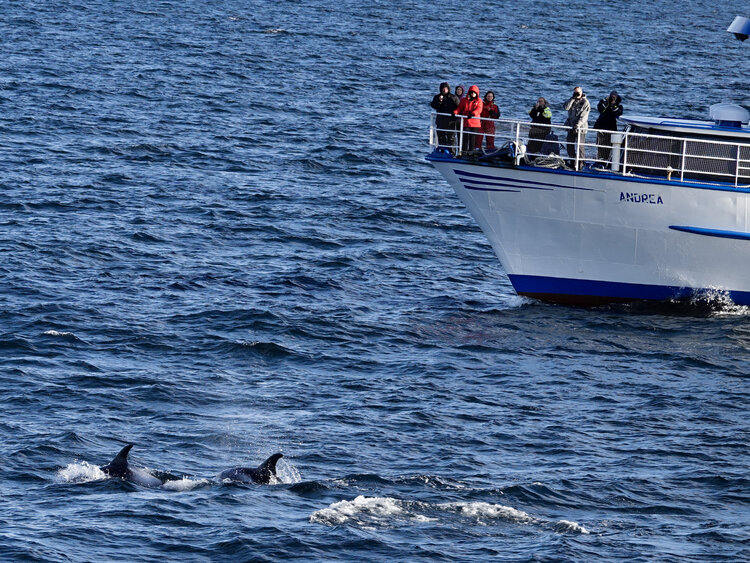
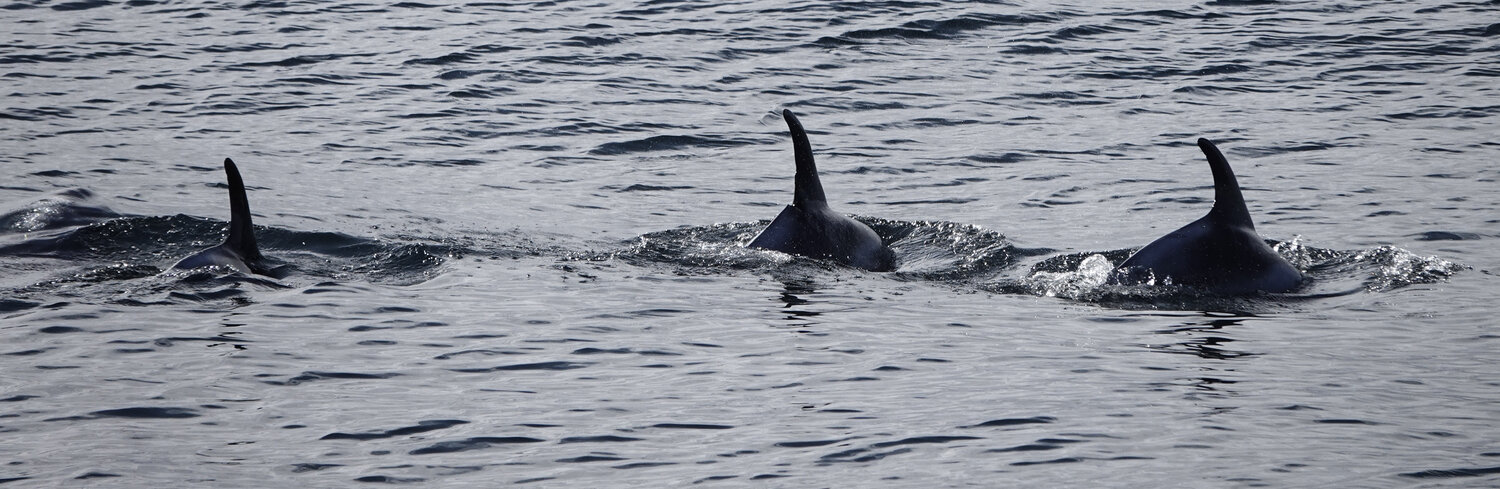
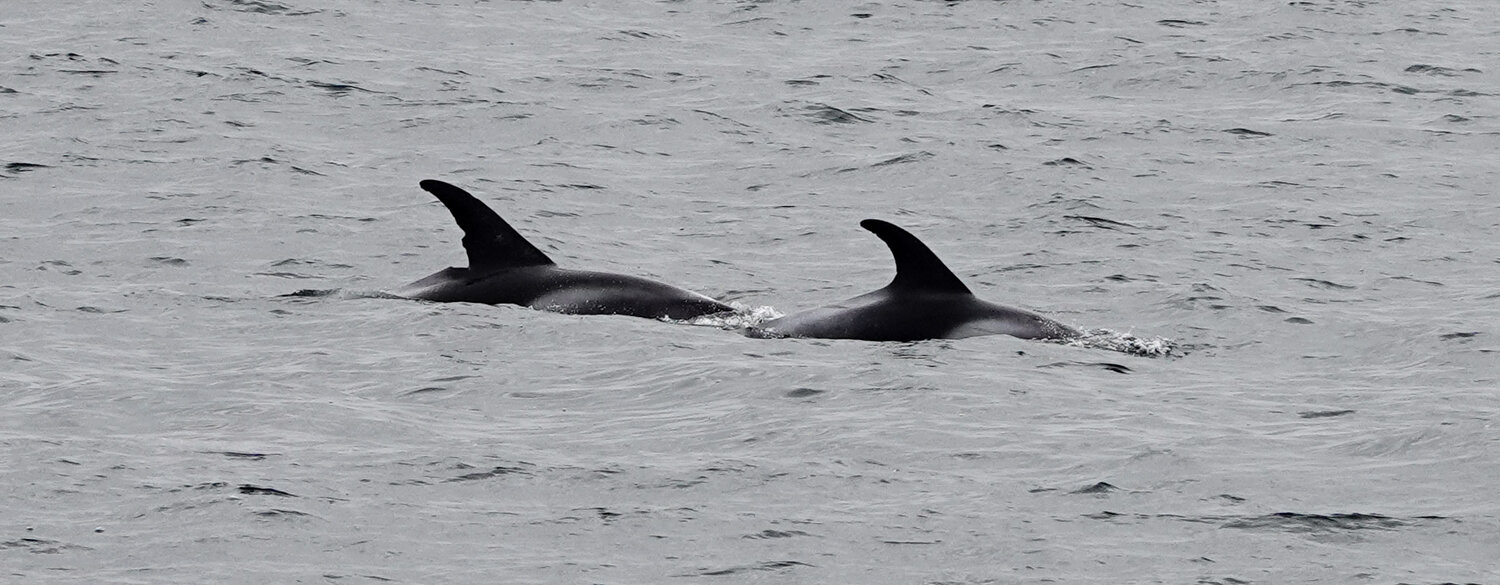
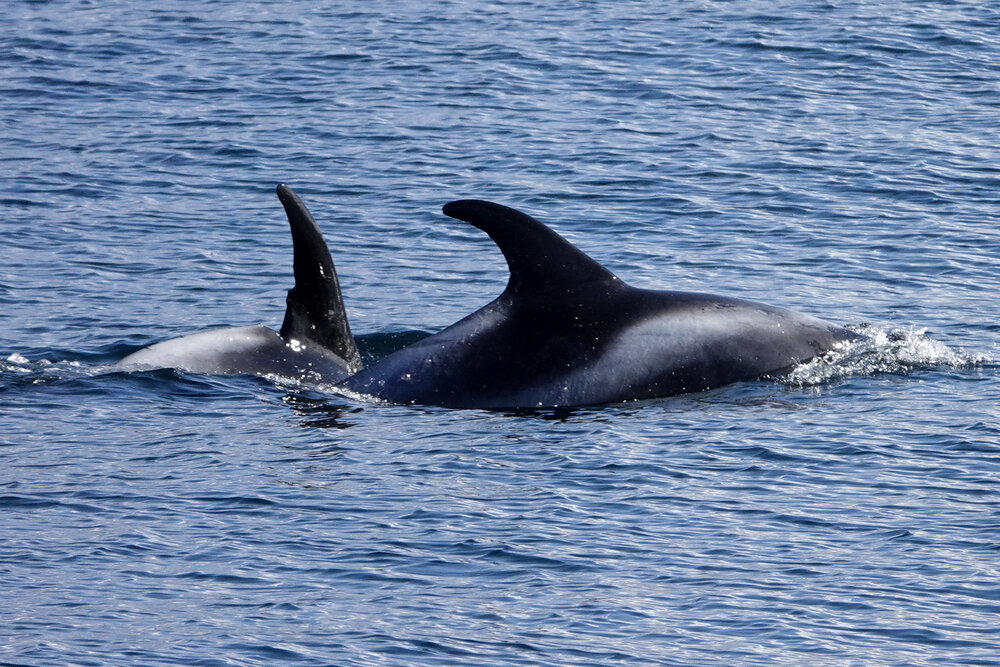
Their dorsal fins might resemble those of a fearsome shark, but that’s probably the only thing remotely dangerous about them. Despite their sociable nature, white-beaked dolphins—like most wildlife in Iceland—remain poorly studied.
When I was little, I always imagined marine biologists working with dolphins. In primary school, my dream was to become a dolphin trainer. I came close to that years later when I swam with them in a dolphinpark.
Since then, my views on working with captive animals have changed, but dolphins still hold a special charm for me. As highly social creatures, they continue to fascinate me.
If you haven’t already, check out one of my first posts: Whales Are Not Fish
The only species you’ll find in our bay is the White-Beaked Dolphin (Lagenorhynchus albirostris), named after its distinctive colouring.
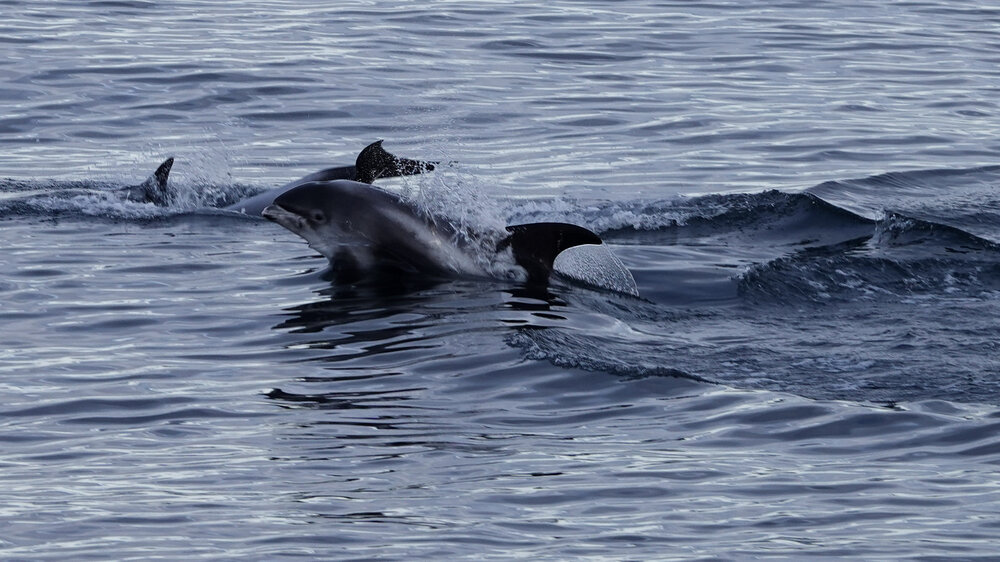
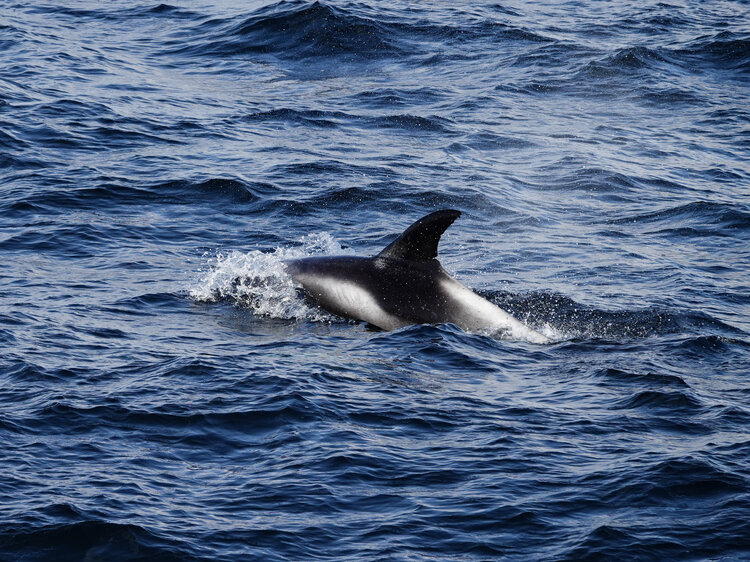
Each dolphin has a unique white-grey pattern on its back, fading to white on its belly. As their name suggests, their beak region is also white, giving the illusion of a small ‘beak’—though juveniles often have a darker one. Their colouring changes as they age.
These dolphins are well adapted to the subarctic climate. Being relatively large for a dolphin species (up to 3 metres long and 350 kg in weight), they generate more body heat. A thick layer of blubber helps insulate them against the cold. With thousands of individuals, Iceland is the best place in the world to see them, followed by Greenland.
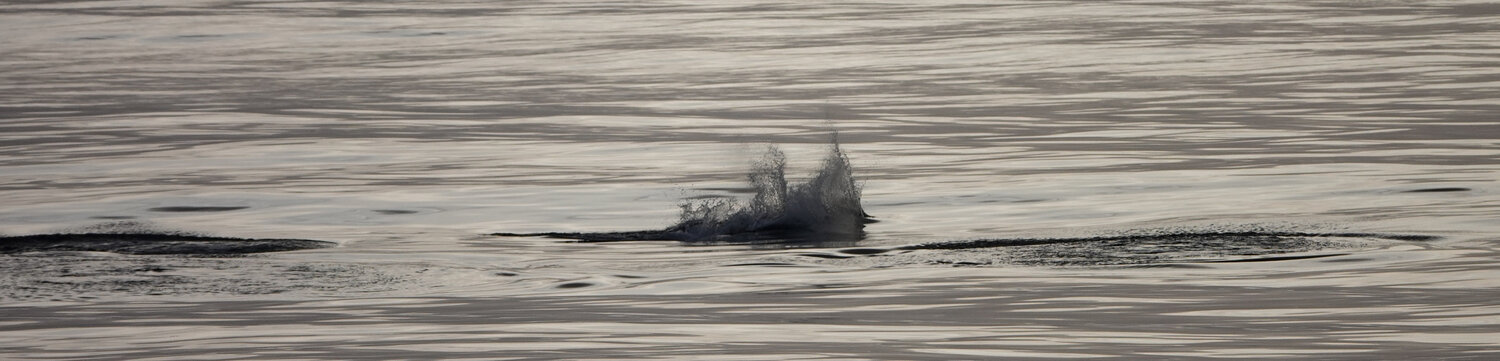
After each dive or leap, they leave behind a fluke print—a unique surface disturbance caused by their tail flukes, just like other marine mammals.
I first saw white-beaked dolphins on my very first boat trip. Then again on my second. Naturally, I assumed they were everywhere, visible on every single trip. That assumption was quickly disproven on my third and fourth outings, when not a single dolphin appeared.
They’re always present in the bay, but their behaviour varies more than I expected.
Just like us, their mood and level of interaction change from hour to hour:
Sociable and playful
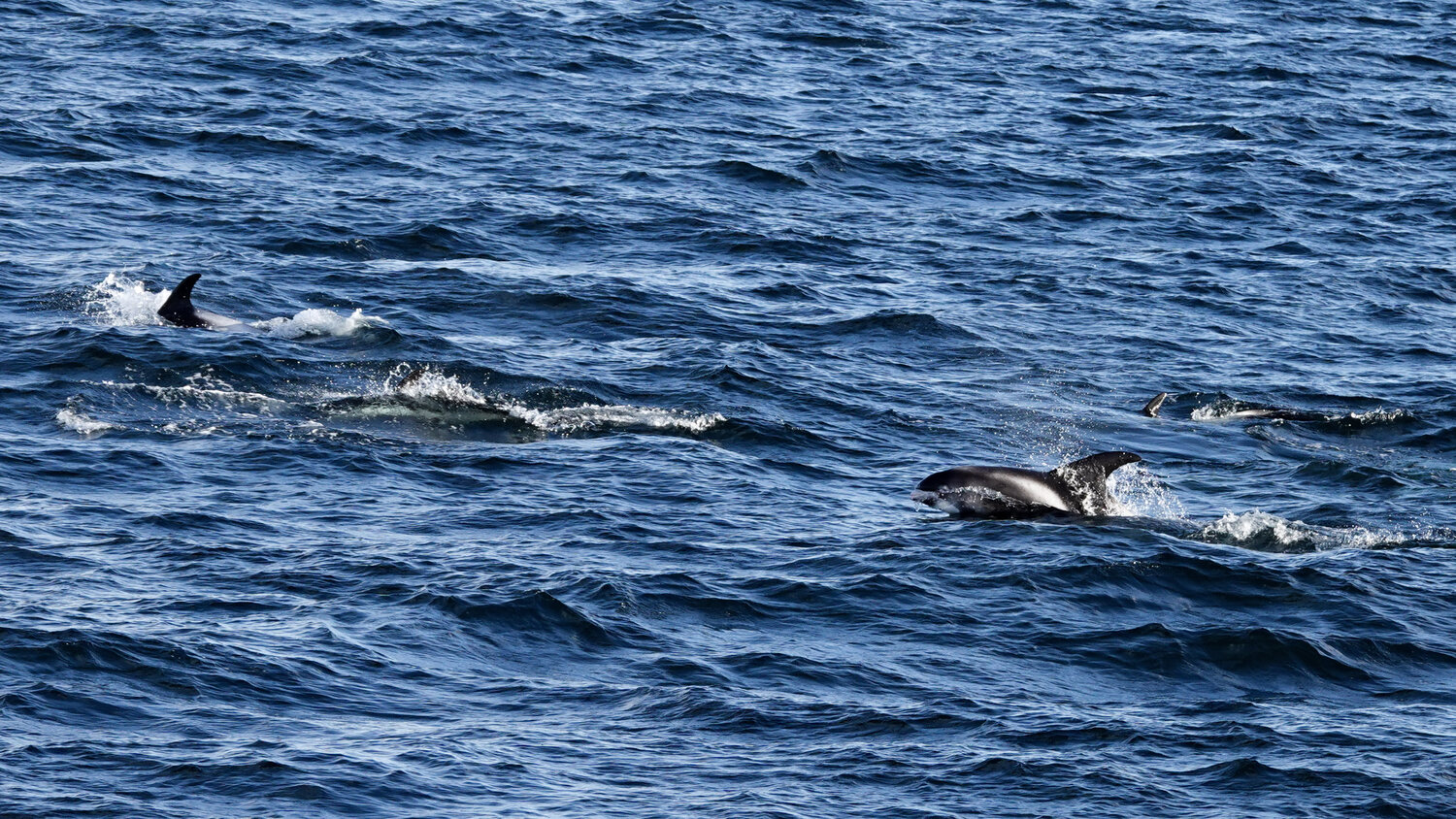
When they’re in the mood, they swim right under our boat, surf the waves at the stern, and engage in bow riding—gliding along the pressure waves created by the vessel.
Energetic and leaping
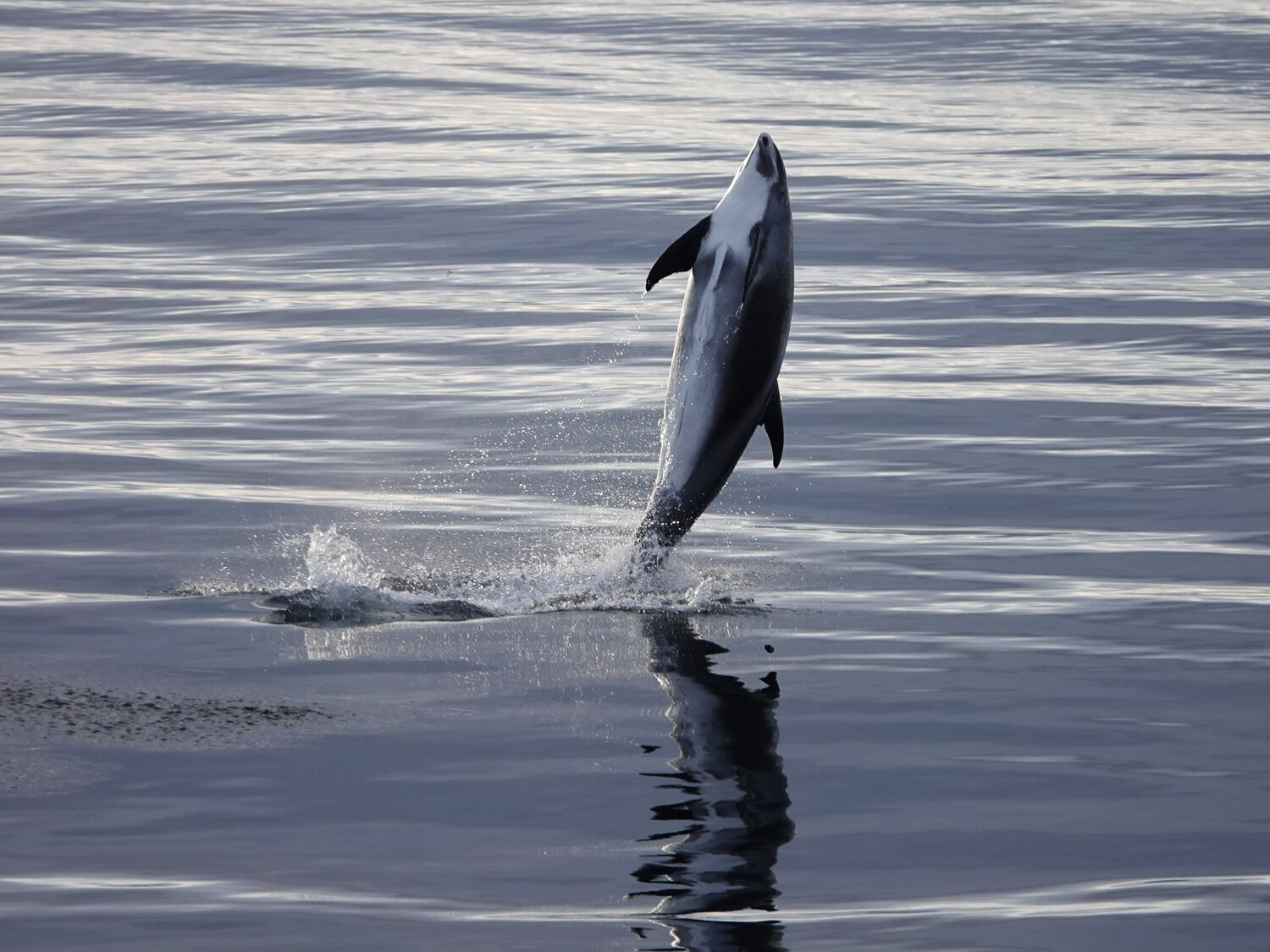
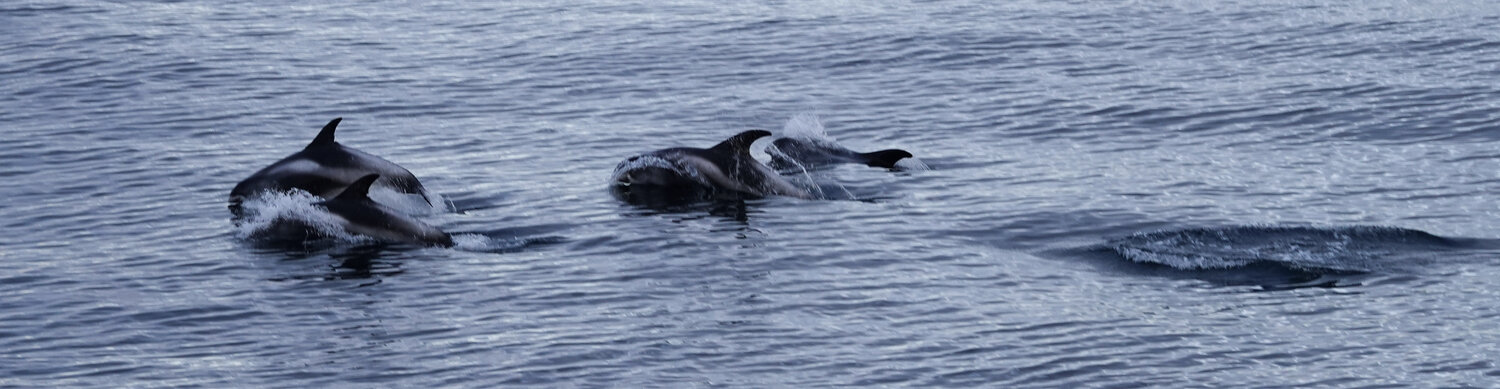
Young dolphins are especially fond of jumping—just like children bursting with energy. Their leaps may not always be graceful, but they certainly enjoy every second of it. They can perform dozens of jumps in a row, some impressively high.
Focused on hunting
Sometimes, they ignore us completely and are only around because they’re hunting fish. Their diet also includes squid and sand eels.
On the move
They may simply be passing through, travelling up to 300 km in just a few days in search of food.
Avoiding us
At times, they actively steer clear of our boat, moving away whenever we approach. If that happens, we leave them be—especially when there are multiple boats in the area.
Capturing them on camera
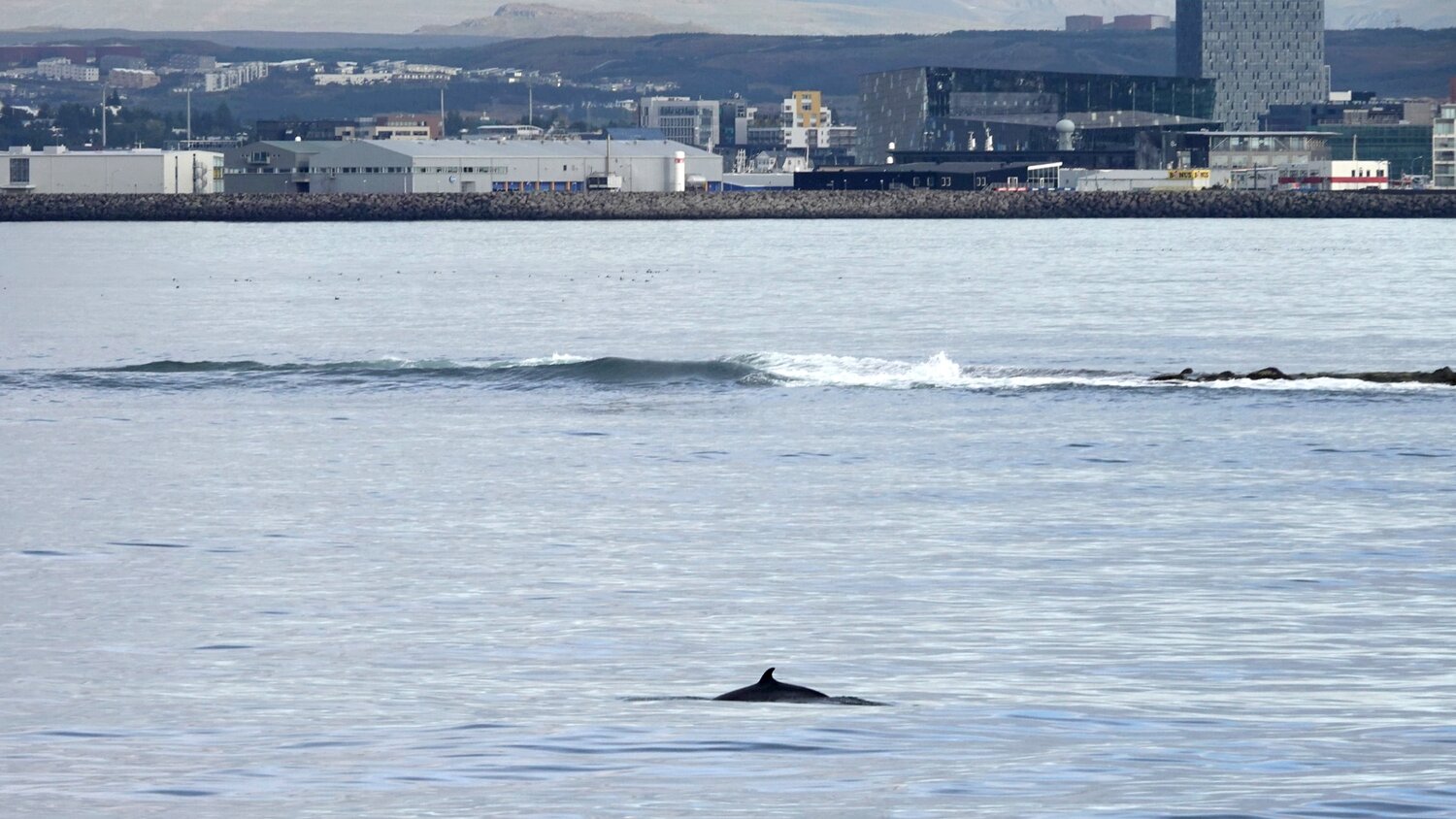
At first, I struggled to photograph minke whales. But once I learned their behavioural patterns, it became much easier.
Dolphins, on the other hand, are a whole new challenge. They:
Move very quickly
Change direction instantly
Frequently dive for a second or two before resurfacing somewhere else—this movement is called porpoising
Often travel in groups, obscuring each other’s dorsal fins
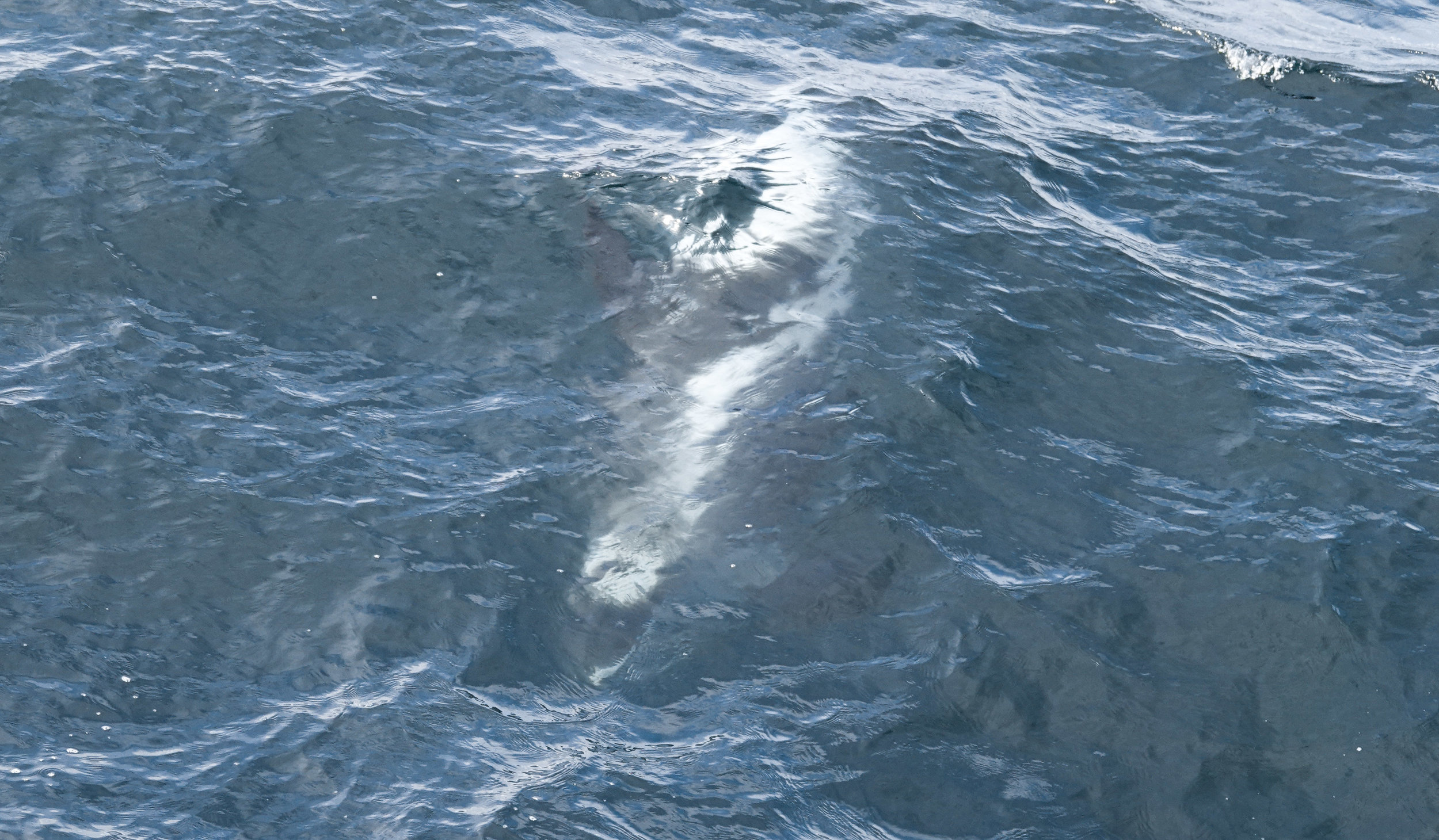
Rarely show their side profile, instead displaying either their front or back—not ideal for identification
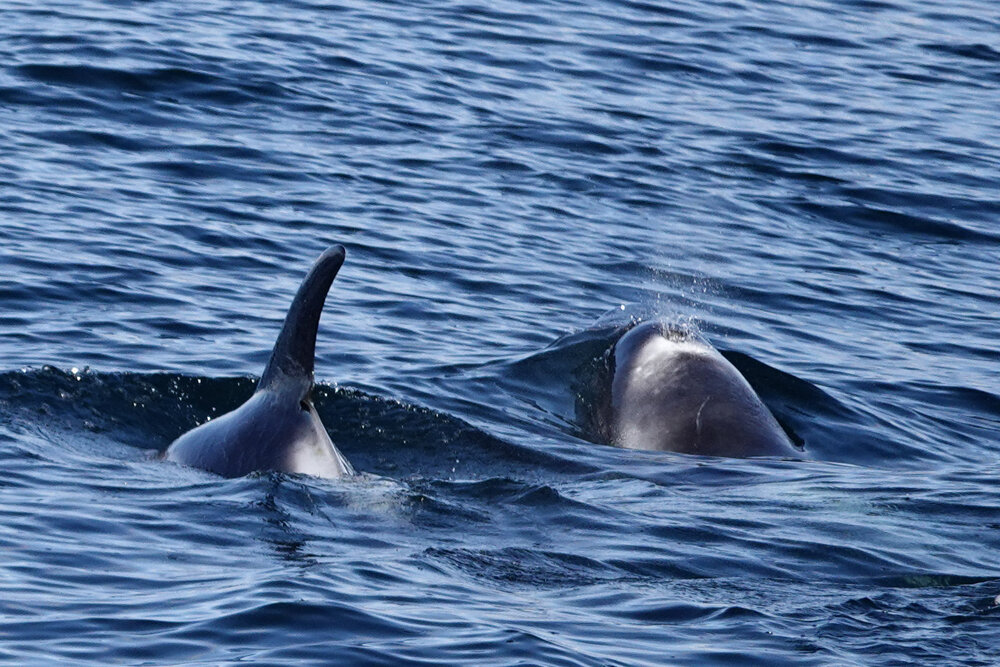
To properly identify individuals, we need clear photos of their entire dorsal fin—from both sides if possible, and ideally from above.
Take a look at the photos below:
Which angle makes the dorsal fin’s shape and markings easier to see?
this angle is the worst
the best angle
Unlike baleen whales (e.g., humpbacks, blue whales, minke whales), toothed whales (e.g., dolphins, porpoises, orcas, sperm whales) are social animals. They form groups and communicate with each other.
I still struggle to count them in real-time. When they surface together, it’s hard enough to spot them all—let alone count them in a split second! That’s why I rely on photos to estimate group size later.
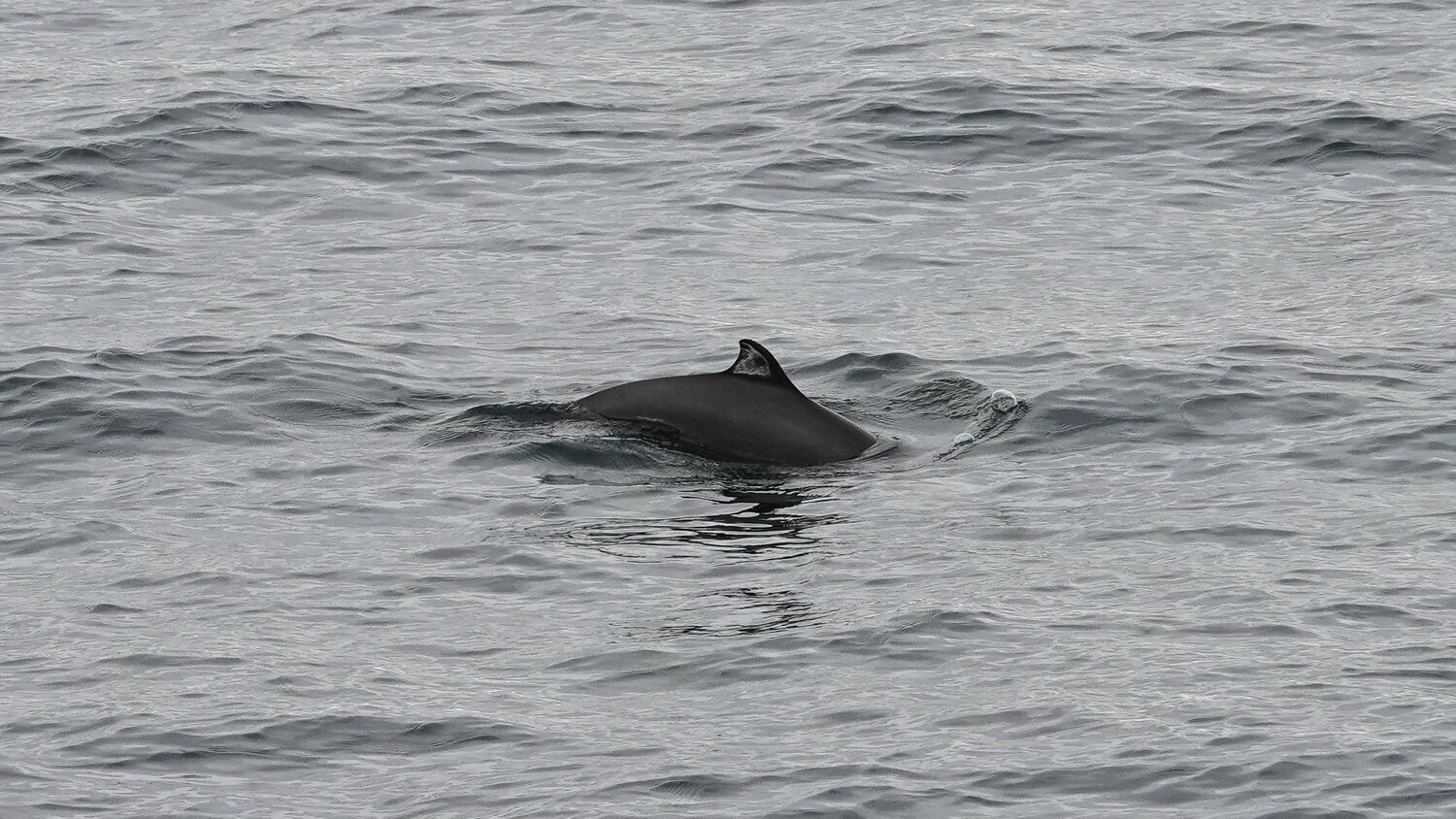
harbour porpoise
Fun Fact: That’s not a dolphin in the photo—it’s a porpoise!
Harbour porpoises look similar to dolphins, but their teeth are different. They’re also much smaller—so much so that passengers often call them “baby dolphins.”
Since they’re tiny and lose body heat quickly, they must stay in constant motion. That’s why we usually only see them surface once before they disappear.
Recently, however, something incredible happened—a pod of porpoises actually played near our boat. For the first time, we stopped the vessel to watch and photograph them, which is normally almost impossible!
The photo above was taken just over a month ago—right place, right time!
Unlike rough weather, rain and wind don’t bother dolphins at all. However, on stormy days, we don’t see them—the waves hide them, and we can’t tell their splashes apart from whitecaps.
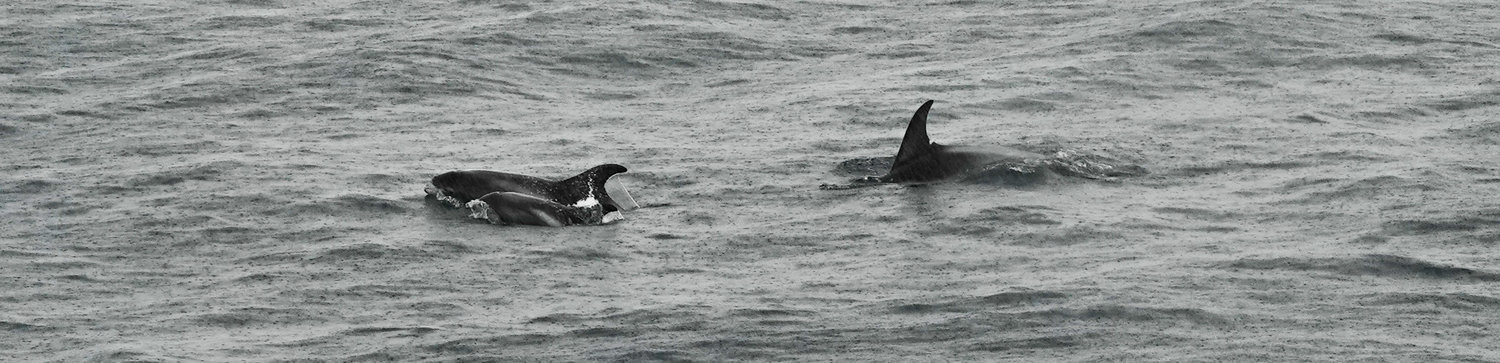
In some photos, one dolphin is noticeably smaller than the other. That’s because it’s a mother and calf. Seeing this frequently is a great sign—it means the population is thriving.
Since we can’t determine sex from photos, spotting a calf helps us confirm at least one adult is female.
Another key difference between baleen whales and toothed whales? The latter have only one blowhole instead of two.
Interestingly, dolphins and whales breathe consciously—unlike humans, who breathe automatically. This means they never fully sleep. Instead, one hemisphere of their brain rests while the other remains alert. If they became fully unconscious, they would drown.
A sunset to remember
One of my most memorable trips took place in September at 5 PM…
Shortly after leaving the harbour, we were surrounded by eight minke whales—an incredible sight! But despite this, the captain wanted to find dolphins.
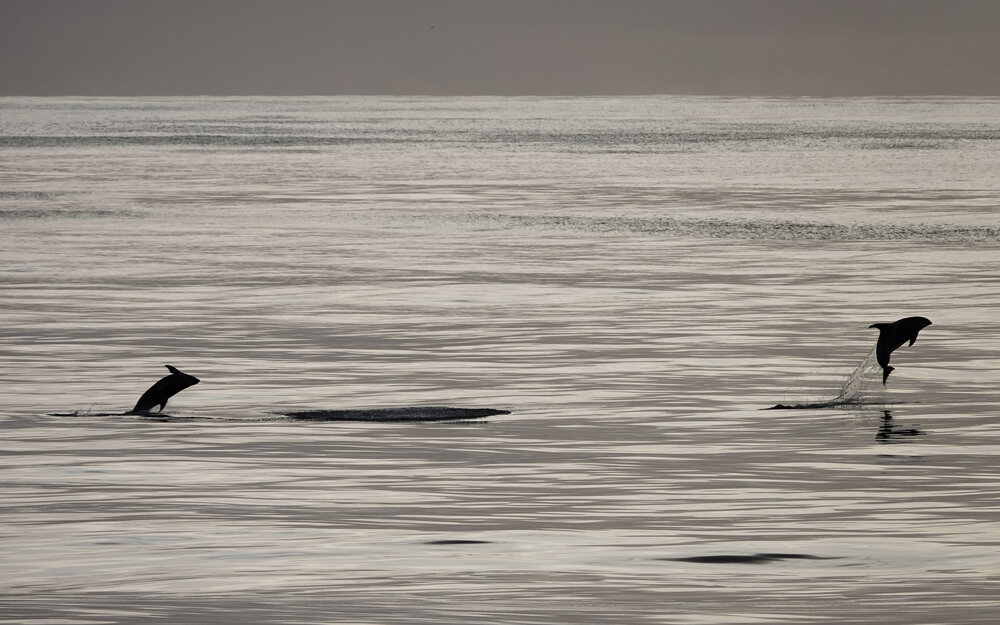
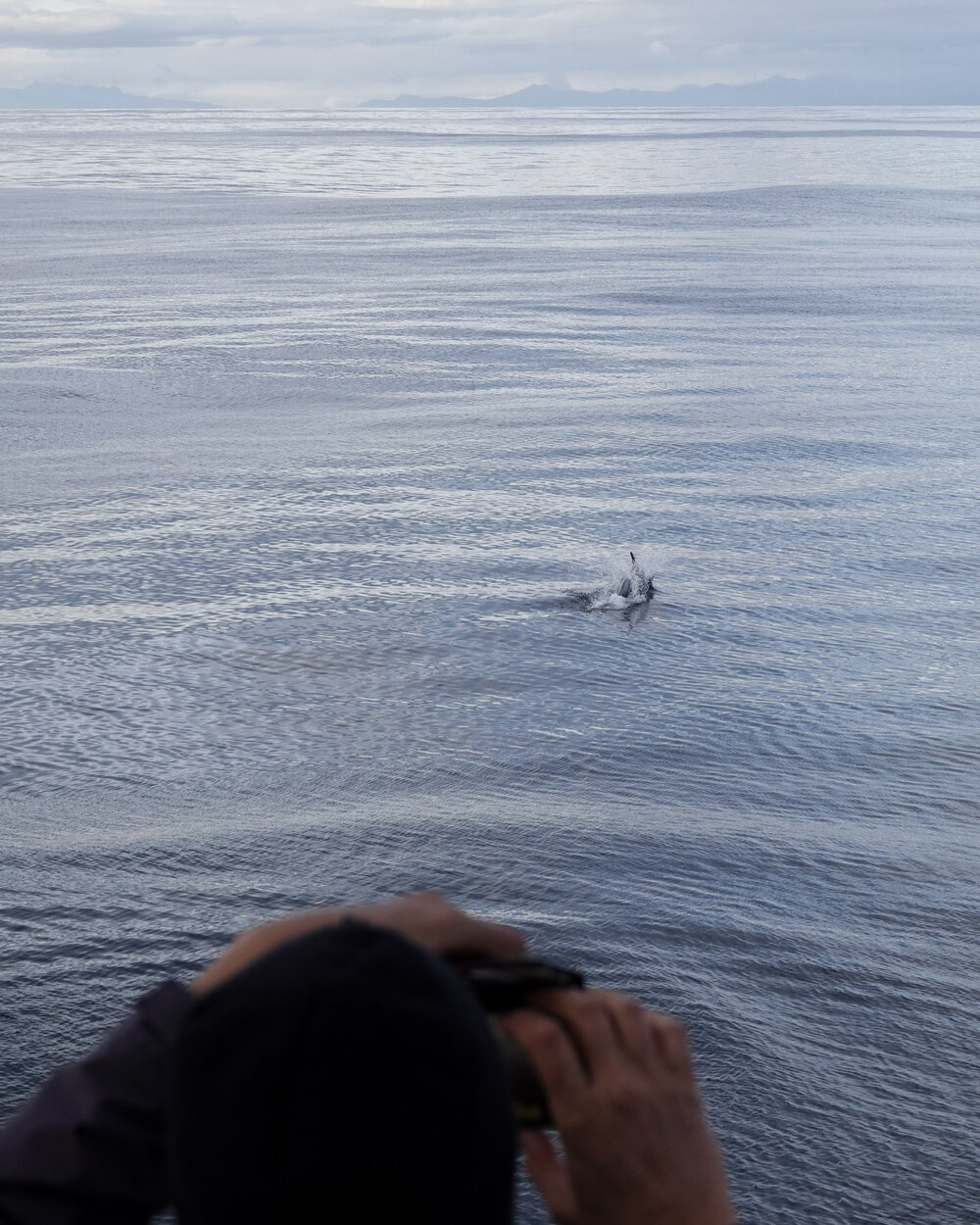
As I noted our whale sightings and admired the sunset, I suddenly heard a splash in the distance. Then, a dark silhouette appeared—followed by cheers from passengers.
It was the captain’s beloved dolphins—two white-beaked dolphins, to be exact.
Imagine this: drifting silently through the bay, with no other boats around. The only sound? The rhythmic splashes of two dolphins leaping half a kilometre away. It sounded exactly like someone belly-flopping—over and over again, purely for the joy of it.
If you’re on a computer or large screen, here’s a fun task:
Look back at the photos above. Can you spot these two dolphins in other images?
The left one appears in at least two more photos (maybe three!).
The right one appears in three more photos.
One of these dolphins was photographed 36 days later—it’s an amazing feeling to recognise the same individual multiple times.
We followed the leaping dolphins until they led us to the rest of their group. It often happens that they separate for a short time, only to reunite and travel on together.
Dolphins in this region usually travel in pods of five to seven individuals.
Photo identification work
My first office task here was dolphin identification. Through this, I learned just how important high-quality photos are for recognising individuals.
Besides nicks and scars on their dorsal fins, other marks help us identify them. These can be caused by:
Illness
Playful biting between dolphins
Encounters with predators (e.g., orcas)
Boat-related injuries
Such markings accumulate over the years, and pigmentation also changes. I will try to answer how this pigmentation has changed over the years in my project assignment on this topic.
In our catalogue of recognised individuals, there are currently around 470 animals; among them are a few ‘celebrities’ whom we often see and can easily recognise: Sophie, Ventiquattro, Puzzle…
That’s all for now. Don’t forget to check out my other posts about Icelandic marine animals: