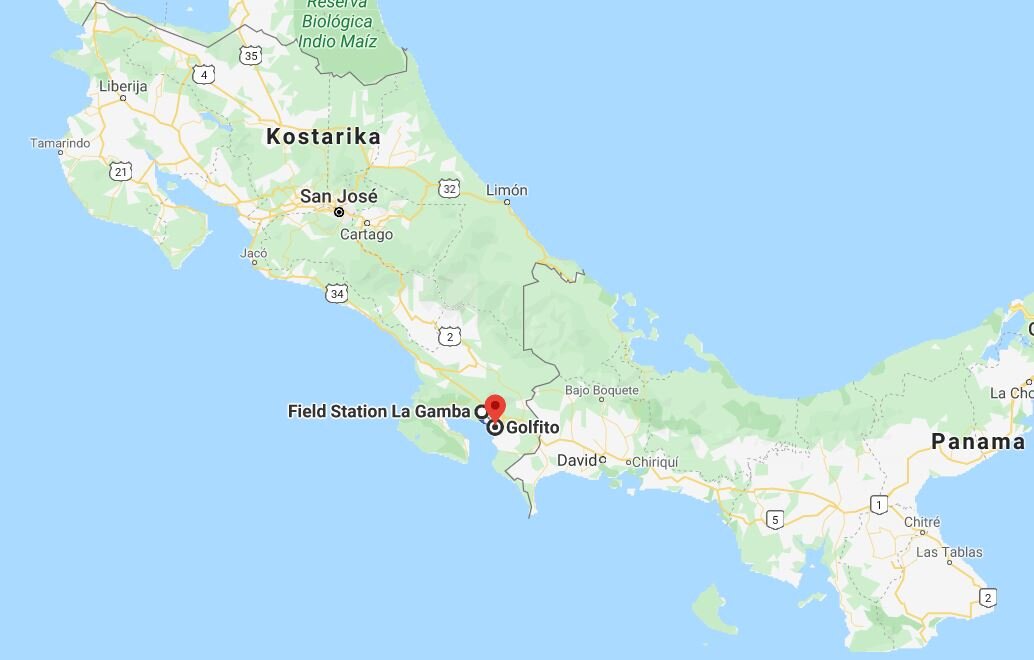
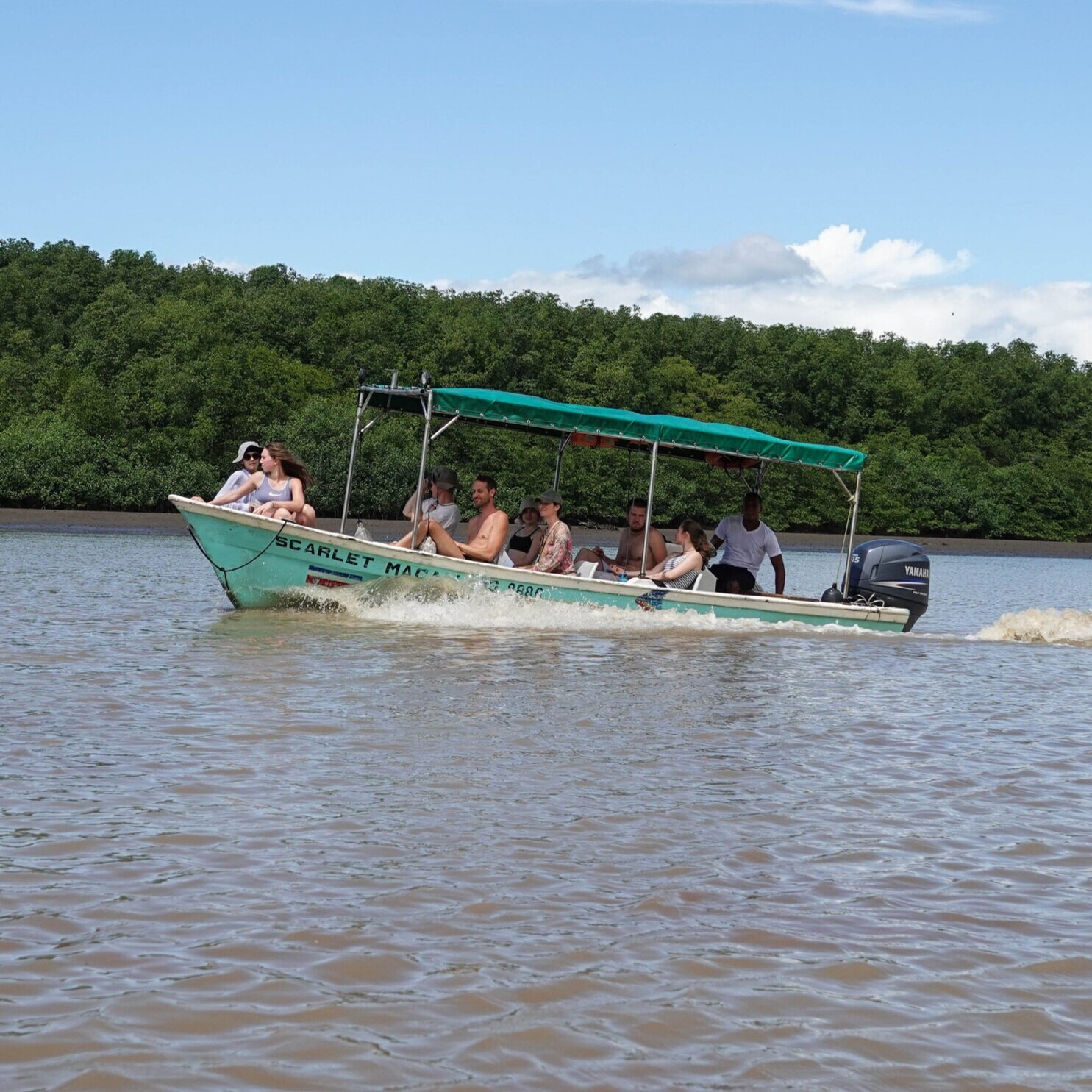
About half an hour’s drive from La Gamba lies the coastal village of Golfito, from where we set out on two consecutive days to explore aquatic environments—by boat, of course.
Below, you can see some of the interesting “finds.”
We reached Golfito from La Gamba by taxi in about thirty minutes.
THE FIRST DAY
We boarded the boat eager to see mangroves for the first time and, hopefully, spot a sloth.
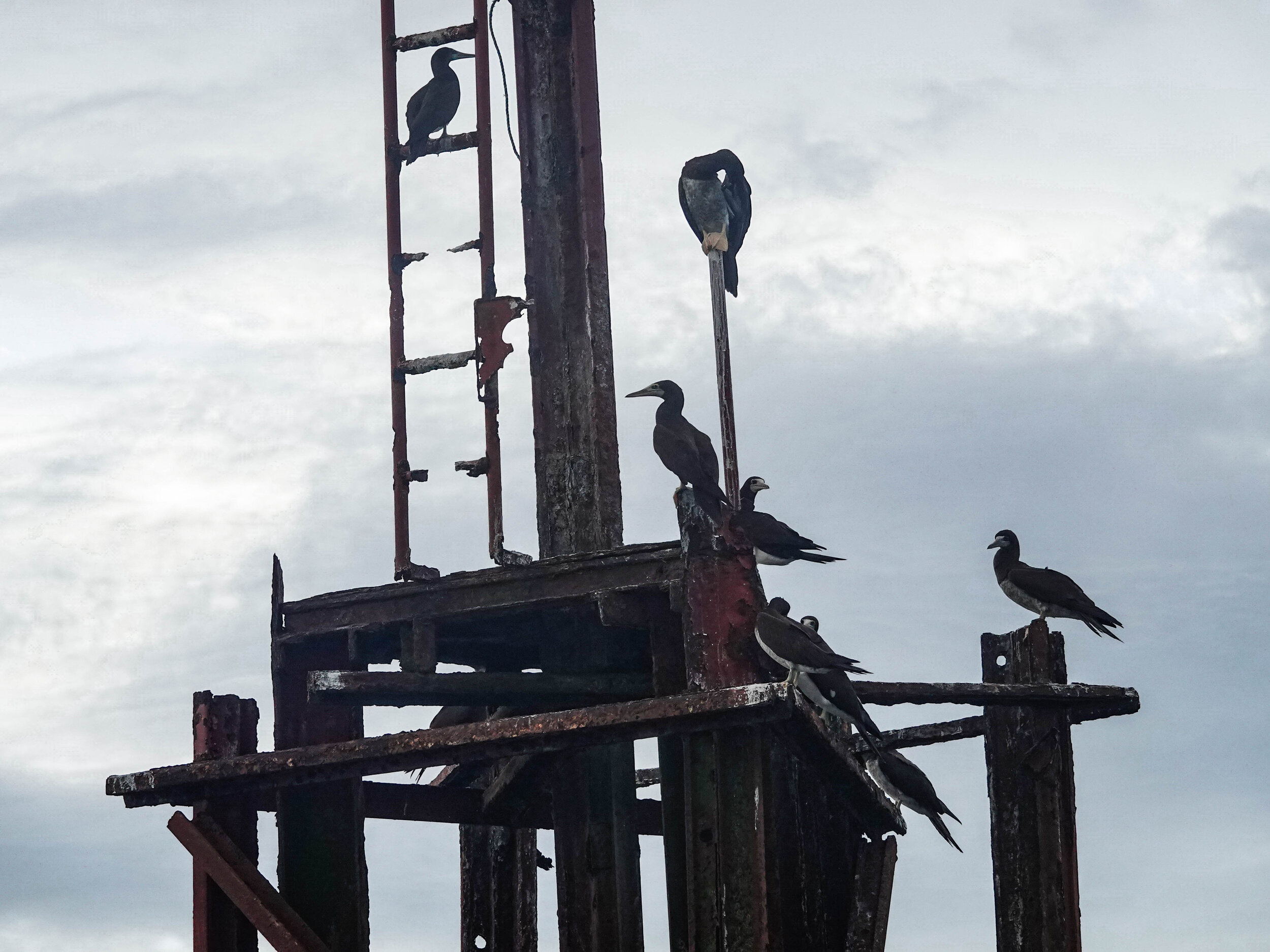
Soon after setting off, we were watched from above by brown boobies.
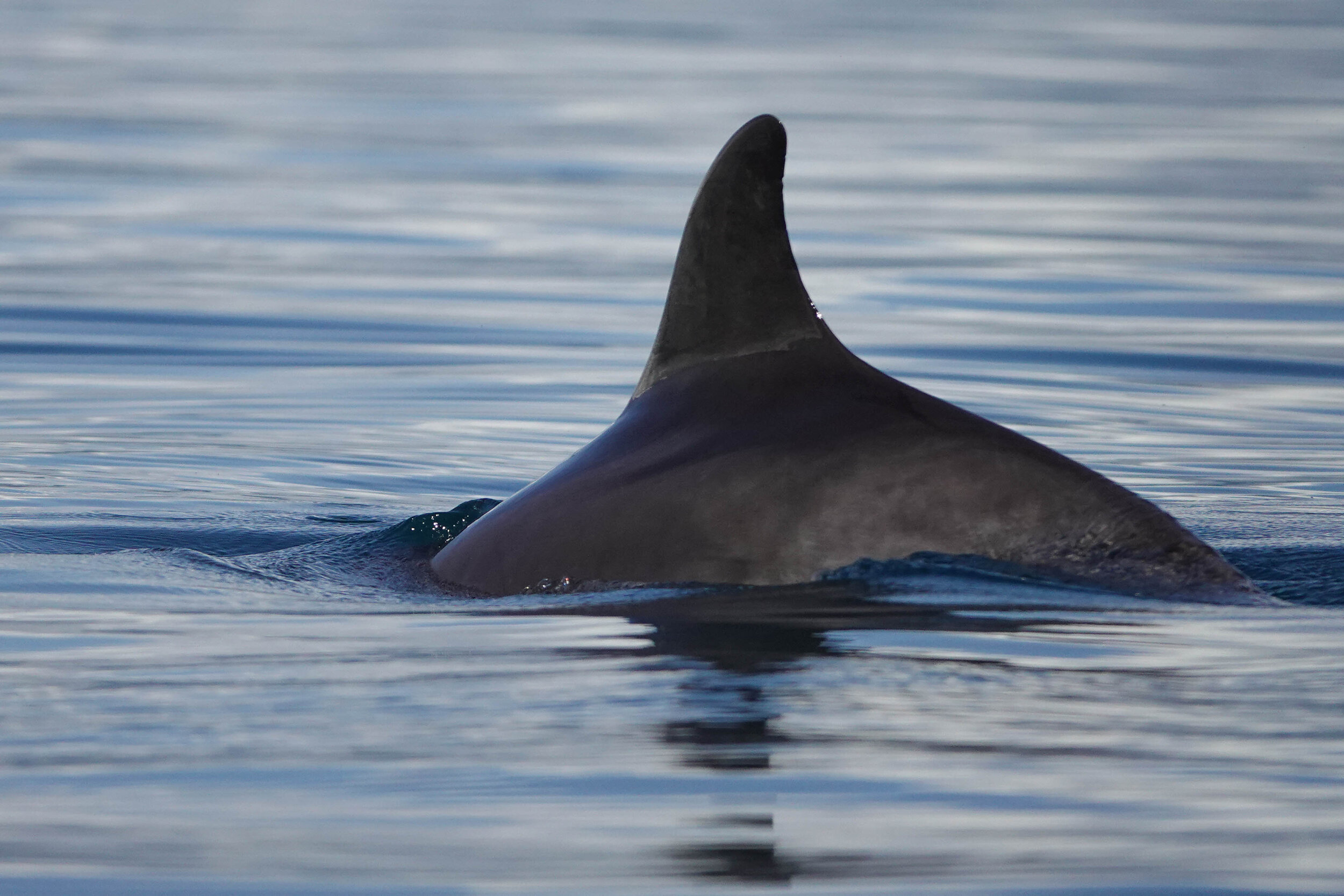
Apparently, dolphins frequent this area too…
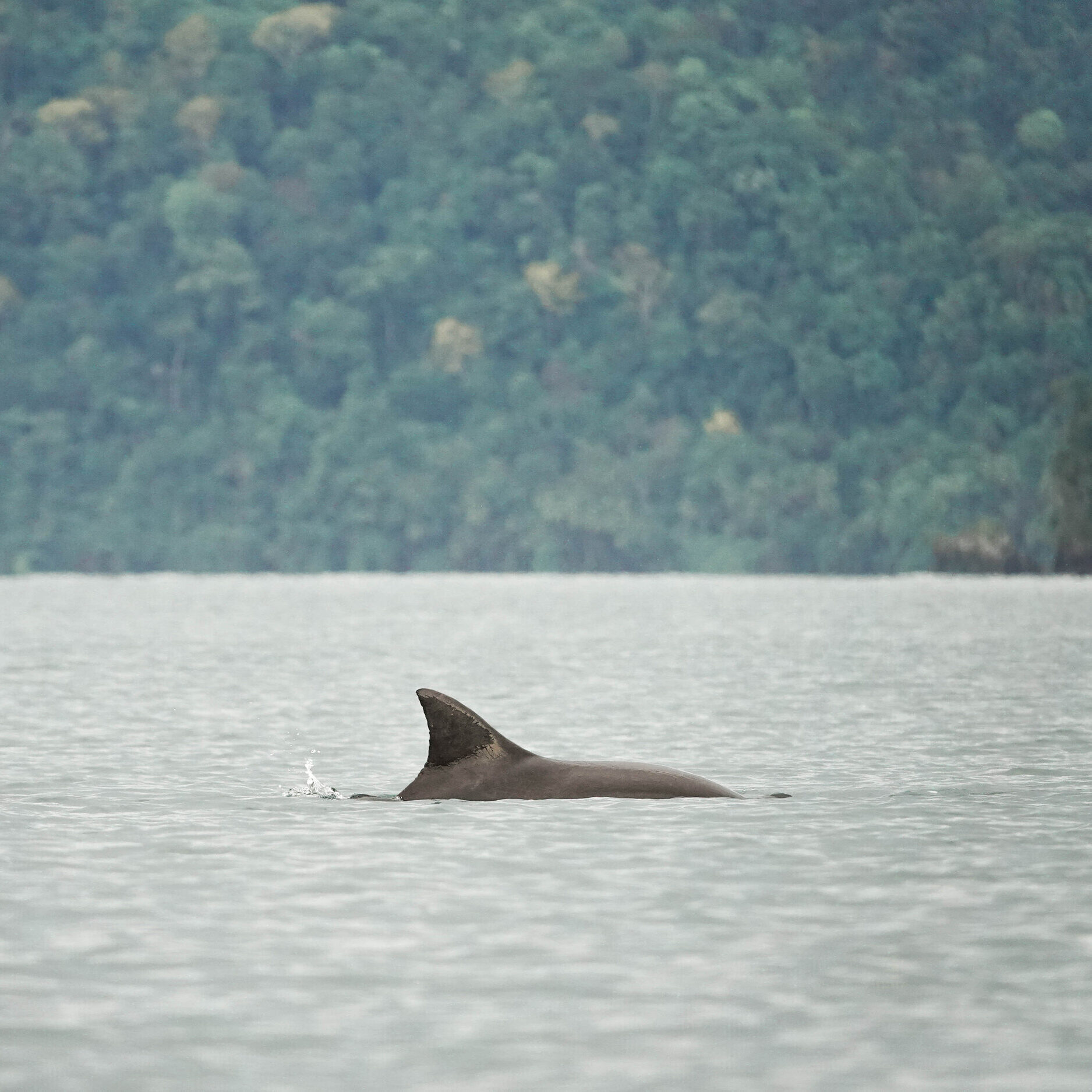
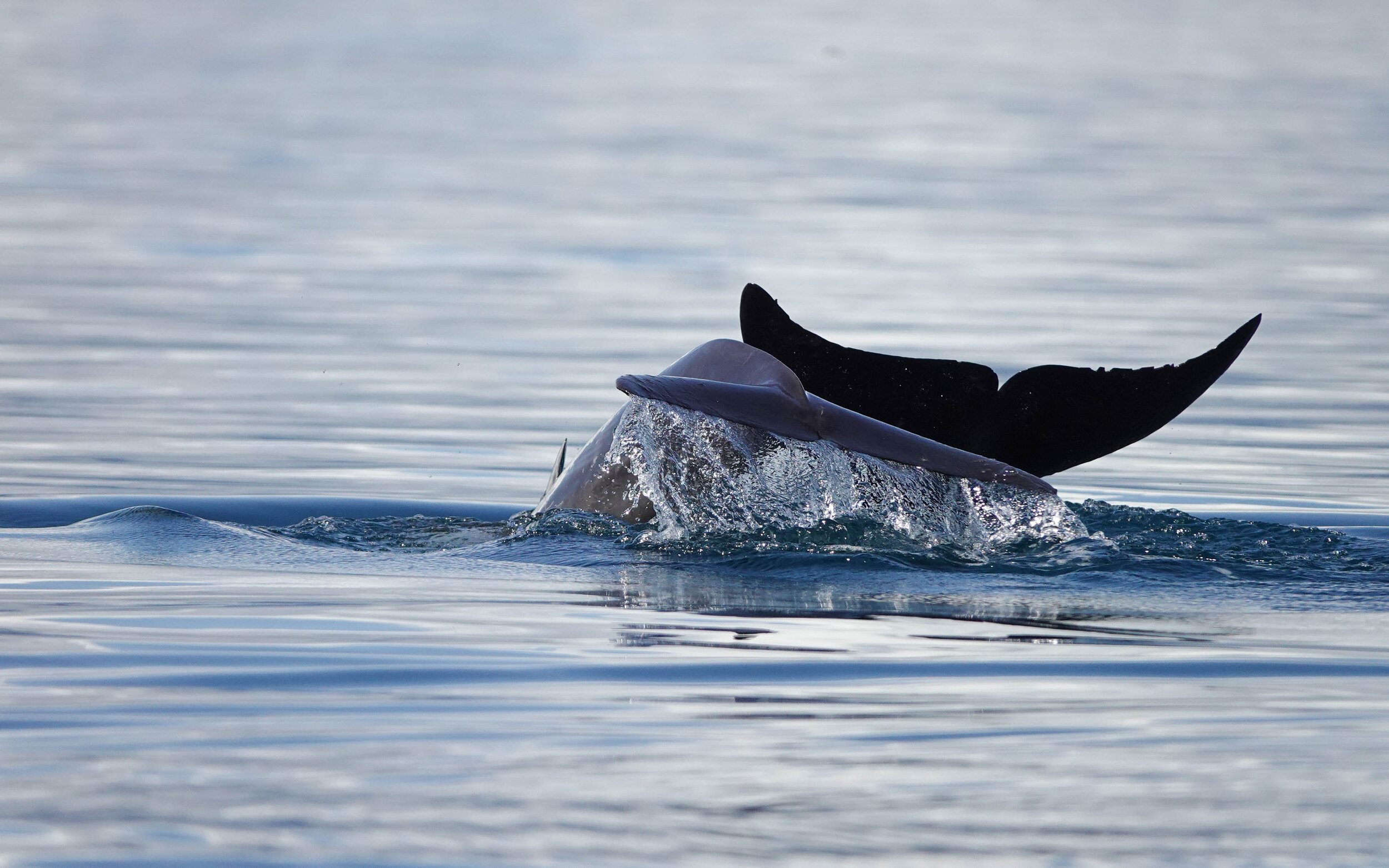
And sure enough—we were lucky to observe pantropical spotted dolphins (Stenella attenuata) up close. These slender, striped dolphins are typical of tropical and subtropical waters worldwide.
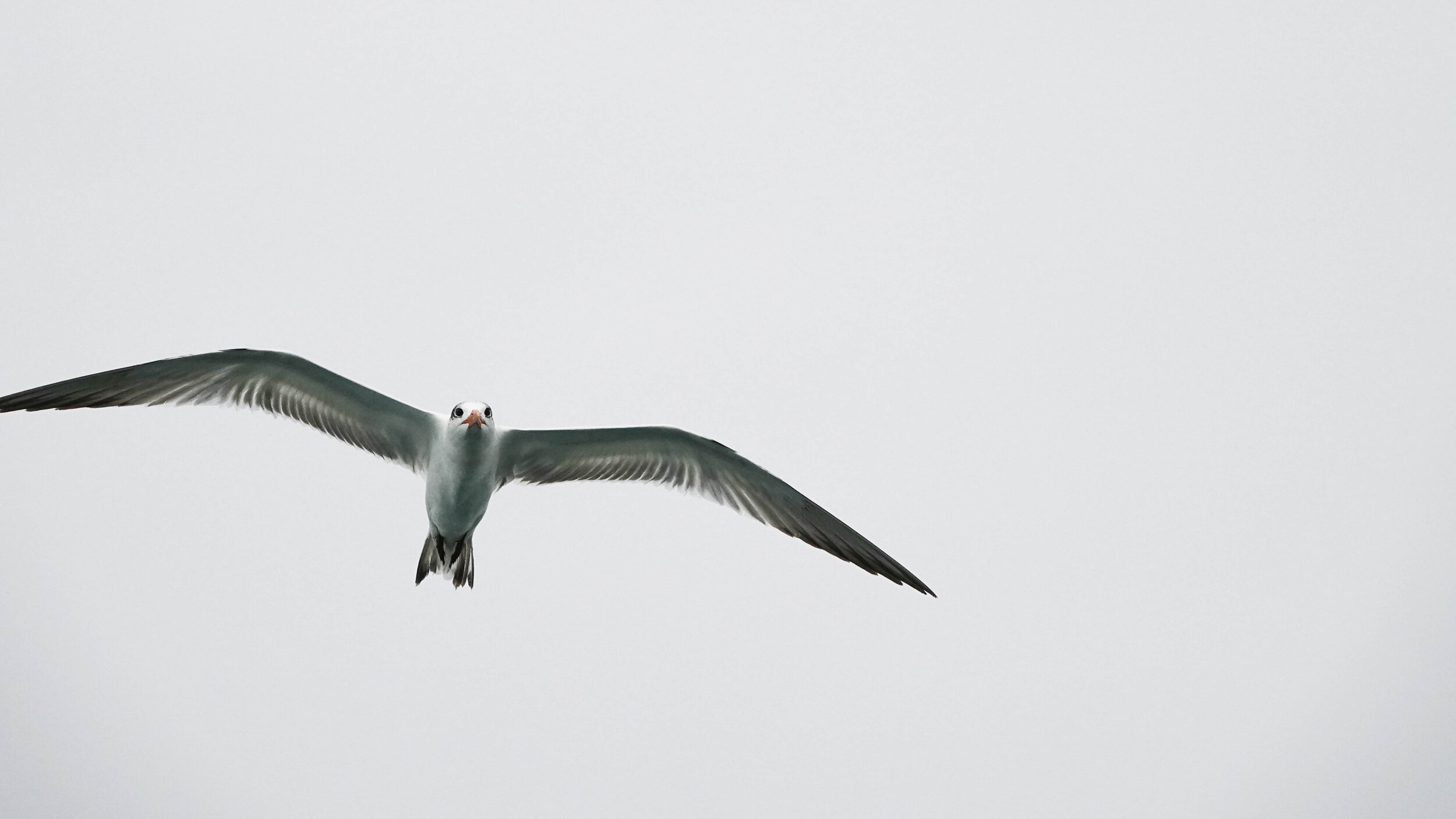
Costa Rica is an excellent country for birdwatchers.
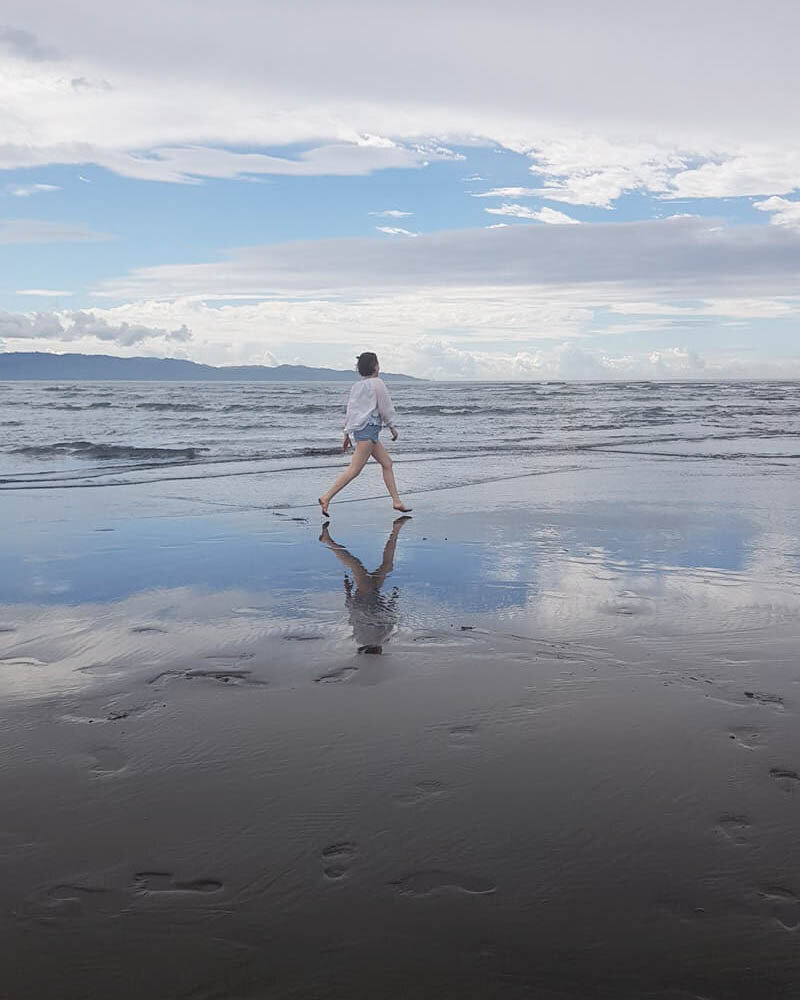
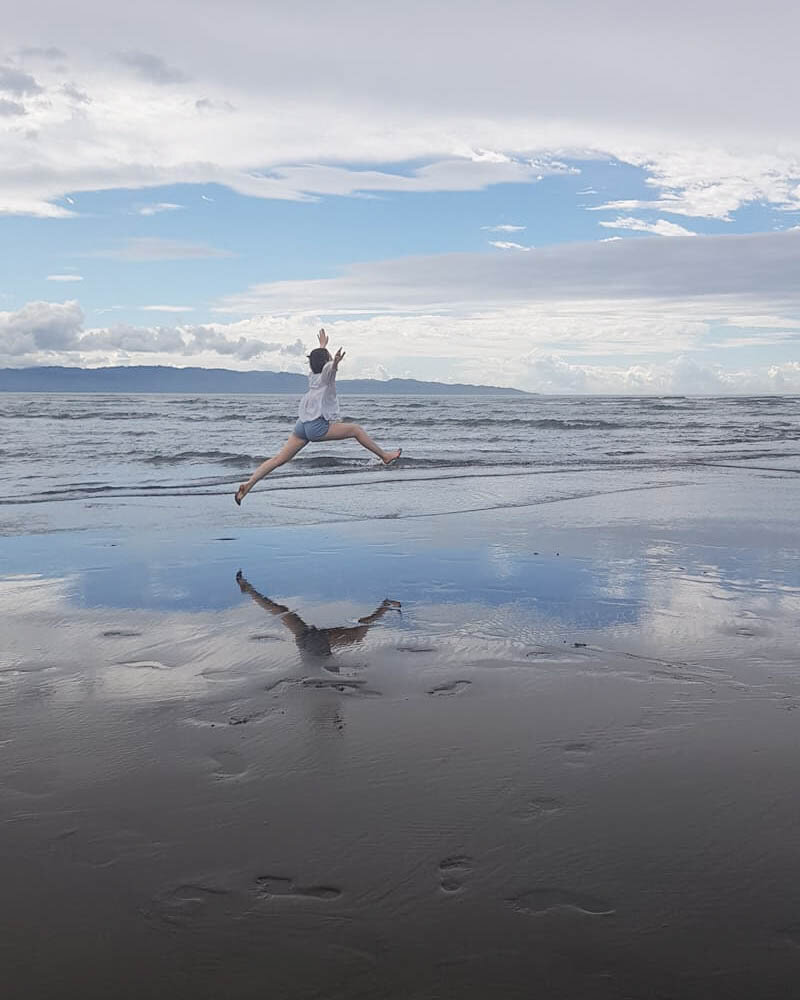
The sea near the coast is quite shallow—during low tide, numerous sandbanks emerge, which we had to carefully navigate around by boat. We landed on one and had fun jumping around.
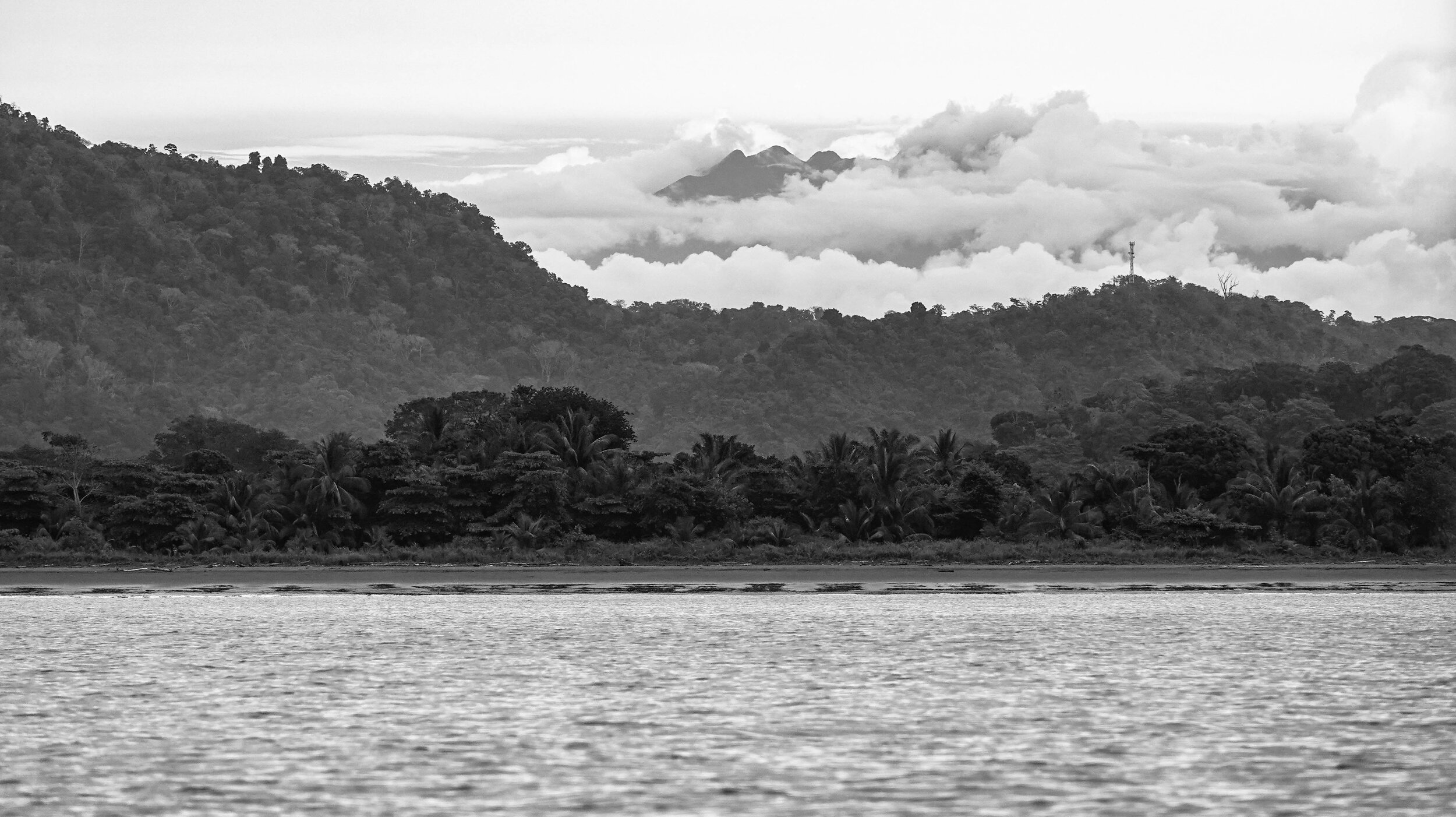
In the background, peeking through the clouds, stood the highest peak of Panama (Costa Rica’s southern neighbor)—Barú volcano, towering at about 3,500 meters.
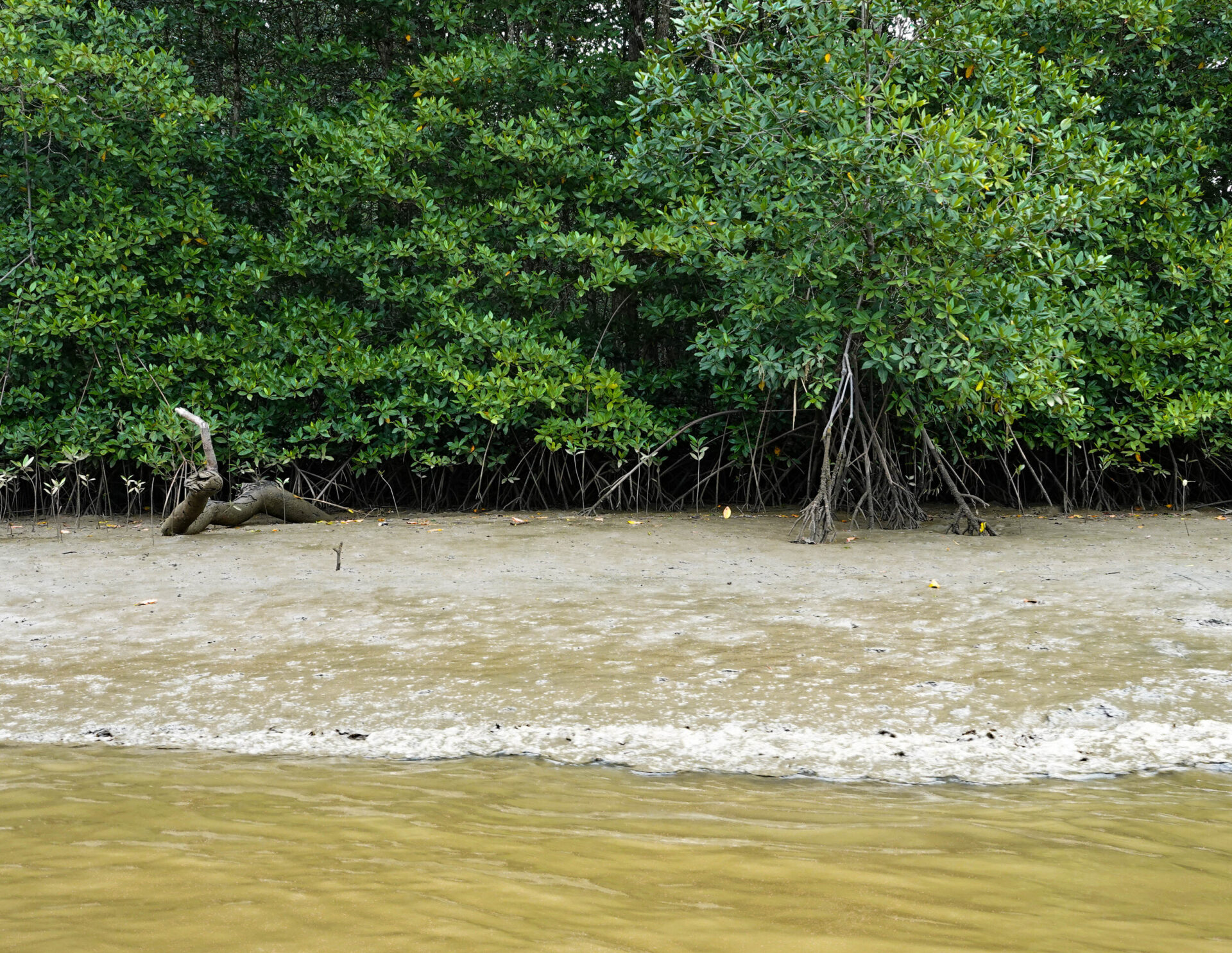
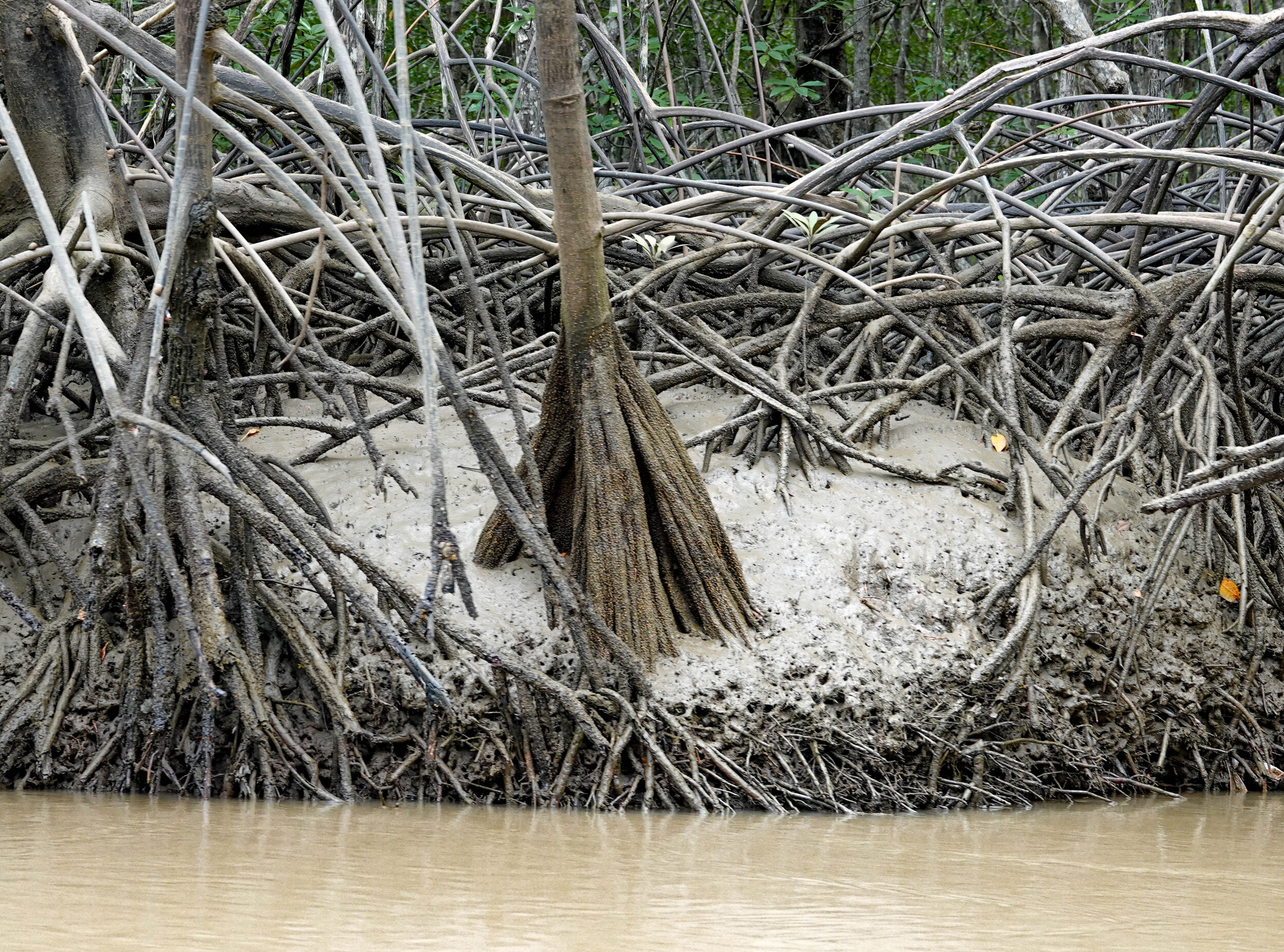
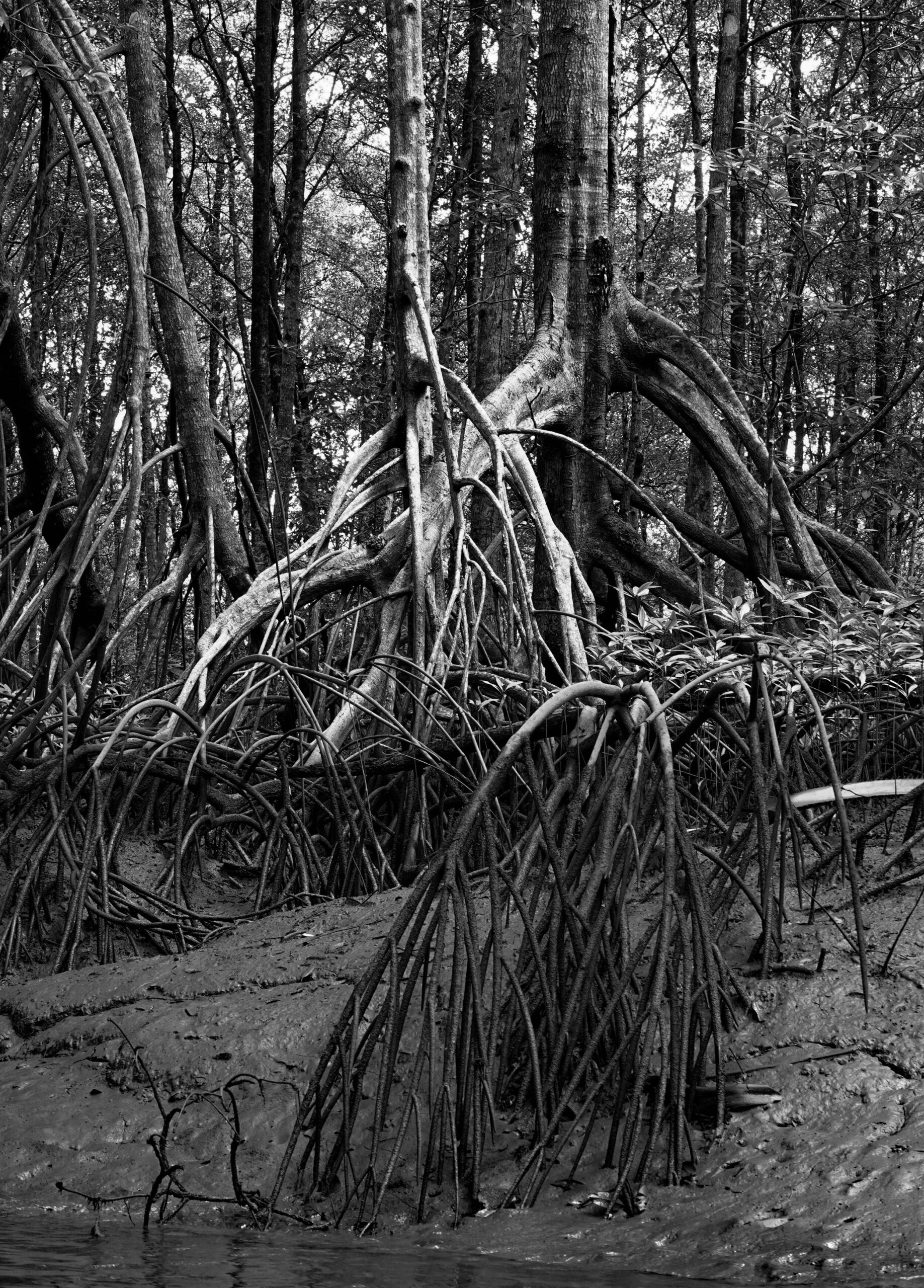
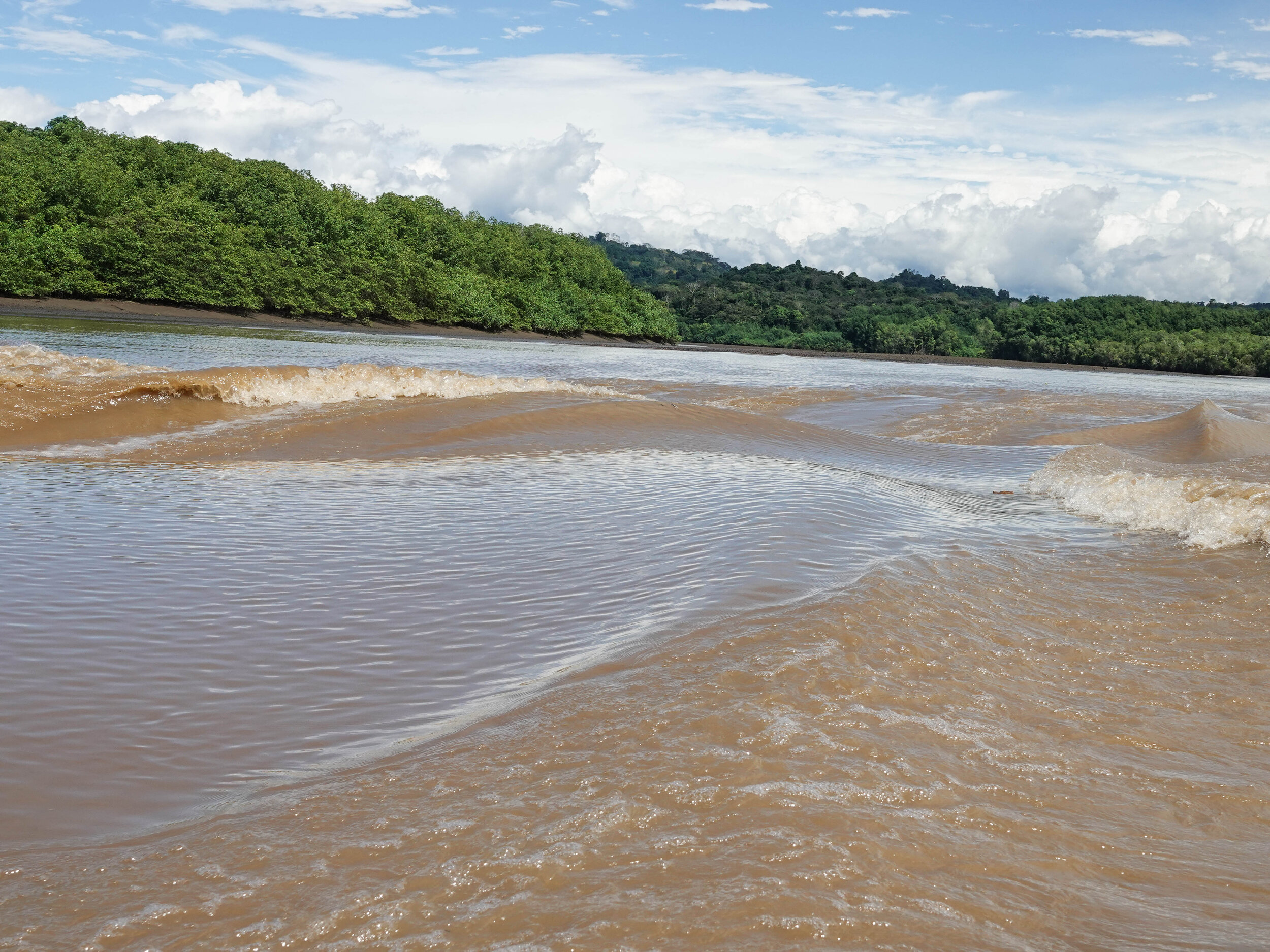
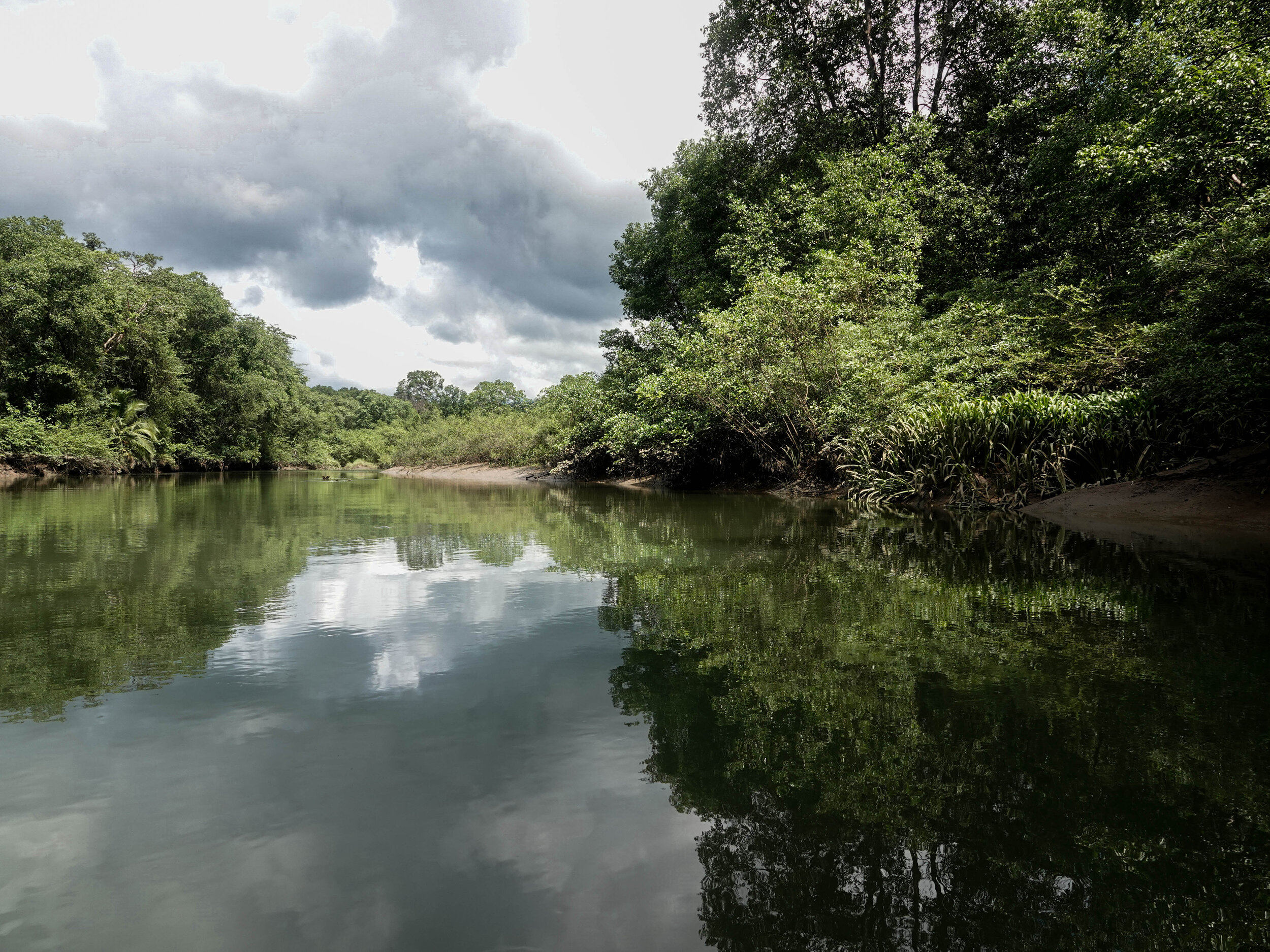
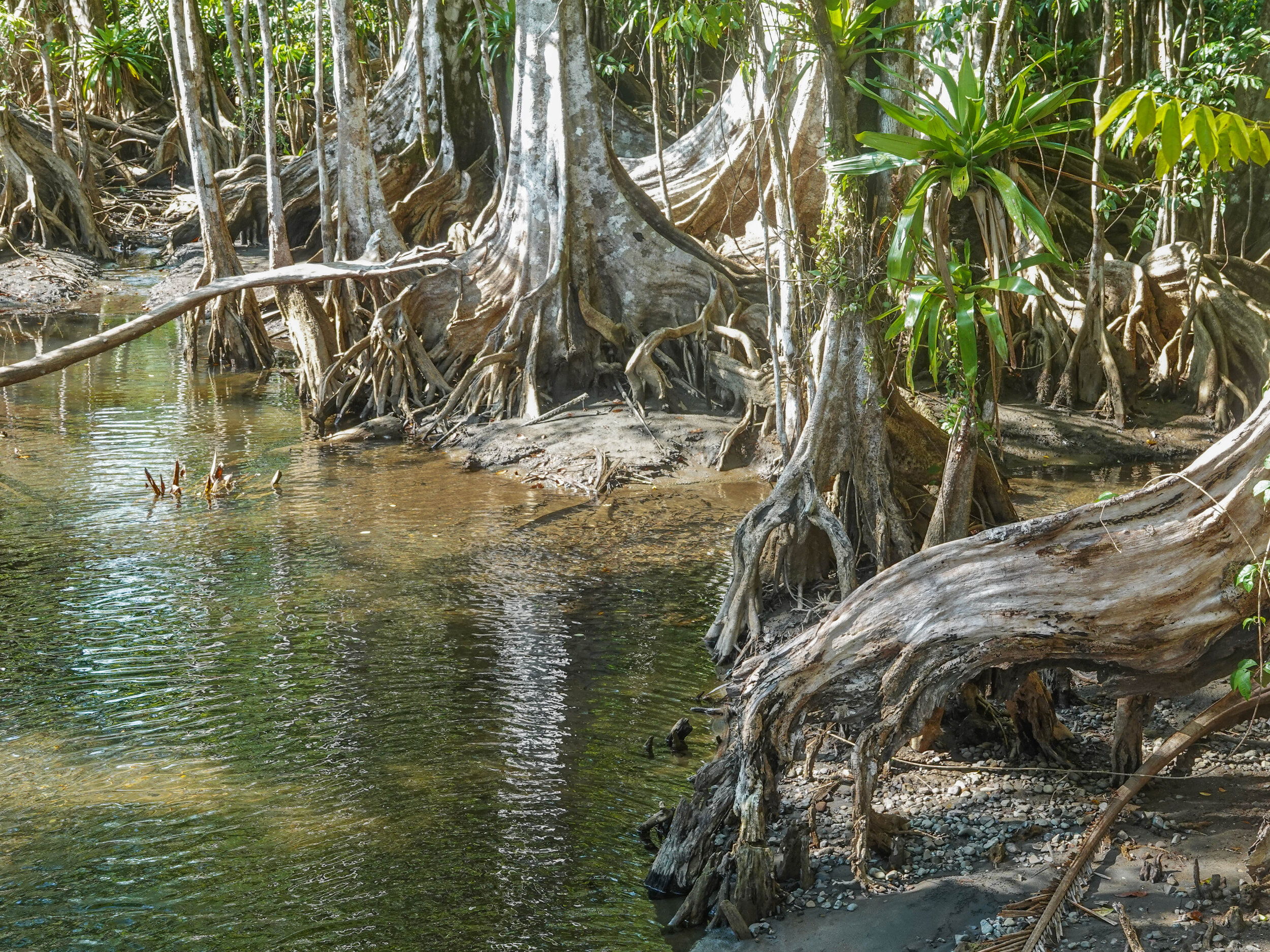
We continued along the Coto River, where we encountered our first mangroves!
Many factors contribute to the formation of these fascinating plant communities, but one of the key conditions is the mixing of freshwater and seawater.
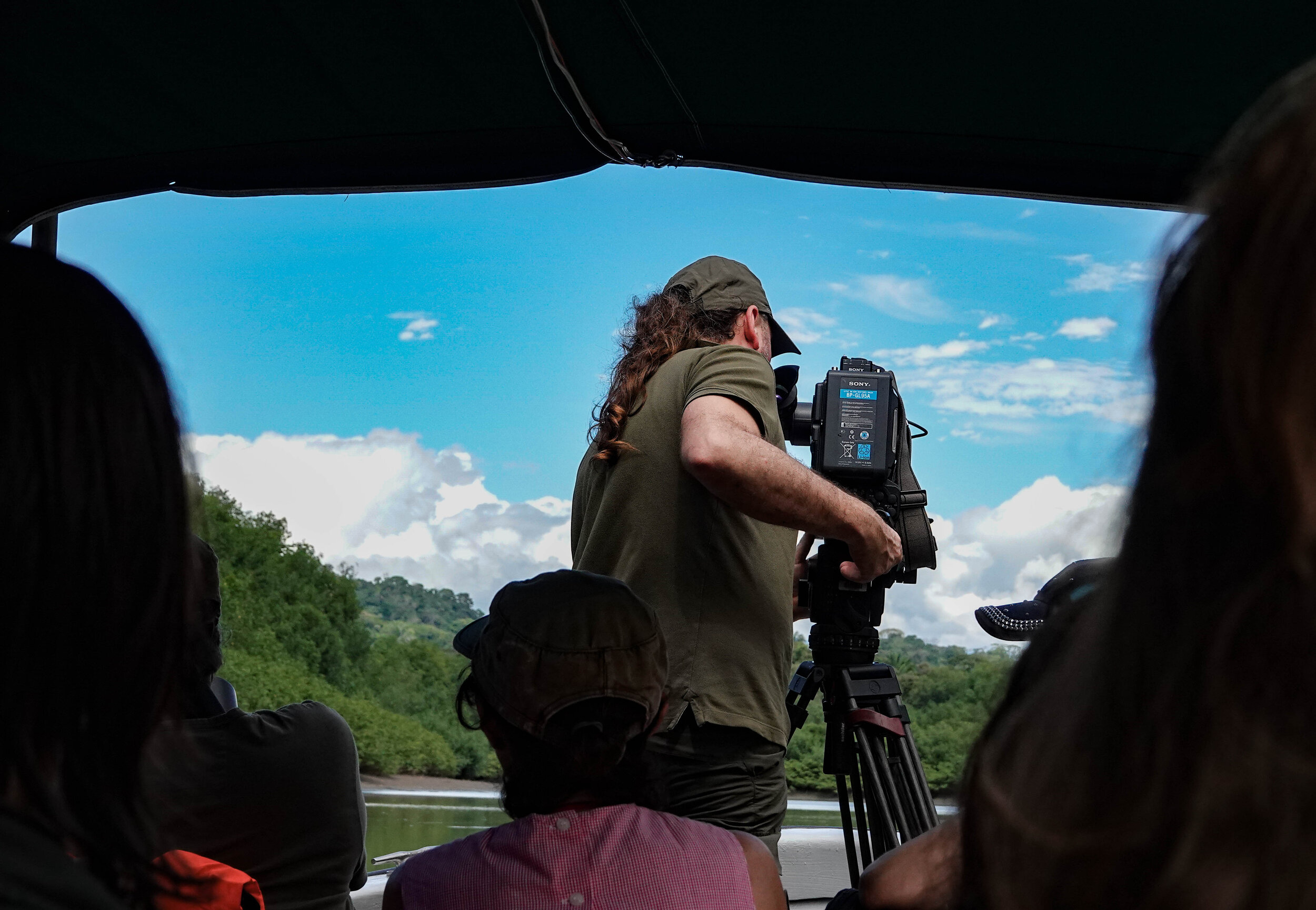
By the way, we were joined by a film crew from RTV Slovenia (national television), who would stay with us for ten days. The footage they captured would later be turned into a documentary, likely available for viewing in about a year.
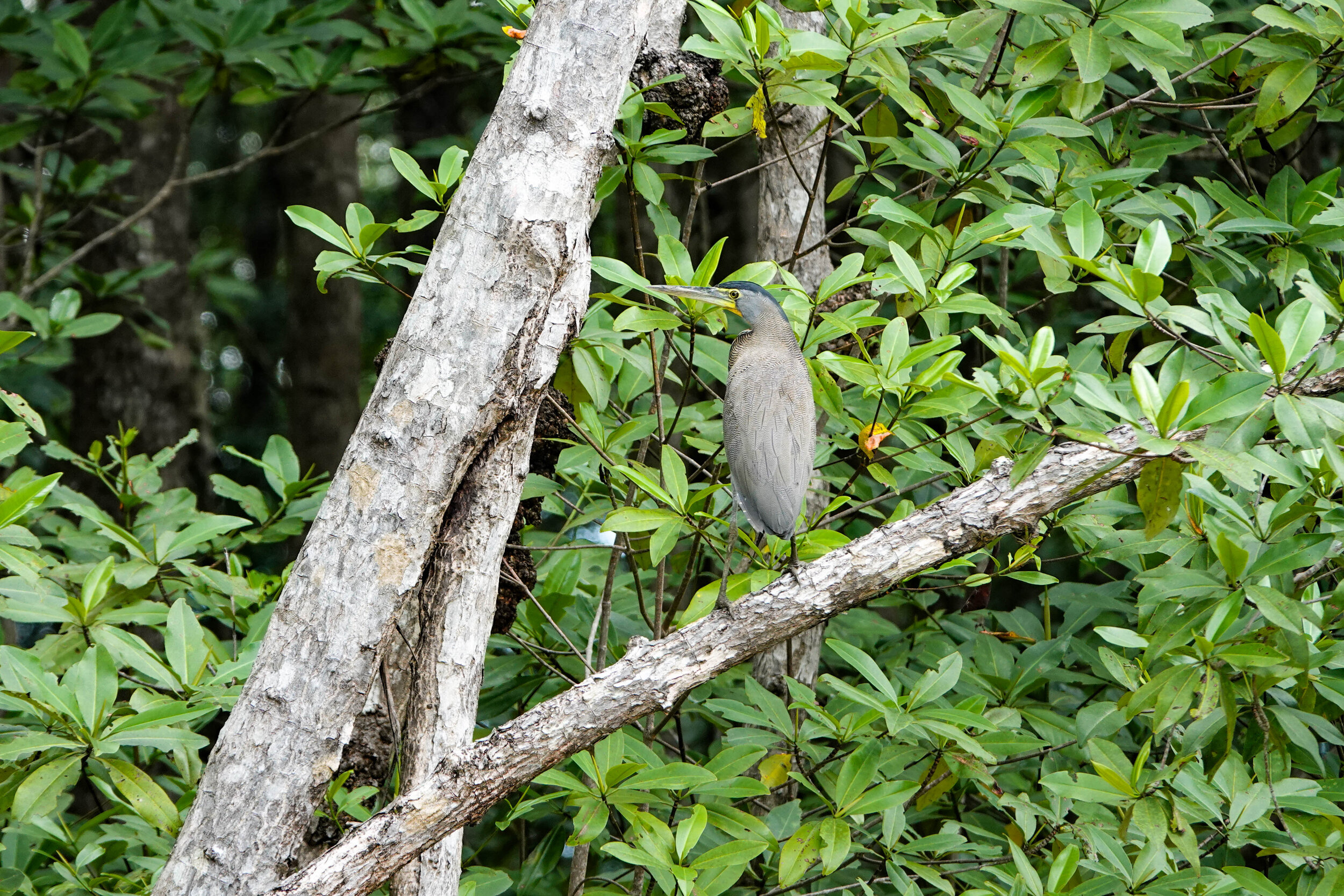
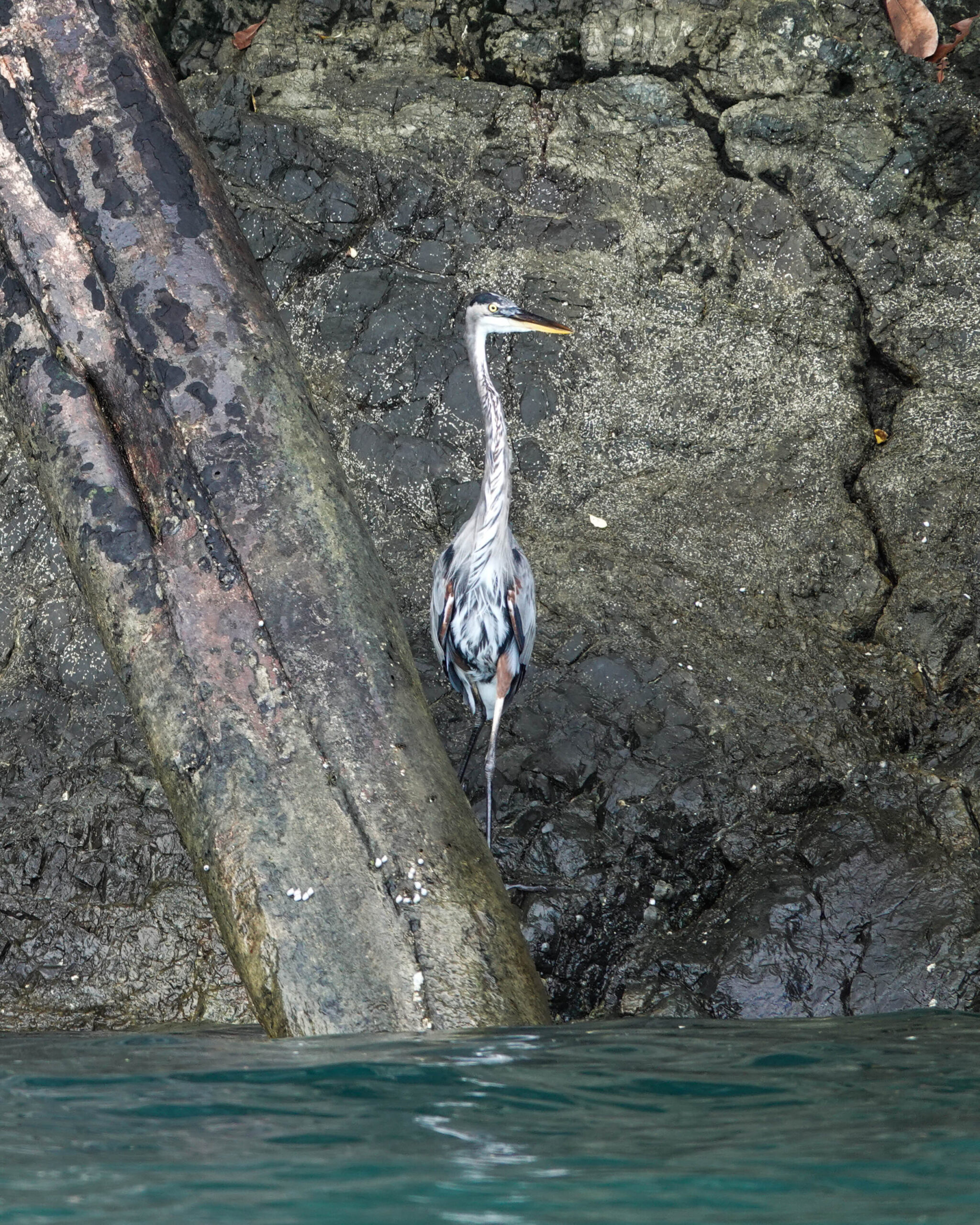
A bare-throated tiger heron was a constant companion as we sailed along the coast.
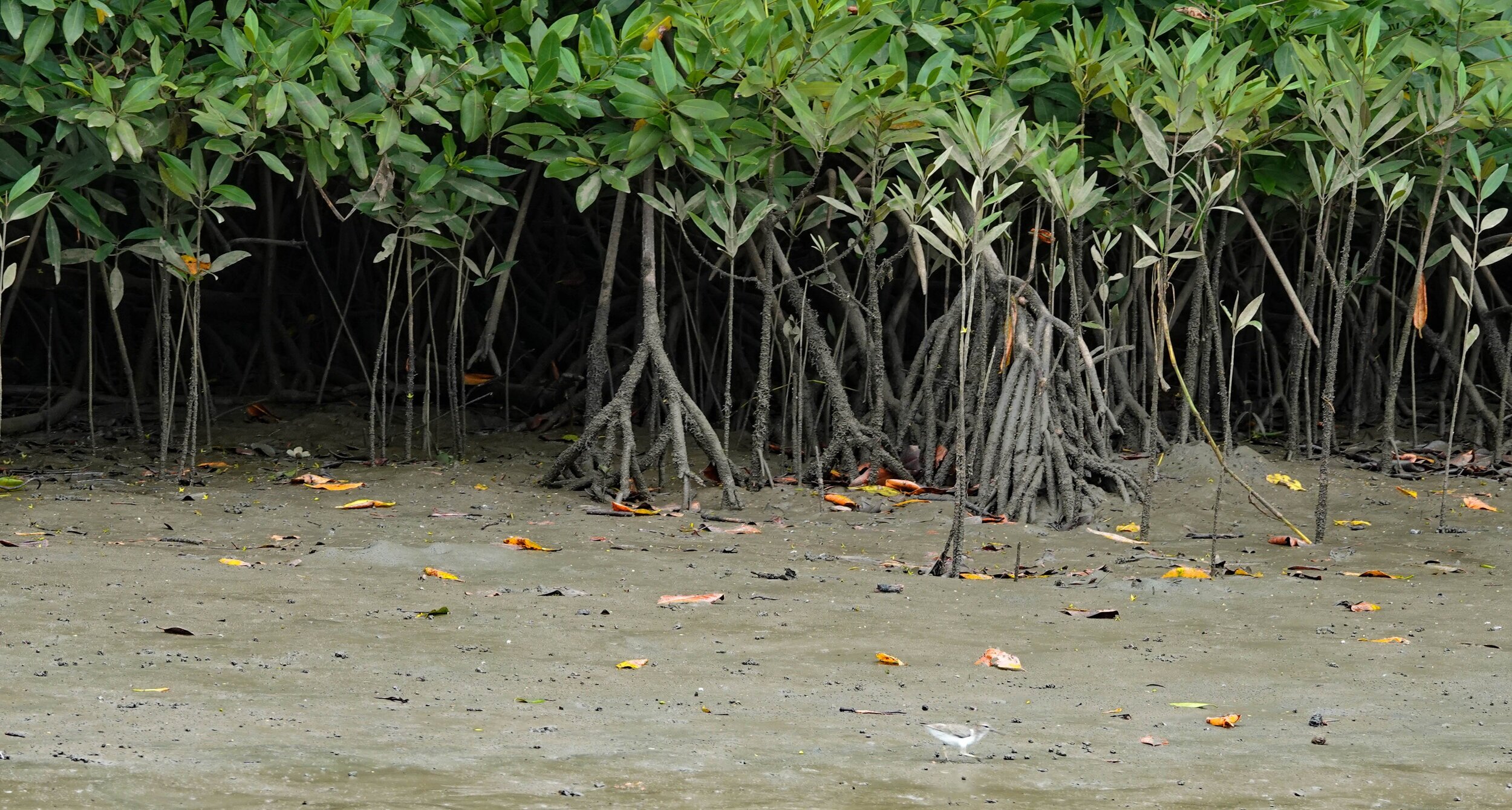
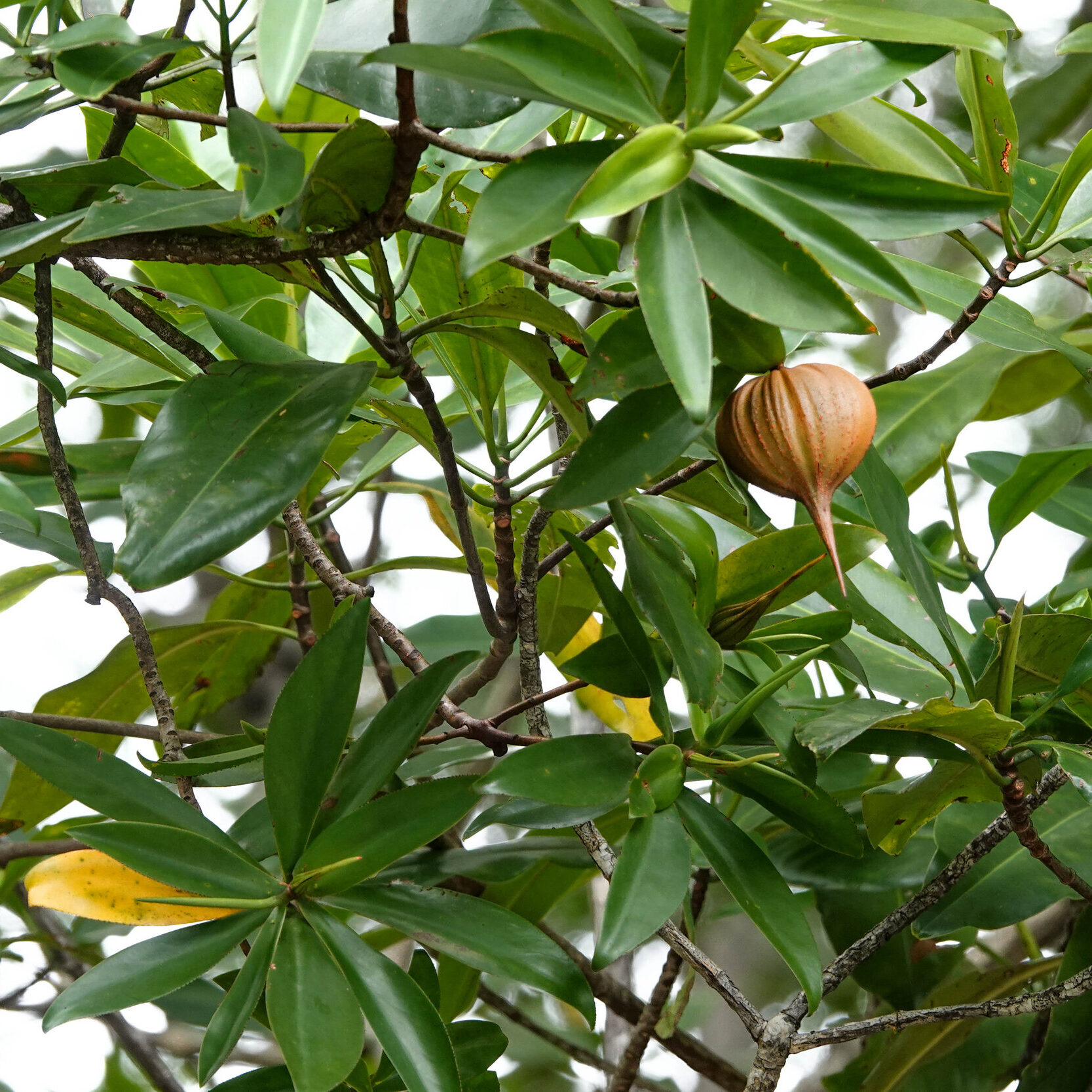
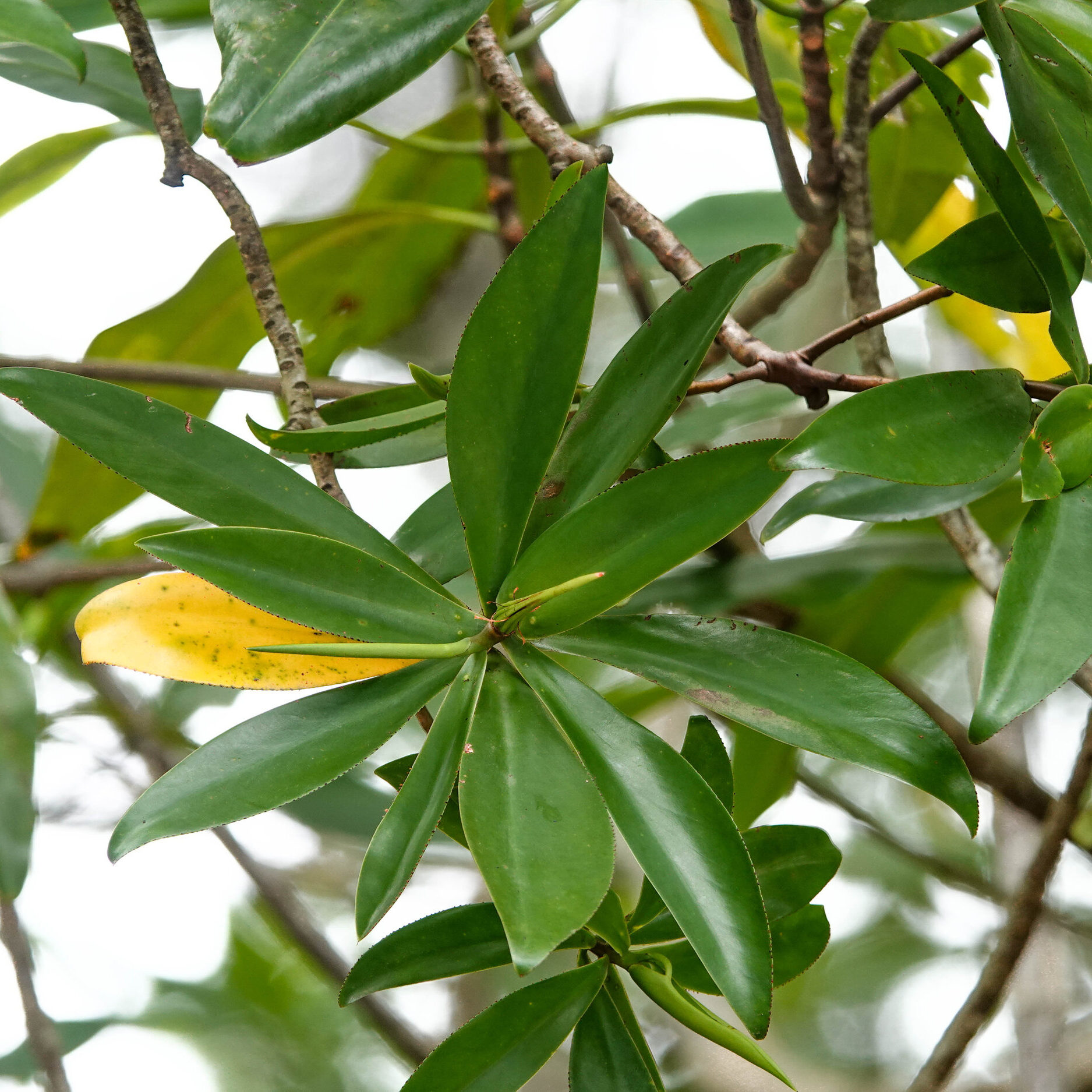
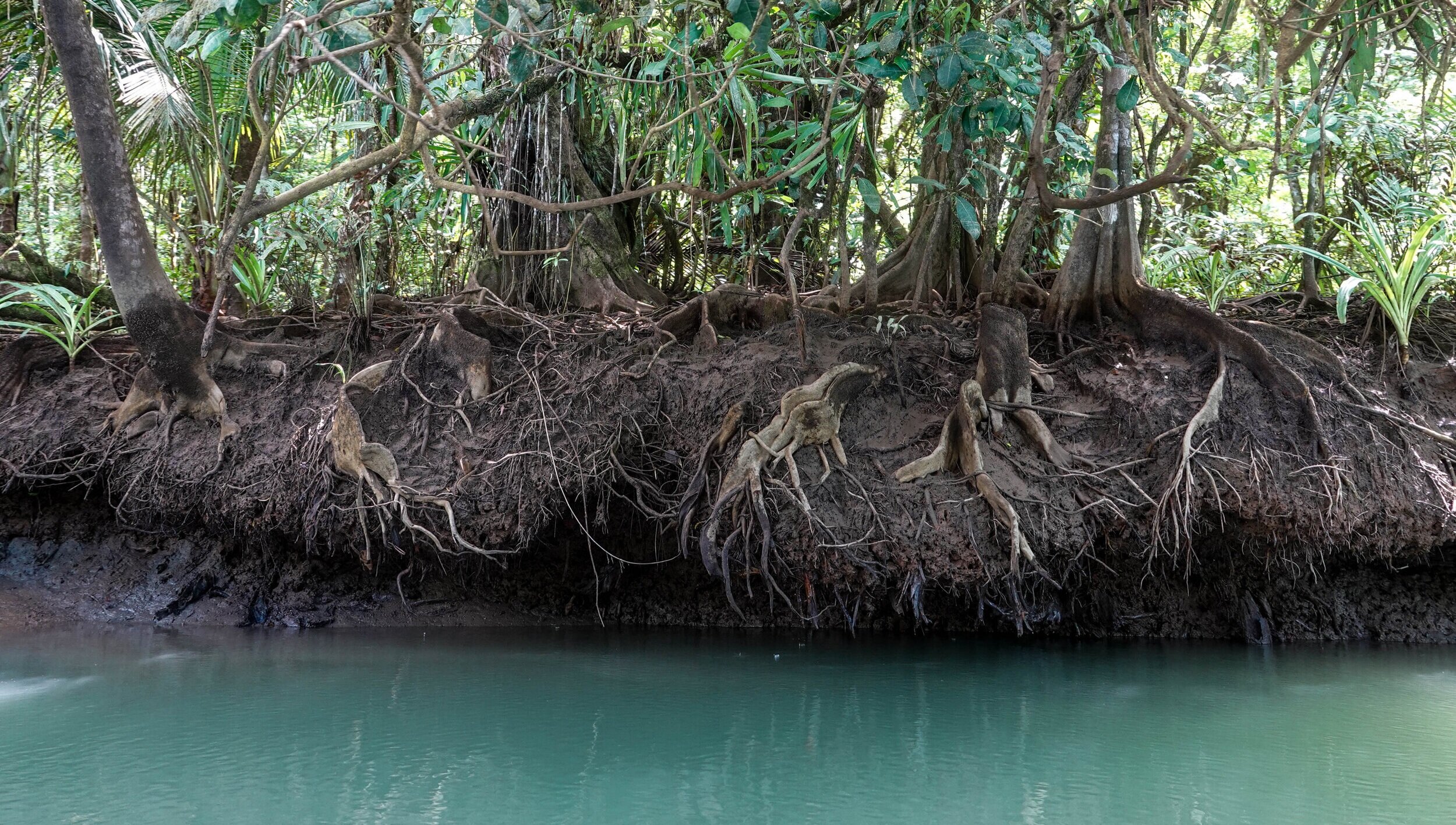
In the picture (above), you can clearly see the difference between two types of mangroves:
Rhizophora mangle (red mangrove) — the ones with sprawling roots
Pellicera rhizophorae (“tea mangrove”) — in the middle
The fruit and the yellow, salt-filled leaves belong to the second species.
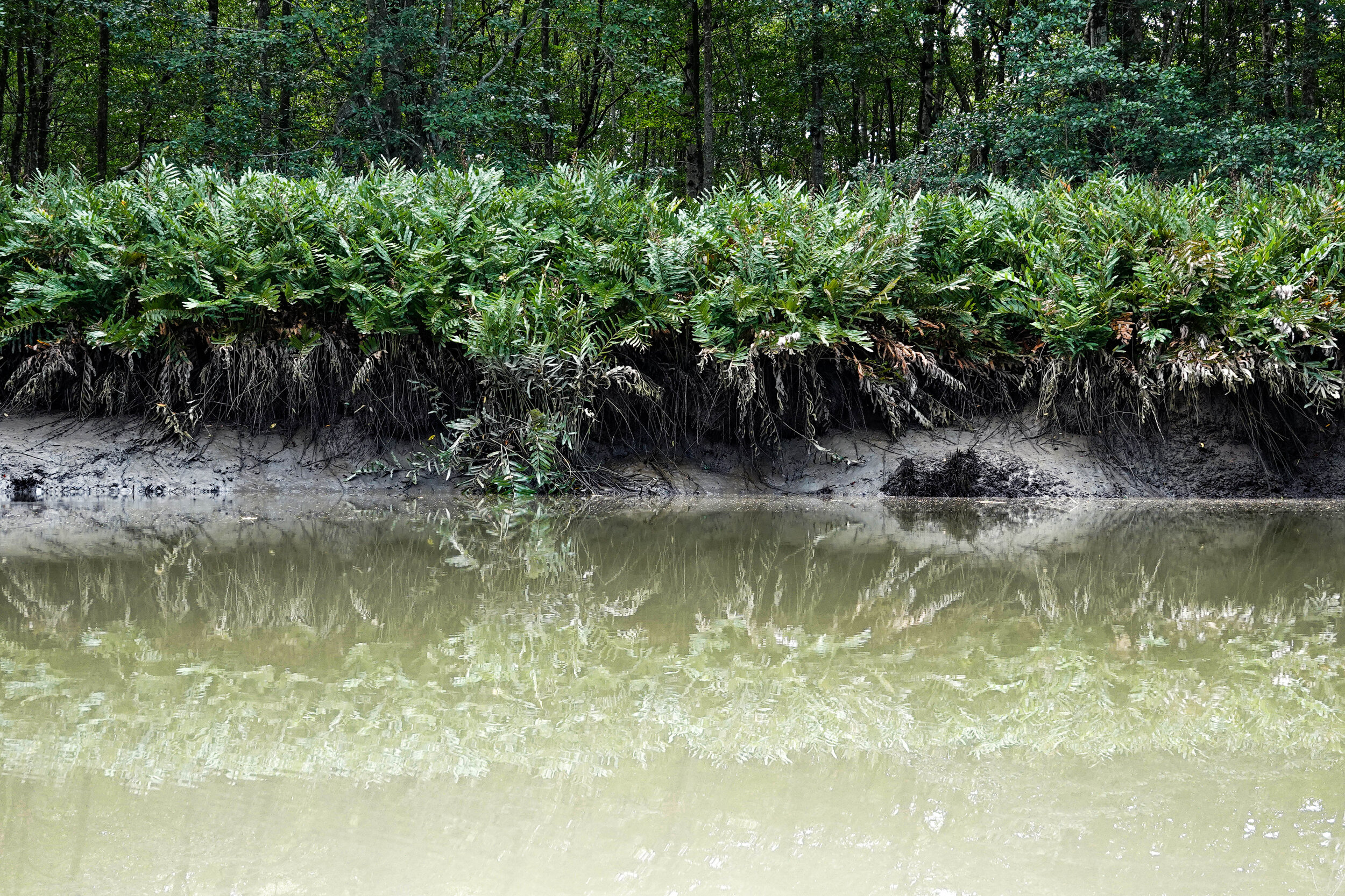
In such conditions, you can also find a type of fern—Acrostichum aureum.
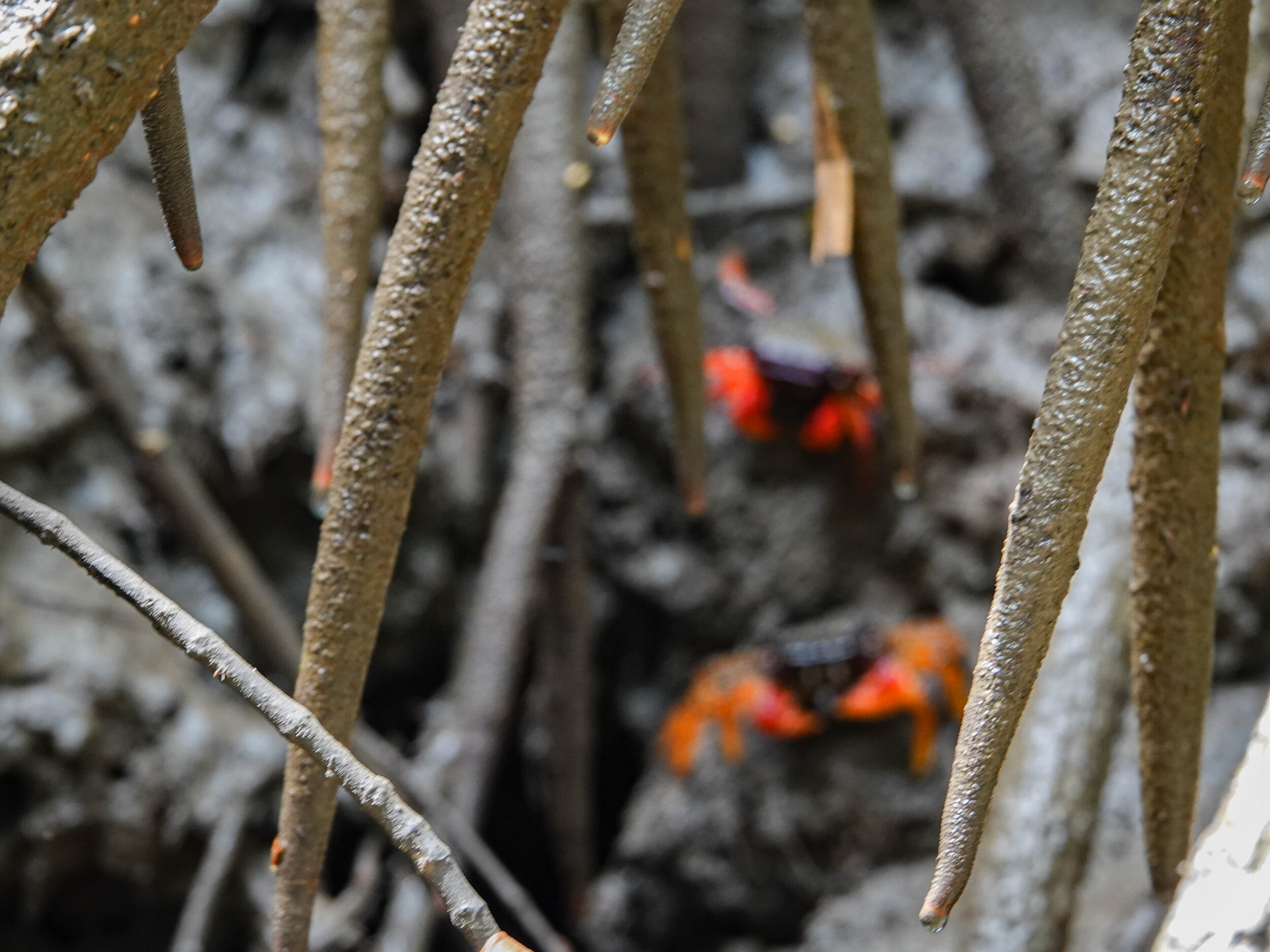
What’s that bright orange thing?
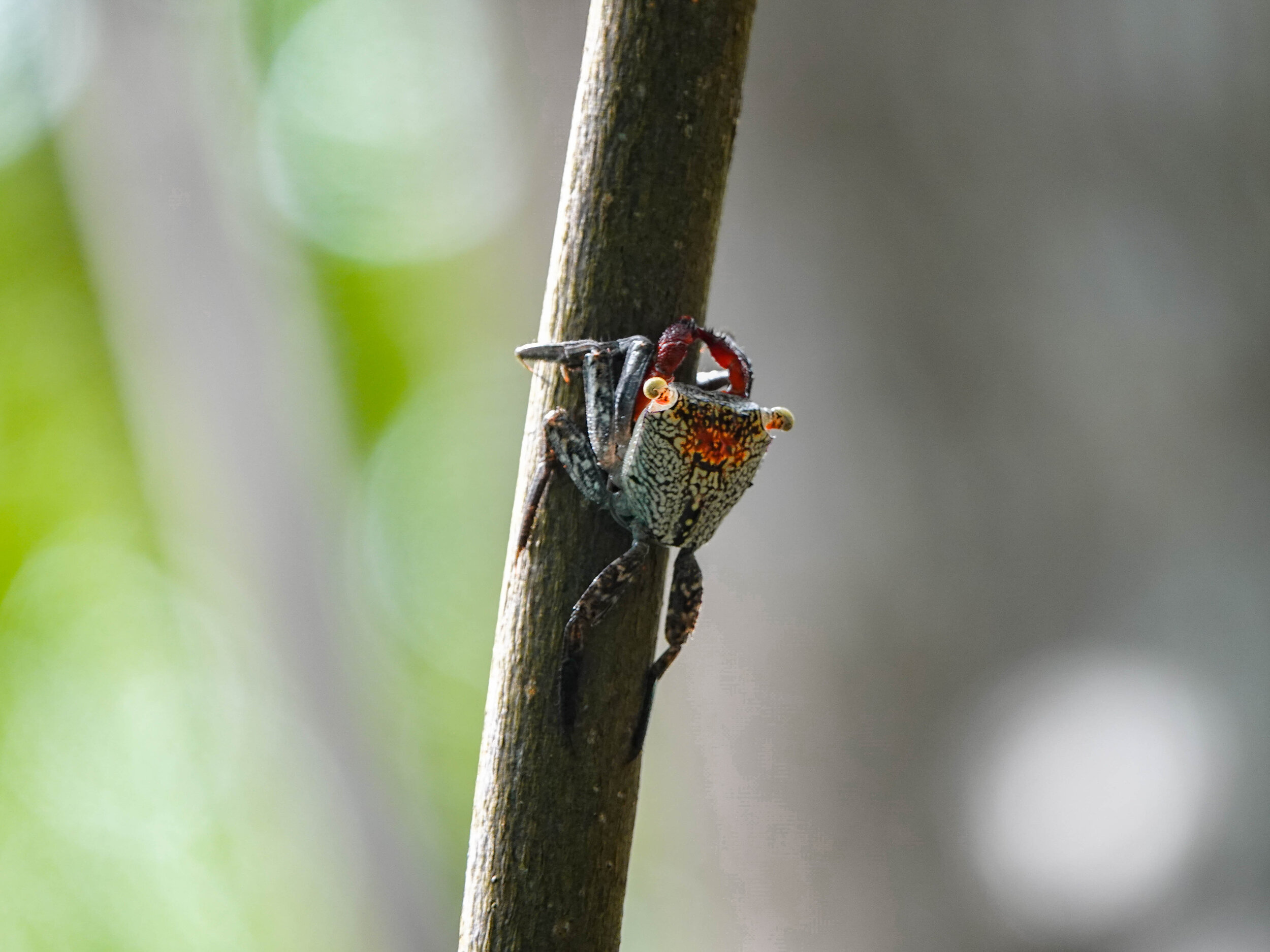
Mangrove crabs!
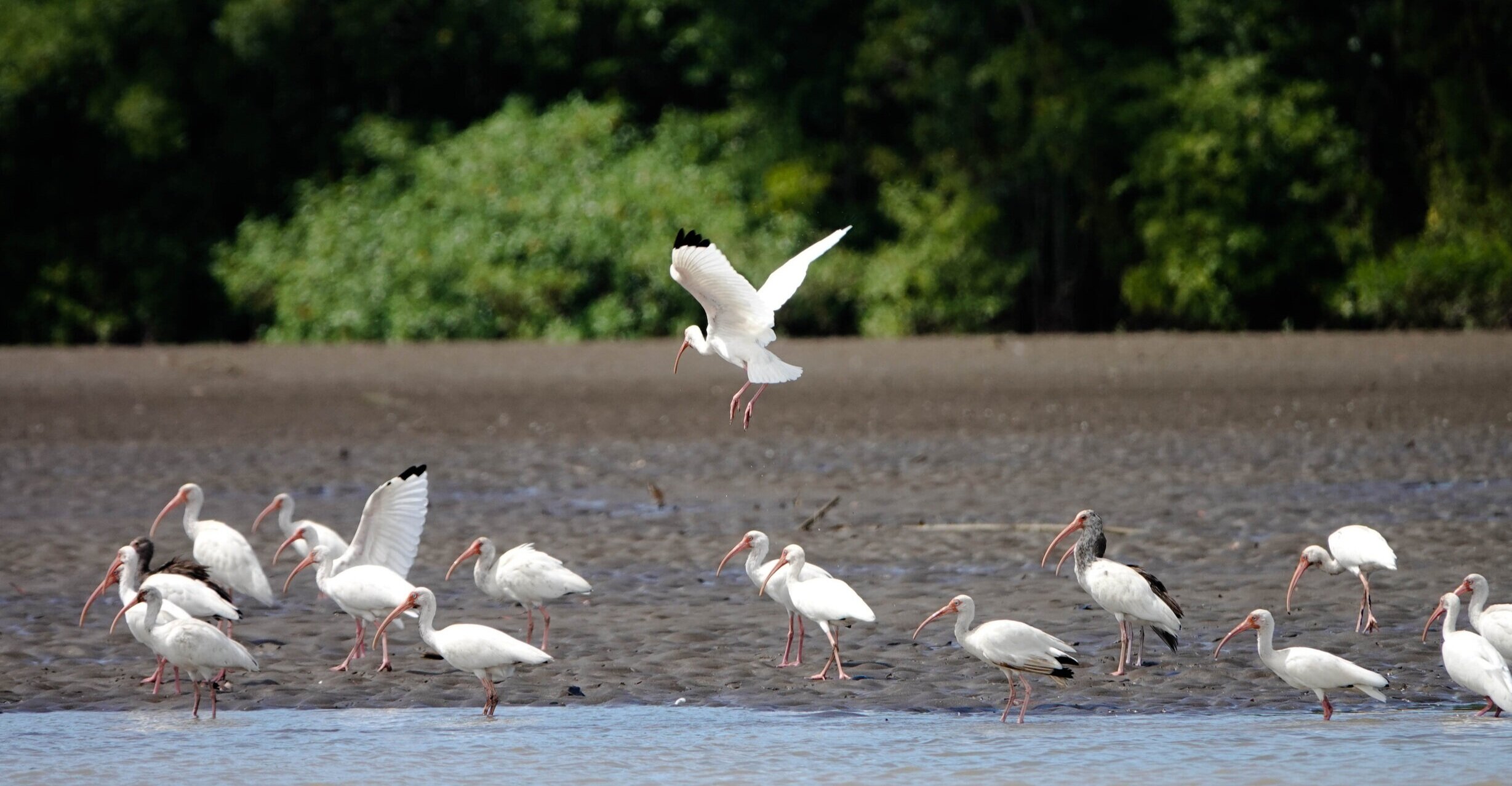
Ibis
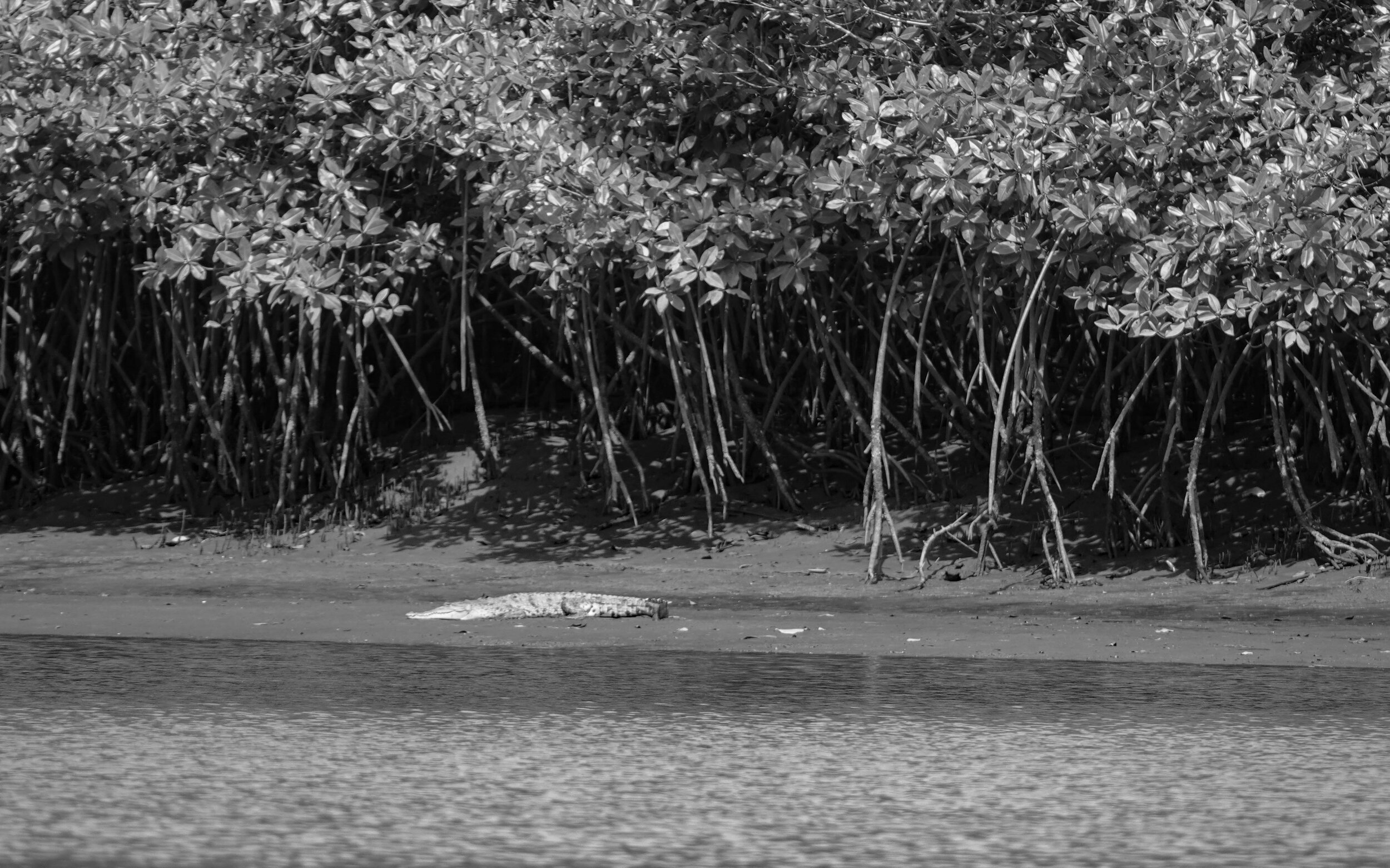
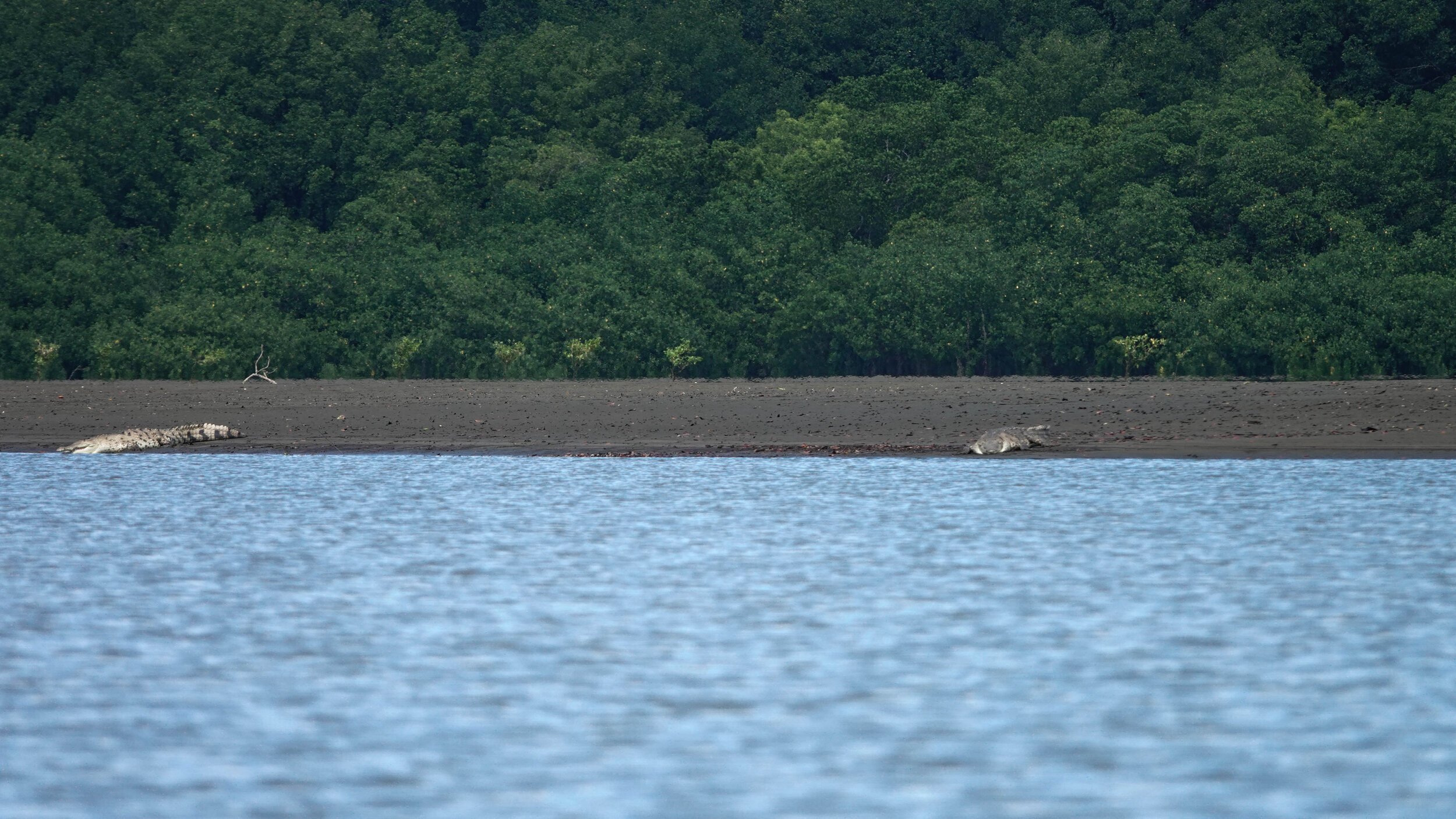
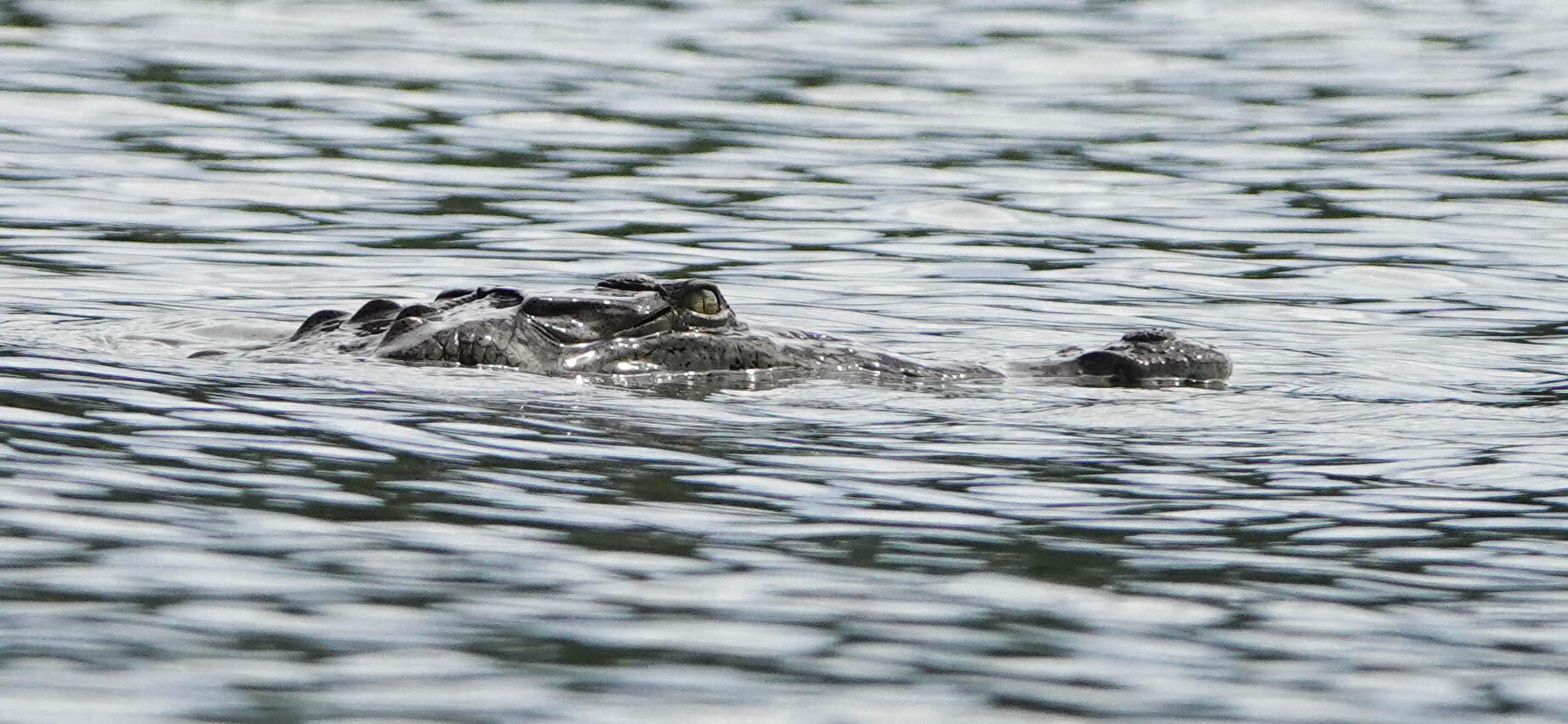
A log, a large branch… or something else?
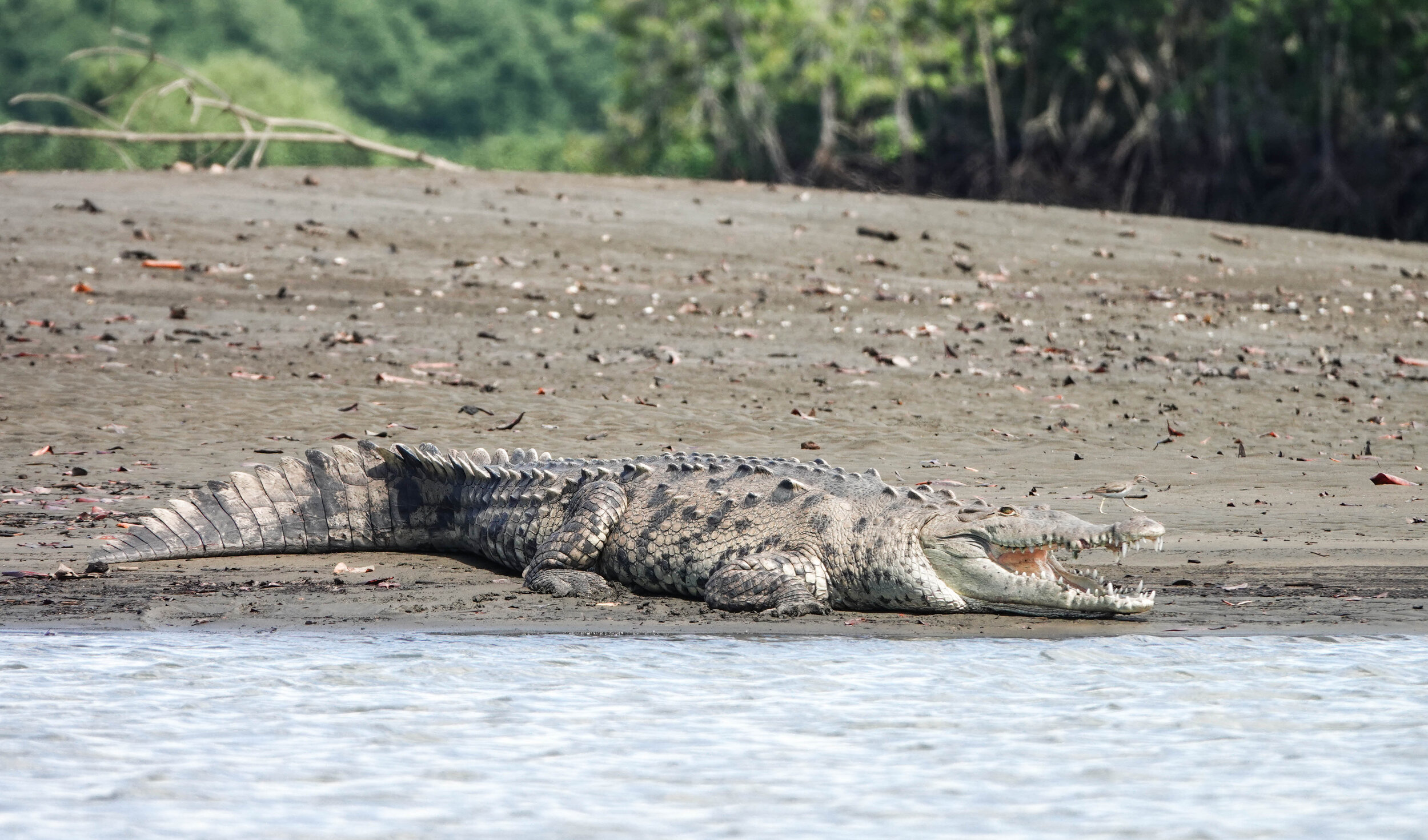
American crocodiles!
Seeing them in real life, you truly feel their ancient evolutionary history.
From a distance, they are almost invisible in the water… until you suddenly spot one just a few meters away.
Our last destination of the day was a Pacific beach, where we hoped to fulfill one final wish—finding a sloth, which was rumored to roam the area.
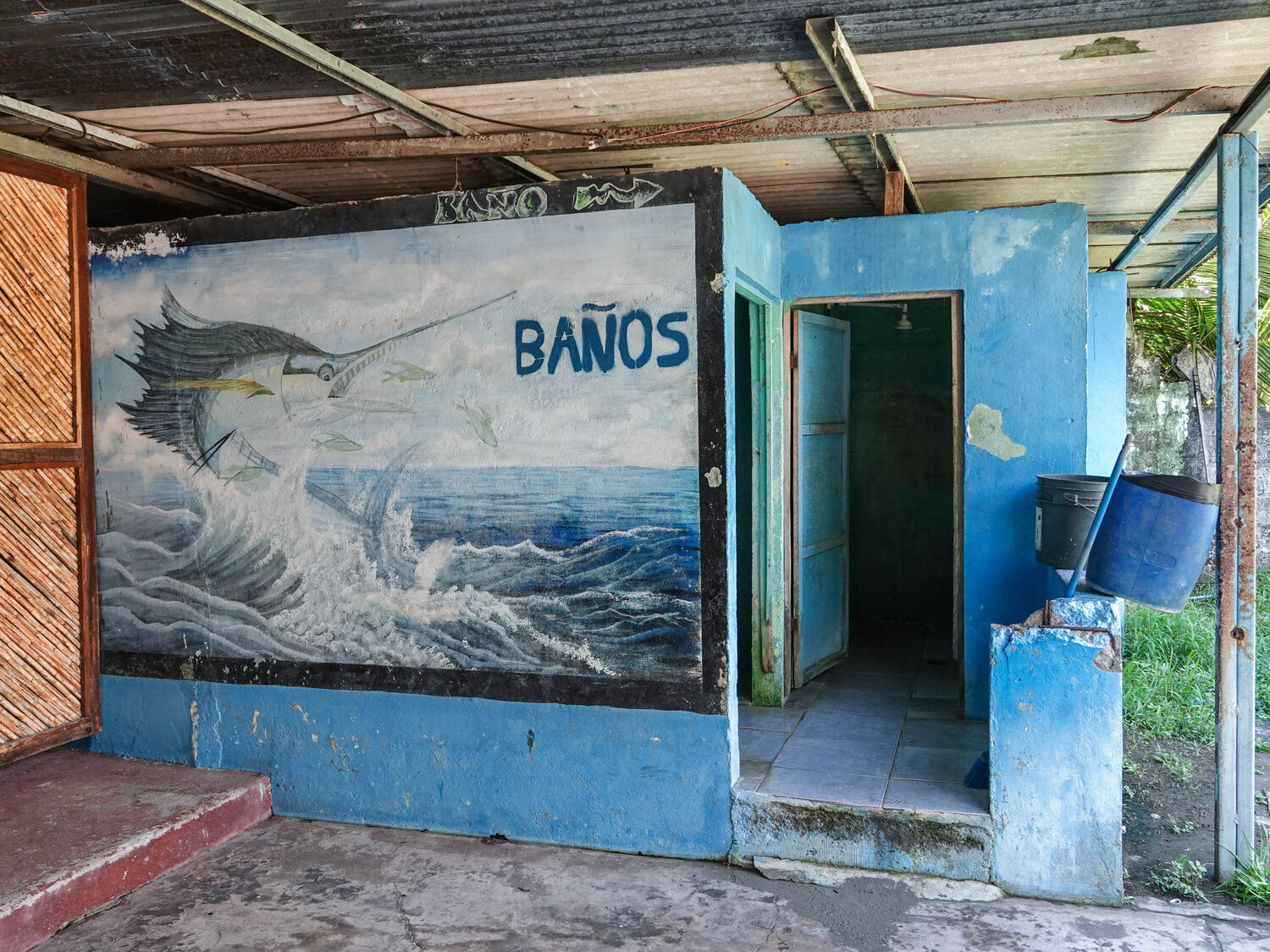
A refreshing “sweet” shower.
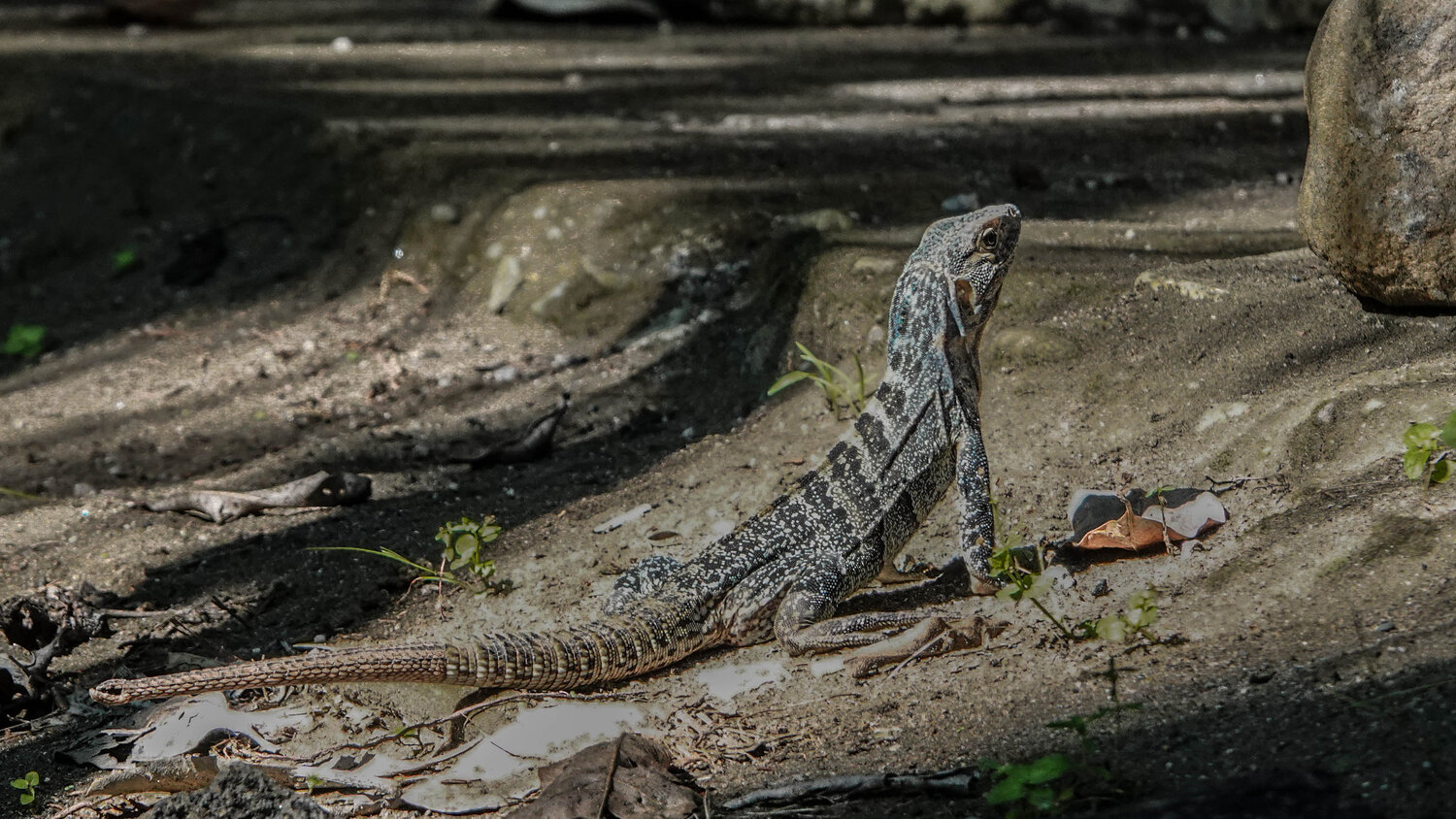
Black iguana—there were plenty of them.
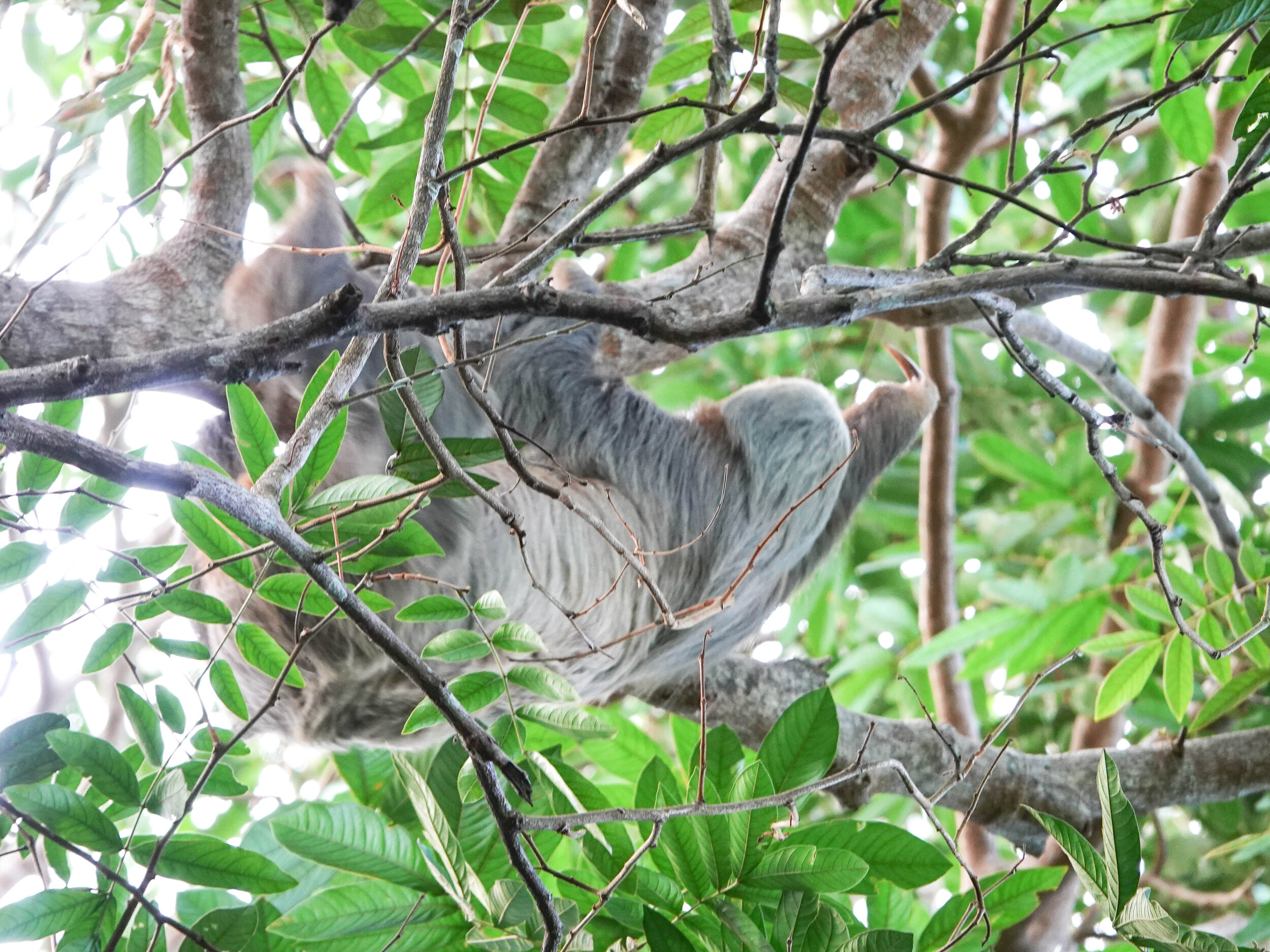
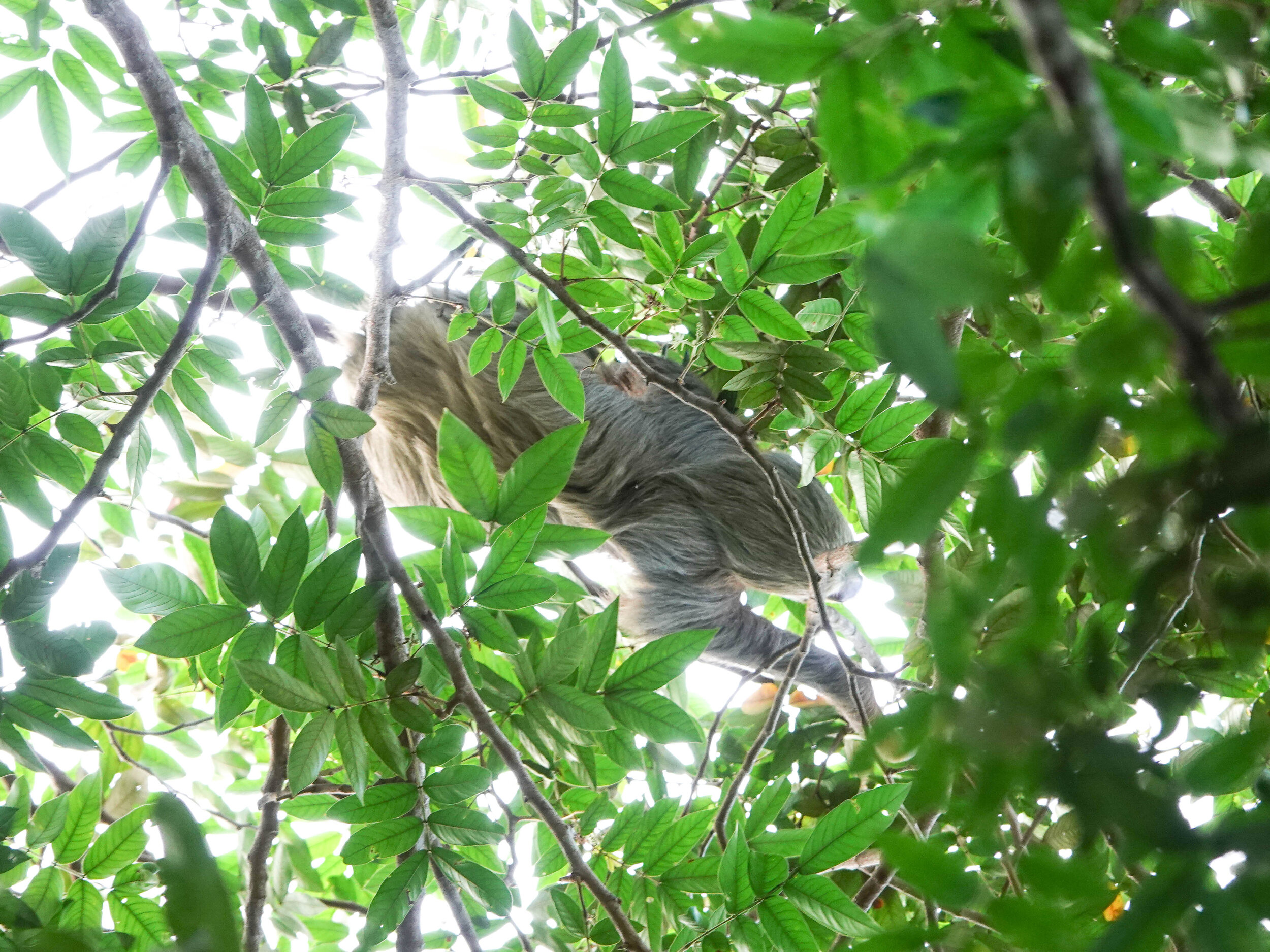
After inspecting almost every tree near the shore, we finally found a three-toed sloth!
This one was quite the athlete—while we watched, it moved at the speed of a slow monkey, which is probably a record for a sloth.
Of course, after five minutes, it settled on a branch and remained there—a fuzzy lump—until we left.
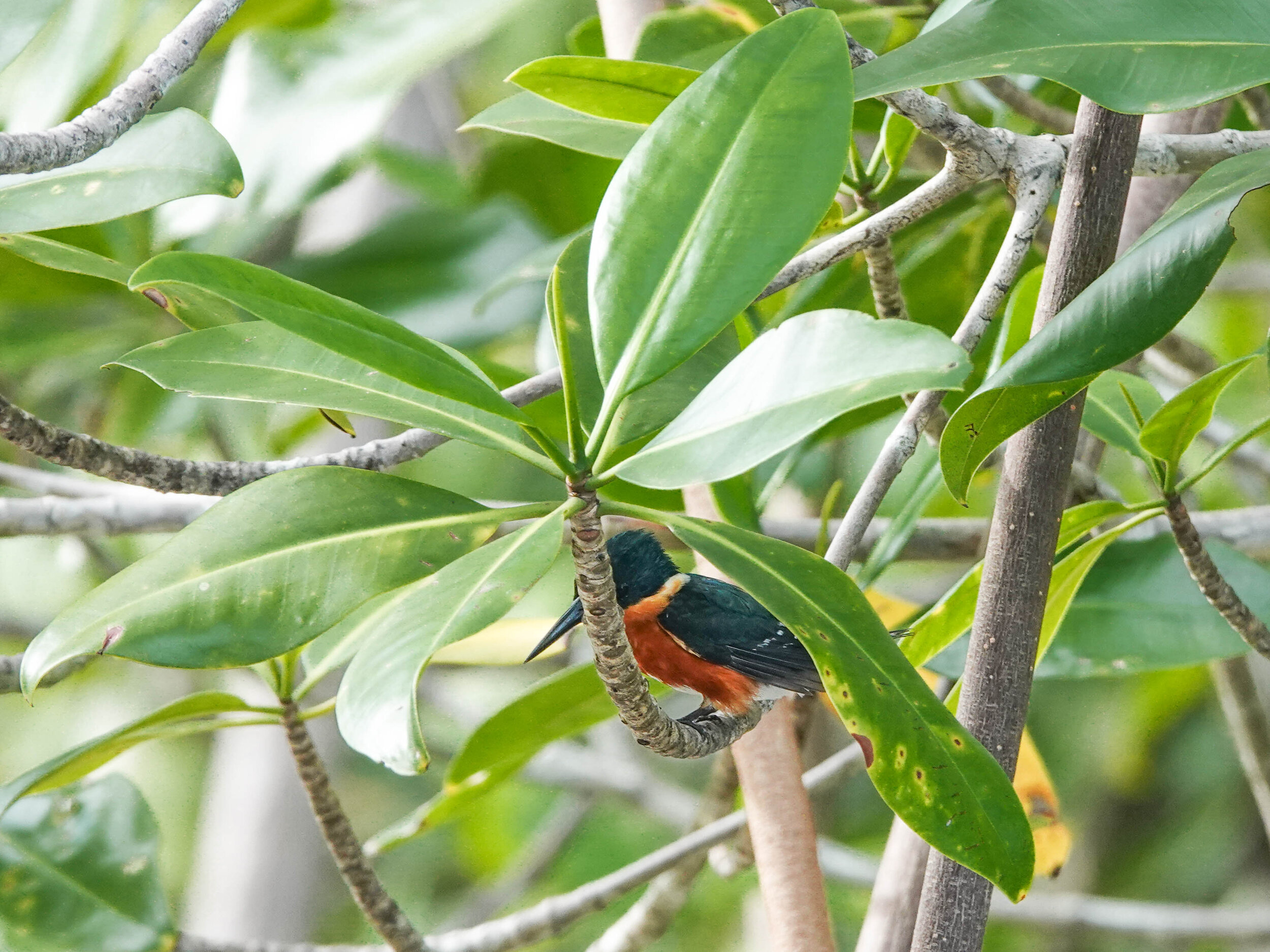
A kingfisher.
With some daylight left, we used the time to observe the surrounding trees and search for monkeys.
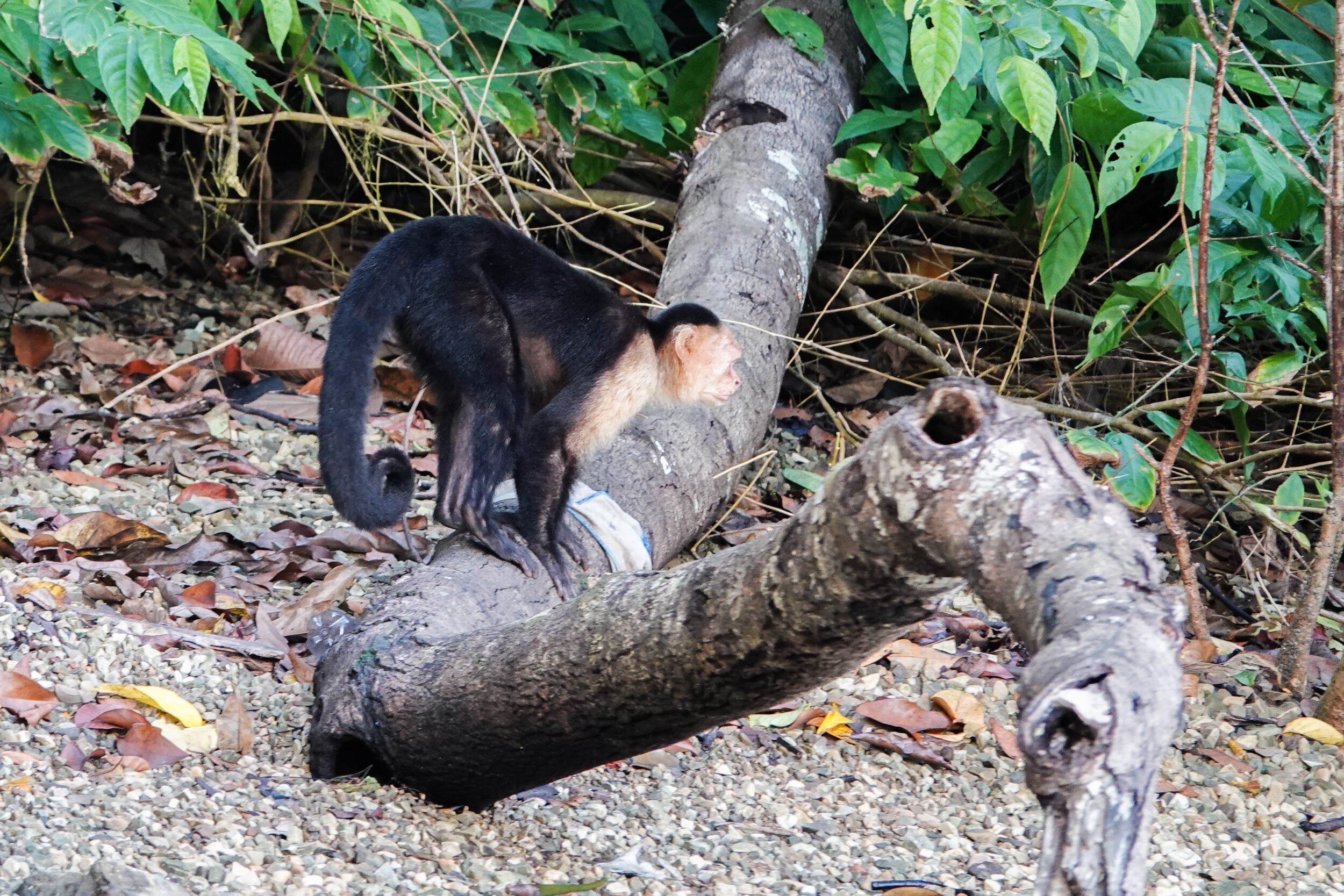
We spotted capuchins…
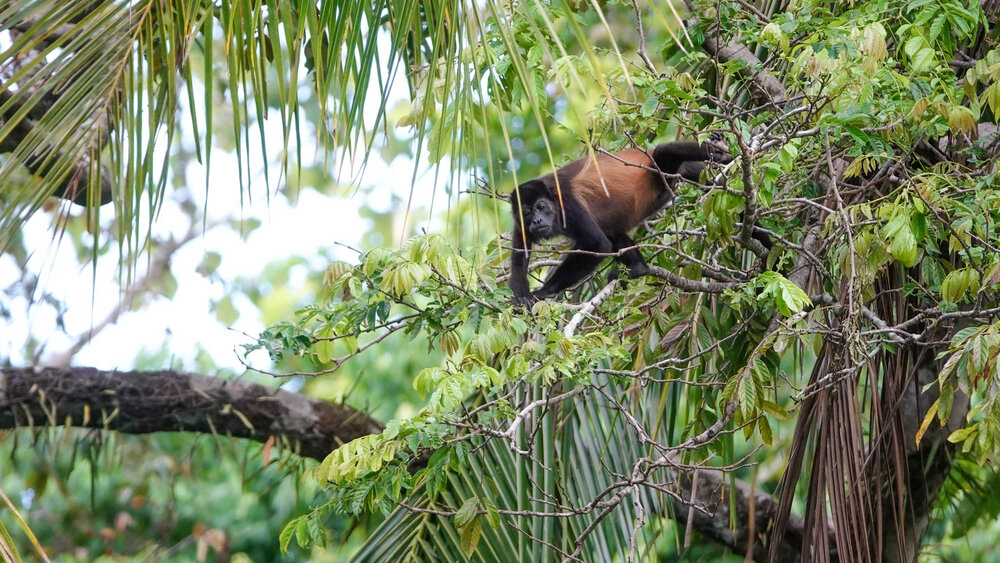
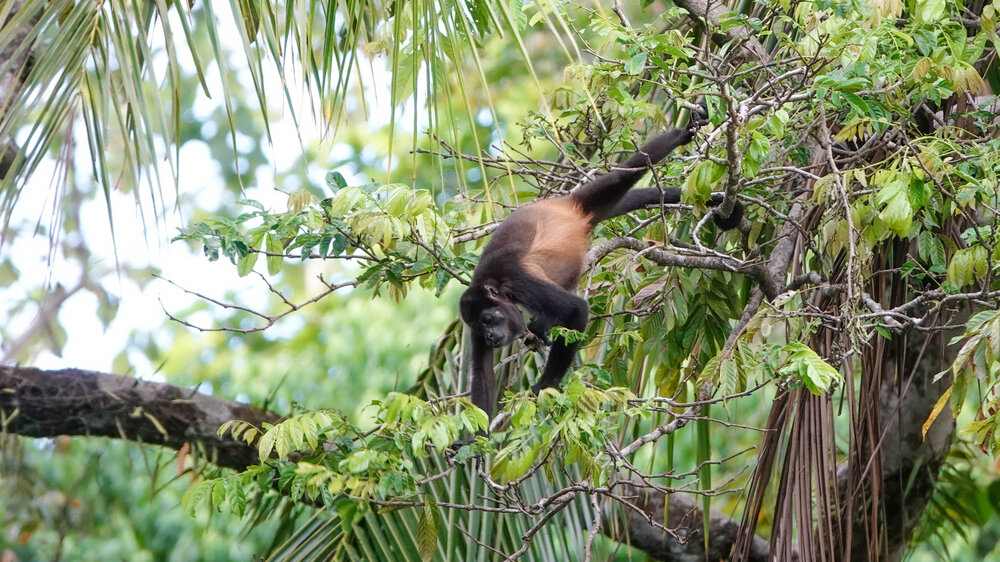
…and howler monkeys—their calls are only surpassed in volume by humpback whales.
THE SECOND DAY
The day began with some birdwatching.
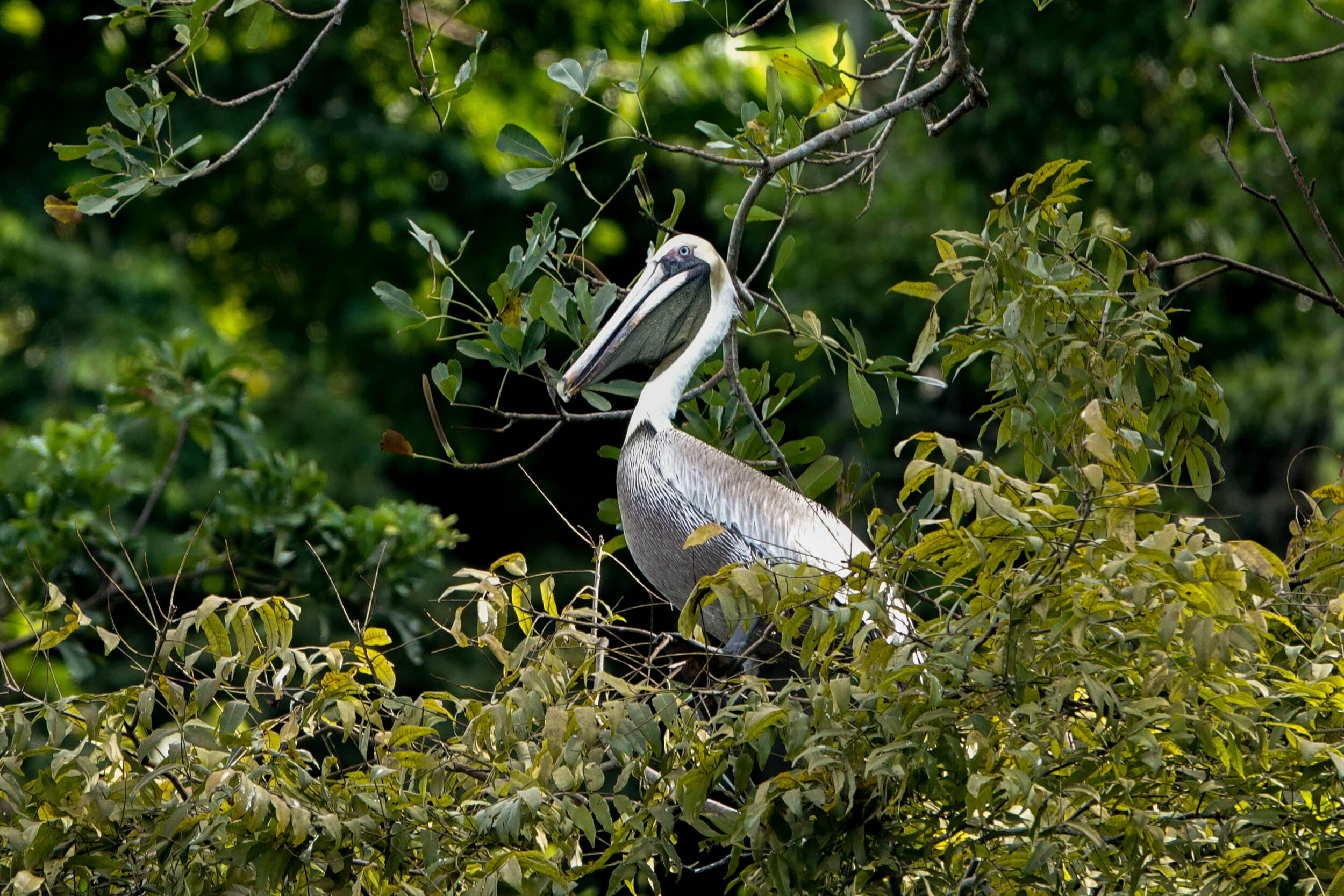
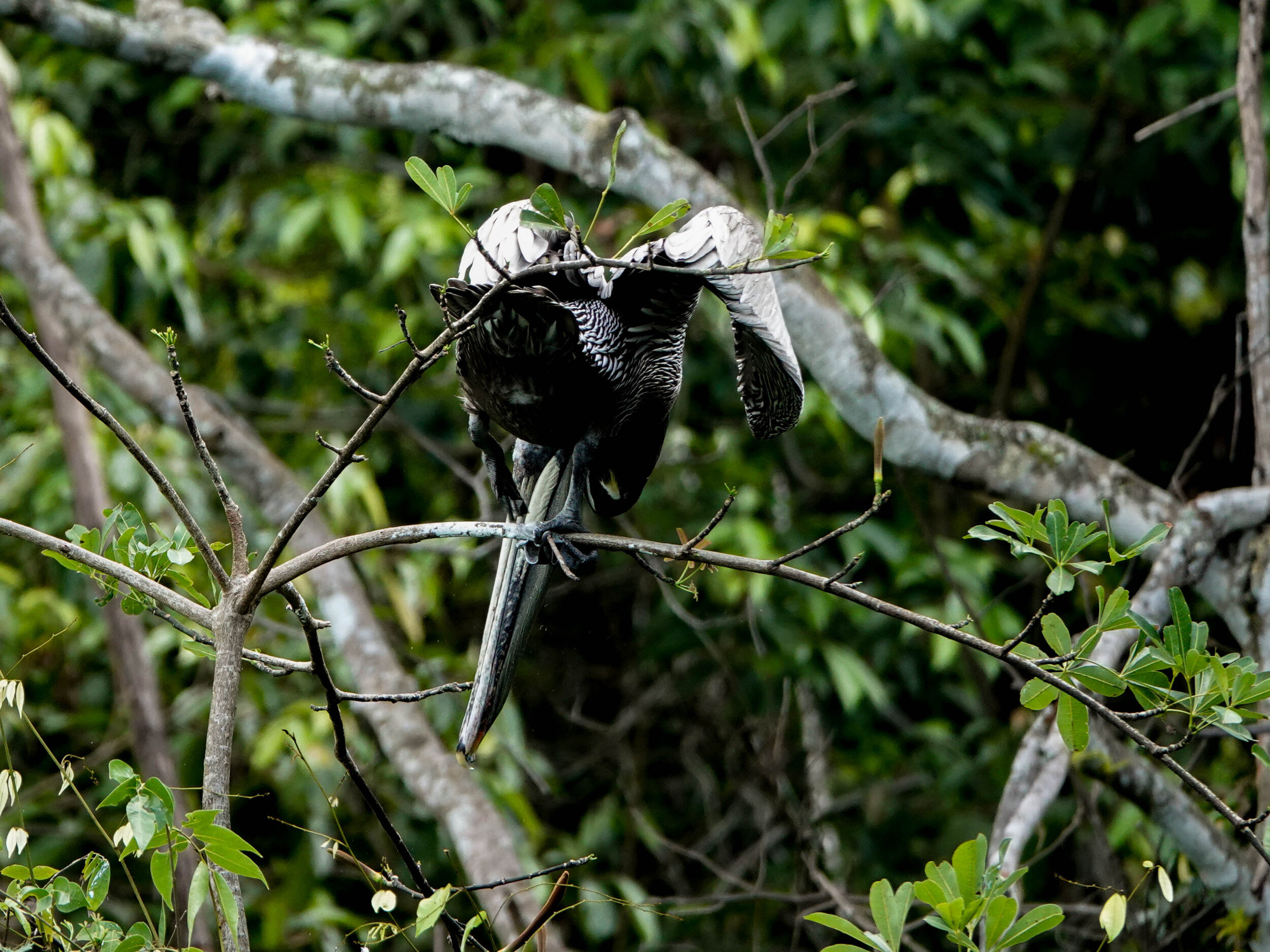
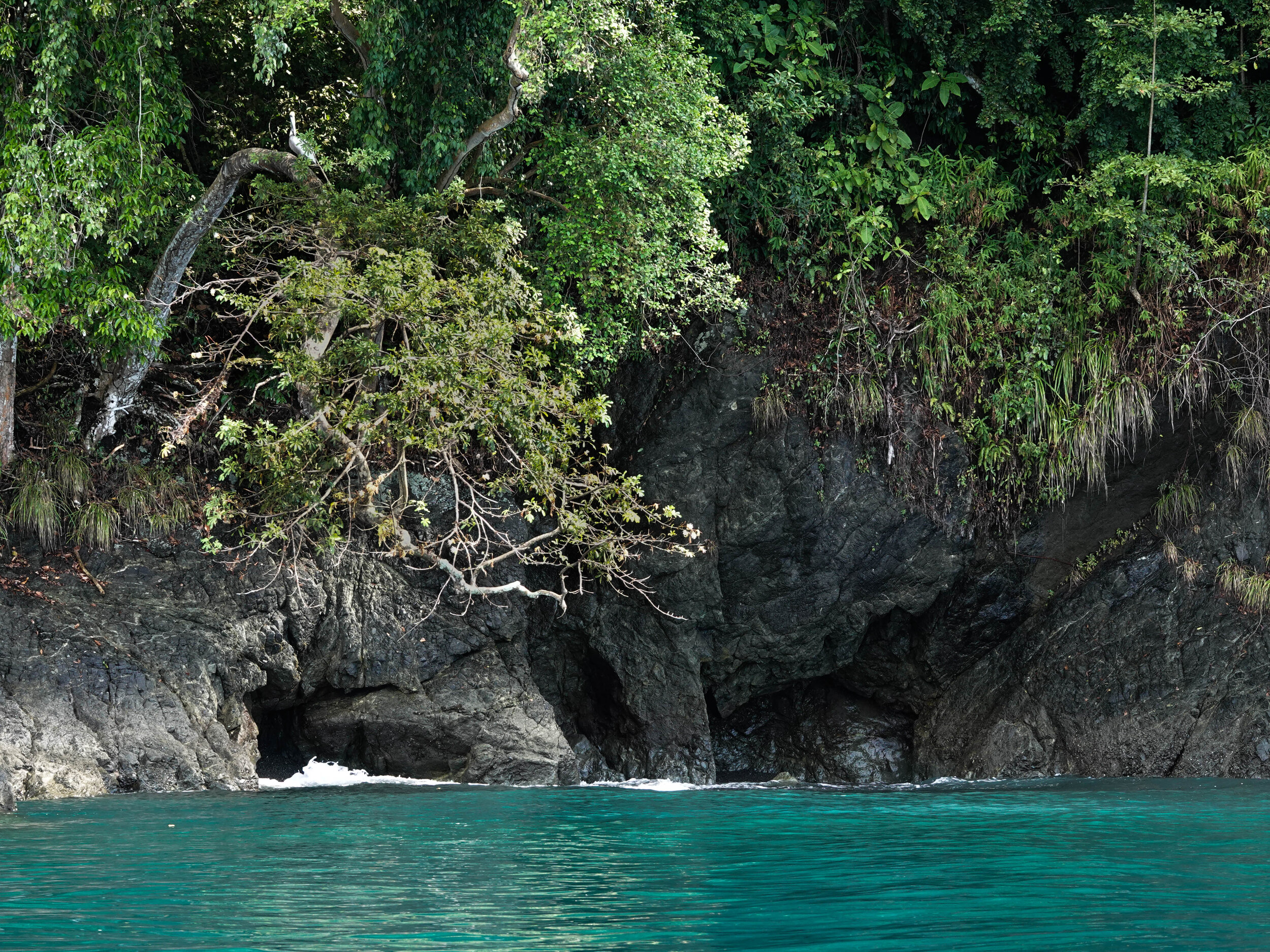
I never imagined seeing a pelican perched on a tree branch at the top of the canopy.
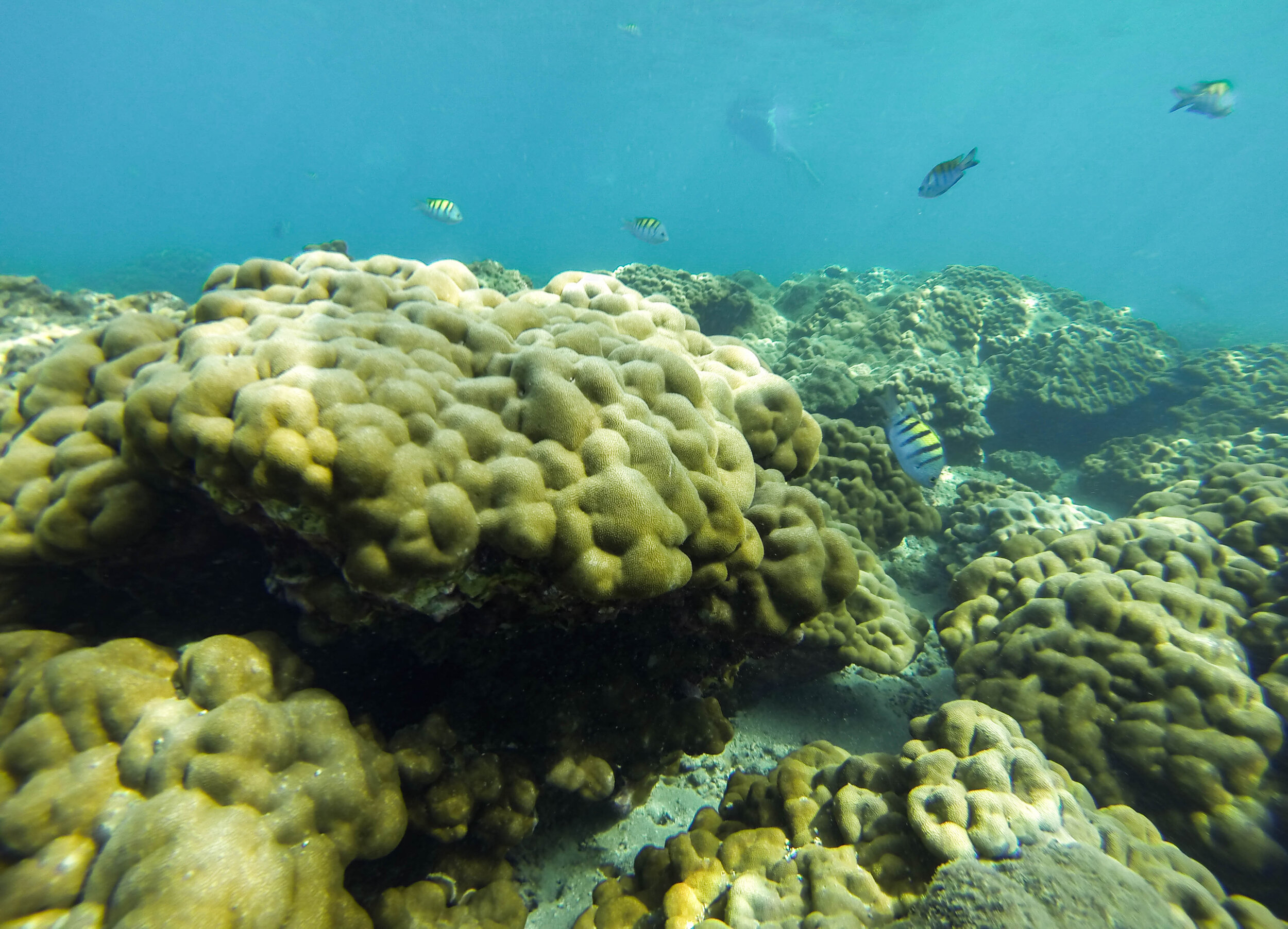
Our next stop was a small coral reef, where we observed the vibrant underwater life.
Many of the corals were dead; those that remained were still home to numerous marine organisms.
One of the culprits behind coral death is oxybenzone, an ingredient found in many sunscreens.
The coastal rock formations here are mainly limestone, shaped by the sea over time into caves and ledges, perfect nesting spots for seabirds.
I wanted to see dolphins again.
And I did—this time, they swam so close to the boat that some people could touch them.
Moments like these remind me why I’ve always loved the ocean.
We slowly made our way to the Esquinas River, where we drifted along in search of Costa Rica’s largest non-venomous snake—the common boa constrictor.
We weren’t very successful in finding one, but we did spot a raccoon, crabs, lizards, and numerous bird species.
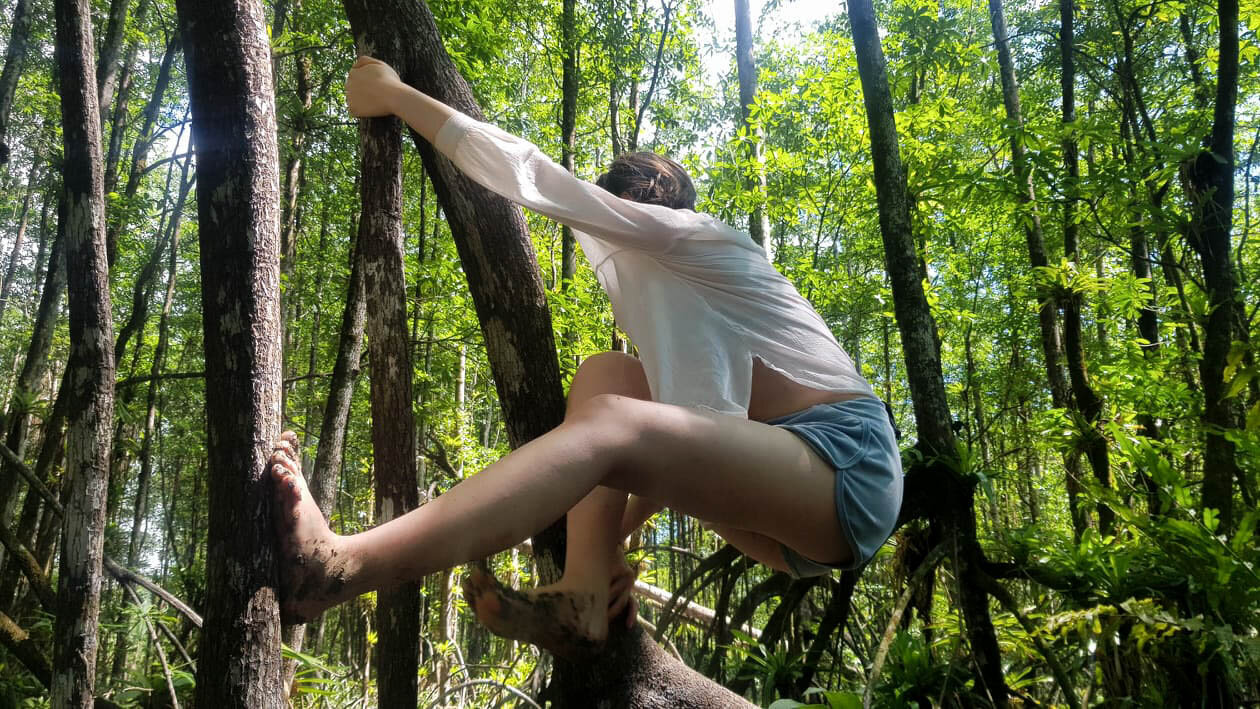
Mangroves accompanied us here as well—and we even climbed their massive roots. Yes, it was muddy.
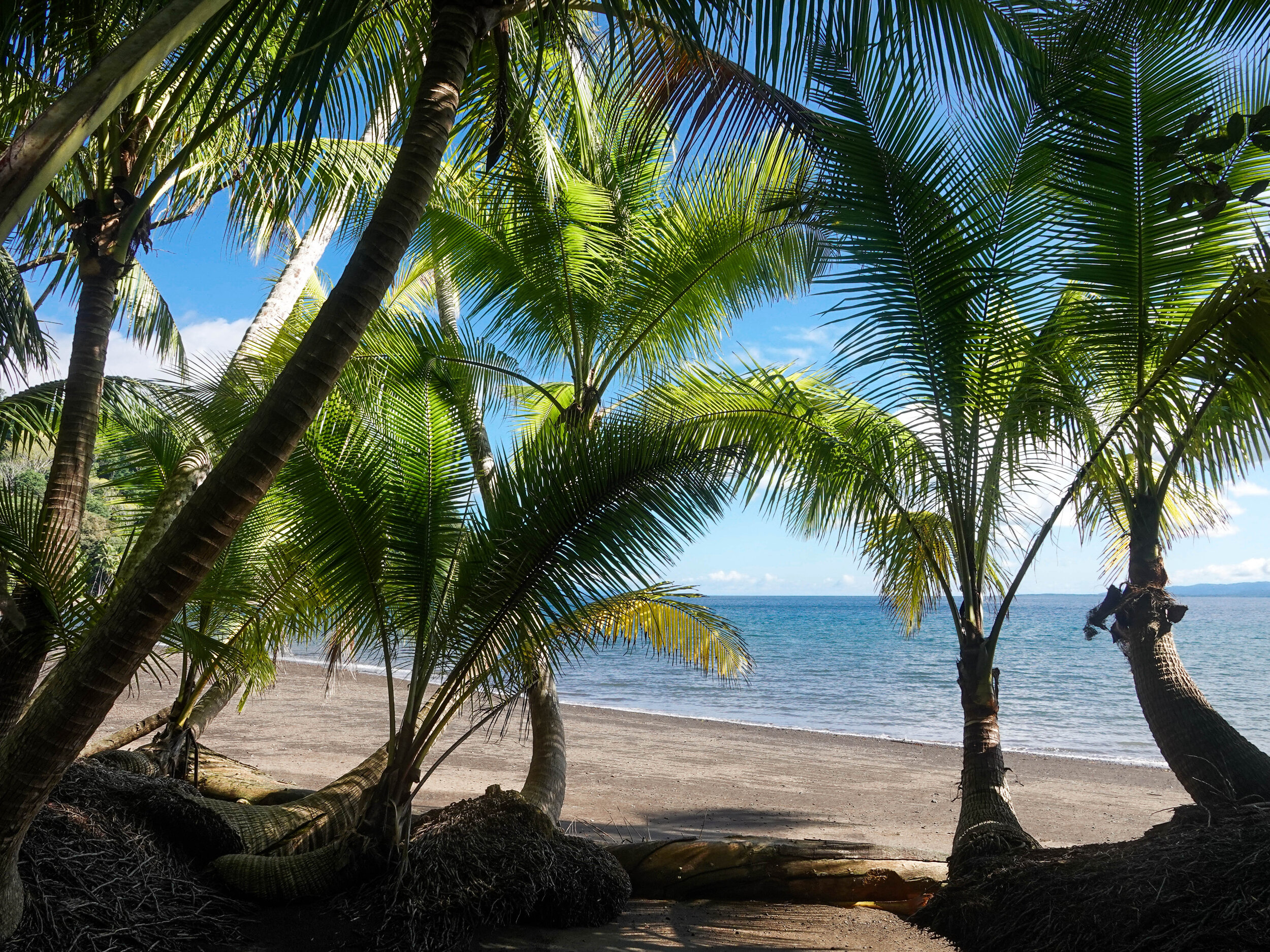
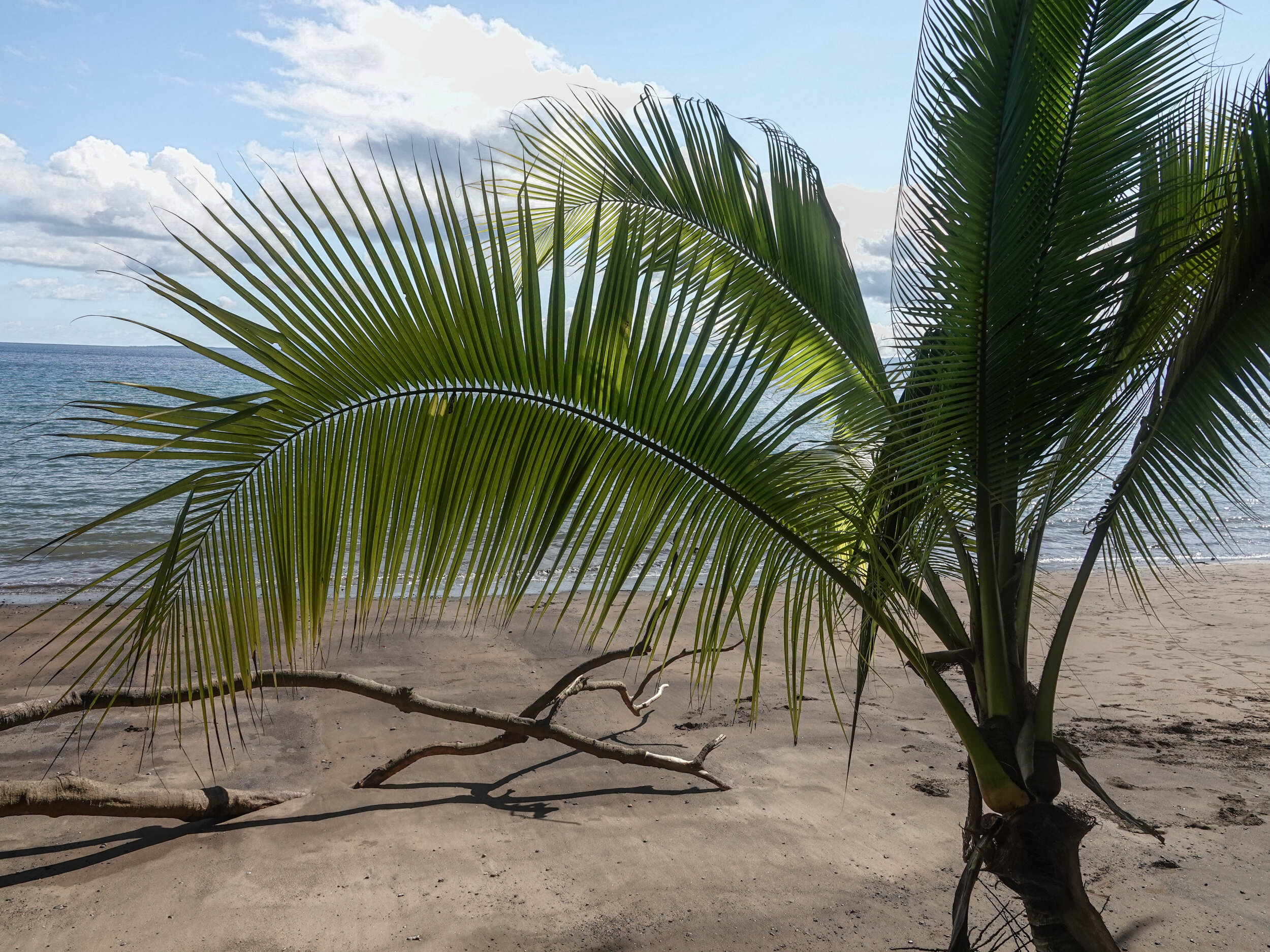
Like the day before, we ended our adventure at a beach.
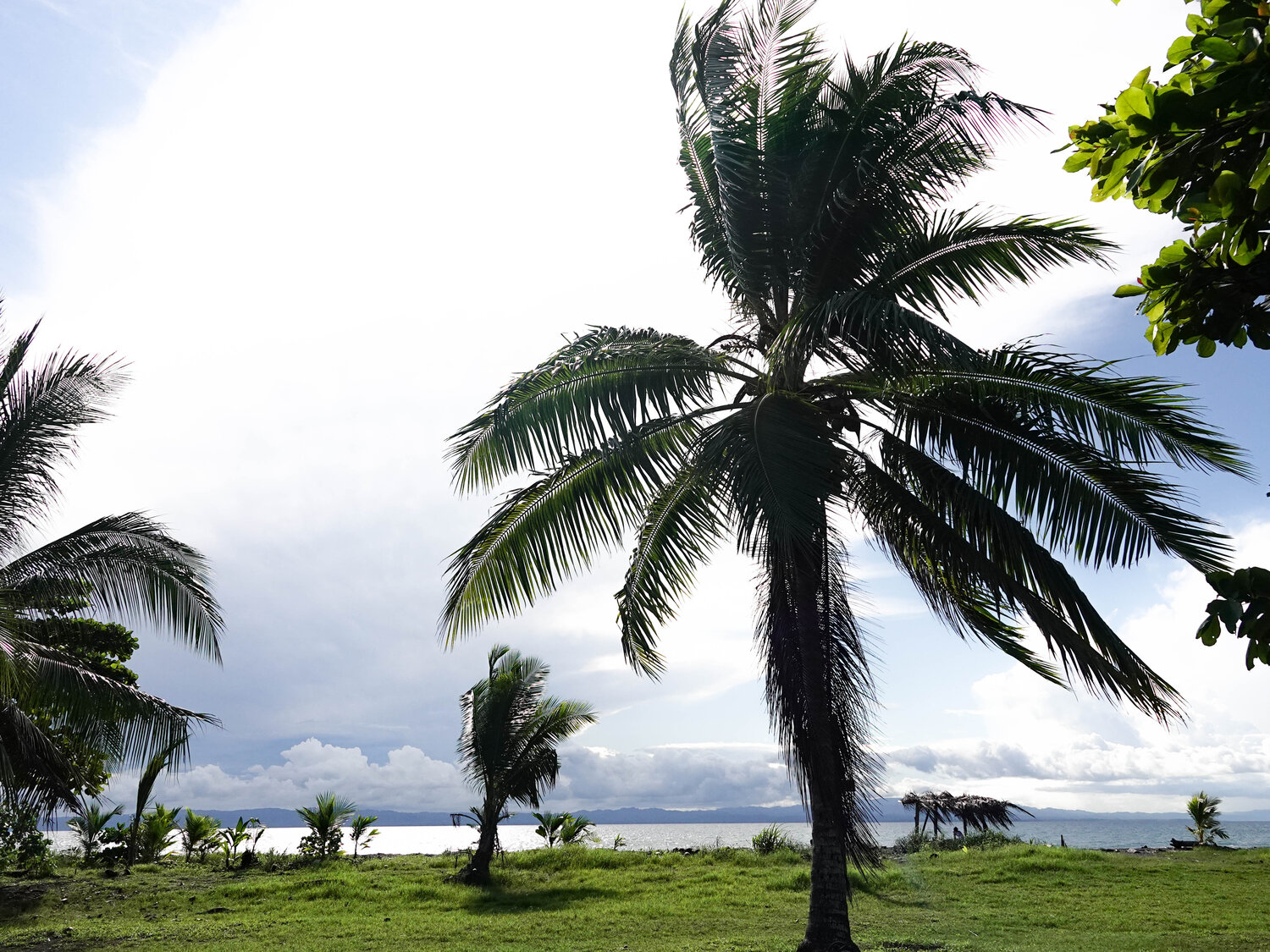
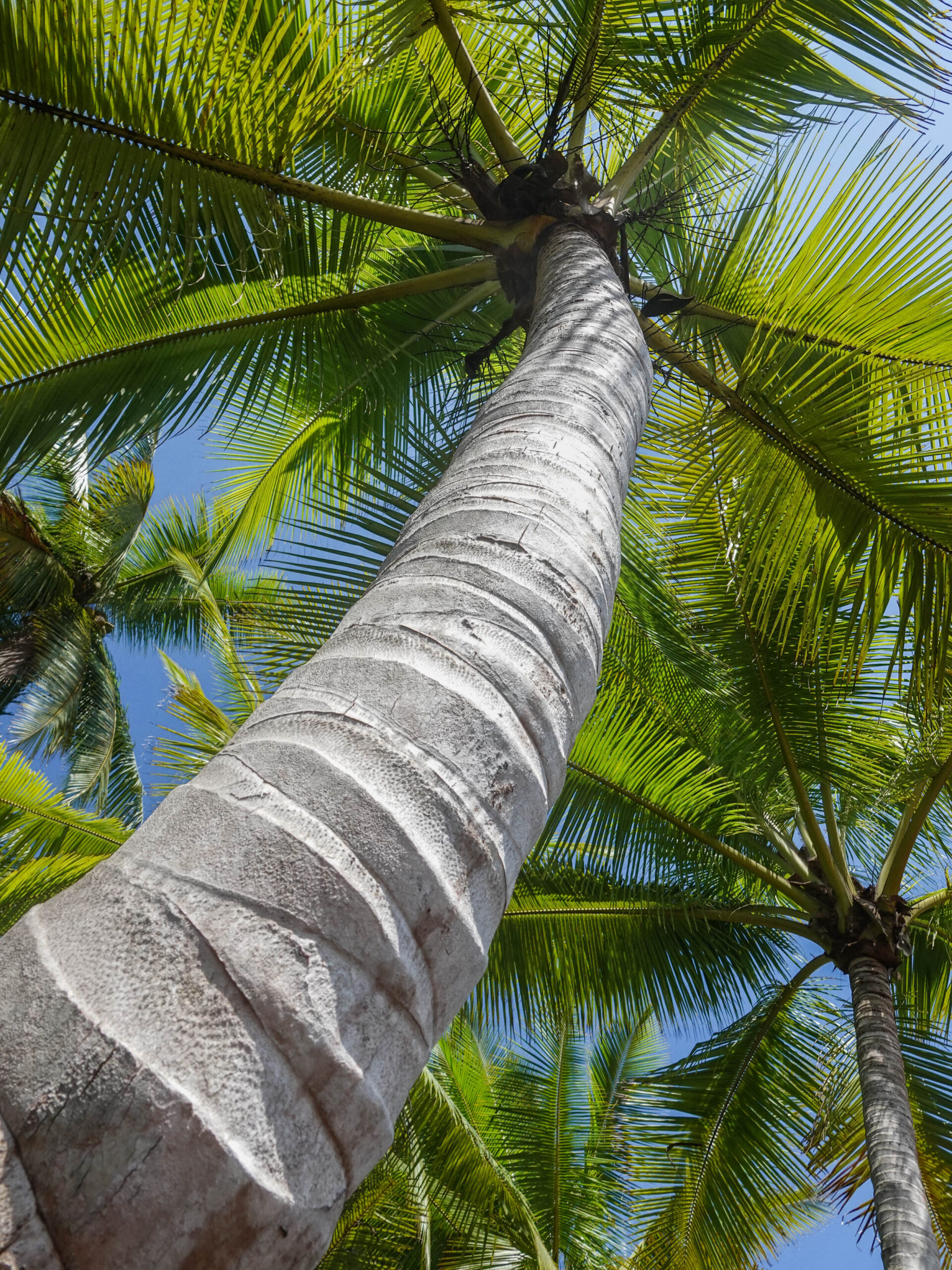
Although they may look like natural umbrellas, they don’t offer much shade.
But they have another great feature—they grow coconuts, which constantly drop onto the sandy ground below.
With a bit of persistence and strength, we managed to crack some open and enjoy the delicious coconut water and flesh.