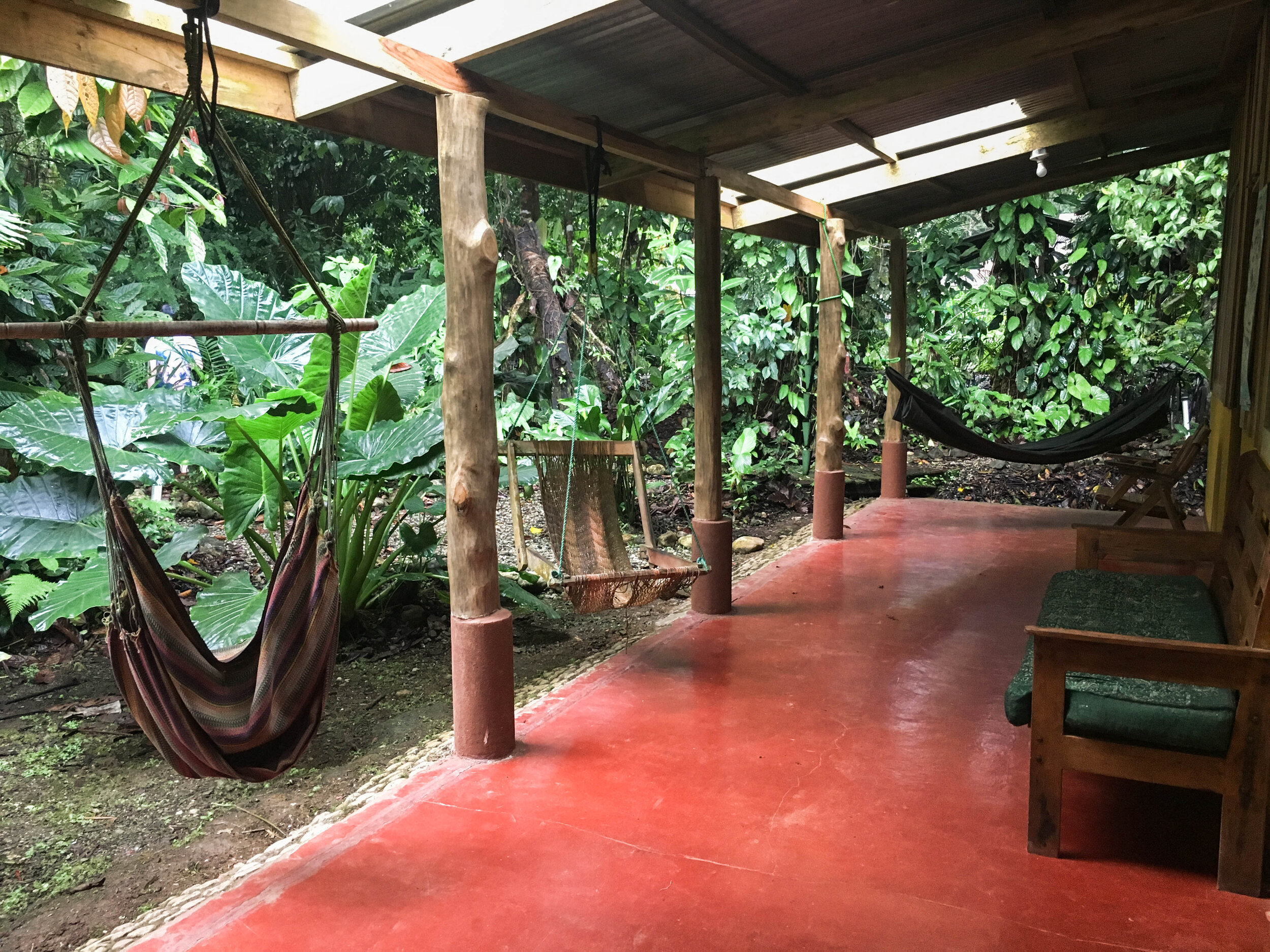
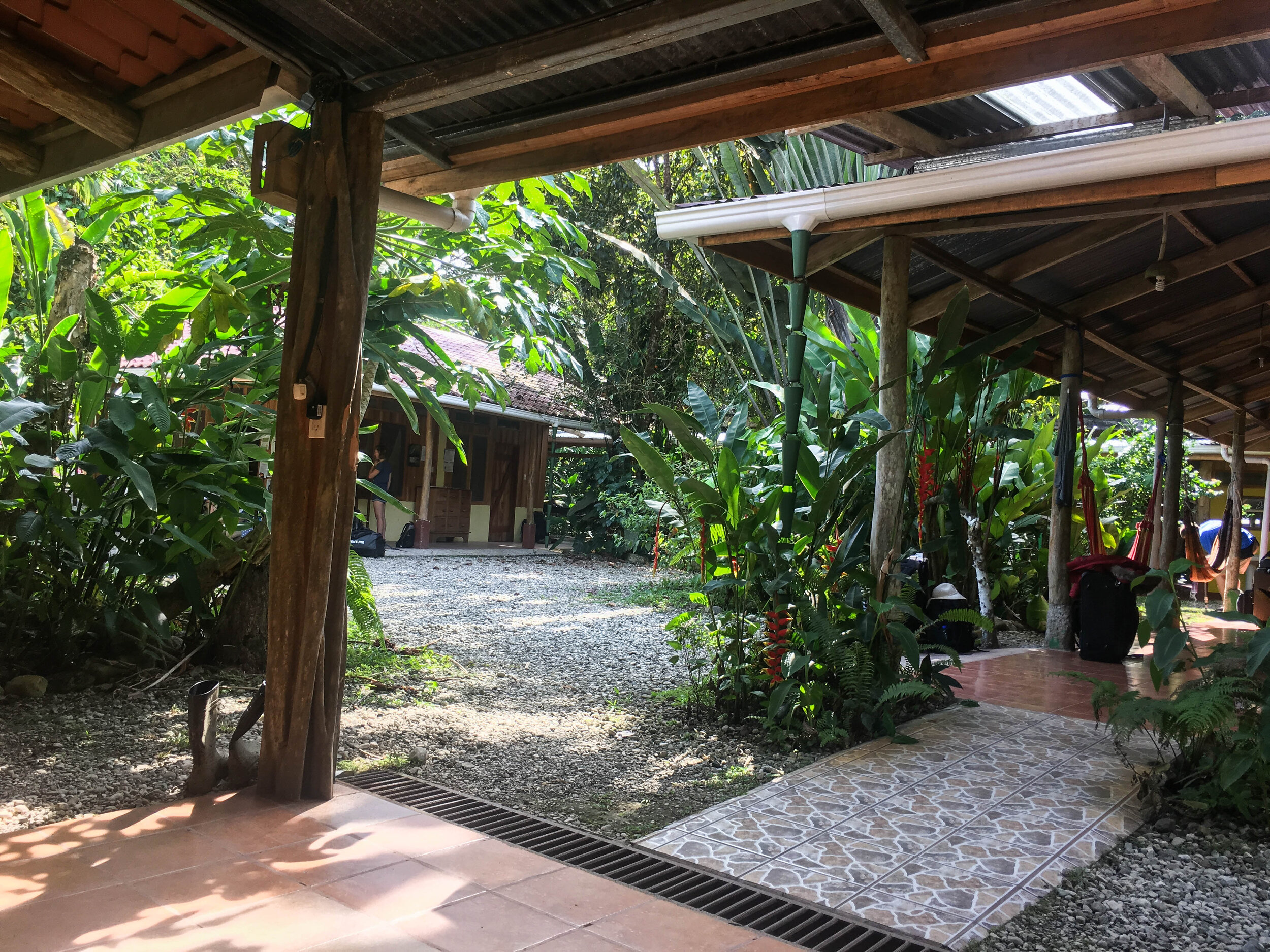
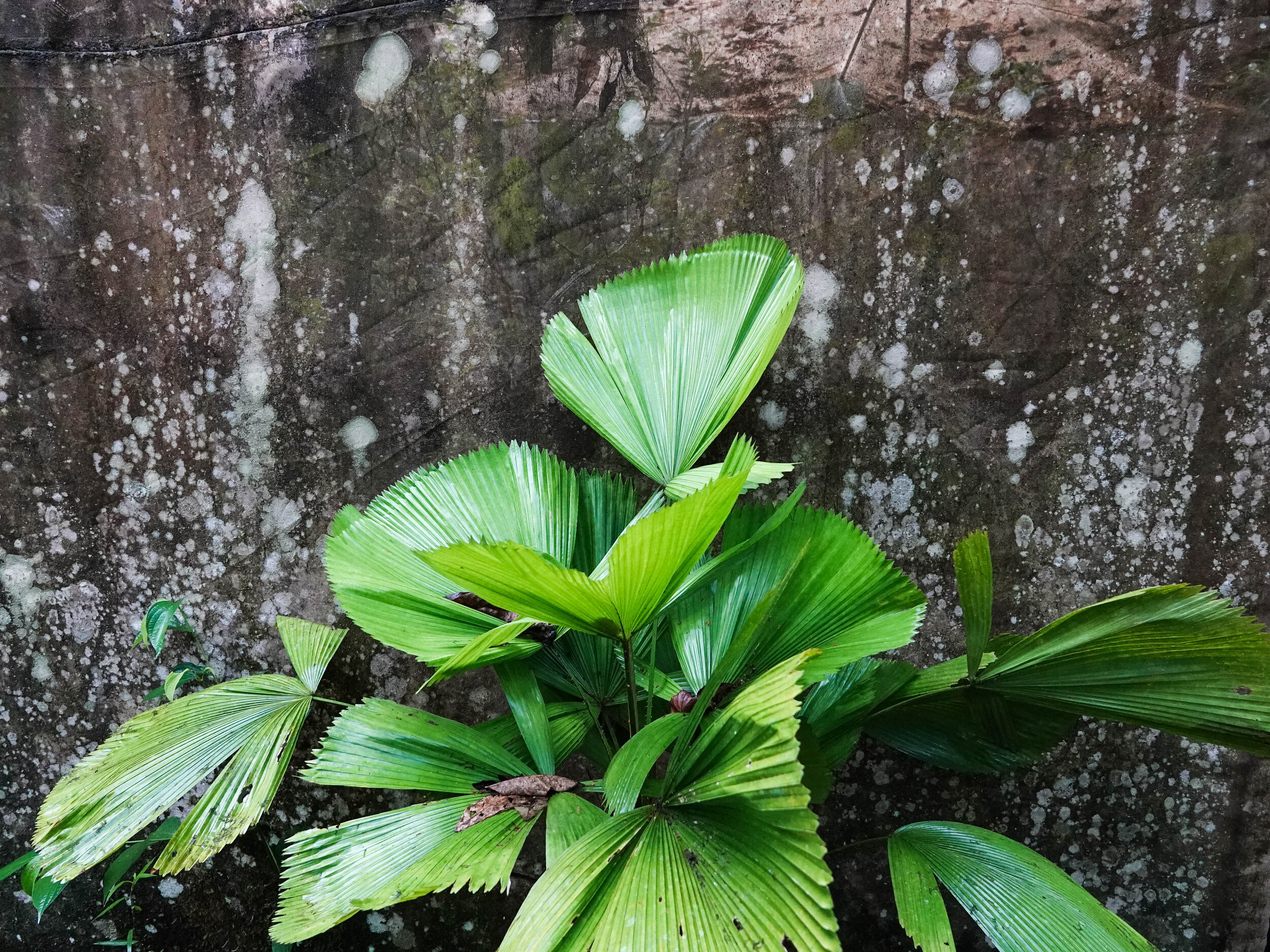
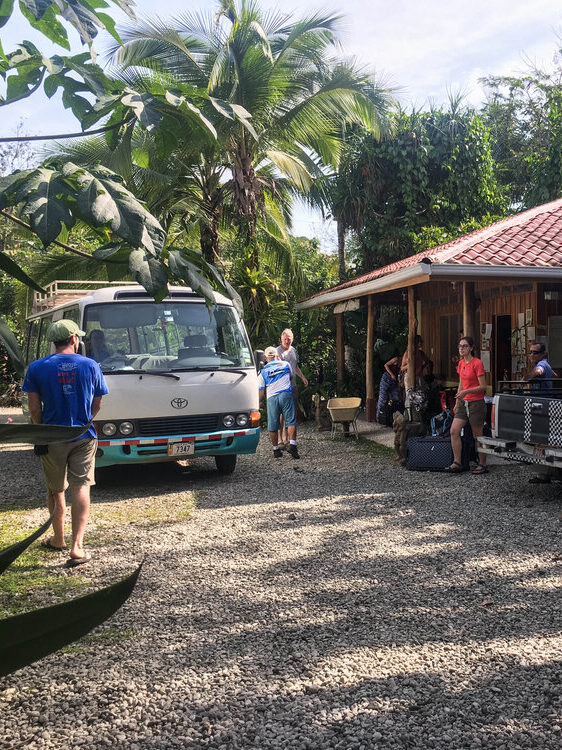
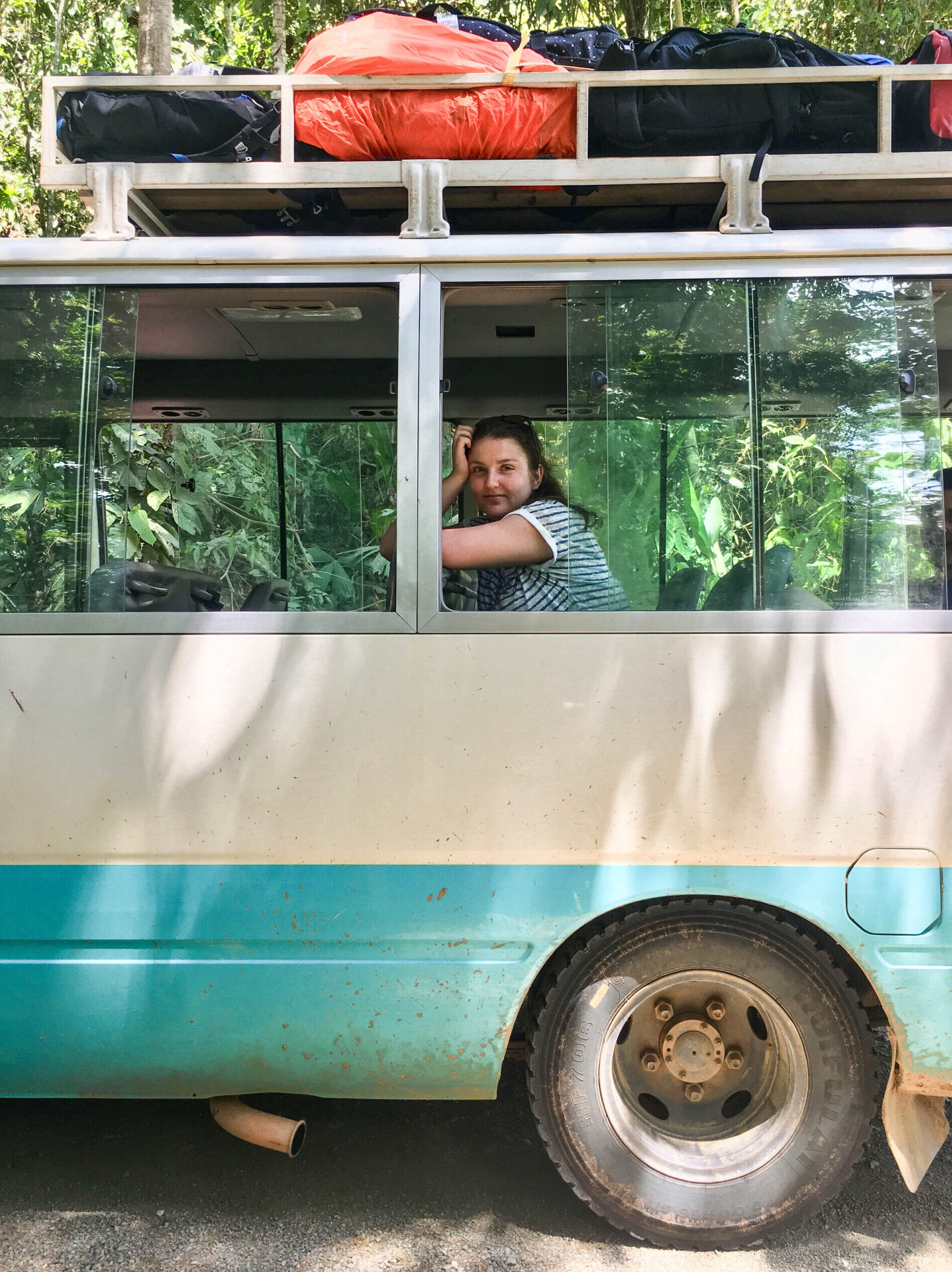
We stayed at the tropical station La Gamba, which is part of the University of Vienna, for ten days—and a lot happened during that time! I’ve already shared some of it with you, but here’s the main part. 😉
On the first day, we took a walk through a large garden filled with all sorts of plants—it’s incredible what nature hides and how many highly useful species we’ve known about for centuries.
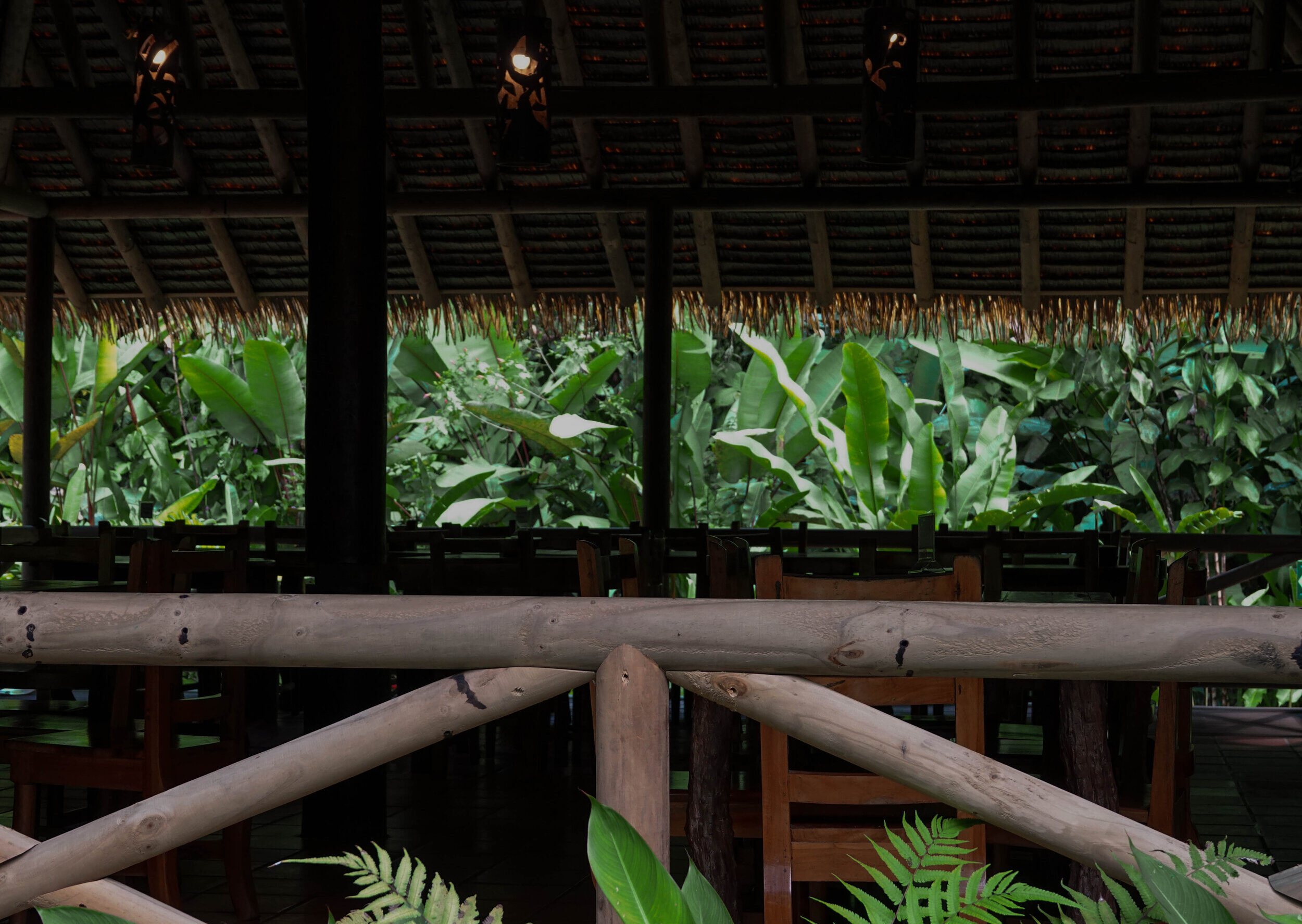
Behind the greenery was a small greenhouse. There are no windows here, as they only make life more difficult. Instead, they use mosquito nets stretched over wall openings. Without windows, the airflow is much better, acting as a natural air conditioning system.
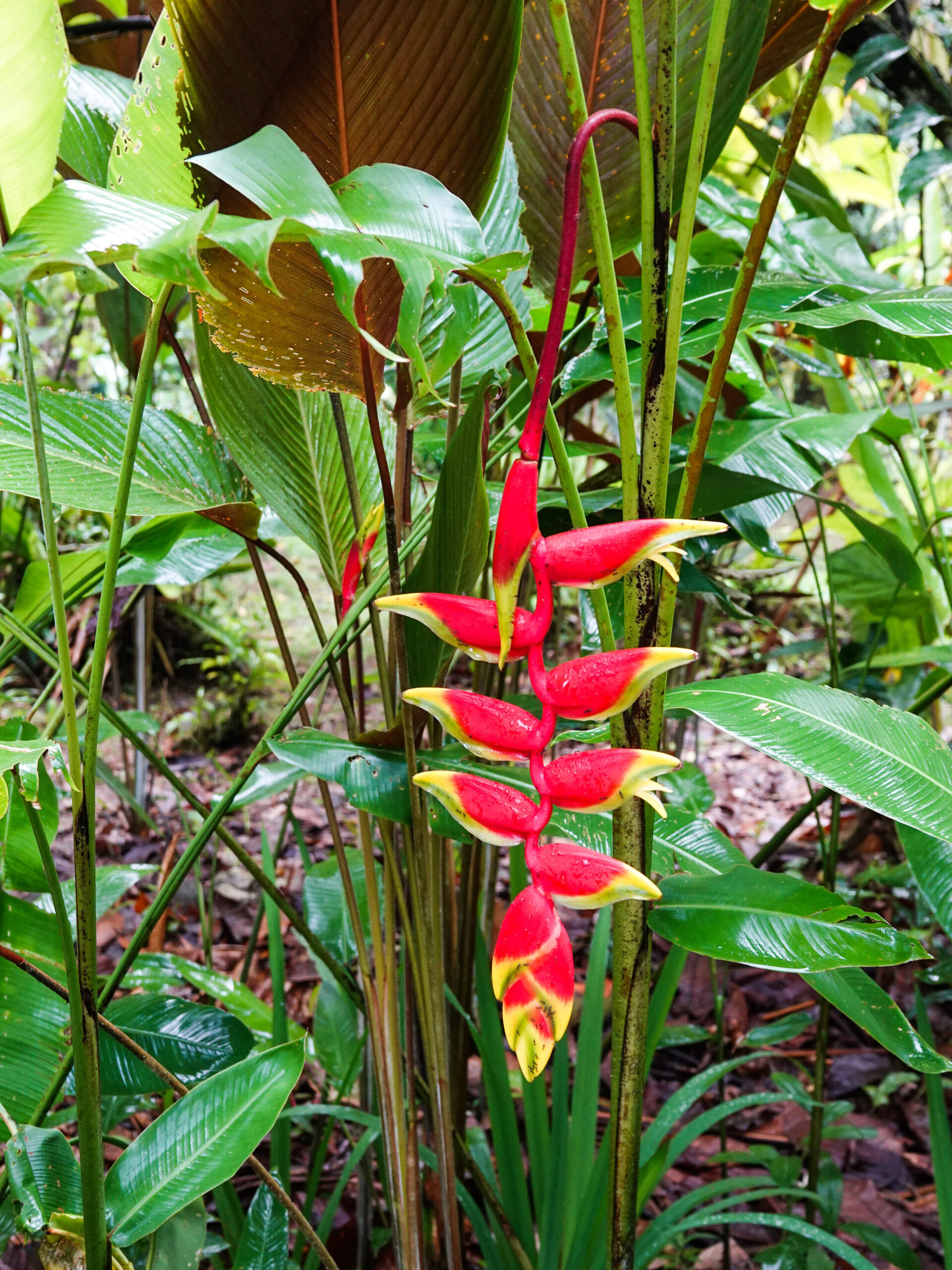
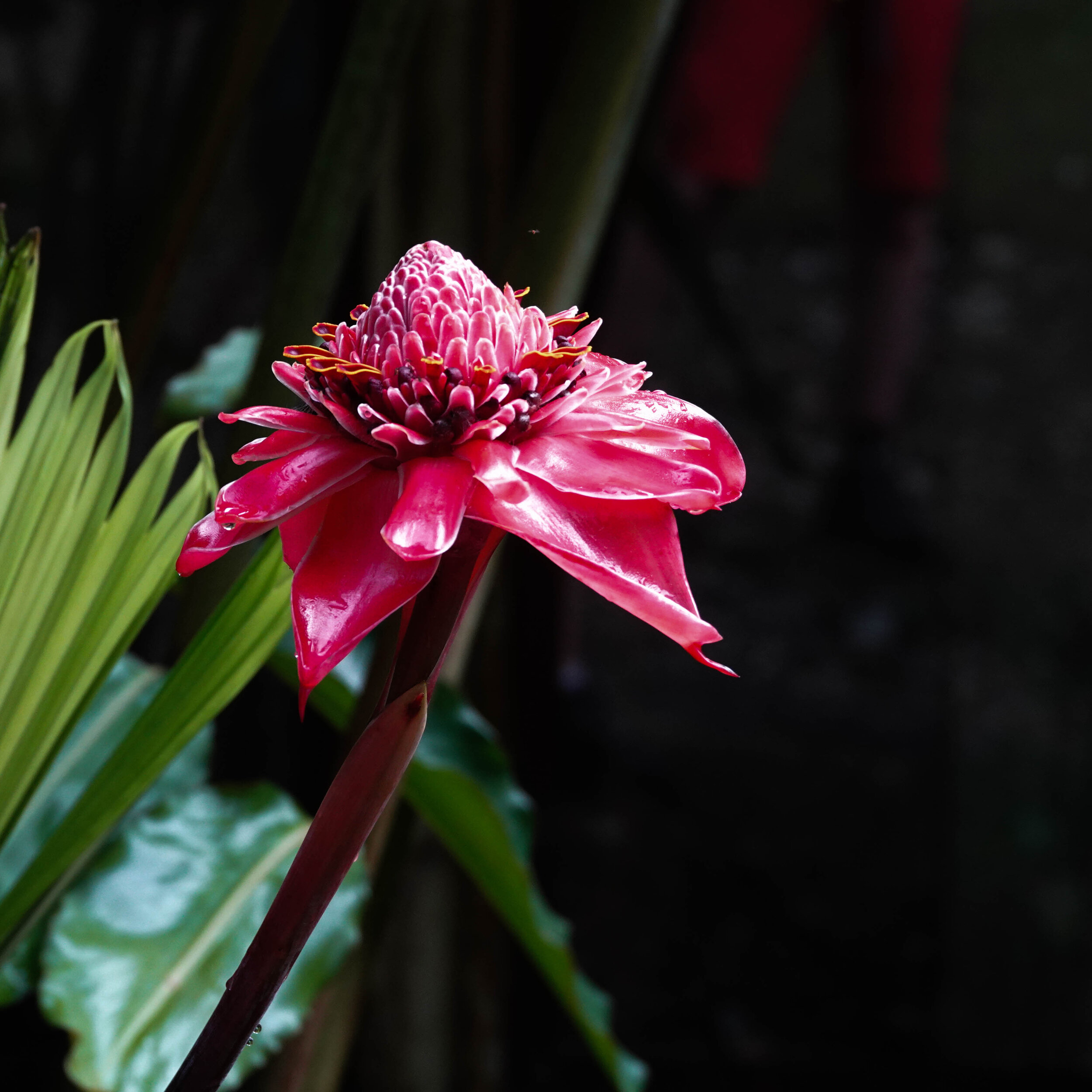
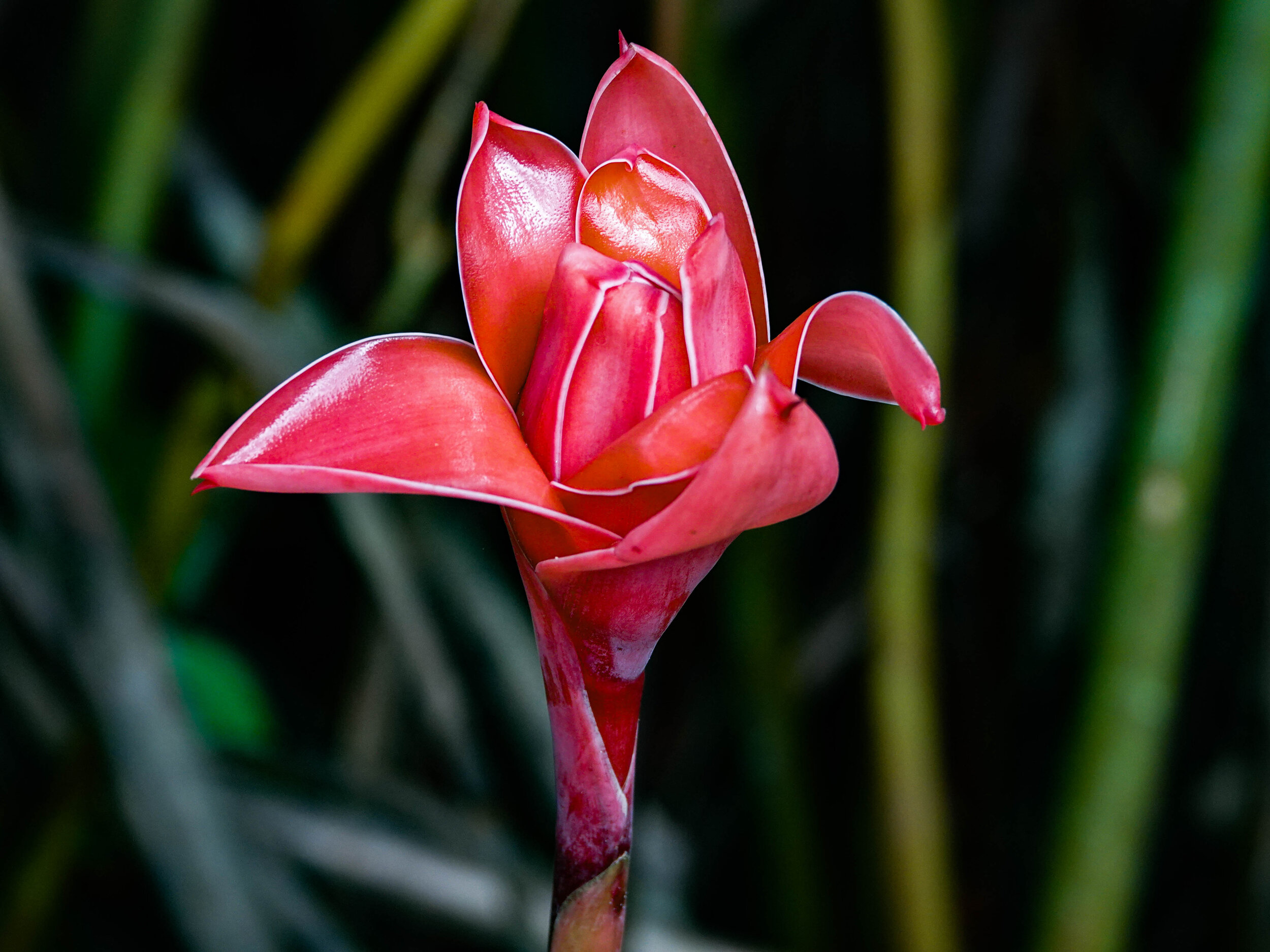
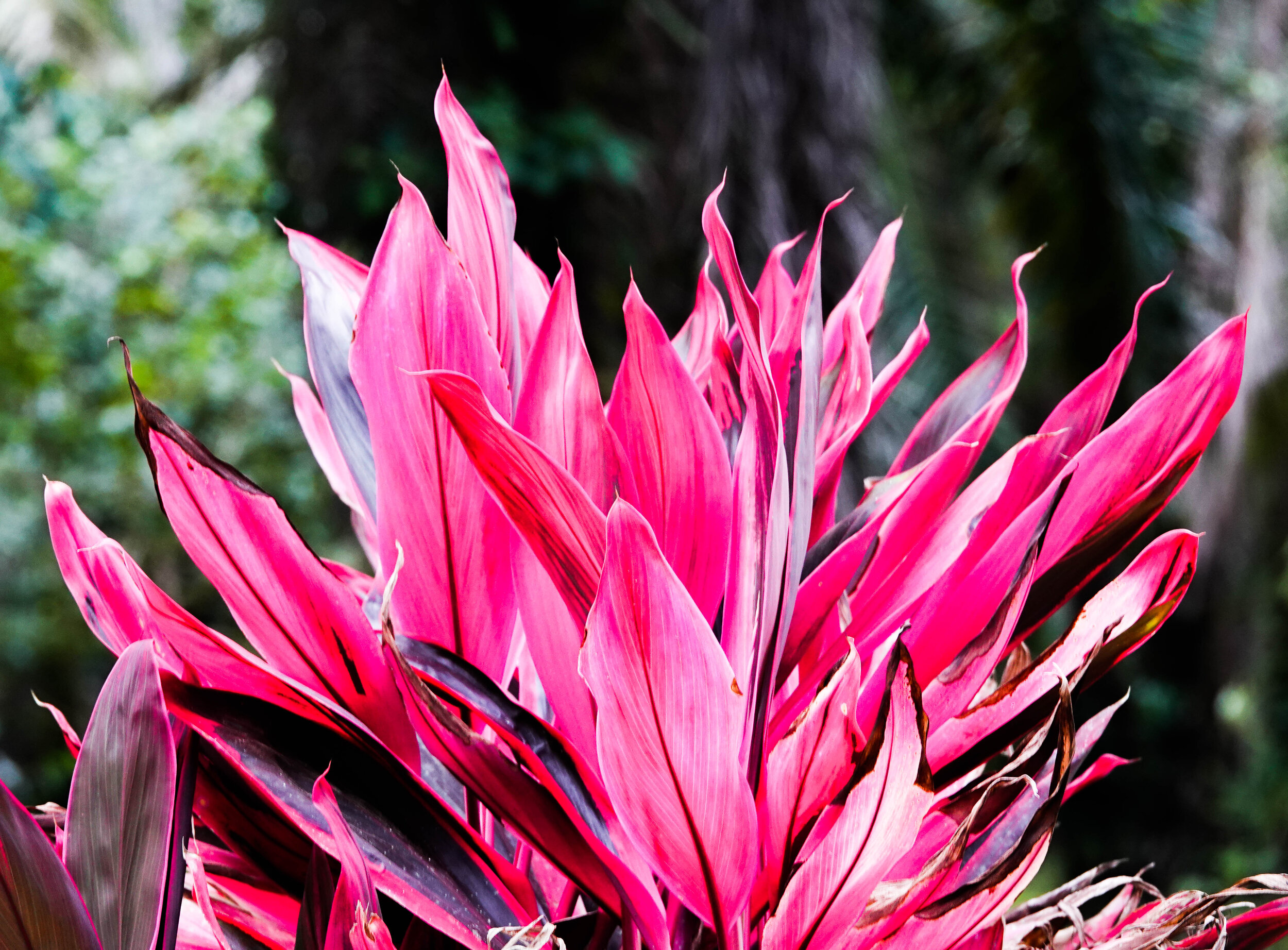
Why is the heliconia red? To attract pollinators—specific species of hummingbirds.
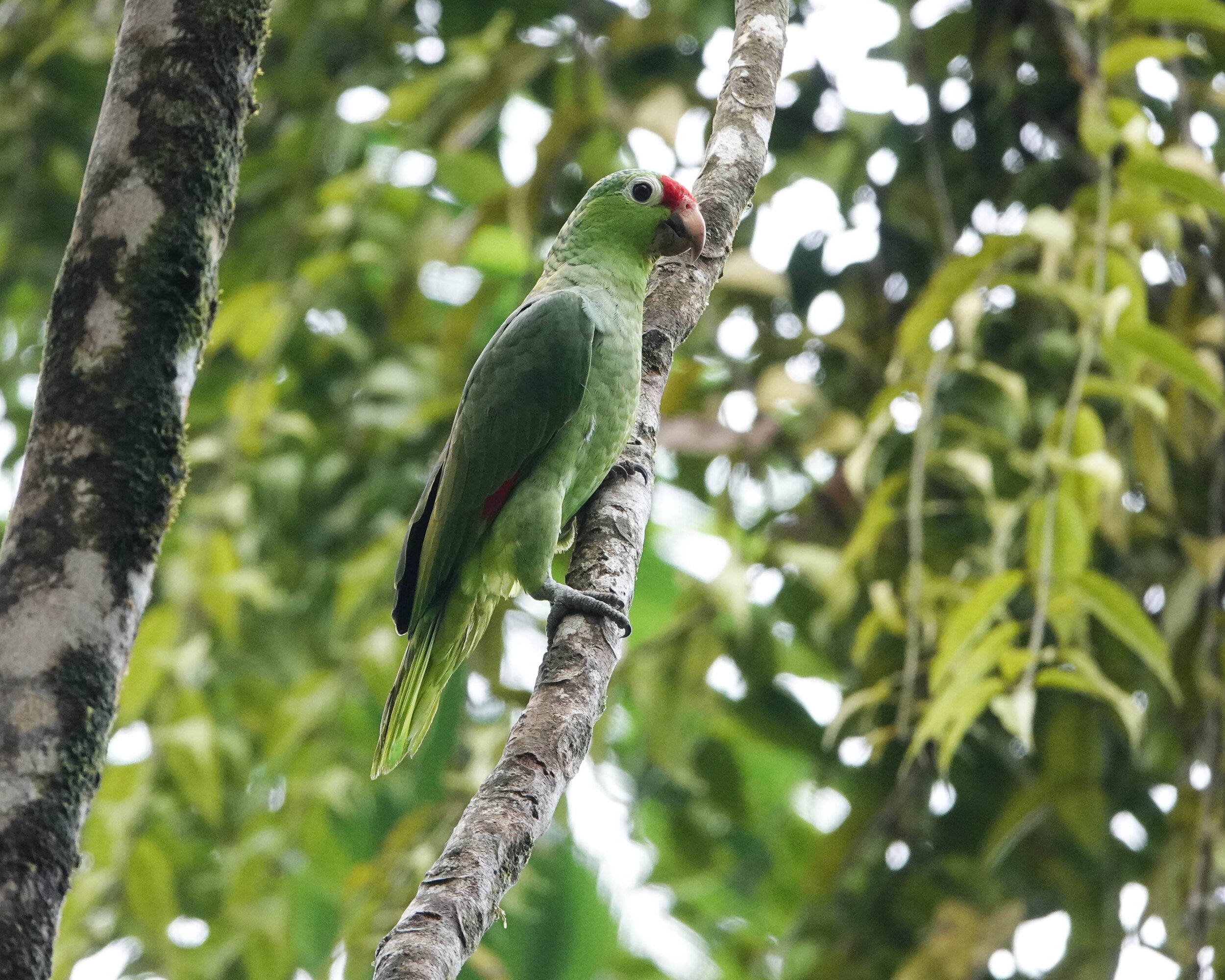
A Crimson-fronted parakeet watched us from high above
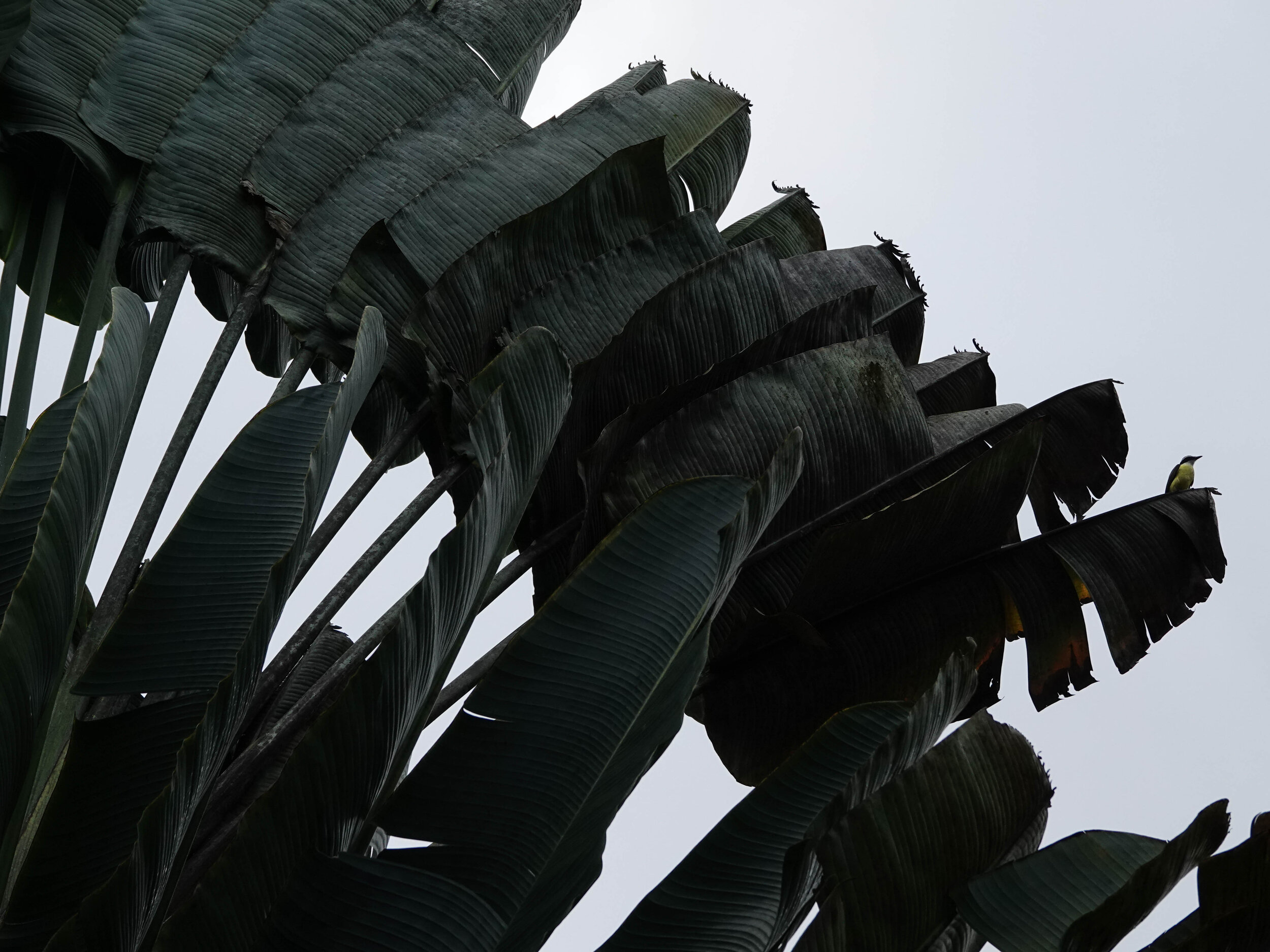
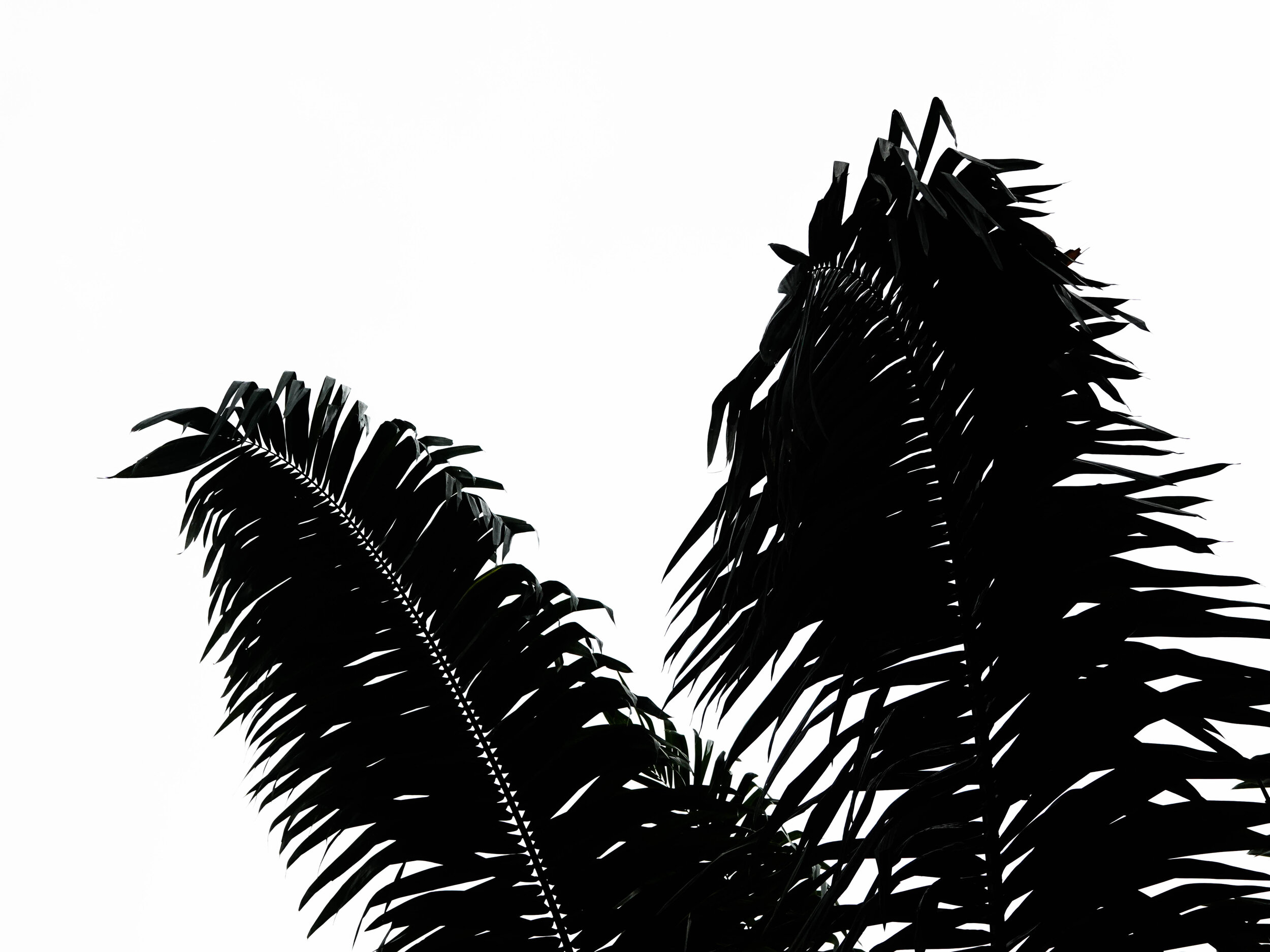
We saw an African palm that stores large amounts of water between its leaves—an absolute lifesaver for thirsty travellers.
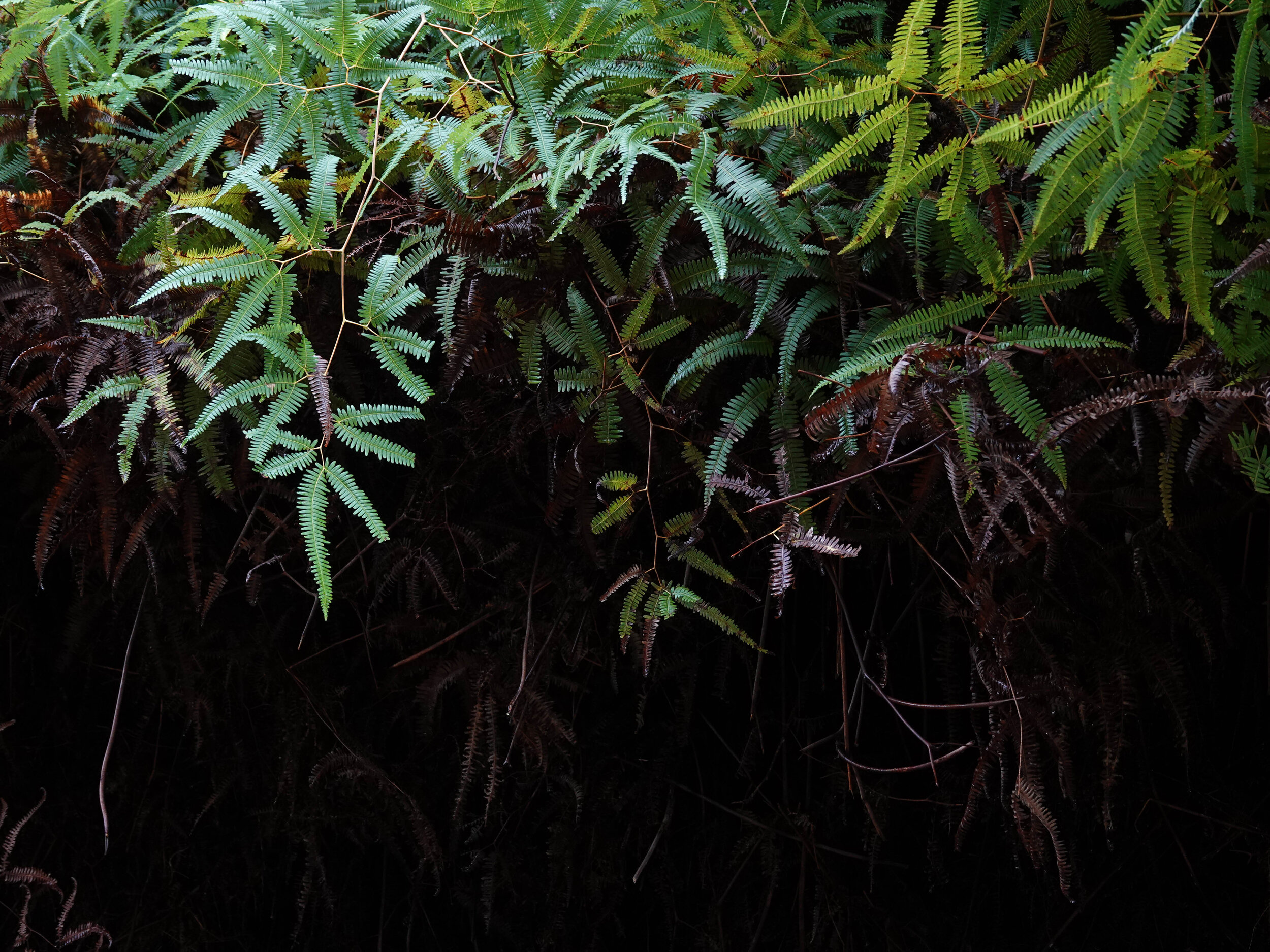
Wherever slopes are bare and trees don’t provide shade, tall and dense ferns thrive. But as soon as trees are planted and begin to grow, the ferns start to wither away.
Around the station, several marked trails lead through the forest and along rivers. Walking outside of them is difficult due to dense undergrowth, mud, thorny plants, and even dangerous animals. If you want to find out more about that last part, stay tuned for this and the next few posts. 😉
First hike through the forest
We started on a beautiful private estate…
…with a colourful garden…
The air was already filled with biting insects and the deafening sounds of cicadas (talking on the phone here is nearly impossible—the person on the other end can barely hear you).
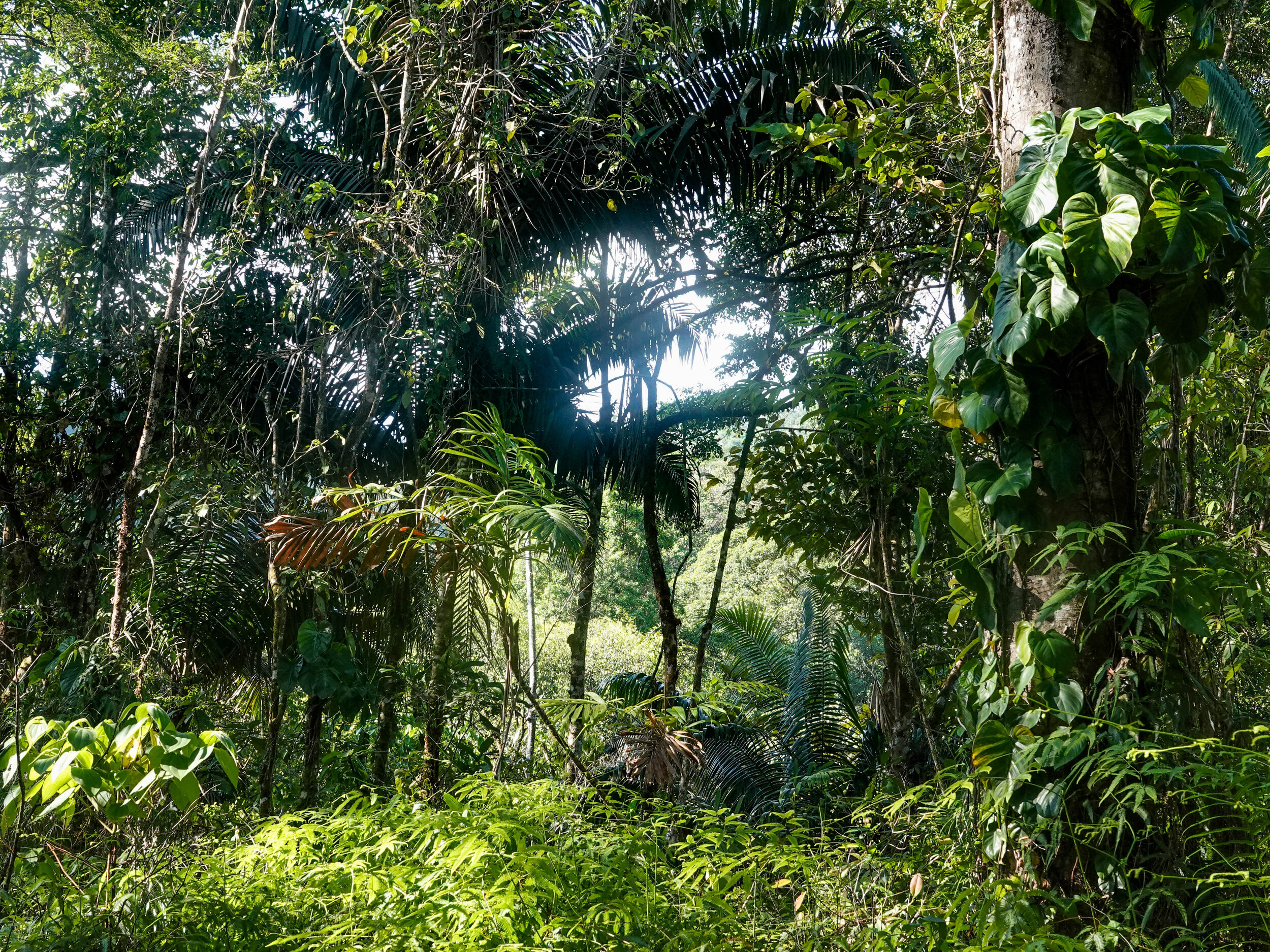
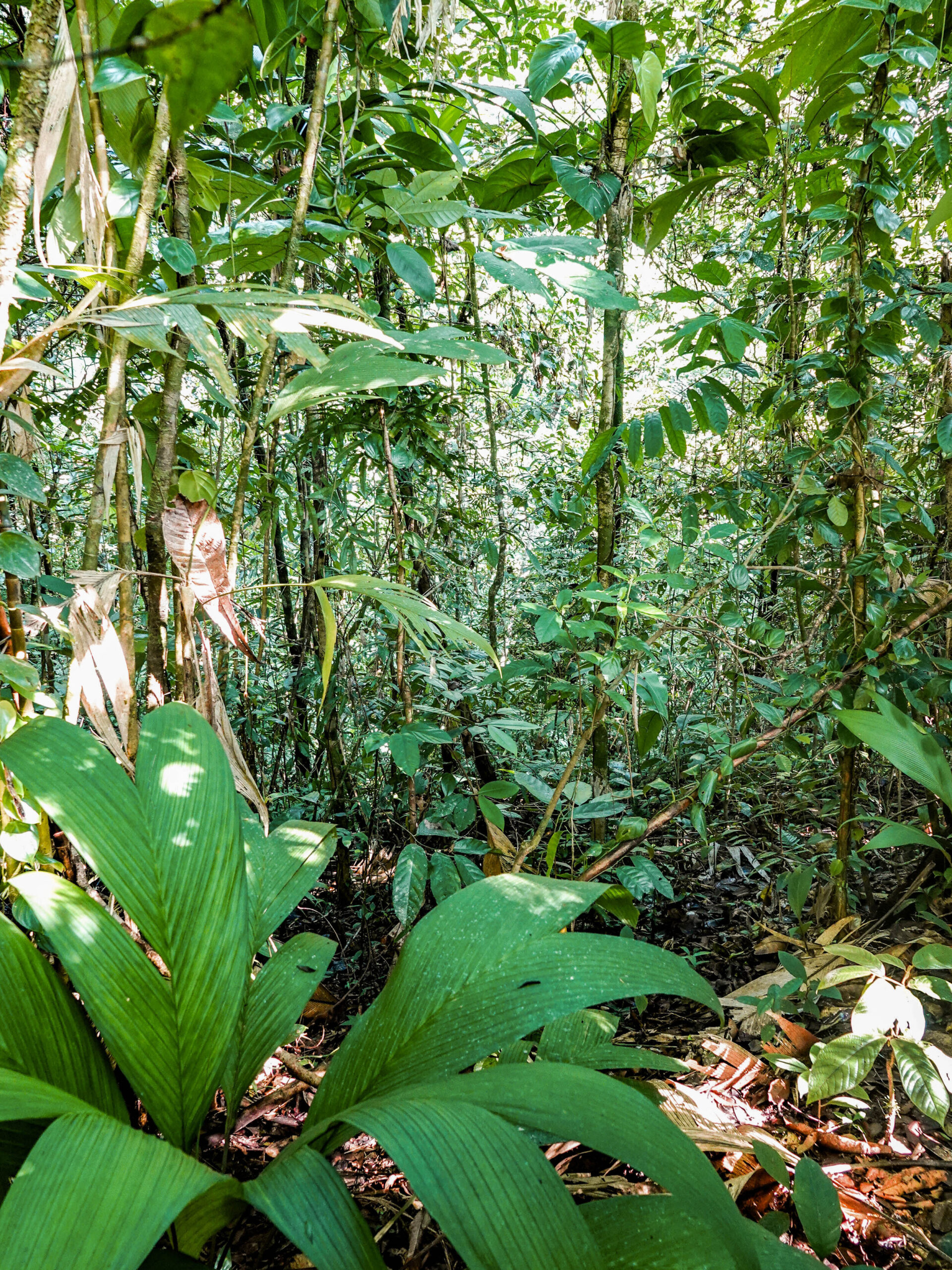
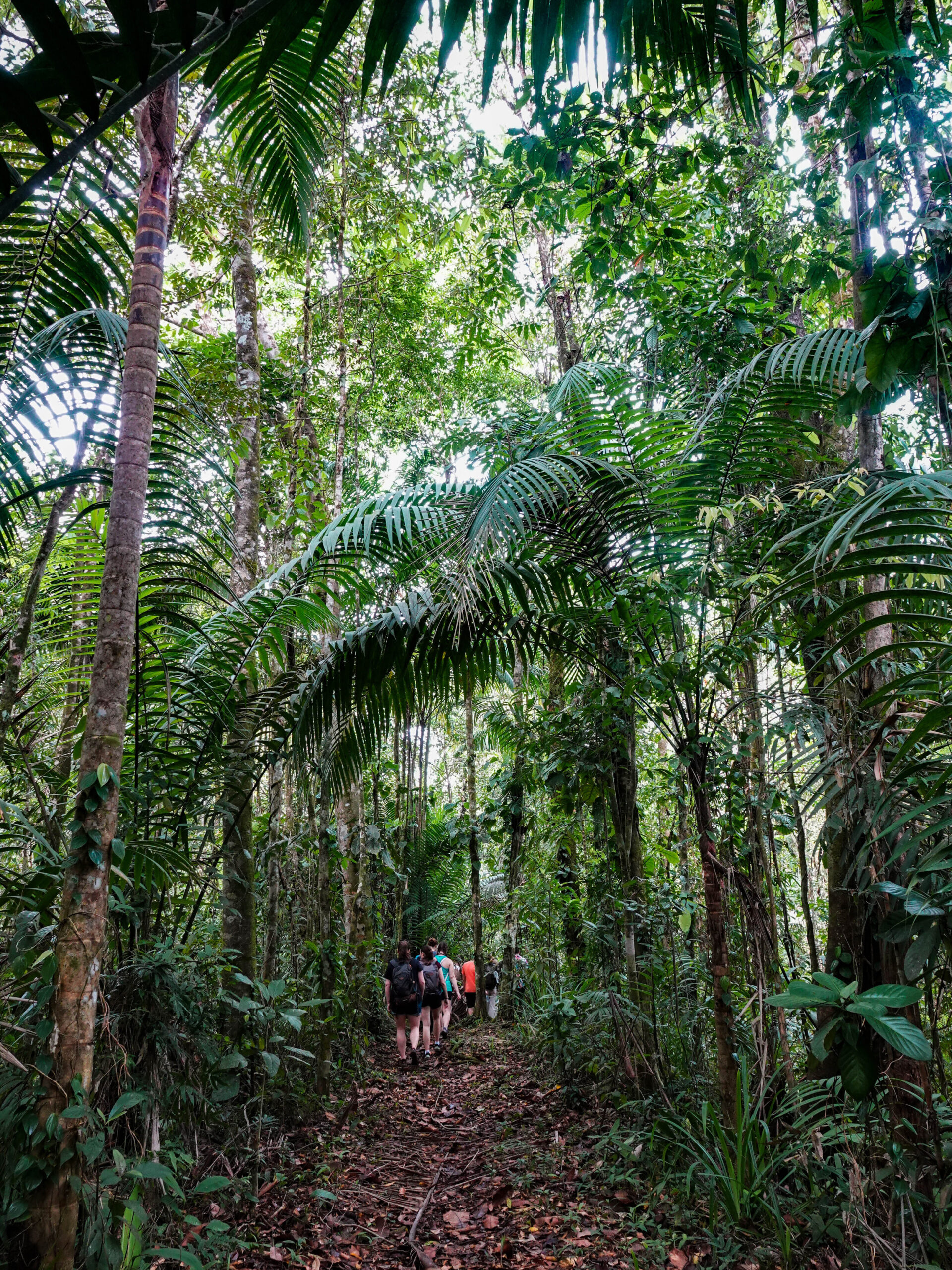
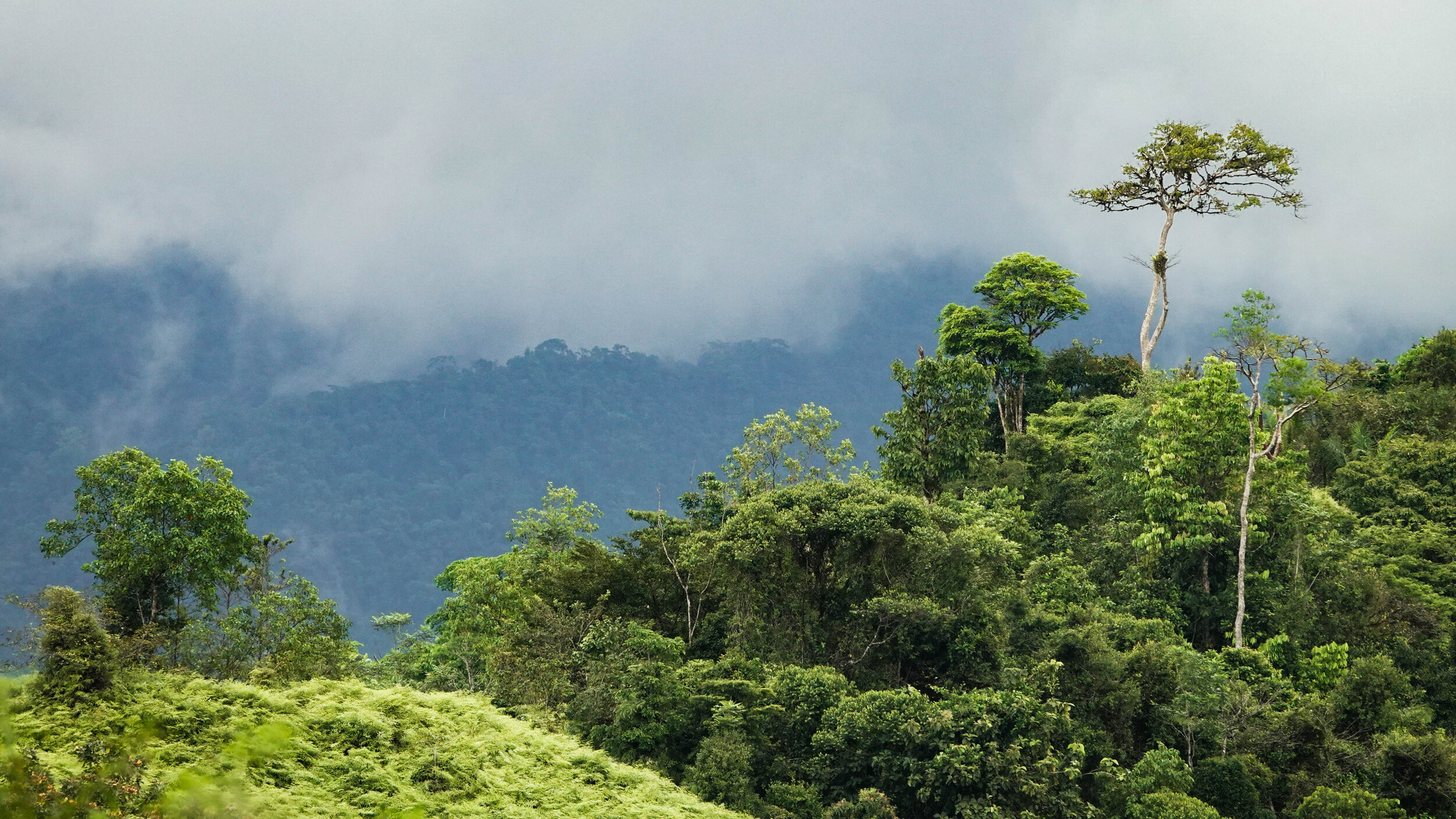
And finally—the tropical rainforest, just as I had imagined it. Unfortunately, this also meant tropical temperatures—about 33°C in the shade with 80% humidity.
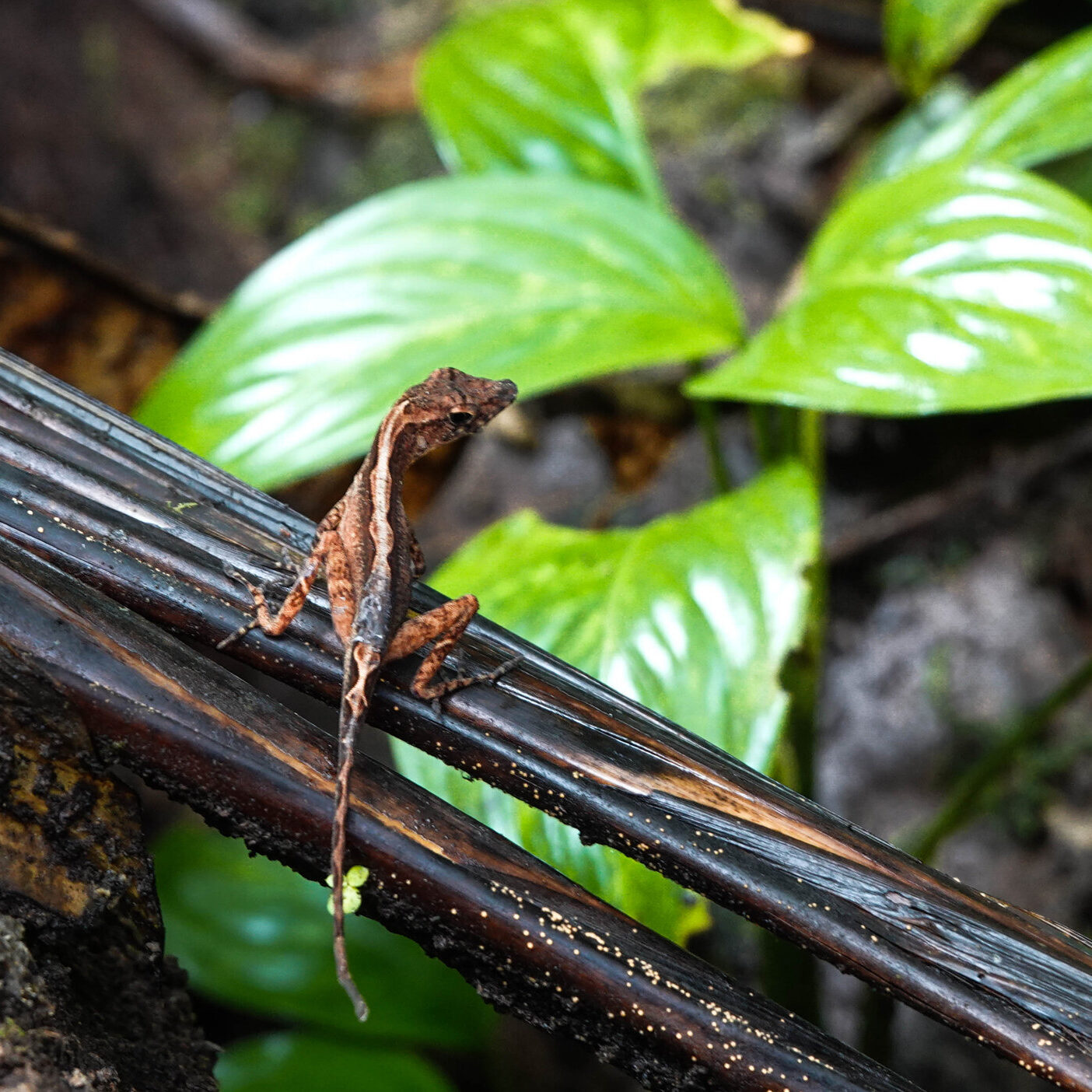
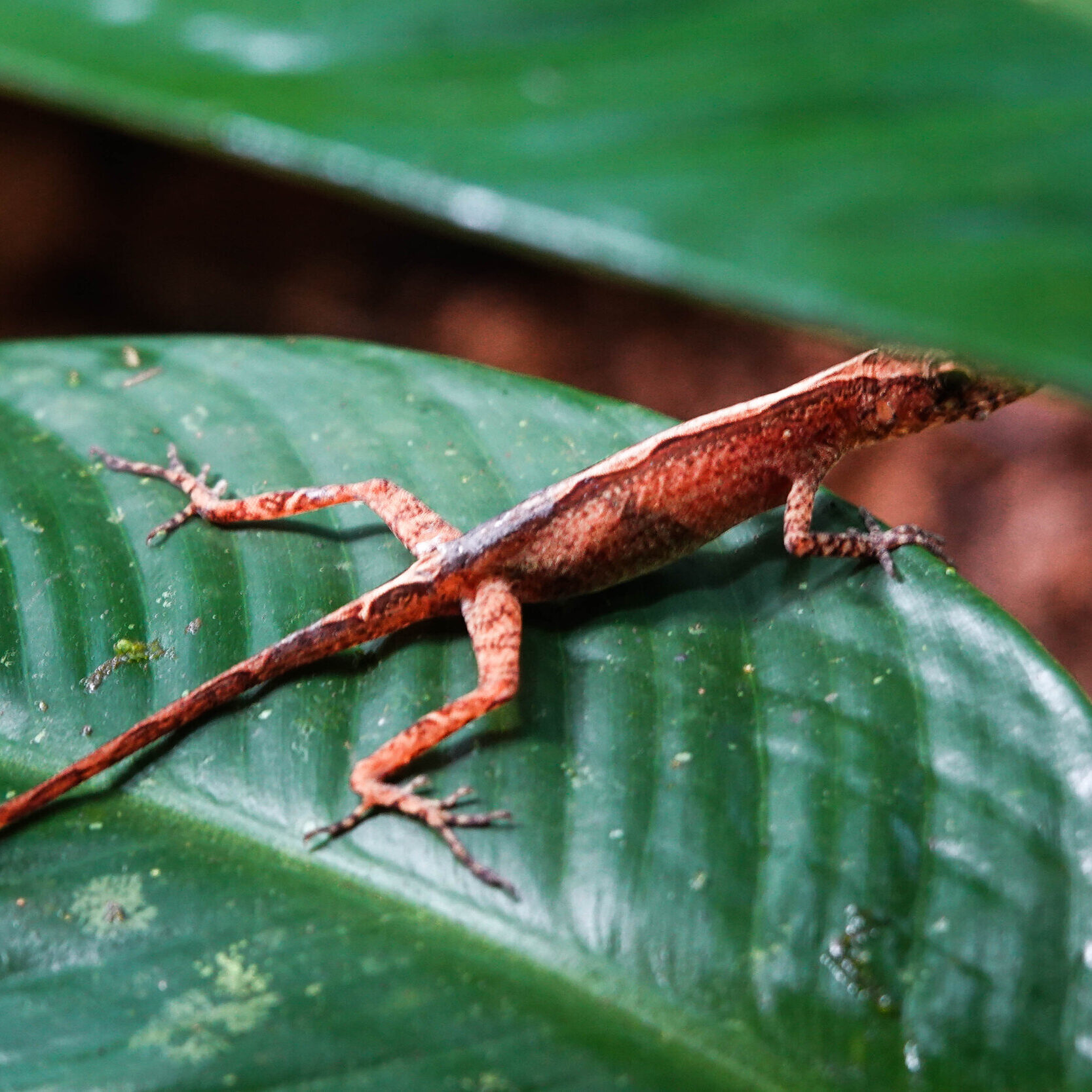
We saw many elusive anoles throughout our stay.
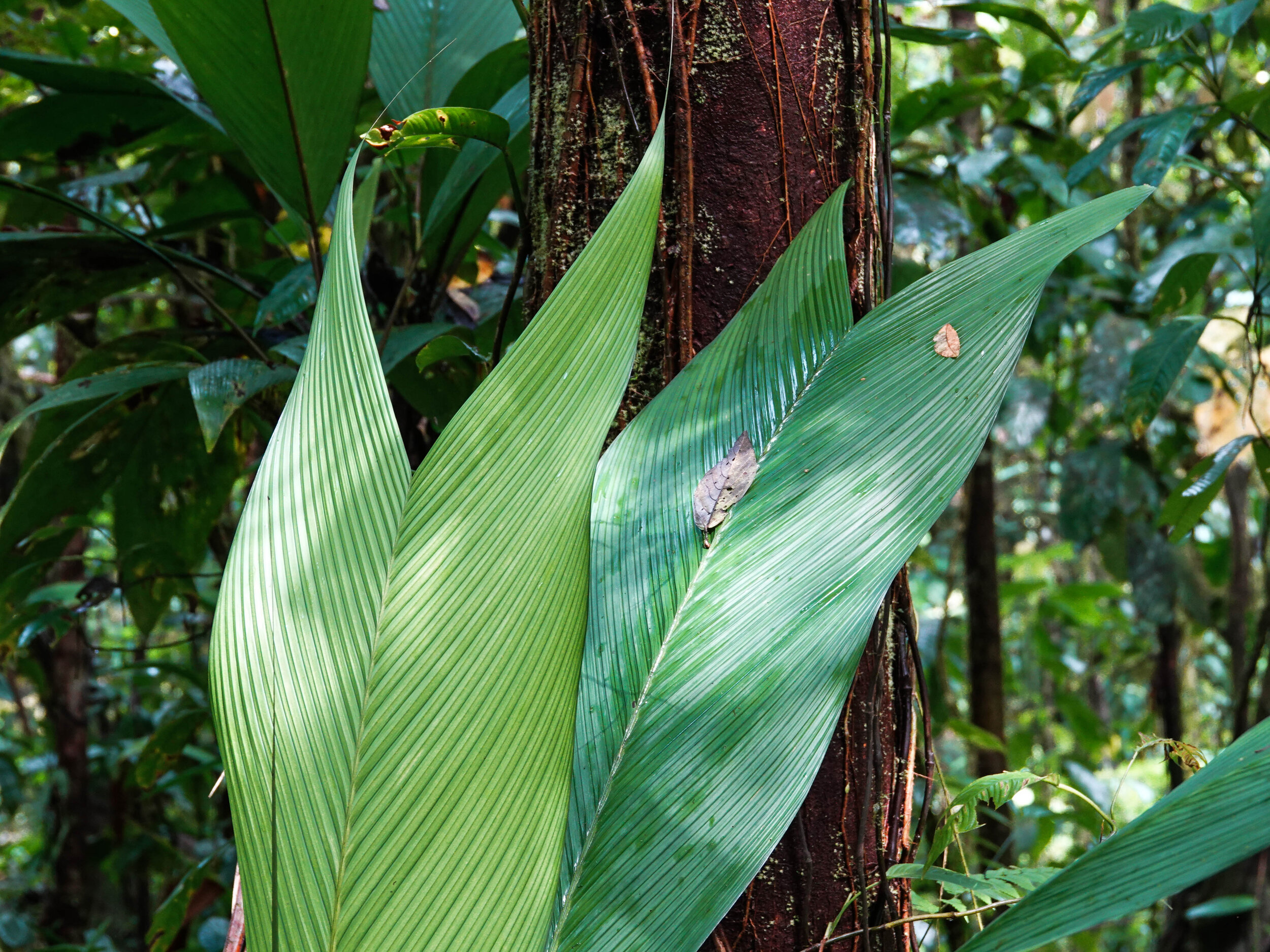
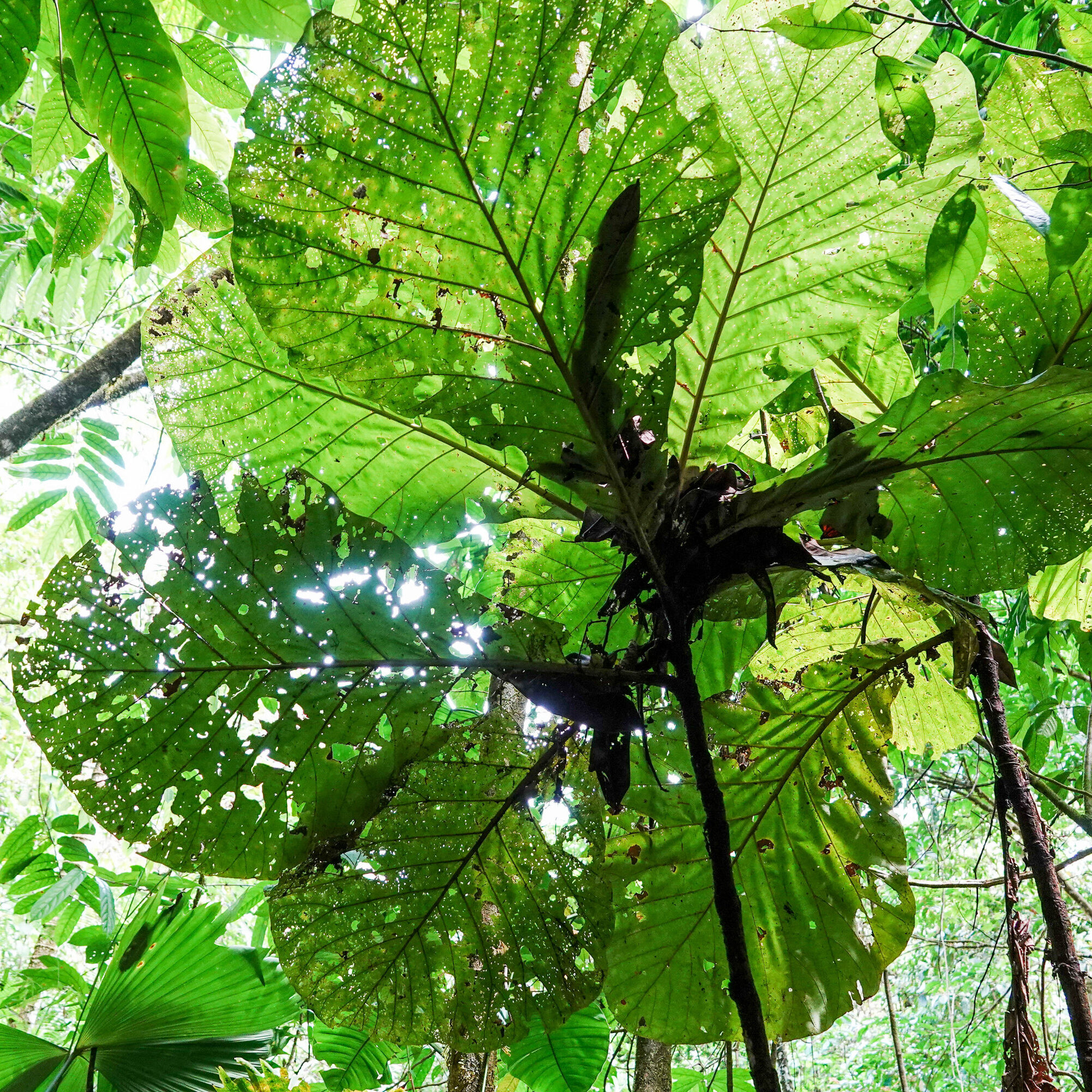
At first, I thought these leaves were damaged—but they weren’t.
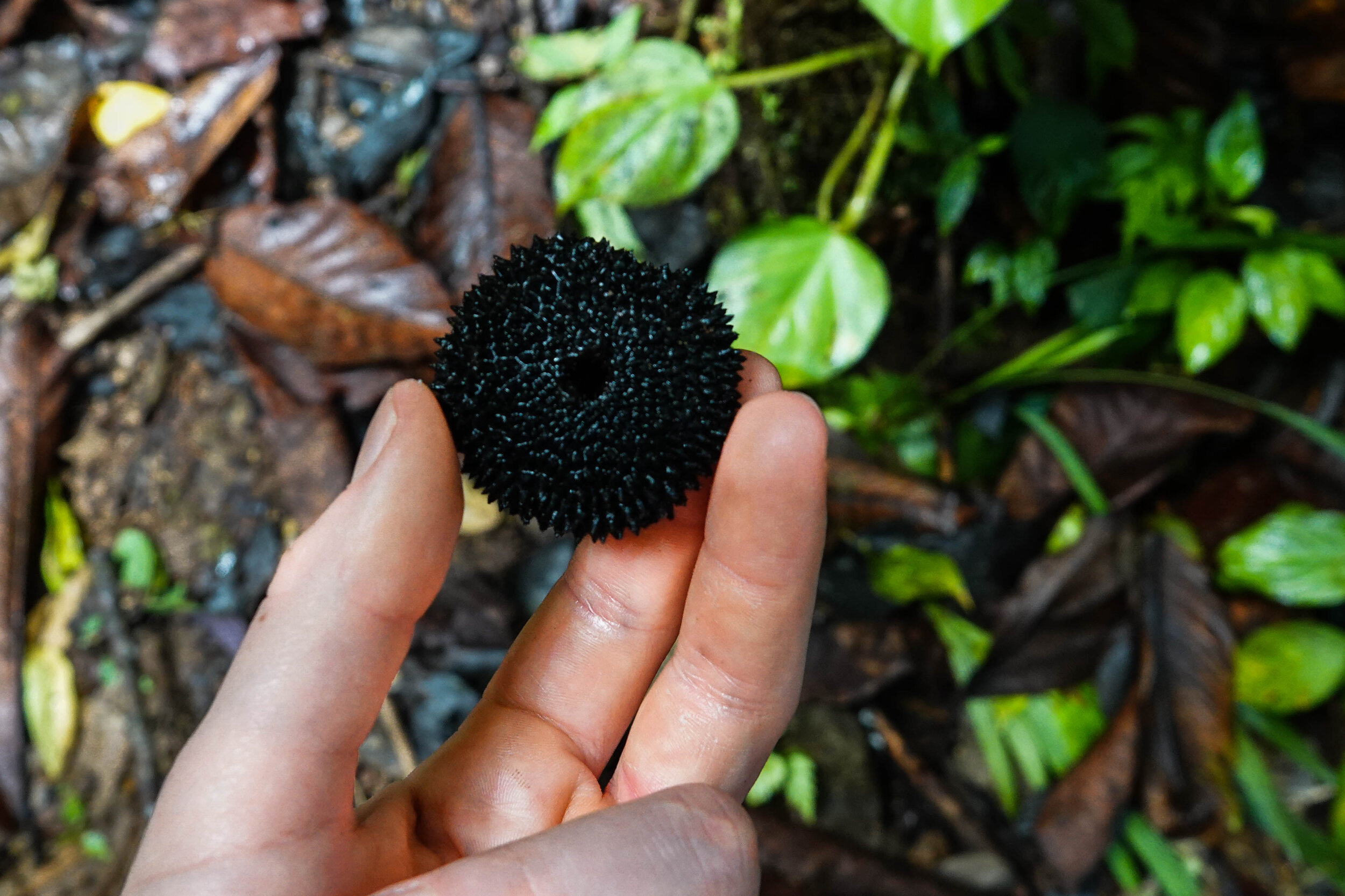
A tree with sea urchins? Yes! Its fruits look just like real sea urchins. They even have tiny holes...
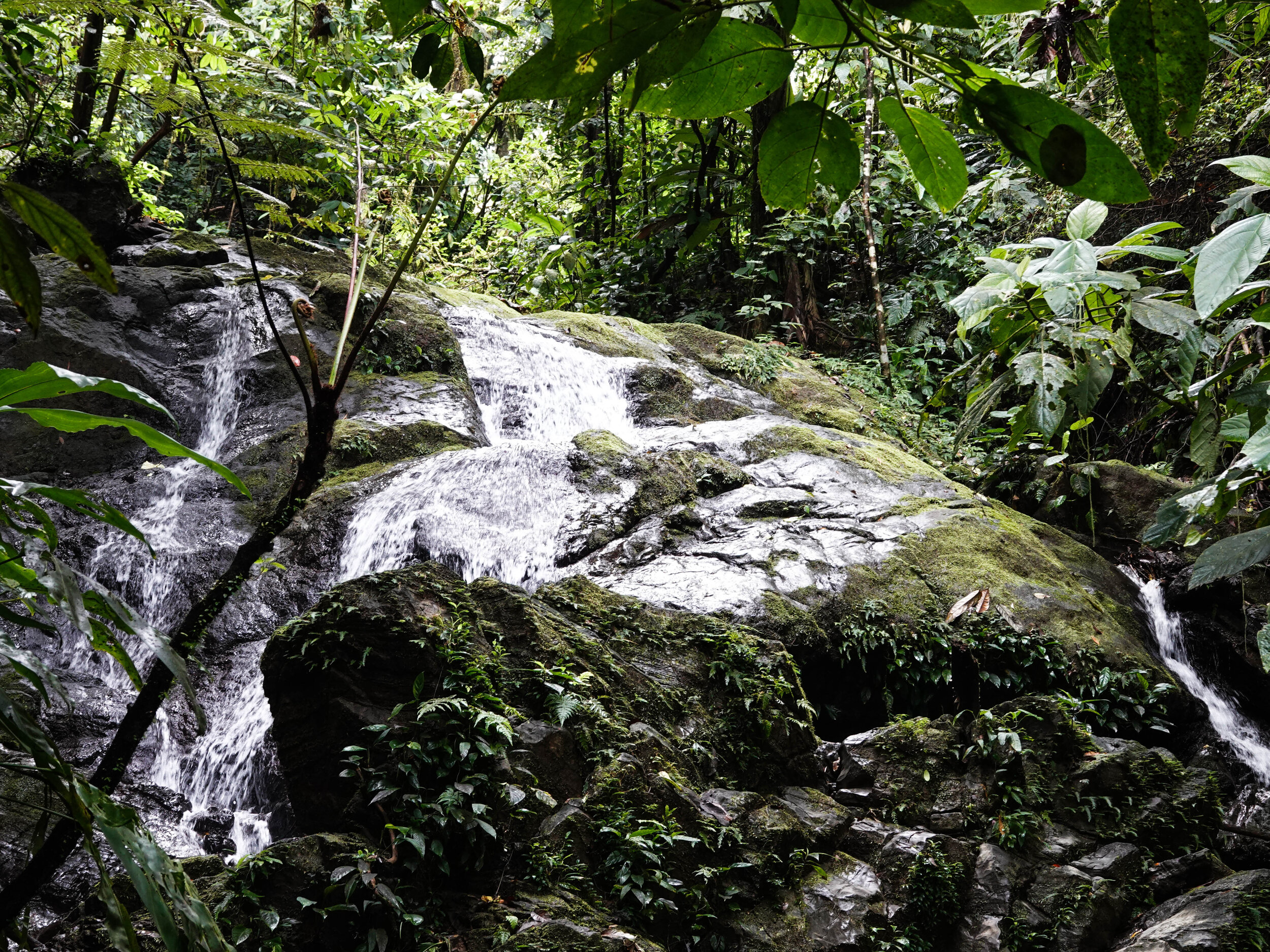
From mid-November to April, it’s summer in Costa Rica—the dry season. That’s why the water levels were low. If we had visited during the rainy season, this waterfall would have looked very different.
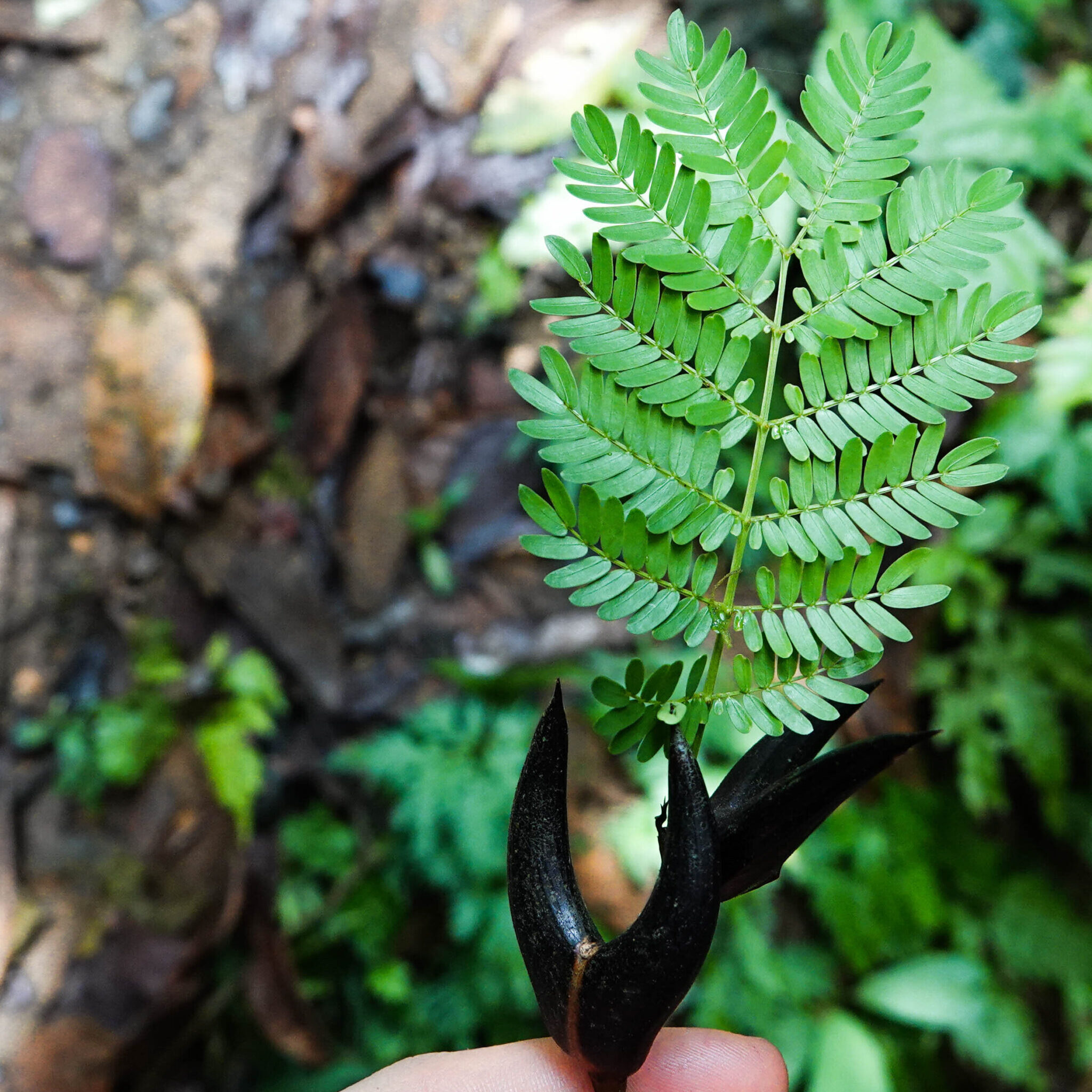
We saw a species of acacia—those horn-like pods are home to tiny ants that protect the tree from being eaten by other creatures in exchange for food and shelter.
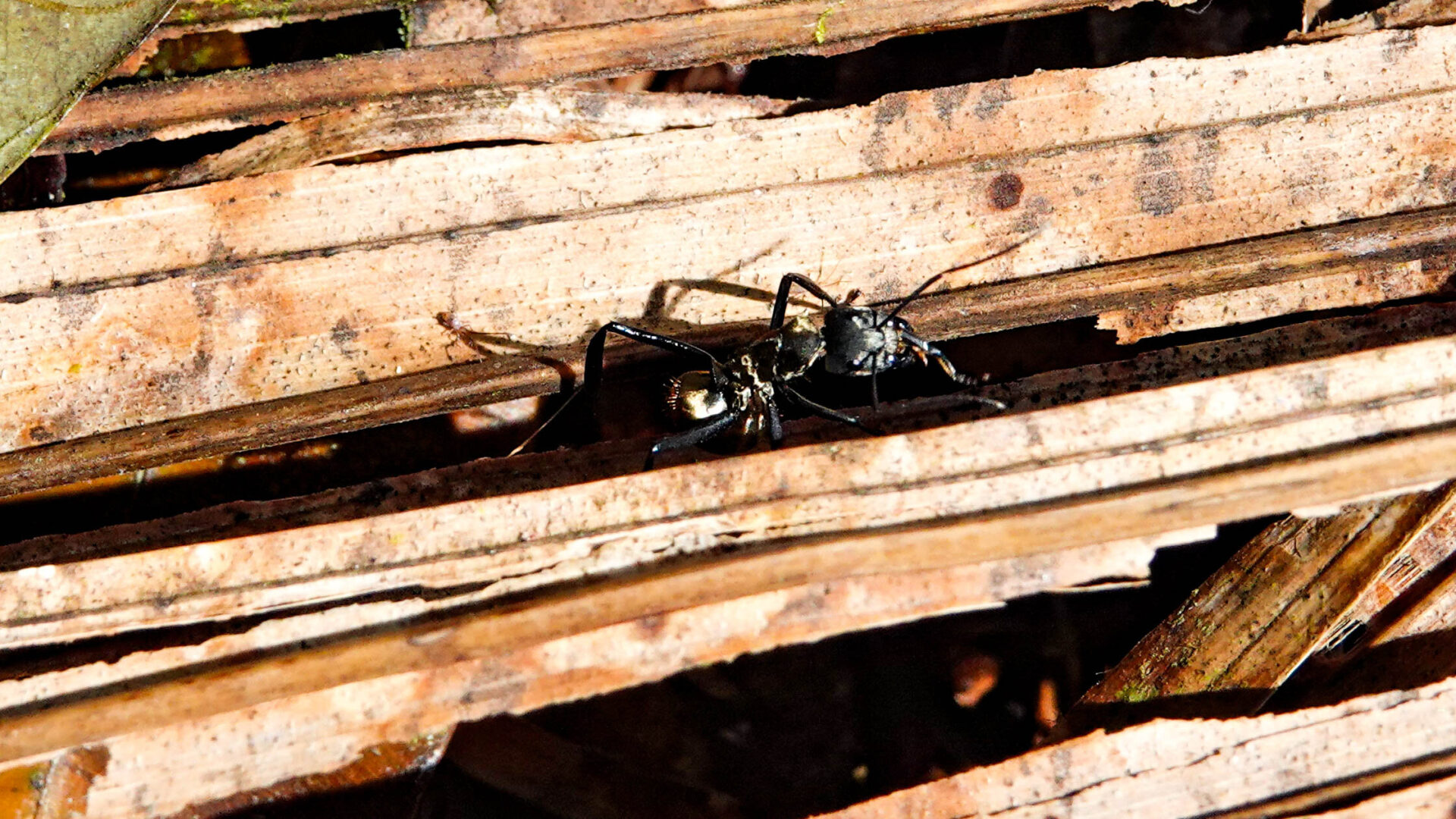
A golden carpenter ant.
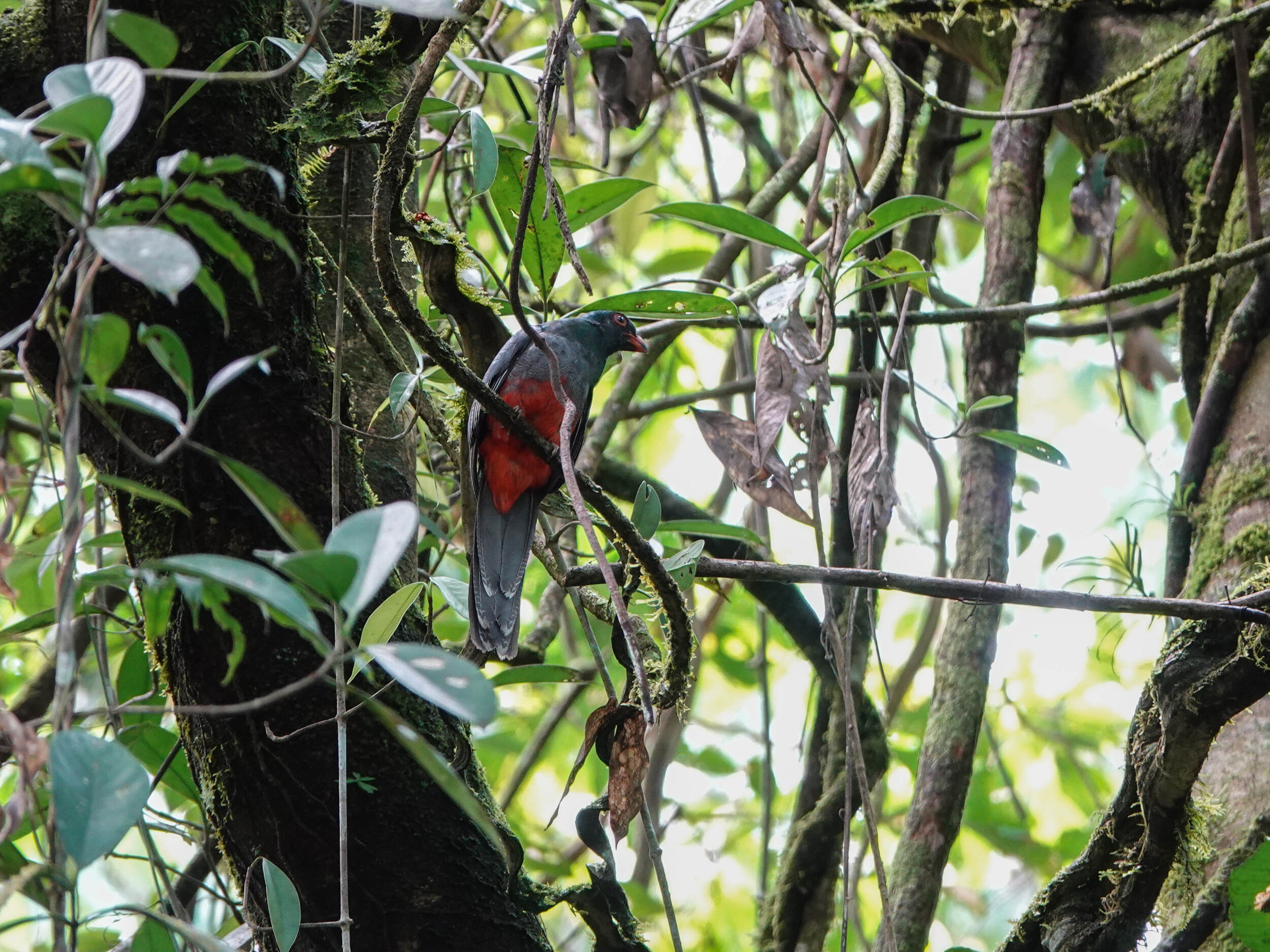
A trogon.
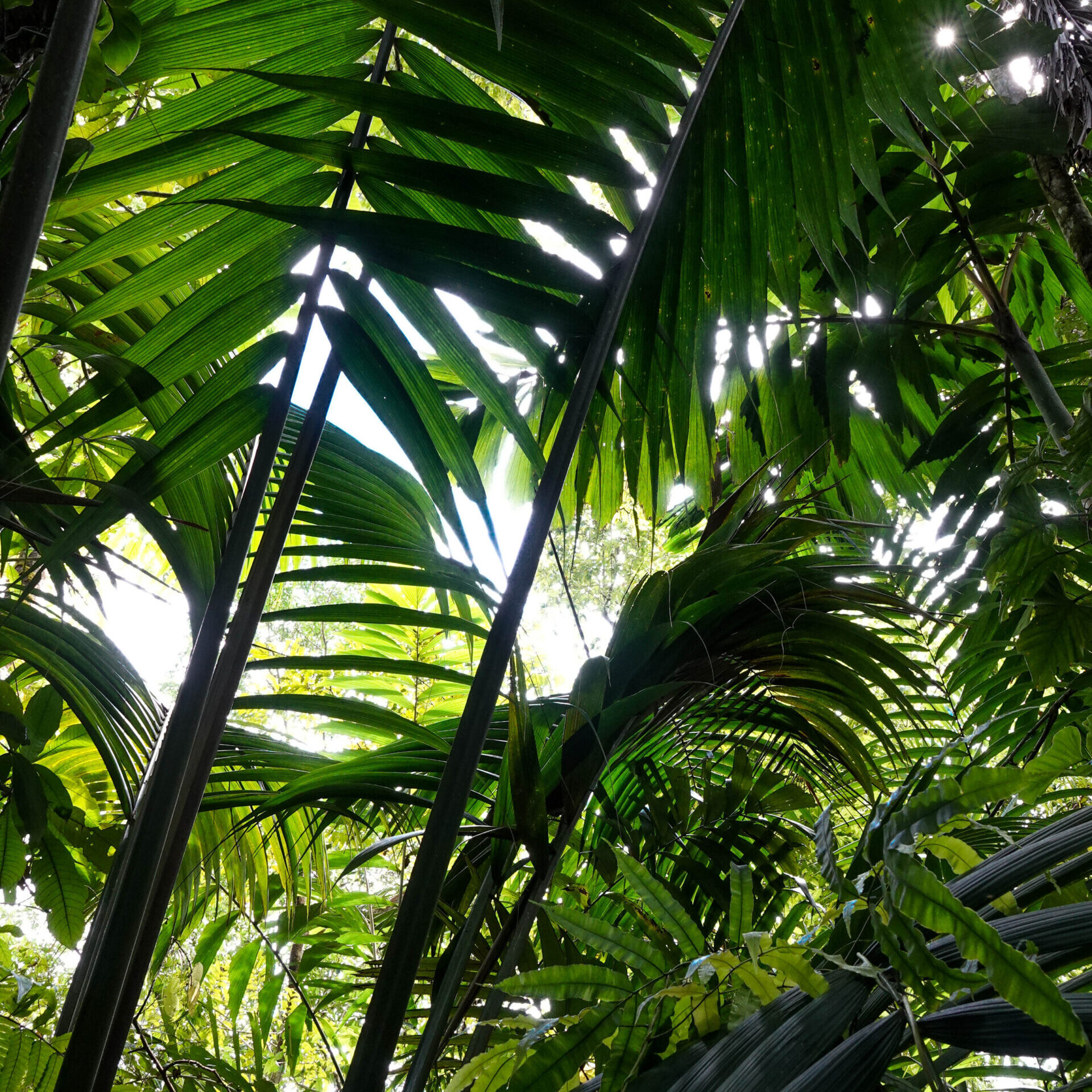
So many different shapes, sizes, colours of leaves.
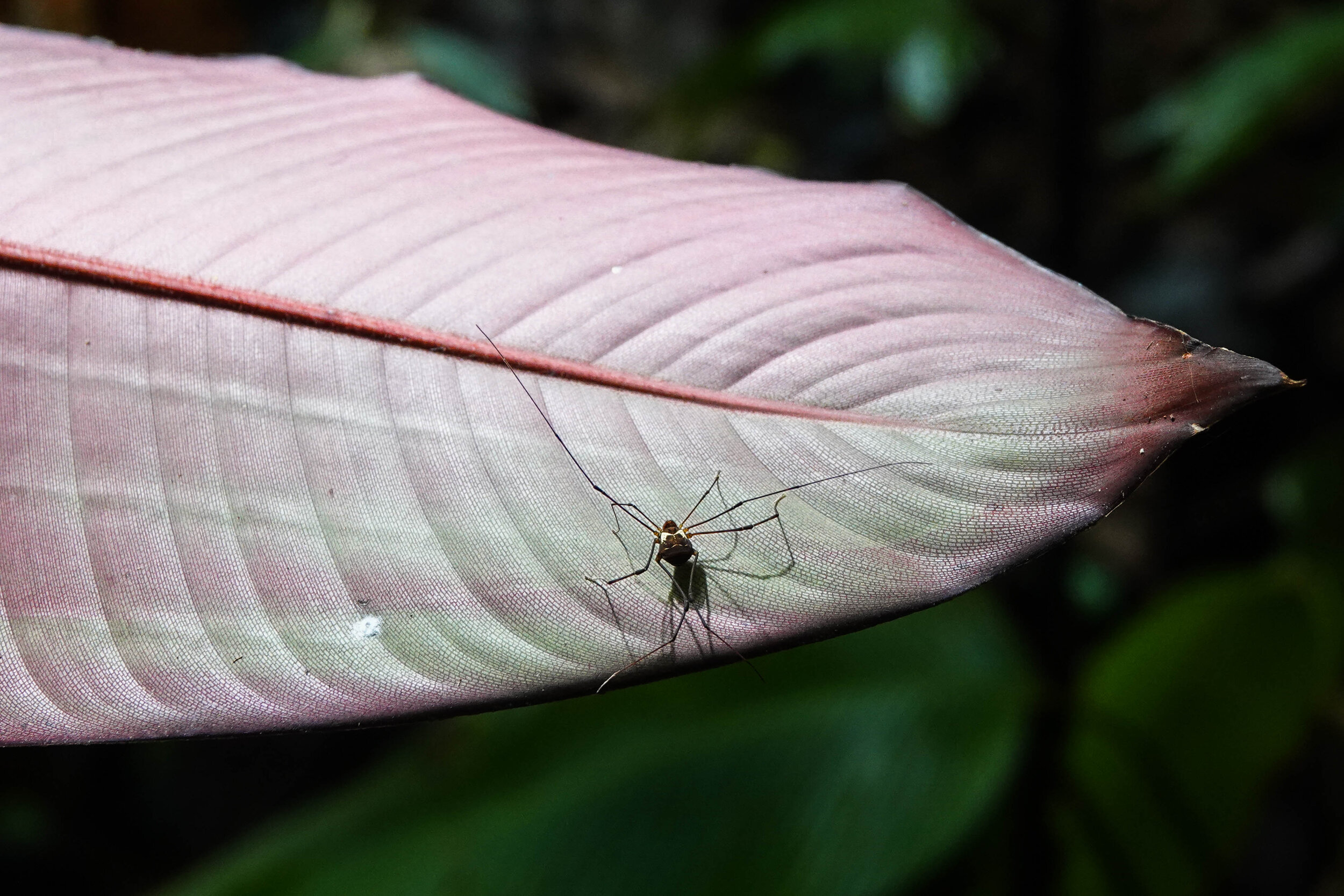
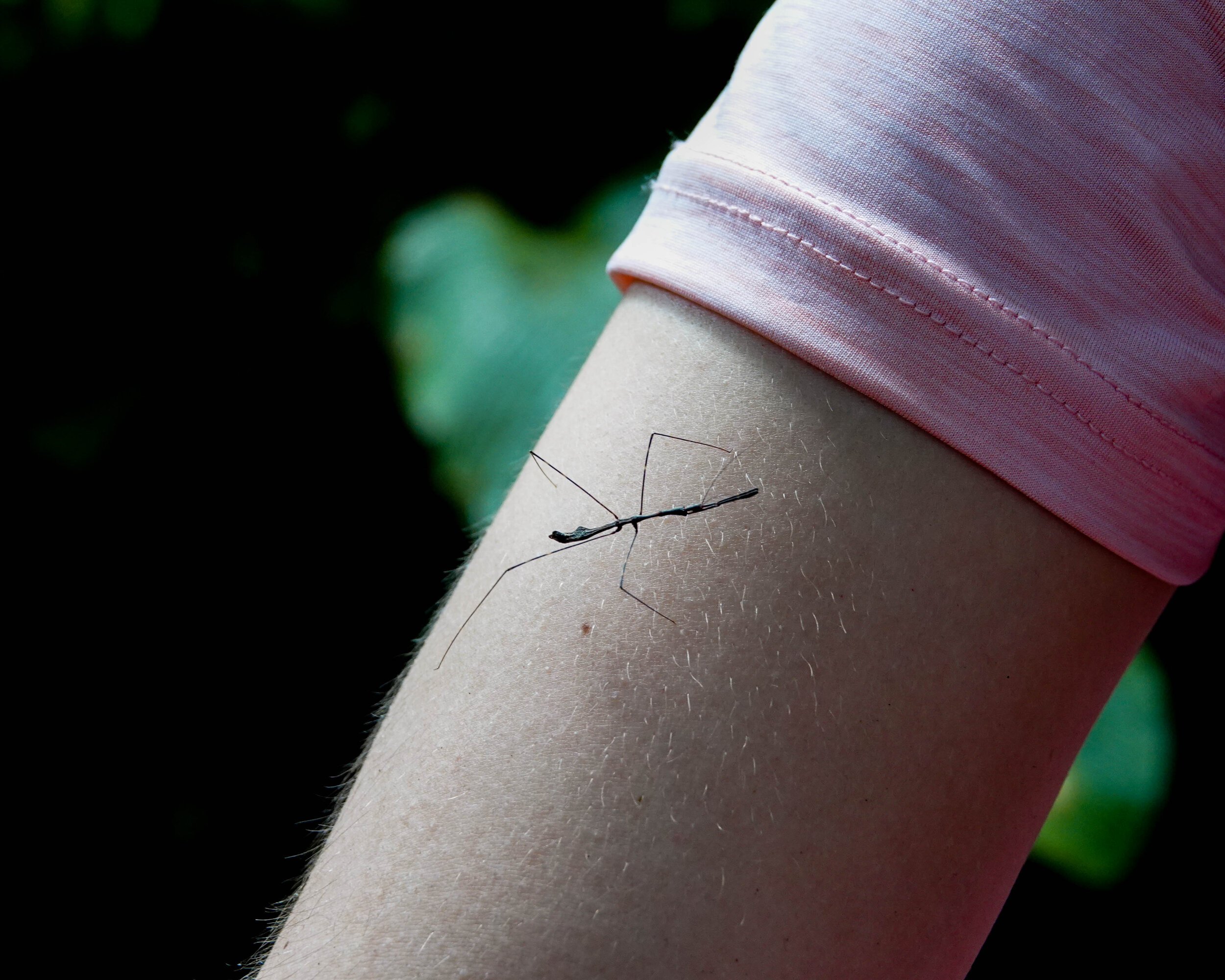
We had plenty of close encounters with stick insects.
A different trail the next day
Only one kilometre from the previous trail, but the forest looked completely different.
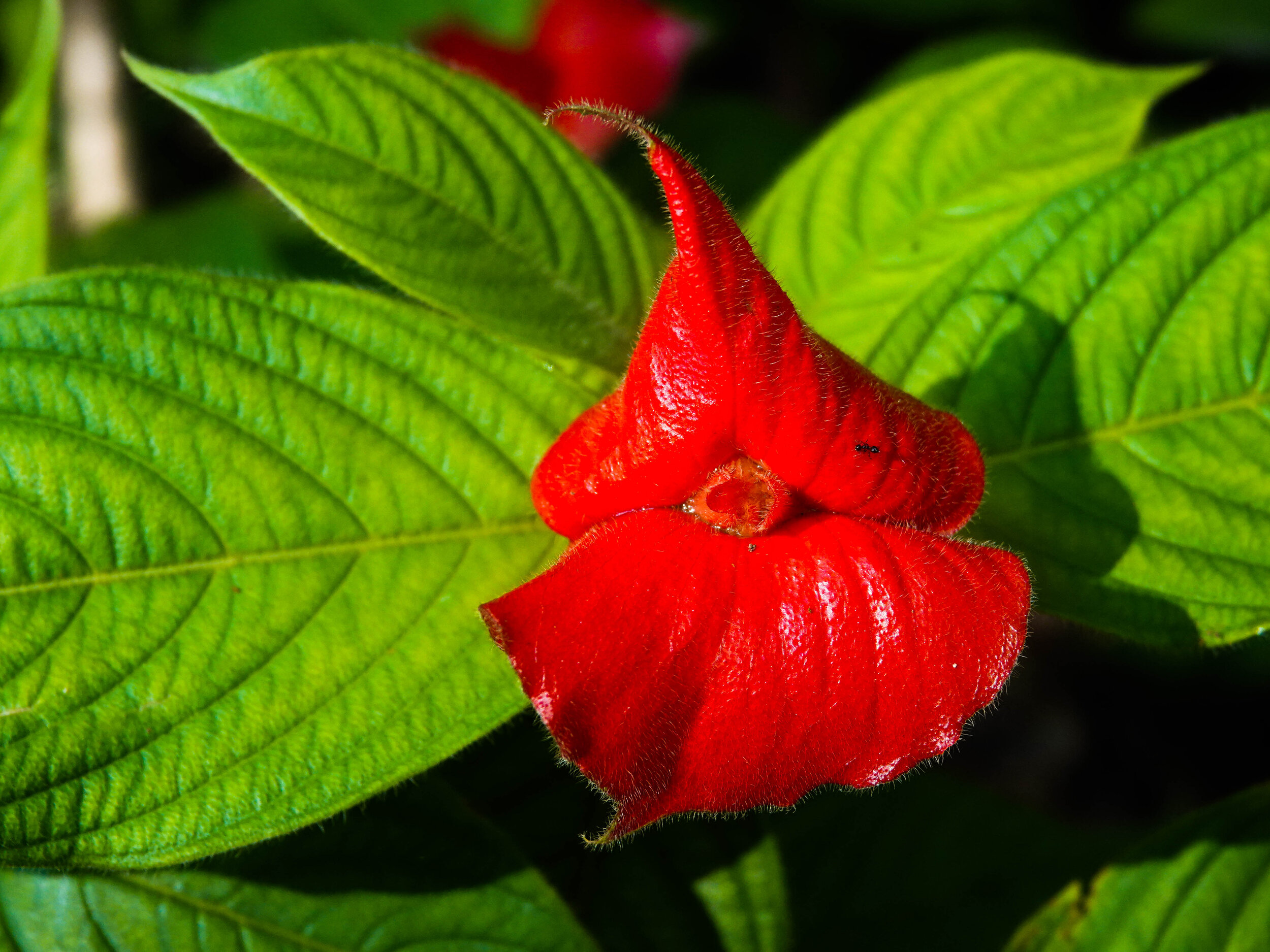
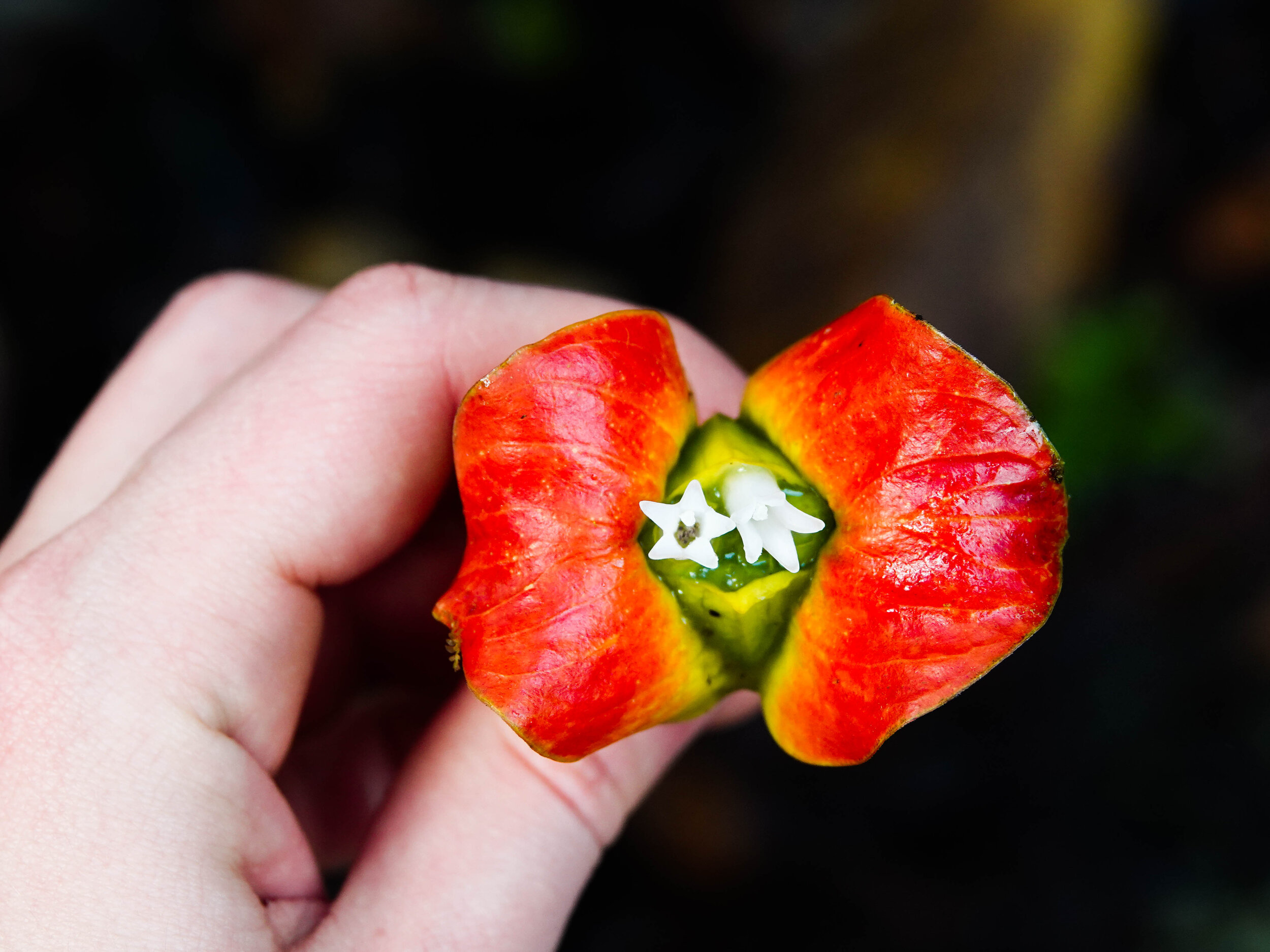
An incredible plant: Psychotria elata, also known as “Kissing lips”.
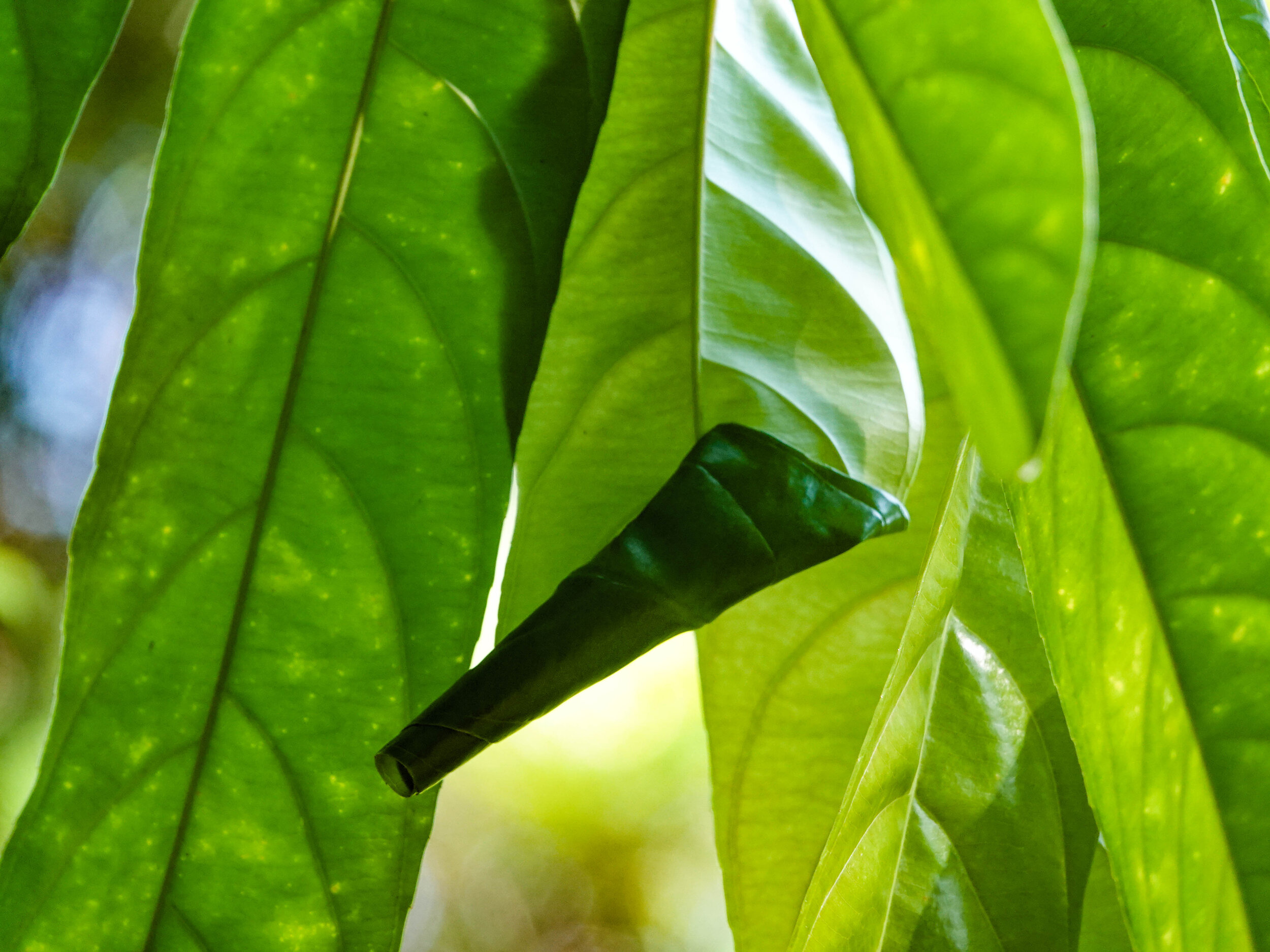
Some leaves had curled-up edges, forming tiny shelters for ants—for a similar reason as the acacia above.
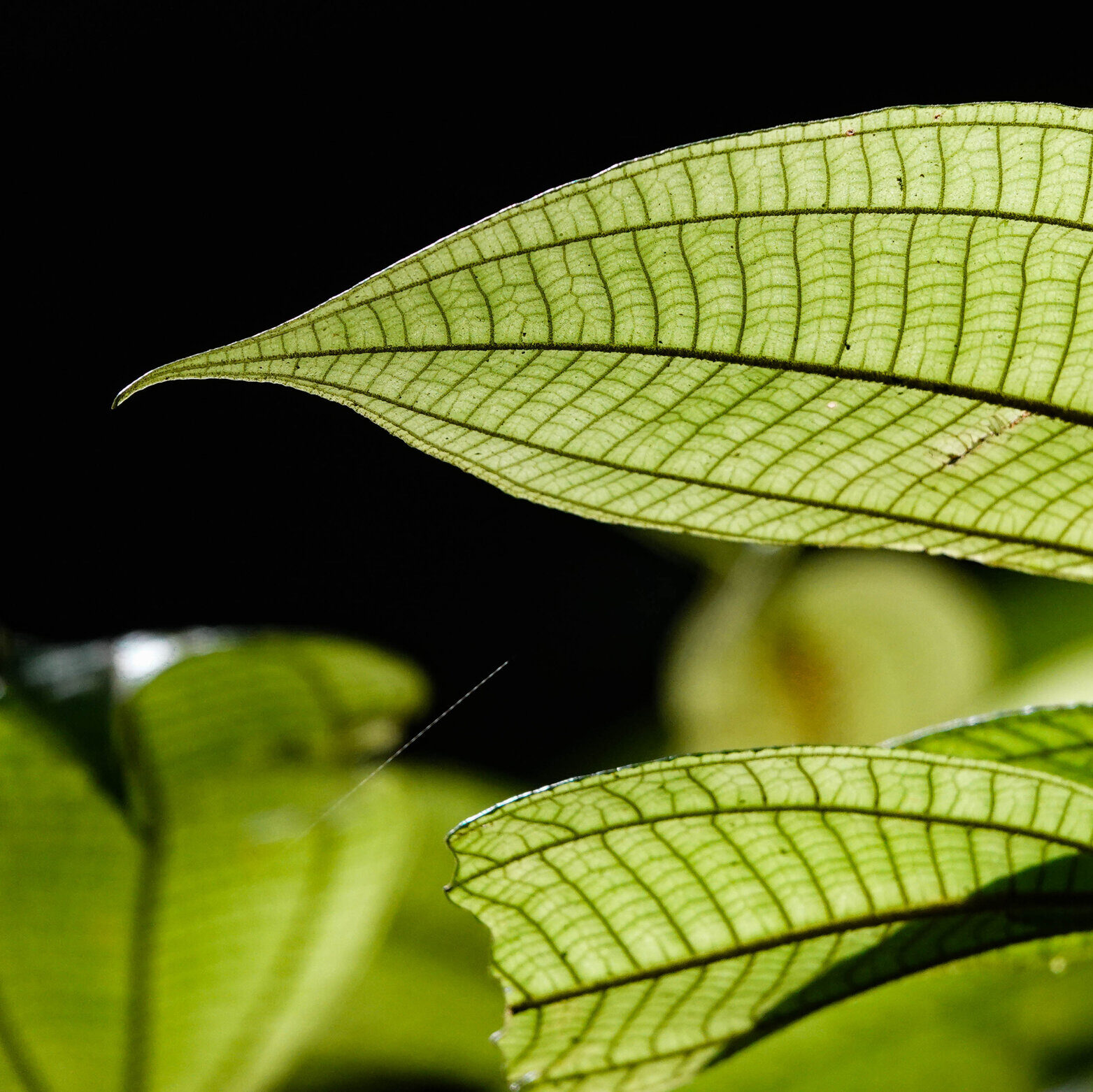
#1: Many leaves in the tropical rainforest have pointed, downward-curving tips, which help rainwater drip off efficiently, ensuring the plant gets properly watered.
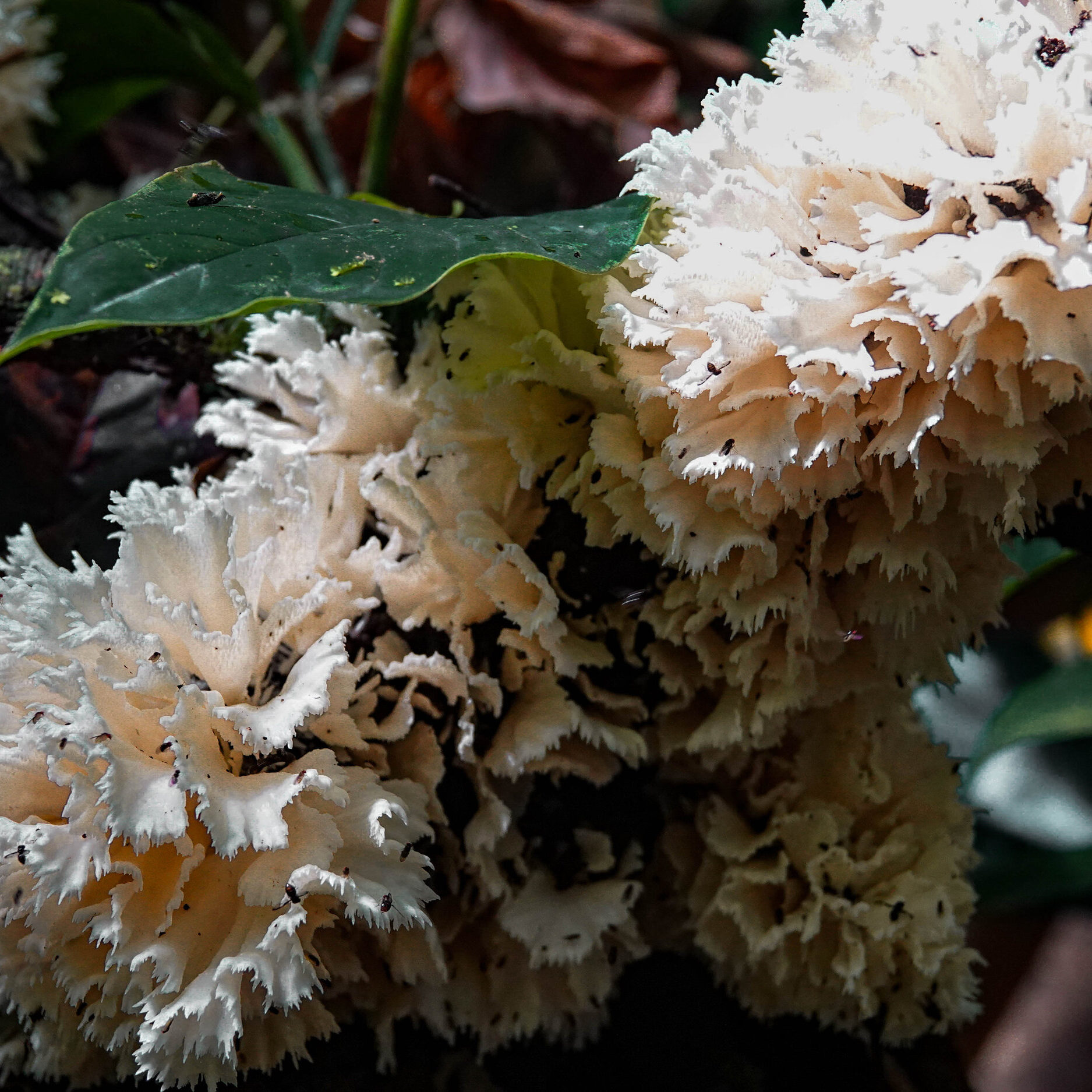
#2: One of the few noticeable fungi in this forest.
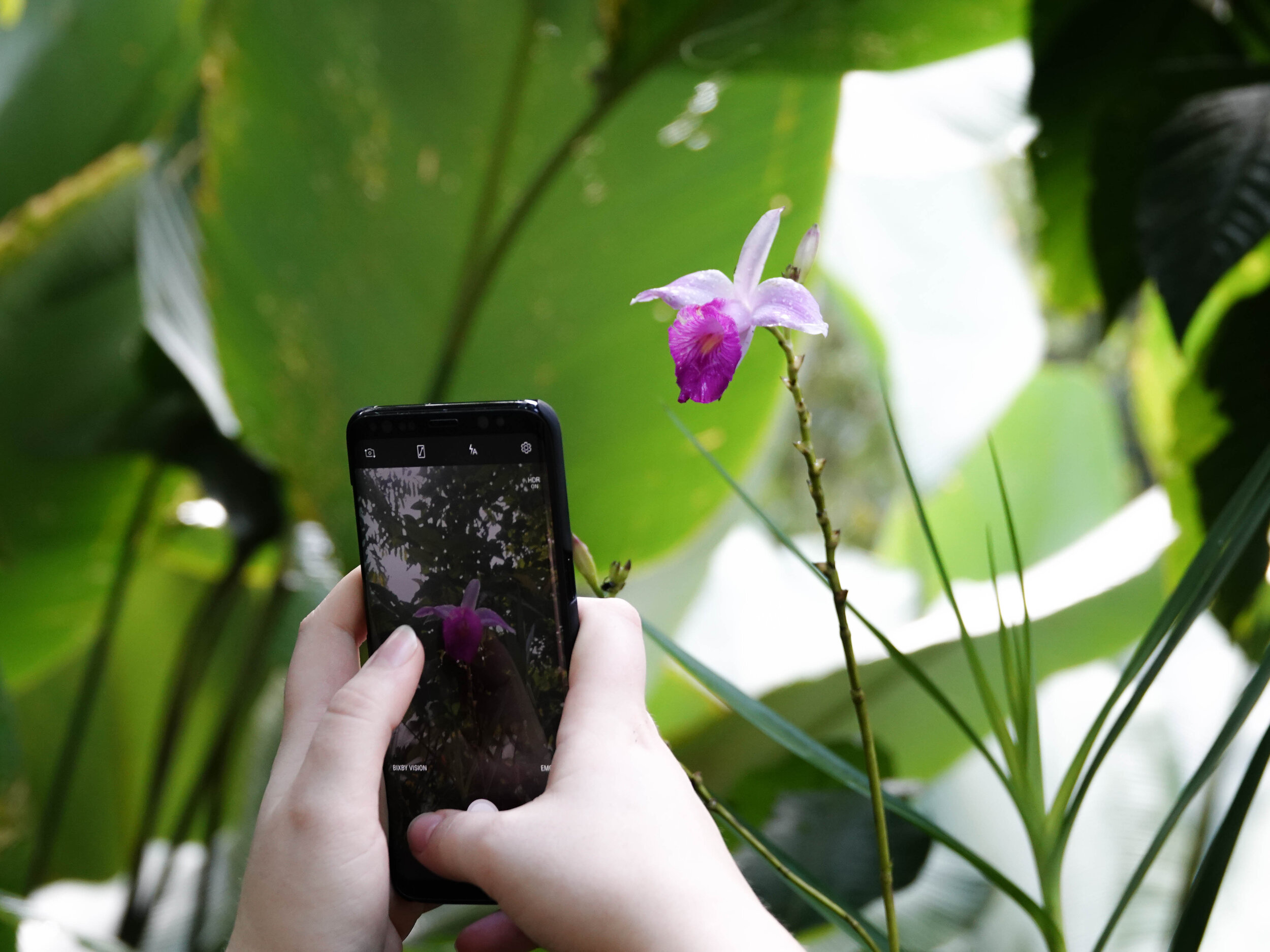
If you love photography, you’re bound to fall behind…
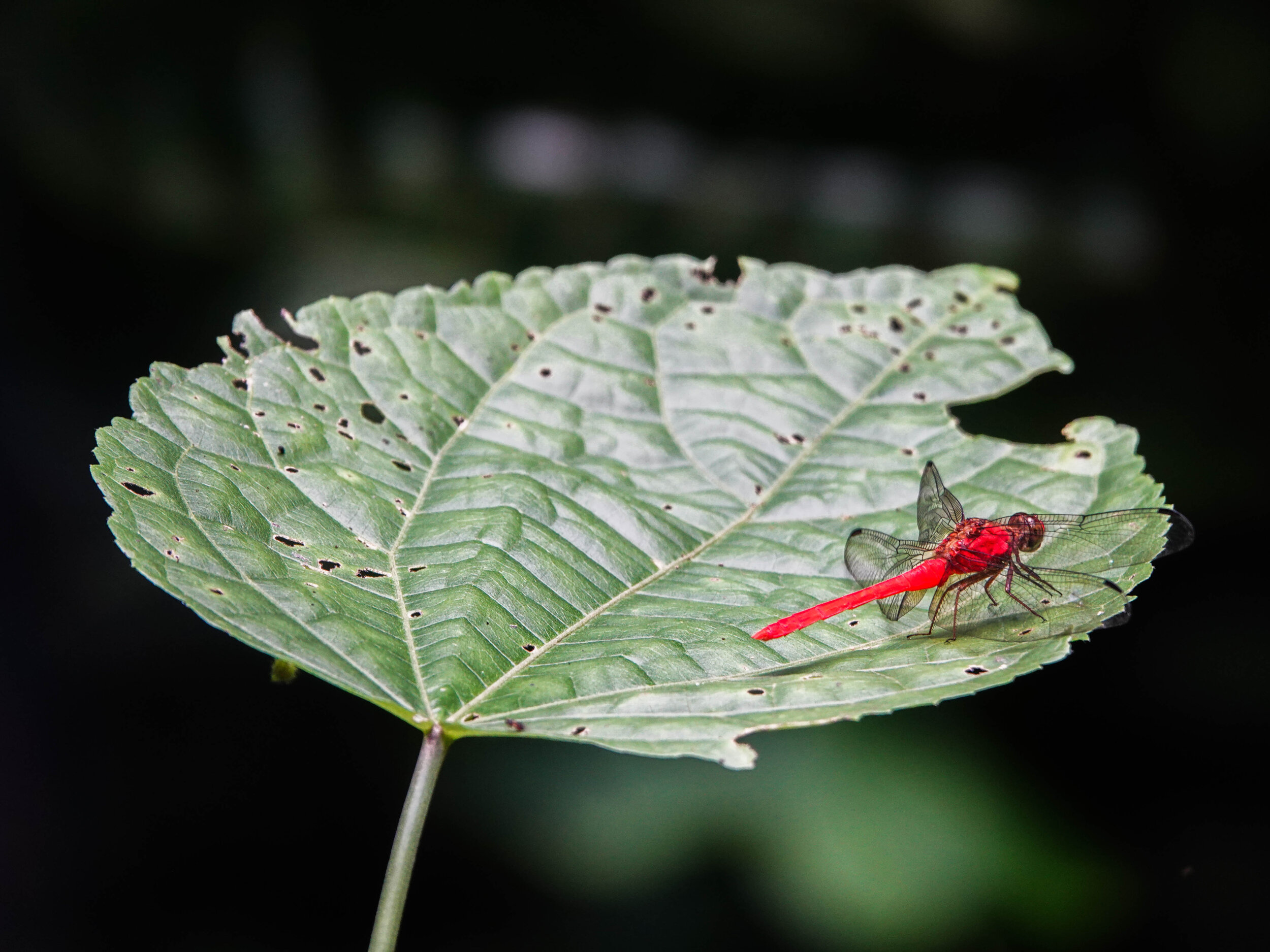
No, I didn’t edit its colour.
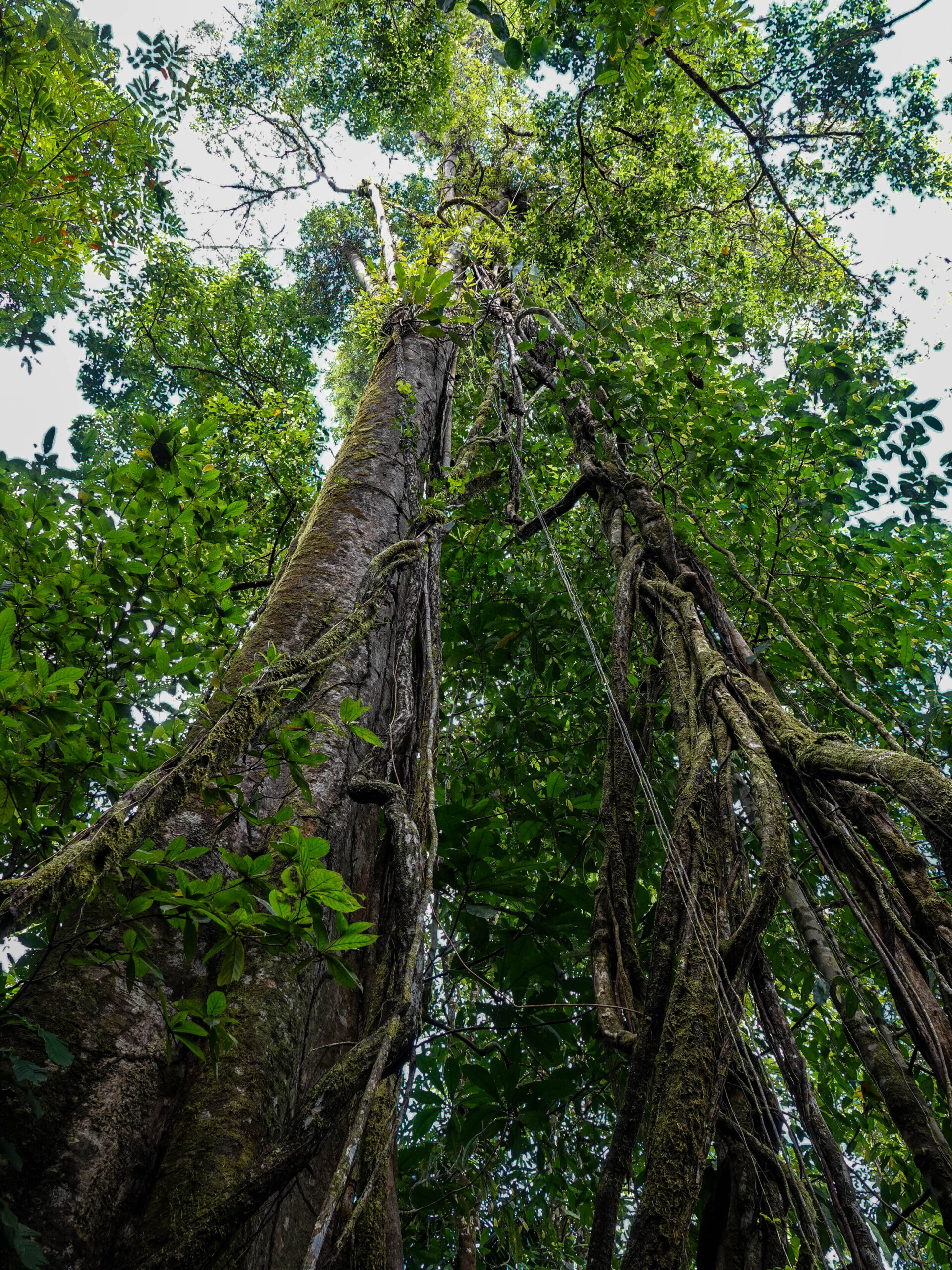
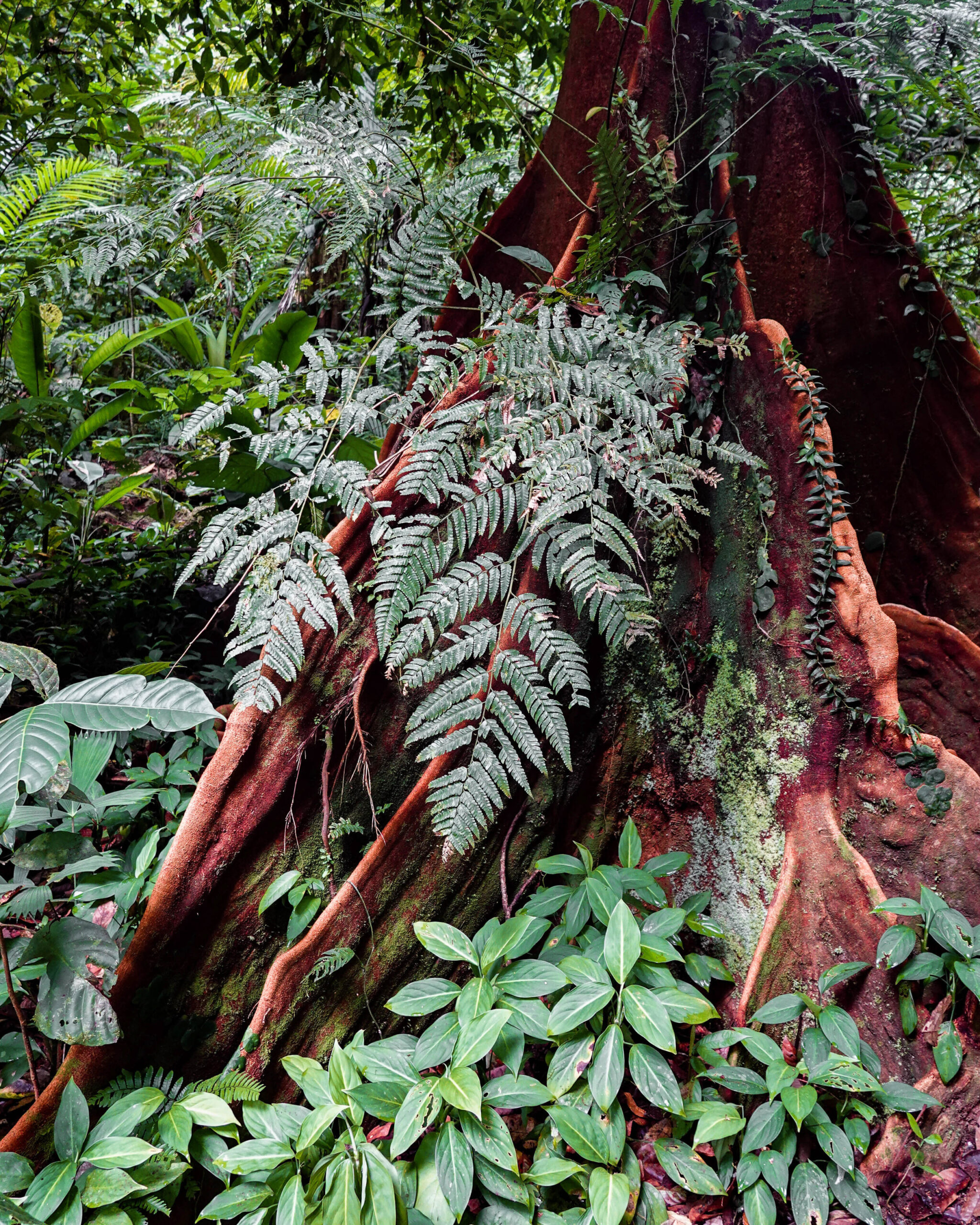
Oh, these roots… they always amaze me!
At one point, I filmed a short section of our forest walk (yes, on my phone—oops) and put together a video. You can watch it here:
Out of our ten-day stay, three days were free, which we could use for independent exploration. A classmate and I went birdwatching—a perfect excuse to soak in the stunning landscape.
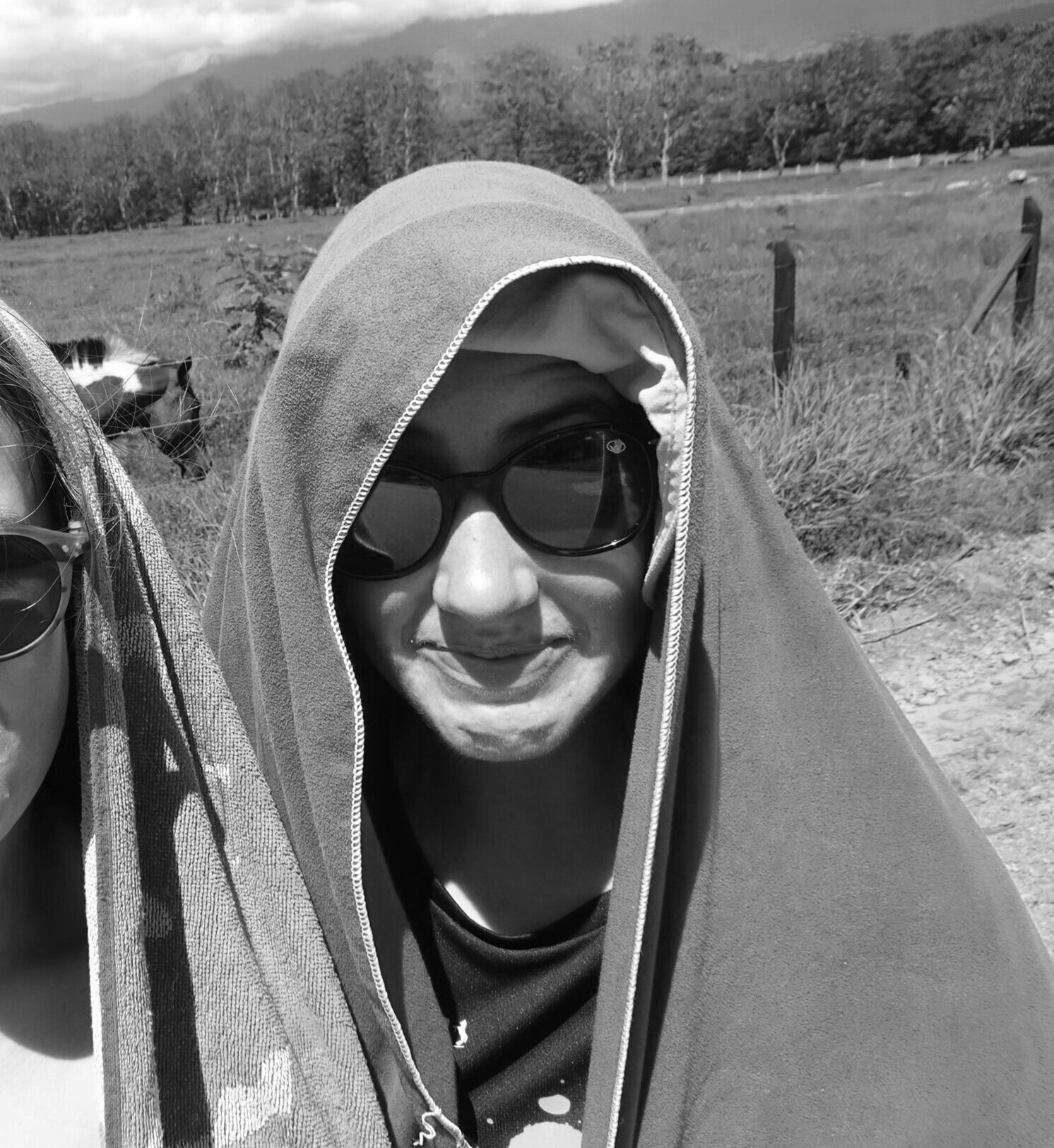
One day, we accidentally hiked far beyond this hill—which resulted in an hour-and-a-half-long trek back under the scorching midday sun, with zero shade. Our survival kit? Long sleeves, a hat, sunglasses, sunscreen, water, and a towel draped over our heads:
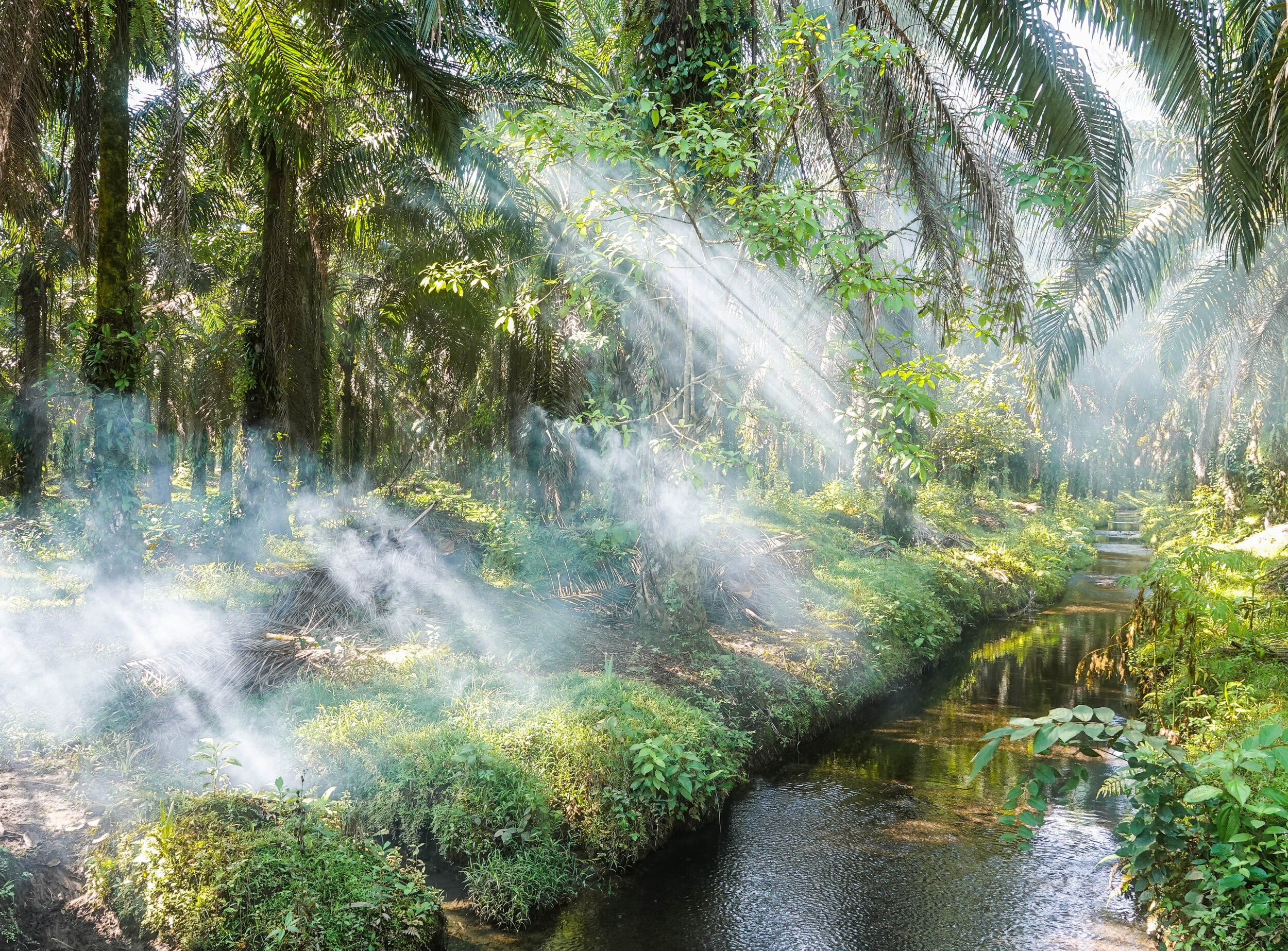
From afar, this forest seemed to be covered in morning mist, lit by the rising sun. But the truth was quite different…
This wasn’t natural mist. It was smoke—rising from burning dead palm fronds in a plantation of African oil palms.
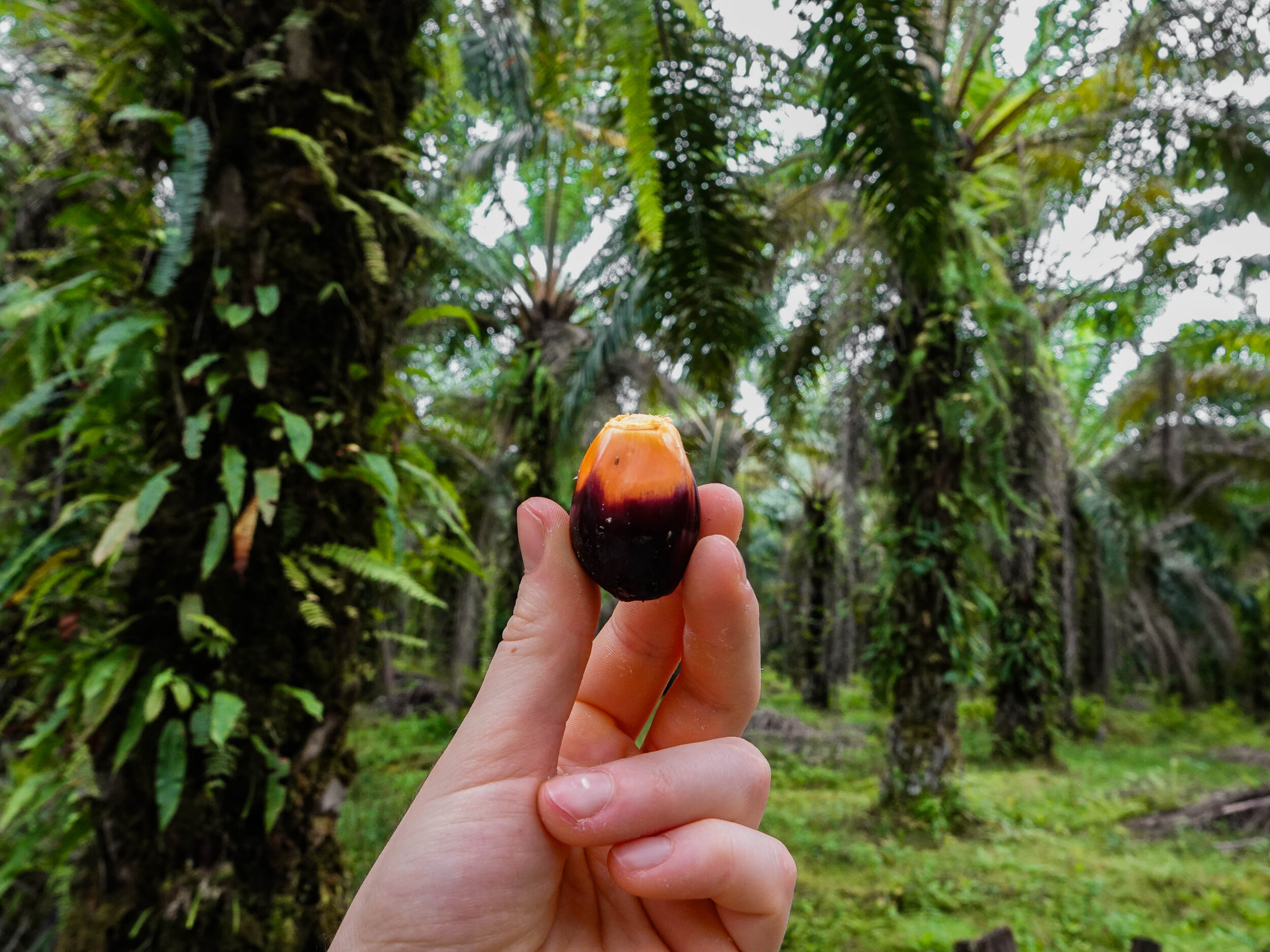
Costa Rica produces only 0.2% of the world’s palm oil. In Germany alone, 50% of palm oil is used for biodiesel. By 2050, global consumption—and production—is expected to double.
One hectare of land can hold 400 trees, which must be spaced apart. The harvest is done manually, using long poles with blades at the end. This happens four to five times a year.
A single fruit bunch weighs around 30 kg. When the trees reach 20 metres in height, they become too tall to harvest—so they are ‘killed’, making room for new growth.
The palms are ready for harvesting after about three years, and the fruits must be delivered to the factory within a day—otherwise, they start to rot. A hectare of palm oil plantations brings in around $10,000 per year.
Back to Birdwatching…
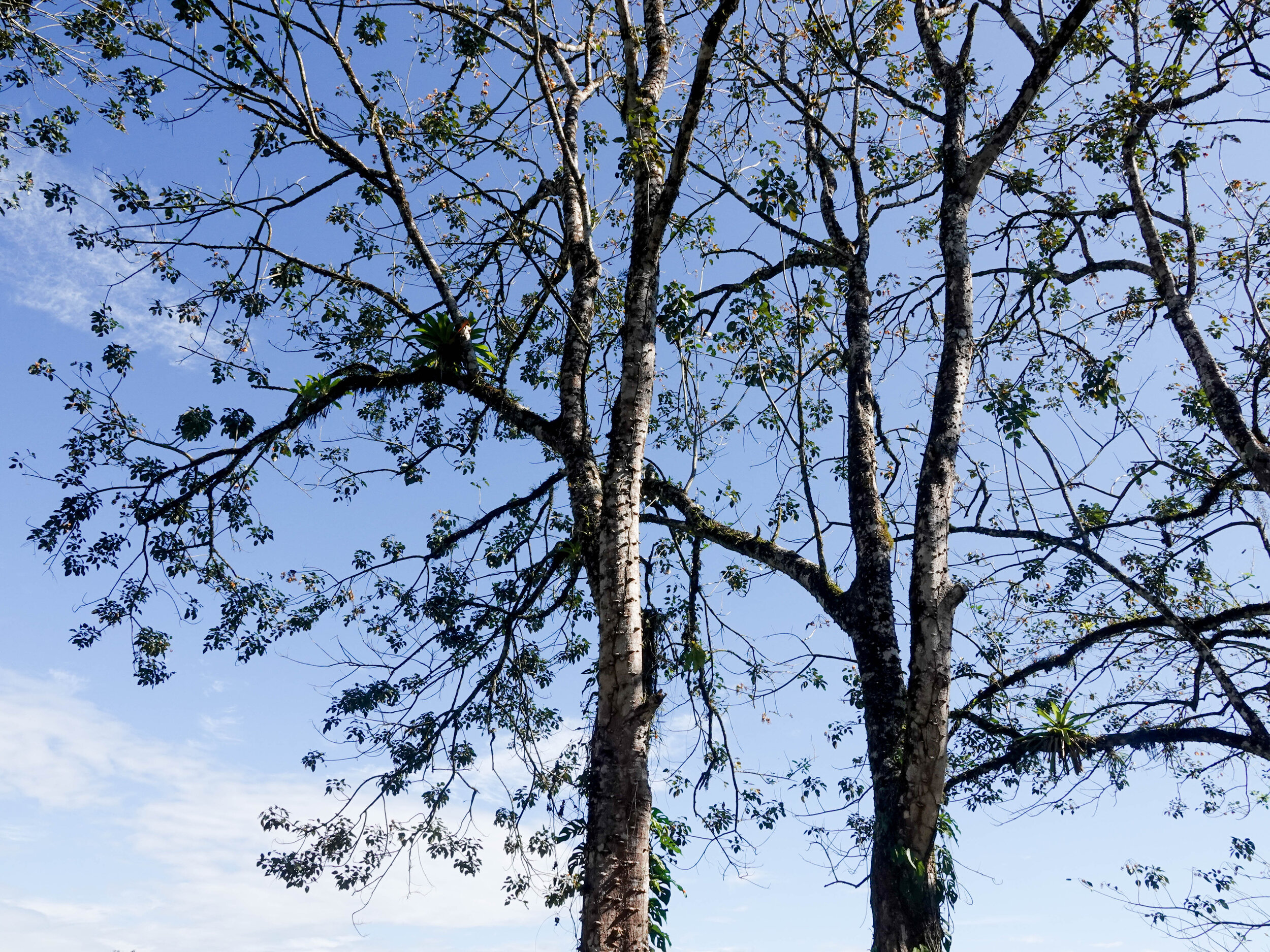
On one side of the path: palm oil plantations. On the other: tall forest trees, filled with chirping and fluttering birds.
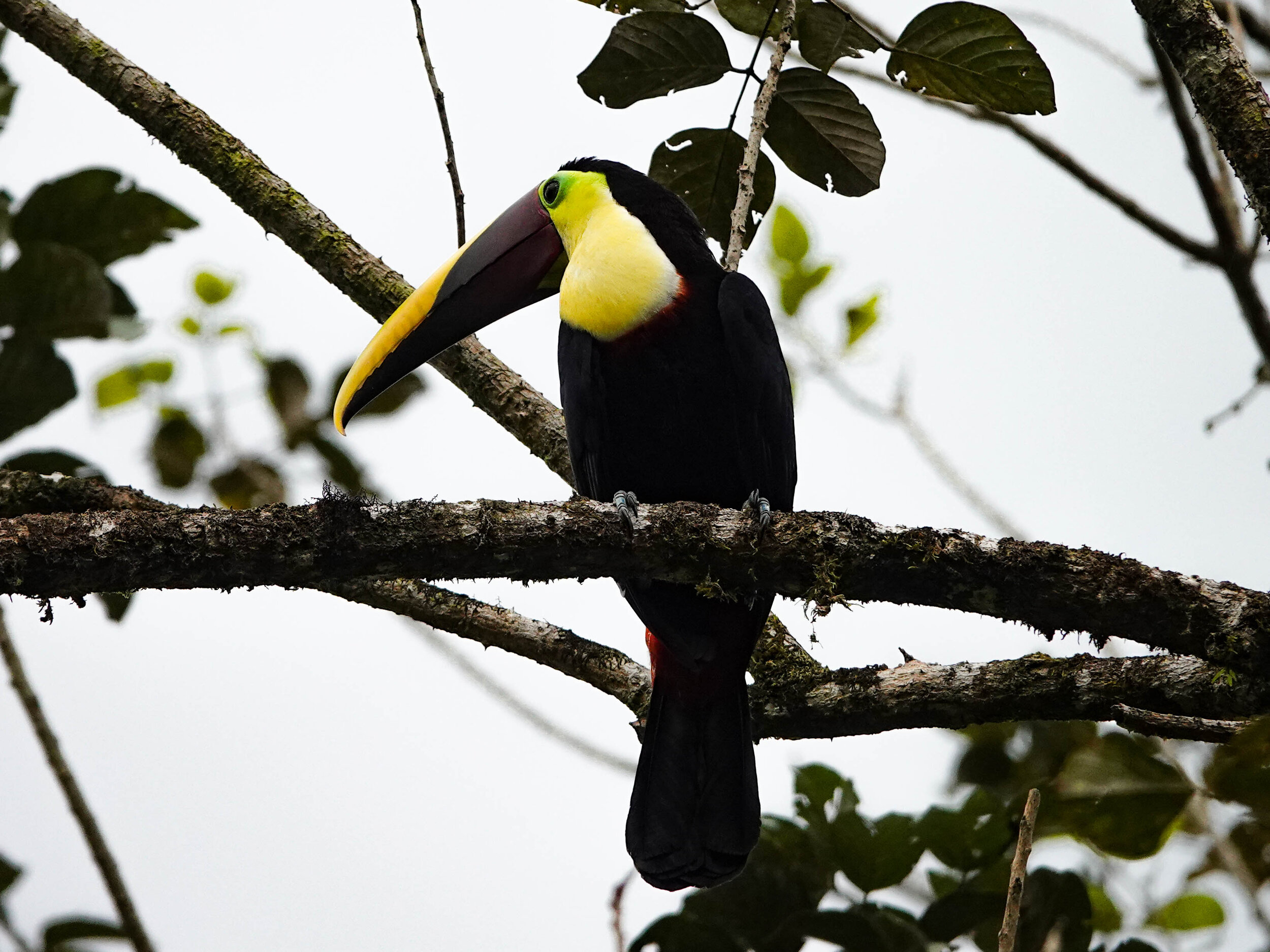
And yes, among them—the iconic toucan!
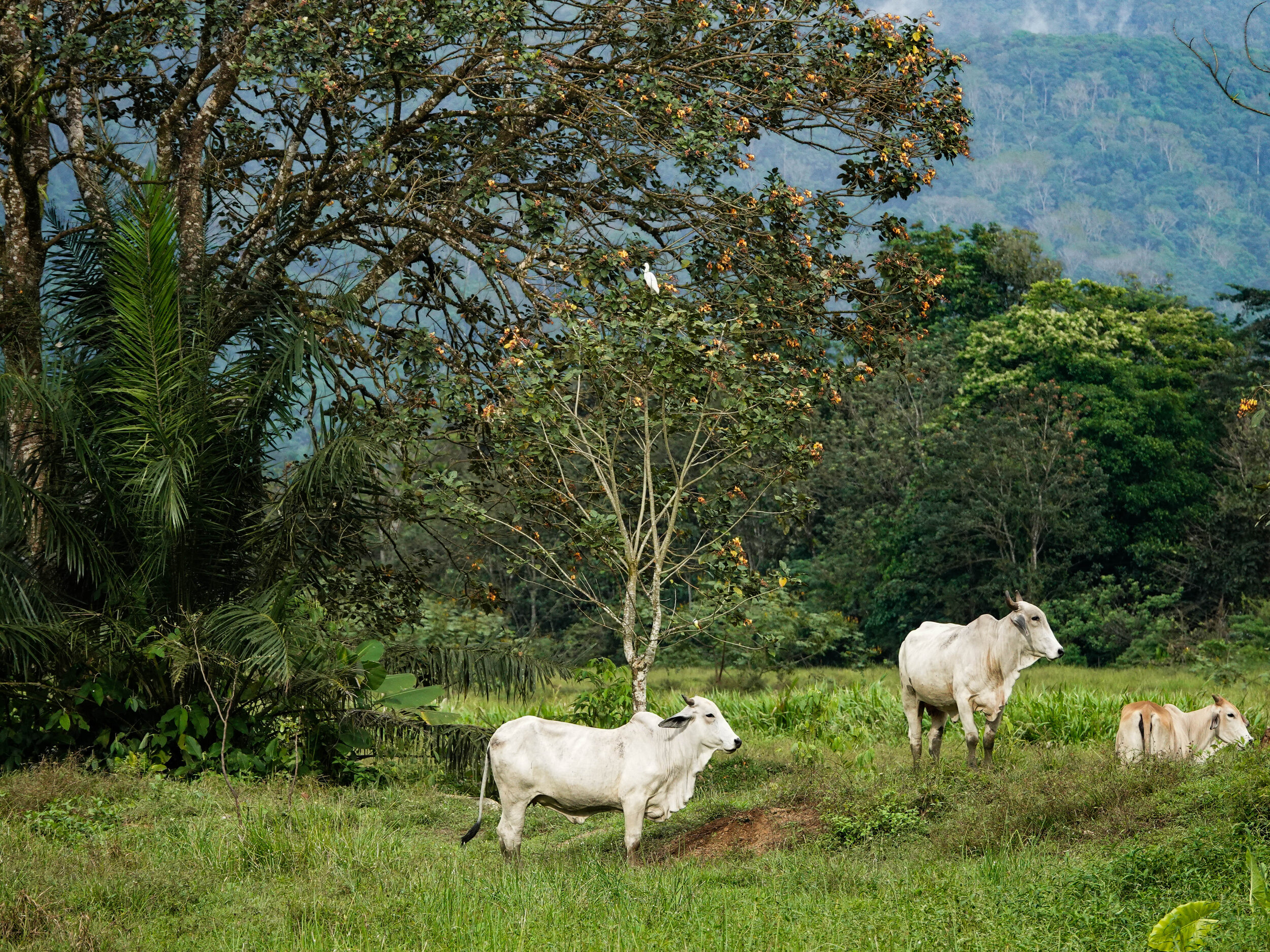
In the background, cattle grazed—one of Costa Rica’s few industries less fond of the forest ecosystem.
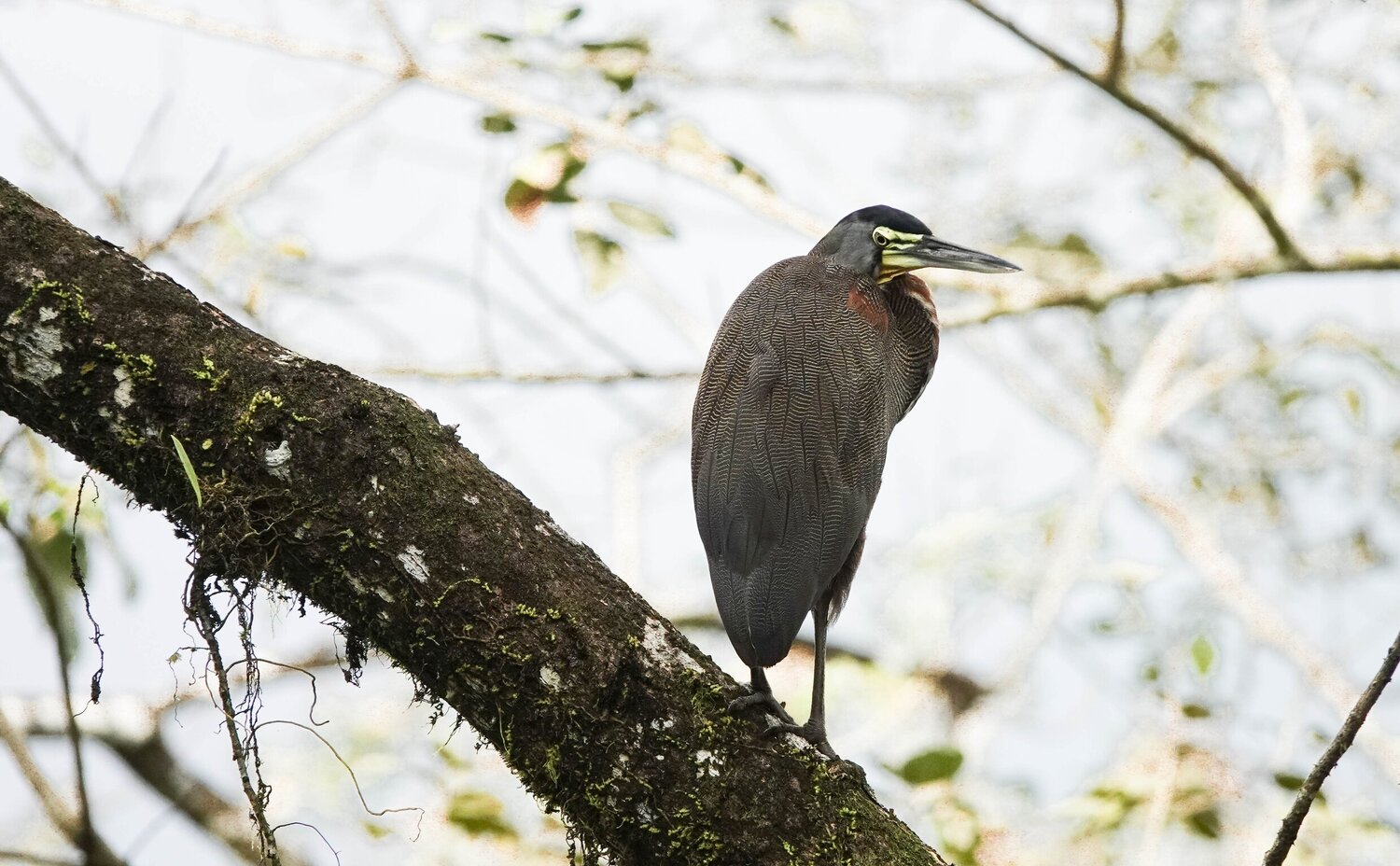
If you've read my previous blogs, you may already know it - the bare-throated tiger heron.
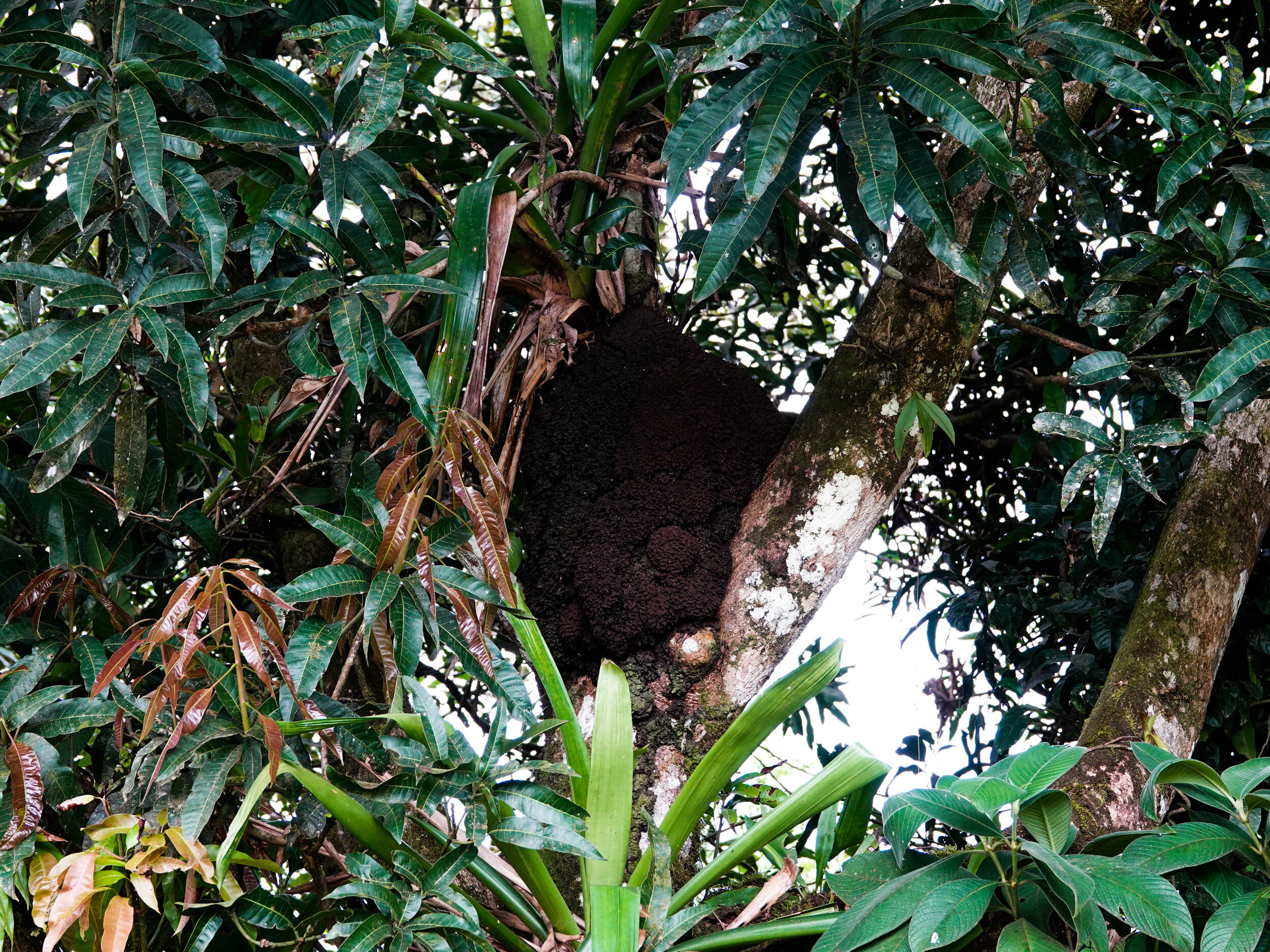
At first glance, these termite nests looked like sloths. Some were abandoned, later taken over by bees, wasps, or even bats.
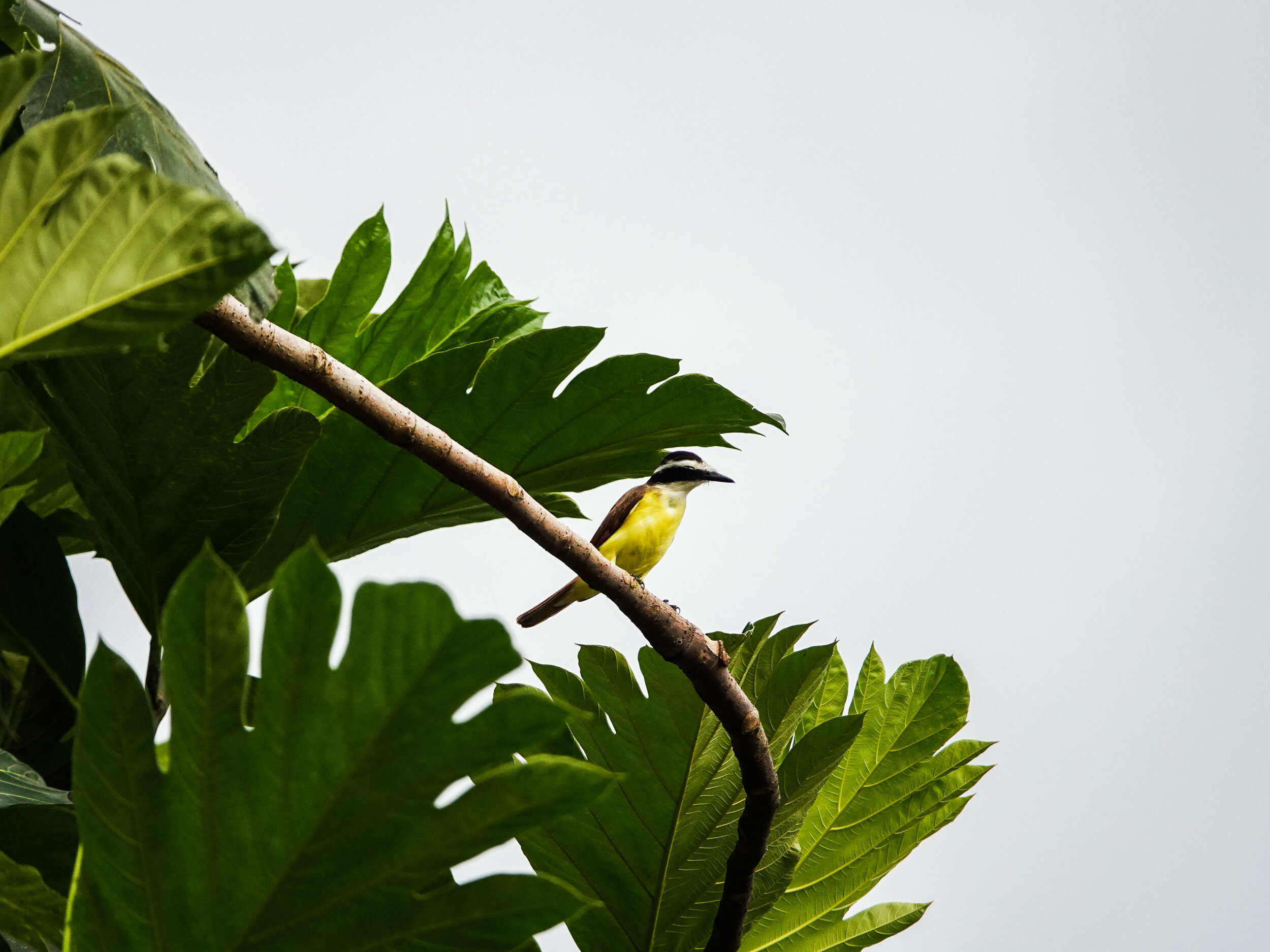
One of the most photogenic birds: the Great kiskadee.
We also saw…
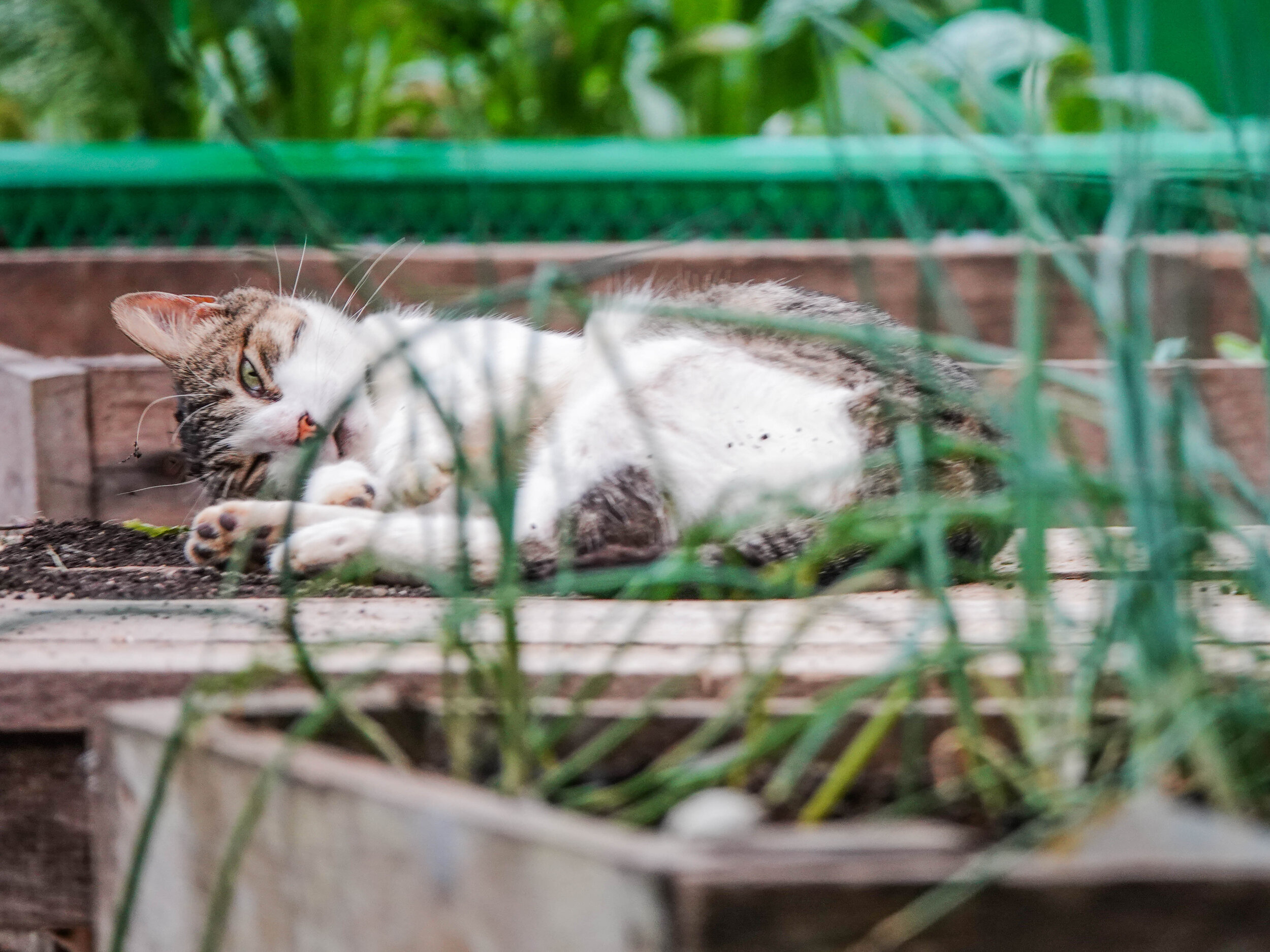
Cats! Hehe
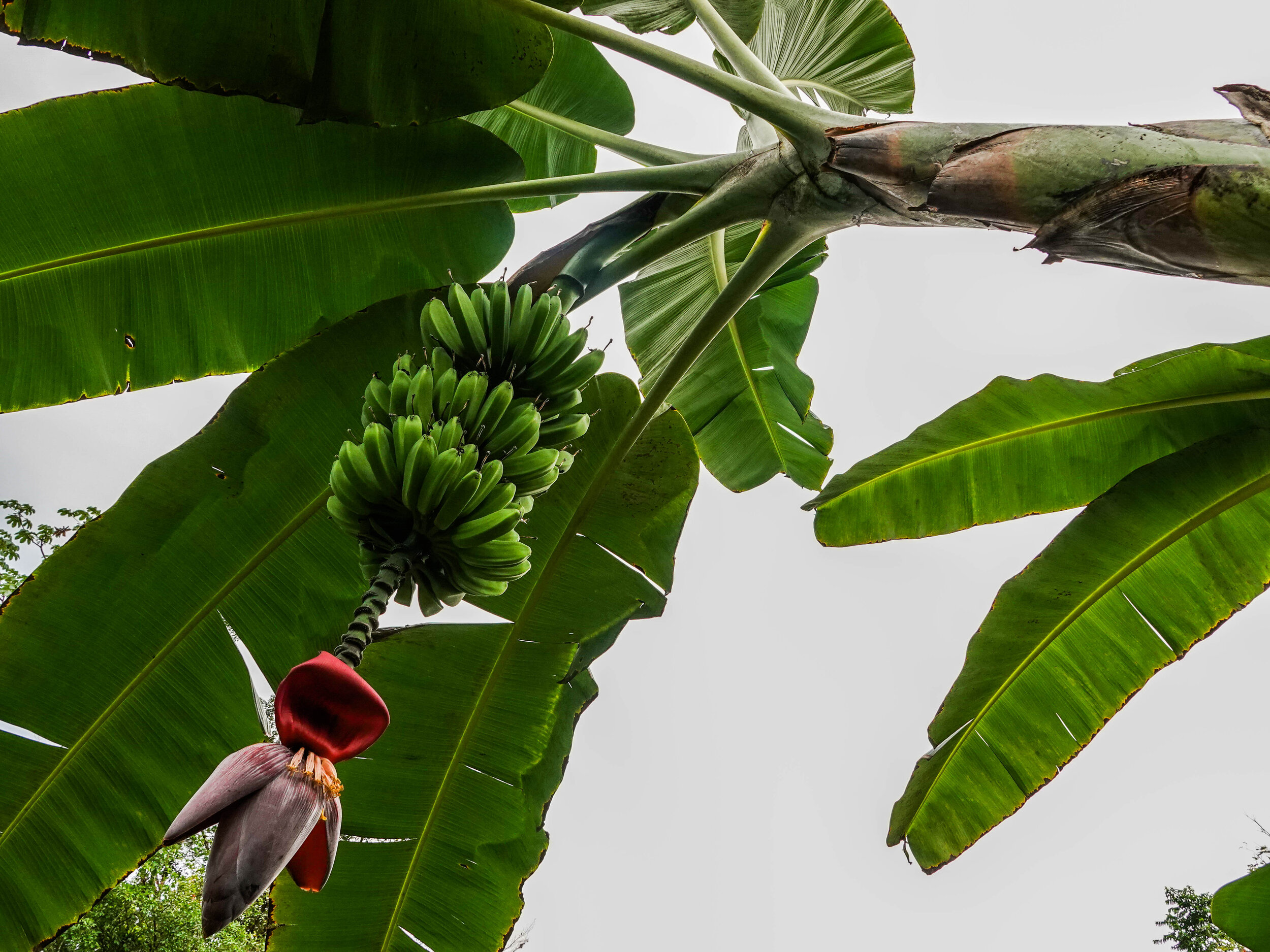
A banana tree—it produces fruit without pollination, and after harvest, it’s cut down, allowing a daughter plant to grow in its place. After about ten years, a new tree is planted.
Find the intruder!
Every day brought new, fascinating plant species.
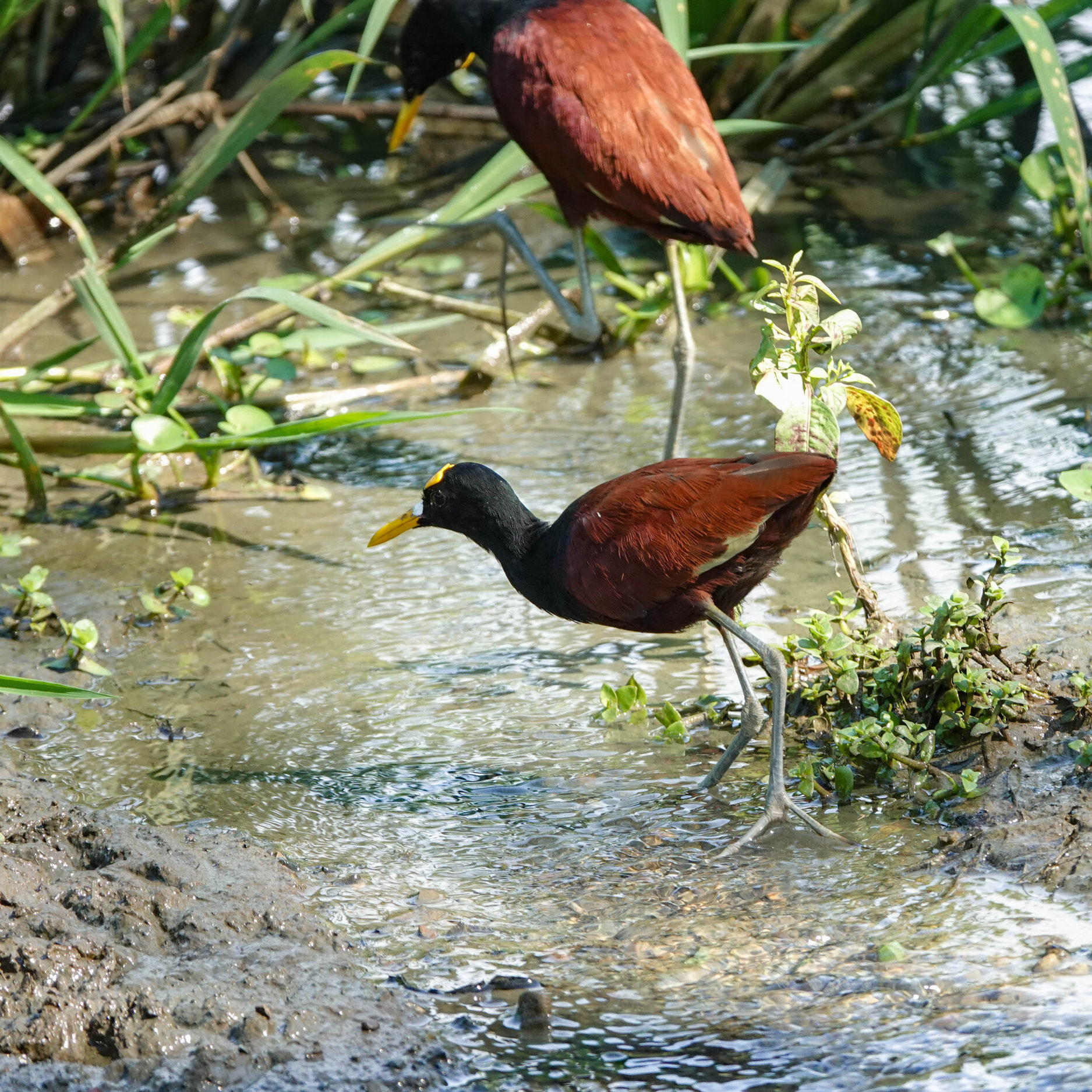
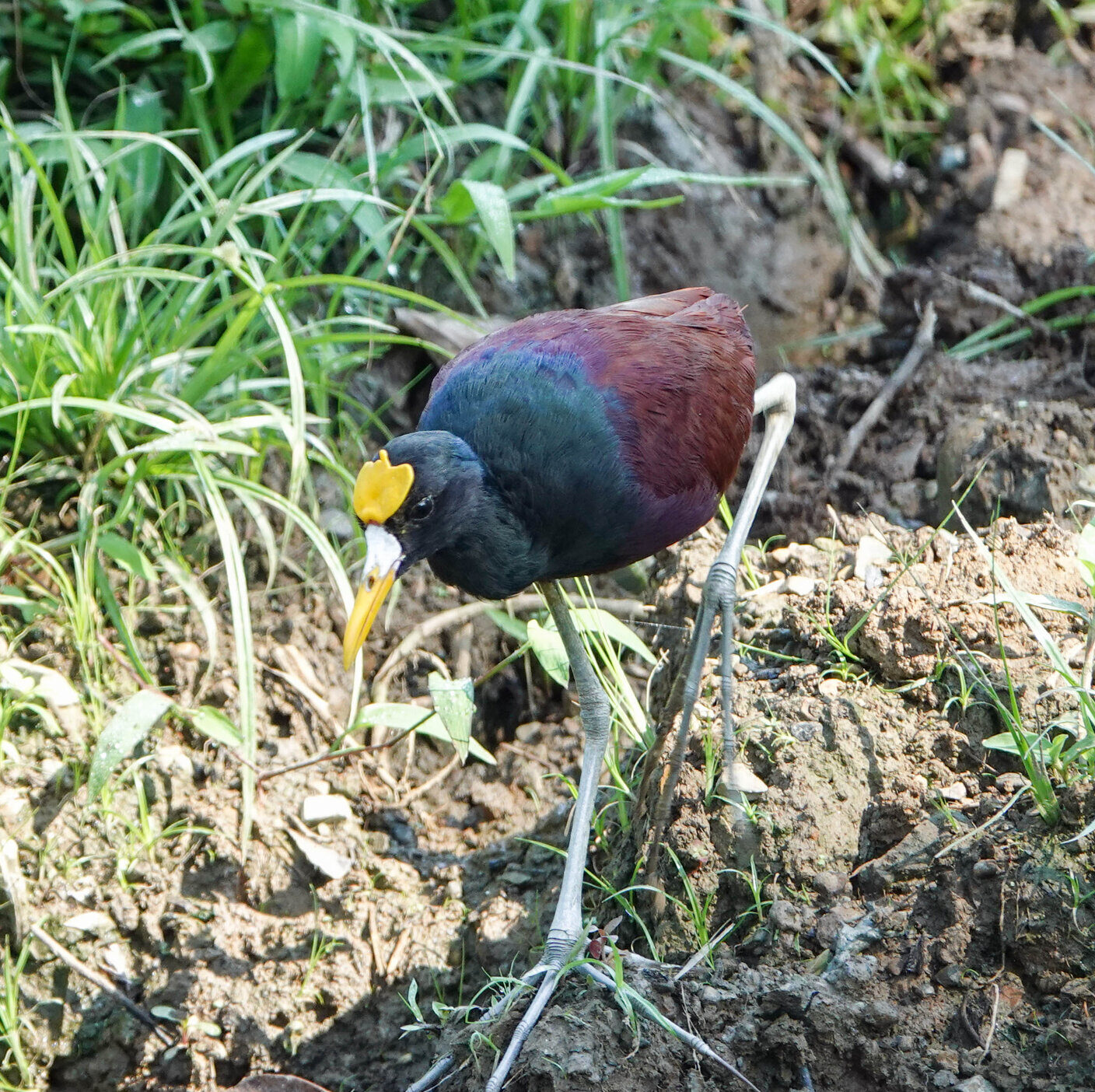
A Northern jacana (Jacana spinosa)—a wading bird.
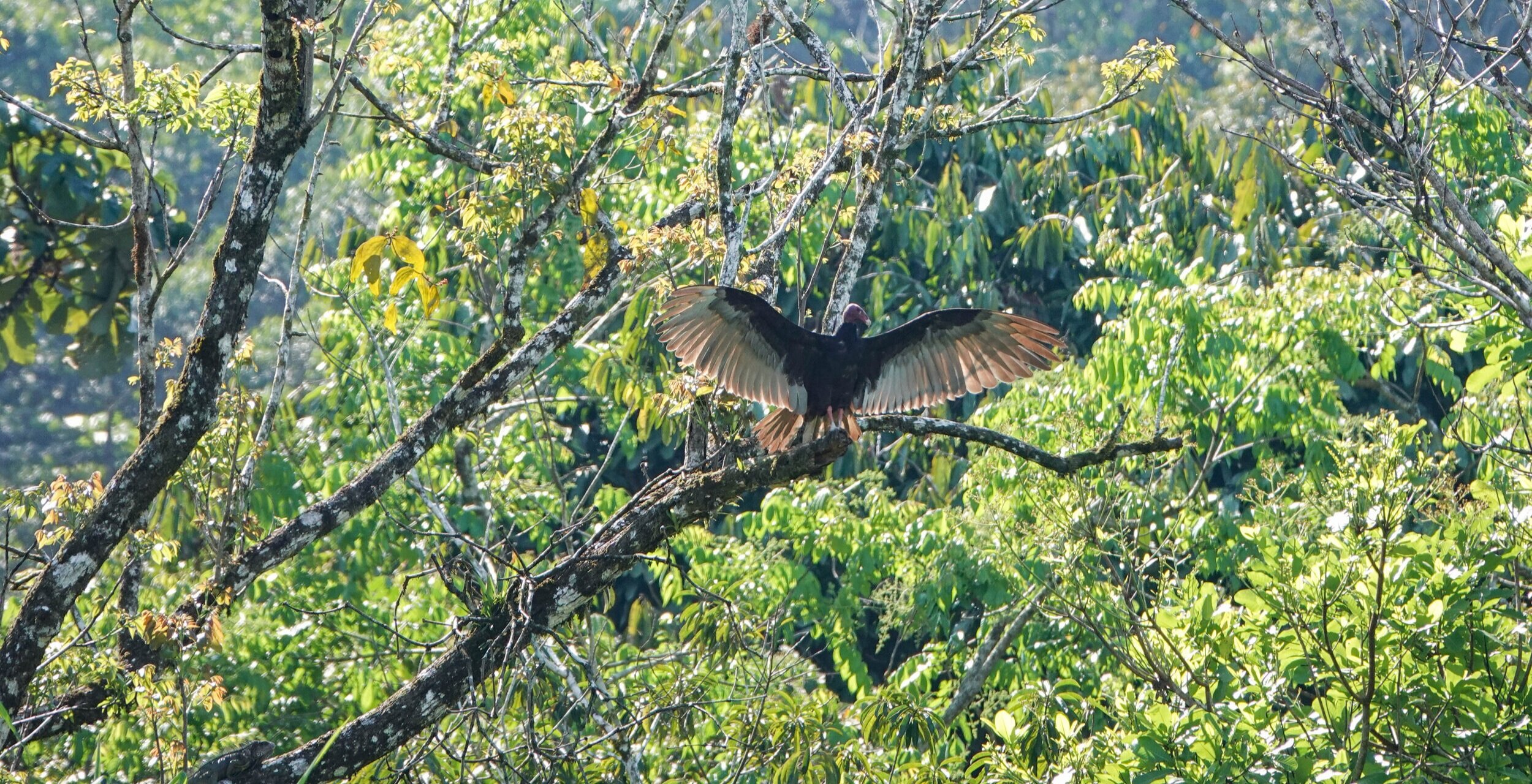
A vulture drying itself—or preparing for flight.
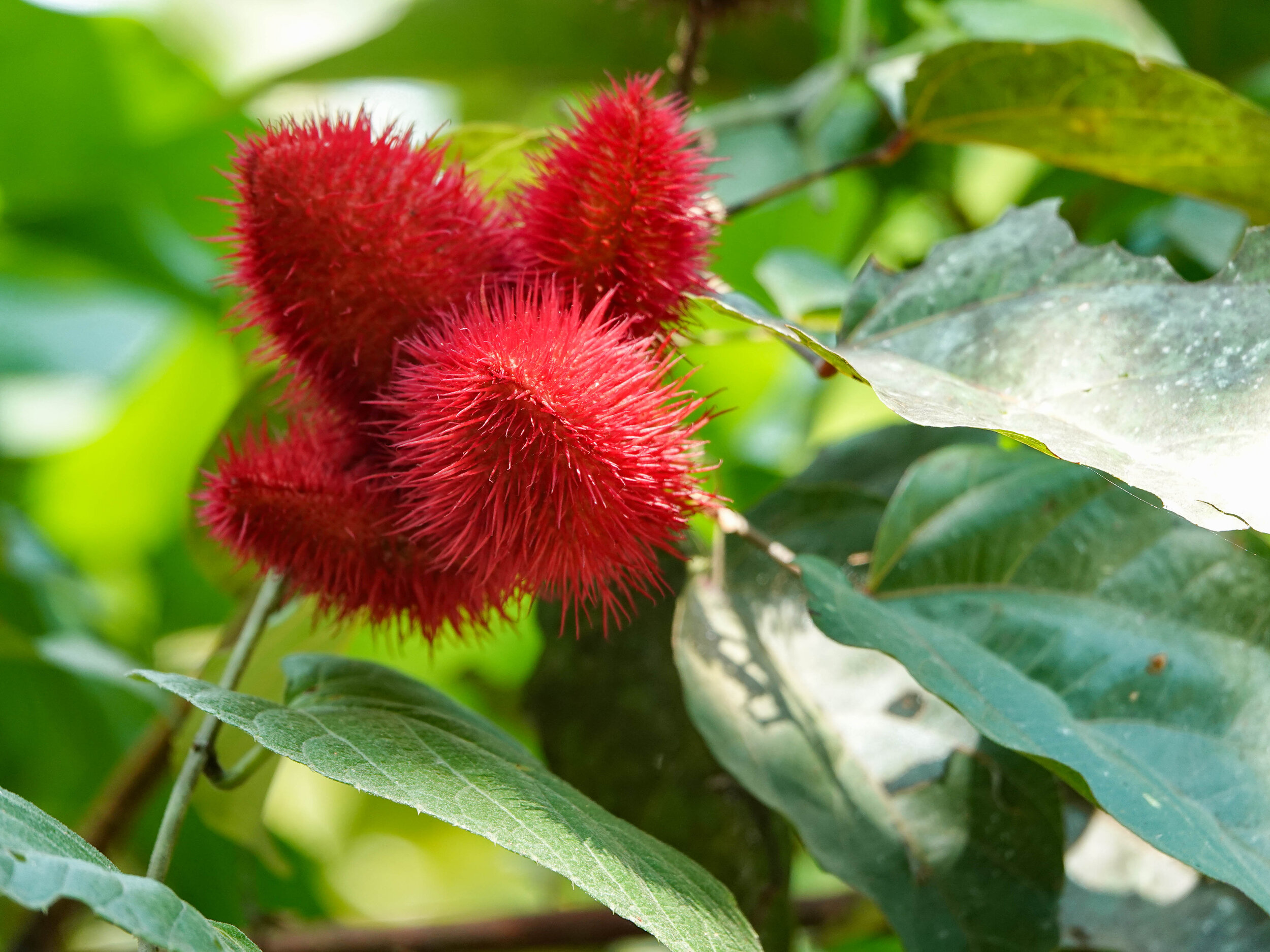
A truly fascinating shrub – Bixa orellana. Inside, it holds vibrant red “seeds” once used by Indigenous peoples as a natural dye. The colour contains both water- and oil-based components, allowing it to mix well in any medium – perfect for creative work. On top of that, it also acts as a natural insect repellent.
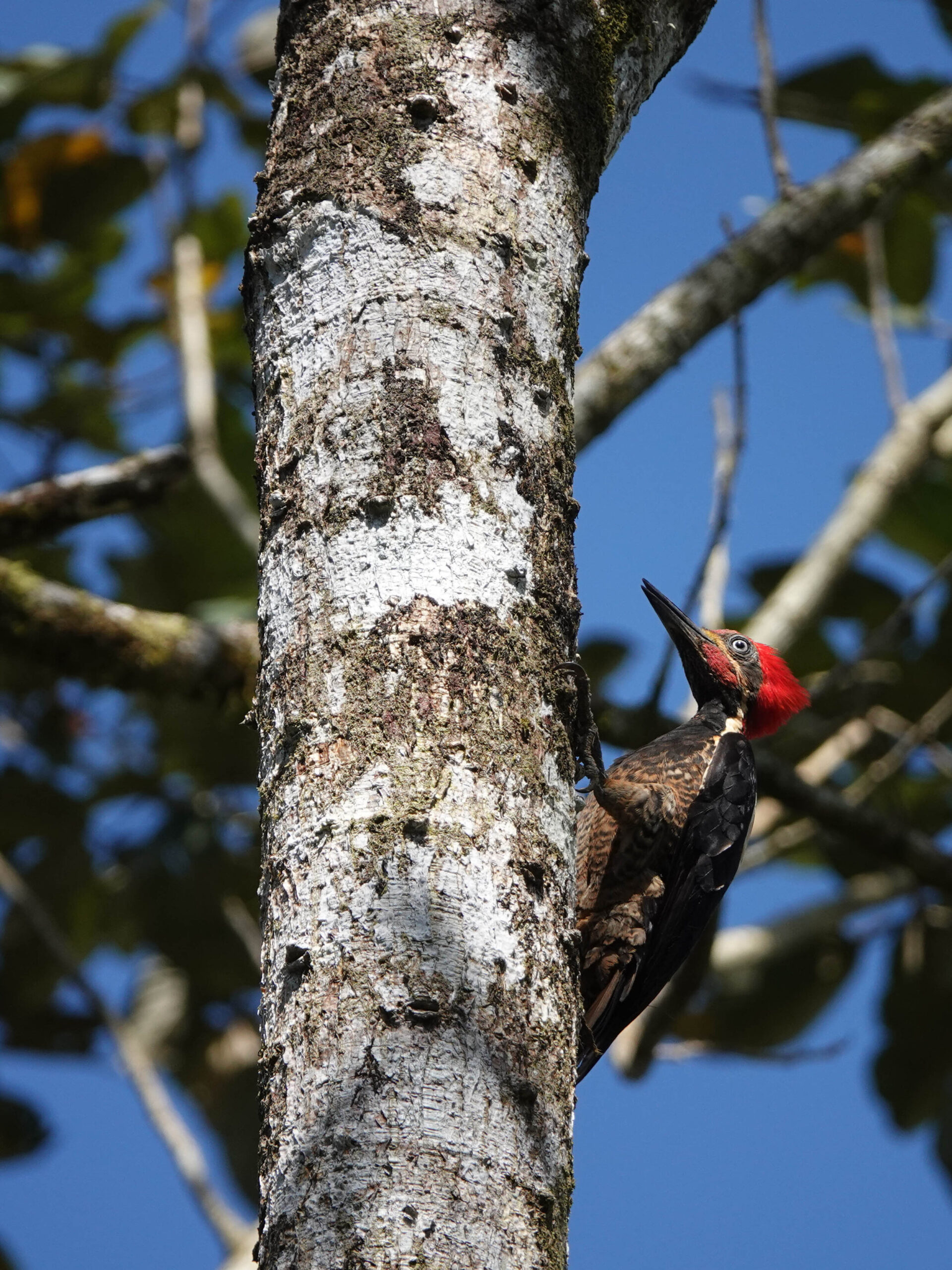
A Lineated woodpecker—a species I saw only here.
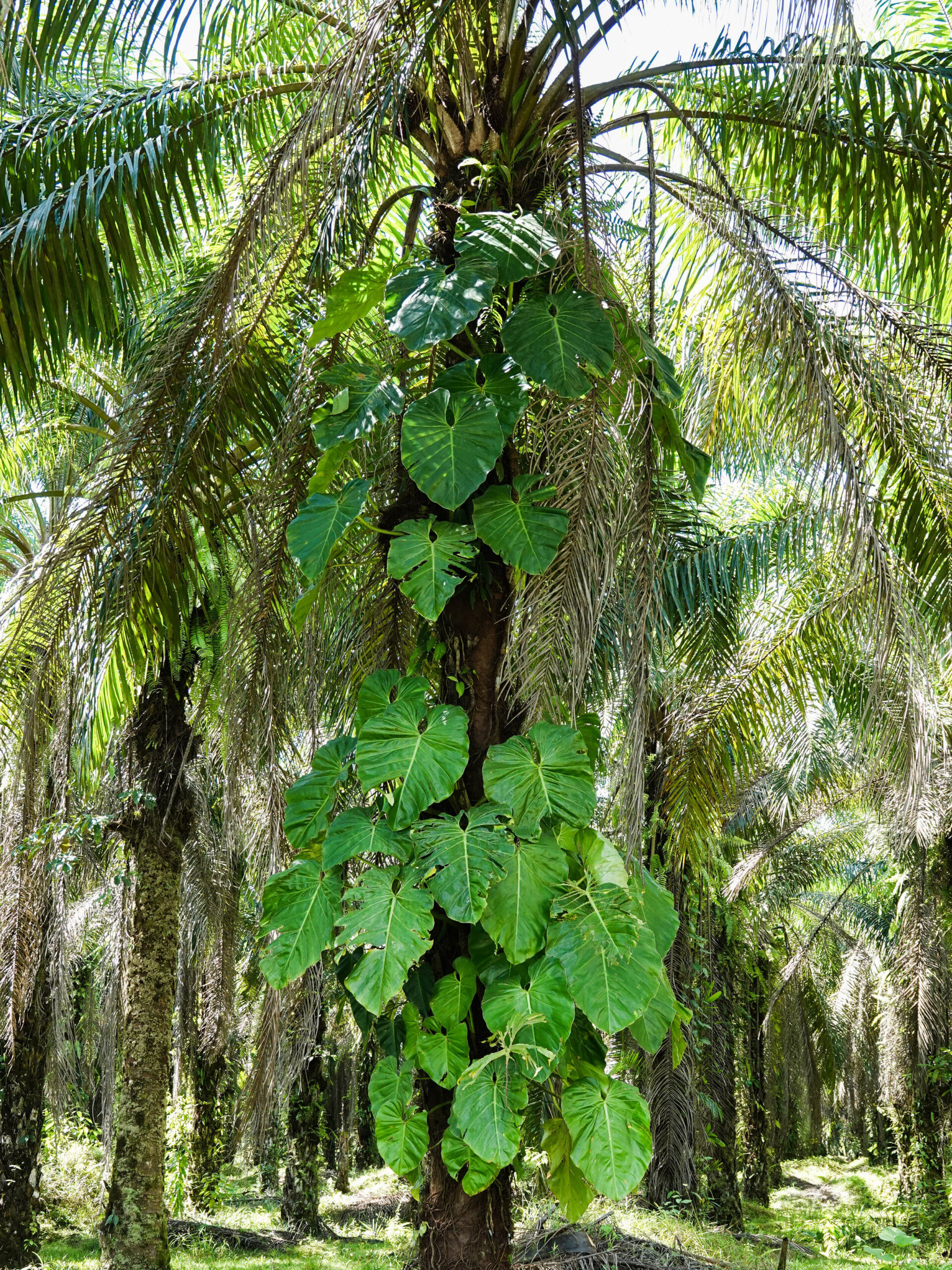
Supporters of palm oil plantations claim they provide a habitat for wildlife. They’re partly right…
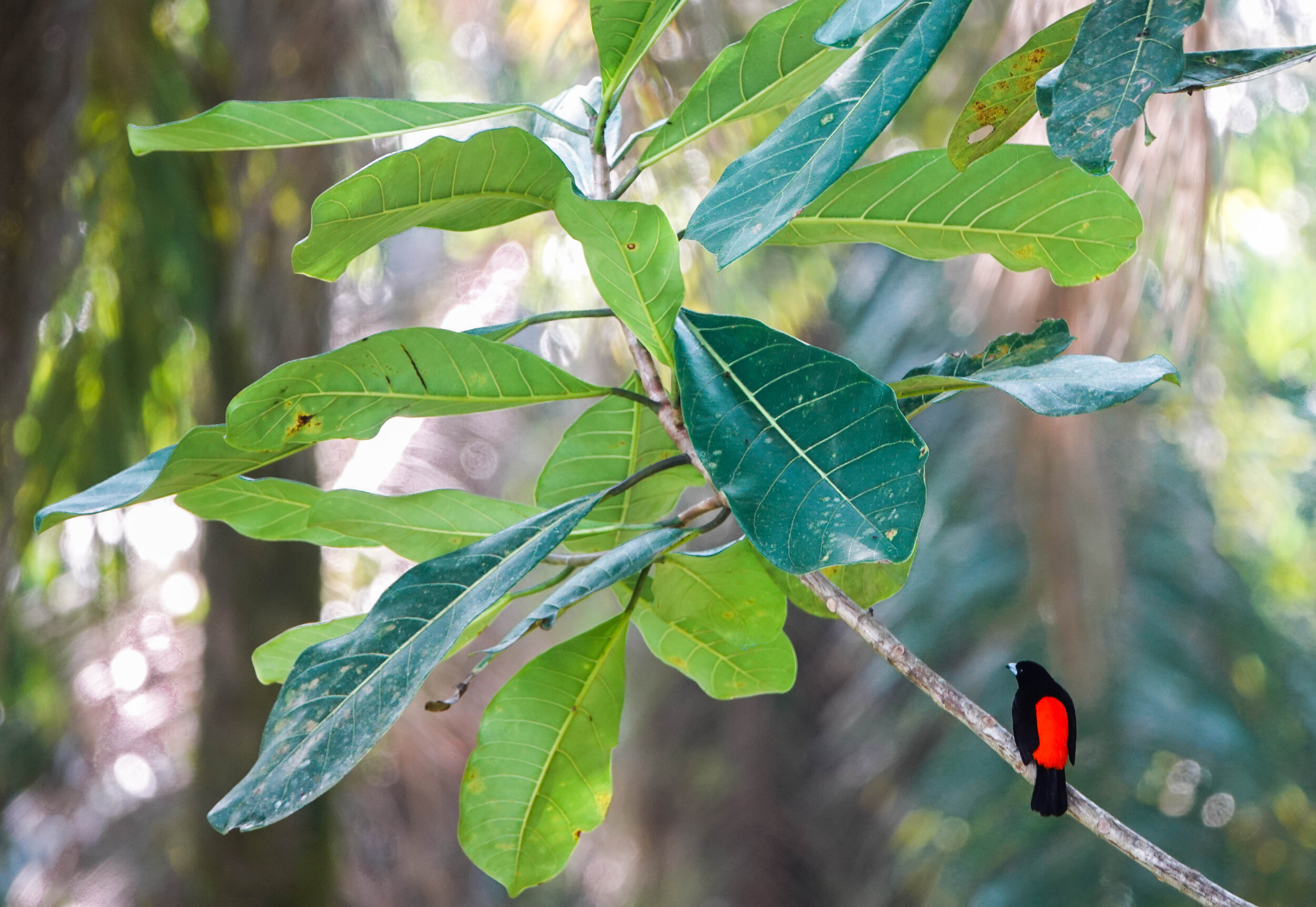
I spotted a Scarlet-rumped tanager…
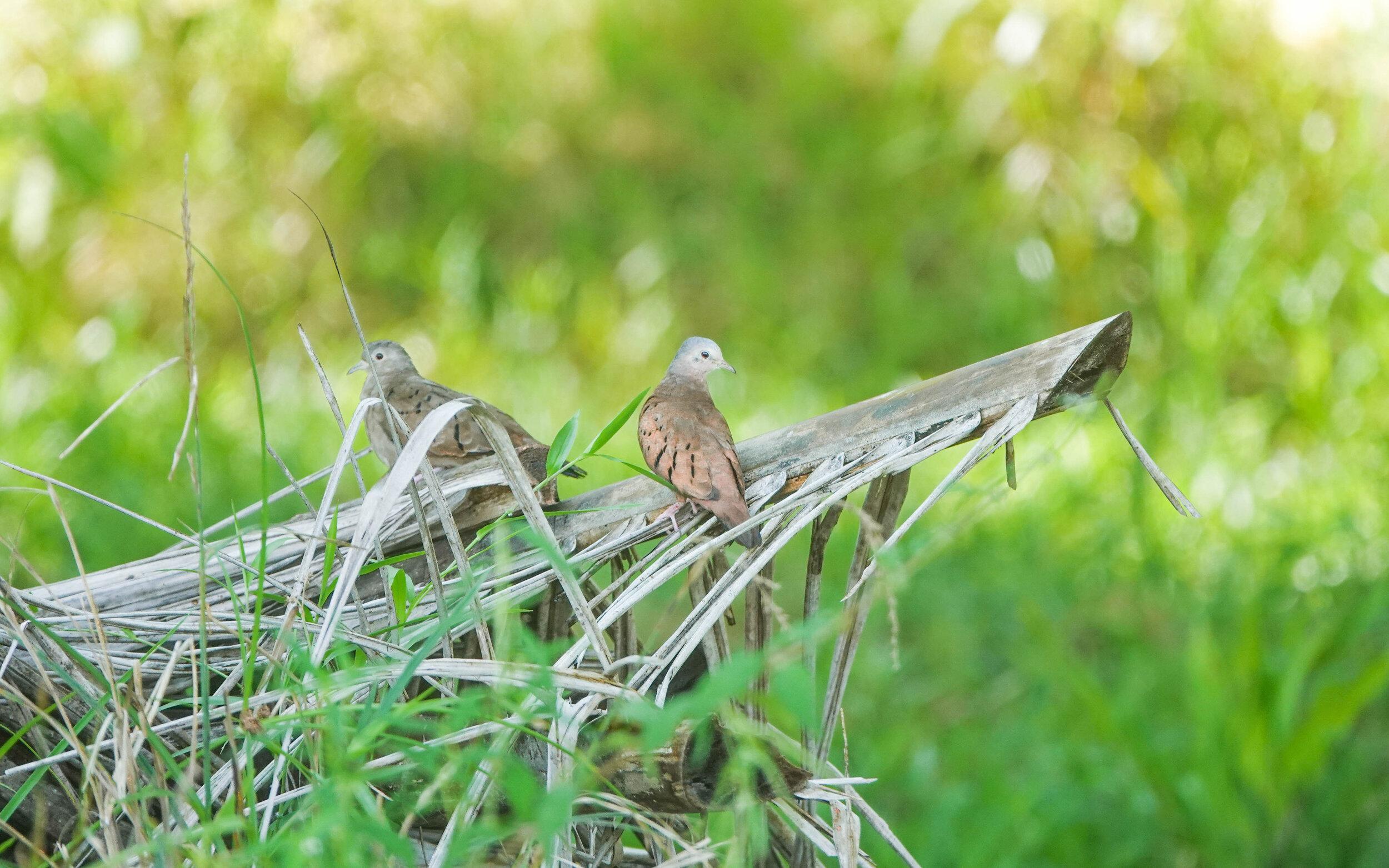
…and this adorable pair.
Everything we saw and experienced came and went in a flash. Departure day arrived far too soon.
I wanted to include everything from La Gamba in this post, which is why it turned out so long. If you made it to the end—congratulations!
There’s still so much more I want to share with you…