12th July is a special date for me for several reasons.
One of them is that exactly a year ago, I accepted an offer to enrol in my dream study programme in Denmark…
You probably already know that this chapter ended earlier than expected (you can read that post here), but the Danish inspiration stayed with me!
my neighbourhood
In the six months I lived in the Danish capital, I noticed some things that still inspire me to this day. And I want to share a bit of that inspiration with you – maybe it’ll touch you too.
Let’s dive in!
Lots of glass
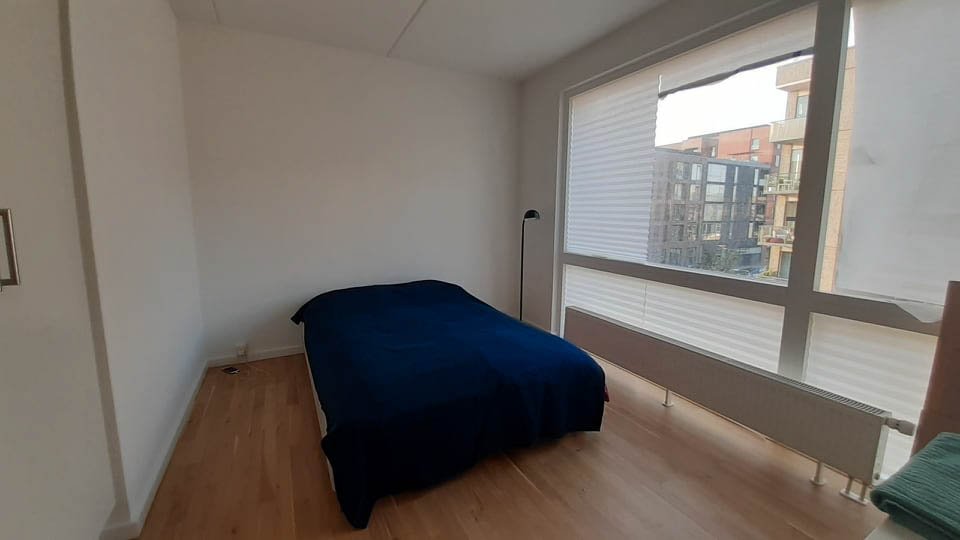
One thing that amazed me already during my flat-hunting in Copenhagen was the sheer size of the windows. Well, not everywhere – mostly in the newer neighbourhoods. My room, for instance, had an entire wall made of floor-to-ceiling windows. In my opinion, spaces like that are so much more pleasant to live in – they’re bright and feel even bigger than they really are. And they’re not cold at all, as you might expect – I hardly ever had to heat my room in winter.
my room – before I moved in
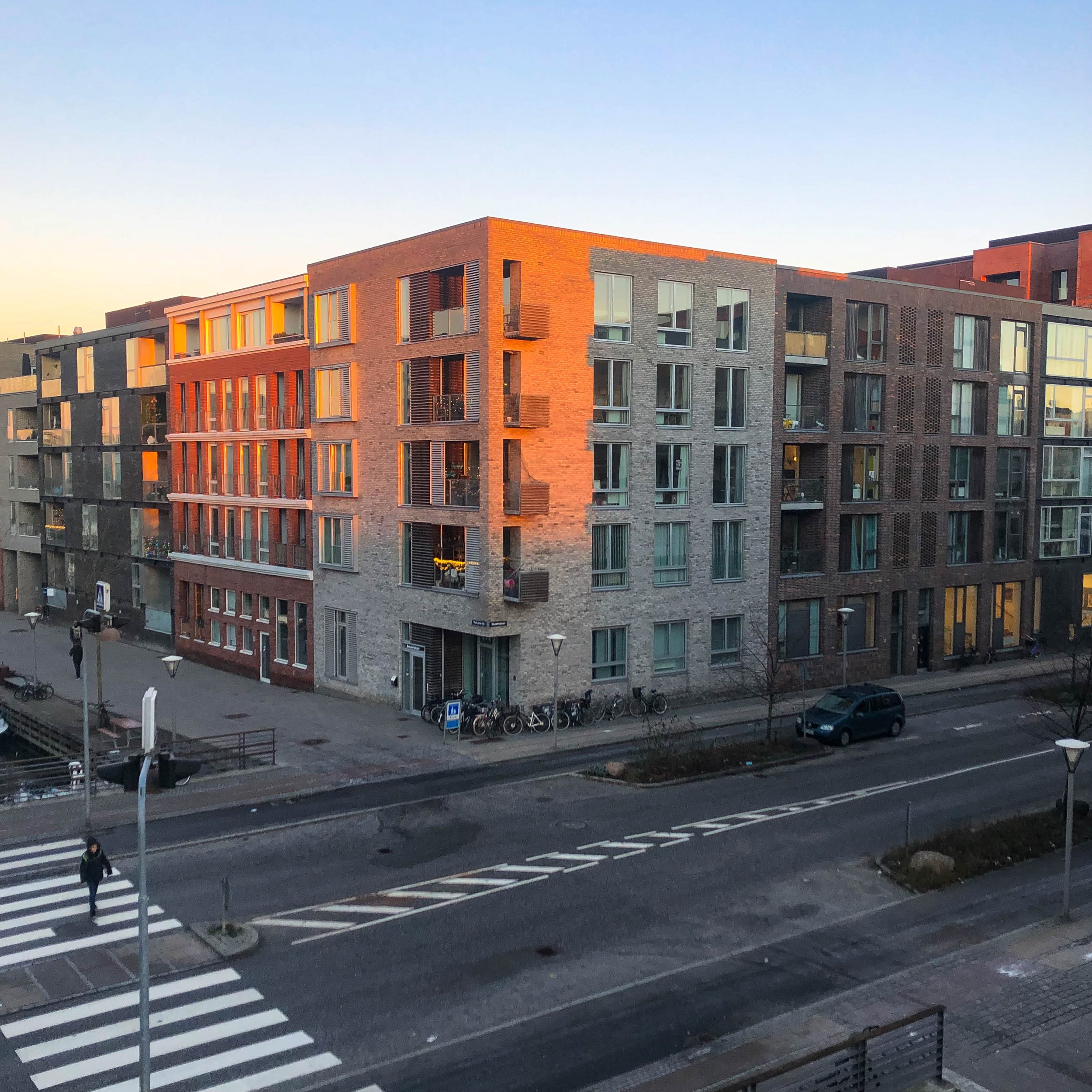
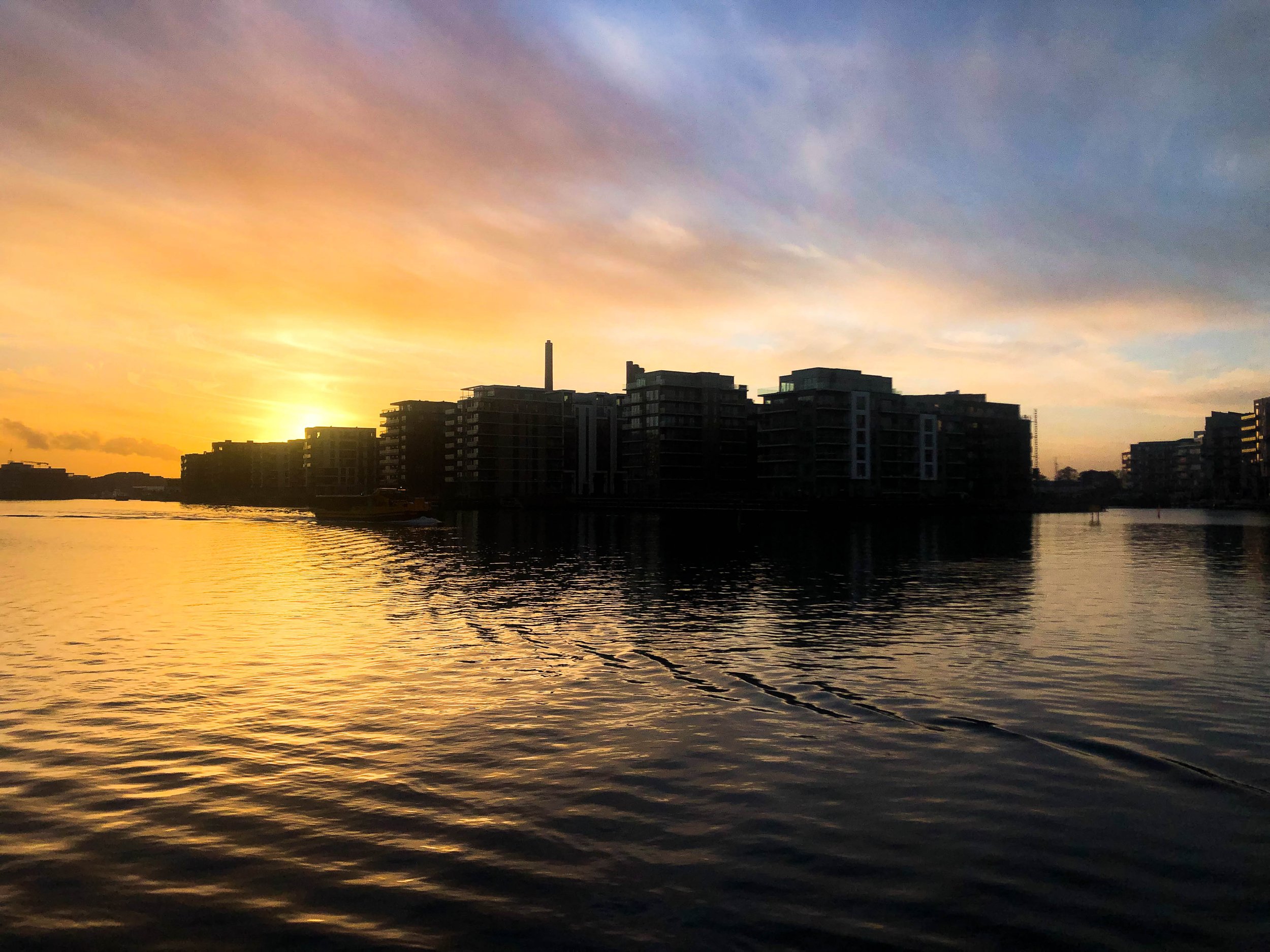
The view through the window and a sunset.
Danes don’t seem to mind being watched by neighbours or passers-by while eating – there are many ground-floor flats with entire glass walls facing the pavement. I also noticed that curtains, let alone shutters, are rarely used. So, during walks, you get a peek into beautifully designed interiors – I’ve never seen such lovely, bright homes anywhere else. They really do have a sense for aesthetics.
No ceiling lights
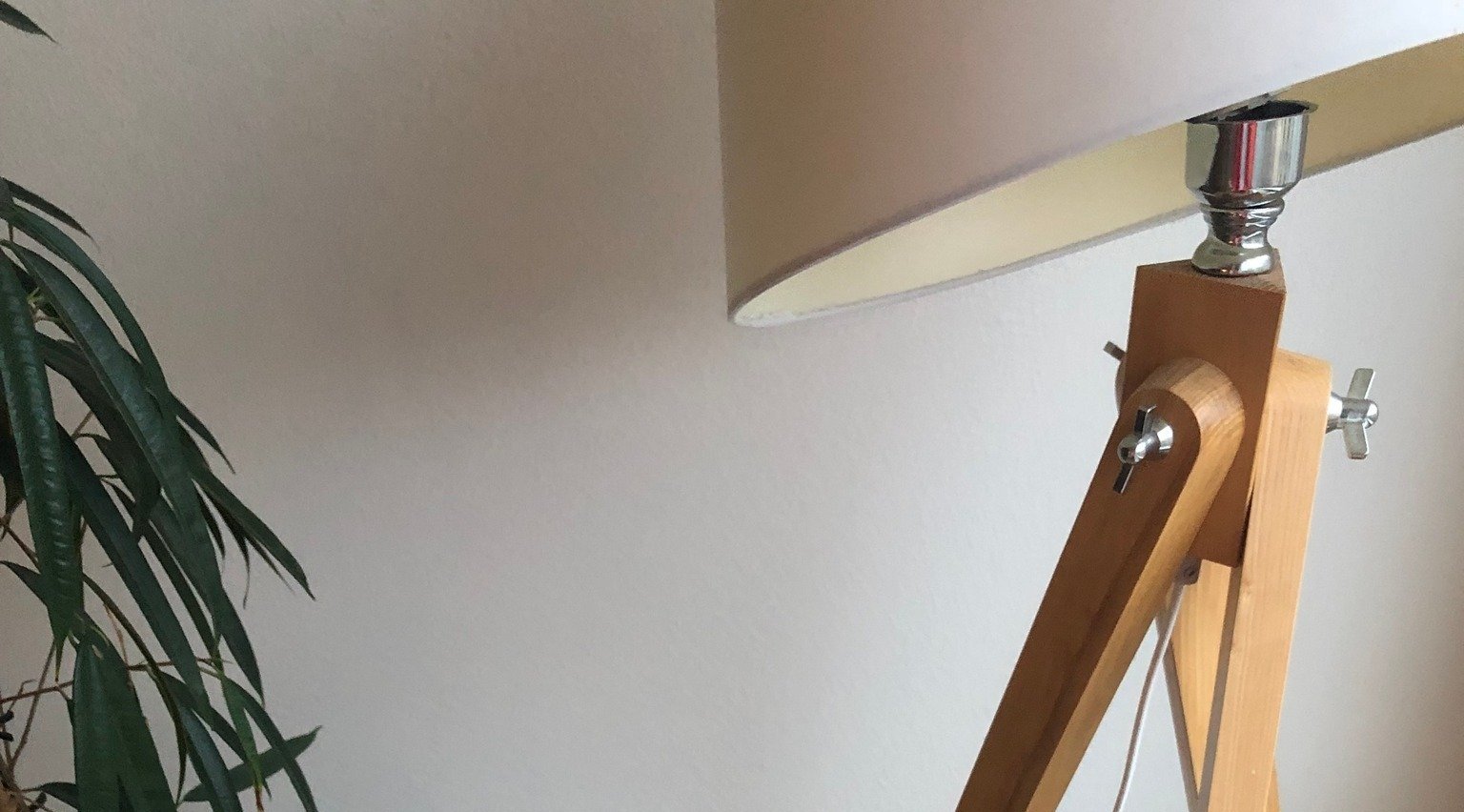
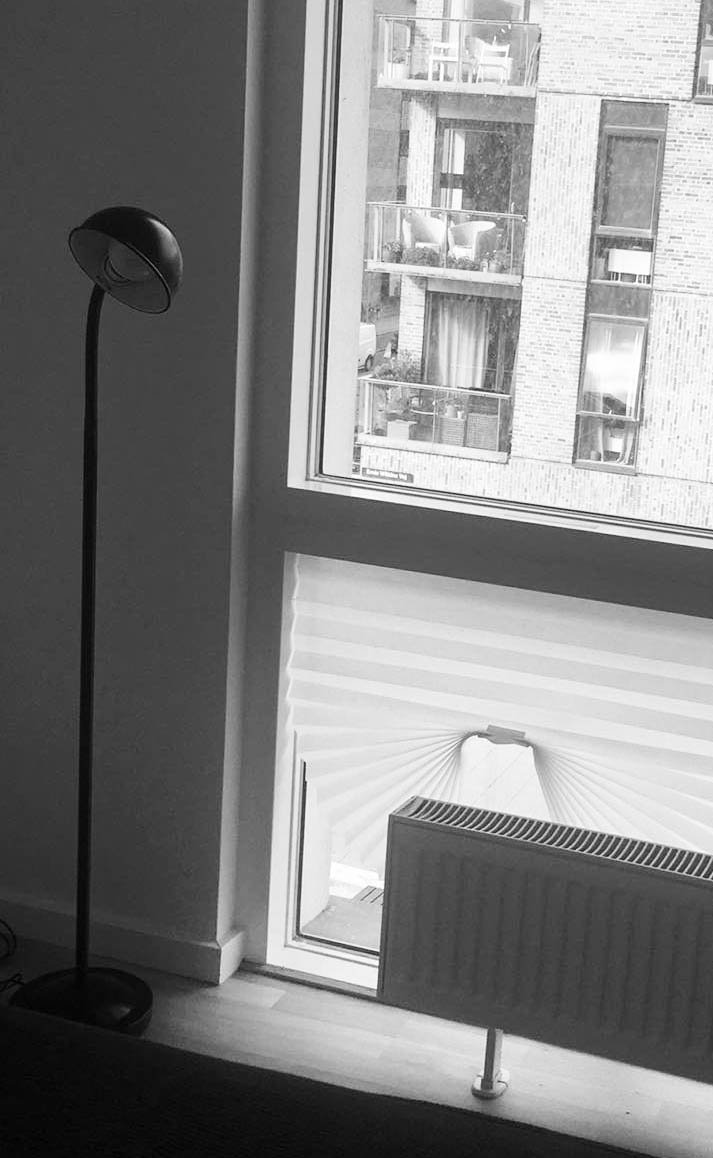
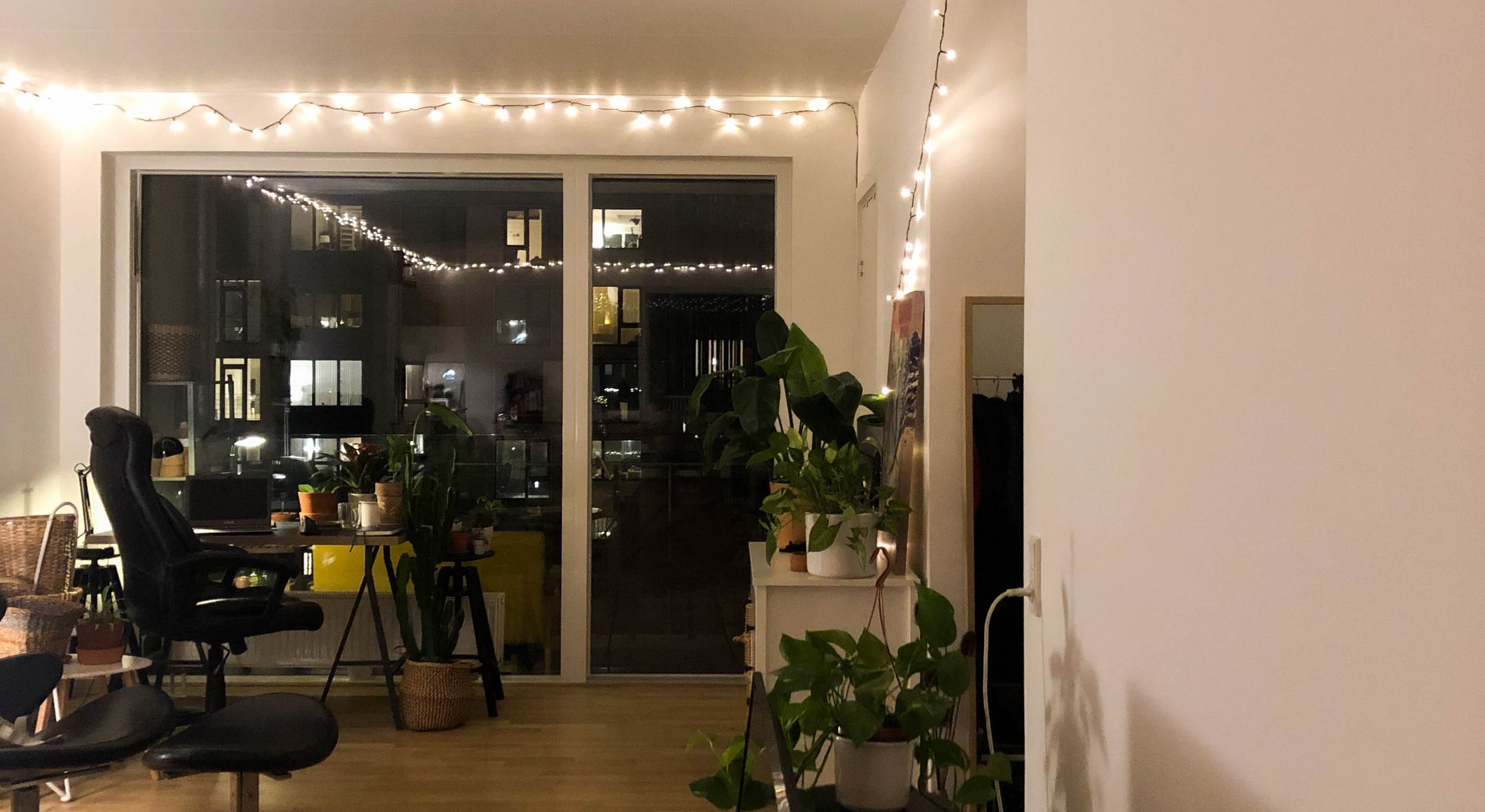
Well, almost none. My flat, and many others I visited, didn’t have ceiling lights – except in the bathroom. When I first moved in, I brought in several floor lamps straight away, worried it might be too dark otherwise. But it turned out I never even used all of them – I just embraced the Danish way. After all, using softer lighting makes perfect sense – in the evening or early morning, harsh light just doesn’t feel good. The gentle lamps helped me unwind from a busy day and transition into a relaxed evening and restful sleep.
When I returned to Slovenia, it felt like a spaceship had landed every evening – that’s how much stronger our lighting is here. Of course, stronger lights are useful for certain evening tasks – but definitely not every evening…
In the background – the little floor lamp we had in the living room.
Cycling
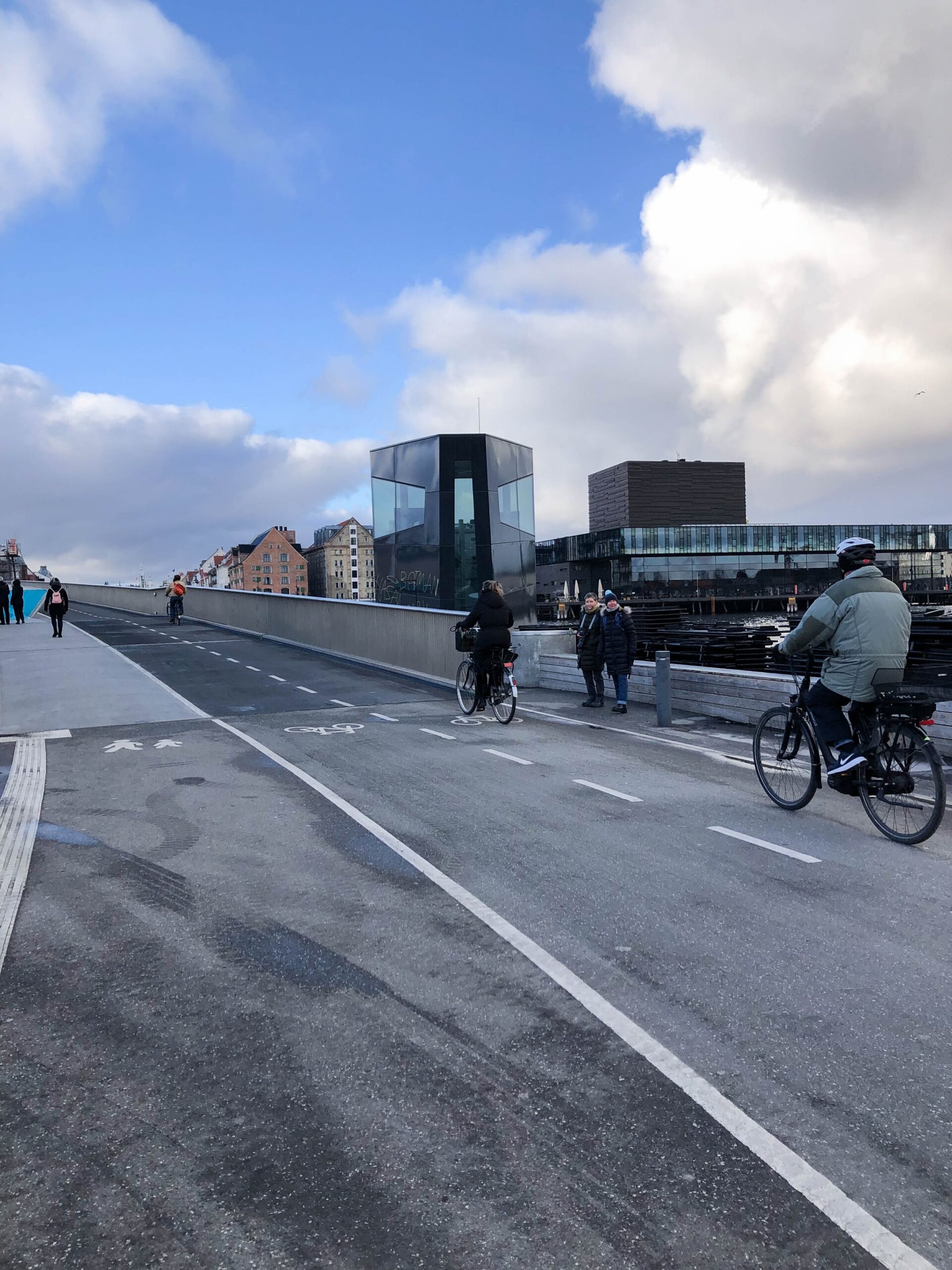
Ahhh, cycling in Denmark is such a pleasure. The bike lanes are wide enough for overtaking, usually built slightly below pavement level (so there’s less mixing with pedestrians), and the signalling culture is top-notch (they’ll even signal if they’re about to stop, and when turning left, they simply raise their left hand to avoid knocking over a cyclist overtaking them). Based on my experience, they fit seamlessly into overall traffic – they respect pedestrians, and cars respect them. For instance, when a bus stops at a stop next to a bike lane, all cyclists stop to let passengers safely cross to the pavement.
I don’t recall ever seeing a bike path at a junction that didn’t have a smooth, comfy ramp.
I was also amazed by how dedicated Danes are to cycling in any weather – they always find a way. On weekdays, bike racks outside office buildings were always full. Even people in elegant clothes often hop on bikes. Brilliant!
"Bad" weather - So what!
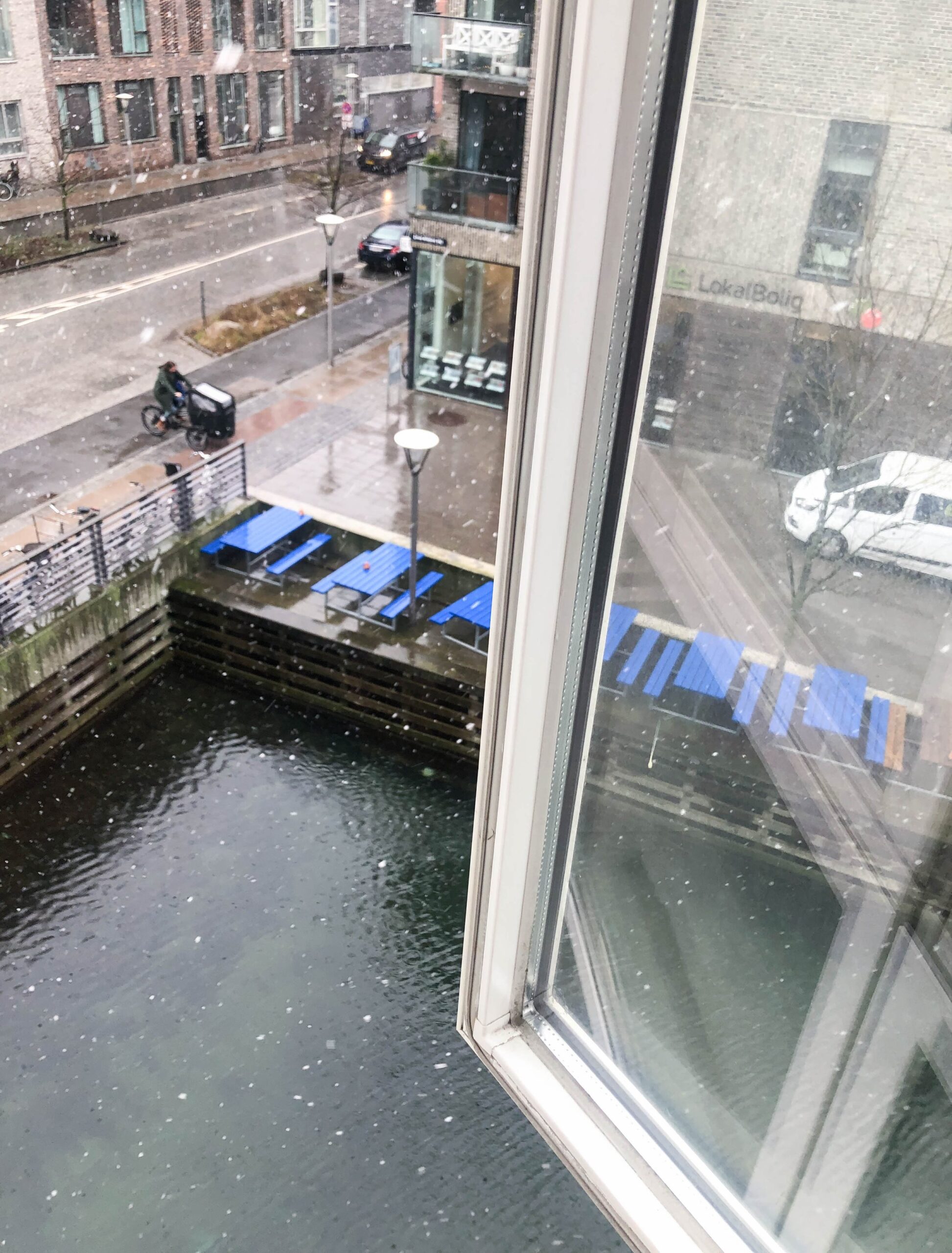
Speaking of cycling – my classmates stayed loyal to their bikes even in the worst conditions – when it was cold, they wore thick gloves and long scarves; when it rained, they’d put on two-piece raincoats; when it snowed, they cycled carefully over bridges (and occasionally fell); and when it was very windy, they just left home a few minutes earlier. Problem solved!
Few students own cars to get around for daily errands.
Even in winter, when it’s still dark until 9 AM, the locals don’t let it stop them – by 6 AM, the keenest runners are already on the streets, regardless of rain or clear skies. Umbrellas are practically non-existent – they wear raincoats and boots instead, enjoying the day as if the sun were out. When the sun does shine, it feels like the whole city comes out to soak up the rays. There’s a real joy in the air – they truly cherish good weather and make the most of it.
International atmosphere
I was genuinely impressed by the cultural and national diversity – you hear different foreign languages on every corner, especially English, which the locals speak incredibly well. Ordering food in English at the shop is completely normal. There are tons of study programmes in English, so there’s a big community of international students – and workers who decided to stay. I love how open Danes are to this and how willingly they adapt – even at university, they stick to English the whole time.
You get even more of that international feel if you share a flat with others – in my case, I lived with a Venezuelan, a Polish girl, and a Czech guy. Meeting people from different parts of the world was one of the highlights of studying and living in Copenhagen.
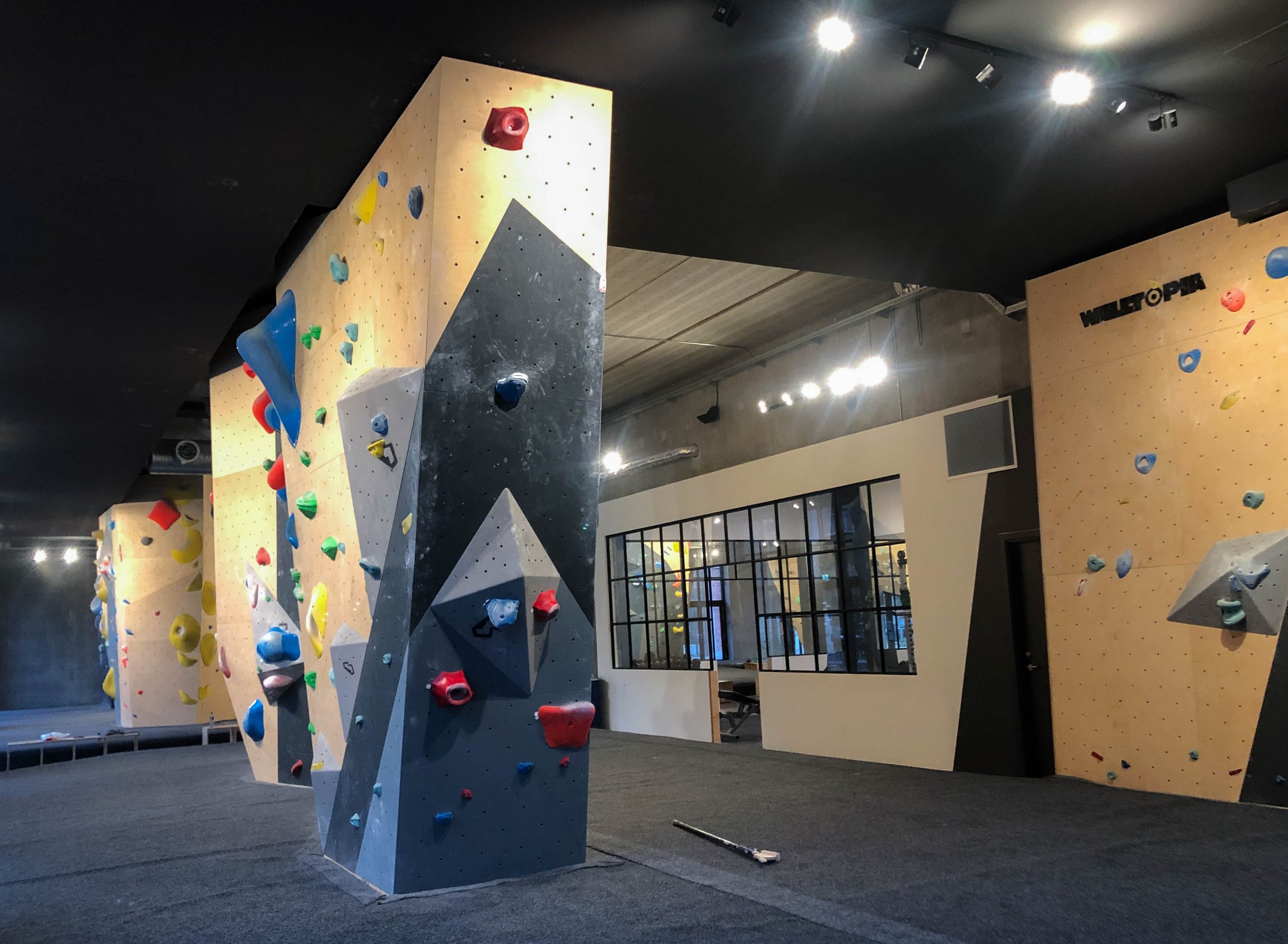
I also loved going climbing at the local centre – they’d greet you in English right away, as the climbers came from all over the world.
Architecture
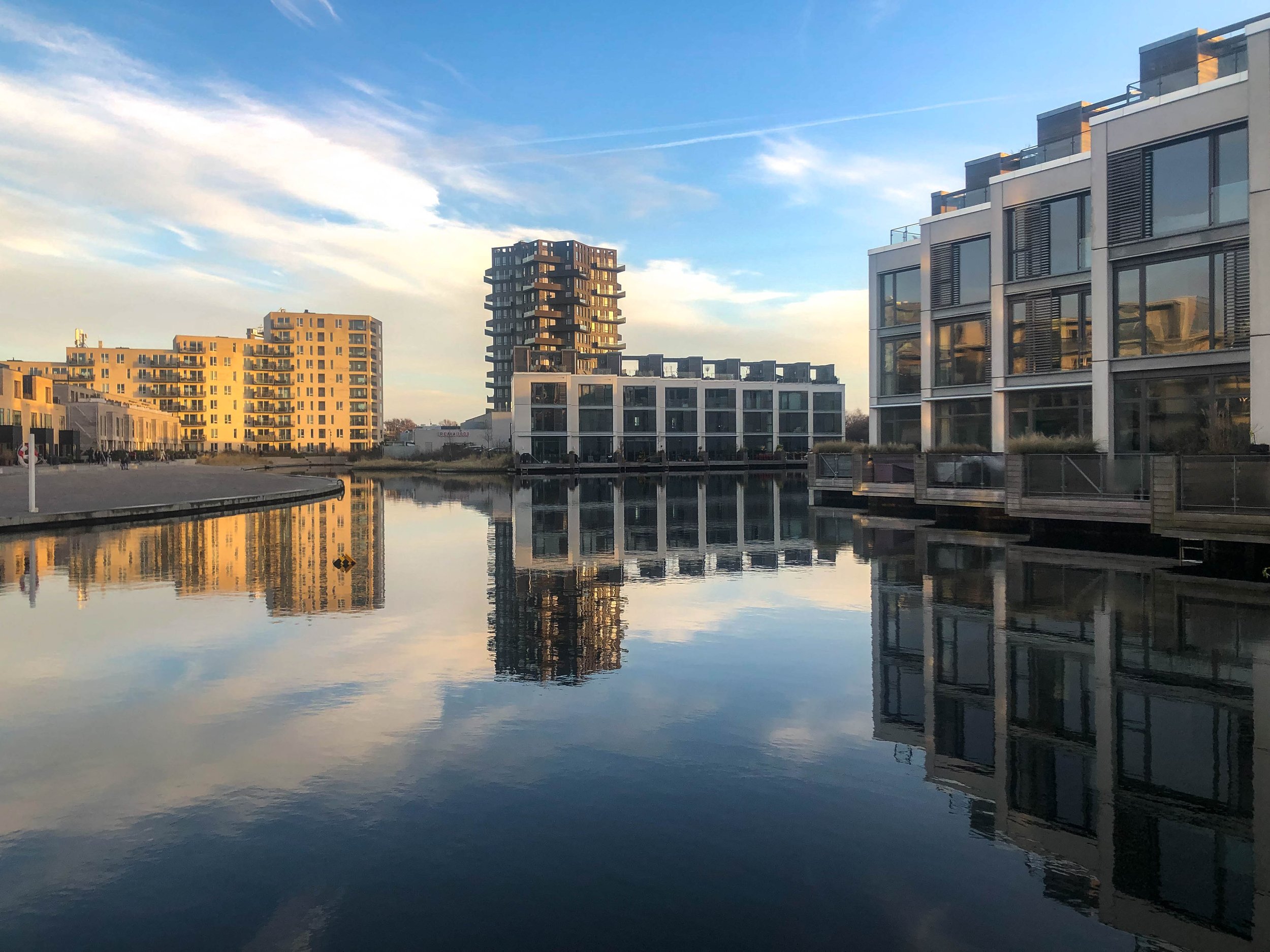
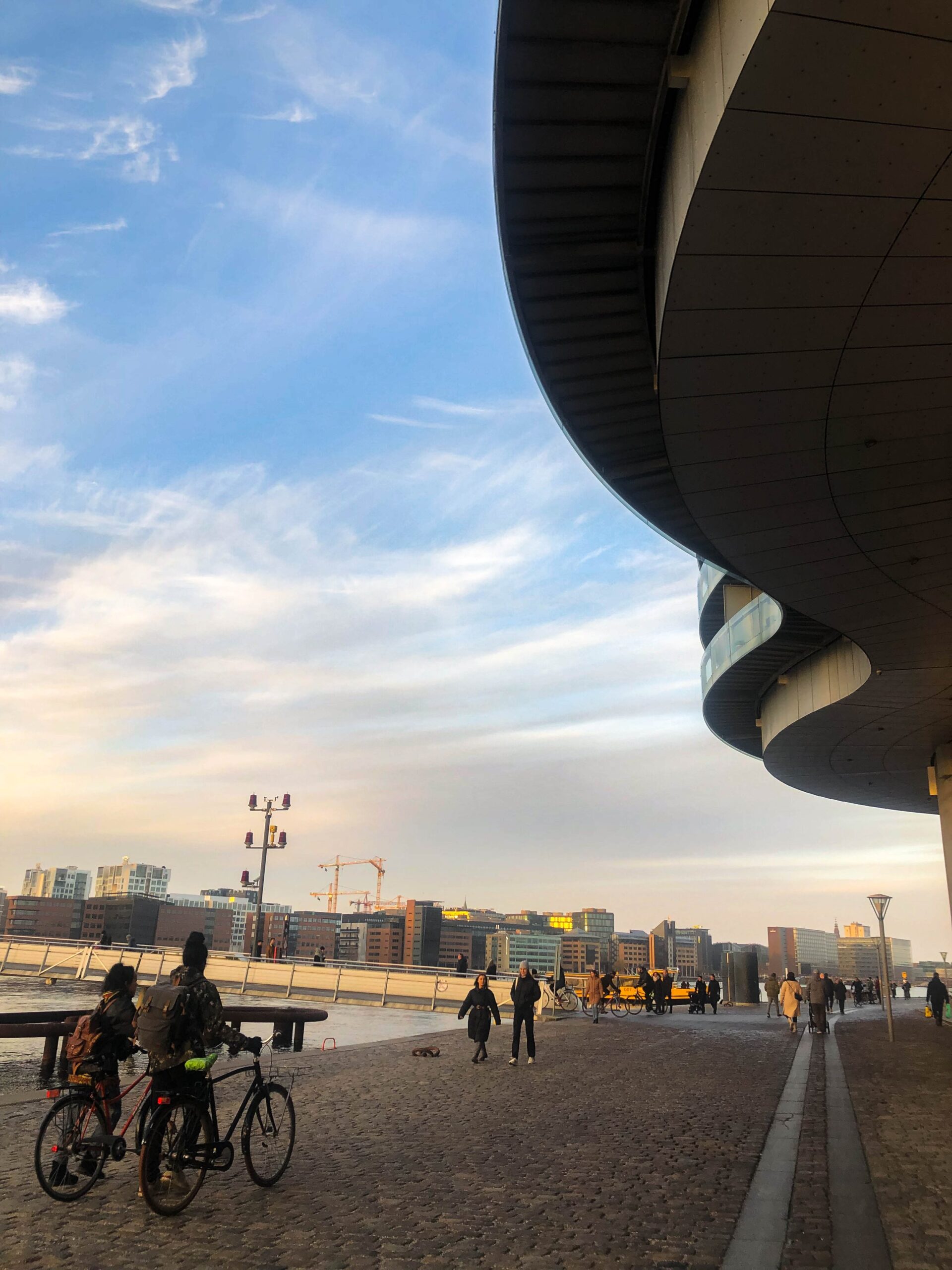
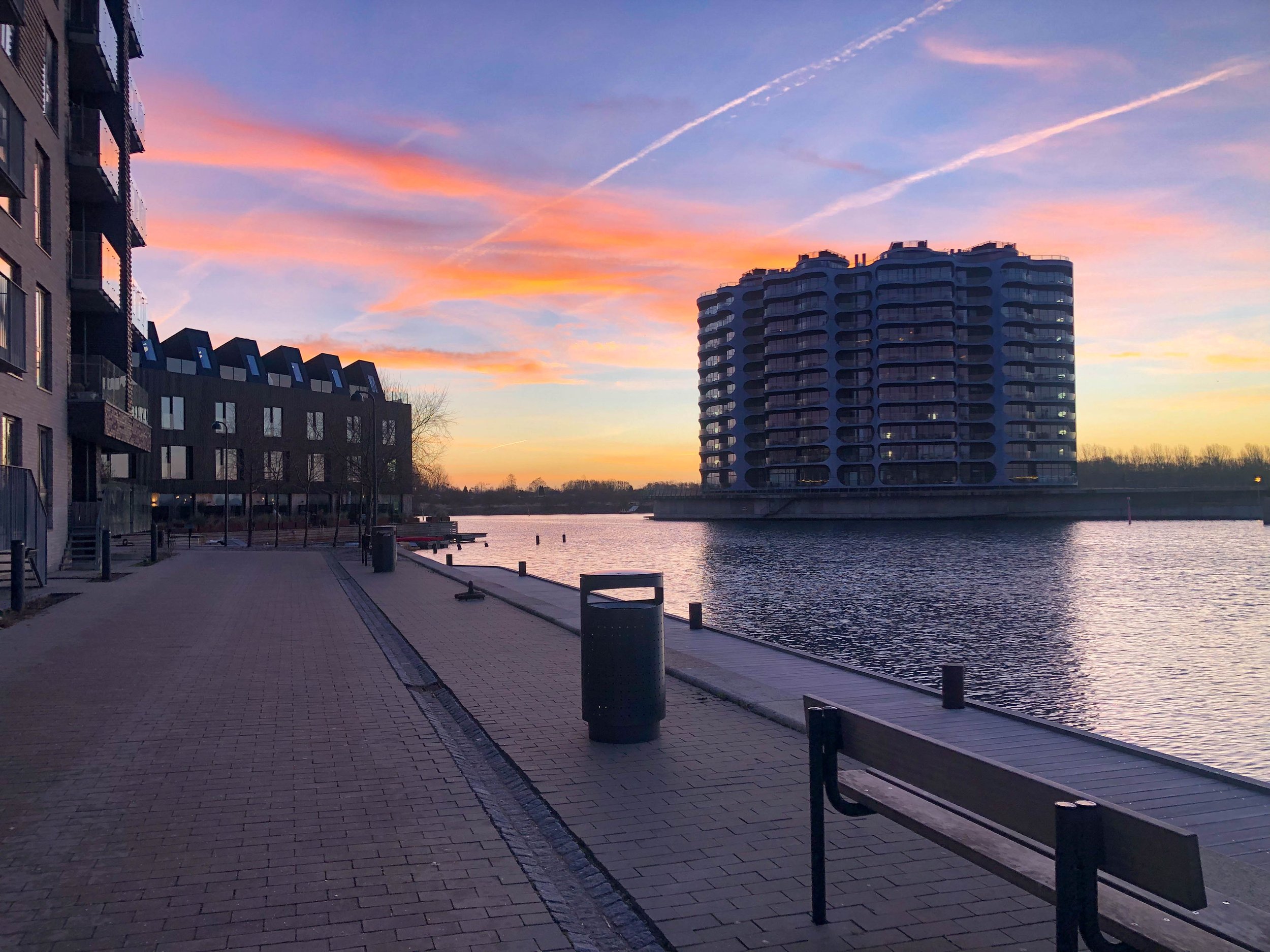
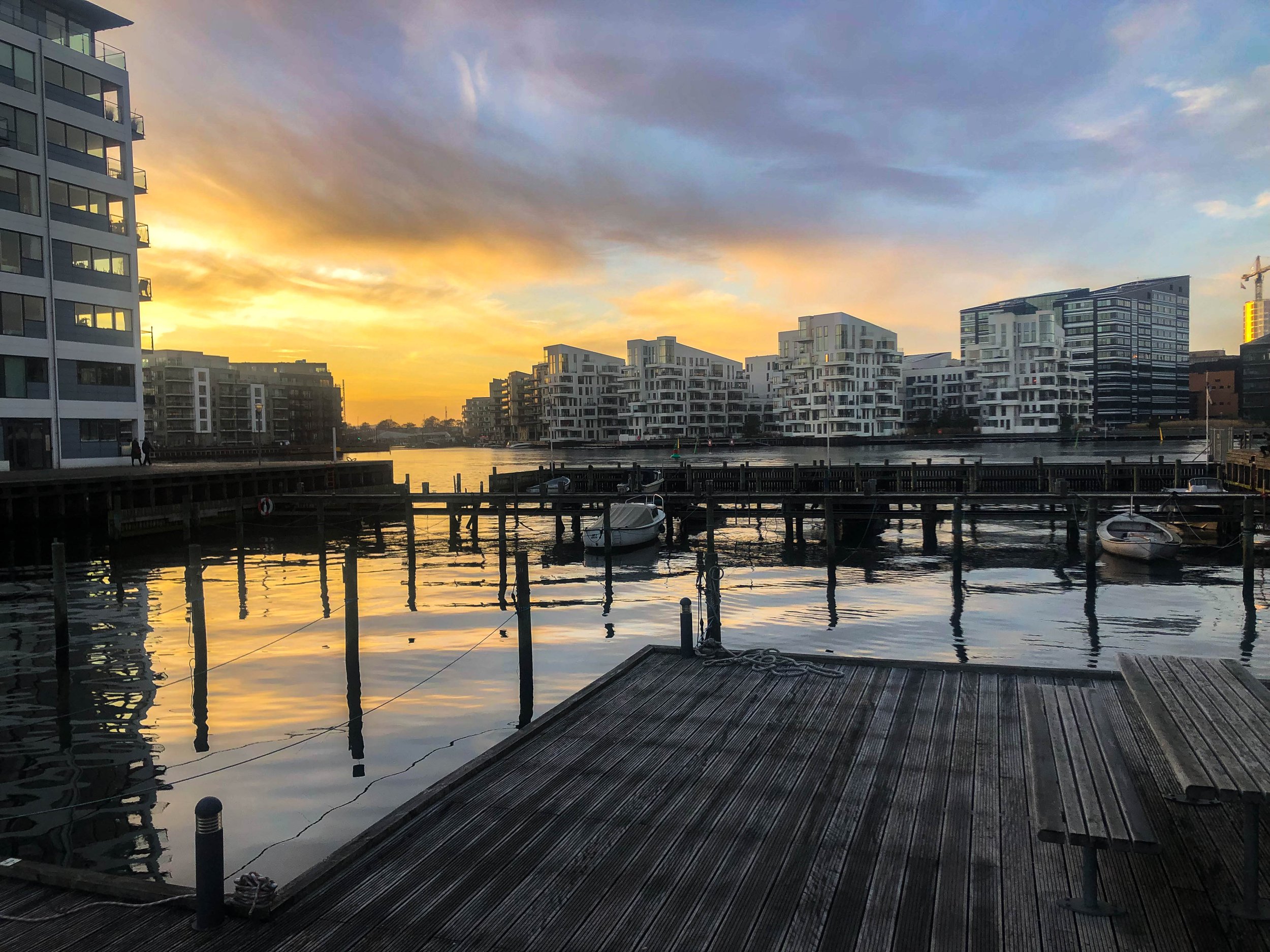
I’ll keep this short – I’ve never seen or experienced such beautiful architecture (the modern side) anywhere else. That mix of sleek design, greenery, and the sea is just the best.
Fans of older architecture won’t be disappointed either – the city centre and some other districts have plenty of charm.
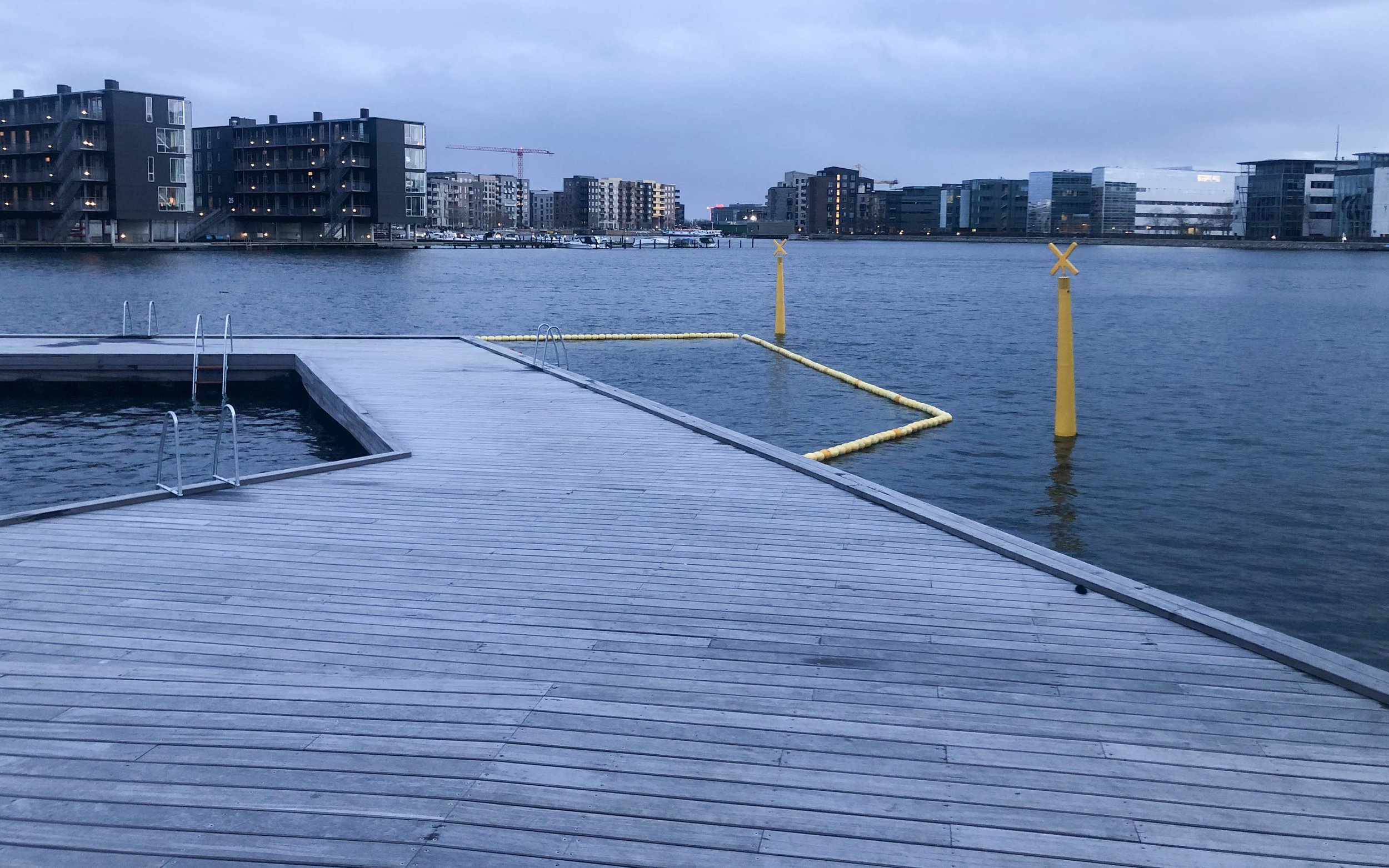
A swimming area right outside a supermarket – literally. Filled with water from the main harbour canal.
A few hundred metres away, the view opens up to the old part of town.
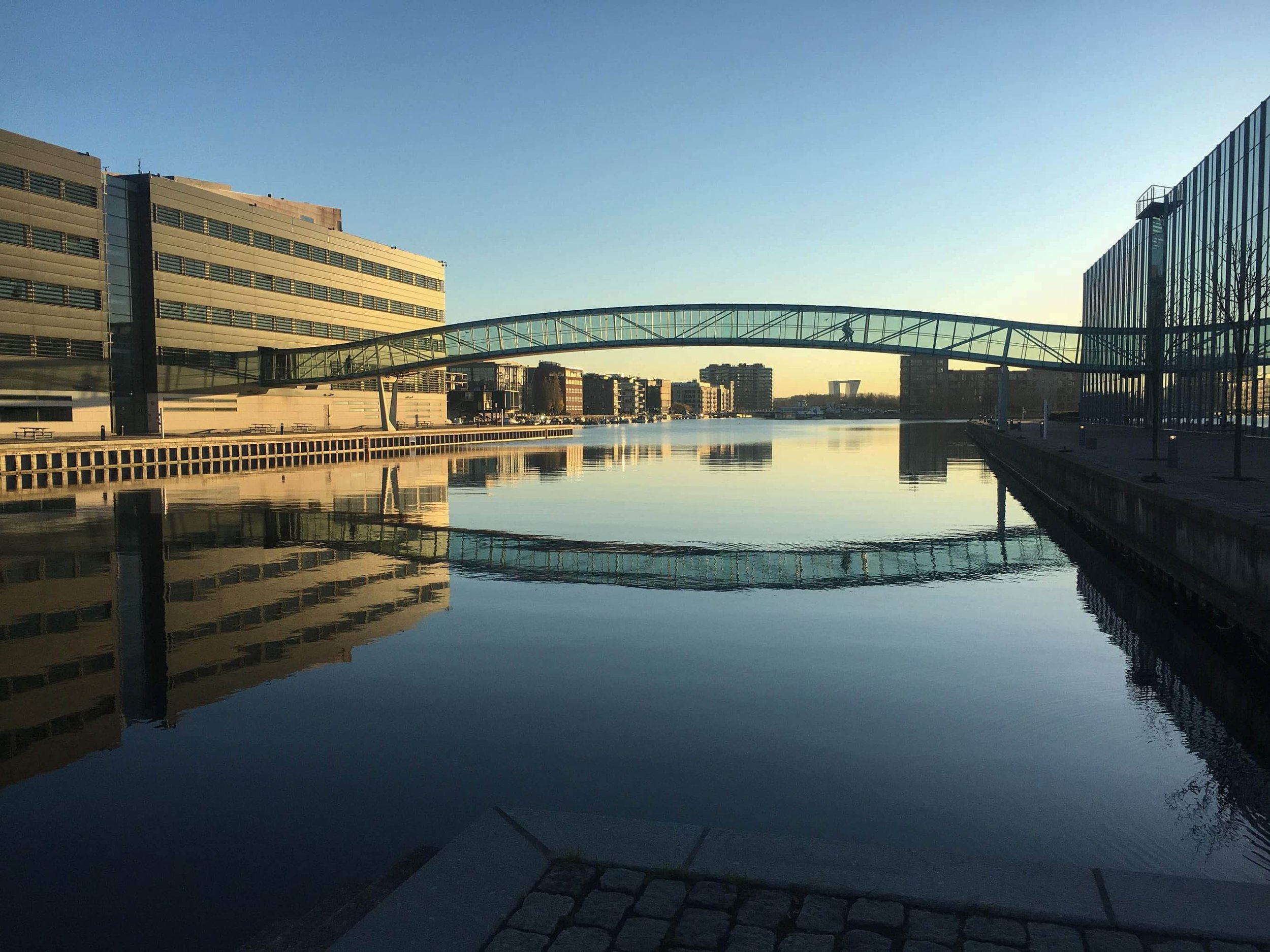
B E A U T I F U L. Sunrises and sunsets, with reflections in thousands of windows, really are something else.
Eco & Organic
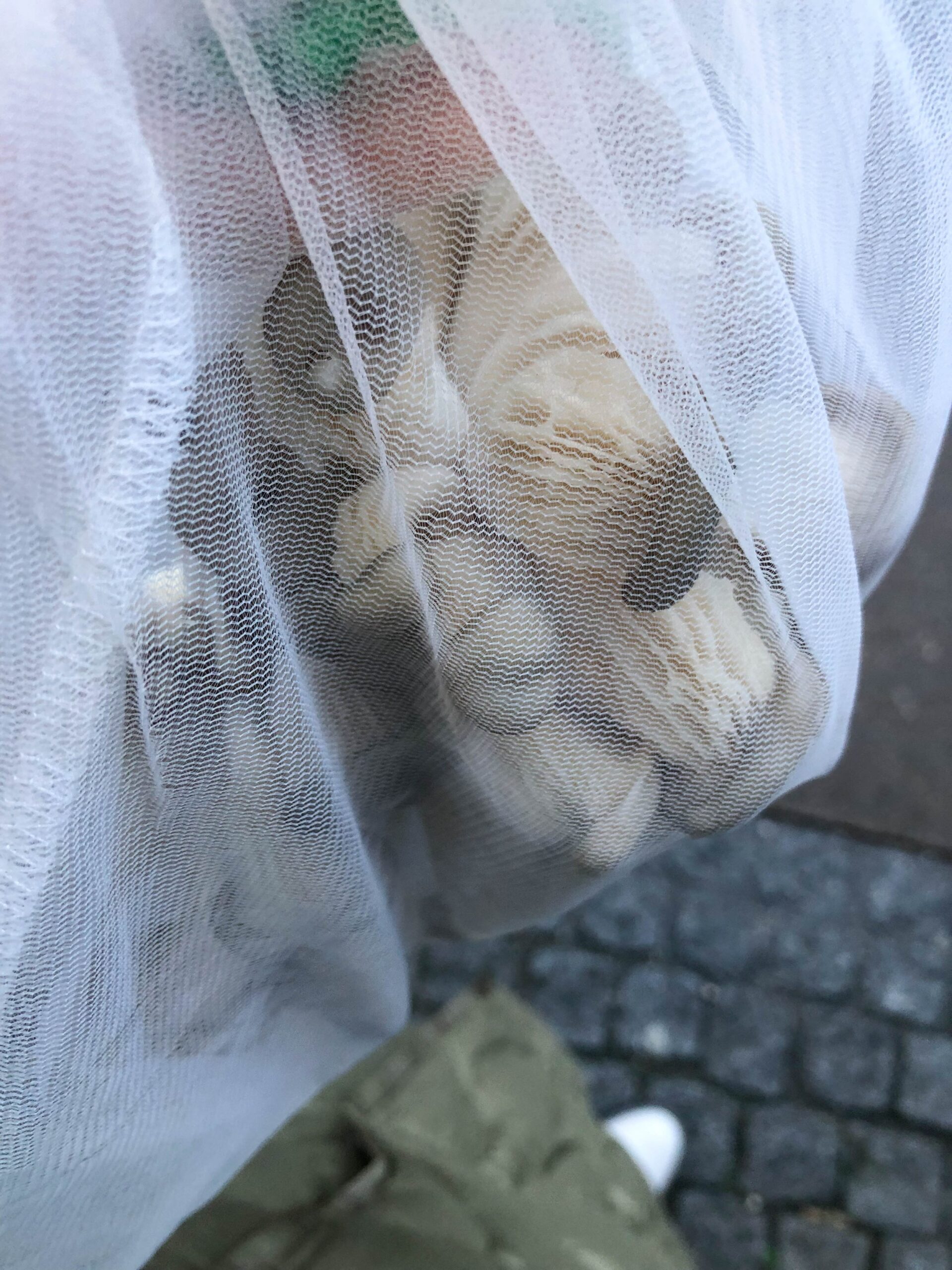
The shelves in shops are bursting with organic produce – from fruit and veggies to Danish mushrooms (yum), to bread and other multi-ingredient products. Most things you could wish for are available in organic versions (called “økologisk” in Danish), and if you look around a bit, the prices aren’t much higher than the regular ones. One shop even had a weekly 20% discount on all organic products – and people made the most of it.
I’d say the awareness of the impact of different farming practices is higher there. Of course, there’s still room for improvement, but it makes me happy to see change happening in the world.
A bag of organic & Danish oyster mushrooms. Yummy!
Winter bathing
In January, while climbing, I overheard a chat between a visitor and a staff member that went something like this:
“Do you go swimming in the sea?” – “Eh, not much lately. I should start again…” “Ahh… I’ve already swum for 214 days in a row. I love it!”
…
At the time, the sea was 4°C. And the woman, who looked around 40, seemed super fit and healthy.
I gave winter swimming a go myself – at first, entering the water feels like your body is about to freeze up—but after a few seconds… you still feel like that haha.
Well, when I got out (after 30 seconds or maybe a minute), I was instantly hit by a wave of fresh, warm energy that stayed with me throughout the whole day. I repeated it a few more times, though I didn’t manage to develop a daily routine. If I’d had a bit more time, I probably would have made it a habit—the feeling after swimming is simply incredible.
Despite all the buzz around it, on the coldest winter days I was usually one of only three swimmers—often just on my own. I had the sense that the sauna-and-swim combo was more popular… They actually have “winter bathing clubs” you can join, where people go together to swim and sauna. There are even floating saunas cruising through the canals.
During my studies, we had a little team of swimmers—before classes started, a group would gather by the sea canal in front of our building, take a quick plunge, and then continue their day energised and refreshed. Brilliant idea. 😀
The meeting point was on the left bank, under the bridge.
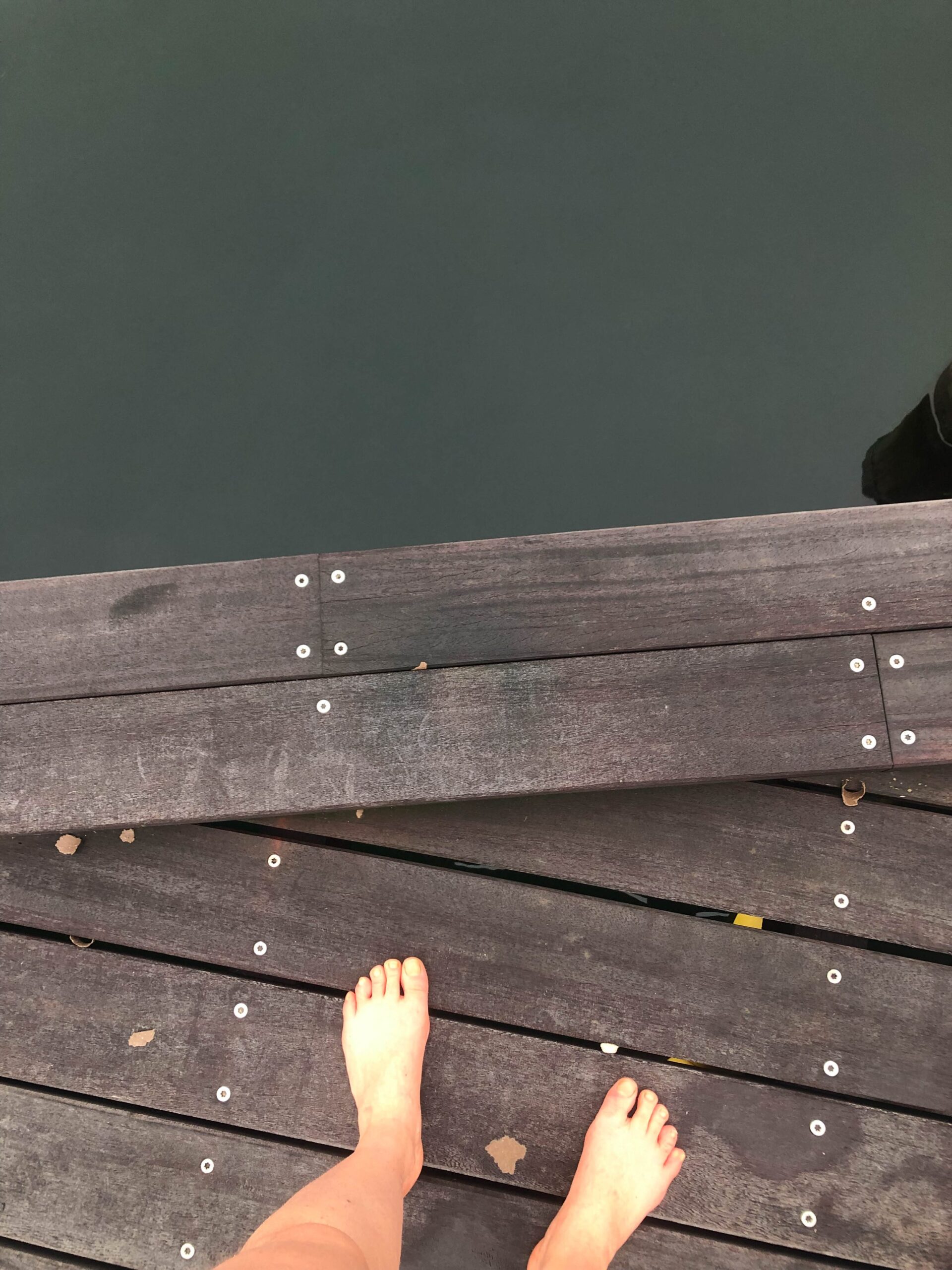
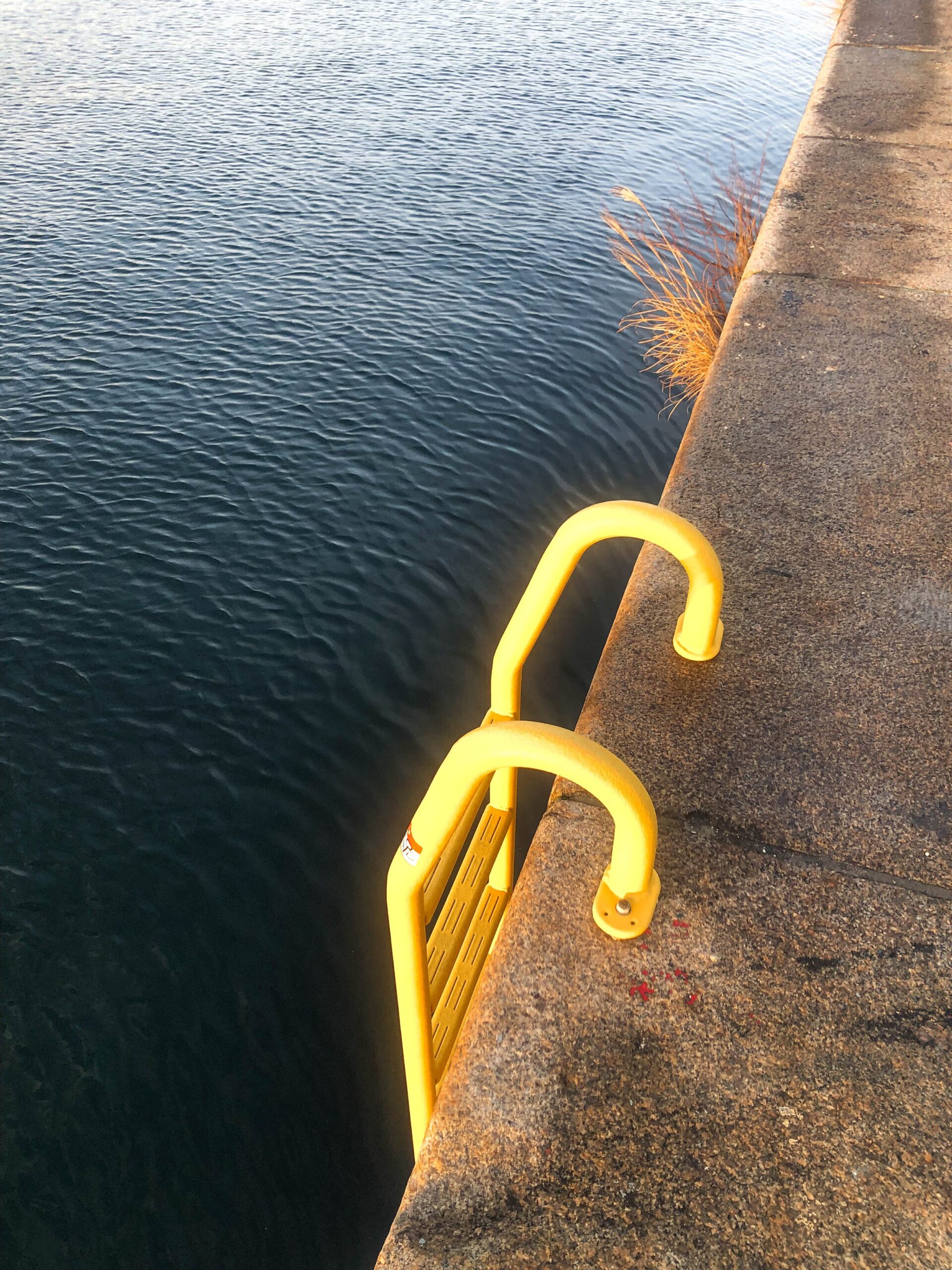
Finding a spot to swim is super easy in this city—there are sea canals everywhere, and little piers with ladders leading into the water on every corner. The only thing to watch out for is not swimming during storms—that’s when the water quality isn’t great, which is marked by small flags throughout the city.
My favourite swimming area.
Recycling "islands"
Now this is an invention! The first thing I experienced in Denmark and still one of my top inspirations. Every neighbourhood has a recycling island (either fenced off or open, placed by the roadside) filled with all sorts: regular recycling bins, containers for oil, metals, batteries, bulky waste—and most fascinating of all—the “self-service section”.
On our island, this included:
Shelves full of books, magazines, guides…
A zone for usable bulky items—working washing machines, ovens, fridges, chairs, tables, clothes dryers…
A ceramics & kitchen area—cutlery, mugs, full sets of unbroken plates…
A bit of everything—a helmet, a guitar, a rug, a monstera plant, a bike, a paddle, clothes, a food processor…
I thought the idea was brilliant and incredibly practical. New, useful items appeared daily, and people came by just as often to take them home. Our flat was mostly furnished thanks to this island—or through a group I’ll talk about in a moment. These islands allow newcomers to furnish their homes almost entirely for free, giving these items a new home and a longer life. And chances are, after you’re done with them, someone else will carry on using them too.
A corner of our living room—naturally, no ceiling light. And in the background, the neighbours’ uncovered windows.
Free Your Stuff Copenhagen
This is the name of a Facebook group with over 80,000 members, meant for people who want to get rid of things and for those looking for something. Over 50 posts appear daily, like:
“Giving away a sofa in Nørrebro (location). It’s in great condition, so would be lovely if someone took it who’ll keep it for years. Collection before Saturday or ASAP.”
Within three minutes, there are usually five people commenting they’d like it—first come, first served. Once, I posted that I was looking for a bike—and I actually got one (you really need to be lucky for that).
People give away just about anything you can imagine. Some even post items they’ve found at recycling islands. Something like this—active and not misused—would be amazing to have in Slovenia too.
SU – Student Grant
Another great thing, which I personally didn’t use, but many of my classmates did—especially those who stayed in Denmark—is the “SU” (Statens Uddannelsesstøtte). This is a grant offered to all students from EU countries who study in Denmark. The condition? You must study and work at least 12 hours a week.
Once you meet these requirements, you can get the SU—around €750/month—plus whatever you earn from your job, which can be anything. Since wages in Denmark aren’t low, this adds up to more than enough for a comfortable life. That is, if you don’t mind working weekends and continuing your day with a job after your classes.
It’s even easier for Danes—they get the grant without needing to work. Still, many of my Danish classmates worked alongside their studies, especially since most of them already lived on their own.
Studying in Denmark is tuition-free for EU citizens.
Communities
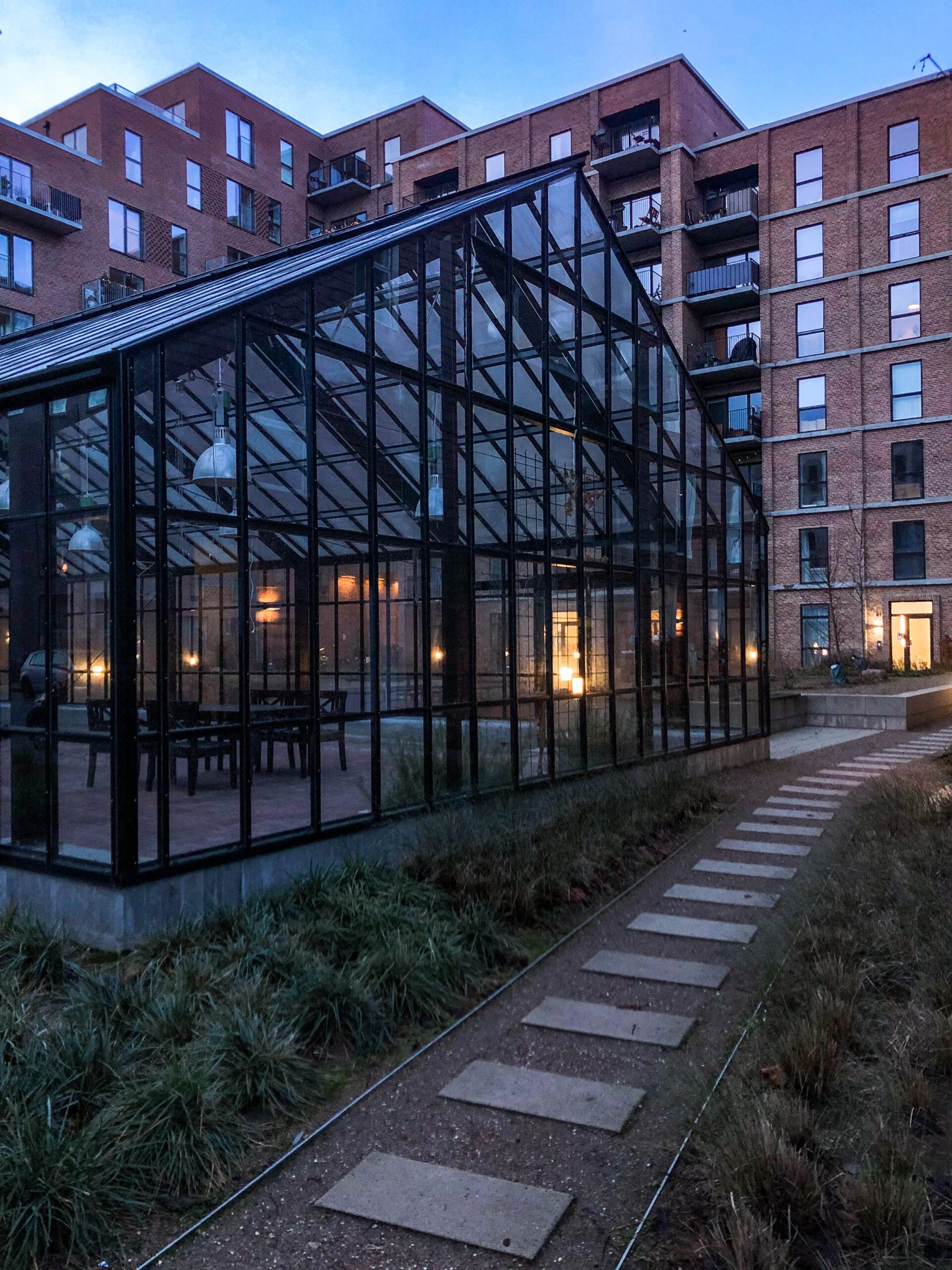
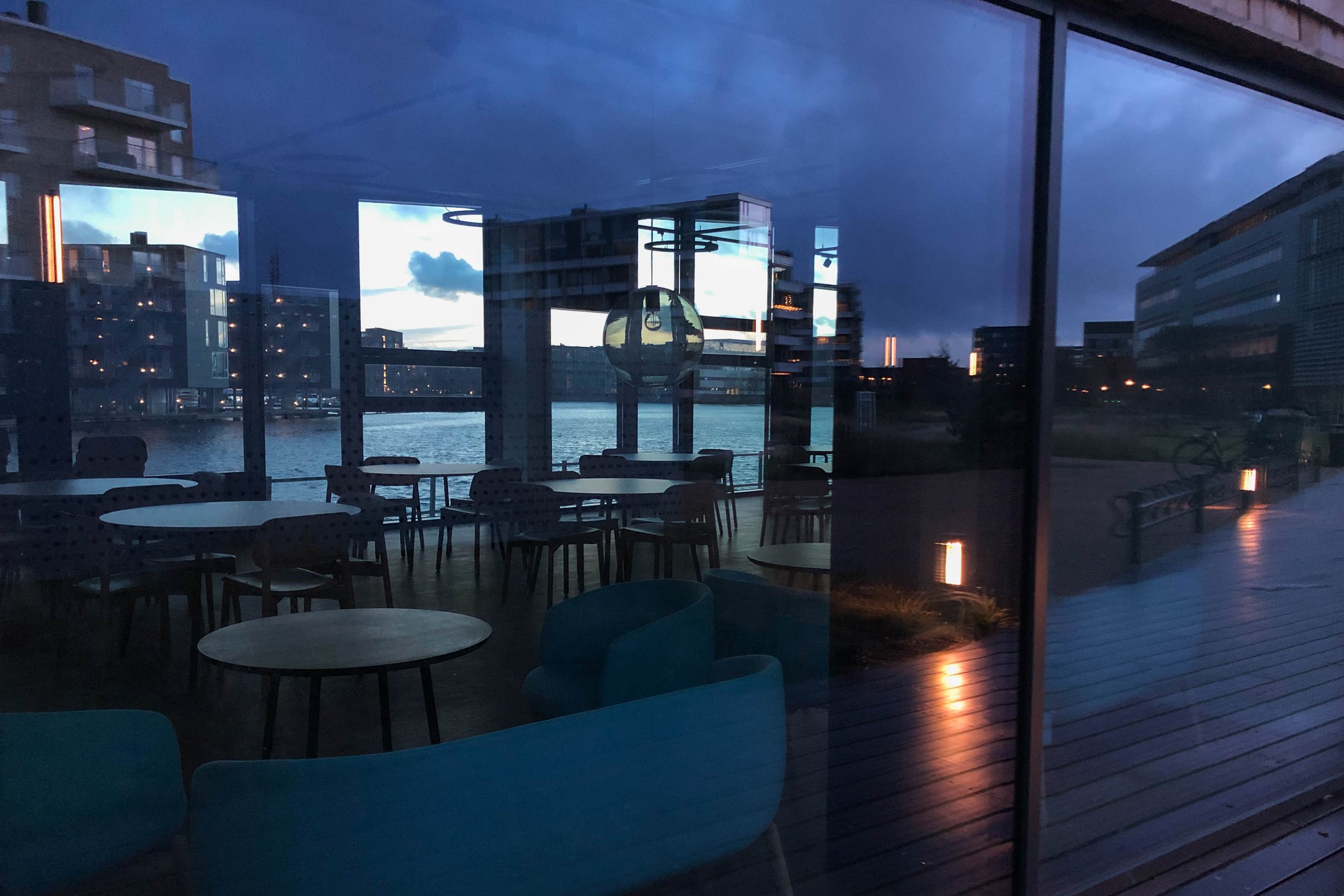
Besides online communities (via FB groups etc.), individual neighbourhoods have dedicated community spaces. This might be a small wooden house in the courtyard, a glass building by the canal, a picnic area behind a block of flats, or even a shared greenhouse filled with tomatoes and herbs. I saw plenty of local mini-events filled with a cosy vibe.
There are also places (like Folkehuset Absalon), where everyone who drops by during dinner time shares one long dinner table. Despite a certain Danish reserve, I feel like they truly know how to build community.
A greenhouse / gathering space perfect for cosy dinners.
A little house on the pier, where weekly events took place.
Studying in Denmark
And finally—the reason I went to Denmark in the first place. These kinds of study programmes simply don’t exist in Slovenia. Group work, problem-based learning, a relaxed atmosphere… it all made my university days truly inspiring. I learned a lot—for life.