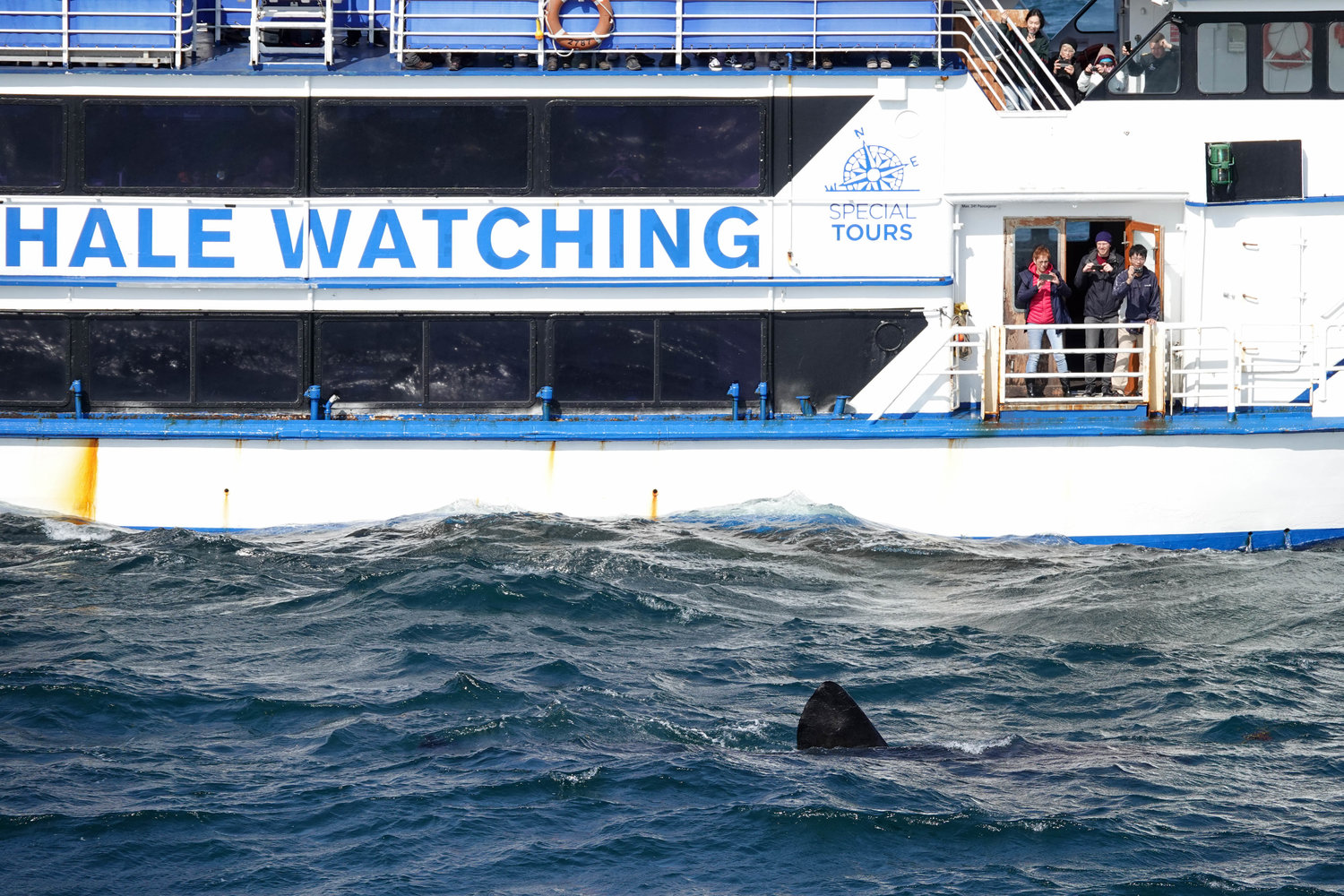
The first thought when you see a fin is probably shark. And the first instinct—get out of the water! But is this creature really a shark? And is it truly dangerous? The first answer is yes, but the second couldn’t be further from the truth. Why? Keep reading to find out.
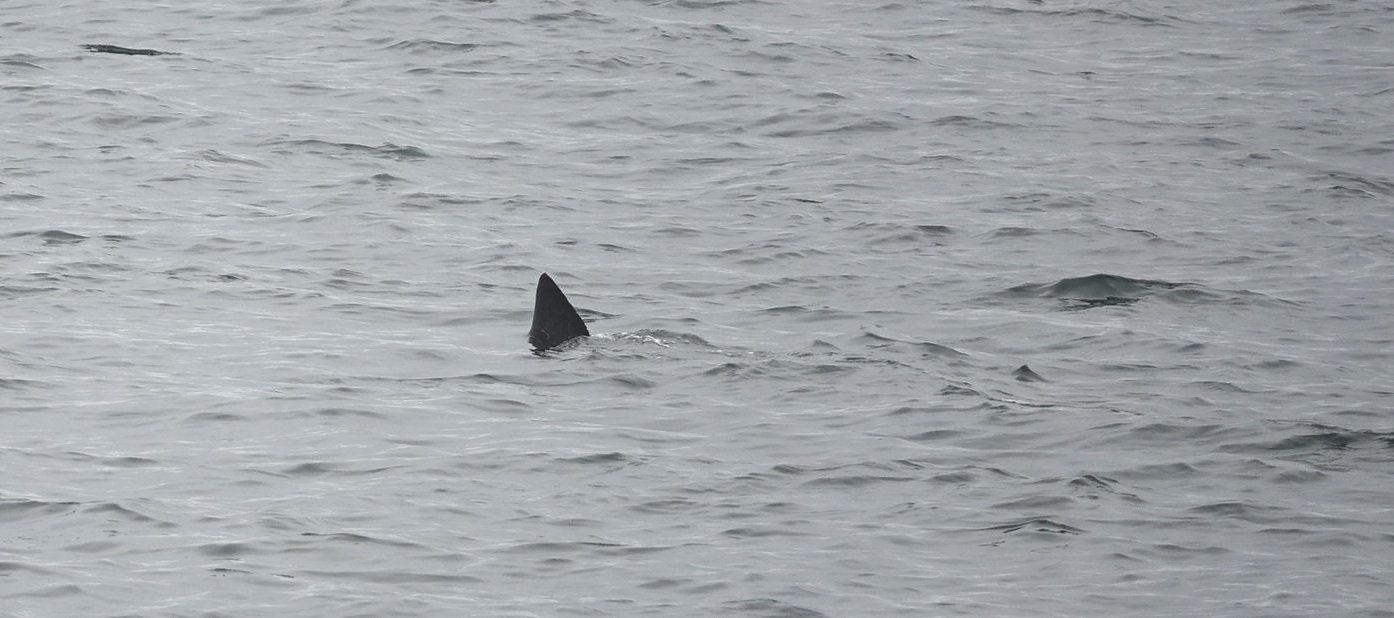
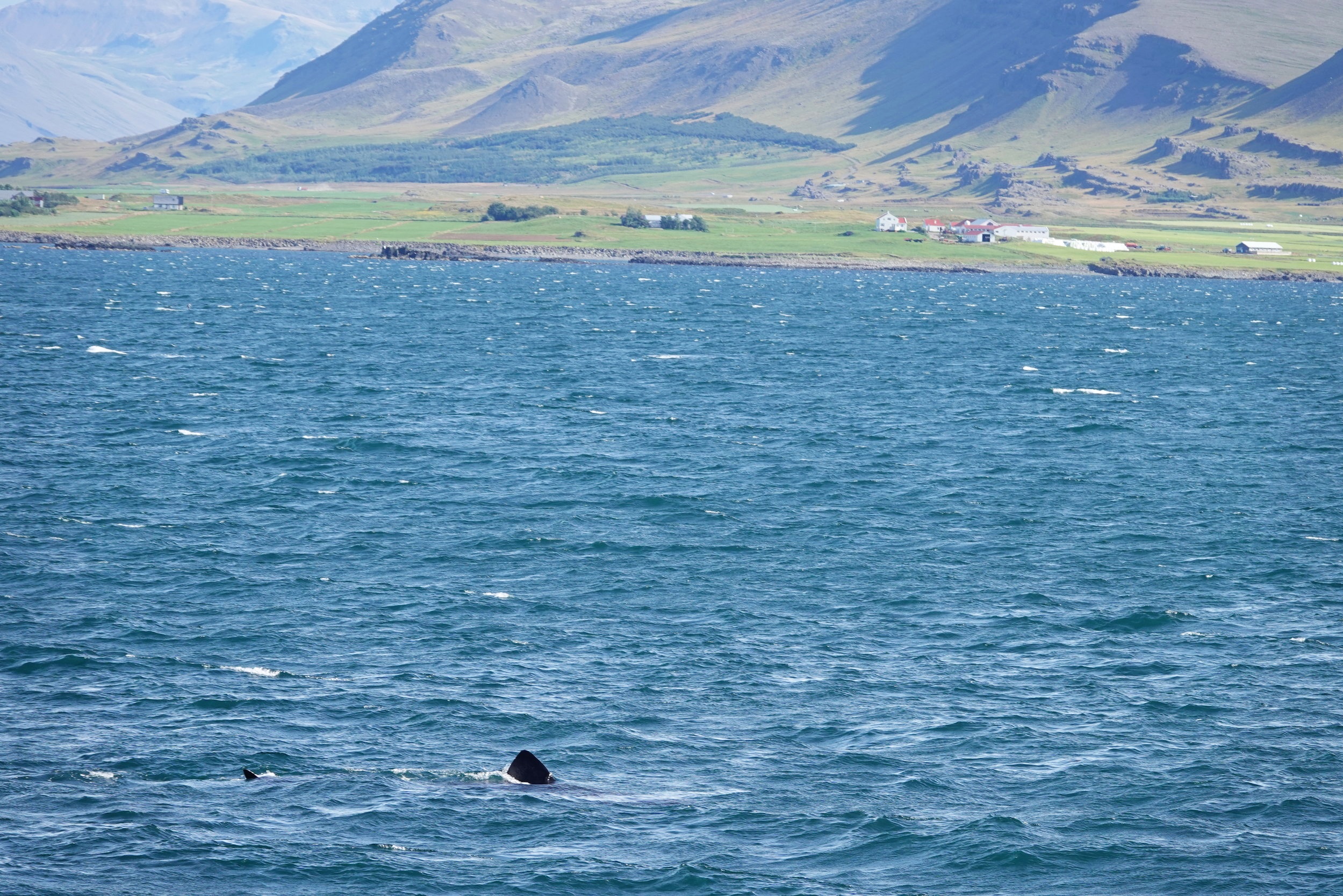
Beneath the surface lurks the basking shark (Cetorhinus maximus), a rare visitor to our bay that only appears a few times a year.
Is this photo even mine?
That same morning, after an incredible encounter with a young minke whale (Hyperoodon ampullatus)—(if you don’t know what I’m talking about, check out my blog: Whales Are Not Fish)—my guide and I were laughing about how my list of top marine experiences was missing just two things: a breaching humpback whale and a basking shark.
Less than a minute later, the captain’s voice crackled over the microphone: one of the boats had spotted a basking shark. We headed straight to the location, but by the time we arrived, it had already disappeared.
Exactly one week later, we spotted three basking sharks in the bay! And exactly three weeks after that—another one.
I always love learning something new. If you do too, keep reading!
How dangerous is it?
For humans? Not very. It does have hundreds of tiny, backward-facing teeth arranged in multiple rows—just like other sharks—but it doesn’t even know how to use them. And theoretically, it couldn’t eat us even if it wanted to; it’s a filter feeder, sieving zooplankton from the water as it slowly moves—only about 4 km/h. This slow pace makes it easier for us to observe it.
It only comes to the surface when there’s an abundance of food, making encounters extremely rare.
The real danger? Its rough skin, which can easily cause abrasions. But unless you’re smaller than 5 mm, you’re safe—it has no problem swallowing anything tinier than that.
The name basking shark comes from its slow movement near the surface while feeding. It almost looks like it’s basking in the sun and drifting along with the current.
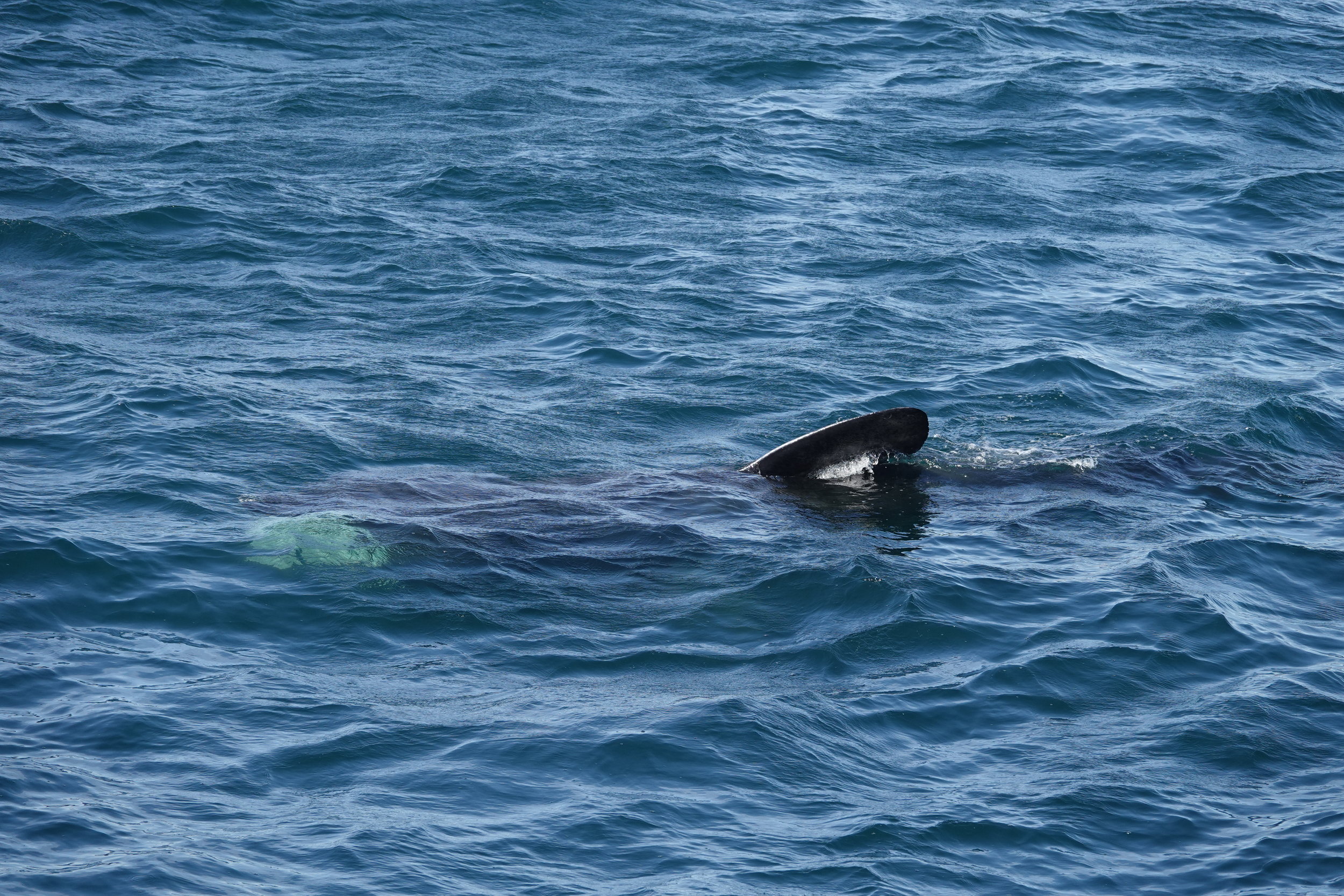
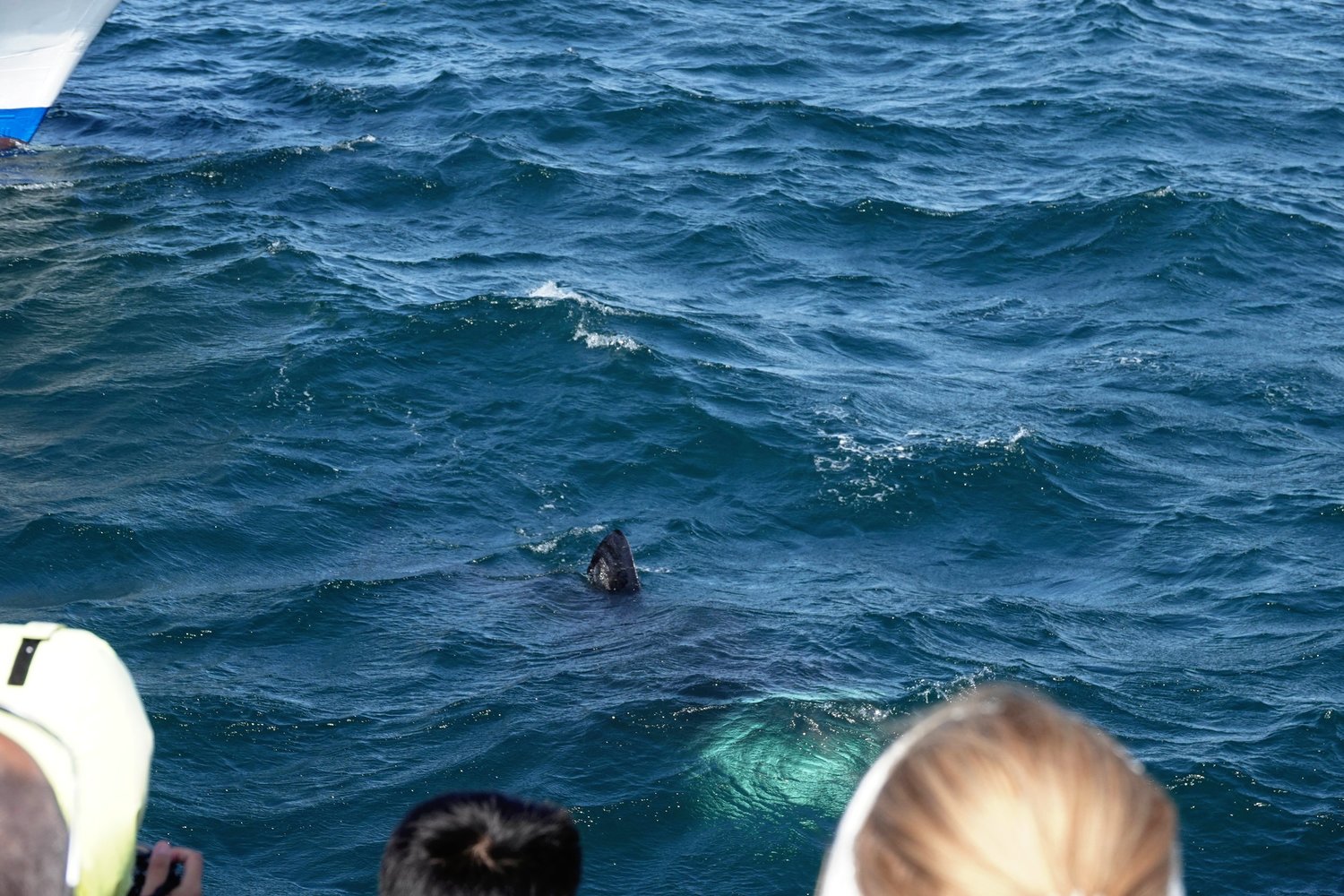
If you look closely, you might spot something white in the water—that’s its massive mouth, which can open up to 1 metre wide while feeding!
Does it have the same habits as the minke whale?
Not really. While they both eat similar food and are of a similar size, that’s where the similarities end. Unlike whales, basking sharks breathe through gills and don’t need to come to the surface for air.
During summer, when food is plentiful (of course!), they often gather in same-sex groups of up to 100 individuals, where they also communicate with each other.
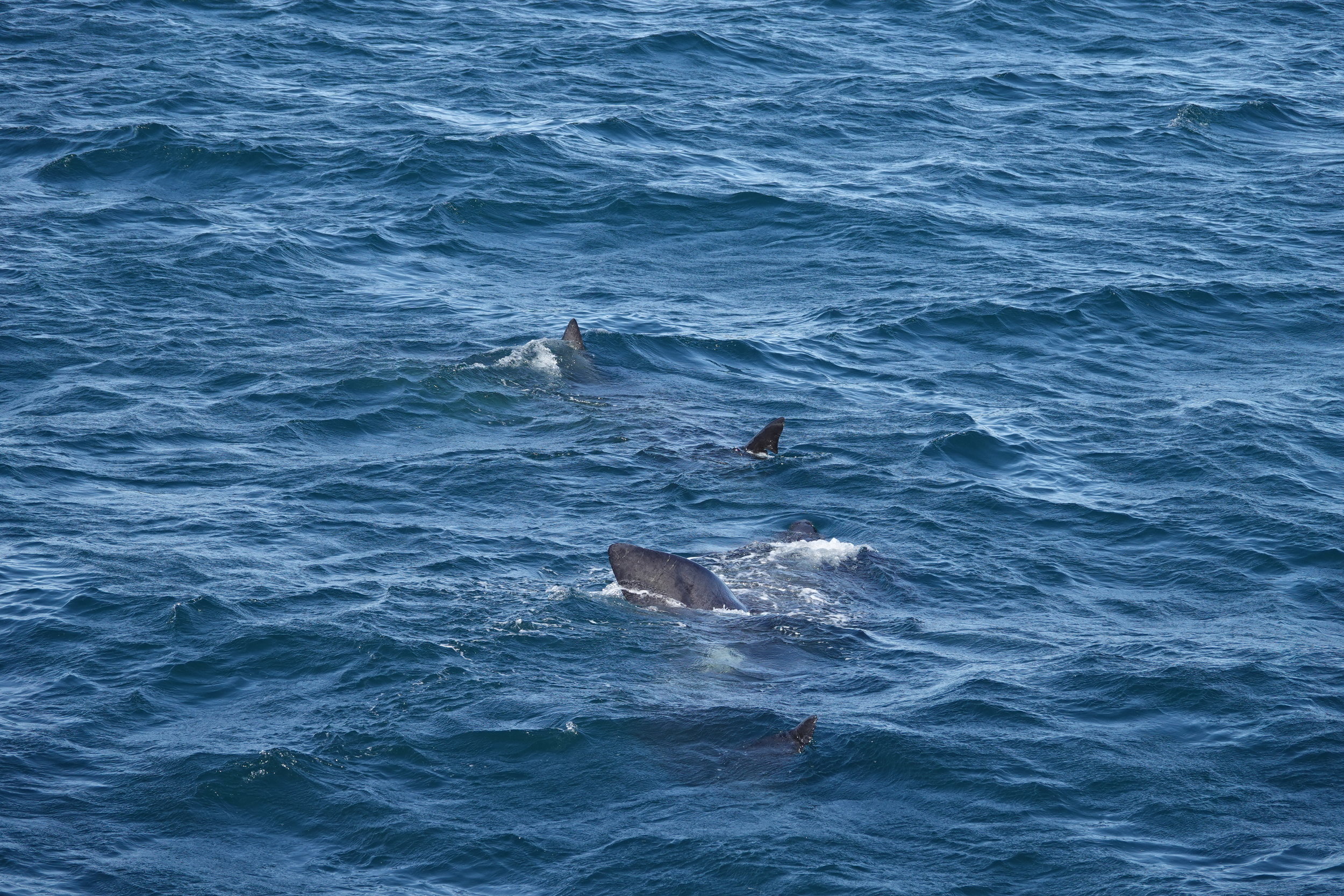
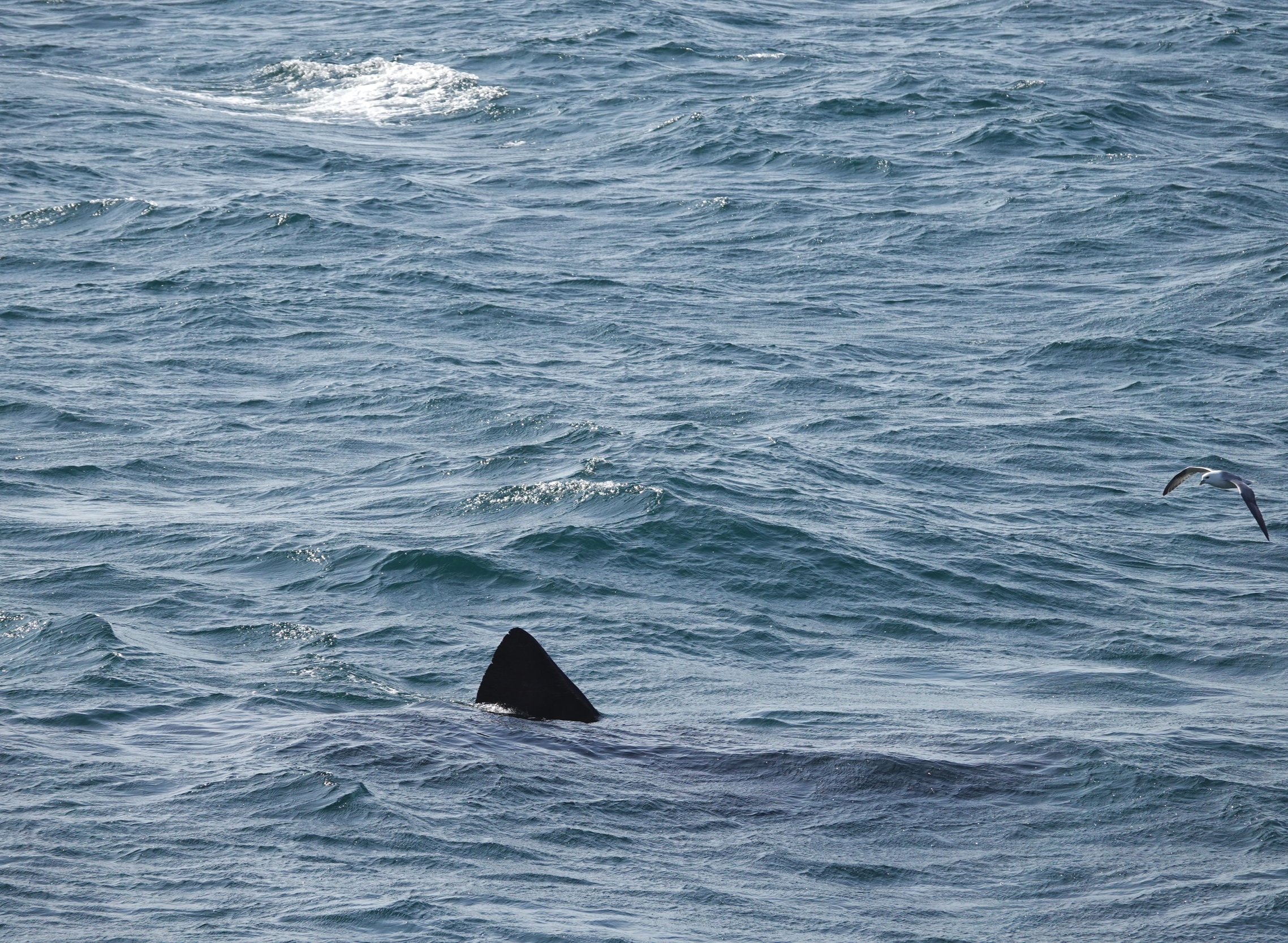
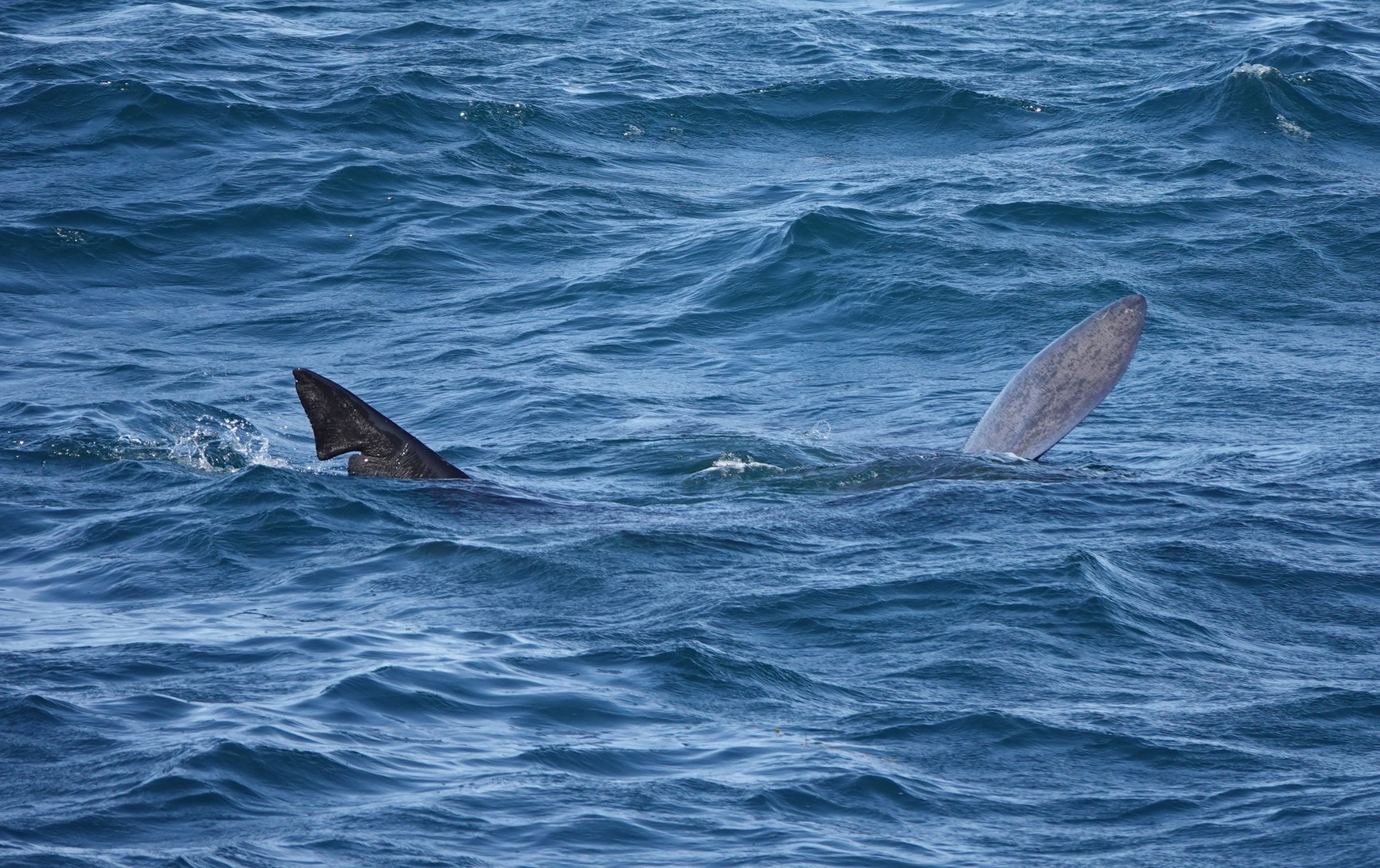
Two or four sharks? Two. Each shark has two visible fins: the dorsal fin and the tail fin.
Can we identify individual sharks?
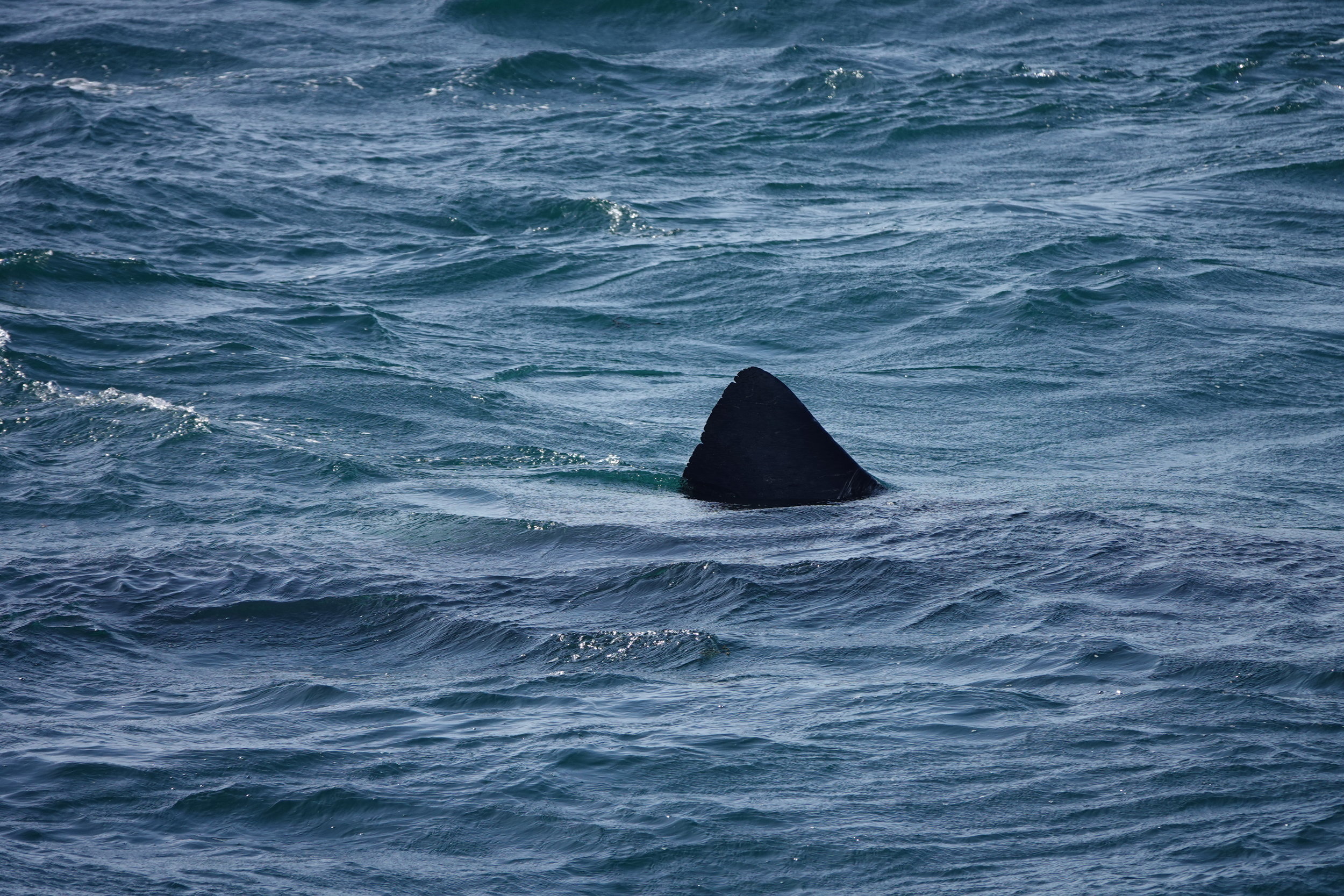
Yes! Just like whales, basking sharks can be identified through photo ID. Each shark has unique scars and markings on its fins, making it possible to recognise individuals.
In 2016, the team at Elding tagged a basking shark named Dimples, and they still track it today. Thanks to satellite data, we get insights into its life even when we’re not around.
If you look closely, you can see notches on the fin, and if you look even closer, you might notice scratches all over it.
Does anything dare to attack it?
Despite its enormous size, basking sharks are still preyed upon by orcas and great white sharks.
They are also frequently targeted by lampreys—small parasitic fish that latch onto them with their sharp teeth. They can’t pierce the shark’s thick skin, but they’re a serious annoyance. Some researchers believe that’s why basking sharks sometimes breach out of the water—to shake off these parasites.
Where do they go in winter?
Unlike northern bottlenose whales, basking sharks migrate wherever they want. They prefer water temperatures between 8°C and 14°C, so in winter, they head slightly south, diving to depths of 200–900 metres in search of food.
The tagged basking shark we tracked swam all the way to the Atlantic Ocean near Spain, before later returning to Iceland.
Surprisingly, basking sharks have also been spotted in Slovenian waters! The last recorded sighting was in 2015, when an 8-metre-long individual appeared.
? > Basking shark > All other fish
The basking shark is the second-largest fish in the world—only the whale shark (Rhincodon typus) is bigger.
Newborn basking sharks are about 1.5 metres long, but they can grow up to 12 metres over their lifetime. Their growth is slow, and their lifespan remains a mystery. Scientists estimate they live at least 50 years, but some believe they may exceed 100 years.
Because of their prehistoric appearance, they were often mistaken for sea monsters in the past.
The bird on the right is very close to the shark—just for size comparison!
Is it related to rays?
Yes! Basking sharks belong to the same group of cartilaginous fish as rays.
What reminds me most of rays, though, is something purely visual—when large basking sharks swim in choppy waters, their huge dorsal fins sway from side to side. It looks just like the flapping movement of ray fins in the water!
This made it quite difficult to capture both fins upright in a single photo.
What does it look like underwater?
Sadly, I can’t tell you from experience. But from what I’ve heard, it has massive gill slits and incredibly rough skin, ranging from brown to dark grey or even black.
Young basking sharks have a long, hook-shaped snout, which is thought to help them feed as they develop.
The most it dares to show a large crowd? Its snout.
Mysterious creatures?
Beyond their bizarre appearance, another mystery lies in their ability to stay hidden. Since they don’t need to surface for oxygen, hundreds of basking sharks could be swimming nearby without us ever seeing them.
They only come to the surface when food is abundant. The moment the food disperses, they dive back into the depths.
This often leads to frustrating encounters—one whale-watching boat might observe a basking shark for ages, but by the time another boat arrives, it’s already vanished. It’s happened to us. Many times.
They don’t care about boats. In fact, they’ll even swim directly under them.
Why are they a protected species?
Basking sharks were added to the endangered species list due to overfishing.
They were primarily hunted for their huge livers, which make up 25% of their body weight and contain 700–1,500 litres of oil. This oil was used in lamps, cosmetics, medicine, and food products.
Their skin was turned into leather, their cartilage used in medicine, and their meat sold as food.
Between 1950 and 1993, their population declined by 80%. Today, due to a lack of data, we don’t even know their exact numbers.
Despite international bans, some Asian markets still hunt them for their prized dorsal fins.
"Don’t eat us. Meet us."
That’s all for now. You’ve survived my scariest post yet.