
I’m writing this post at a desk in a room with huge windows overlooking the sea canal, just a few minutes’ walk from the university I’ll start attending in September. I can’t wait! What I’ll be studying will be revealed at the end of this post, but first, let me share some of my initial impressions since I arrived in Denmark.
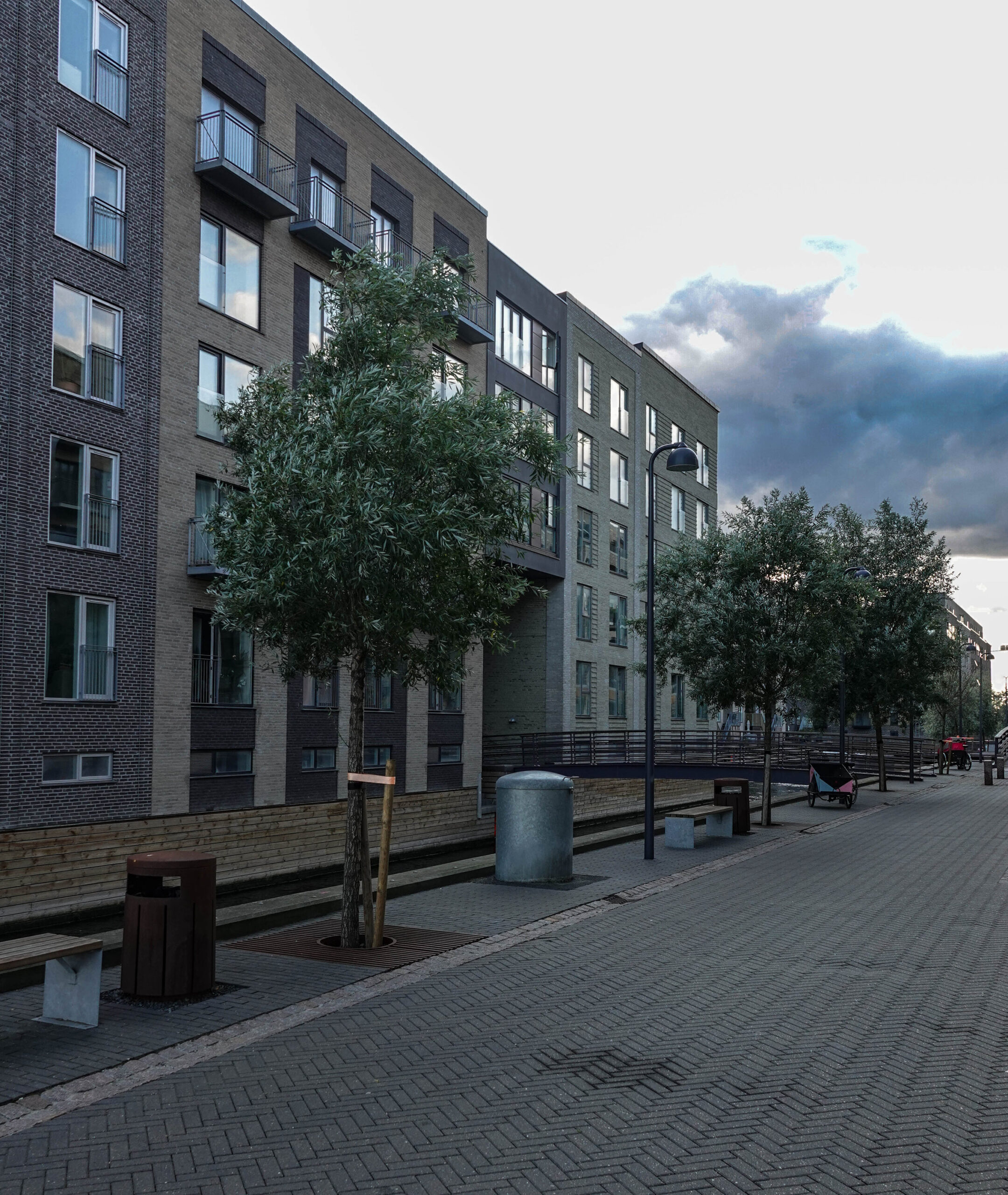
The city’s vibe completely enchanted me, and I hope I can convey that to you a little through the photos I took near my apartment.
After arriving from Brnik to Amsterdam, I walked about half an hour to the gate for the flight to Copenhagen. It was at the very end of a long hallway, and what really caught my attention was the scene when I got to the end – passengers were sitting on chairs in almost a sequential pattern – one person… one or two empty seats… next passenger, and so on. Nobody sat next to a stranger, as I had often seen at other parts of the airport, in waiting areas for other flights. Based on the videos I’ve watched, this is quite a common behaviour among Danes (and Icelanders…) – they love maintaining personal space and respect it for others as well.
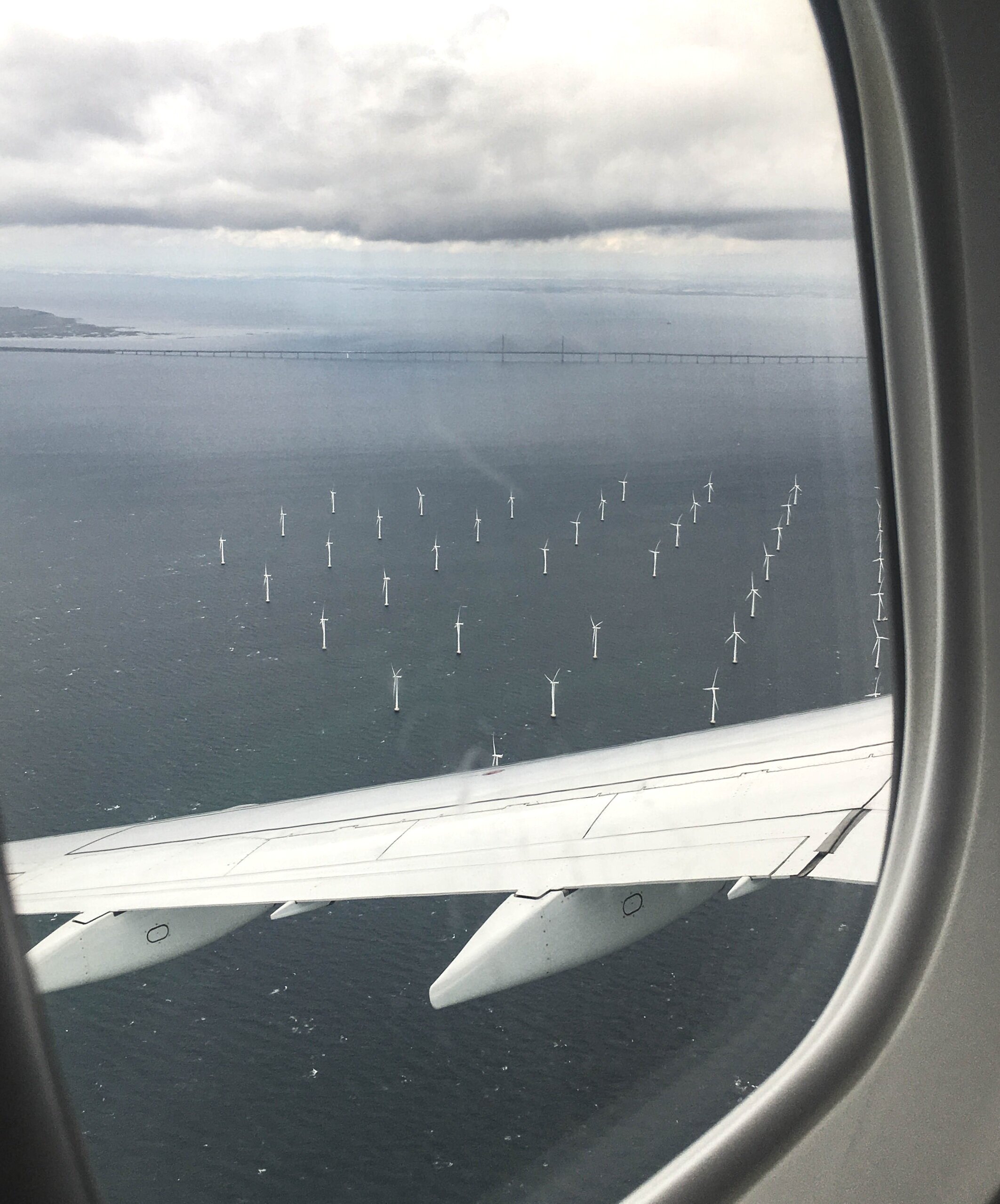
The first glimpse of Denmark looked like this – a field of wind turbines by the sea and in the distance, a bridge connecting Denmark (on the left) to Sweden. Simply stunning!
The weather is currently perfect for me – around 18°C, with a light breeze here and there, sunny to cloudy. Today it drizzled a little for the first time, but that didn’t stop street life – most Danes put on light jackets and continued on their bikes or walking. A few hours later, the sun was shining warmly again.
Copenhagen is known as one of the European cities where it’s hardest to find housing. Every year, many foreign workers and students, as well as locals from other parts of the country, choose to study in the Danish capital, so the search for apartments (or more often a room) is truly a huge challenge, especially right before the start of the autumn semester.
I was lucky enough to find one after 10 days of VERY intense searching, which I attribute to sheer luck. There are many websites with waiting lists for apartments that you can sign up for. I signed up for everything that existed, but at most places, I was at least 100th in line. There are many Facebook groups where daily offers for rooms or apartments are posted. It works like this: you write to the landlord (introduce yourself and explain why you’d be the best flatmate…), and they then choose, say, 5 or 10 top candidates from the 50 or so messages they receive and conduct an online interview – with each person individually. Then, they think it through and choose one person. What can I say – my success rate was: after about 15 messages, I got two responses suggesting a video call. Both messages came at least a week later.
Fortunately, I didn’t have to attend those calls because, right before they were scheduled, a message “fell from the sky” offering me the perfect place for a pleasant start to my stay in Denmark. Of course, I also had an online call (an hour-long “interview”), but I was the only one they interviewed. 🙂
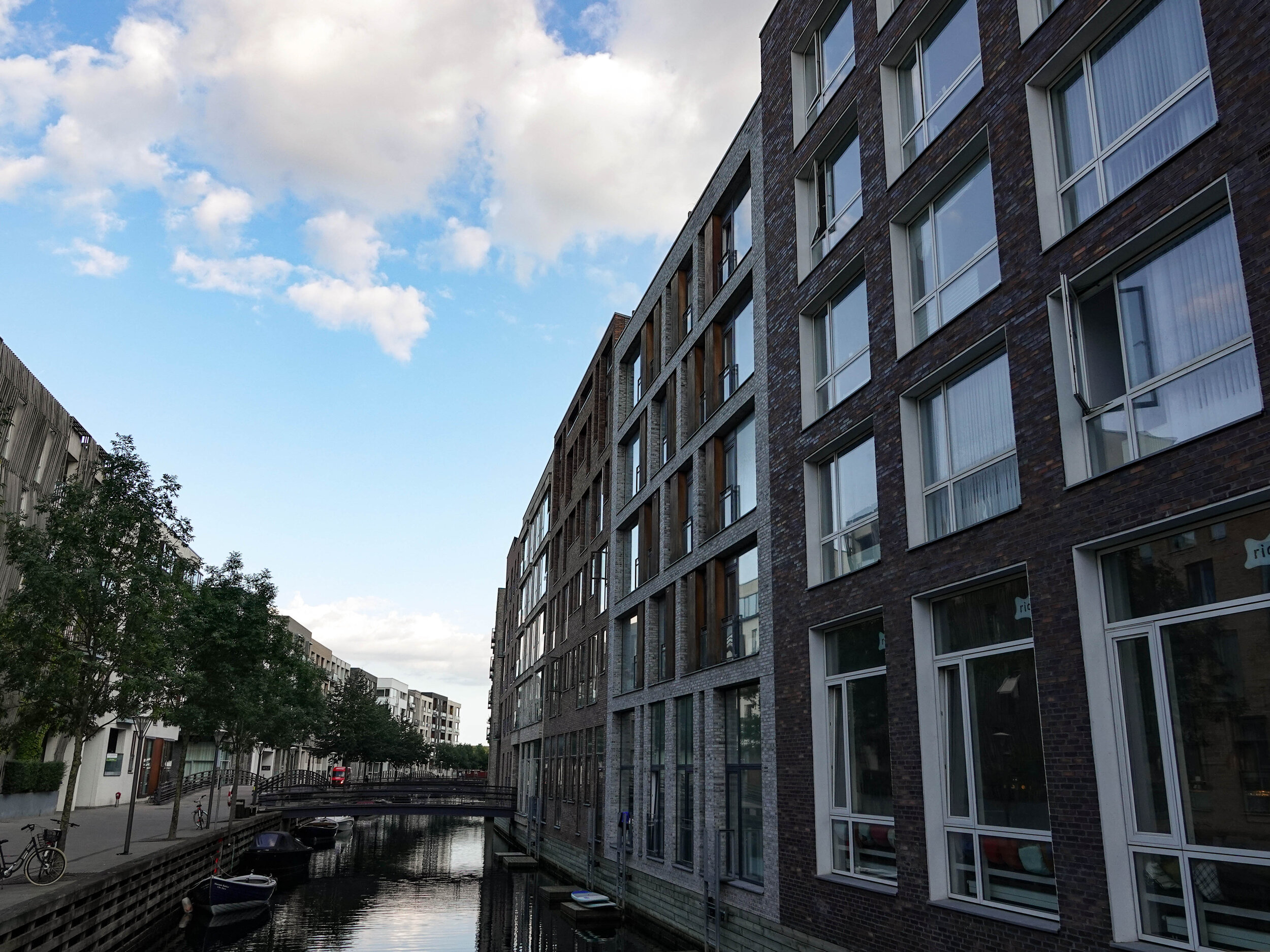
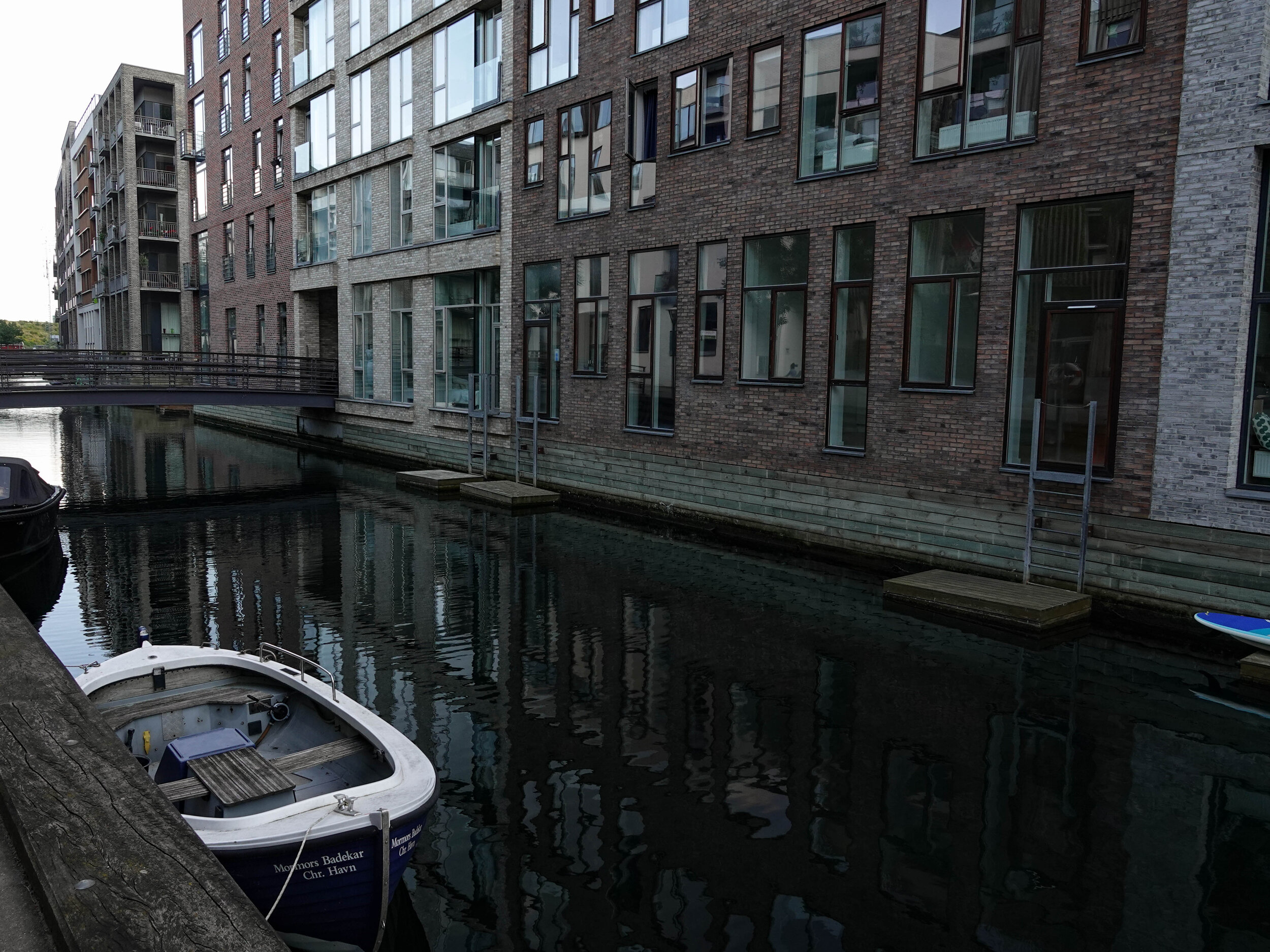
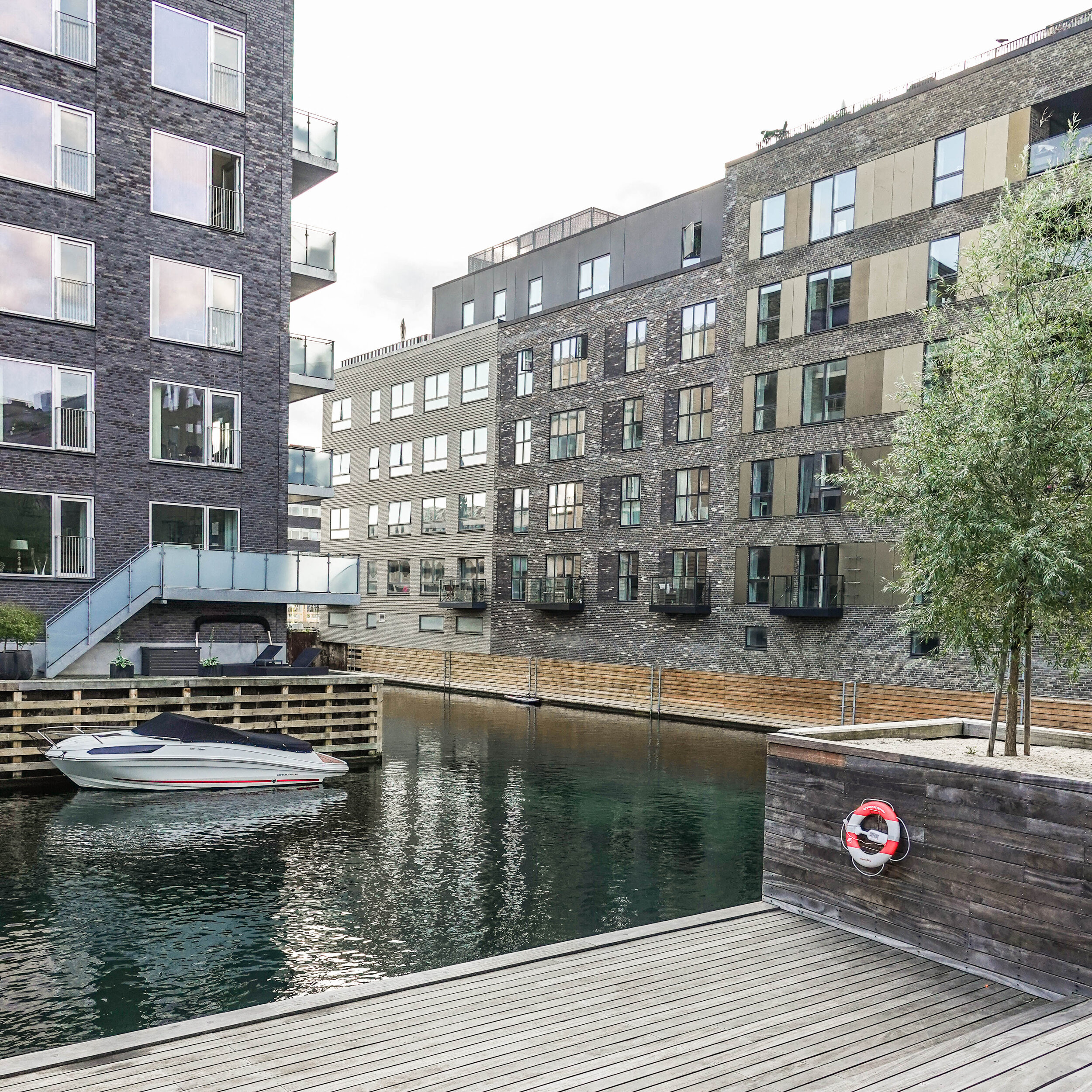
The vast majority of the apartments they were renting out were very nicely decorated, minimalist, some had terraces, some had direct access to the water (through the balcony you could get into the sea water by using a ladder), many of them were very modernly furnished, with large windows, in very nicely decorated neighborhoods. Well, one of these neighborhoods is also my current one.
I’ve already taken several trips around the city, and I’m constantly enchanted by it. When I first cycled through the city centre by the sea canal, I thought I was dreaming. I had actually dreamt of a very similar scene a few months ago, but back then, I thought it was the capital of Estonia.
This city is something surreal – I’ve never seen such an unusual blend of modern and old, along with nature. The first thought in my head was – this is what I imagined Slovenia would look like in 2100. Truly a completely different world. Full of mini innovations, beautiful architecture, fresh sea air, and friendly people. And there’s still so much left for me to explore! Good thing I have more than just a month or two.
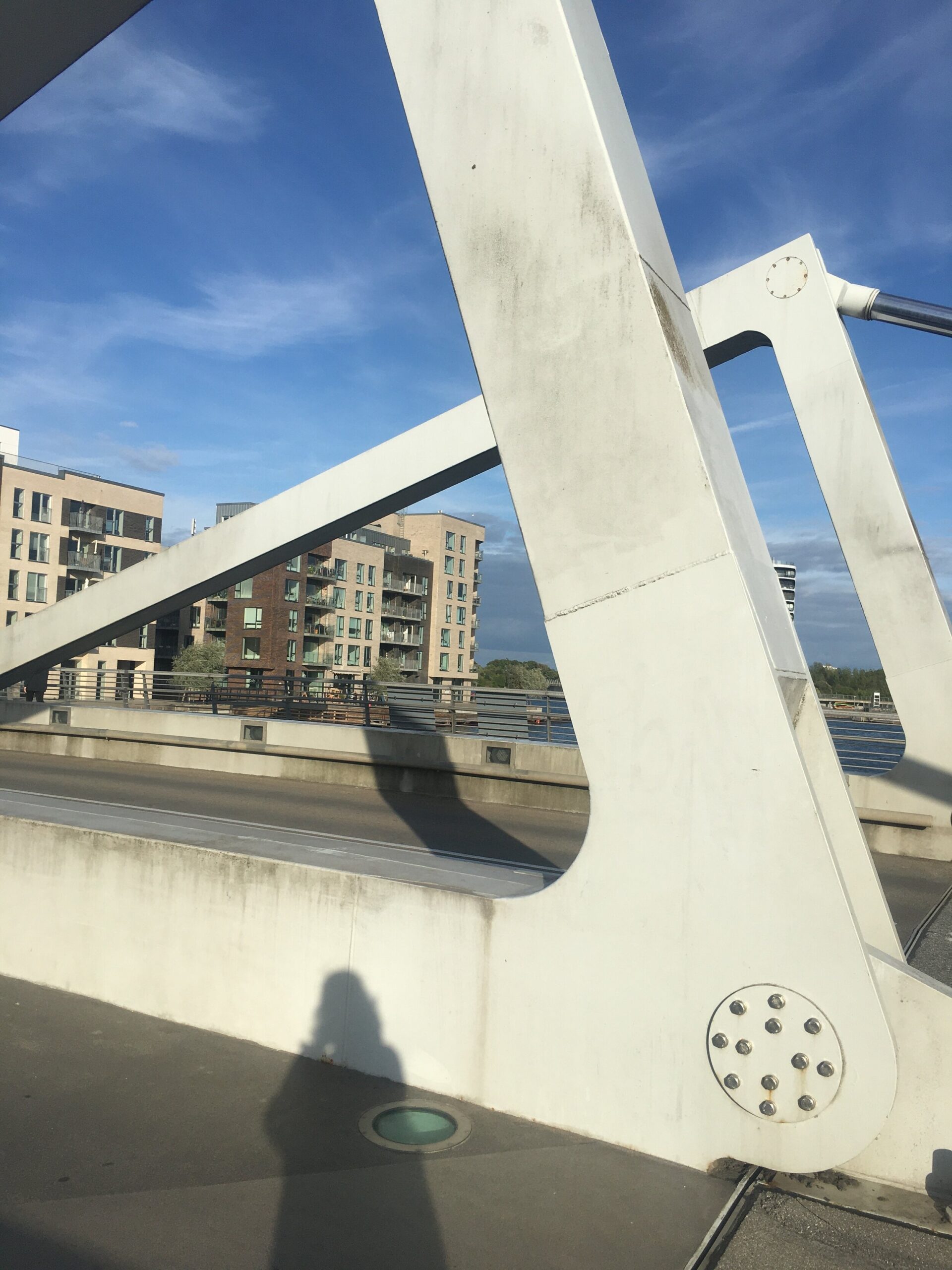
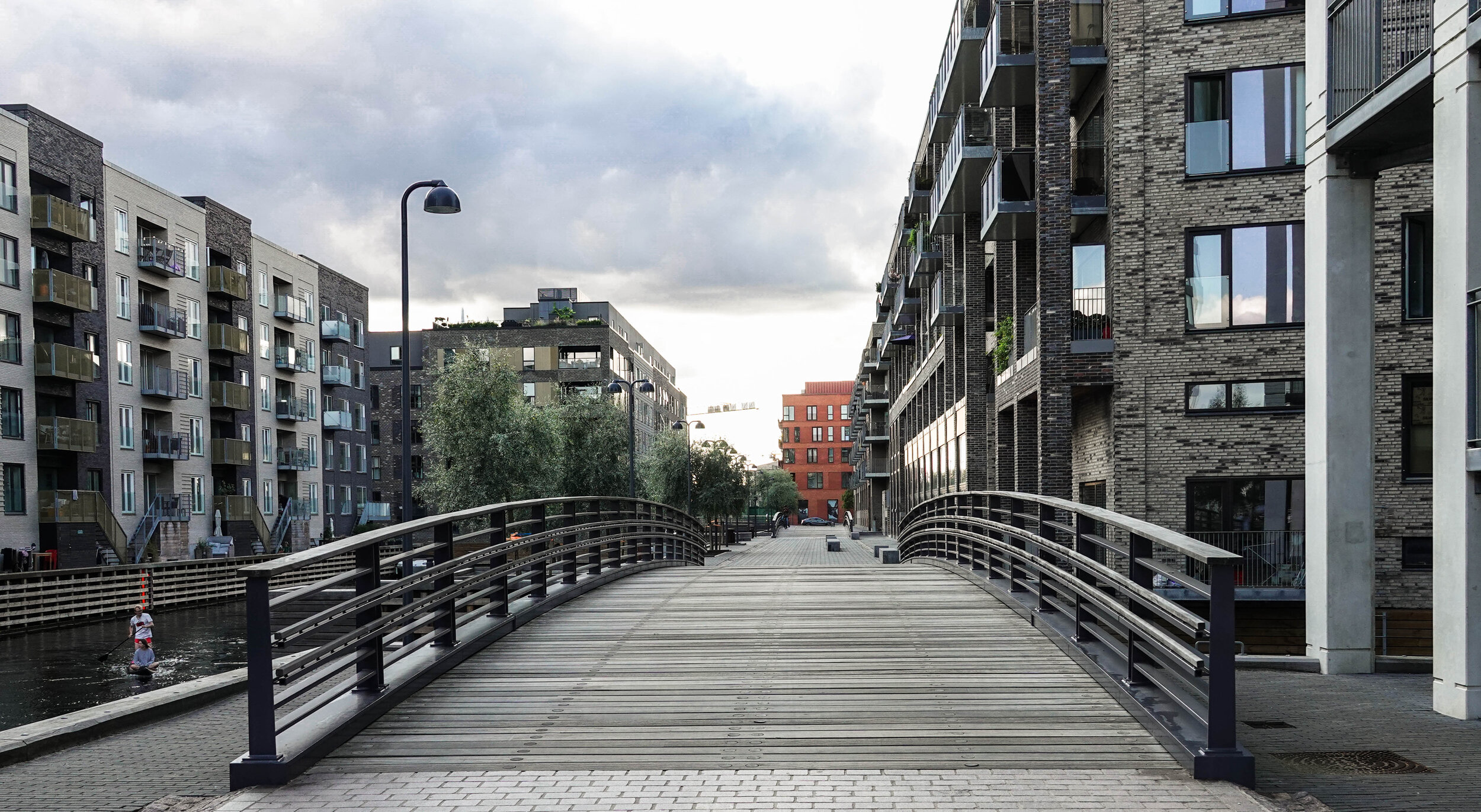
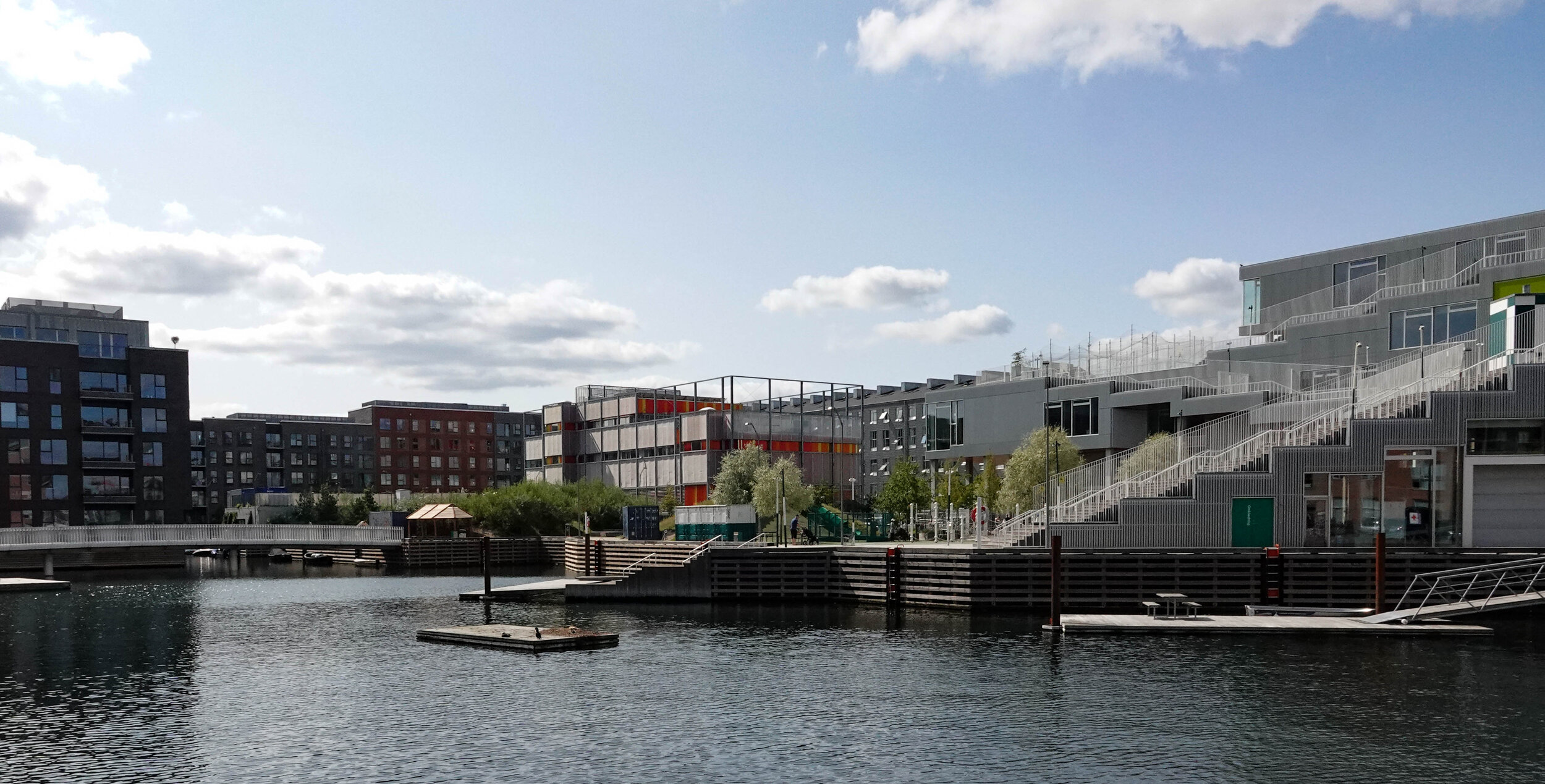
I was also thrilled by my immediate surroundings – I live next to one of the smaller sea channels, along which are tiny streets. To cross the canals, they’ve built fairy-tale bridges – curved so that larger vessels can pass under them. What was even more interesting to me – cars also drive over these curved bridges – like in an animated movie.
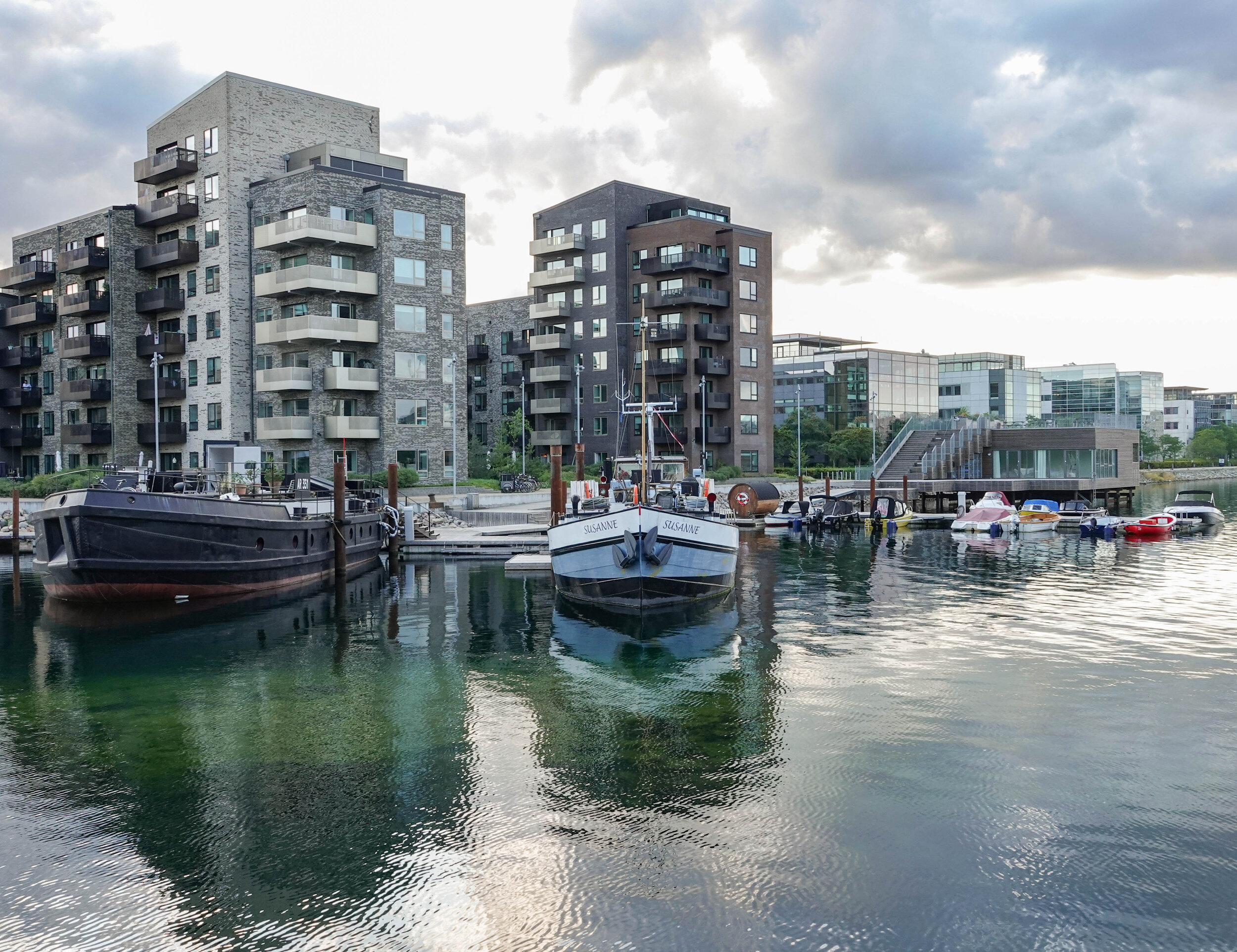
There are also quite a few cafes on the water (on parked ships or on pontoons). I still don’t understand how something so beautiful can exist. This atmosphere can probably only be fully felt in person.
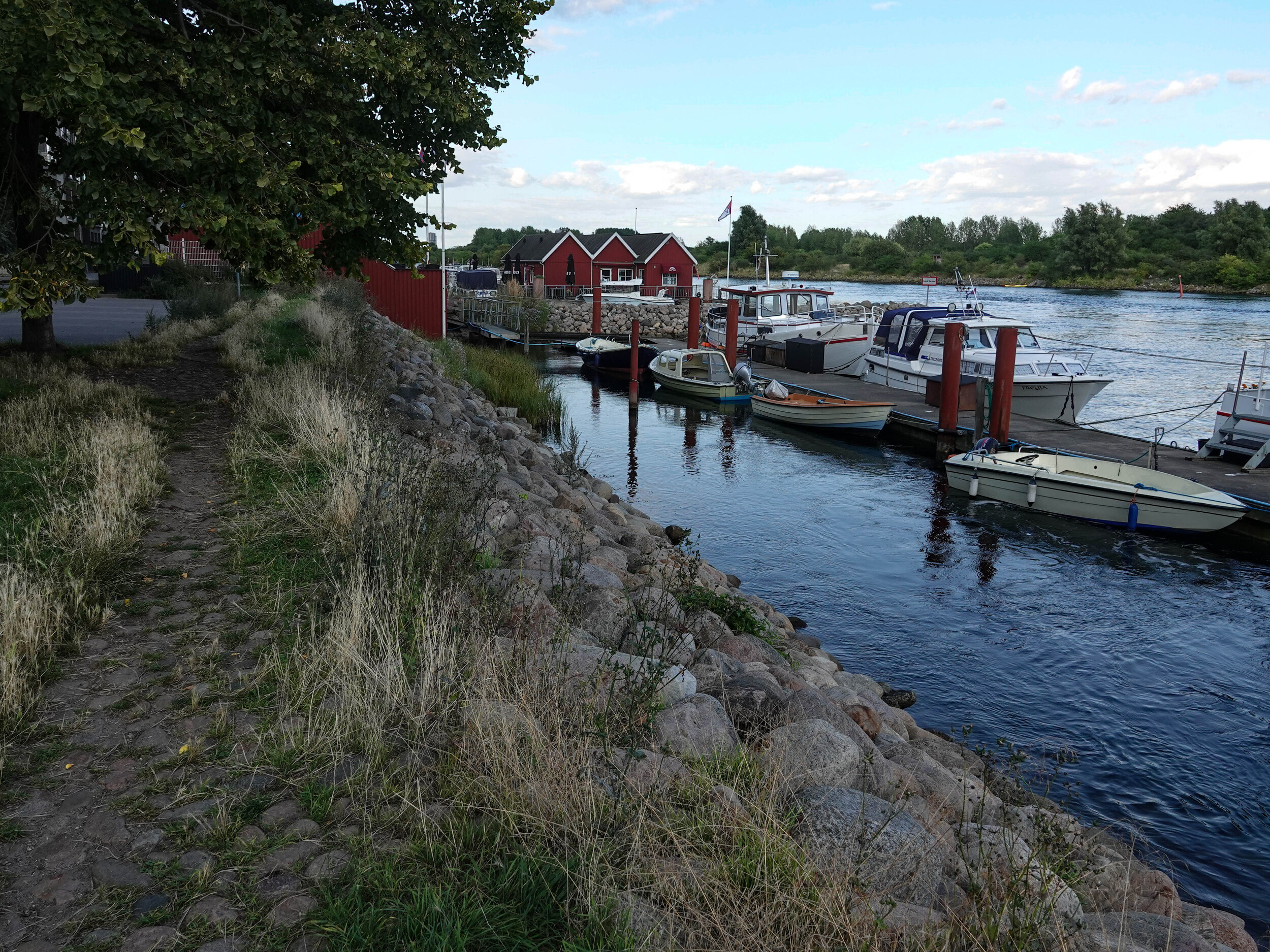
At the end of the street, there’s a larger canal with a strong current – on the other side of the canal, there’s a large green area with football fields (including oval ones), a kind of cove, and countless opportunities for recreation. In this spot, in the mornings and evenings, fishermen catch fish, and not far from here, there’s also a swimming area. Copenhagen was once voted the best city for swimming.
There are a lot of swimming areas and opportunities for swimming here. Almost every corner by the canal has a ladder to the water, a wooden platform for sunbathing, or even a real sandy beach.
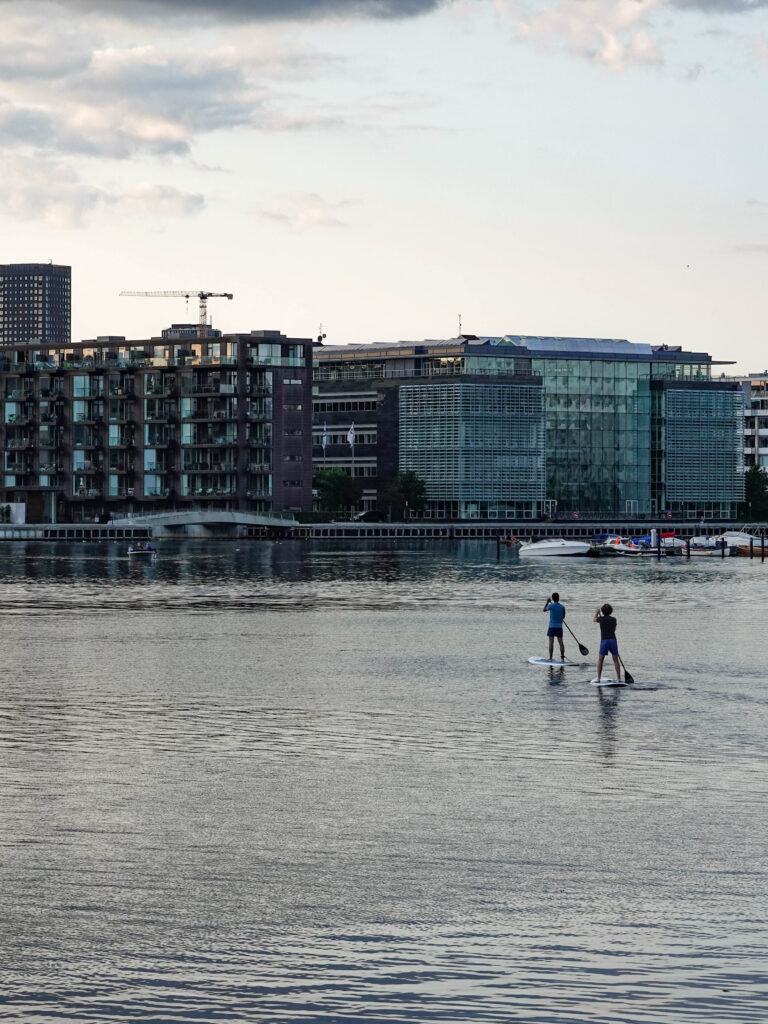
As a resident in this part of the city, I have the chance to borrow a kayak or a “SUP” and paddle through all these numerous canals and under all these bridges. There’s also something called a “sea bus” that goes from the outskirts of the city to the center, and locals use it. It takes about an hour (which is a lot).

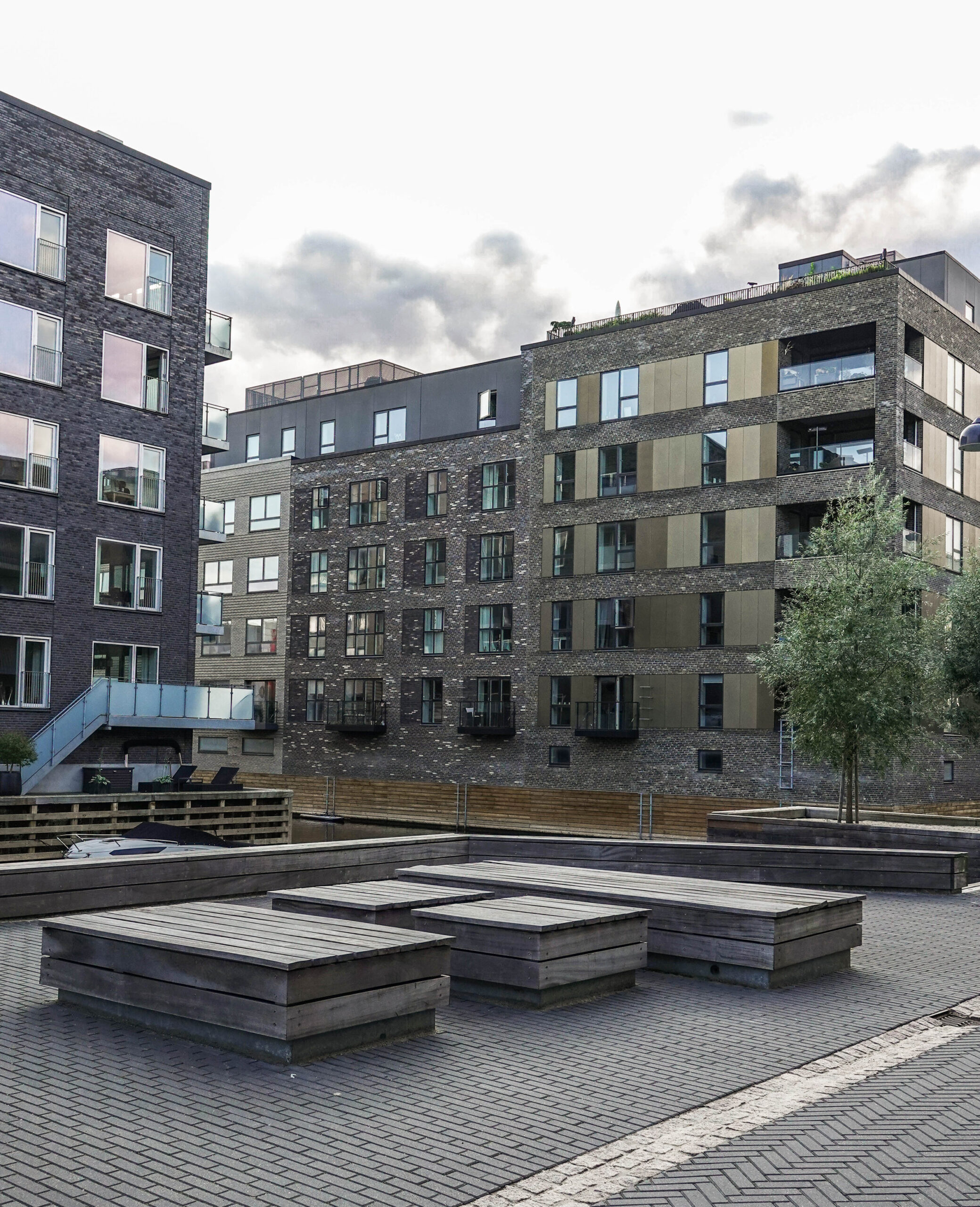
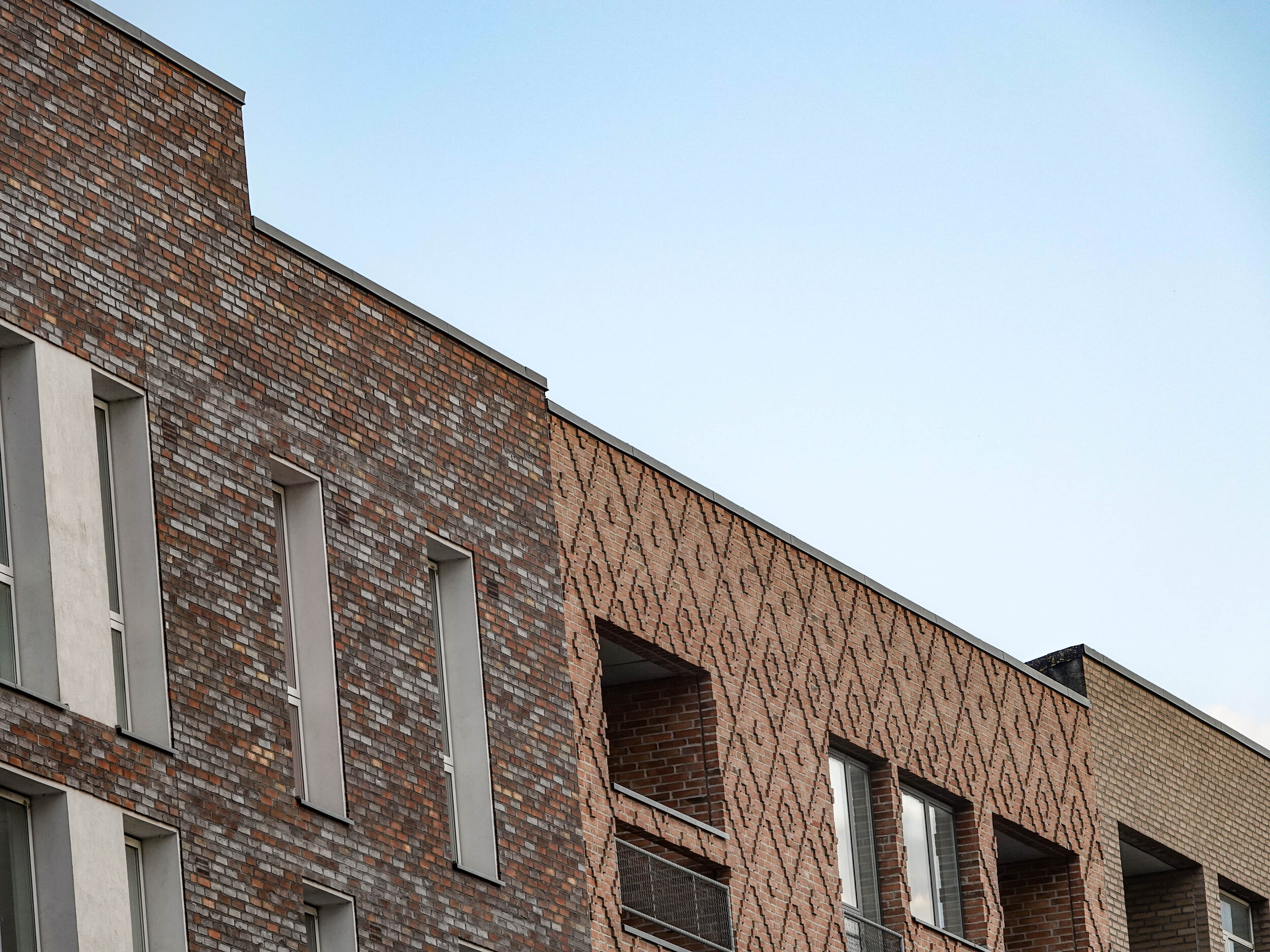
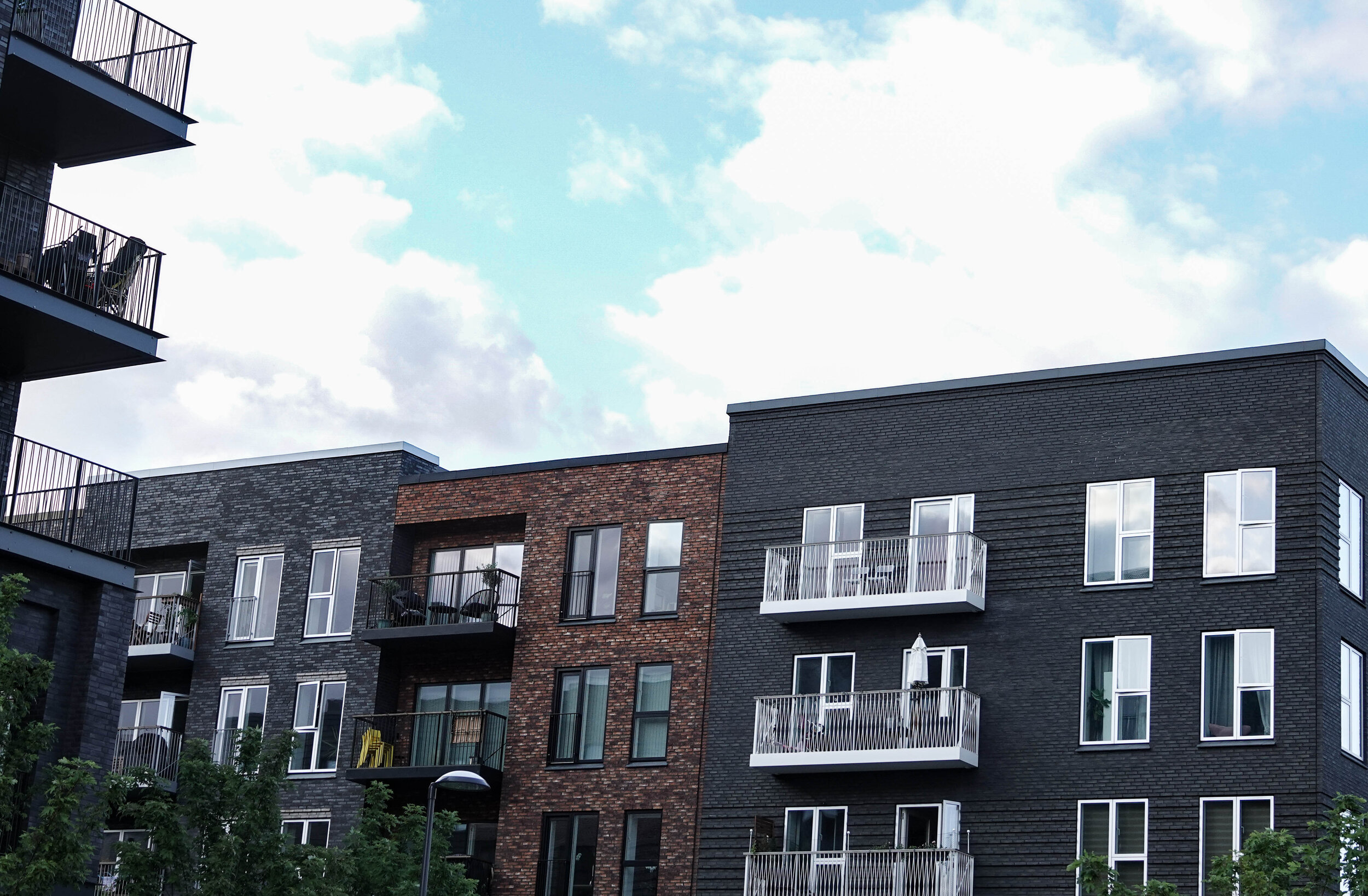
A large portion of the buildings I’ve seen so far is at least partly made of bricks – in countless colors, color combinations, and different shapes and placements. In some places, bricks are used to create a fully brick-like look of buildings, while in others, for example, light beige bricks give a very modern look, and the bricks are almost invisible. In our neighborhood, they really played with colors – every building is a different color. I really like it. I should ask my housemate, who is an architect.
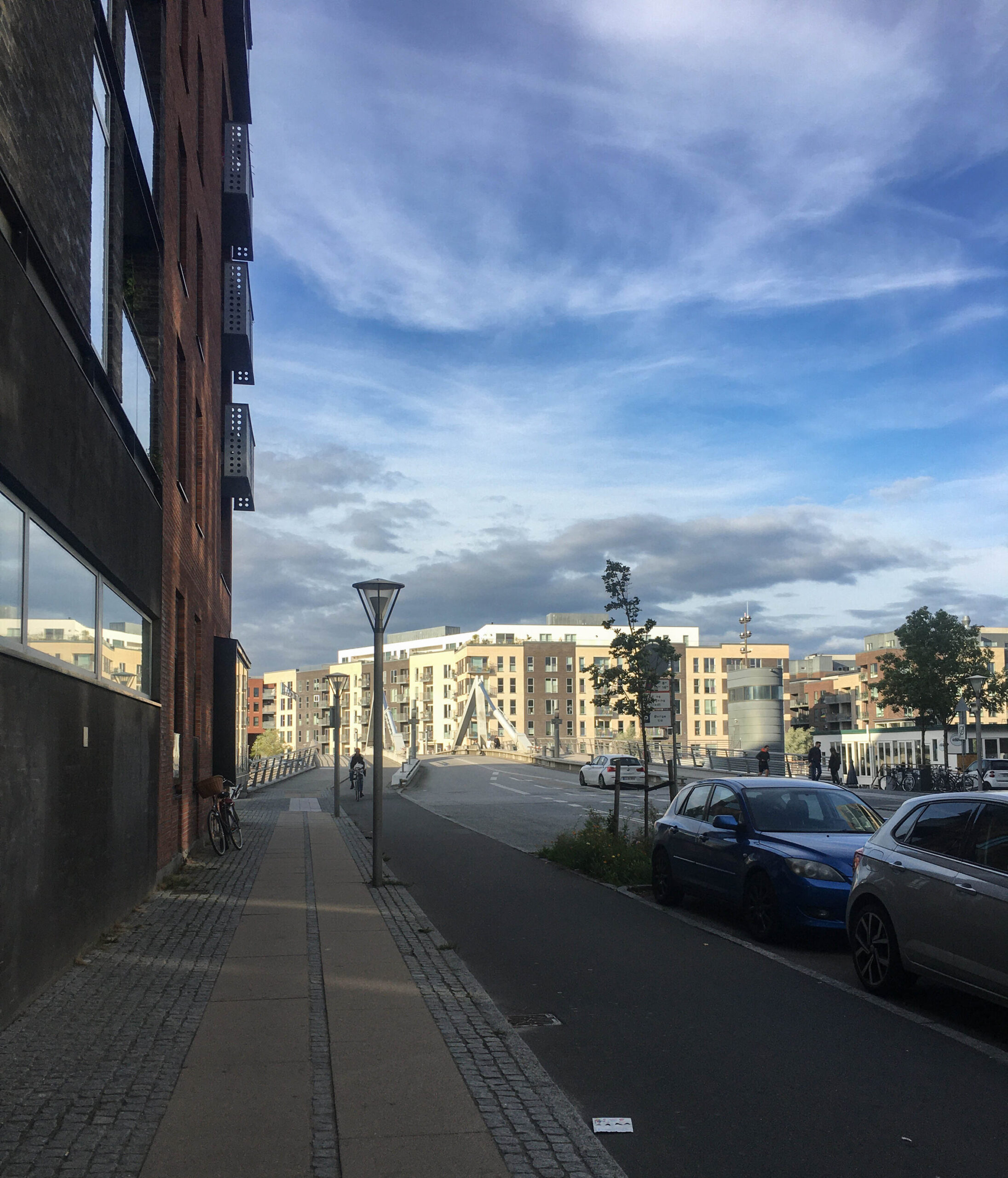
The streets and roads are beautifully arranged. There is always a pedestrian lane and a wide lane for cyclists – the bike lane is one level lower than the pedestrian lane and is usually raised above the road. What I found interesting (and quite less jarring) were the speed bumps they have on bike lanes. They’re very rough – if you don’t slow down or get off your seat, they shake you quite a bit. I encountered so many new things in the entire bike system that I will probably share all these fascinating Danish innovations in a separate post.
When I first visited the city center, I was quite surprised by the number of cyclists and their speed. At one point, I was going down a bridge that was meant only for pedestrians and cyclists, and here’s what it looked like: pedestrians were walking slowly in both directions, not really sticking to their lanes, while rollerskating people were weaving through, and cyclists overtook them on both sides – cyclists on my side just barely avoided cyclists from the other side, who were overtaking in our lane. Additionally, visitors from nearby stalls were constantly crossing the lanes as they left. It was a few seconds of chaos, but 100 meters later, it all cleared up, and I found myself in a much less crowded street. It was an interesting experience.
I also immediately noticed their fashion style, which I really like – it’s like watching my Pinterest in real life.
There are a lot of runners on the streets. They run right on the streets – both in the city center and on the outskirts, and along the beach. I’ve seen so many runners that I was completely tempted to go running myself. I found a nice seaside park nearby, where alpacas are supposedly grazing. I haven’t seen them yet. I’ll report back when I find them.
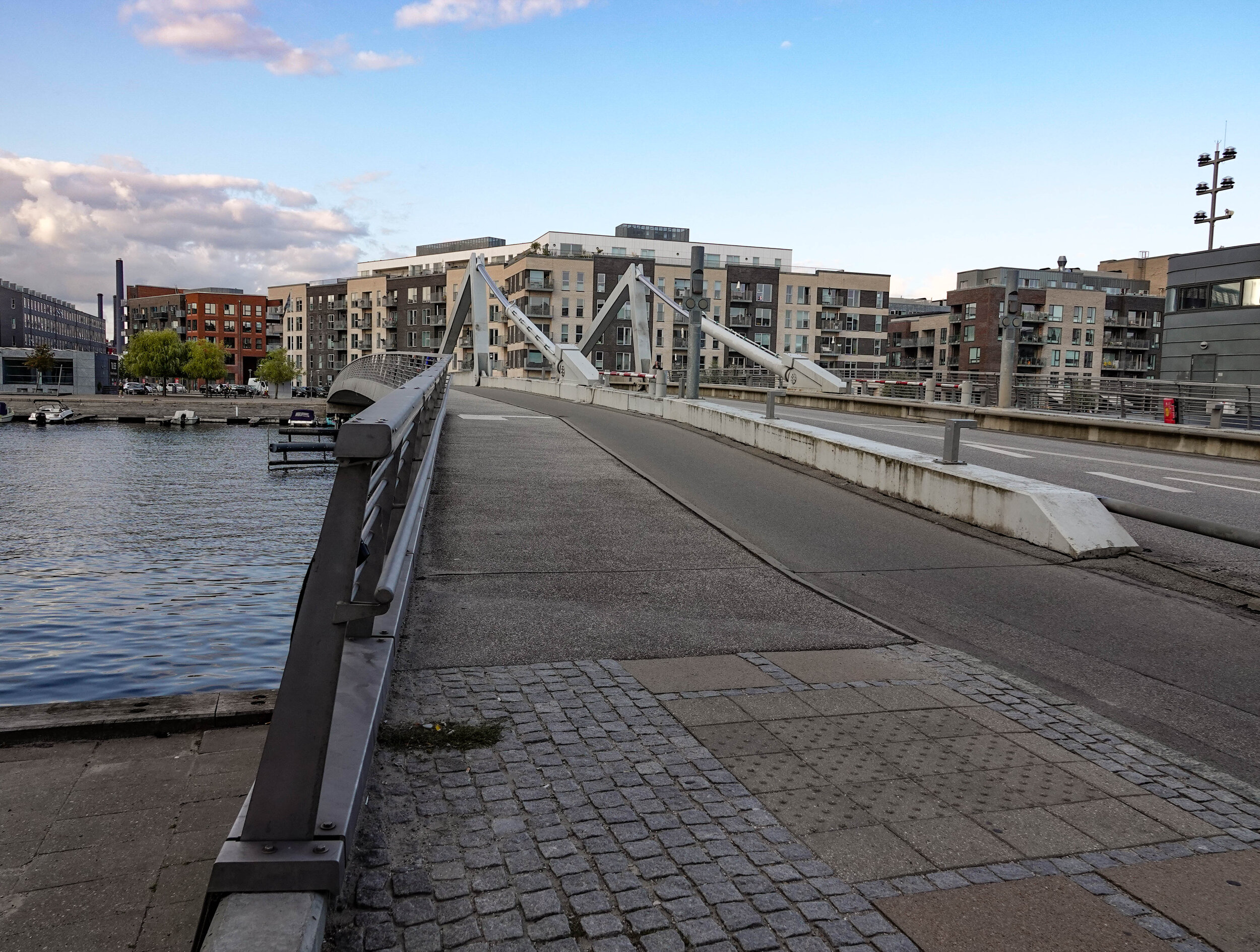
I adore the sea, and here I can see it on every corner. Where there isn’t the sea, there are ponds; where there are no ponds, there are lakes, marshes, swamps, or bays with abundant life. The so-called northern shrubs are everywhere, and their sandy beaches with tall grass are something I’ve been most excited about. I’ve already visited two different beaches, and both were wonderful. For swimming, you do need to muster up some courage as the water temperature is currently 17°C or less. But almost the entire coastline feels like it’s yours, as even the locals don’t swim much (at least not when I was there). There are, of course, countless city beaches – even between residential blocks.
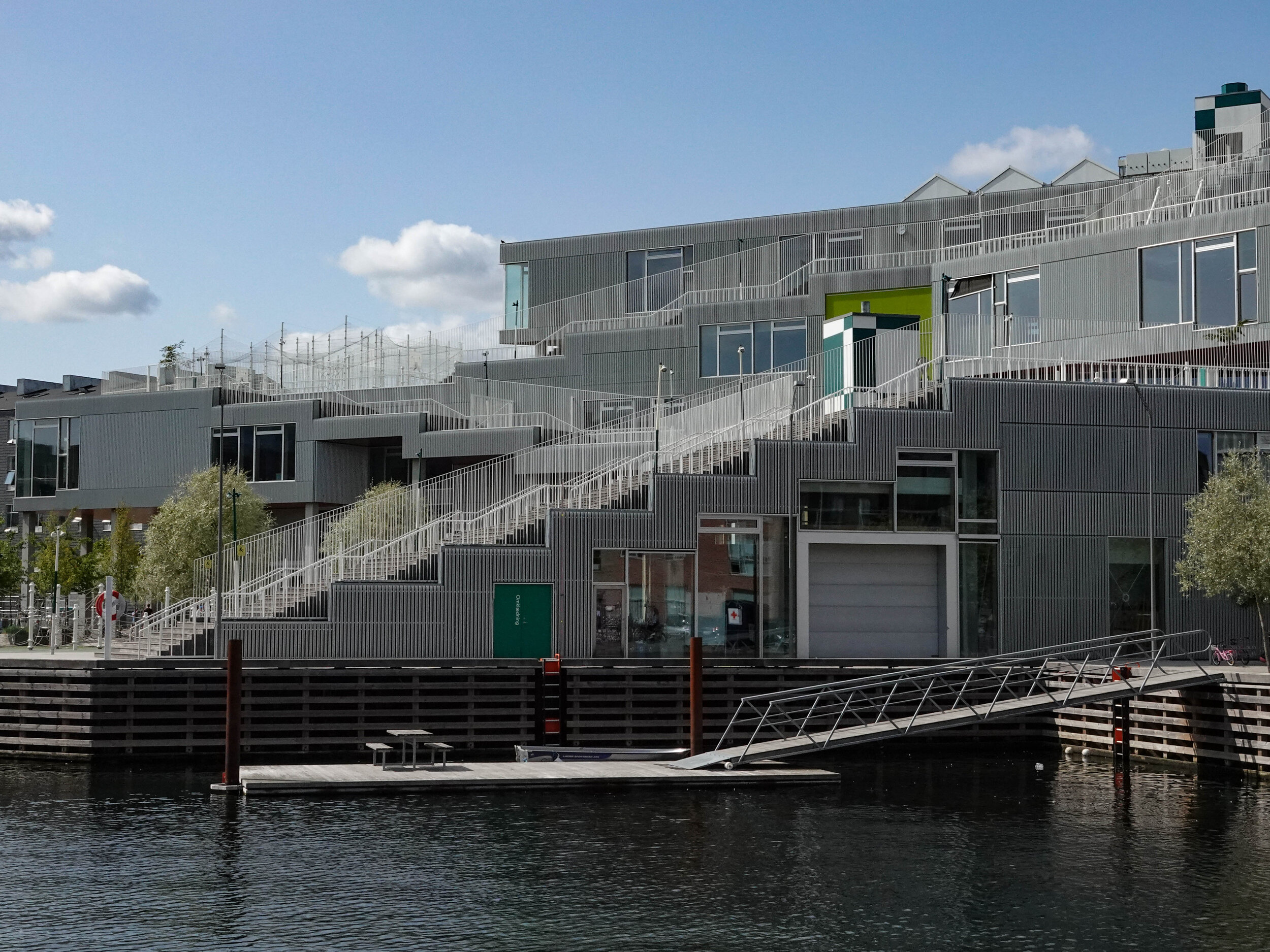
The Danes really know how to enjoy nature and their surroundings in general – at every turn there is a bench, a wooden platform, or even a picnic table.
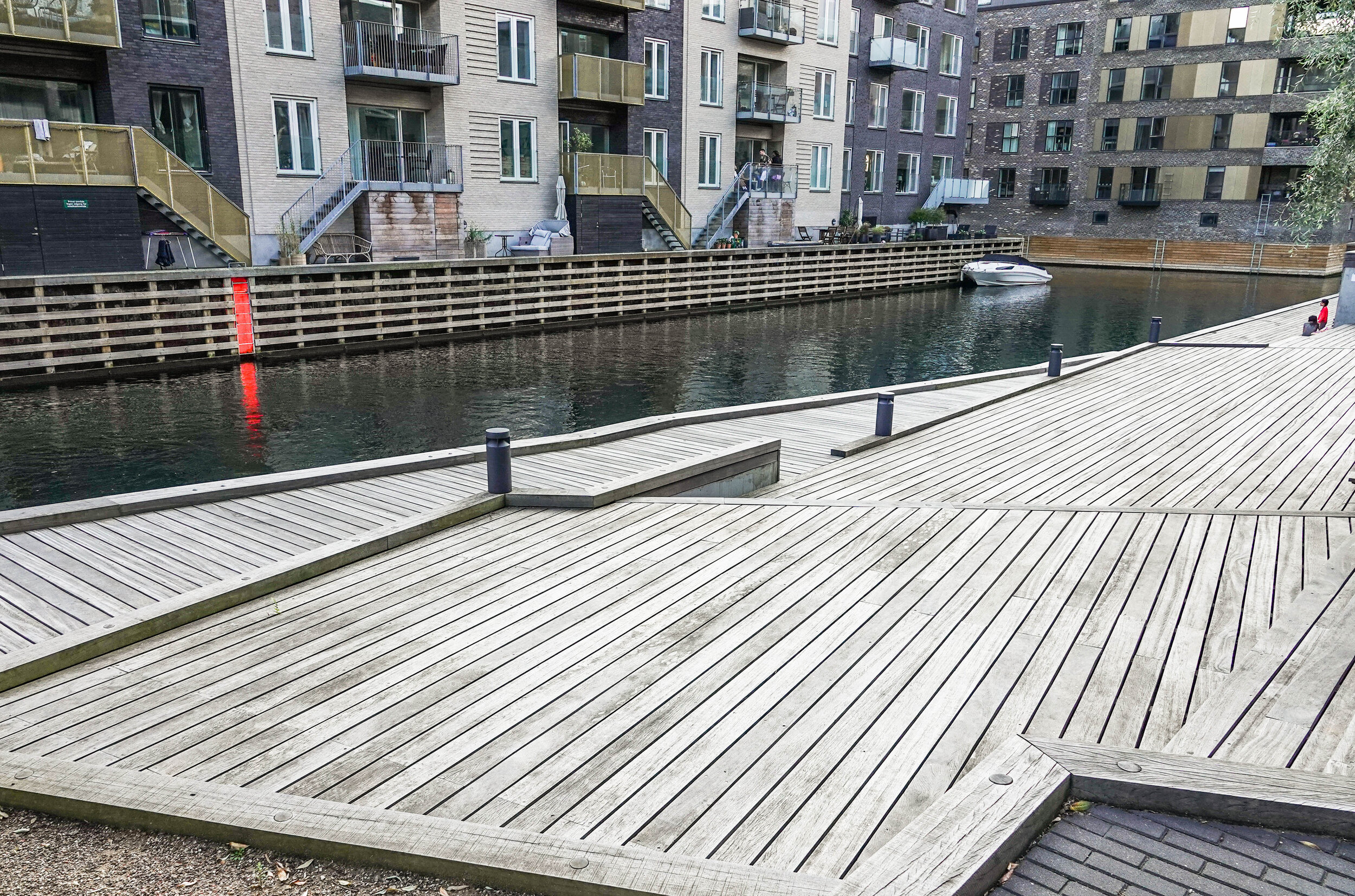
Up until now, I’ve mostly been in grocery stores, where I was fascinated by how quickly everyone shops. In the store, most customers walk very fast; they rarely stop in front of a shelf to browse what would be the best purchase. I’ve never seen anything like this in Slovenia. They don’t have scales with numbers, as practically every fruit or vegetable is already packaged with a barcode. Unfortunately, most of the packaging is plastic… Sometimes there’s a squash with only a label on it. Well, bananas are also without plastic. There are also markets, but I haven’t managed to visit them yet…
What surprised me positively is that a lot of the food is organically grown. They don’t just have an “ECO” or “BIO” section, but you can find many ECO products on every shelf, preferably also produced in Denmark. And the price because of this is not excessively higher than usual.
At the checkout, they always ask if you need a receipt. If you say no, they won’t print it. I remember they did the same thing in Iceland.
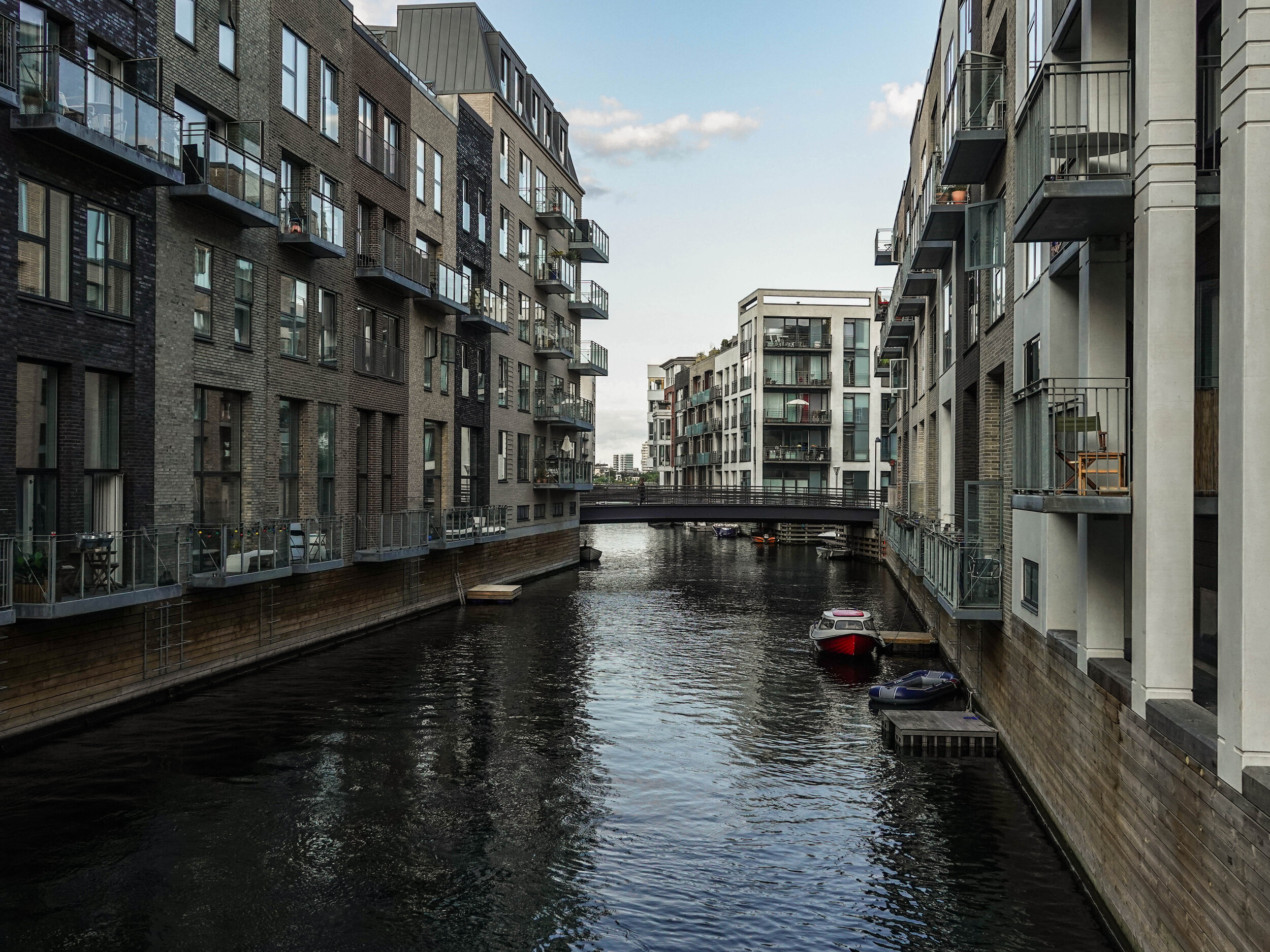
This question about the receipt is the only Danish sentence I currently understand. Danish is quite a challenge – if you think everything is clear on paper, you find out that it’s not exactly the same when it comes to pronunciation. Apparently, Duolingo didn’t teach me very well… I’ll have to add some other strategies. And maybe a little magic, hehe.
I’ve heard that in Denmark, it’s common for people to leave things they no longer need by the trash bins, and it’s completely normal for anyone to take and bring it home. I experienced this the first minute I arrived at the apartment – my roommate had just taken out the trash and brought back a large, very well-preserved rug. Later, they showed me the area with trash bins for our building and the surrounding area. It’s like some kind of recycling island, where on one side you also have used furniture, on another side, glass jars, books, picture frames, climbing helmets, and much more. I almost bet that none of this gets thrown away because there’s always someone who finds it interesting. Ola goes to the trash every day to see if there’s anything new. Yesterday, she brought two language learning books with CDs, and another day about six books and picture frames… Most of our apartment is furnished with these things, or with things people advertised in the Facebook group “Free your stuff”. Fascinating!
I also find it interesting that many apartments don’t have ceiling lights in the rooms. They prefer those tall lights that they move around the floor. Apparently, they’re not so fond of strong light when it’s dark outside. But they have large windows, so during the day, there’s more than enough light.
I’ve also noticed that they have very small shower cabins everywhere. Often, there’s no barrier between the toilet and the shower. We could teach them a thing or two about that.
One mini problem is that the water in Copenhagen is very hard – limescale quickly accumulates on tiles and is quite persistent. Just a few days before my arrival, for example, a pipe in the washing machine “exploded” because it was completely clogged with limescale.
There are many things I could talk about already, but I’ll wait until I experience and live them a bit more. Nature is definitely what will bring me to many unforgettable experiences. And of course, the studies, which is the main reason I’m here in the first place. I can’t wait!
Ah, before I forget – I came to Copenhagen to study Sustainable Design. When the studies begin and I get to know the program better, I’d be happy to write about it.
Would you be interested in hearing about the journey here – how I found the program, how I applied, how lucky I was…? This project actually started last January when I began reviewing all master’s programs in Scandinavia and the surrounding areas from Costa Rica.
The new and especially beautiful environment has a very positive effect on my well-being – I have a lot of new motivation, a bunch of exceptionally good ideas, a desire for creative expression, and excitement over every new day, every new corner I discover. Will you join me?
A lot of new things are coming. Next time, maybe even some more dynamic photos that I’ve been collecting. 🙂
Until then, take care!
<3, Alenka