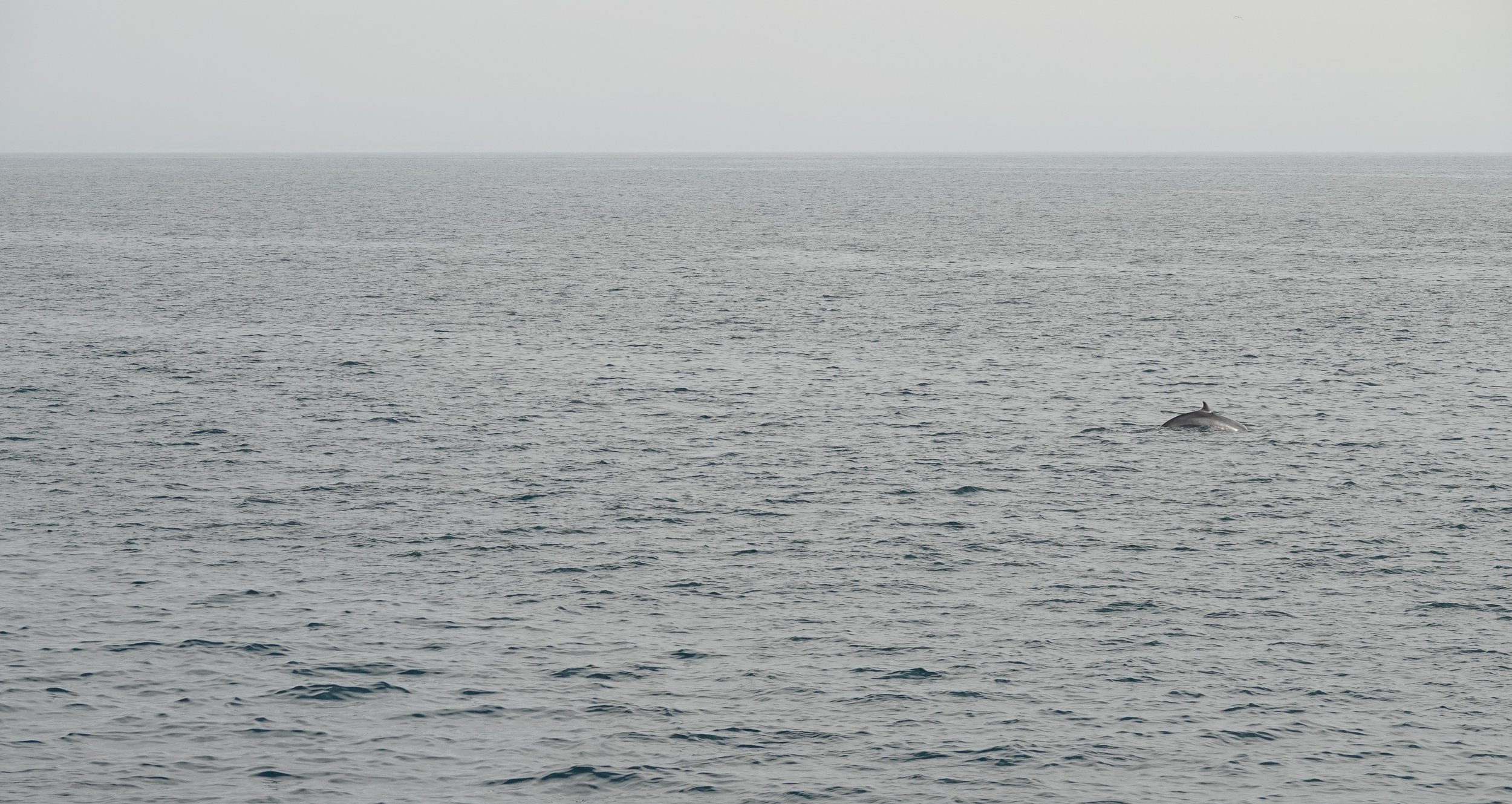
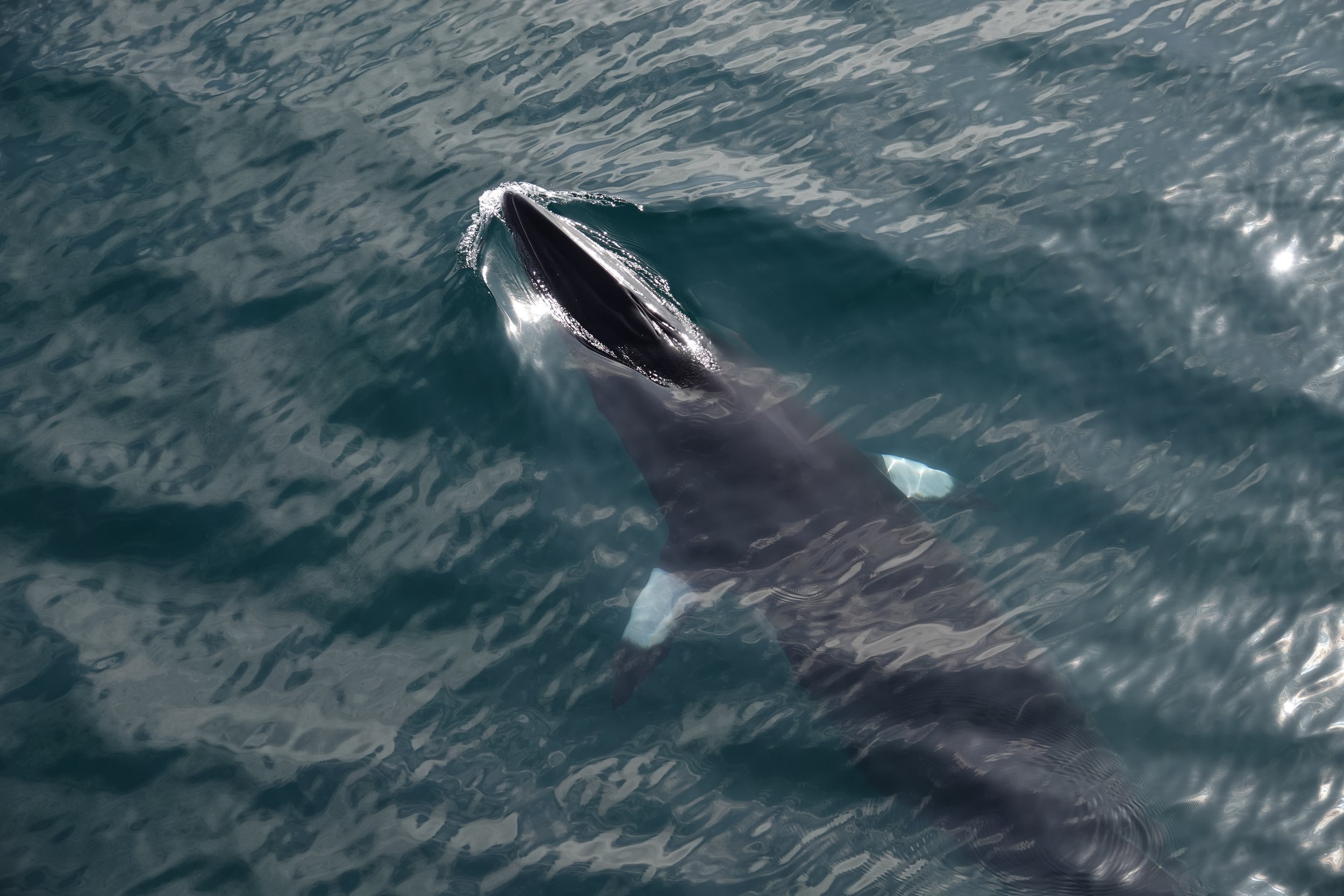
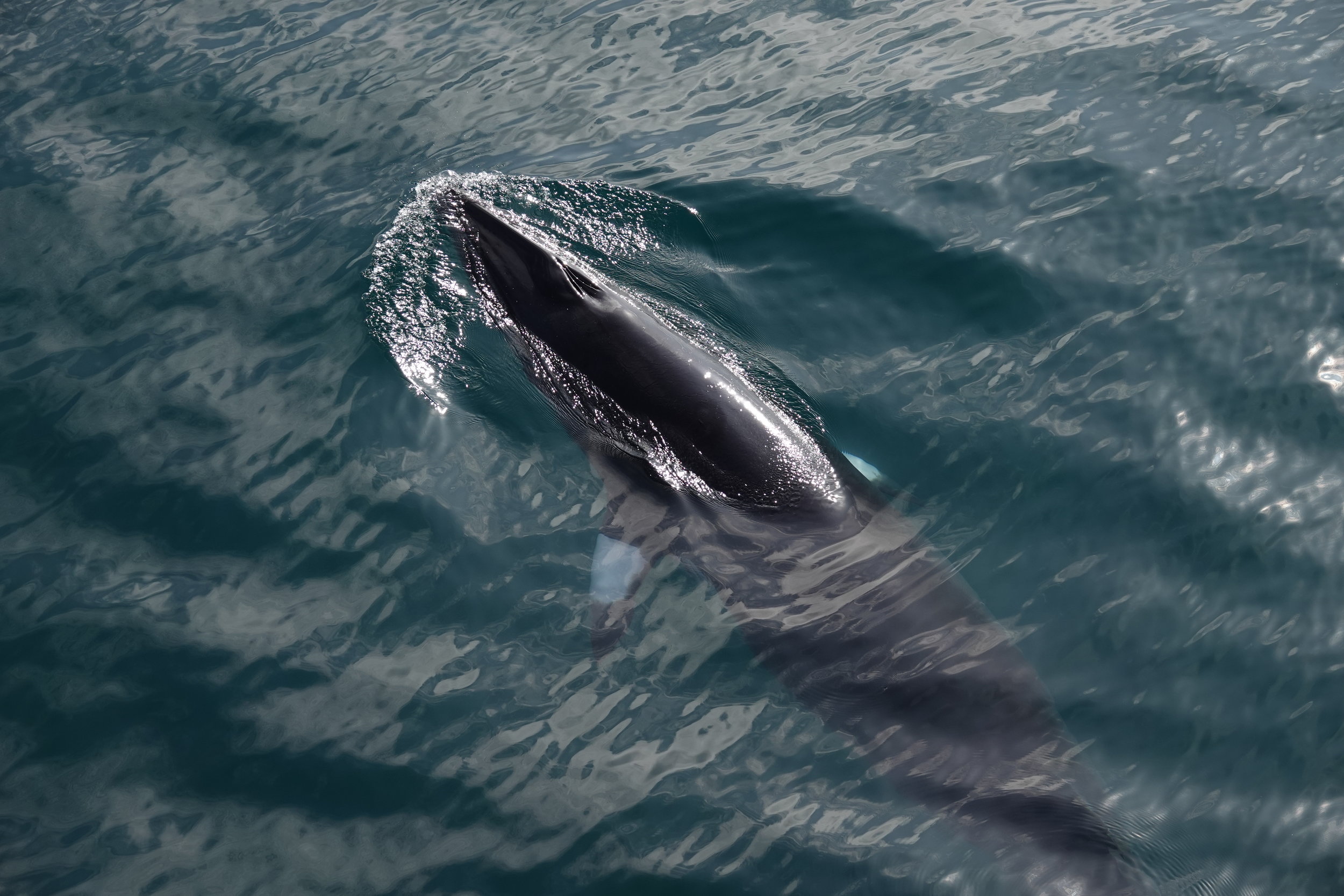
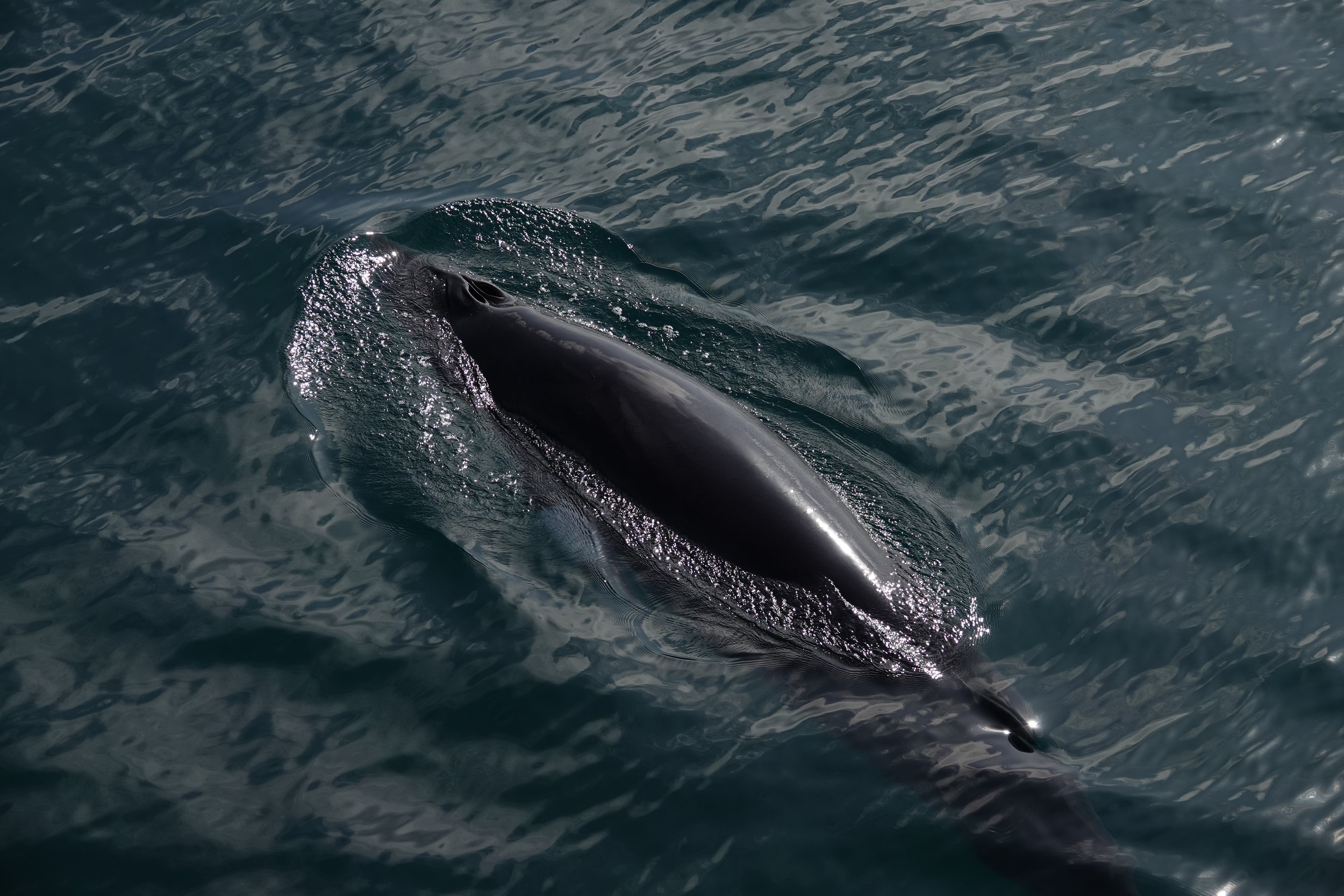
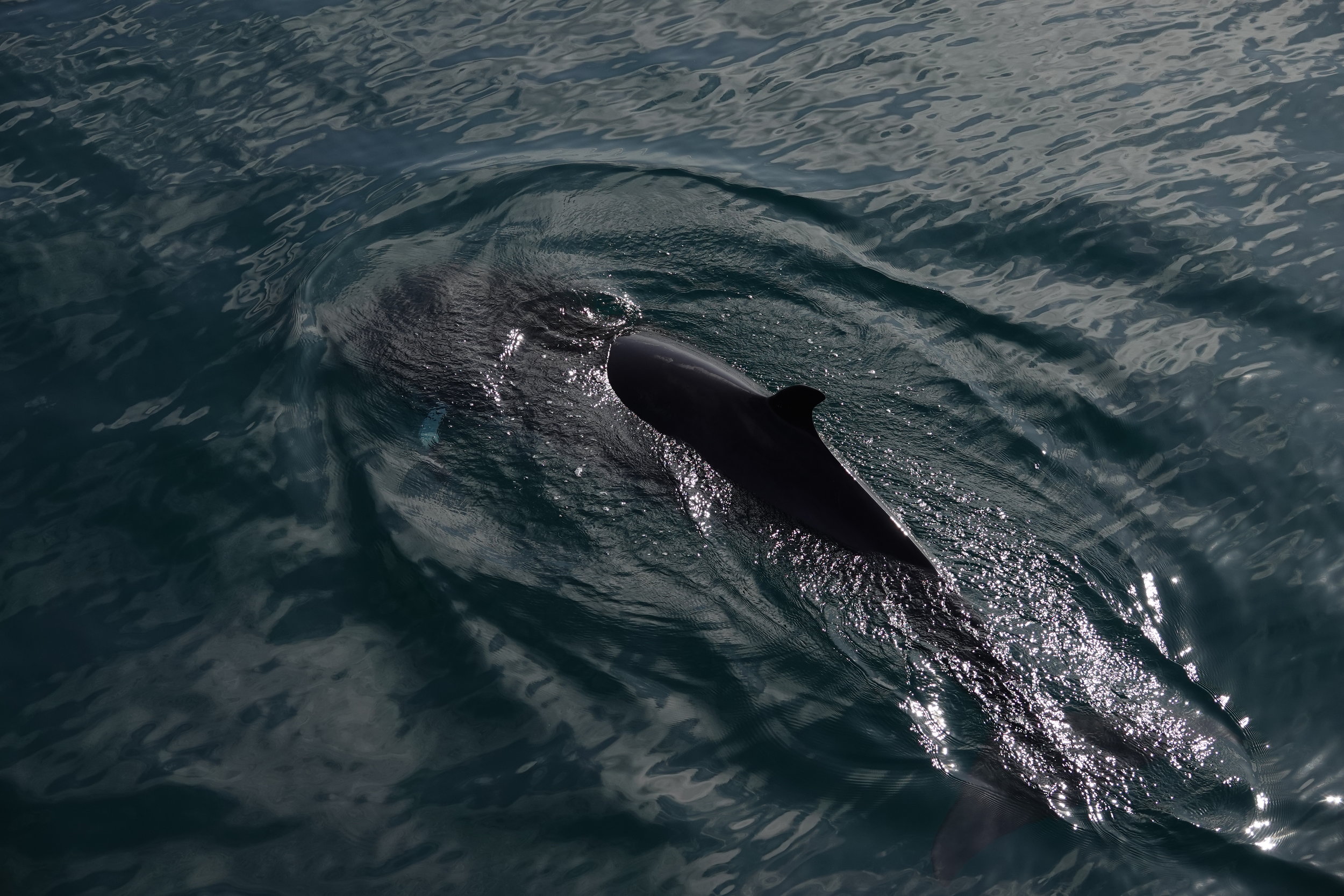
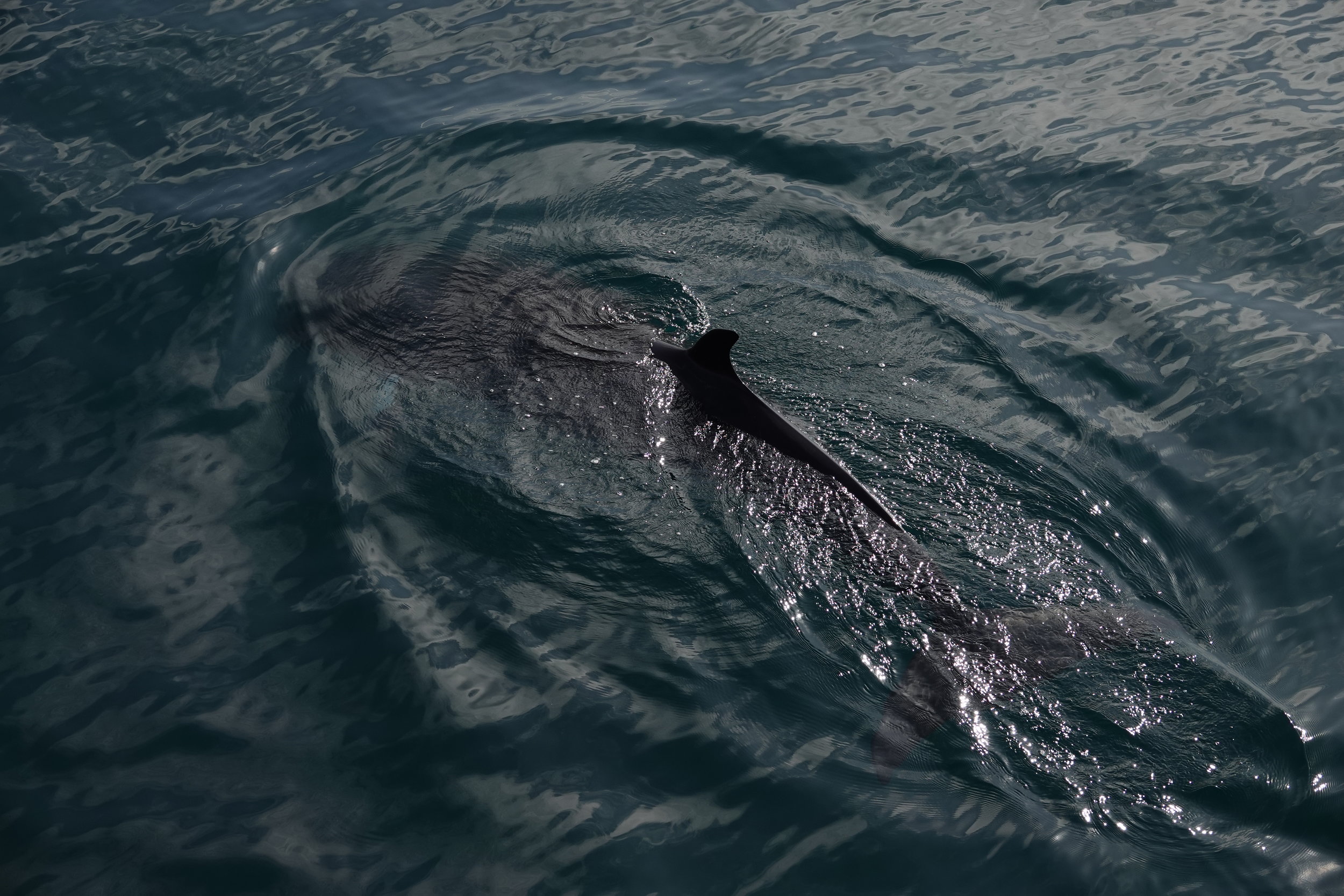
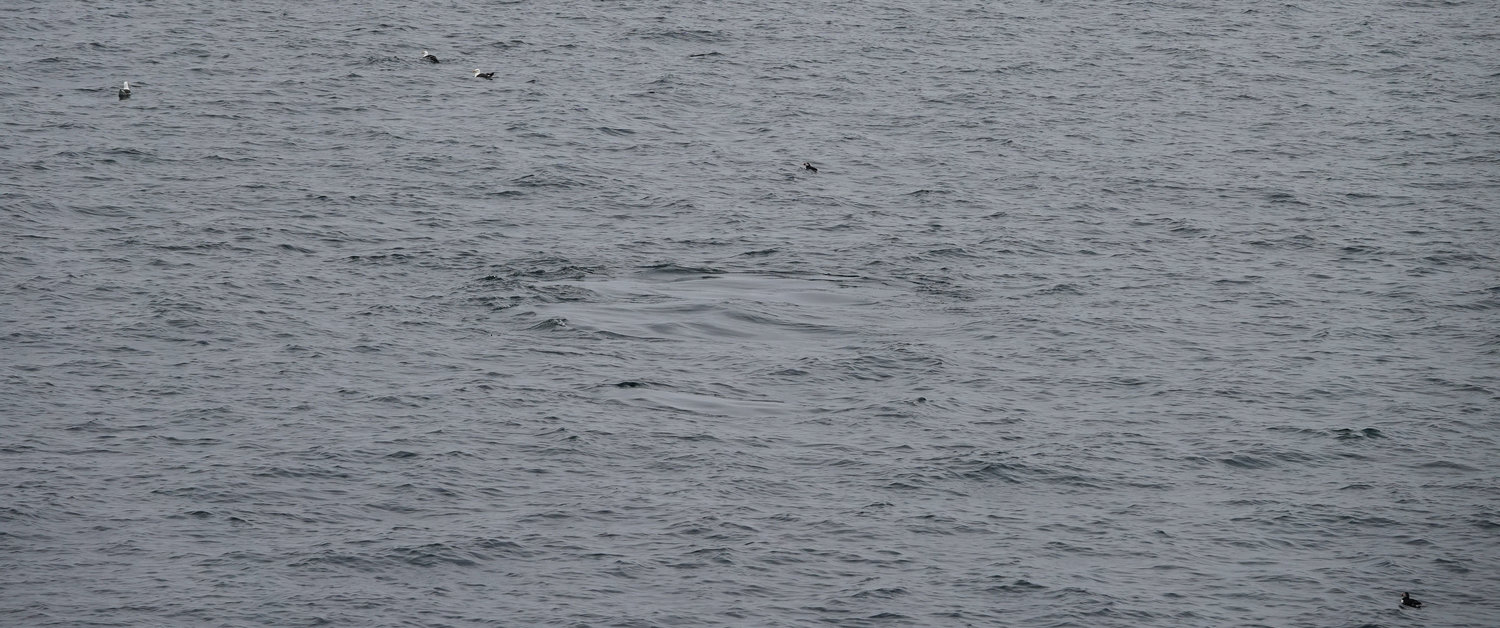
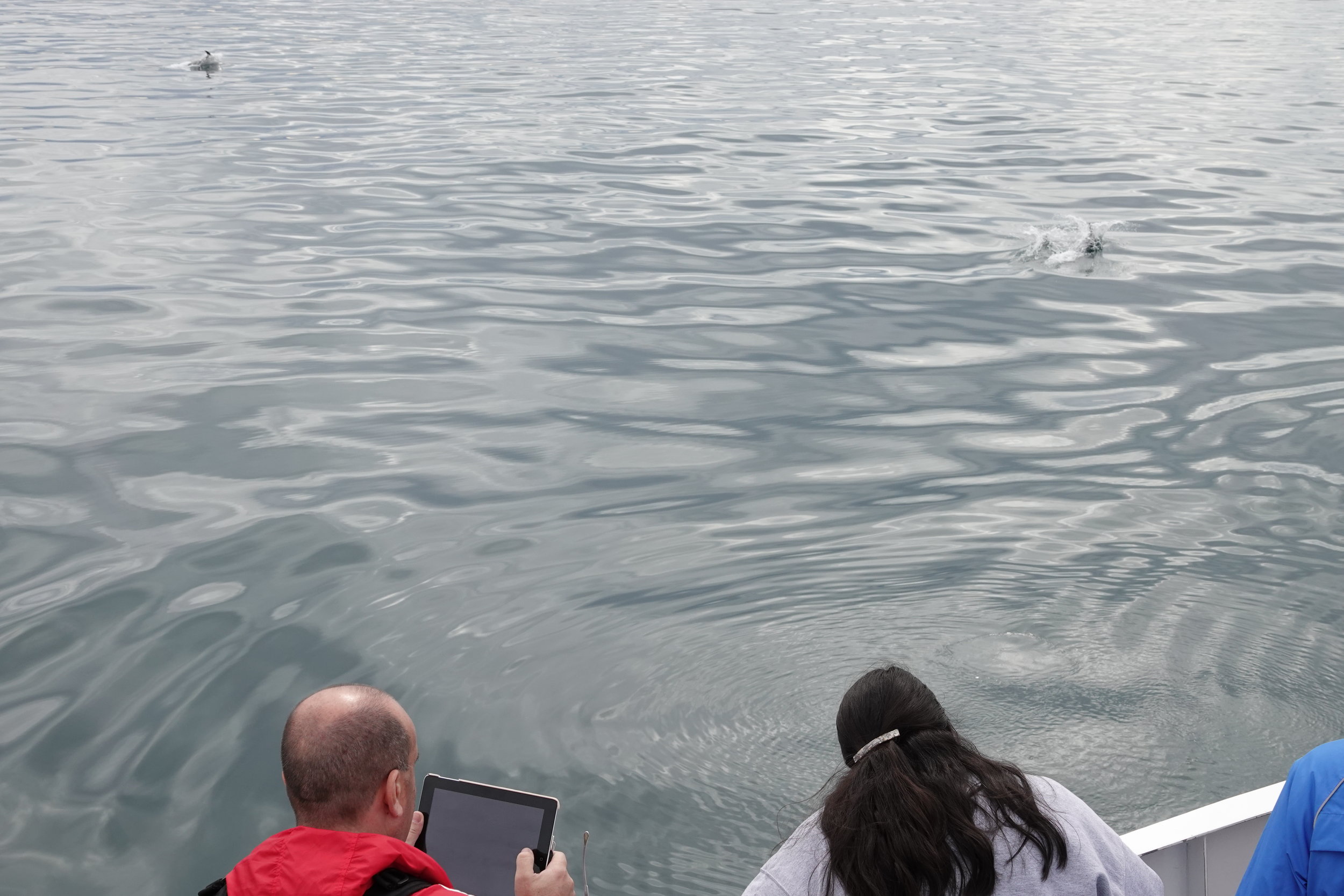
Did the photo above seem dull to you? Then you probably missed a whale measuring between 7 and 11 metres! Yes, three weeks ago, I would have said that’s impossible too, but it’s not.
That’s just how minke whales (Balaenoptera acutorostrata) are:
Fast
Unsociable
Cautious
Almost never show their tail flukes
Dark in colour
And if I add that whale watching means searching for wild animals (it’s not a marine zoo), whose habitat spans all three of the world’s oceans, and that we’re scanning the sea surface with the naked eye, then I can confidently say that finding these creatures isn’t easy.
BUT!
These are signs that reveal their presence.
Some of the “tricks” we use to find them:
The more tourists on board, the better – more eyes = higher chance of spotting one (though in reality, it’s often the opposite)
Carefully scanning the sea surface for dorsal and tail fins rising above the water
Listening (when a whale surfaces, its exhale can sometimes be heard)
Smelling (minke whale breath supposedly reeks of dead fish – hence the nickname “Stinky Minke”)
Looking for blow – the clouds of water vapour (several metres high) that appear when they exhale
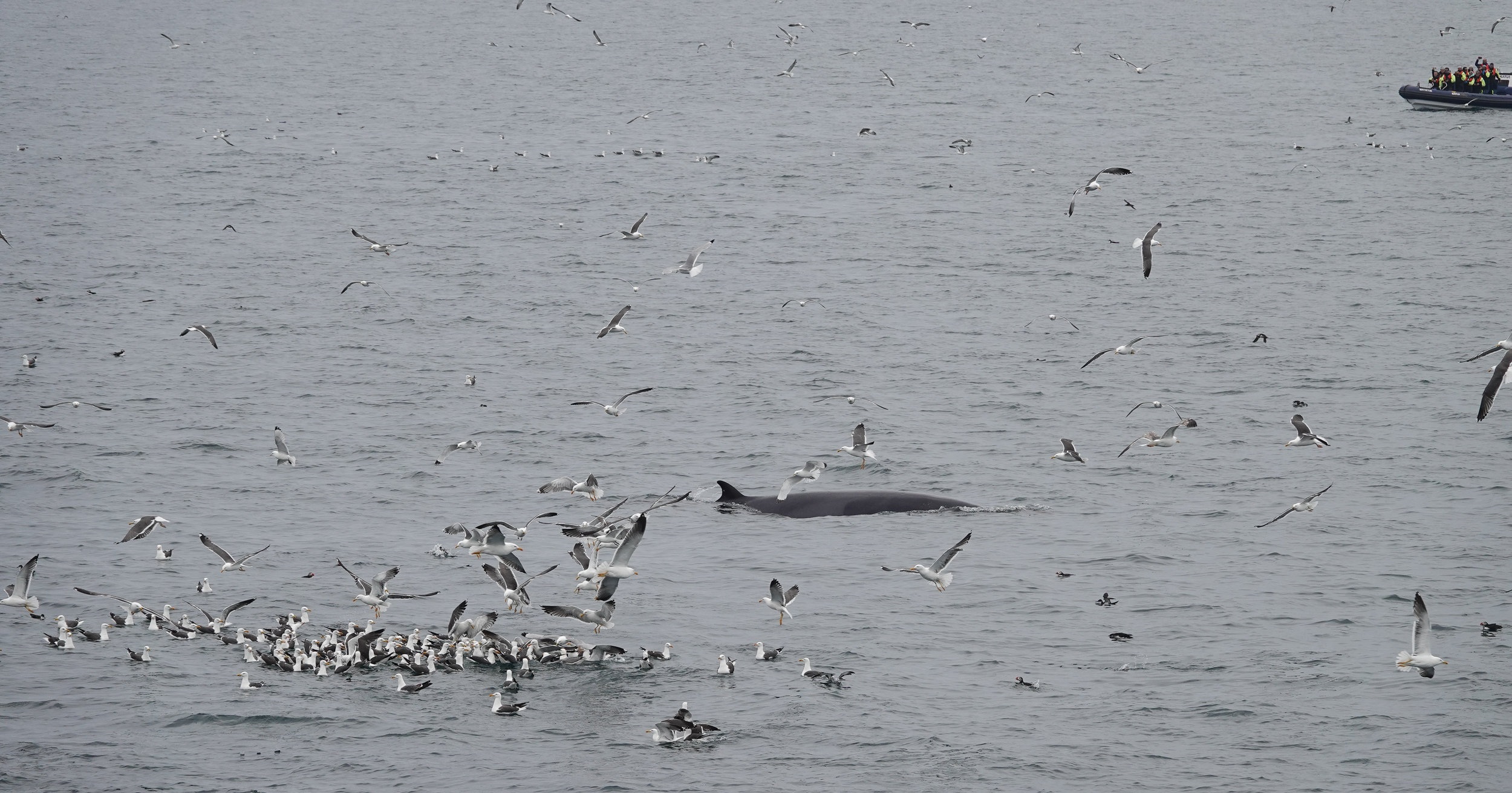
BEST TACTIC: Bird watching! If a large number of birds are actively diving, it means there’s a lot of food around – food for birds = food for baleen whales (they are filter feeders).
Some days we spot none, other days we see 10. The “hotspots” change from hour to hour – just like the movement of their food (fish and plankton).
In Faxaflói Bay, we most often see four species of whales. Today, I’ll introduce the one I’ve personally seen the most – the minke whale.
10 FACTS ABOUT MINKE WHALES
#1 They are very fast swimmers.
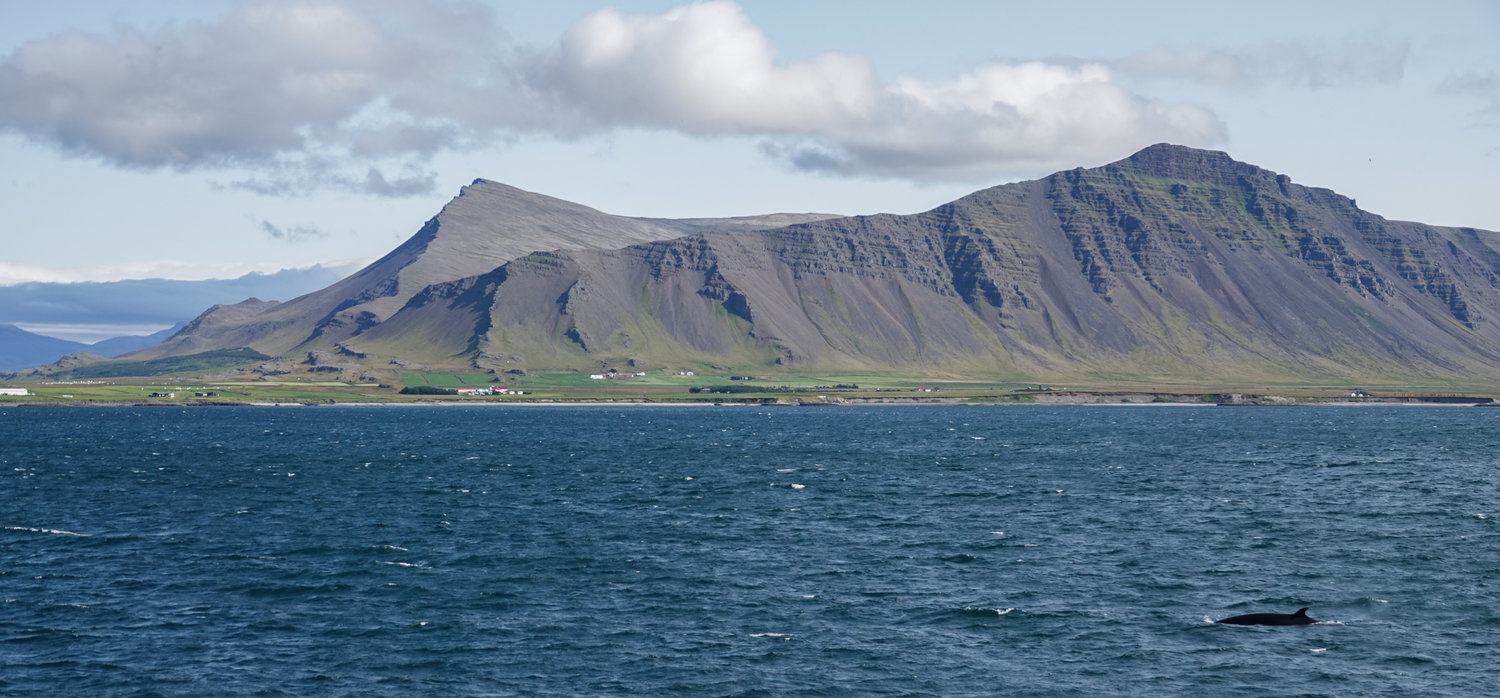
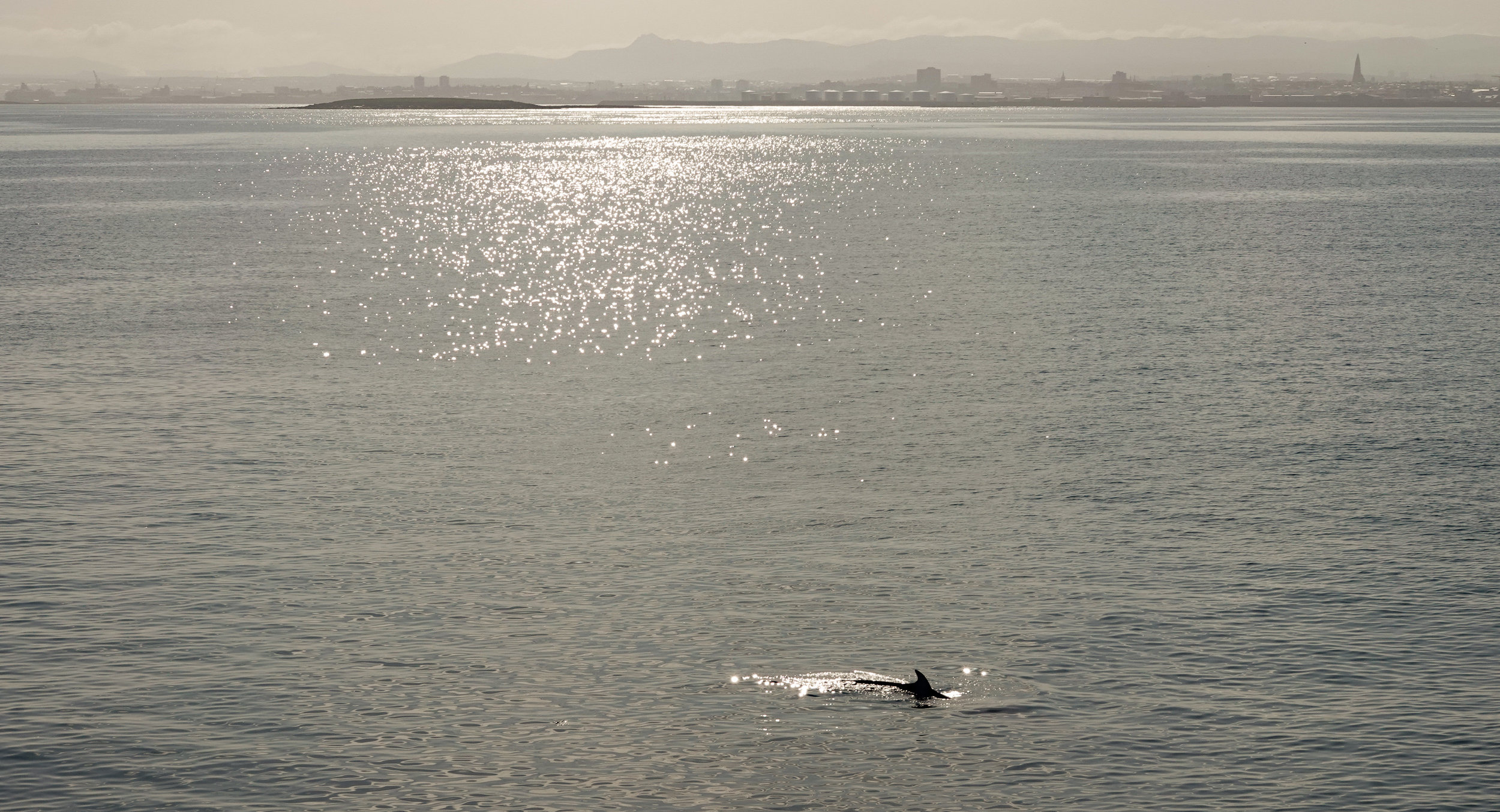
Their aerodynamic body shape allows them to move swiftly through the water. They swim faster while travelling and slower while feeding. They easily outrun our boat – reaching speeds of up to 34 km/h.
In the background: Akrafjall, a glacier-carved mountain above the fjord.
#2 They don’t lift their tail flukes before diving.
Unlike humpback whales, whose flukes help propel them deeper, minke whales have a denser body that allows them to dive without additional force. They are slim and agile, making their movements highly unpredictable – if you see one at the surface before it dives, it might resurface 400 metres away on the opposite side of the boat!
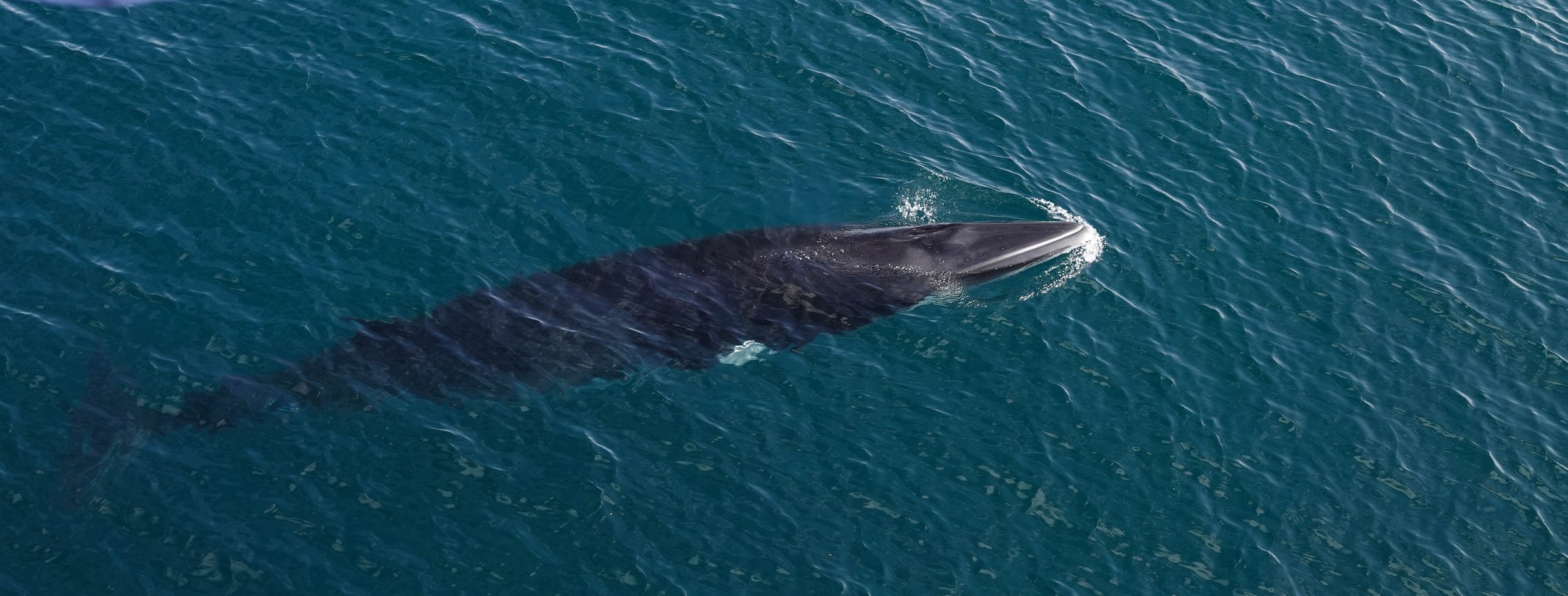
Above is an example of a shallow dive: When surfacing, first their pointed snout appears, followed by their nostrils, and finally their dorsal fin – the largest among baleen whales. Then, within seconds, they vanish again.
#3 Every winter, they migrate to the Canary Islands.
In summer, they abound in our bay, as the waters here are colder, richer in oxygen, and full of life (food). From March to October, they stock up on energy before heading to warmer waters, where food is scarcer.
One tagged individual we track via satellite prefers the Canary Islands, where adult whales raise their calves, staying together for about a year. After their first migration, the mother leaves the calf – supposedly in the place she considers safest.
This cub has his mouth open and is showing off his baleen plates.
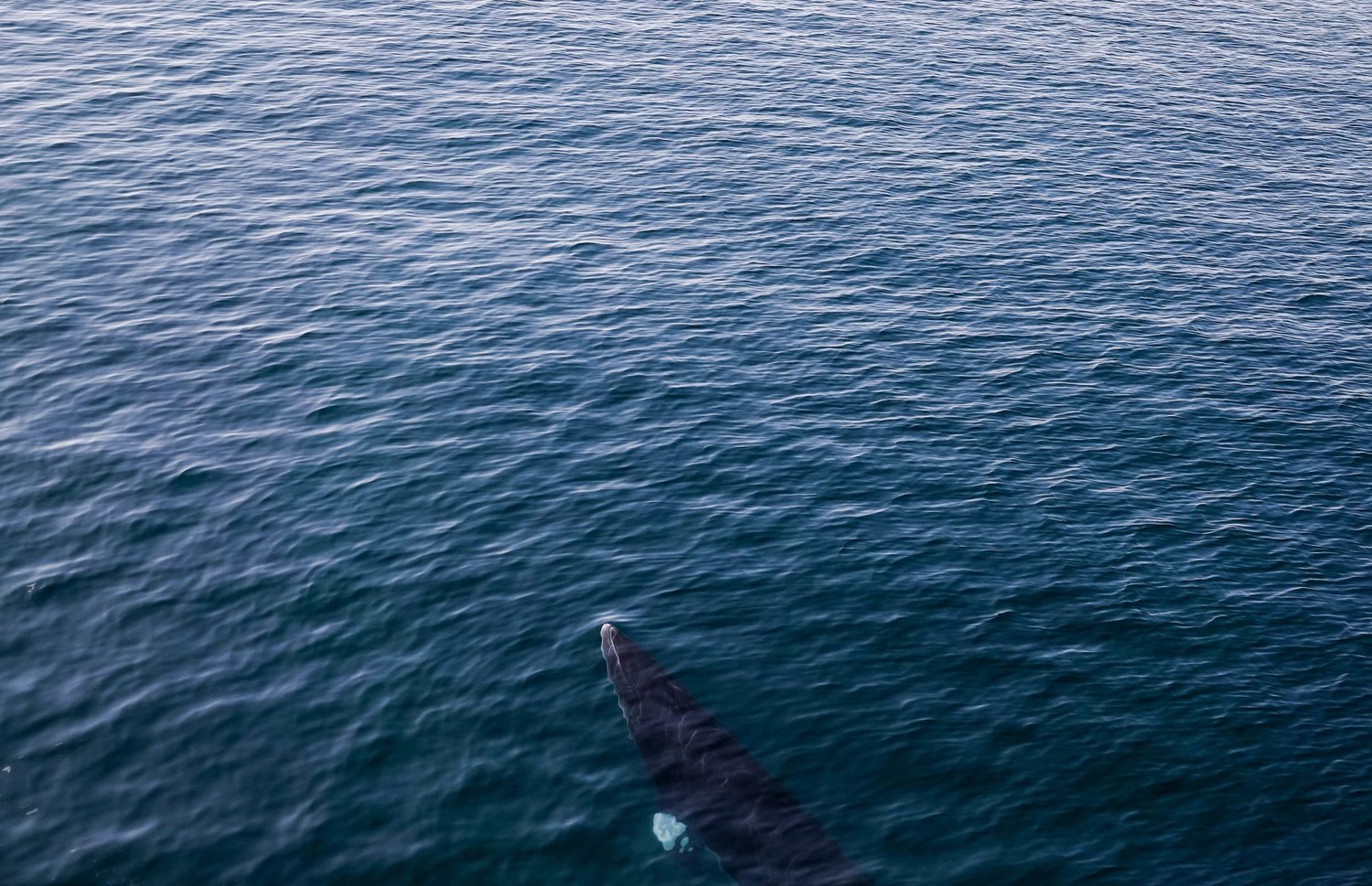
#4 They leave a flukeprint behind.
This is the smooth patch of water that remains visible for a few seconds after a whale dives. It sometimes makes tracking them easier.
Can you see it? – A calm area without waves.
#5 They do both shallow and deep dives while feeding.
The depth of their dive depends on where the food is. If the prey is near the surface, the dives are shallow and frequent; if deeper, they are longer and deeper.
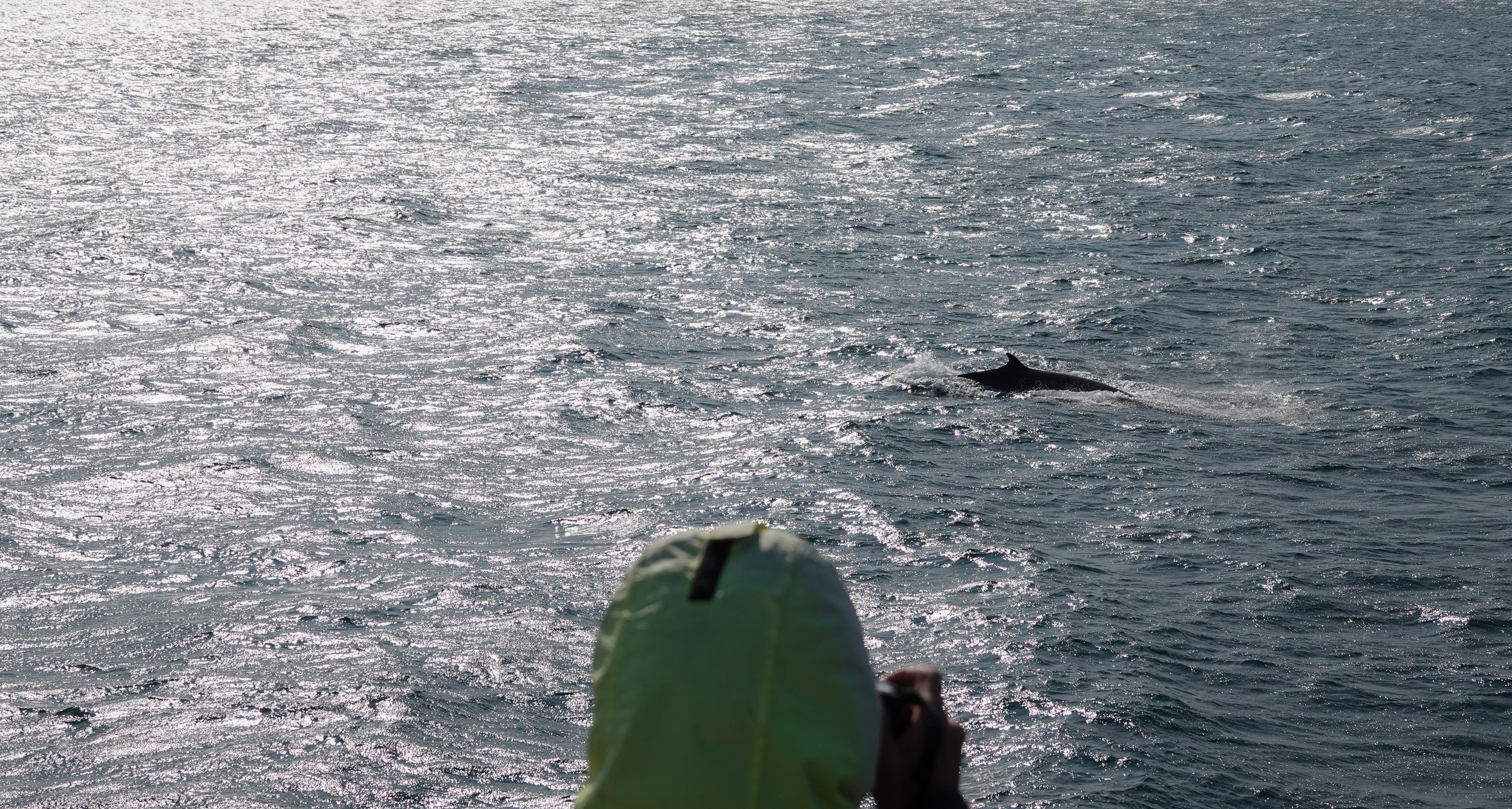
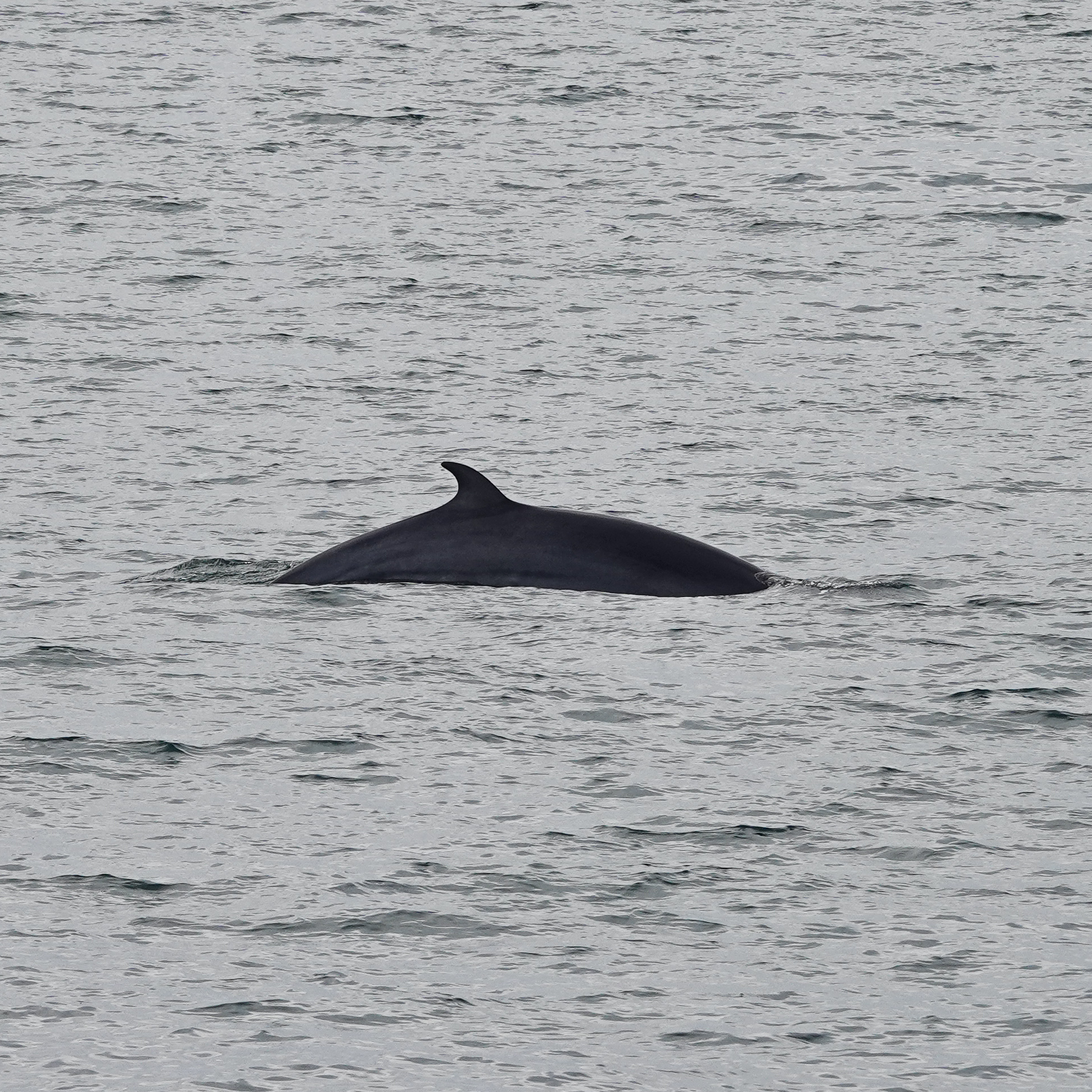
Minke whales can hold their breath for over 20 minutes, but during feeding, they usually make 2 to 4 shallow dives (surfacing approximately every 20 seconds), followed by a characteristic arching of the back before a deeper dive (2nd photo) of around 3–5 minutes. When they resurface, they might be far from their previous location.
#6 Young whales are very curious.
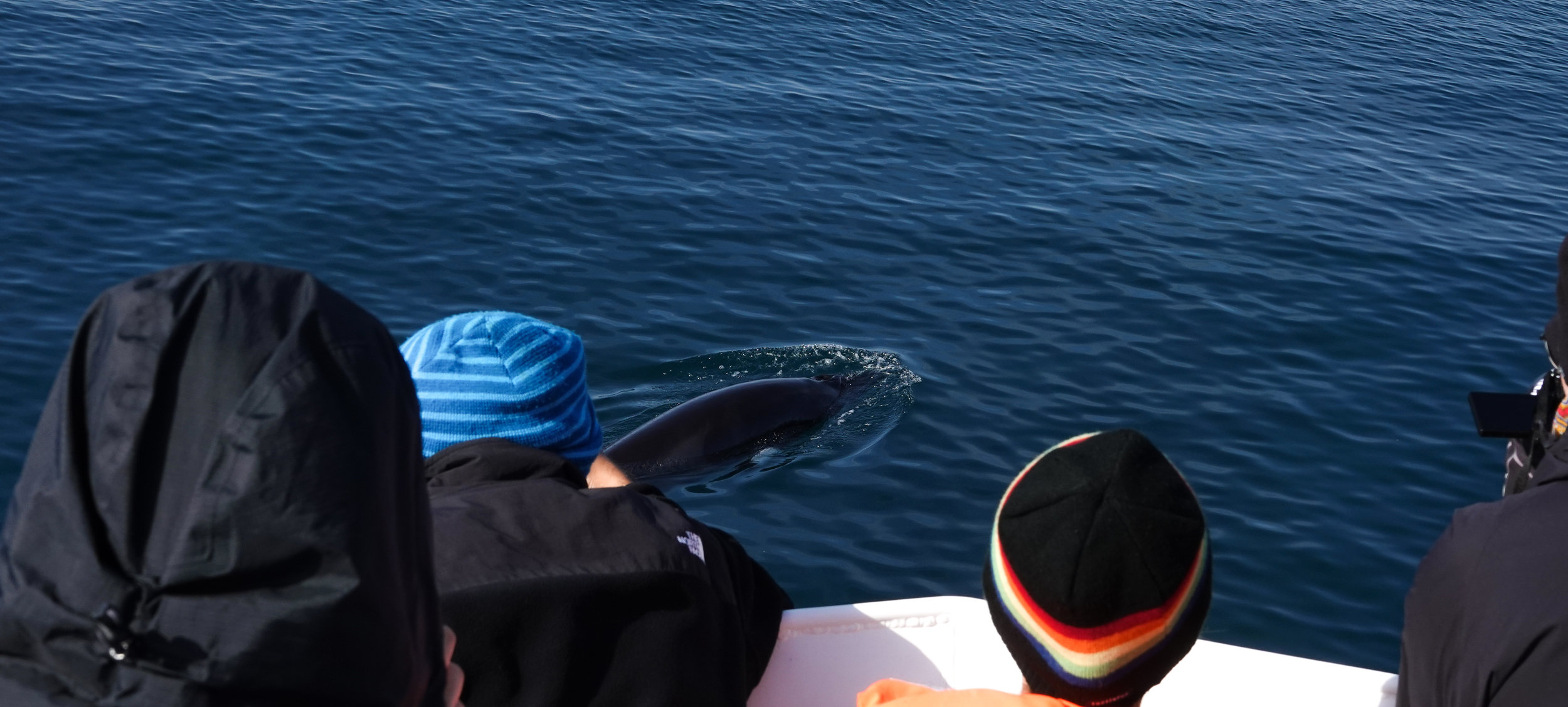
Two weeks ago, I had the rare privilege of witnessing something incredible – we spotted a minke whale 250 metres away. As always, we approached slowly and stopped at a respectful distance.
Soon, we realised it was a young whale. Unlike adults, juveniles are naturally curious and don’t avoid boats. This one was no exception – for 40 minutes, it circled our boat, swam underneath it from one side to the other, and surfaced frequently, keeping us running from one side of the boat to the other. An unforgettable experience!
A young minke whale (≈5 m) just a few metres from the boat.
#7 They exhale before reaching the surface.
This means their blow is much smaller than, for example, that of a humpback whale, which exhales only once fully at the surface.
Another fun fact: baleen whales (blue whales, humpbacks…) have two nostrils, while toothed whales (dolphins, orcas…) have only one.
Clearly visible: its two blowholes.
#8 17 Icelandic whales ended up on a plate in '17.
Between 2009 and 2013, the total was 286.
Yes, whaling is still legal in three countries: Iceland, Japan, and Norway. In Iceland, the current annual quota allows for 229 whales to be caught, but this year, whaling was cancelled due to low demand.
Ironically, the main consumers of whale meat are tourists – you’ll find “minke whale steak” on the menu in several restaurants in Reykjavík. The funny part? This dish is NOT traditional Icelandic cuisine. Only 2% of Icelanders actually eat it.
#9 Females are larger than males.
Unlike toothed whales, female baleen whales are always larger than males. Among minke whales, females are on average 0.6 metres longer. The largest recorded individual measured nearly 11 metres and weighed 8.6 tonnes. On average, they range from 7.8 to 9 metres in length and weigh 5.4 to 6.8 tonnes.
#10 They are solitary.
Minke whales spend most of their lives alone. They only gather in areas rich in food and during the breeding and calving season.
They communicate using extremely loud vocalisations (up to 152 decibels – as loud as a jet engine during takeoff!). Interestingly, the calls of minke whales from different regions sound noticeably different, leading scientists to divide them into several subspecies.
Maybe that’s why they always enjoy the company of birds?
*Whale Watching boats communicate with each other and report when they find an animal – that’s why there are sometimes several vehicles in a group
How to take a photo of a minke whale?
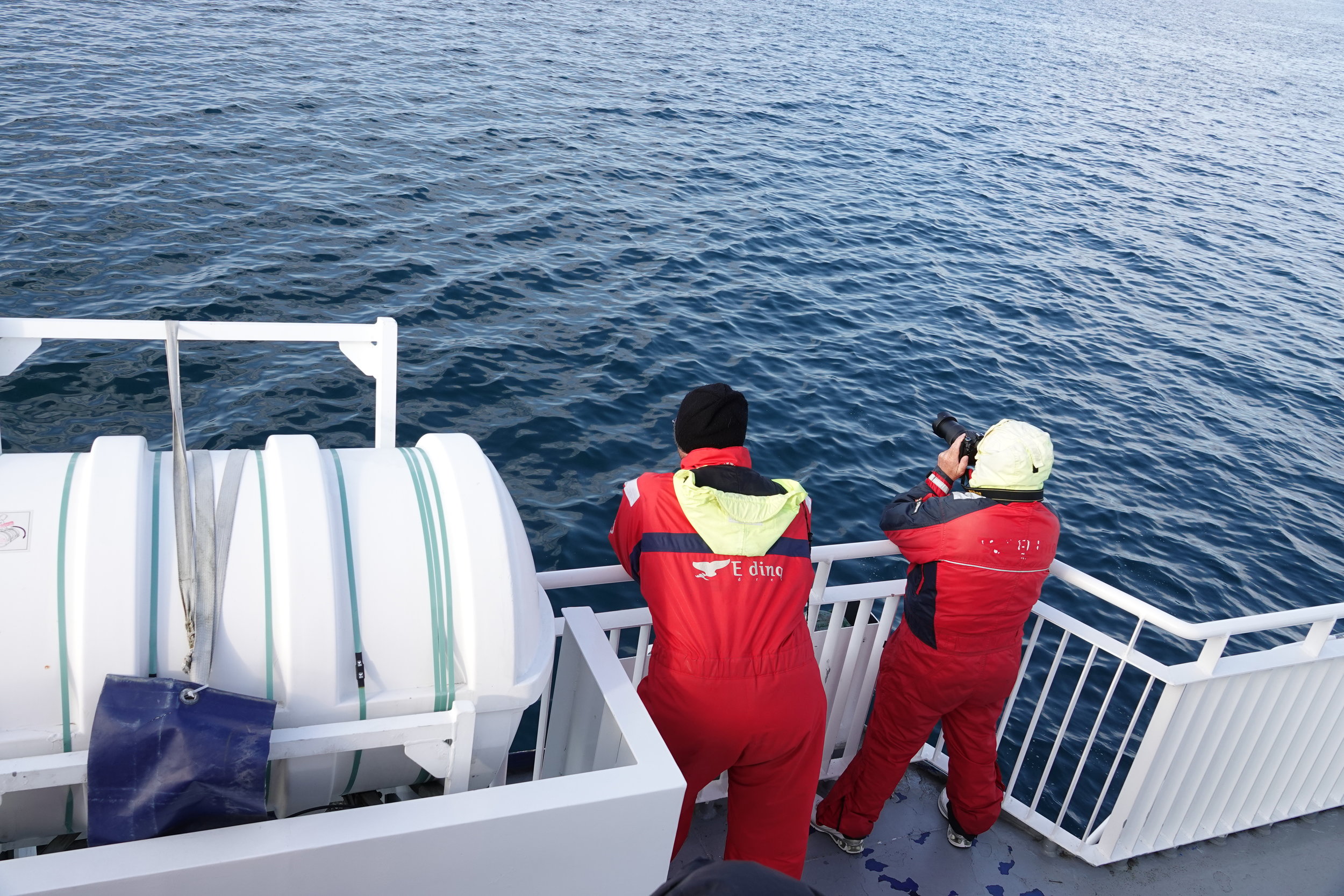
If you want to photograph a minke whale, a tablet, phone, or camera with a small zoom won’t help.
Tour guides usually advise tourists to just watch with their own eyes, because capturing these elusive creatures in a frame is no easy task.
The person on the left probably got lucky.
I hope this brought you closer to these incredible creatures and maybe even sparked some excitement for the ocean world.
If not – I’ll have at least three more chances soon!