After visiting Drake Bay, we took a boat (with all our luggage) and headed north, where we spent two days on the outskirts of Rincón de la Vieja National Park.
We explored the park and enjoyed the refreshingly pleasant climate—no humidity, a light breeze, and lower temperatures.
If you’re curious about what left the biggest impression on me and what truly captured my eyes, take a walk through the photos below.
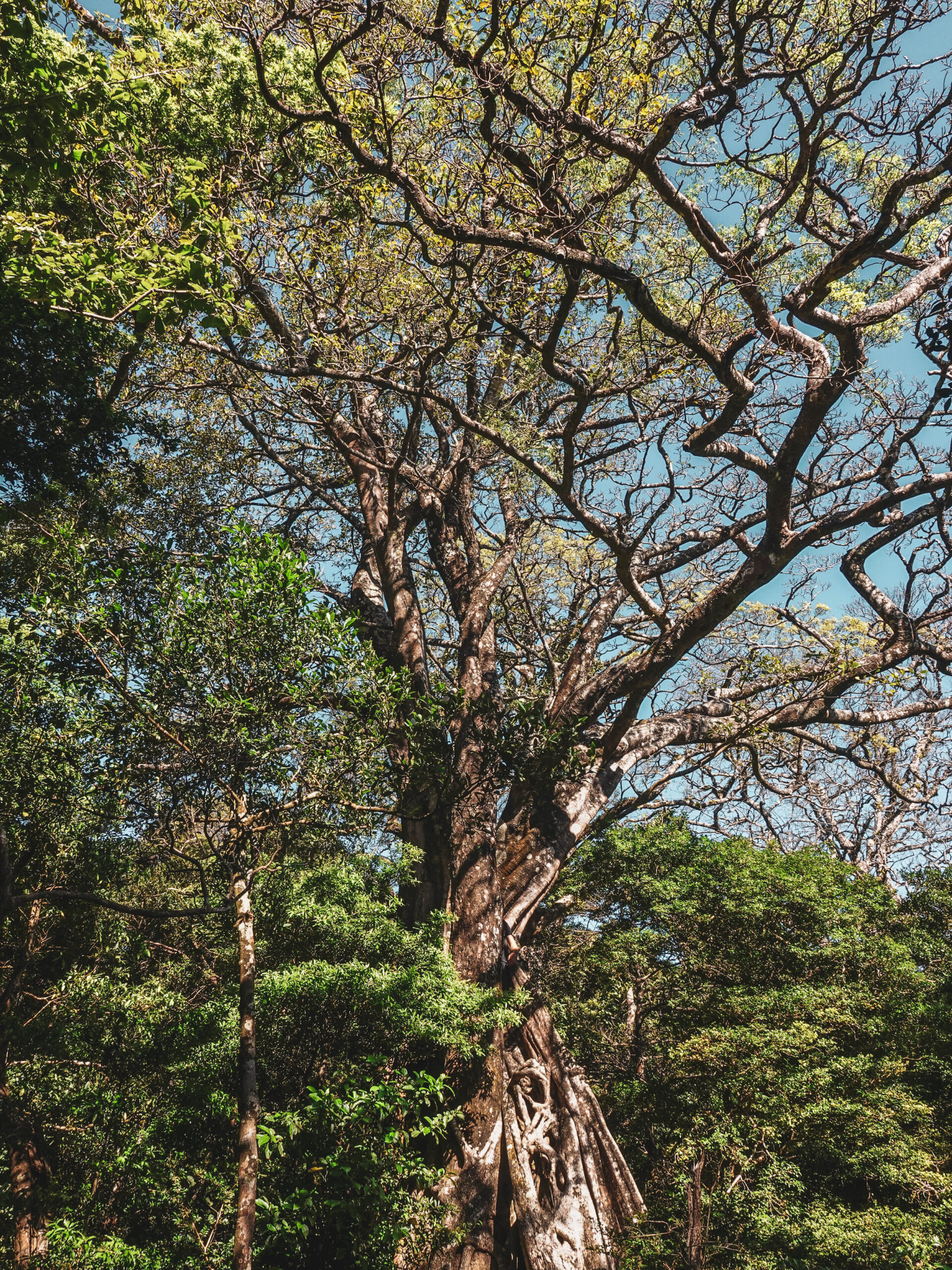
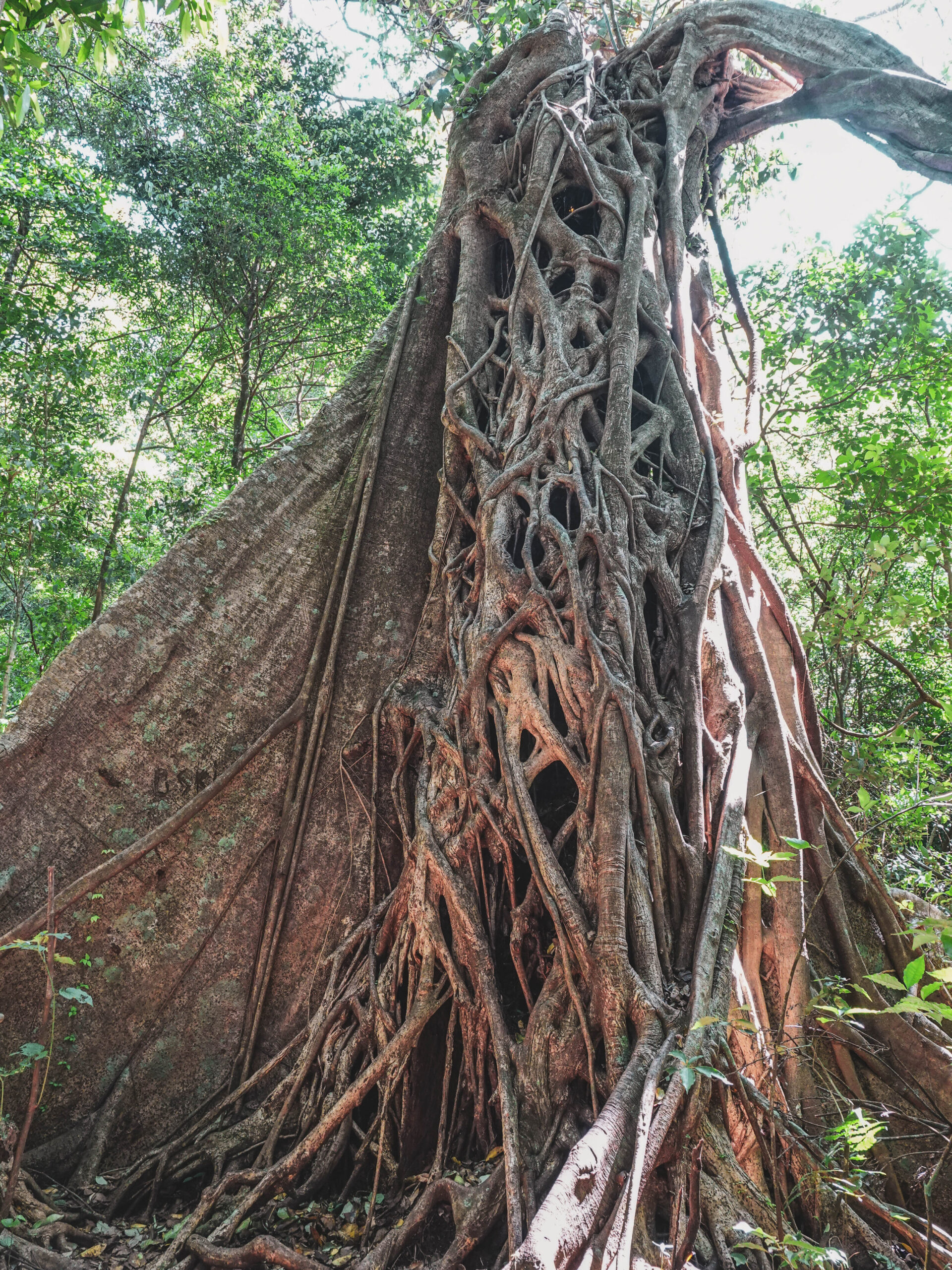
The strangler fig - we came across plenty of these trees along the trail. More on them in just a moment.
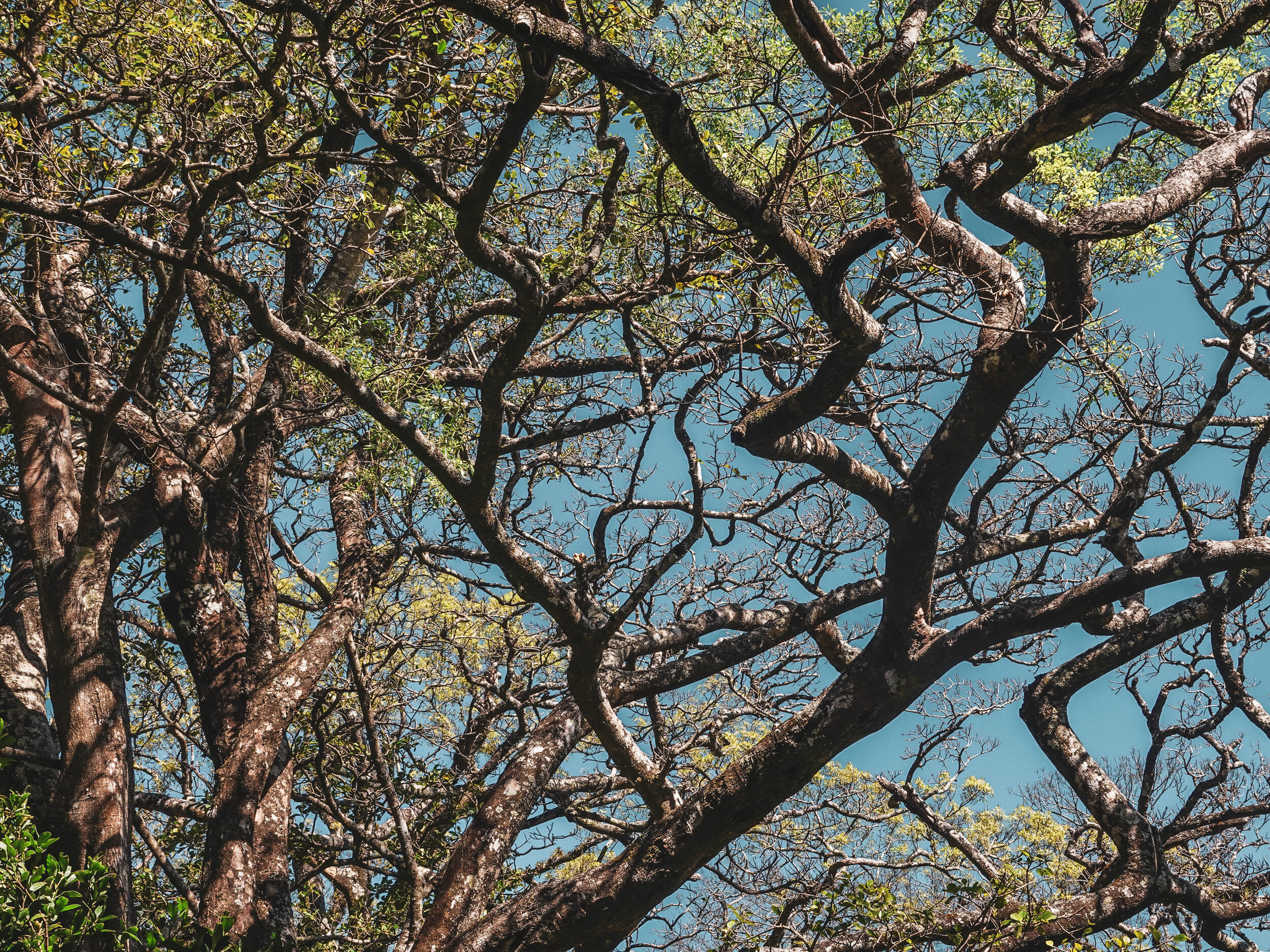
As we walked, we frequently heard the calls of monkeys, so my gaze was constantly fixed on the towering canopies above. Scientists have discovered that the number of strangler figs is closely linked to the number of monkeys—since the monkeys disperse their seeds. One cannot exist without the other… In La Gamba, for example, there are very few of these trees—and very few monkeys as well.
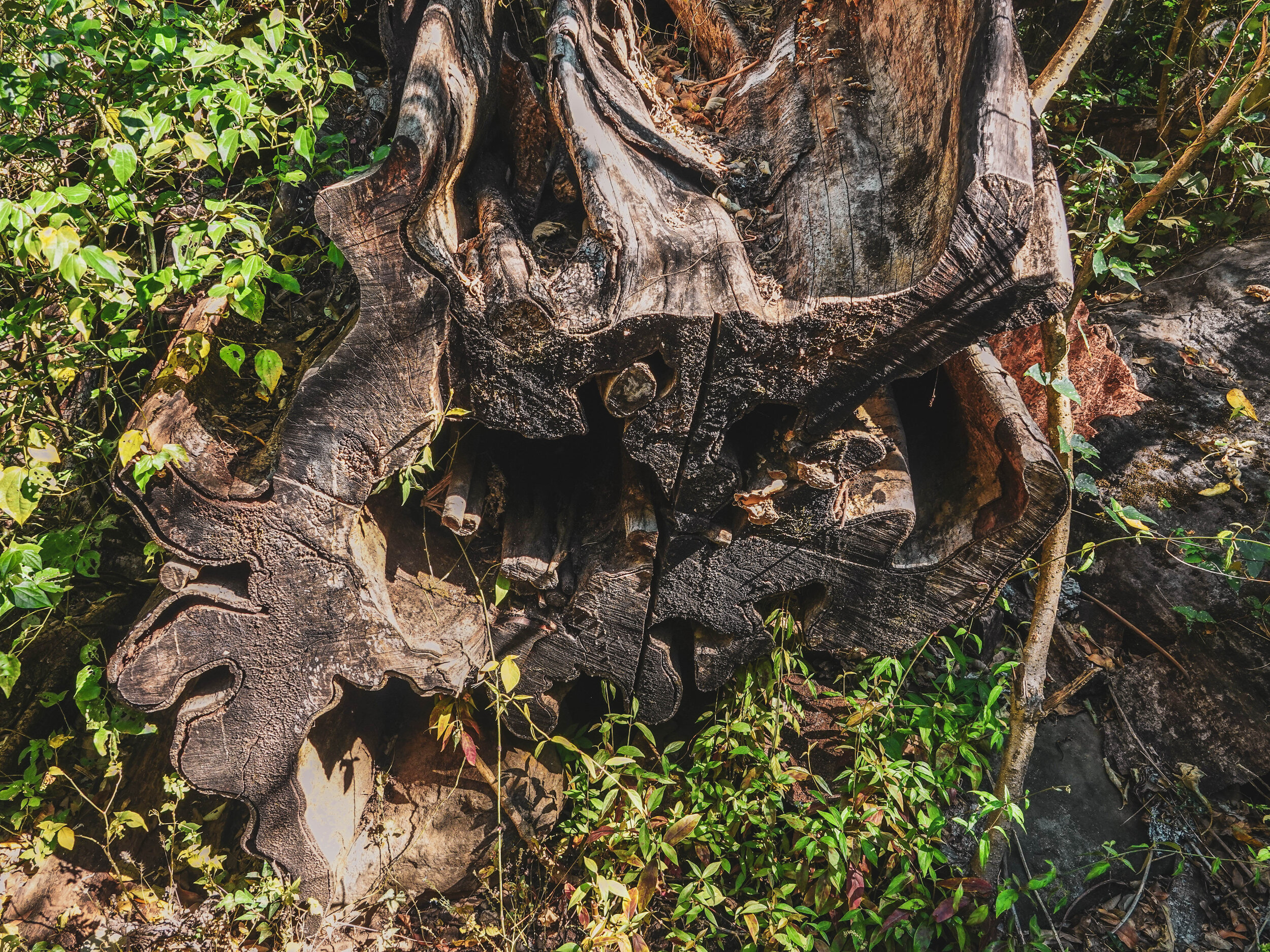
Looking at this tree’s cross-section, you can clearly see how hollow it is. It fell victim to a species of strangler fig. Here’s how it happens (as explained by our professor):
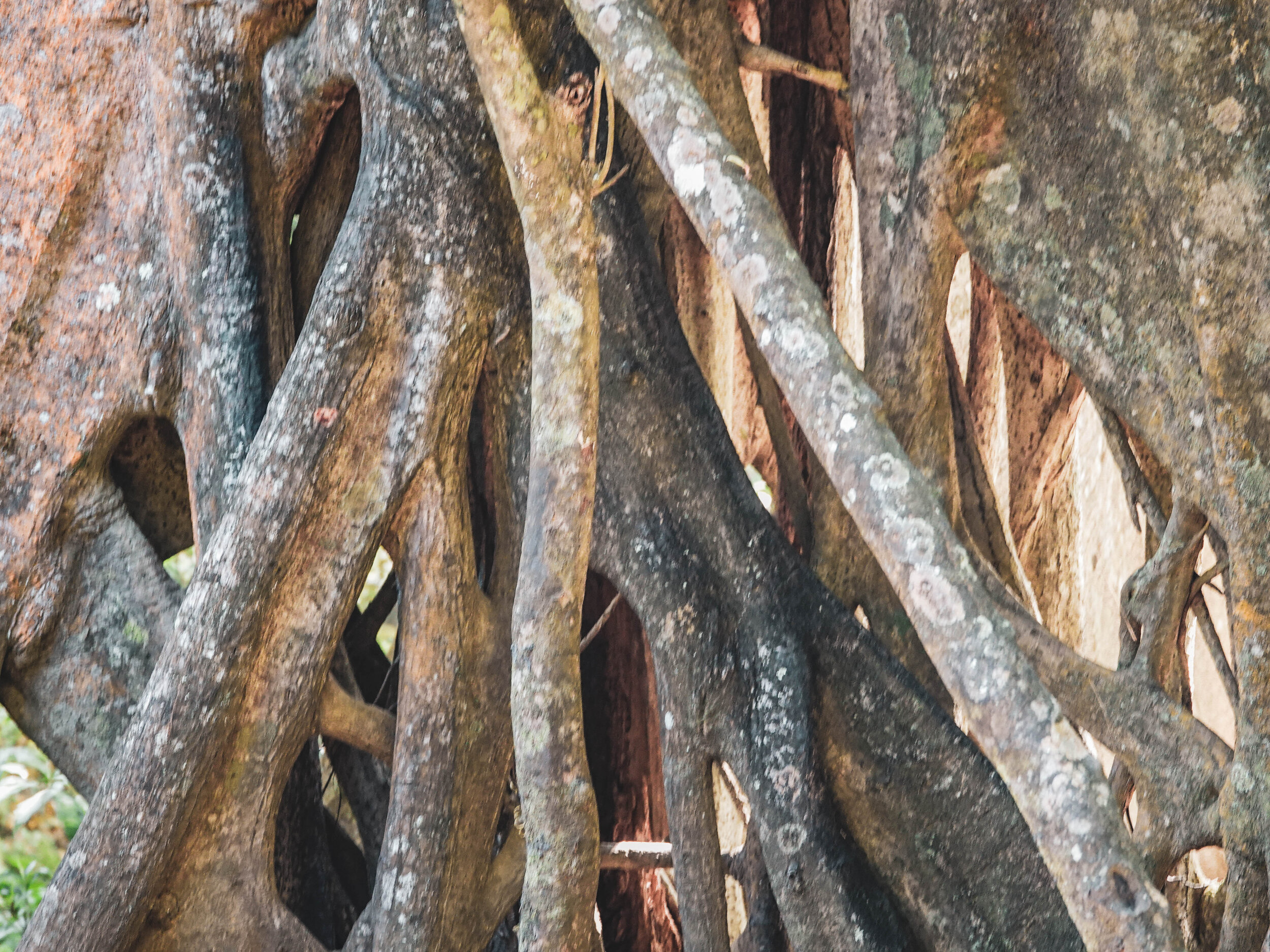
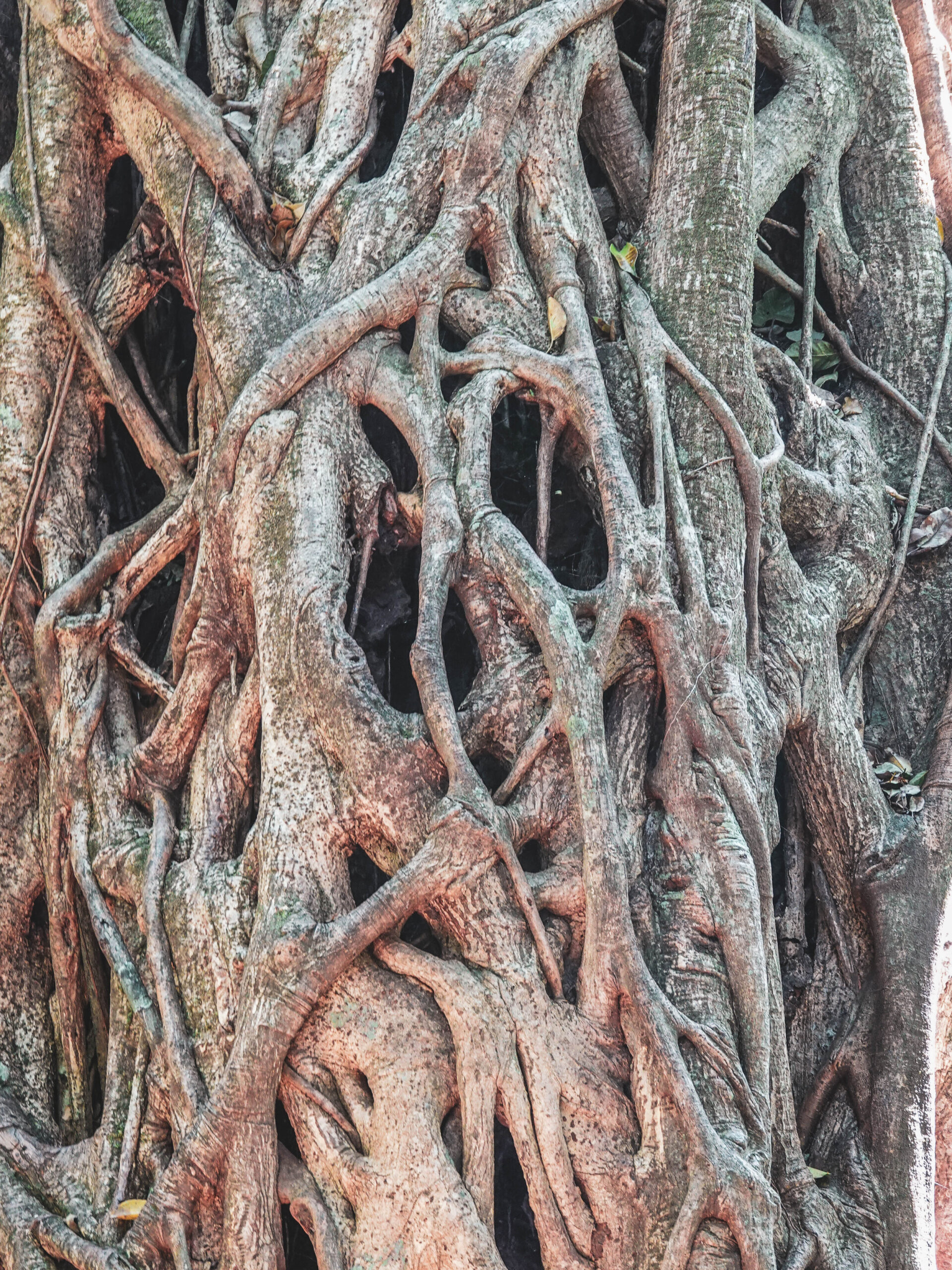
Strangler fig seeds (like the one in the first photo) are spread by birds and germinate in the treetops. From there, they send down aerial roots toward the ground. These roots wrap around the host tree and, once they reach the soil, take root. As the fig grows upward, its roots fuse together and strangle the host tree. Often, the host dies from the “strangulation” and the competition for sunlight—leaving behind a hollow tree.
Strangler figs can also grow independently, without needing a host tree.
Here you can see numerous strangler roots at work.
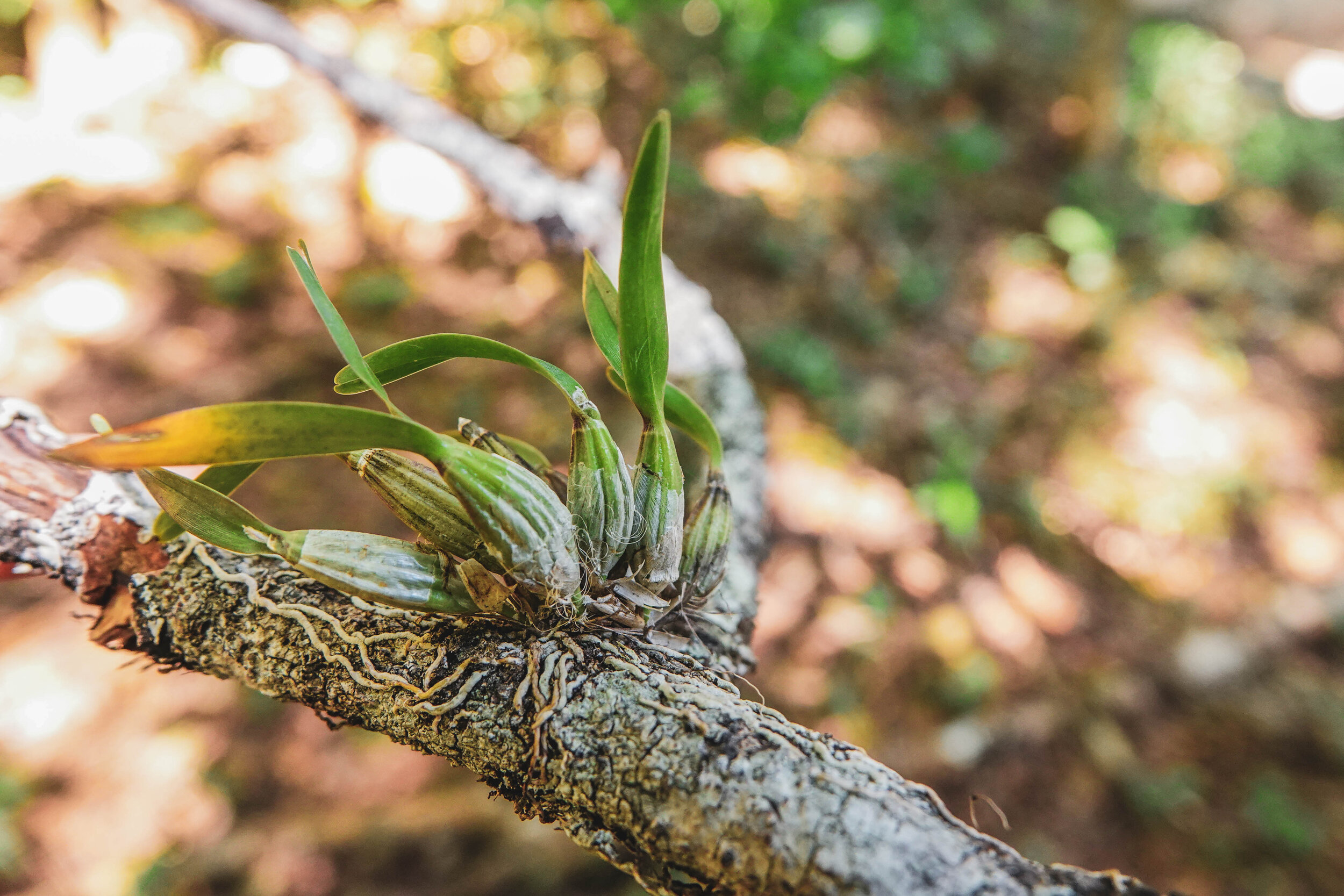
Does this look familiar? Maybe from the way its roots spread? One of Costa Rica’s 1,300+ orchid species
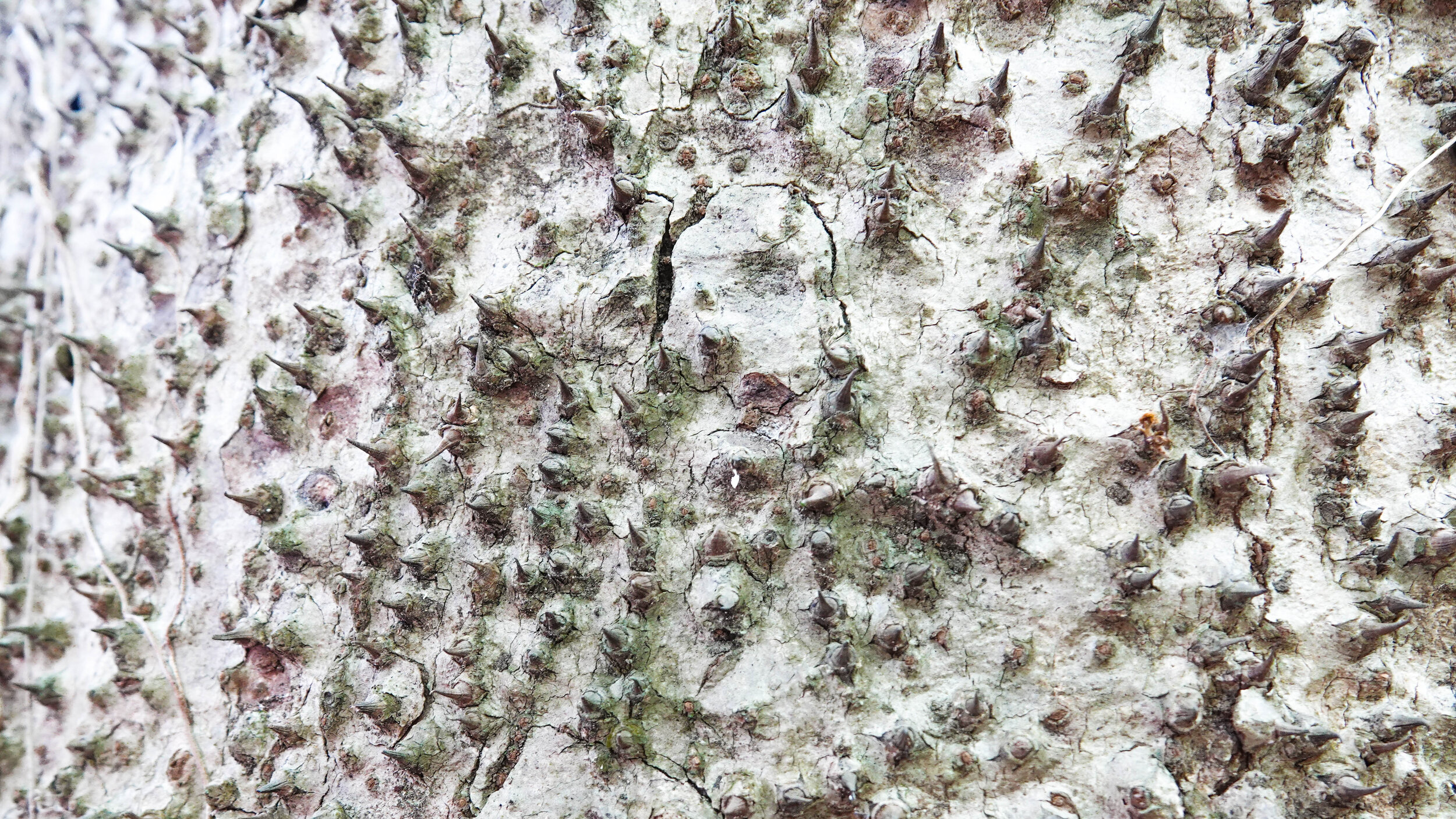
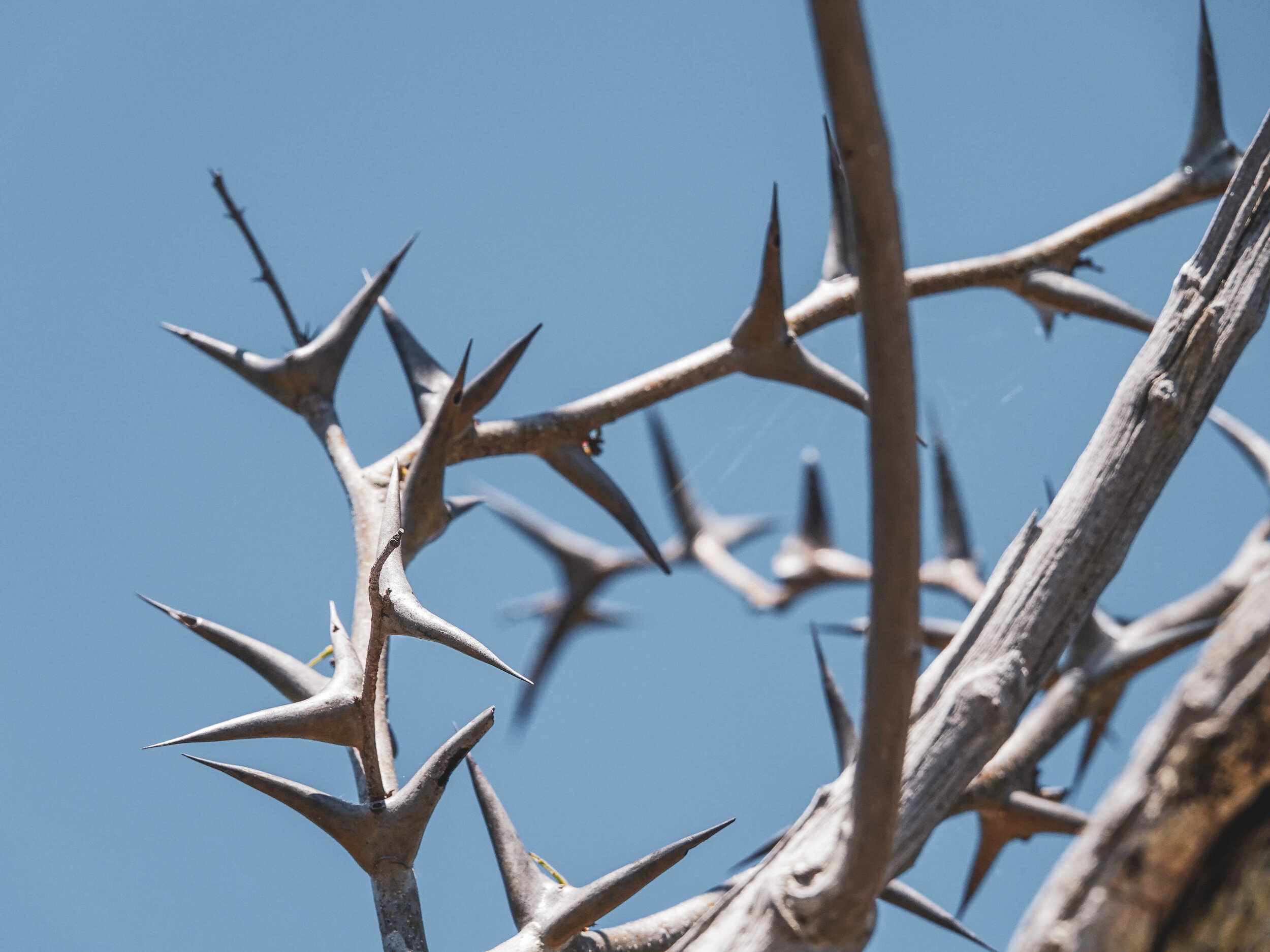
For those who like to touch everything they see, this forest isn’t the best place—thorn-covered tree bark is quite common here.
The tree in the photo above belongs to the species Hura crepitans, which Indigenous people have used in fishing for centuries. They extract a caustic sap from the tree, which stuns fish when released into the water, allowing fishermen downstream to catch them easily.
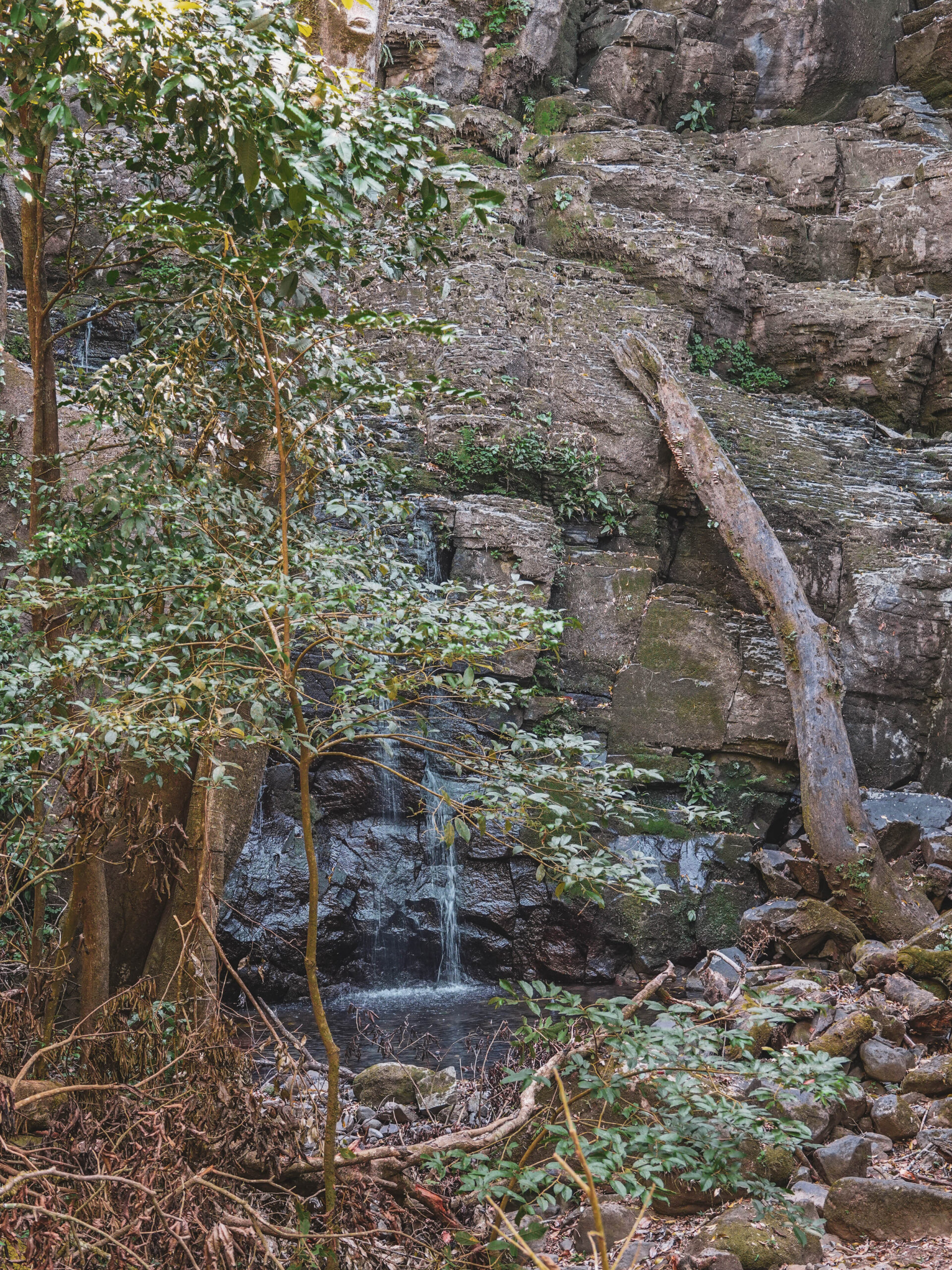
Despite an abundant and truly delicious buffet breakfast at our fancy hotel, some of us couldn’t resist a quick snack—banana chips—while admiring a waterfall tumbling over basalt (volcanic) rocks.
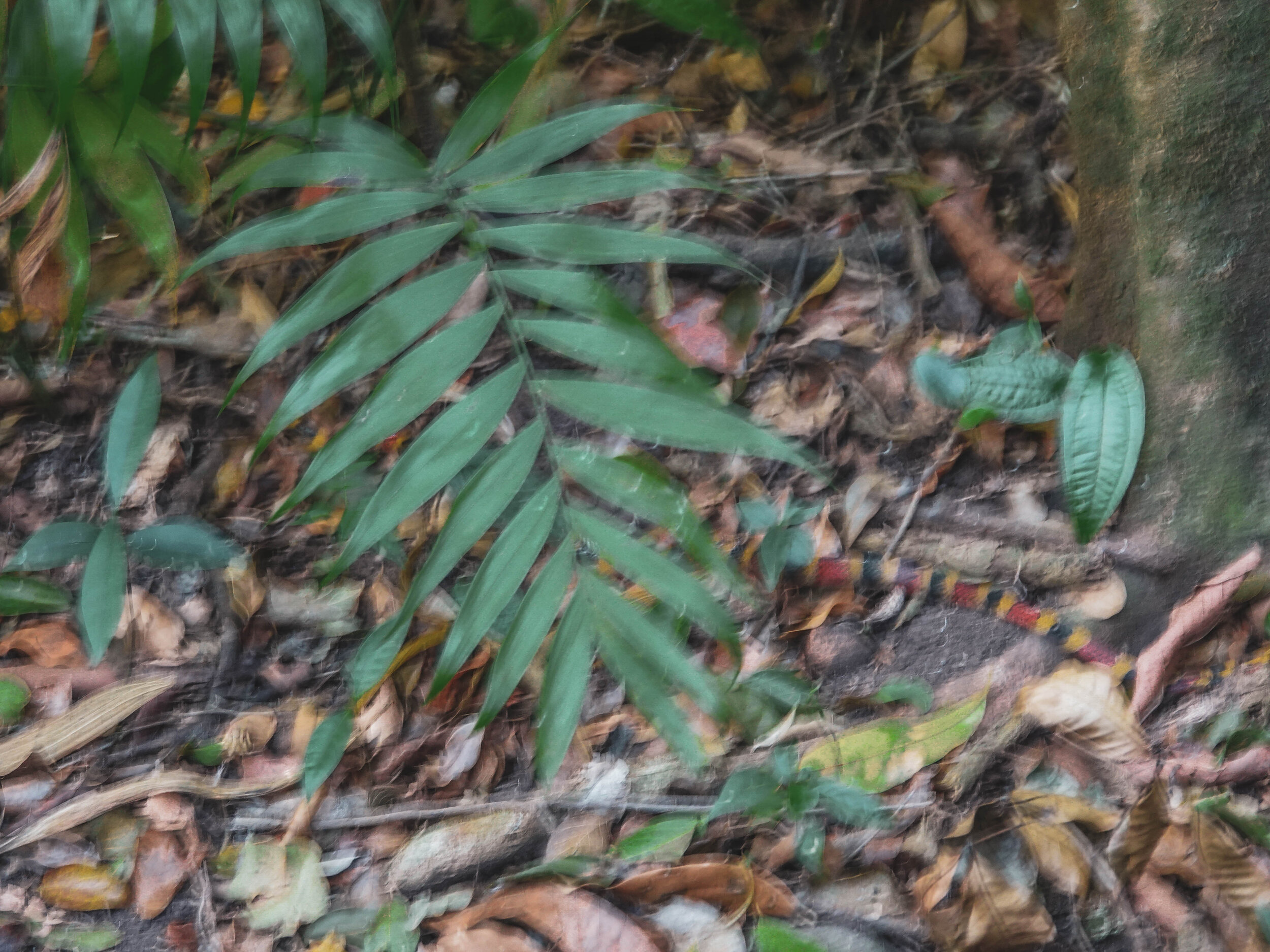
Shortly afterward, we heard a family calling out: “Snake! Snake!”
At first, we thought it was a highly venomous coral snake, but after consulting an expert from San José, we discovered it was an even rarer find—the non-venomous Guatemalan Neckband Snake (Scaphiodontophis annulatus). Judging by my best attempt at a photo, you can imagine how quickly it moved through the undergrowth.
Another great example of a strangler fig successfully spreading its roots everywhere.
At least it’s photogenic…
The national park was named after the active Rincón de la Vieja volcano, which has numerous fumaroles and hot springs nearby.
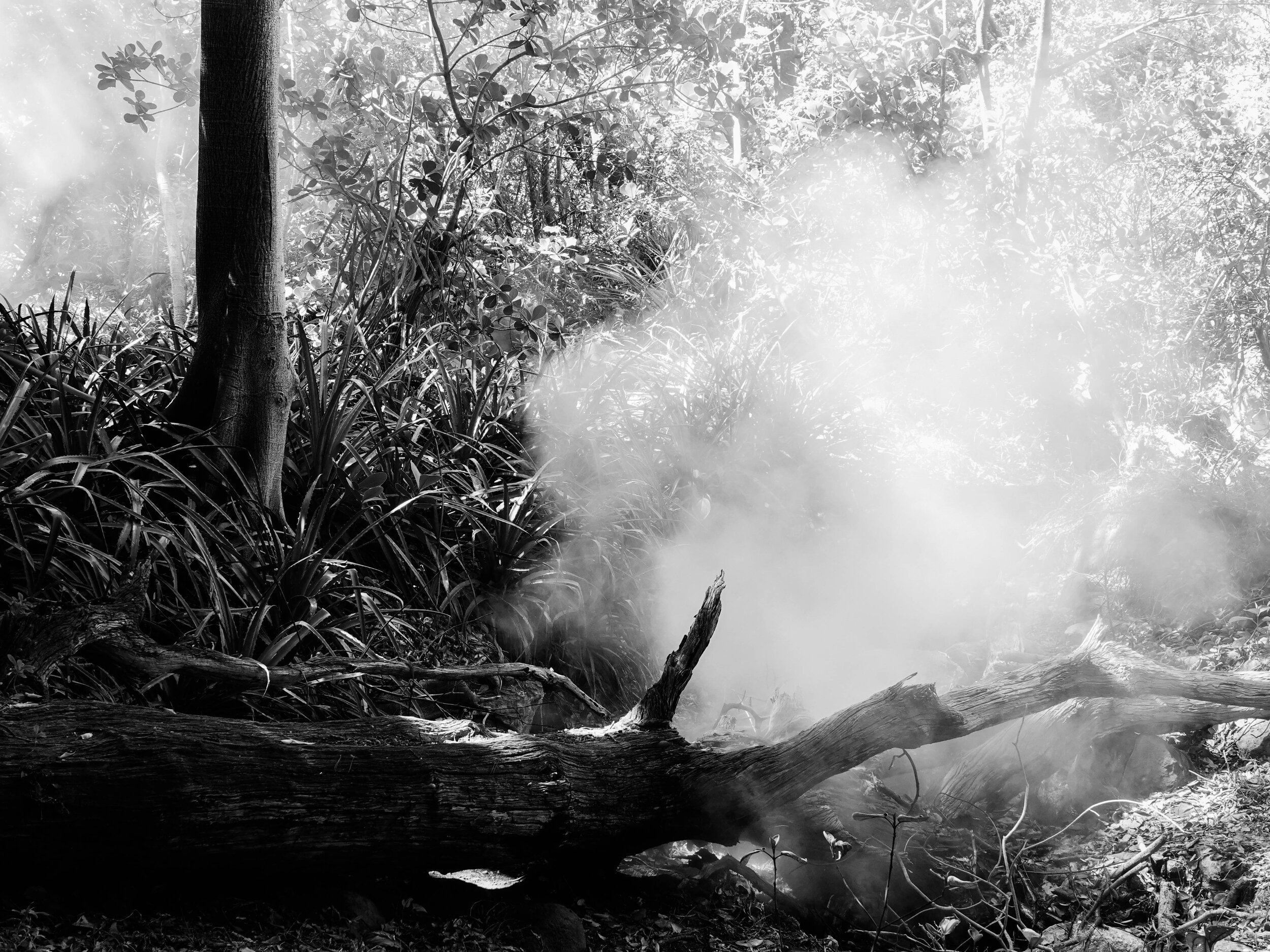
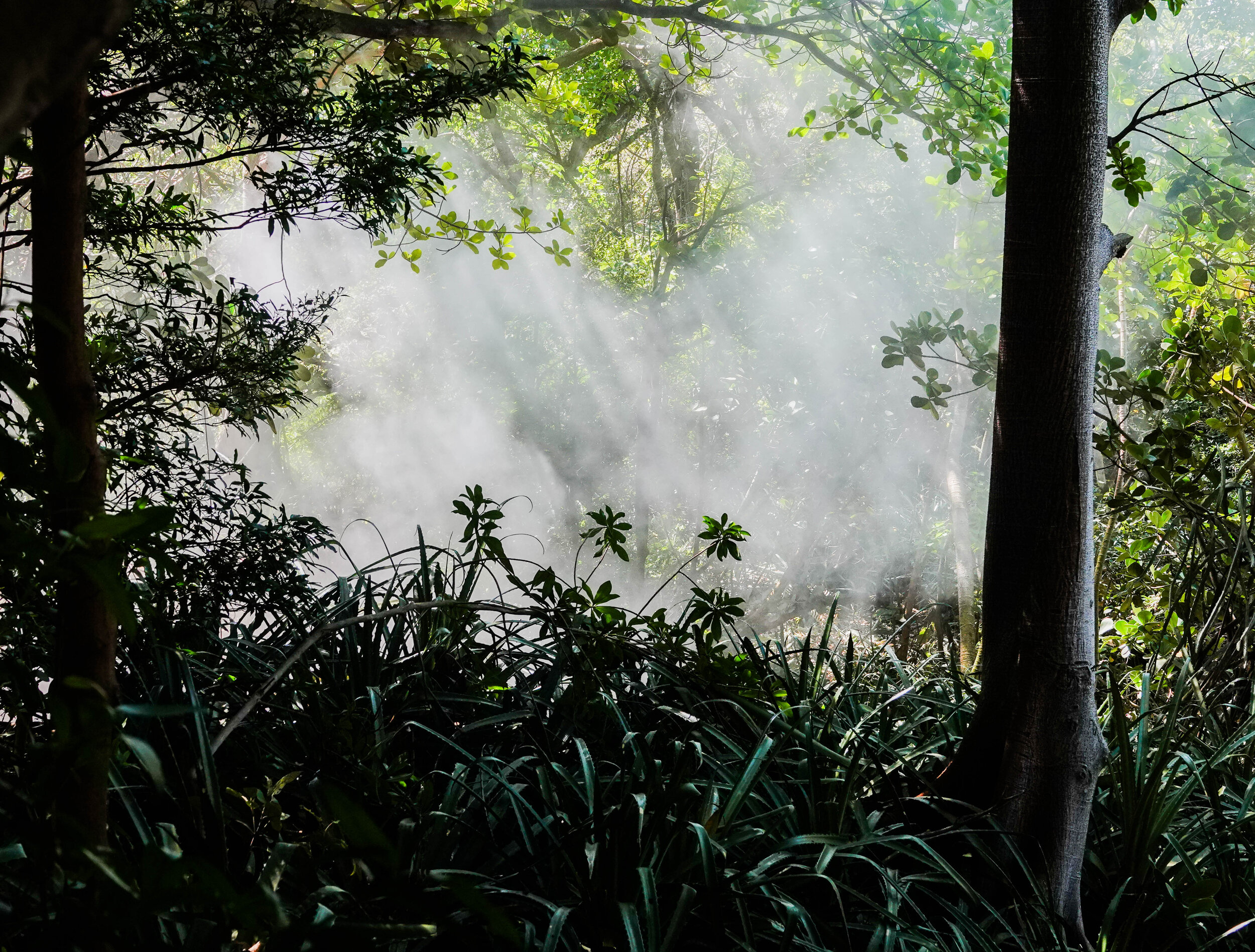
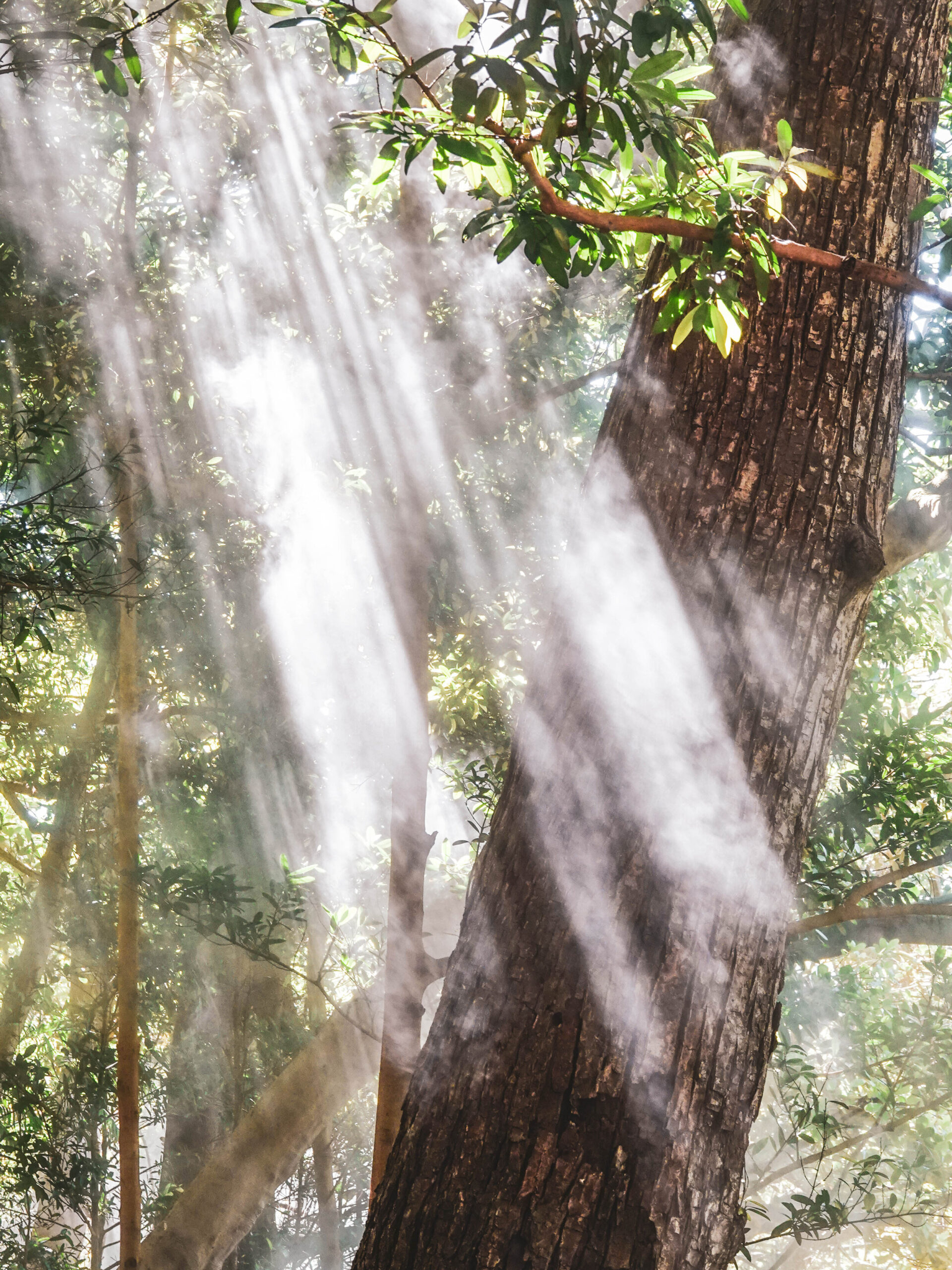
We smelled the fumaroles before we even saw them.
Smoke billowed through the forest.
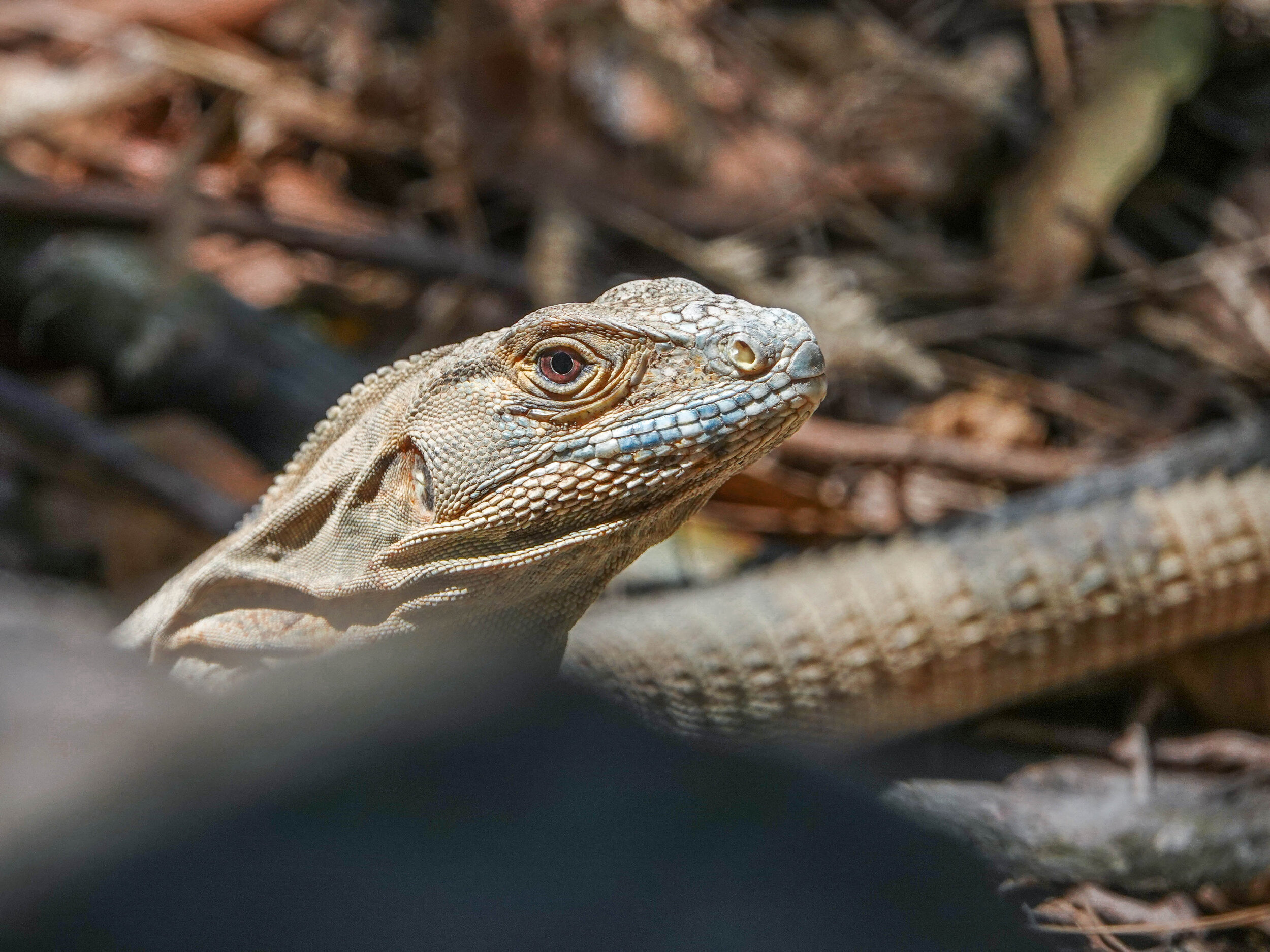
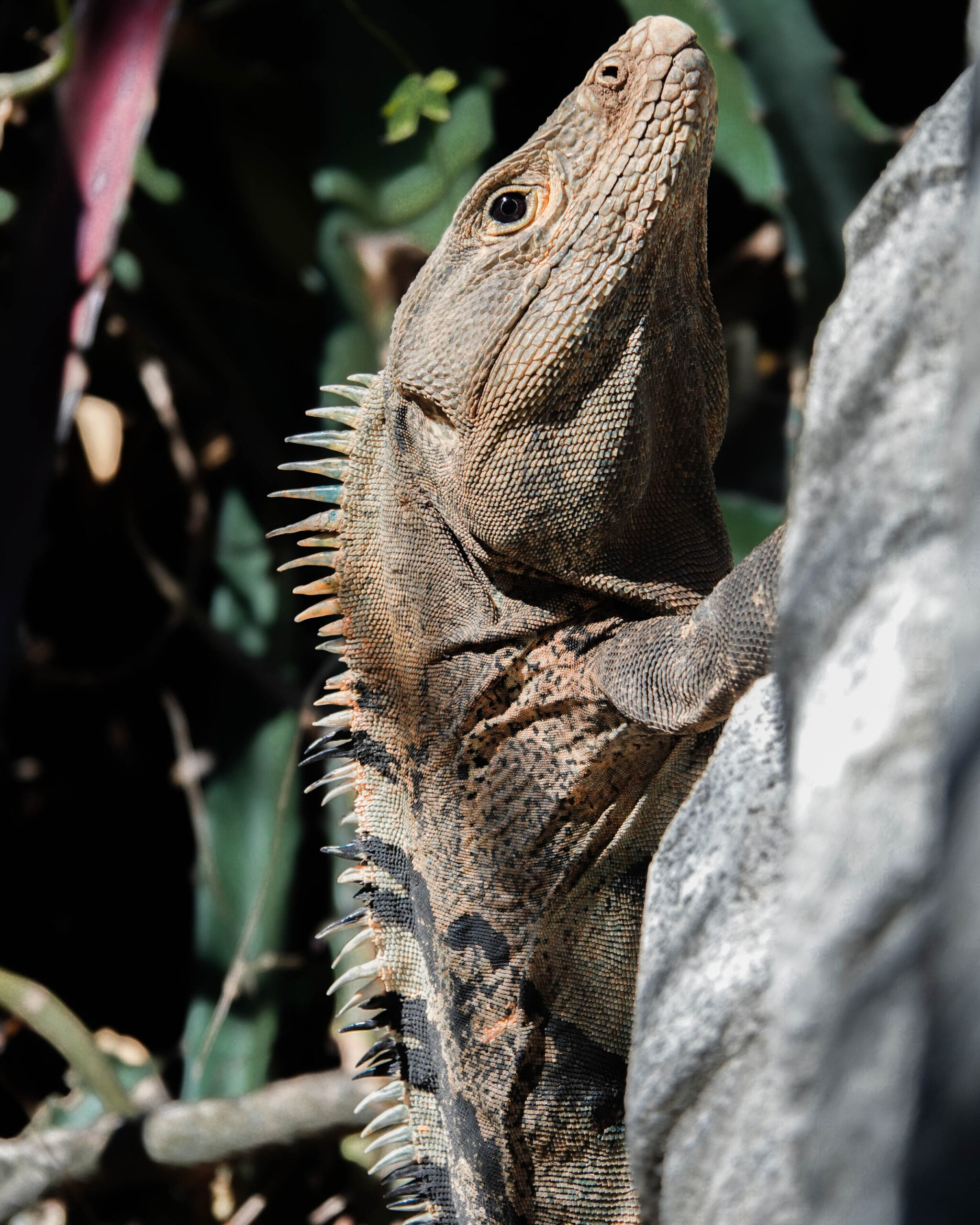
And this iguana seemed to be enjoying it.
Not sure why they call it the black iguana.
Apparently, it’s because of the black, checkered scales on their long tails.
High up in the tree canopy, a colony of wasps had made their home. If you look closely, you can spot at least three workers in flight.
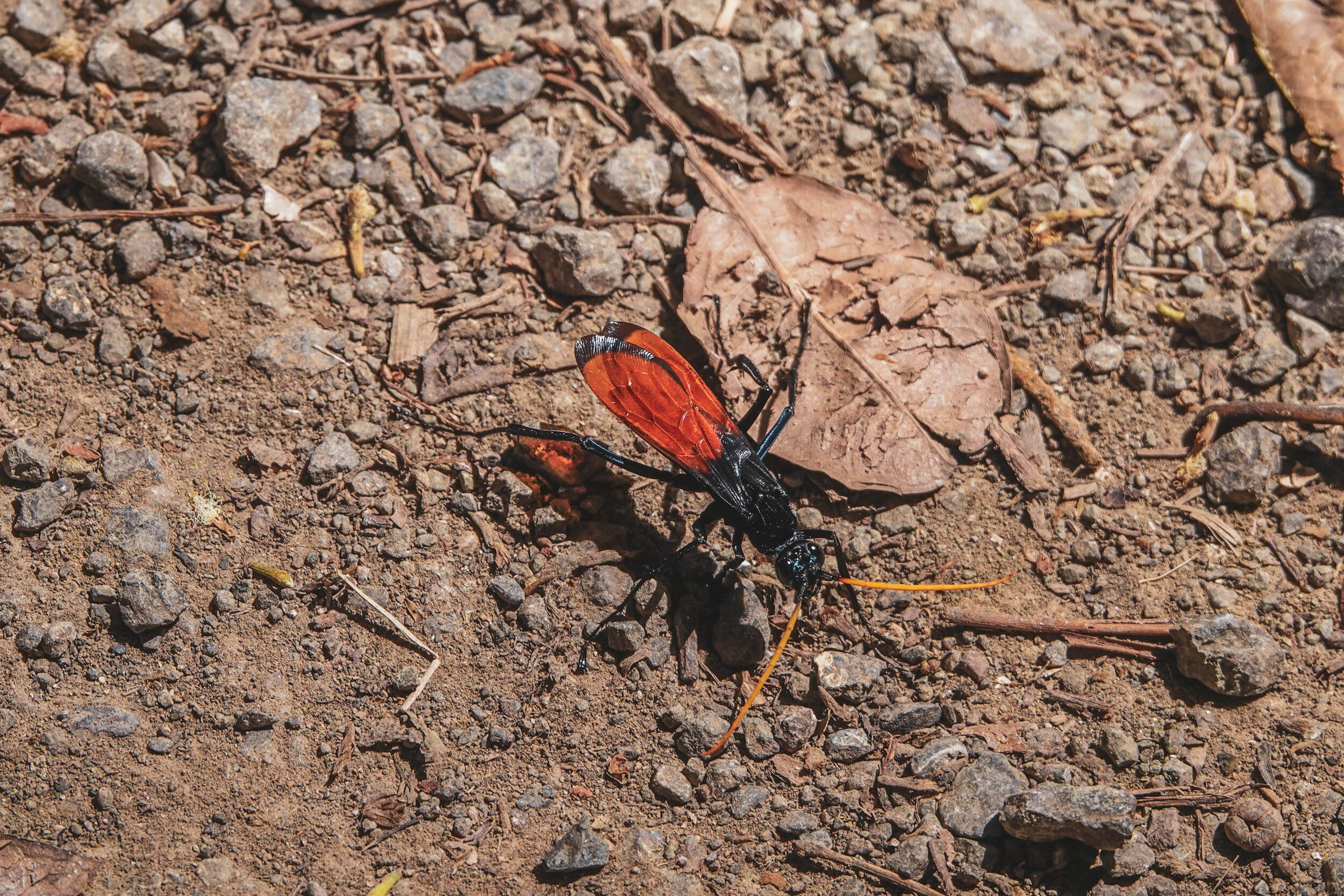
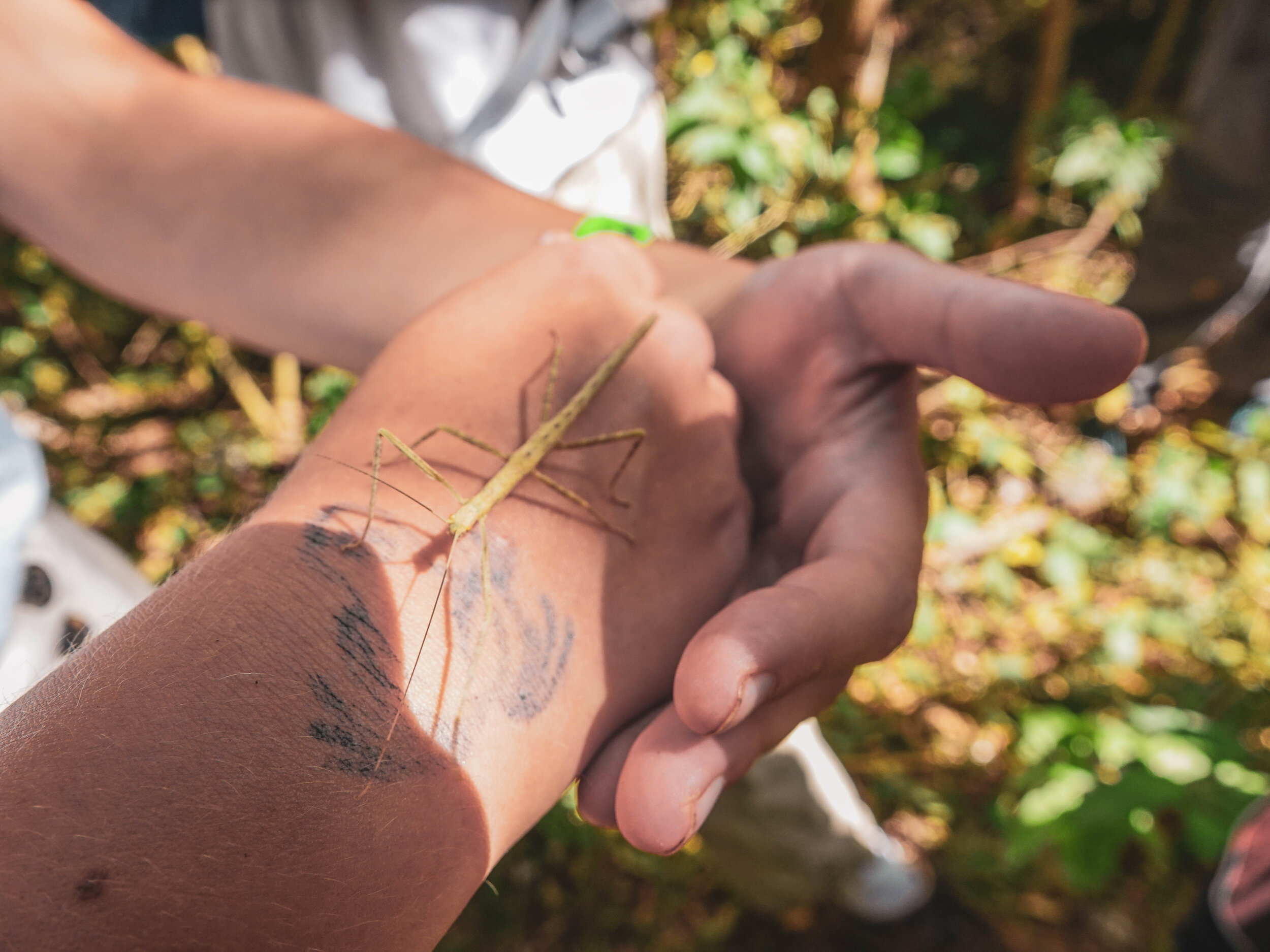
At first glance, this might not even look like a wasp—but it is! Its sting is ranked as the second most painful insect sting (right after the “bullet ant”), and it’s so potent that it can temporarily paralyze a human.
This species, Hemipepsis ustulata, belongs to the tarantula hawk group—a name that comes from its horrifying hunting and reproductive behavior: it stings and paralyzes a tarantula, then drags it (alive) into its nest. And that’s just the beginning of the nightmare… You can read more about it online.
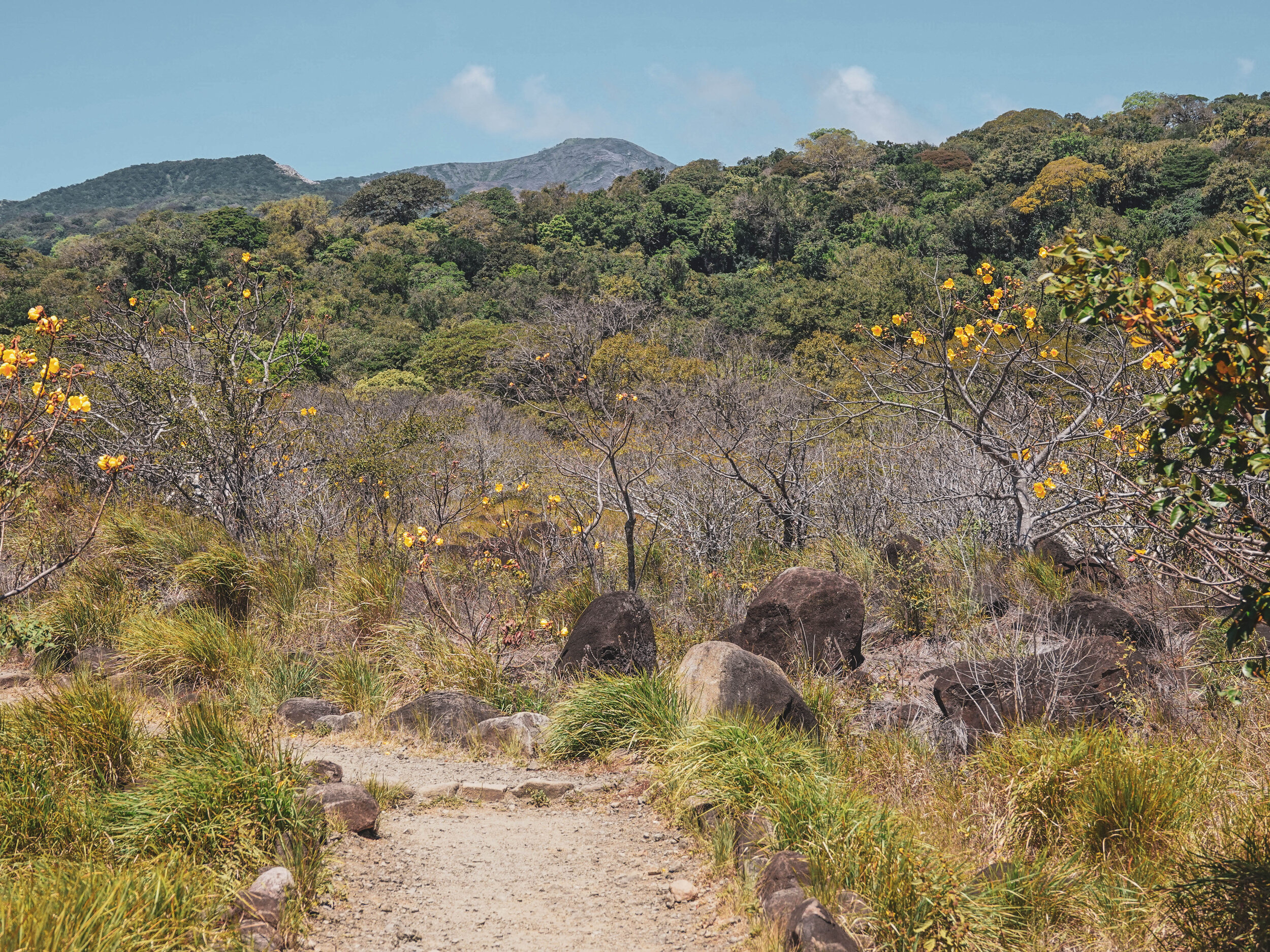
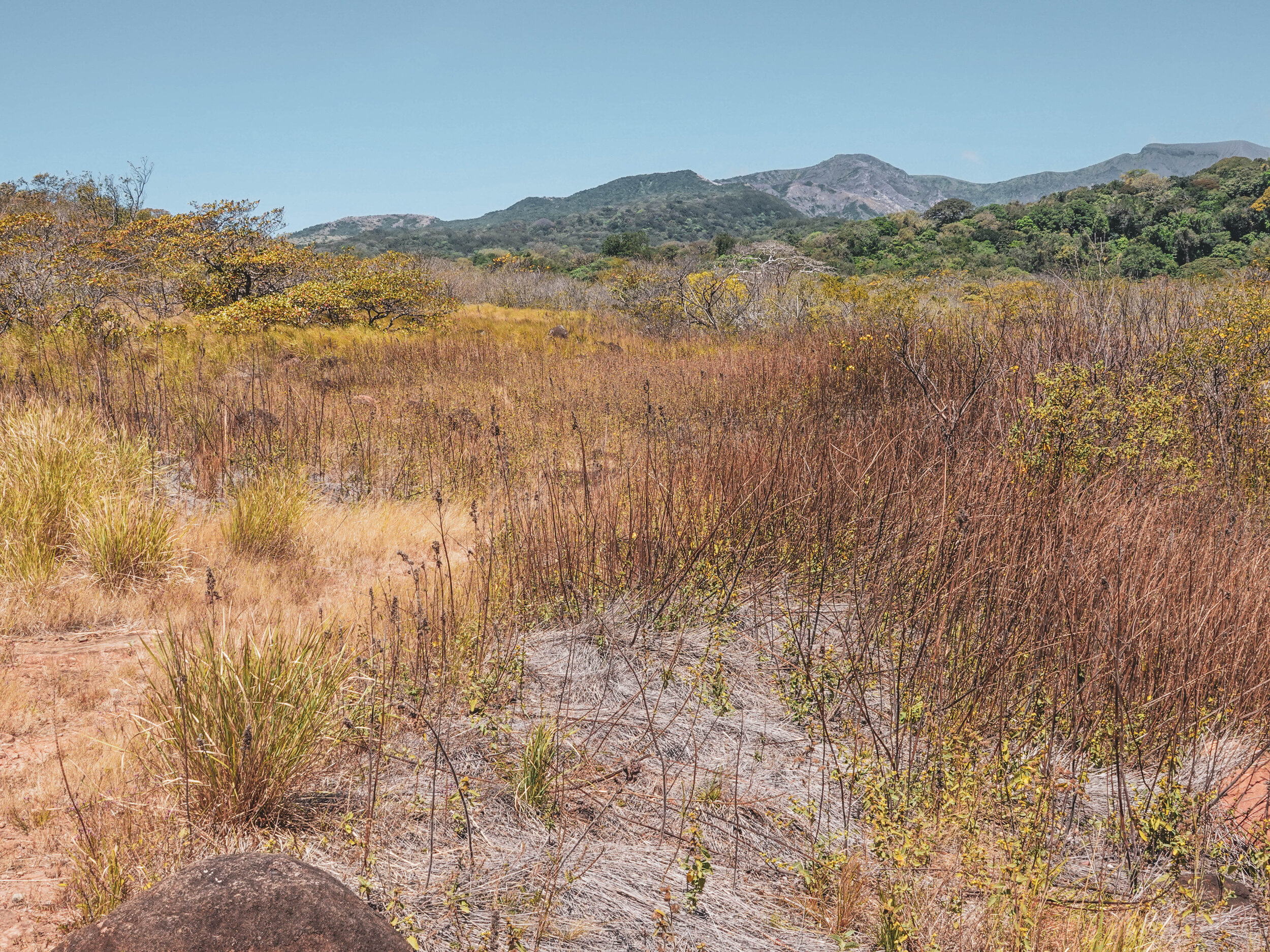
After two hours of walking along a gentle 2-kilometer forest trail, the environment completely changed—turning into a savannah, filled with agaves, epiphytic bromeliads, and cacti.
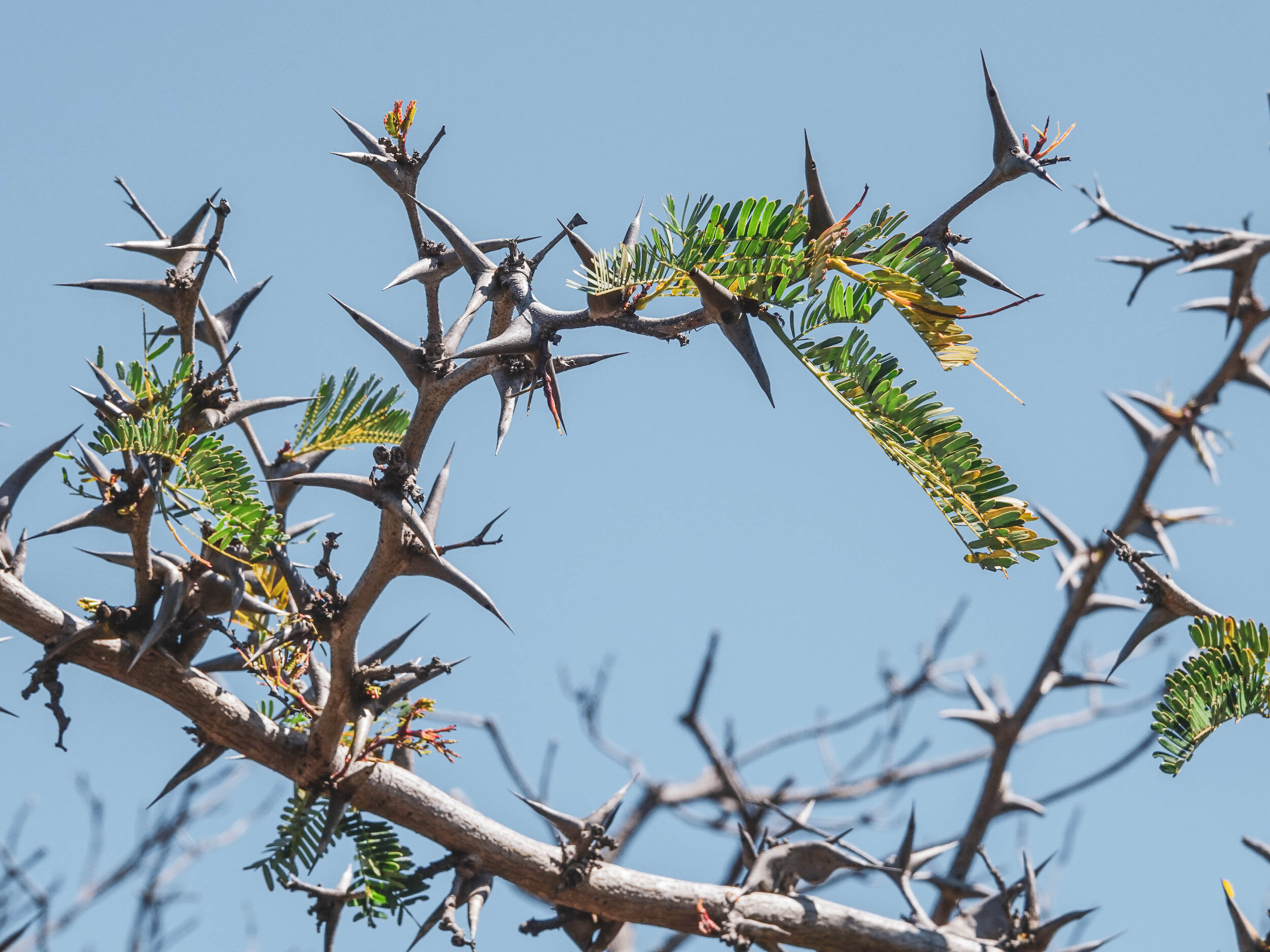
thorns + ants (inside) + feathery leaves = acacia
In this grassy terrain, long trousers and high socks were a must—protection against the coloradillas, tiny reddish mites that are a real nuisance for humans.
They secrete enzymes that break down keratin in our skin’s outer layer (which they feed on), creating intensely itchy blisters. The mites eventually get expelled from the body through hair follicles after a few days. Not dangerous—just incredibly irritating! I still have a few marks on my skin.
In the background, you can see the slopes of Rincón de la Vieja volcano.
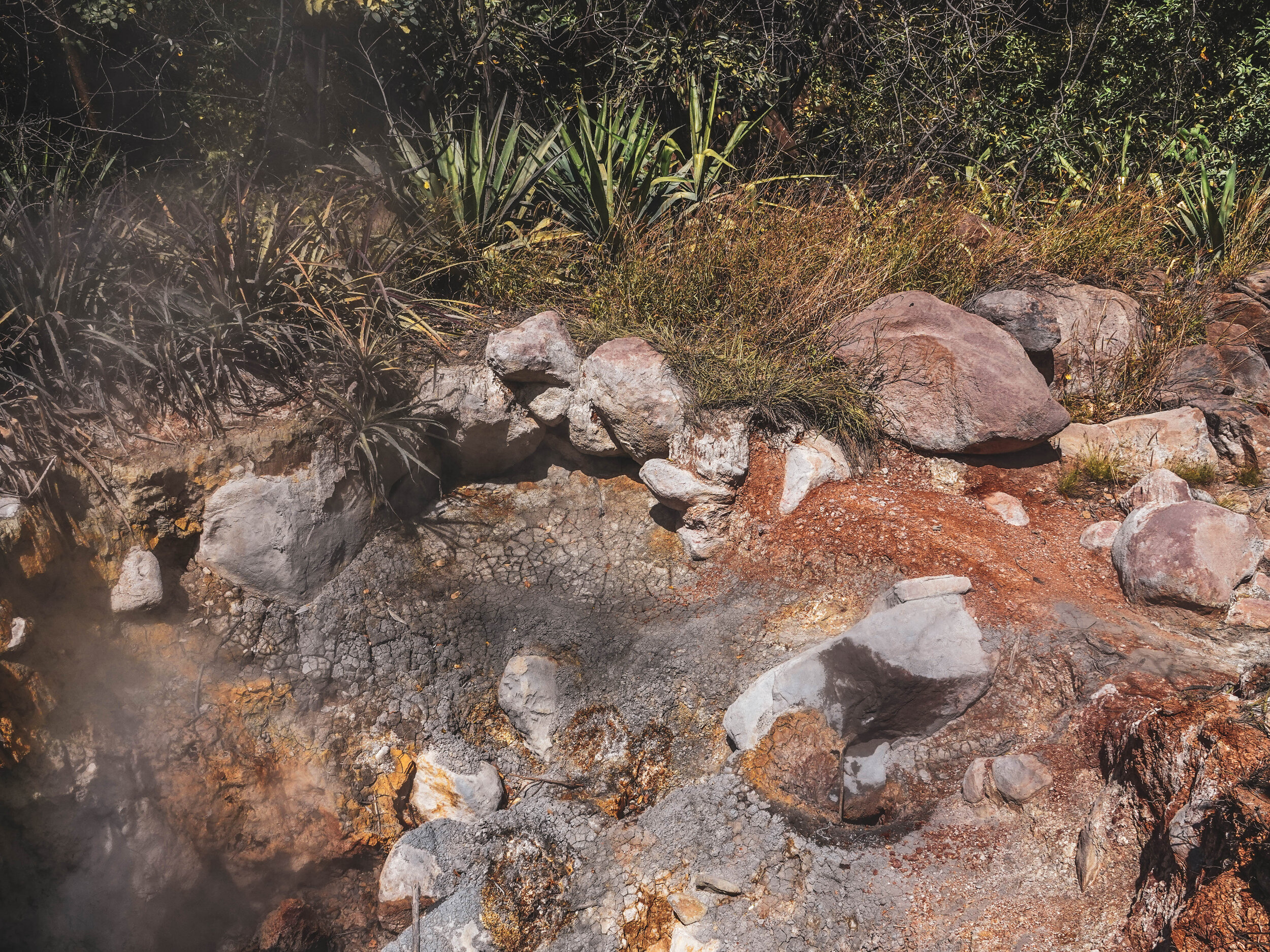
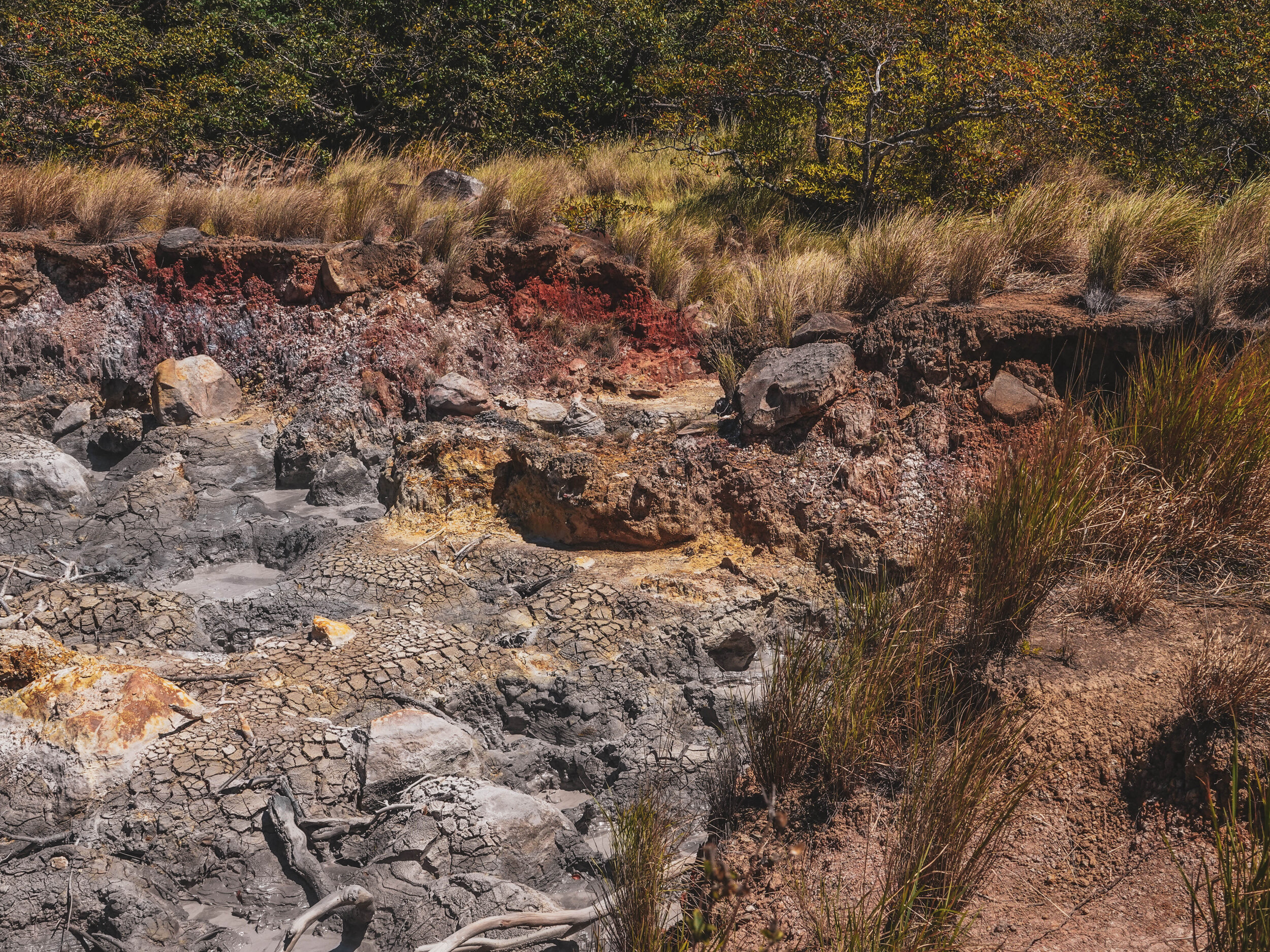
More Fumaroles! The smell instantly transported me back to Iceland…
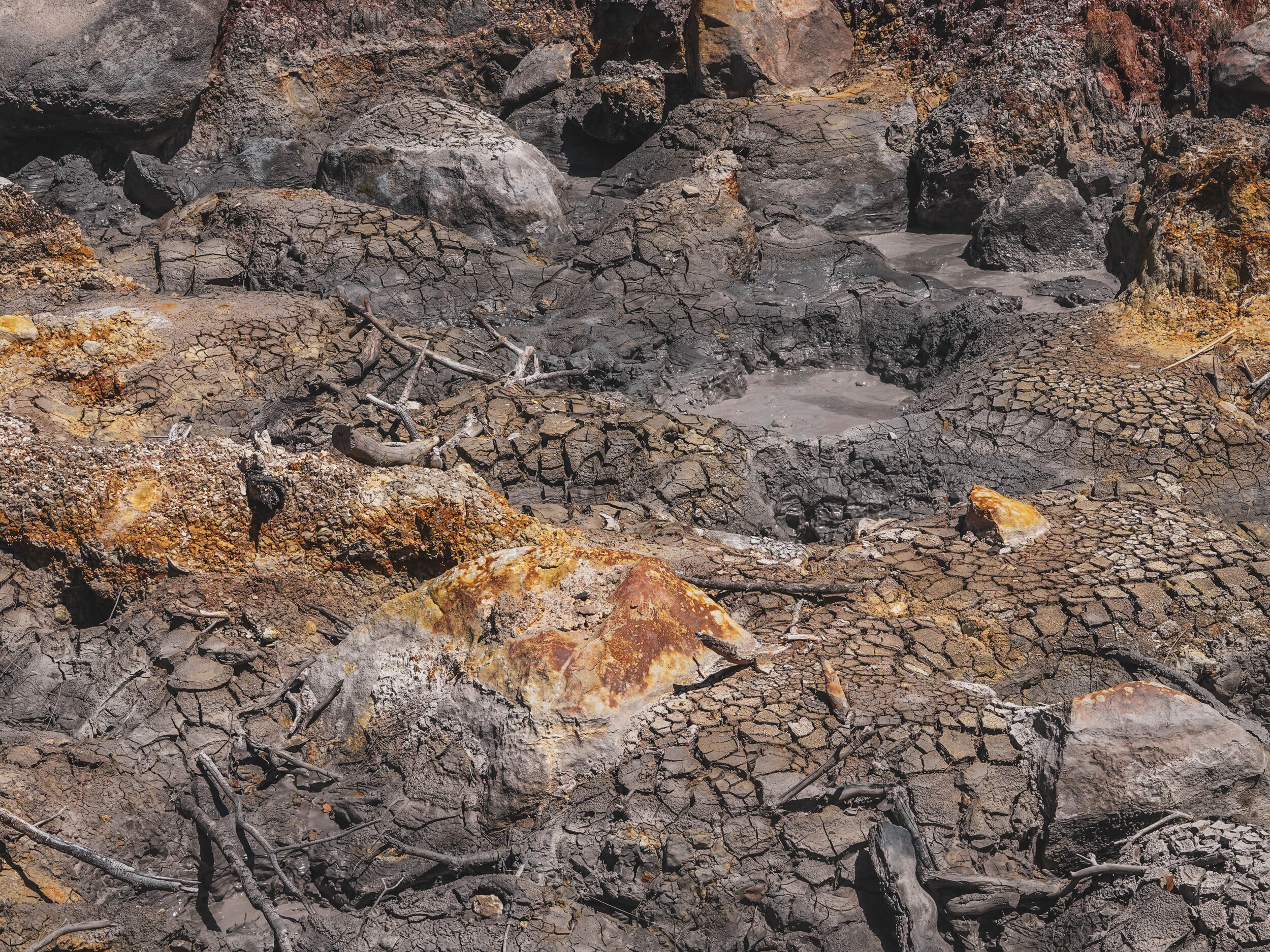
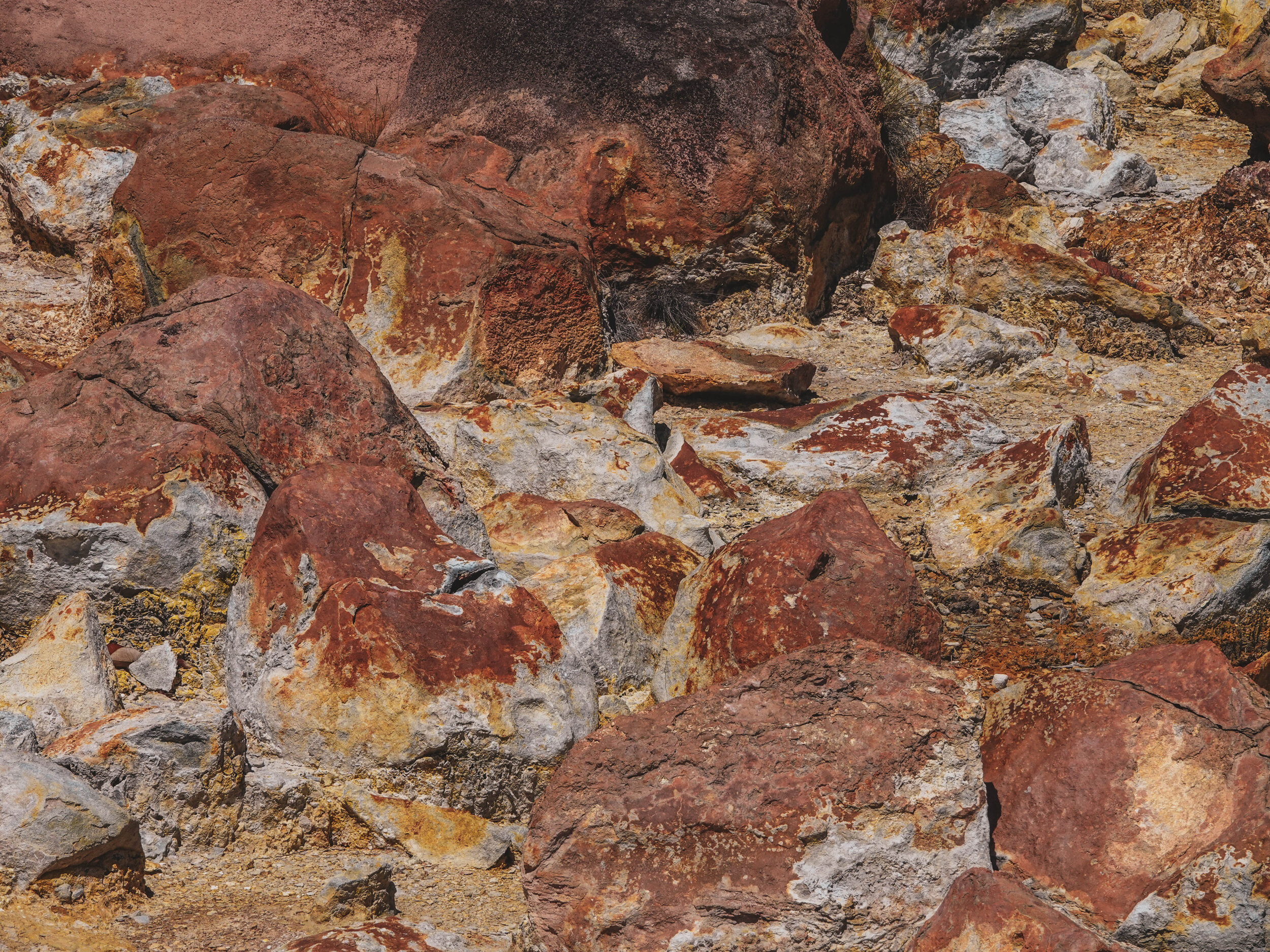
And the terrain? Straight out of Mars.
The red hues come from manganese compounds.
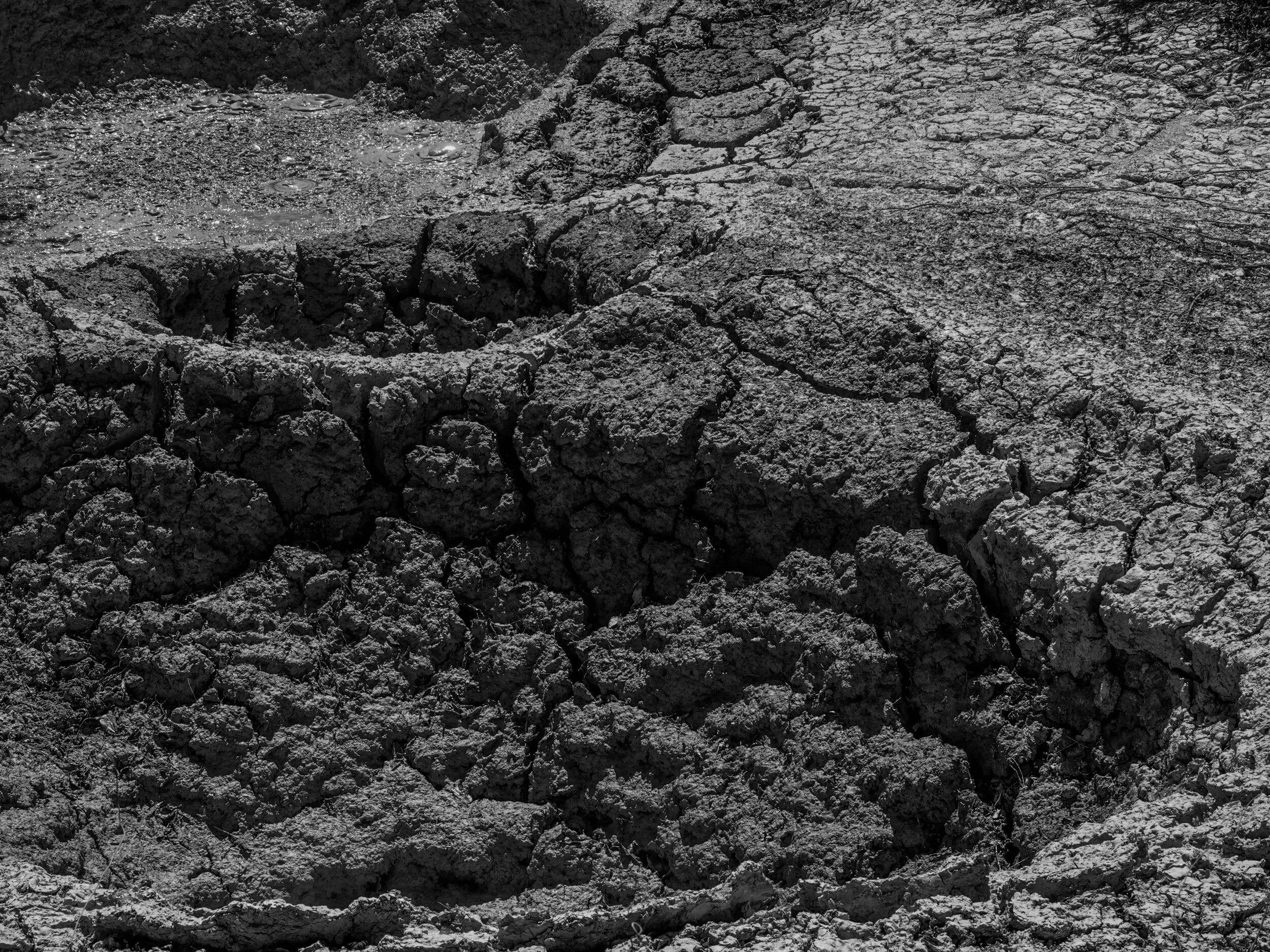
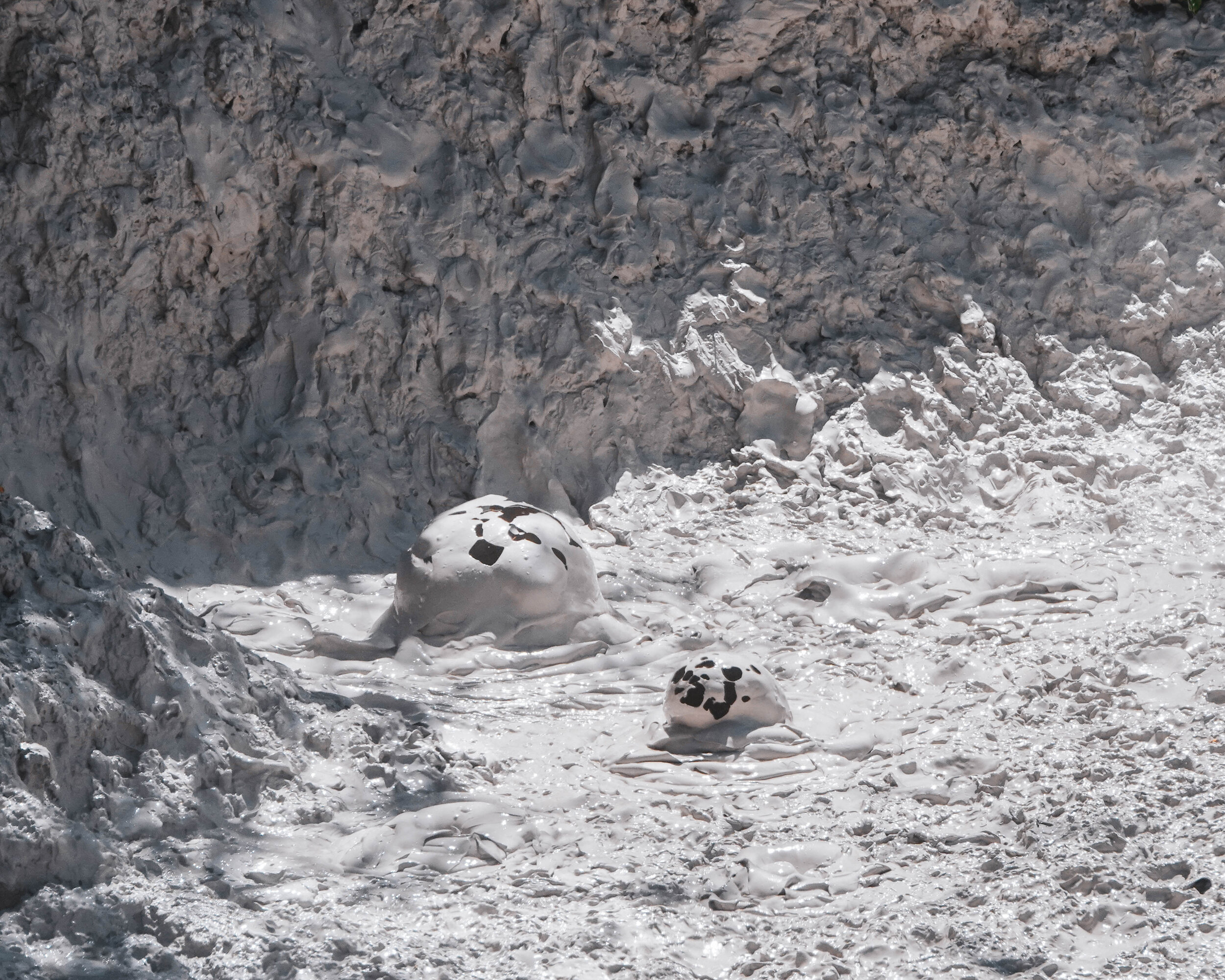
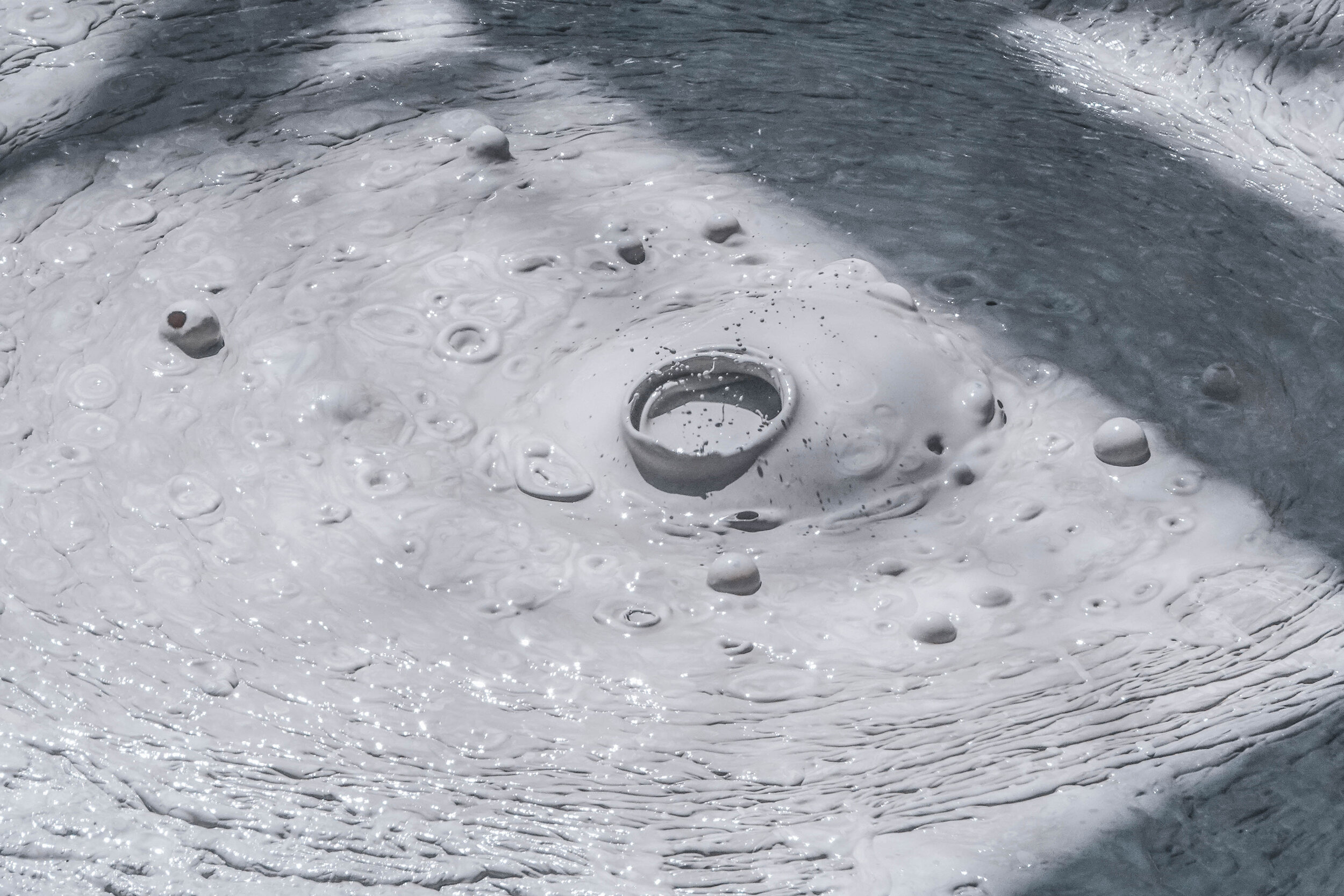
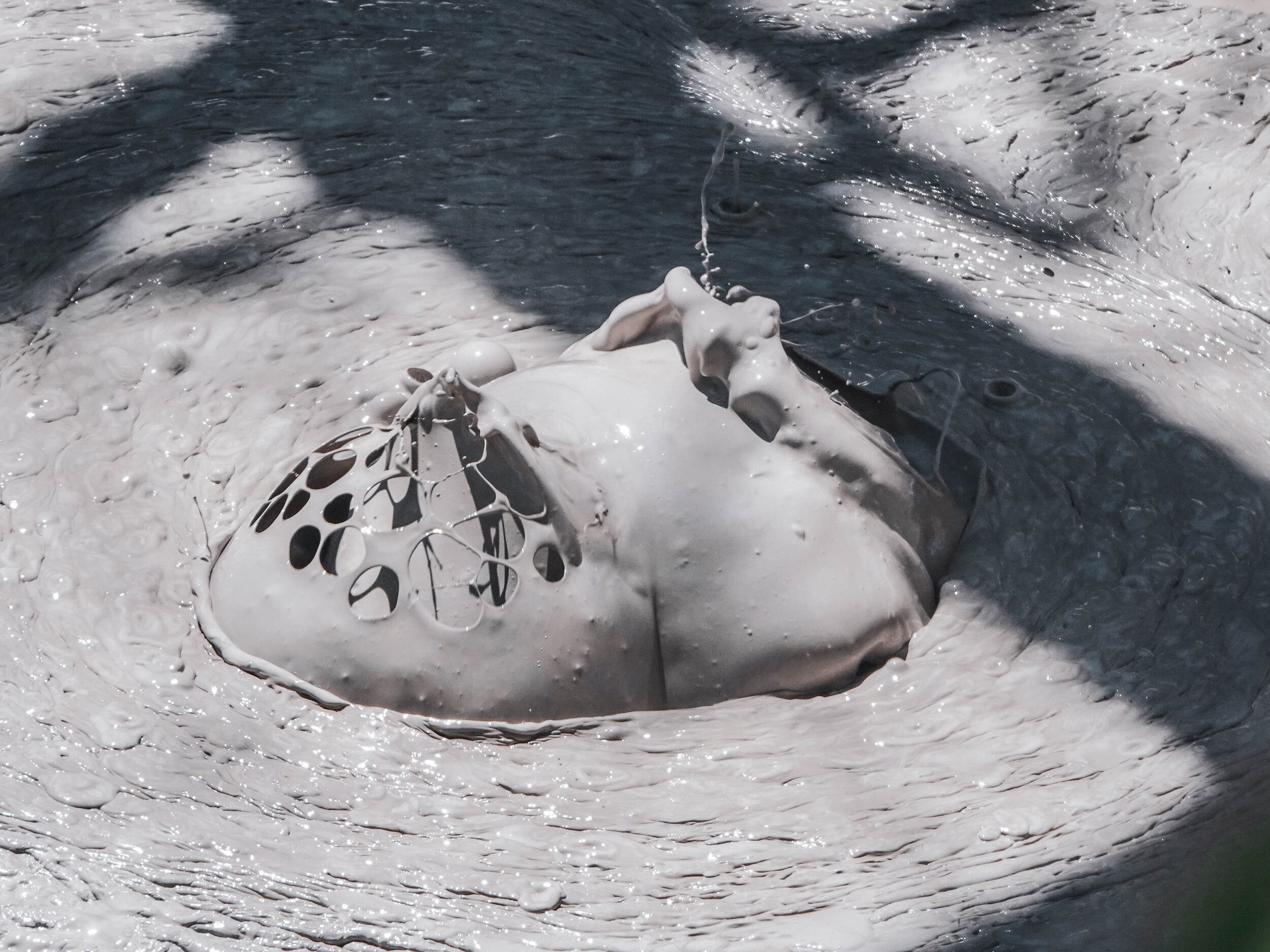
A few hundred meters away, we watched some very active mud pools in action.
Nature never ceases to amaze!
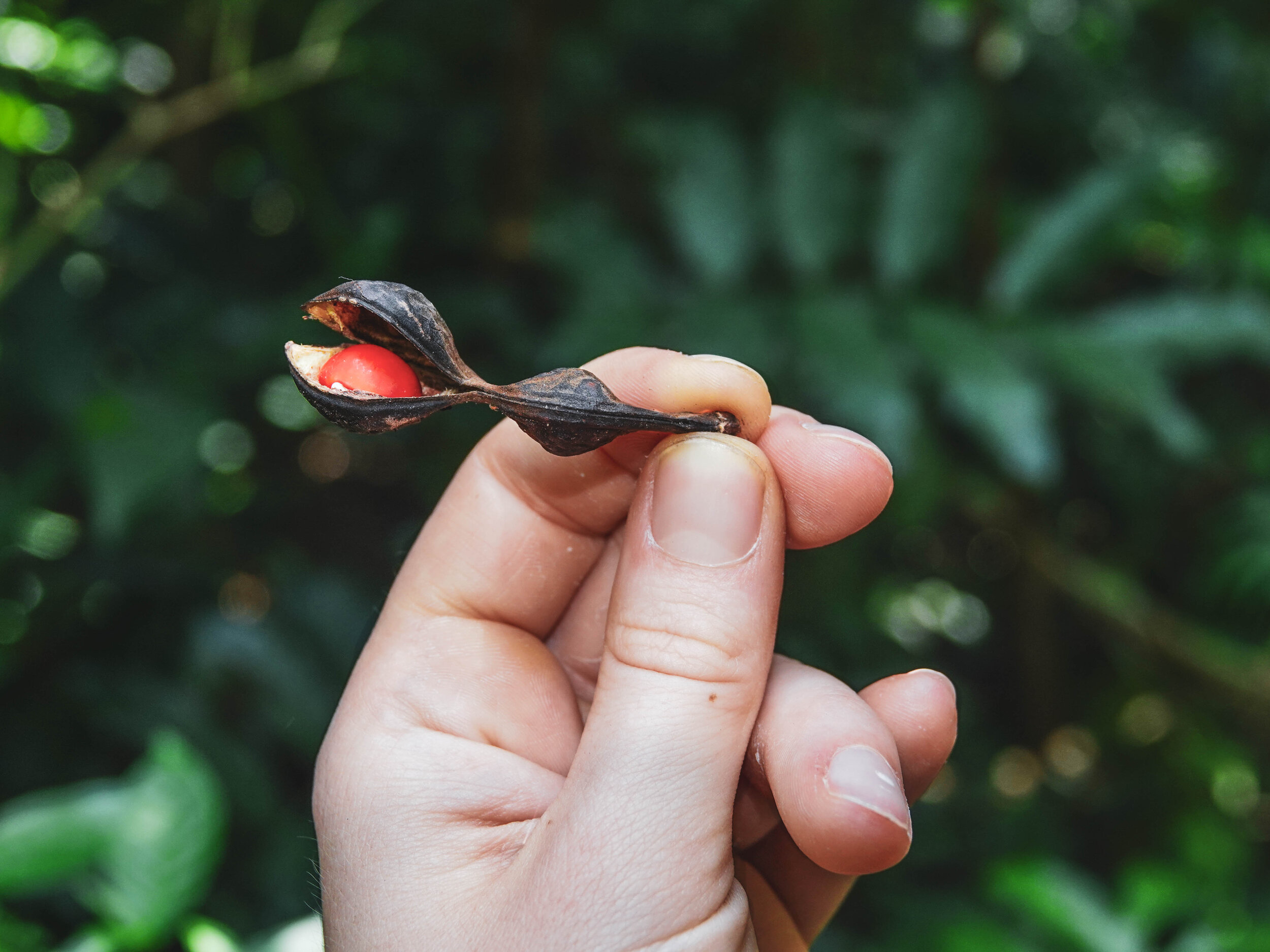
Wherever you looked, the ground was covered with seeds—of all shapes and sizes.
This one dropped straight from the sky!
At first glance, lantana may seem unremarkable, but it has a fascinating story—it’s one of the plant species visited by monarch butterflies during their incredible 3,000+ km migration from Canada to Mexico.
Learn more about their journey below:
A few minutes later, we stepped into a completely different forest, filled with Central American oaks growing along a stream.
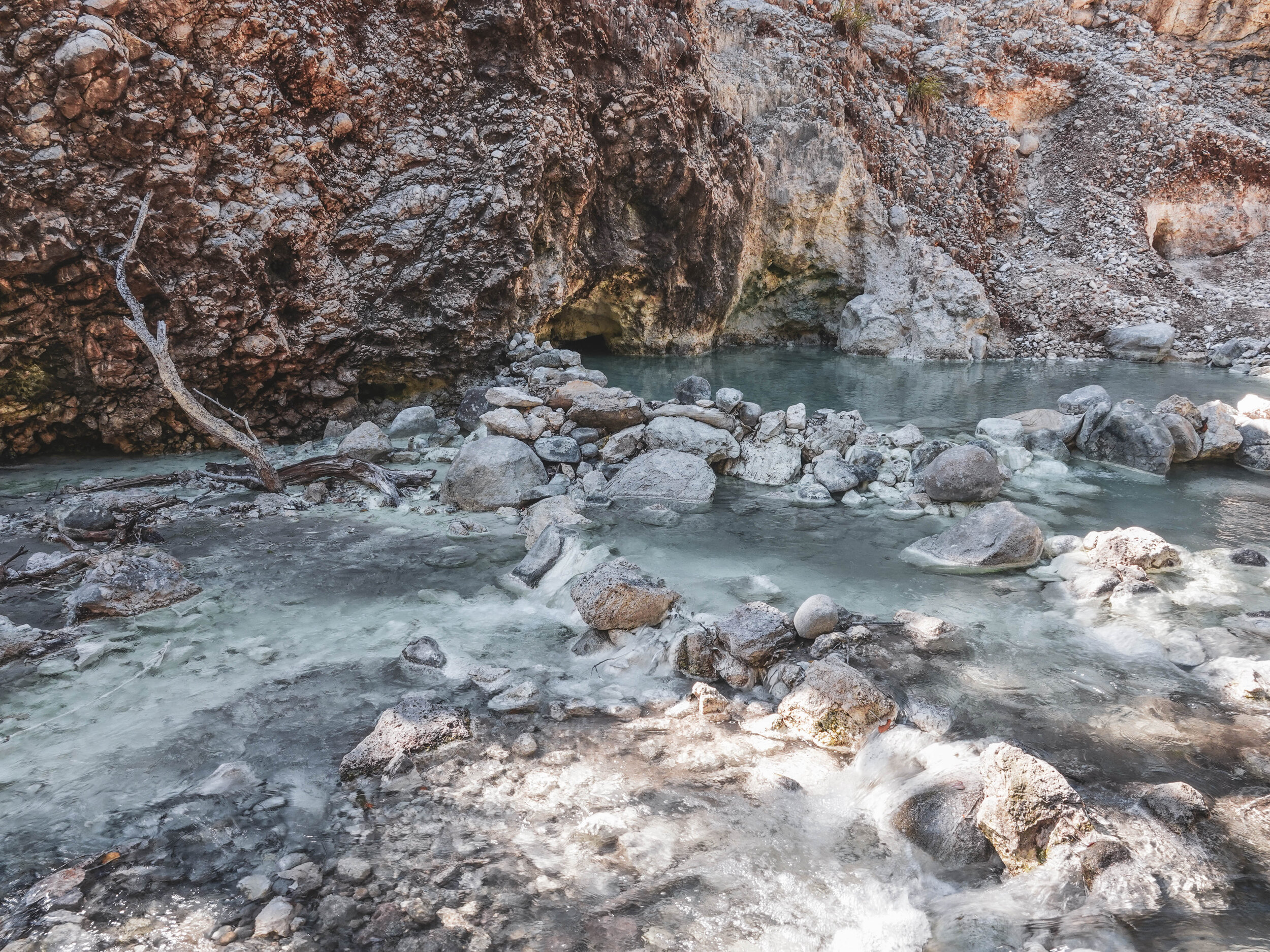
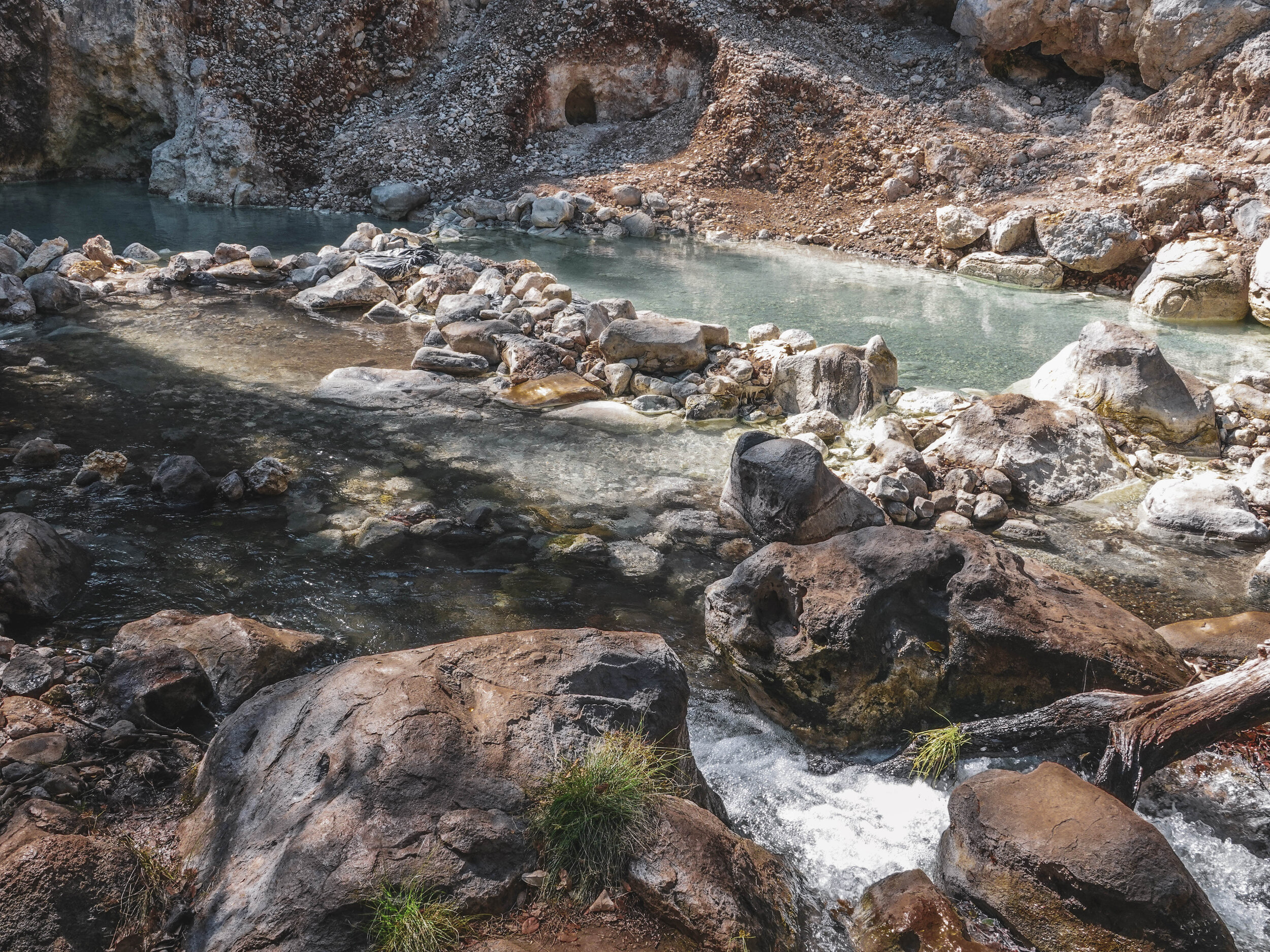
Our second-to-last stop of the day was these hot springs, which look deceptively inviting. If I hadn’t known they were over 50°C, I might have jumped in without thinking!
This region is full of hot springs, thanks to volcanic activity. In fact, we ended the day soaking in one of them, alternating between a cold stream, warm mud baths, and steaming pools.
And just like that, our time in Rincón de la Vieja came to an end.
The very next day, we headed back to the capital, from where we flew home.