I love finding beauty in small things. More often than not, a simple detail—like a colorful wall in the middle of a construction site—excites me more than a world-famous landmark.
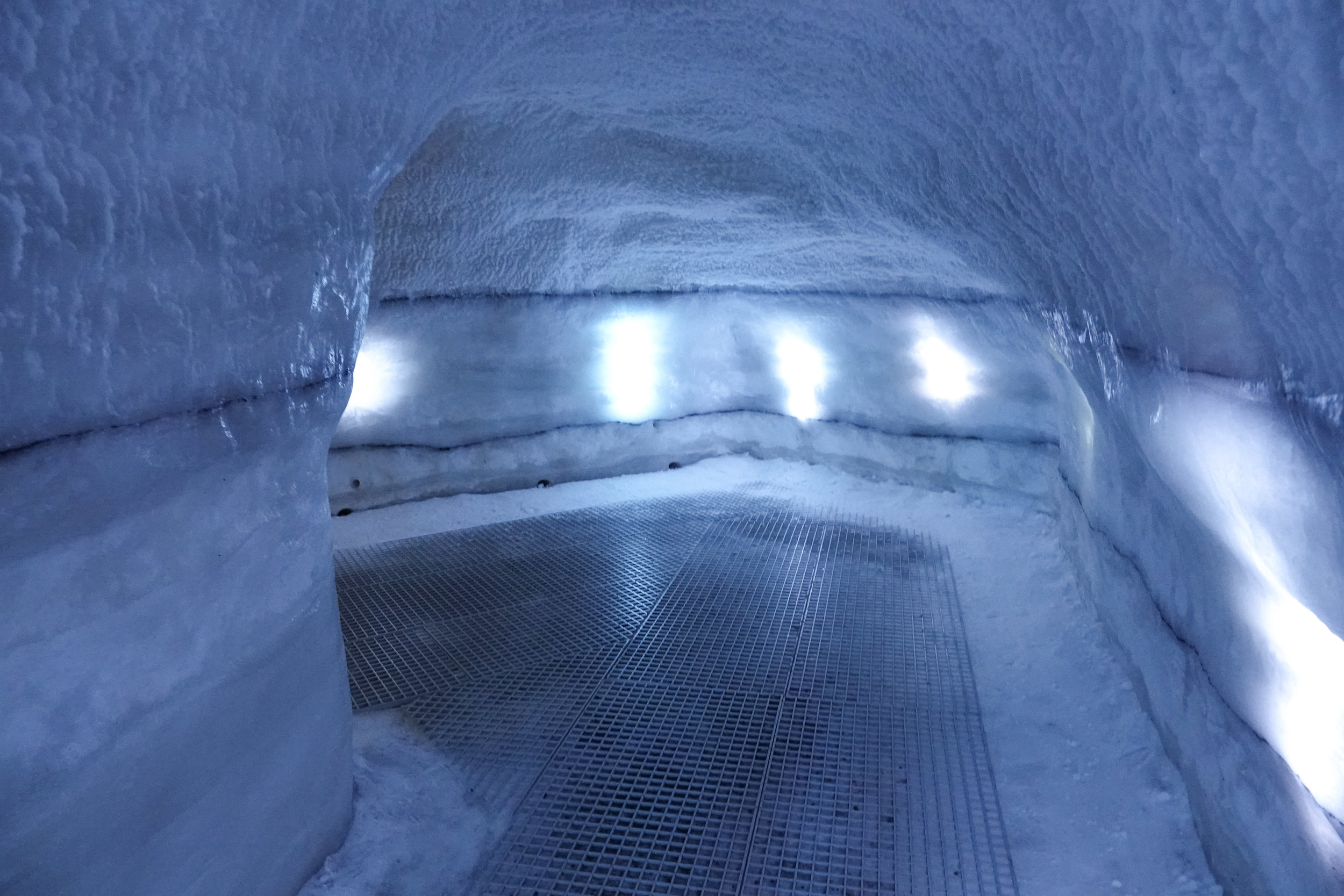
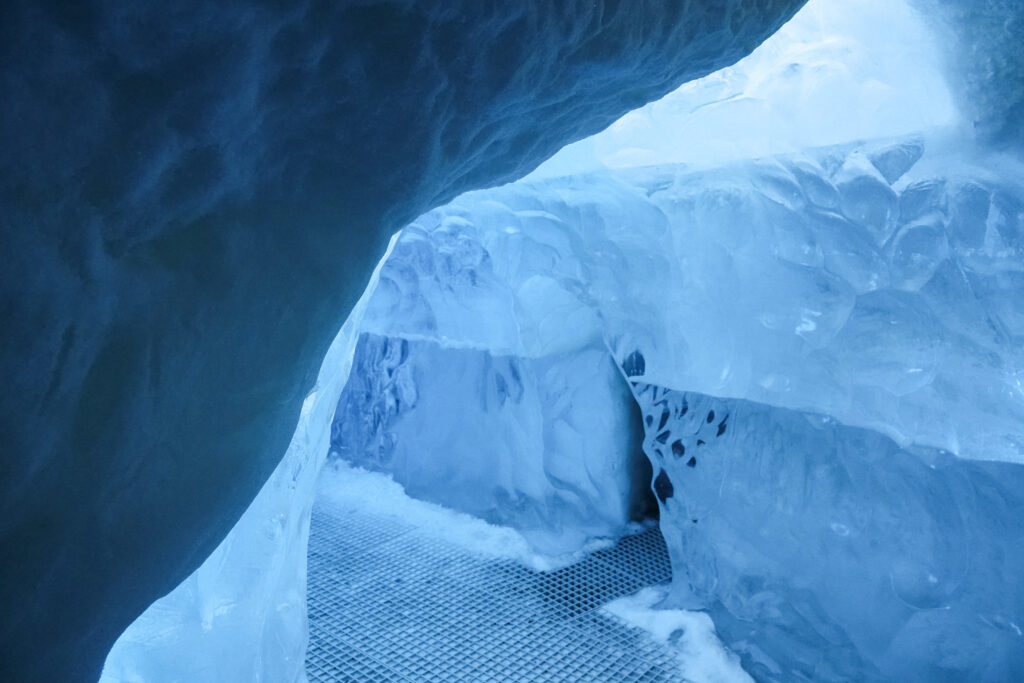
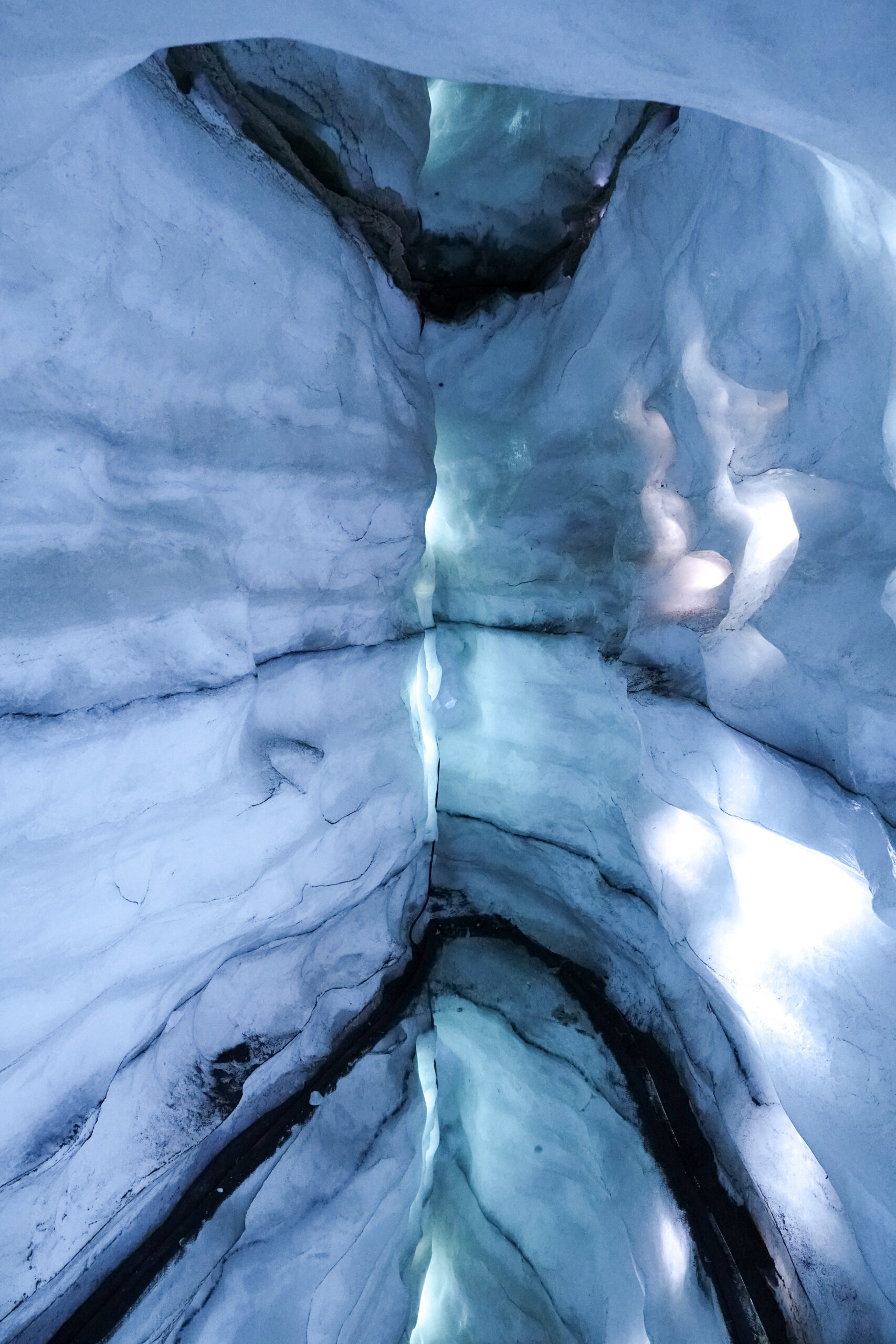
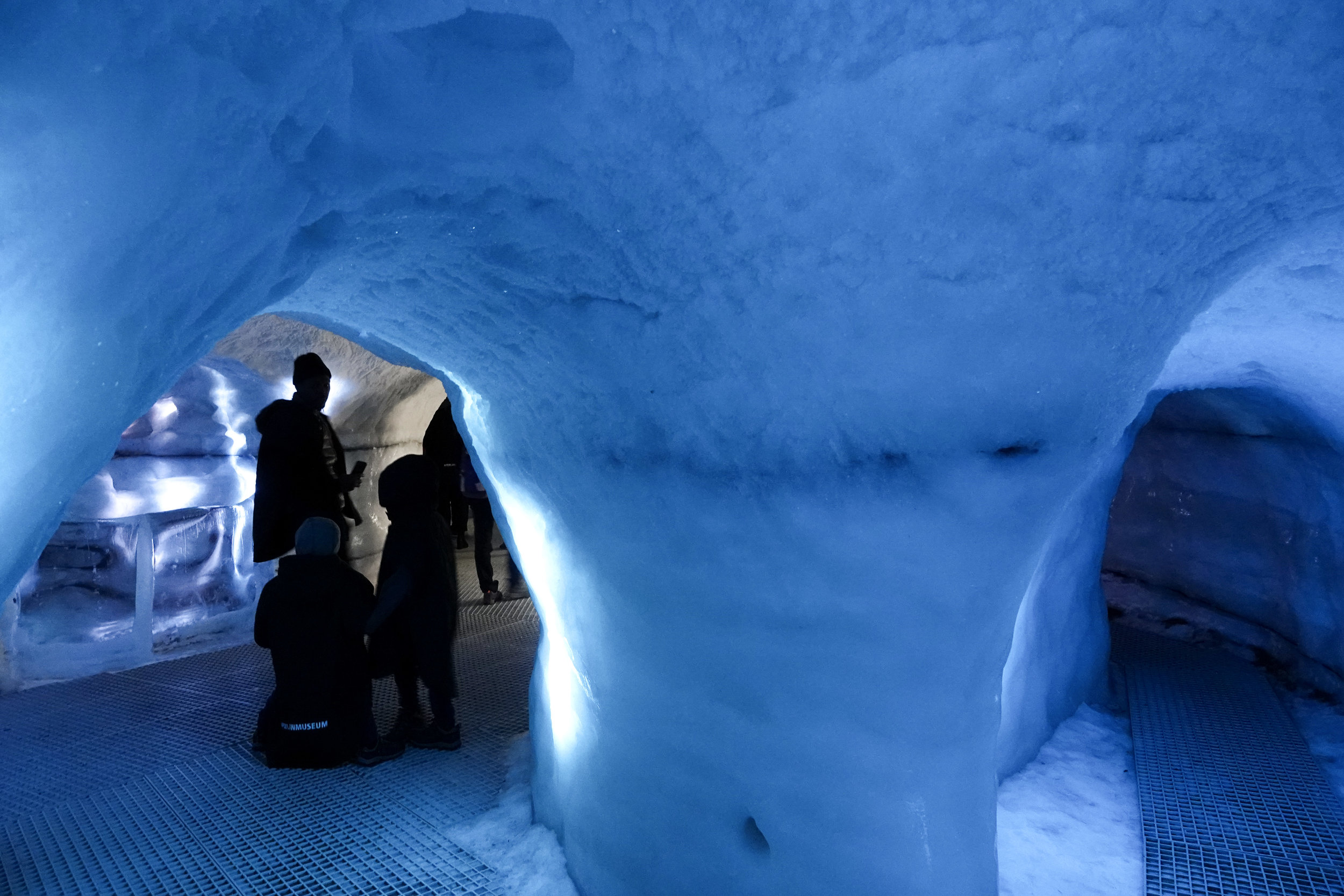
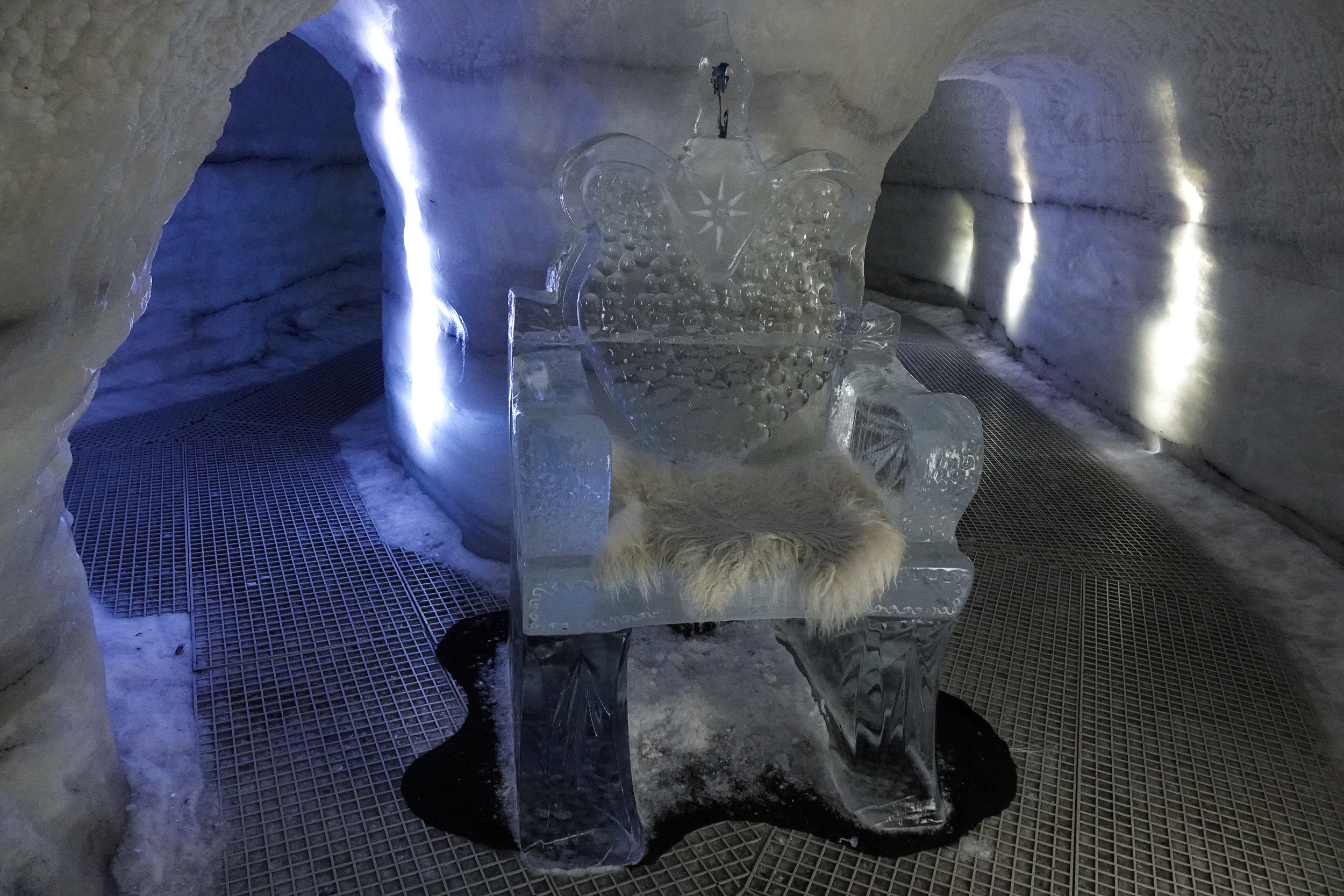
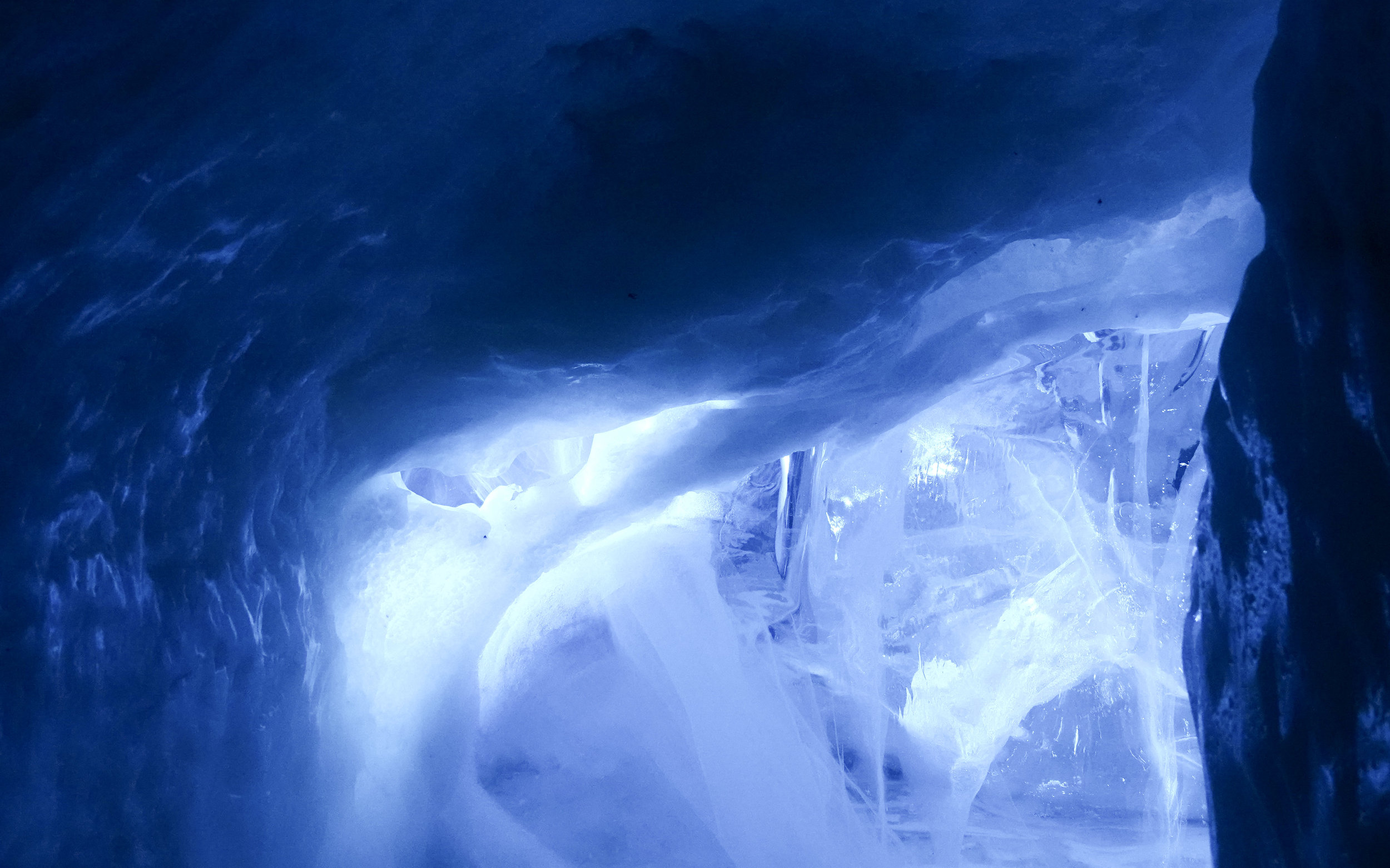
This time, I was captivated by the ice cave in Perlan (if the name doesn’t ring a bell, check out my post “Sunsets in Reykjavík“. Just 100 meters of arched tunnels made entirely of ice—even above your head—the first of its kind in the world!
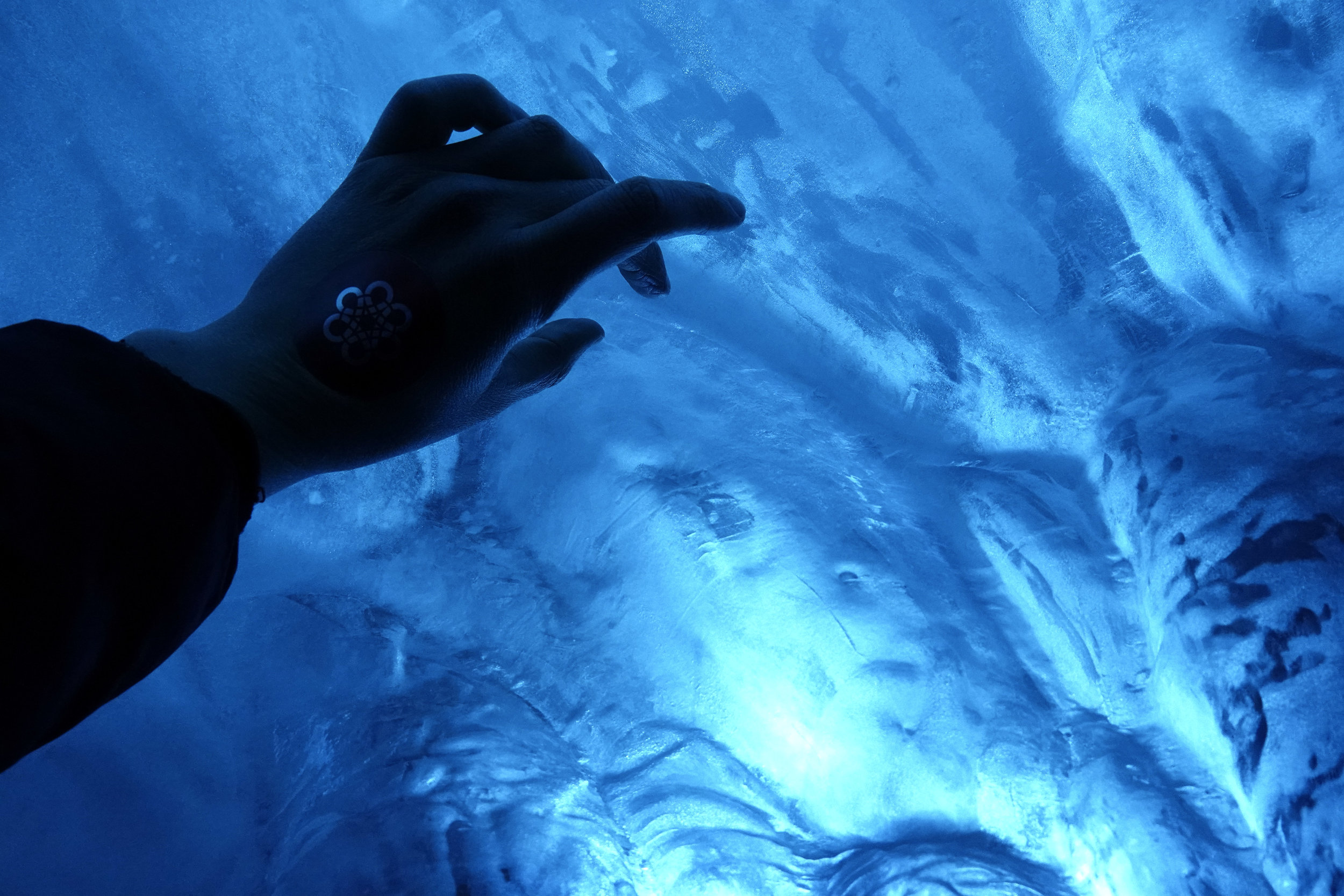
Since the “extreme” conditions and visitors’ lack of preparation quickly cleared the cave, I found myself alone after just five minutes. A perfect opportunity to take dozens of ice shots—because I love its colors, the cold it radiates, its reflections, and its crystalline structure.
After walking through the cave, I explored the GLACIERS exhibition—read the captions of the photos below to discover some fascinating facts about Icelandic water in its mostly frozen form.
“Where the glacier meets the sky, the land ceases to be earthly, and the earth becomes one with the heavens…”
— World Light by Halldór Laxness
The ice cave in Perlan, as you might’ve guessed, is man-made – sculpted from 350 tonnes of snow transported from the Blue Mountains in western Iceland.
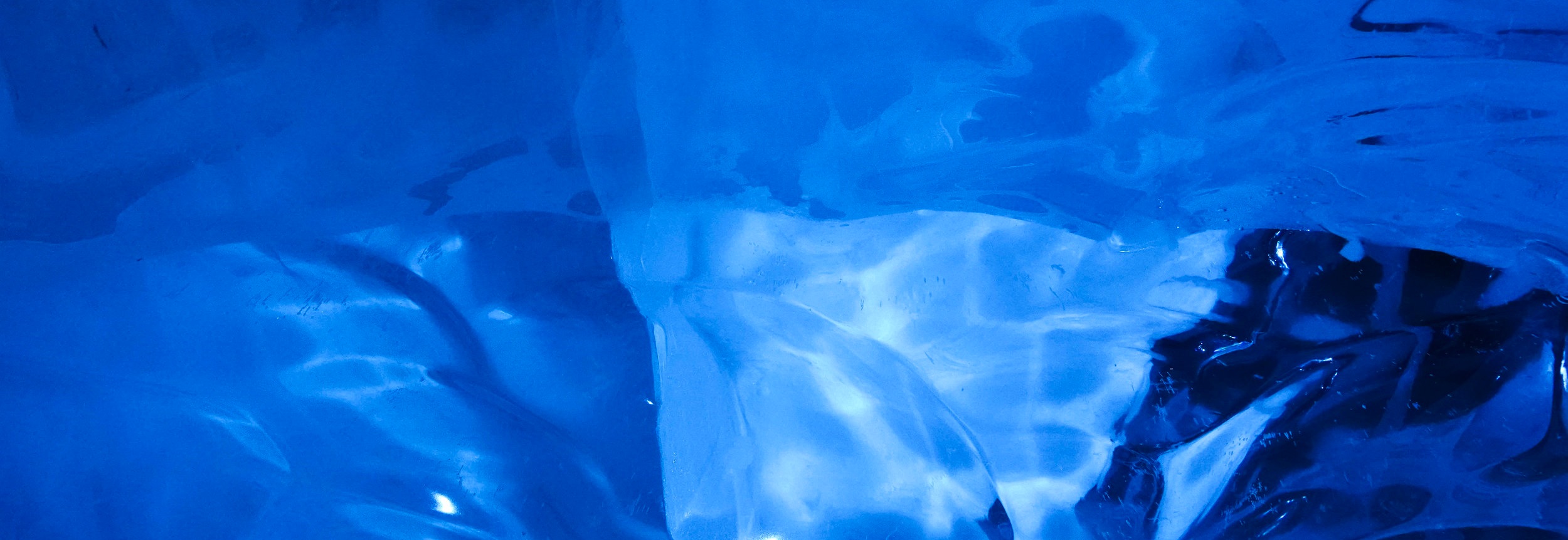
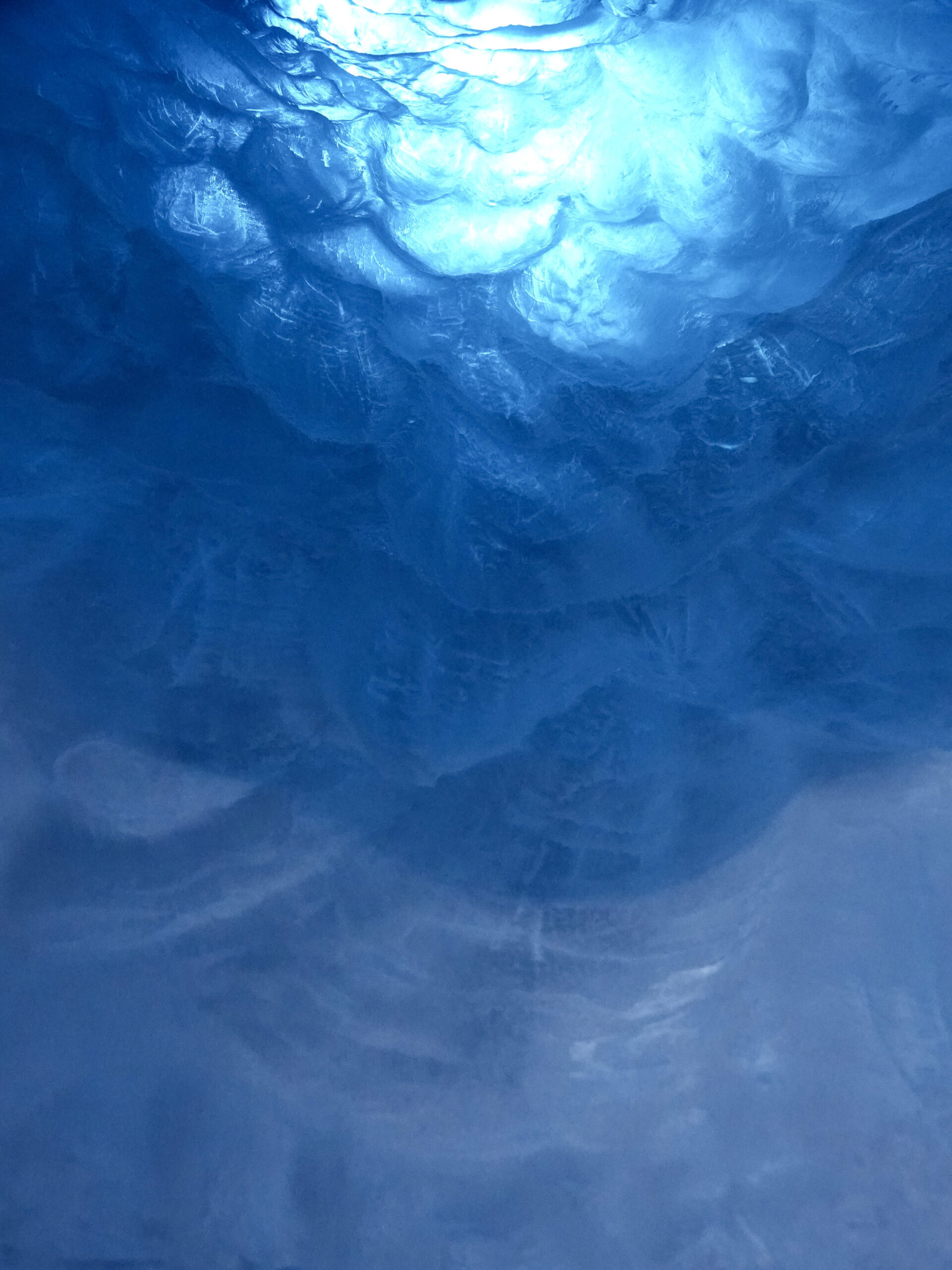
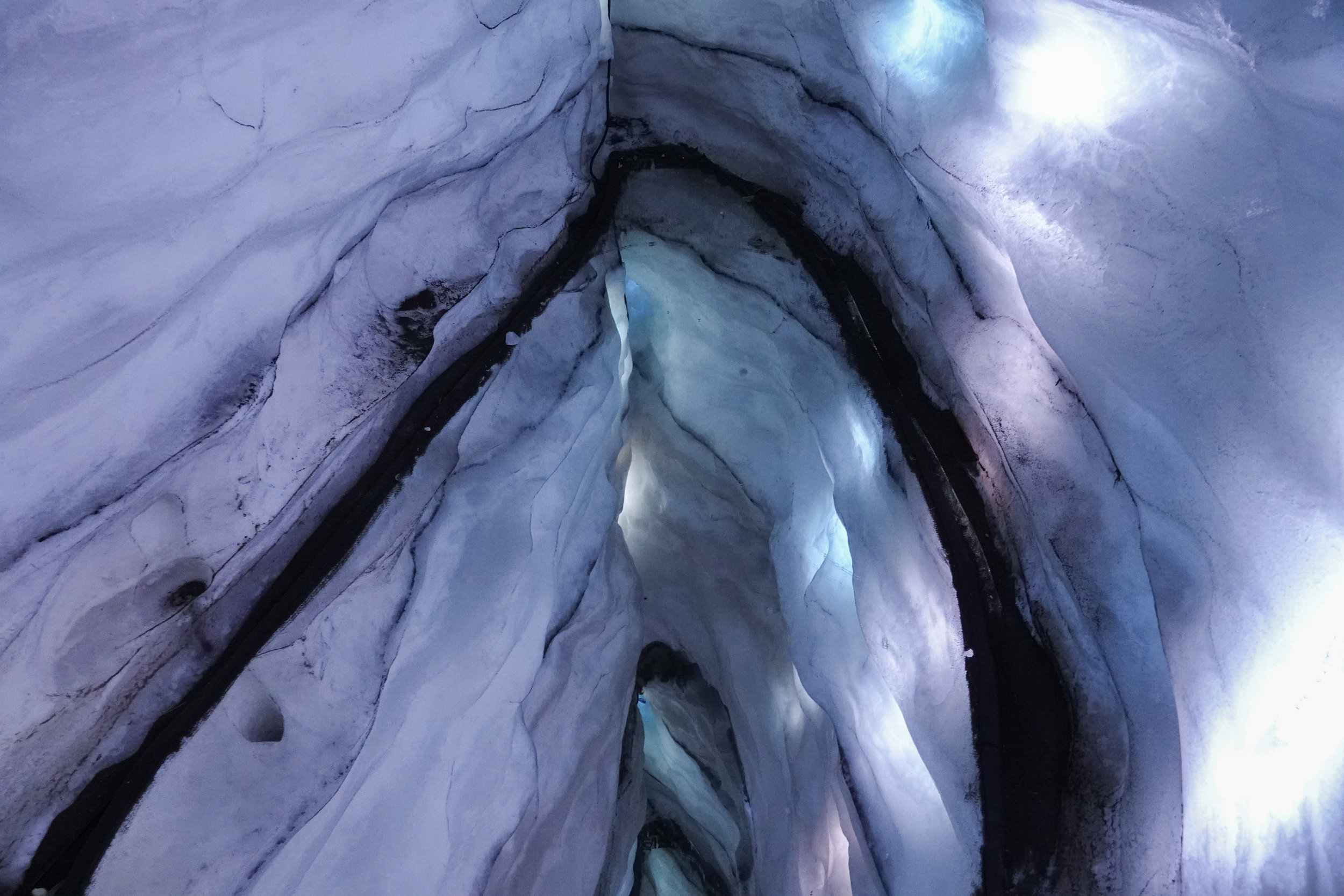
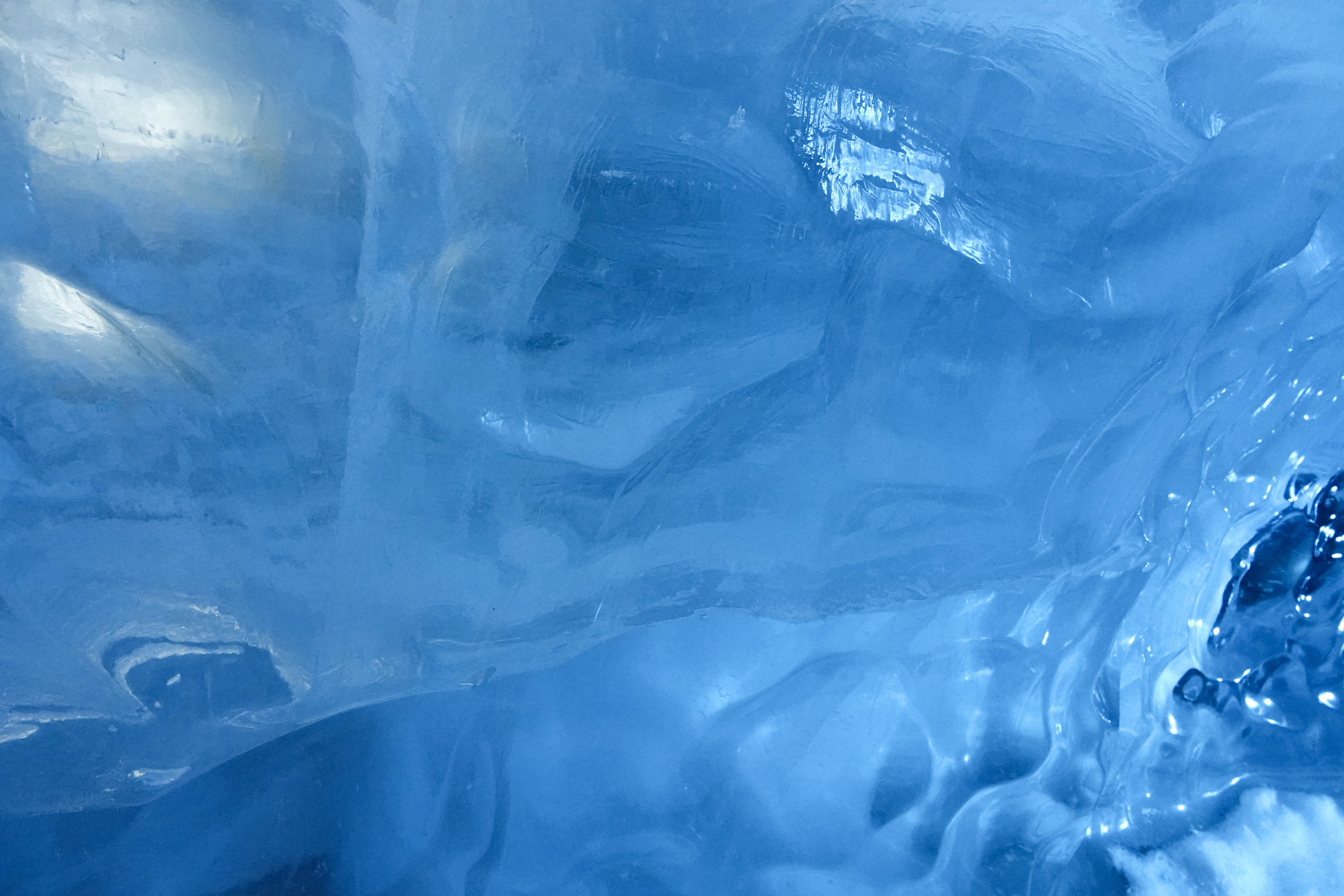
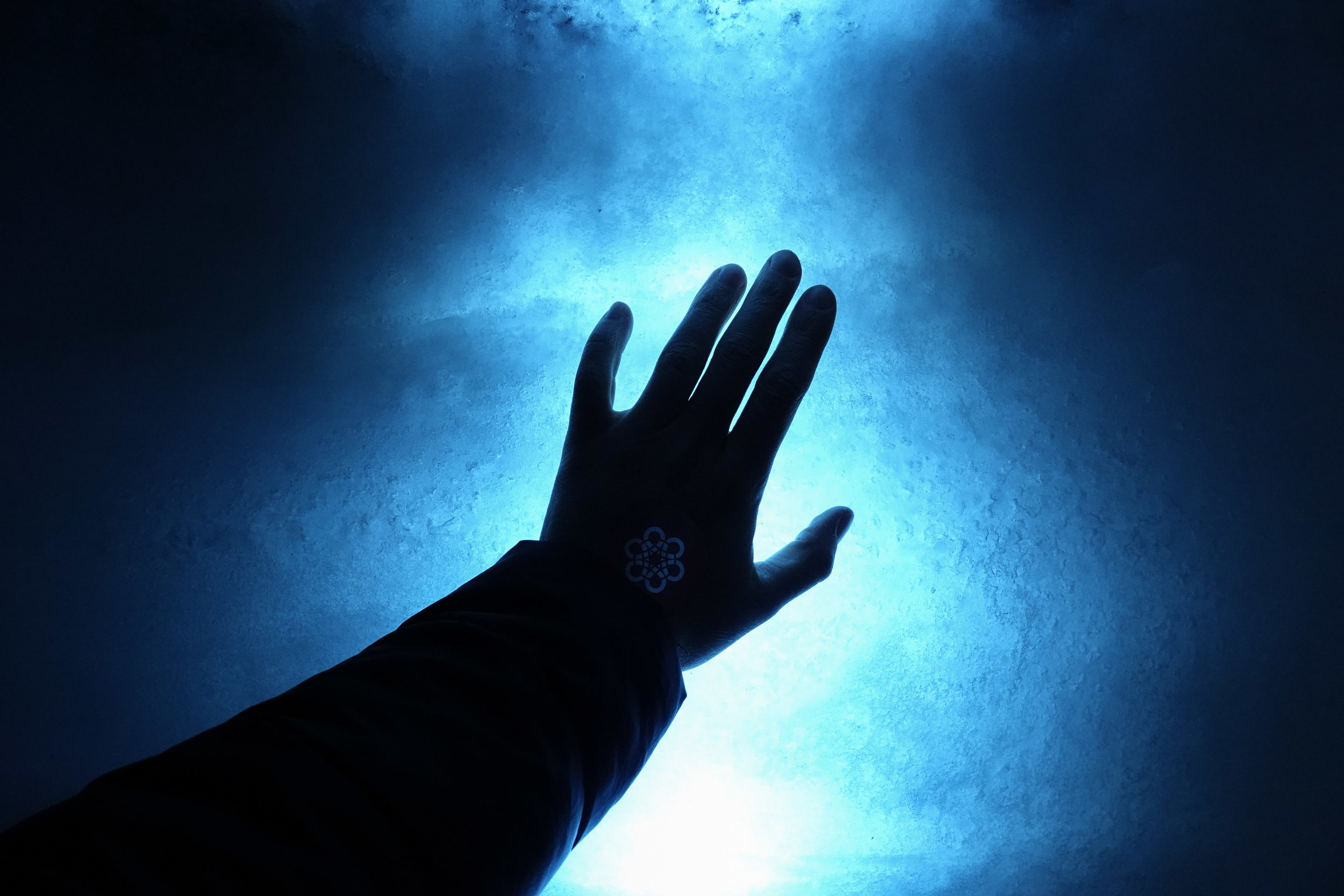
This is what the inside looks like – blue! The colour palette of ice can vary widely, from white and translucent to deep blue, violet-blue, and grey. Even black tones appear at times. The colour depends on light (and even the season) as well as the structure of the ice – if it reflects most of the light, we perceive it as white. If it absorbs the light, it reveals more blue hues.
The upper temperature limit at which ice still remains intact is probably around 10°C – that’s what the air temperature was here. Refreshing, to say the least!
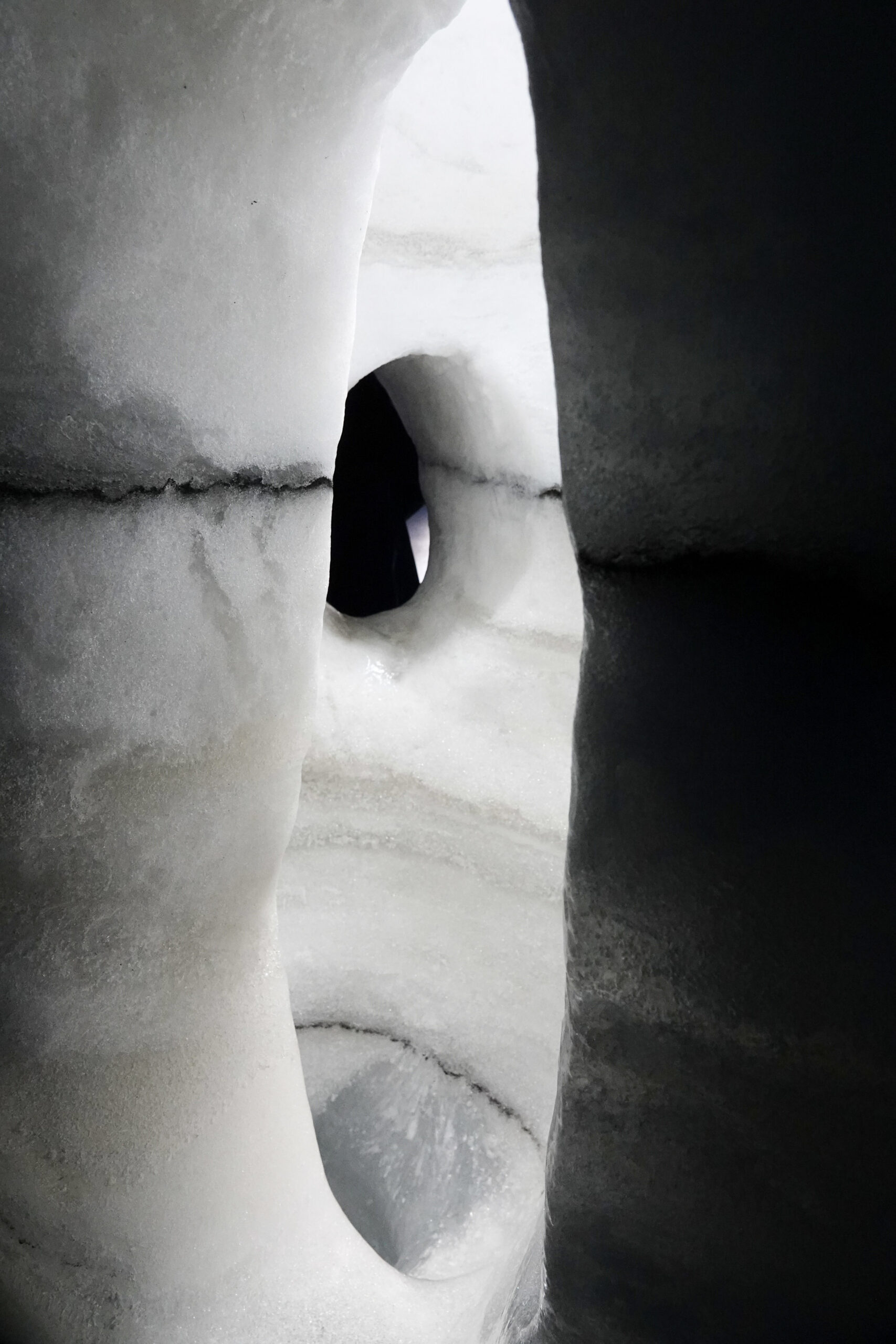
BLACK = layers of volcanic ash. Scientists have shown with Icelandic examples that narrow ash layers actually accelerate ice melt, while thicker layers can slow it down by acting as insulation – even more so than bare ice.
Deep holes like these often lead to the formation of glacier caves – there are loads of them beneath Icelandic glaciers. Back in Alaska, we were warned about standing near them – rocks from the glacier’s surface can fall through without warning.
When observing larger glacial masses, I often get the impression that they’ve "melted into shape" – this is because the upper layers of a glacier move faster than the lower ones, which drag more due to ground friction. The result? A stretched, tongue-like glacial formation.
Ice currently covers 11% of Iceland – roughly 10,000 km², which is about 50% of Slovenia’s size.
Iceland is full of glacial lagoons, where chunks of ice float freely. A perfect opportunity for climbing or striking a pose atop a “drifting” mini iceberg, right? I wouldn’t recommend it – this type of ice is highly prone to tipping over!
It was still crowded for the first five minutes.
This one’s a trick – it’s not an infinitely deep hole, but a mirror under a mirror on the ceiling. Clever design!
Humans may think they rule the world – glaciers included. But no – glaciers are untameable. The power of ice has, over millions of years, carved out valleys, fjords, and river beds, it shelters entire ecosystems, and even stores gases like methane. Whenever humans go up against glaciers, the outcome is rarely in their favour.
Glaciers are alive! Some Icelandic glaciers have been recorded moving several metres per day, over the course of weeks.
Due to "global warming", Iceland lost its first glacier in 2014. Just over a century earlier, it had spanned some 15 km². Two weeks ago, Icelanders bid it farewell with a formal “funeral ceremony.” Now, it is simply Mt. Ok.
Iceland is home to hundreds of fjords and bays – all shaped by the force of glaciers. Towering above them are hills with countless waterfalls cascading down steep cliffs. The most iconic region boasting countless fjords? Without doubt, the Westfjords.
Many of Iceland’s volcanoes are covered by ice caps. When these volcanoes erupt, they melt massive quantities of overlying ice – which can lead to catastrophic floods.
In 200 years, Iceland will be ice-free.
And that’s no joke. If temperatures keep rising, scientists warn this prediction could come true. Why let that happen—why deprive future generations of something as breathtaking as Iceland’s ice?
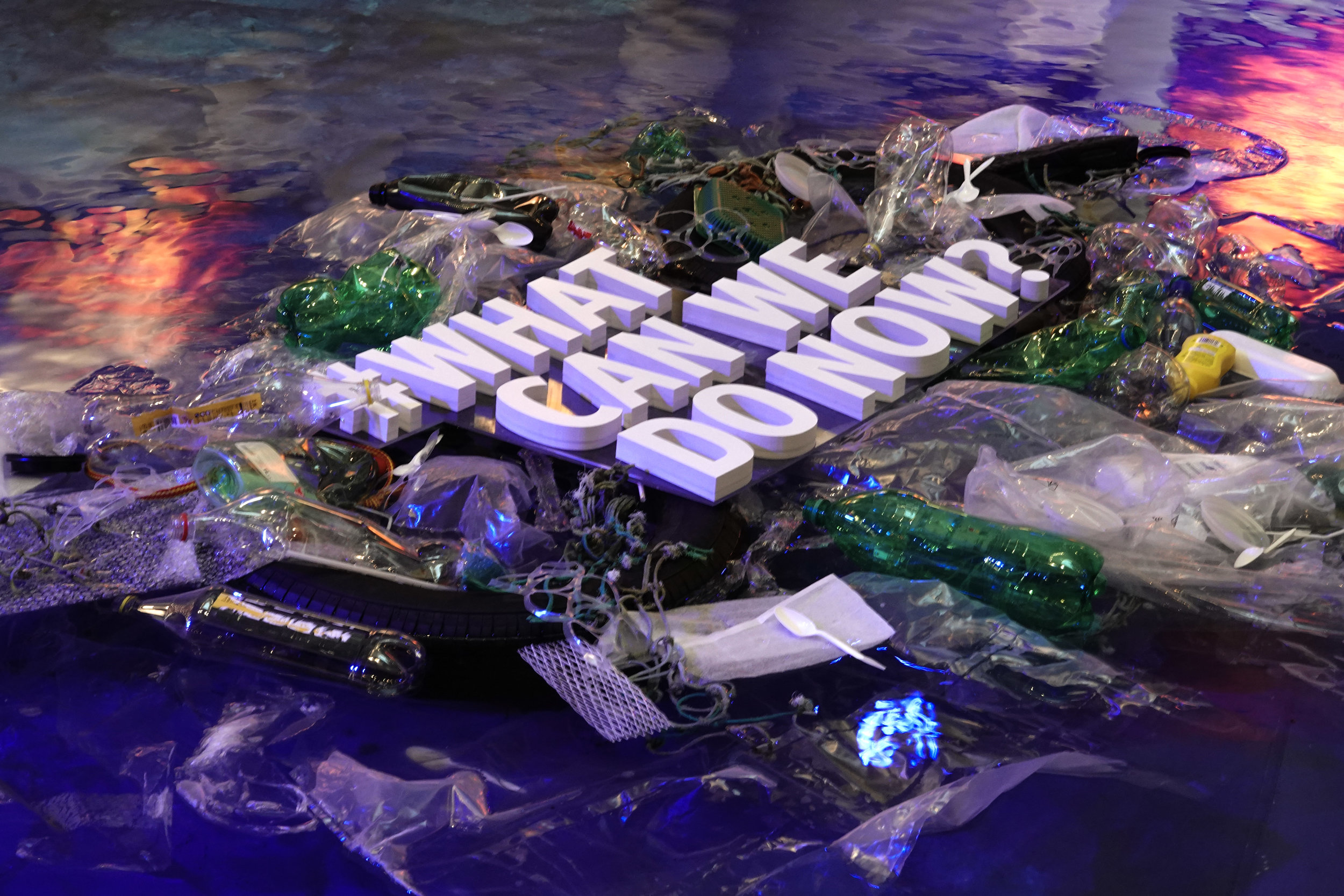
A floating “art piece” on Perlan’s ground floor. By the way—the exhibition on Iceland there is absolutely top-notch.
*If you’re up for it, watch (if you haven’t already) the documentary A PLASTIC OCEAN.
Think about what you really need—and what you don’t.
At the end of the day, it all starts with us. EVERYONE HAS THE POWER—to change the world for worse or for better. There’s no in-between.