—Well, unfortunately, only in my mind, but that’s more than enough to put together another post or two. 😉
As soon as I arrived in Iceland, I posted this:
“I’m in Iceland, visitors welcome until the end of September.”
The only person who took advantage of this one-time offer was my friend Maja. She came for a week-long getaway, just before the end of my stay in Iceland.
We had a great time! Well, at least I did…
Maja’s visit pushed me to make the most of every free day to explore Iceland.
Otherwise, I would have spent the time identifying dolphins—there was still so much work to do!
We booked two full-day trips and, besides activities in Reykjavík, we also had another short trip in mind.
The options were:
Hiking up Esja (the local “Šmarna Gora”)
Visiting the colorful rock formations of Rauðhólar = Red Hills
Something about the second option—probably the promise of more interesting photos—drew us in, and so, one Monday morning, we set off.
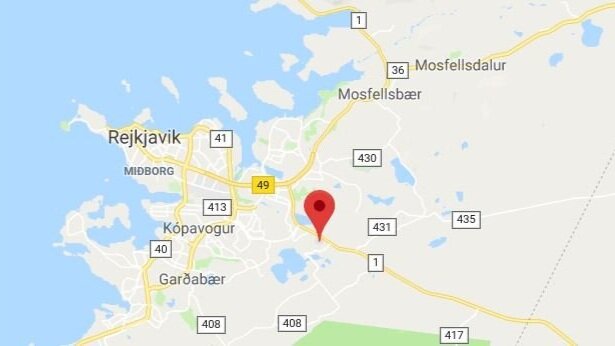
Rauðhólar is just under 15 km from my apartment in Reykjavík and is easily accessible by city bus.
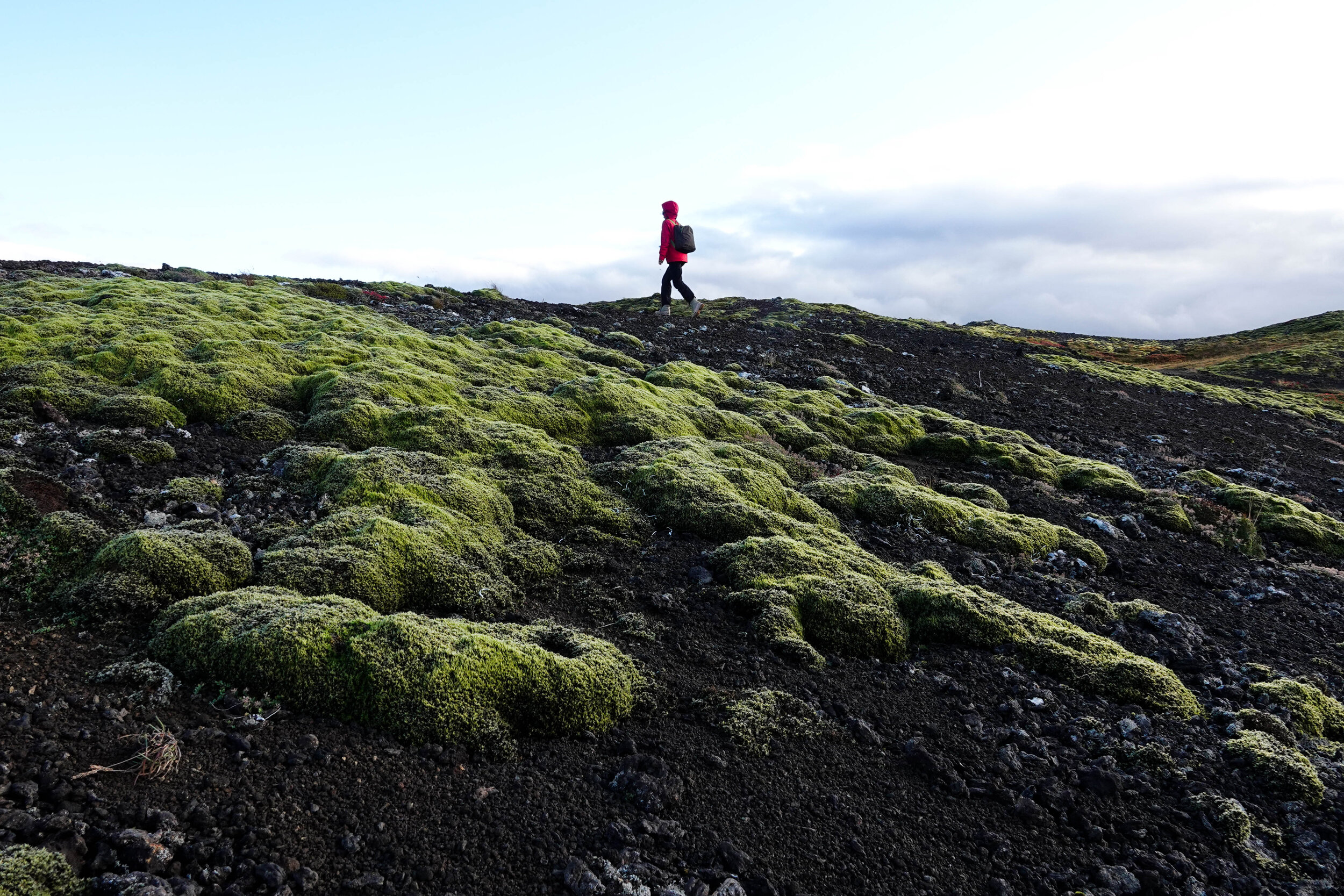
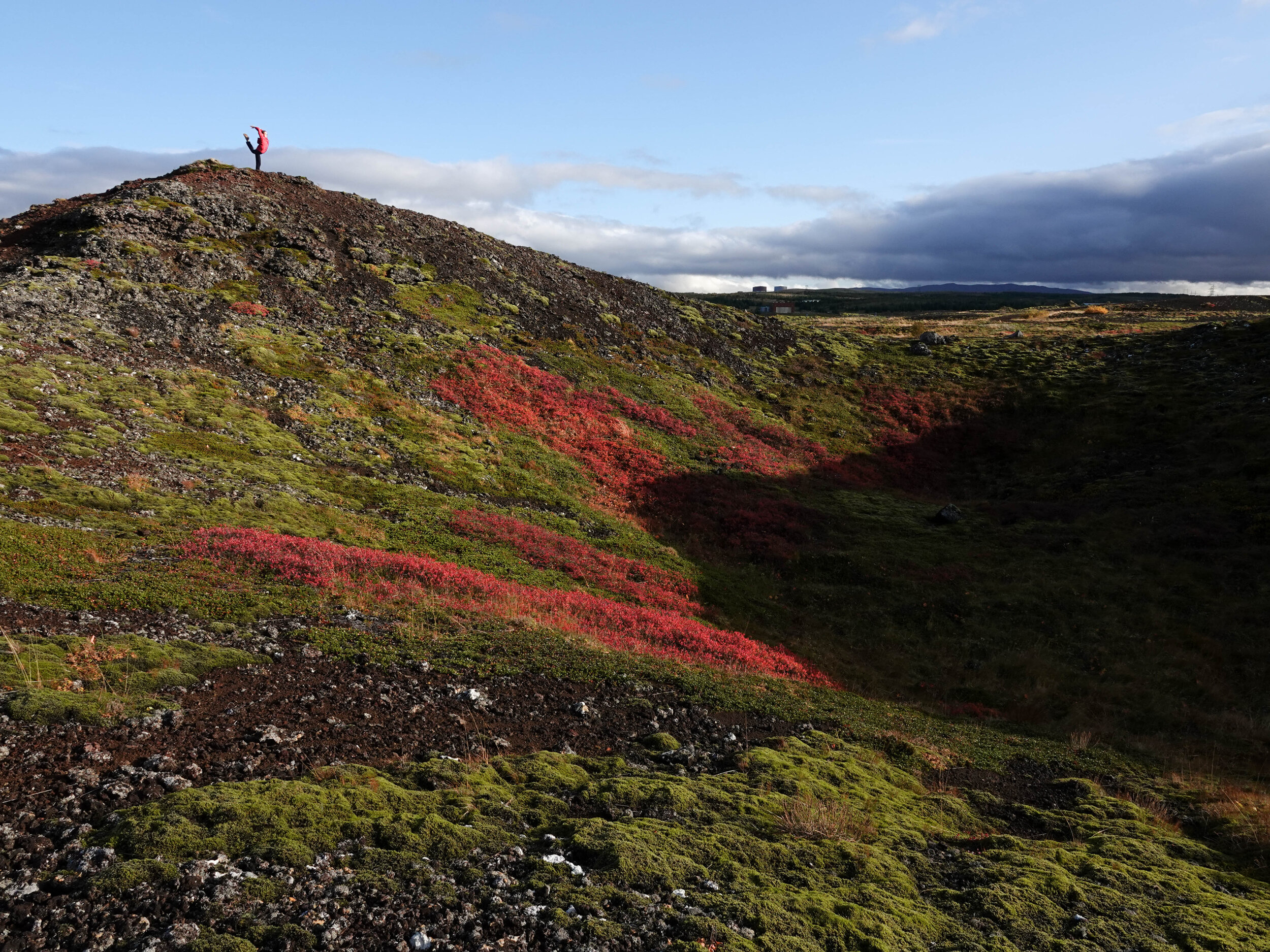
After just a few minutes of walking from the edge of the residential area where the bus stop was, we found ourselves in the middle of this landscape. The sun was slowly breaking through the clouds, making everything even more magnificent. It was breathtaking.
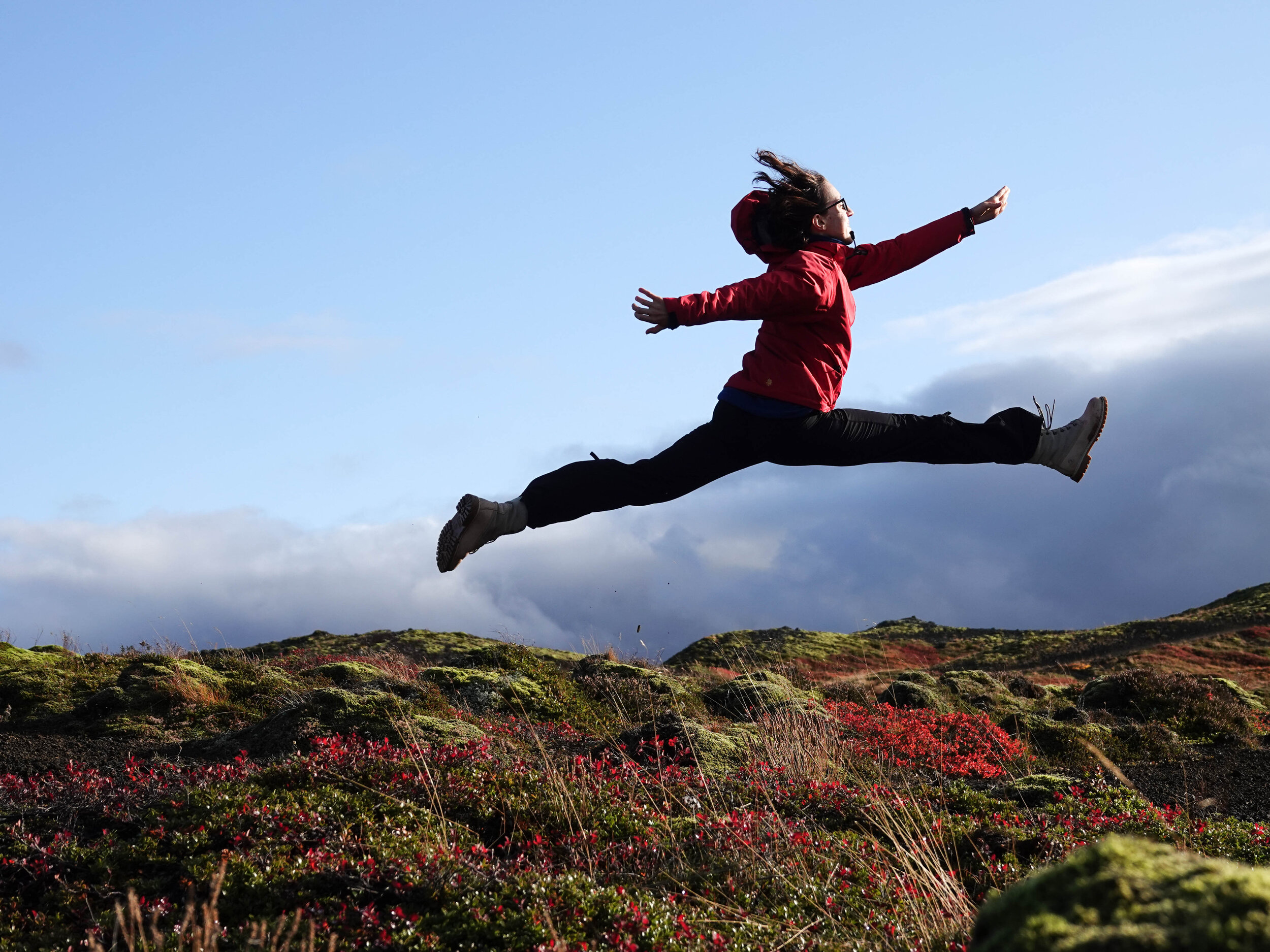
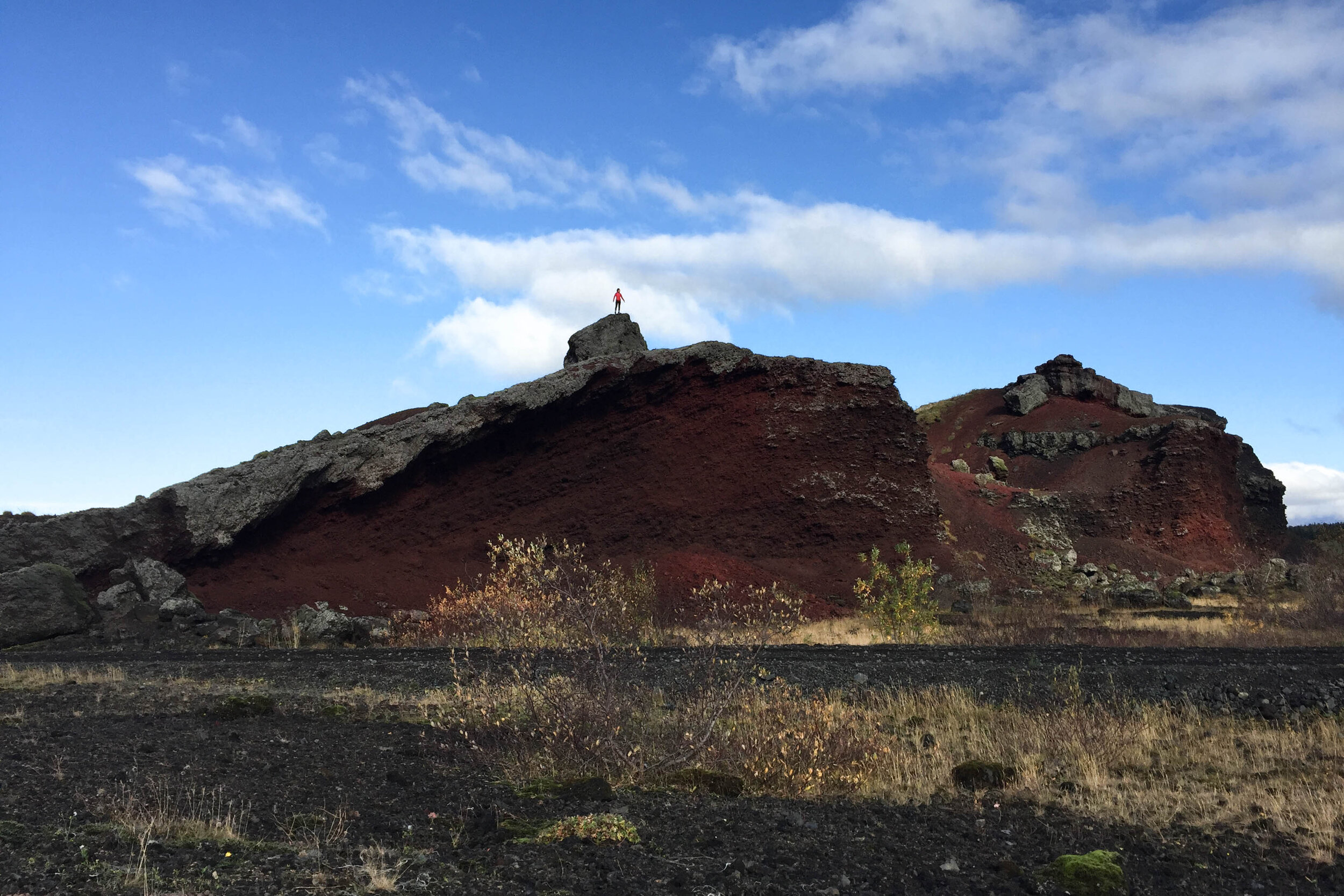
Such beautiful moments had to be captured on camera. Good thing I managed to convince Maja to perform some rhythmic gymnastics jumps in hiking boots.
But what exactly is this place, and how was it formed?
This area (130 ha) is home to around 80 pseudocraters, formed about 5,000 years ago.
Extremely hot molten lava from the nearby Leitir volcano flowed over ponds and small lakes in this area, causing the water to boil. The steam pressure from this reaction led to powerful explosions, creating the pseudocraters we can still admire today.
*For a more detailed explanation, ask Google—or a geologist. 😉
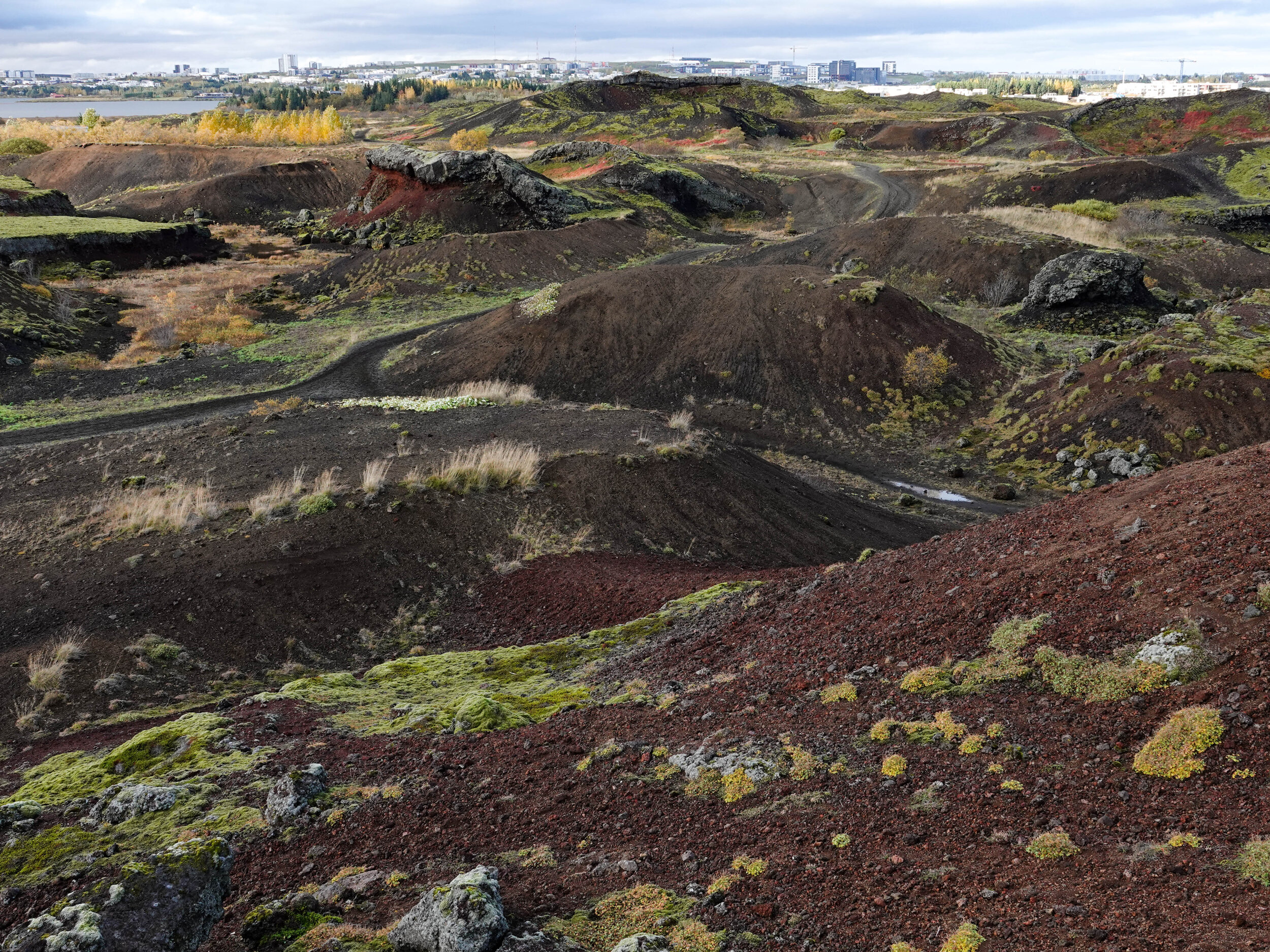
The view from the top of one of these craters:
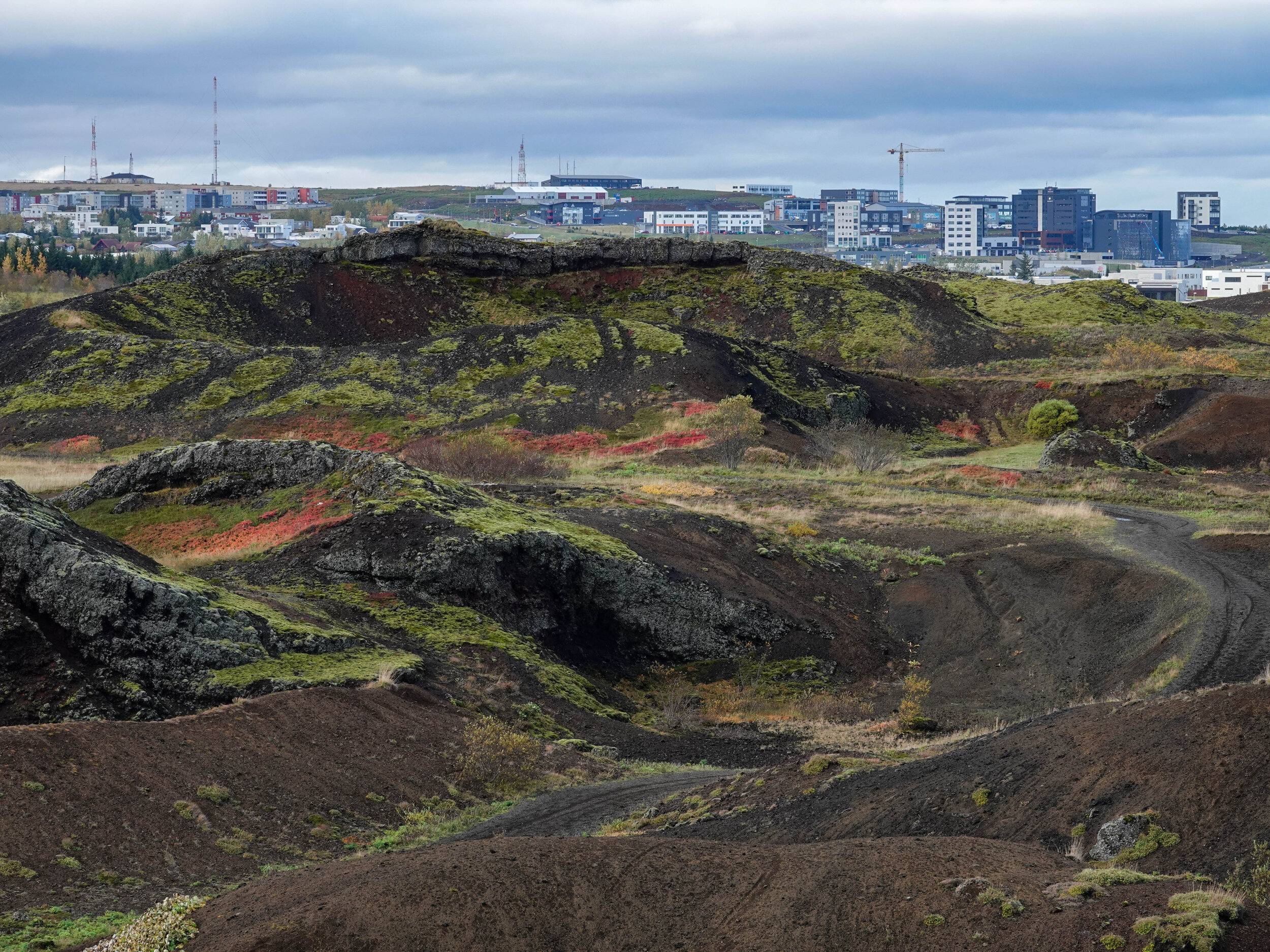
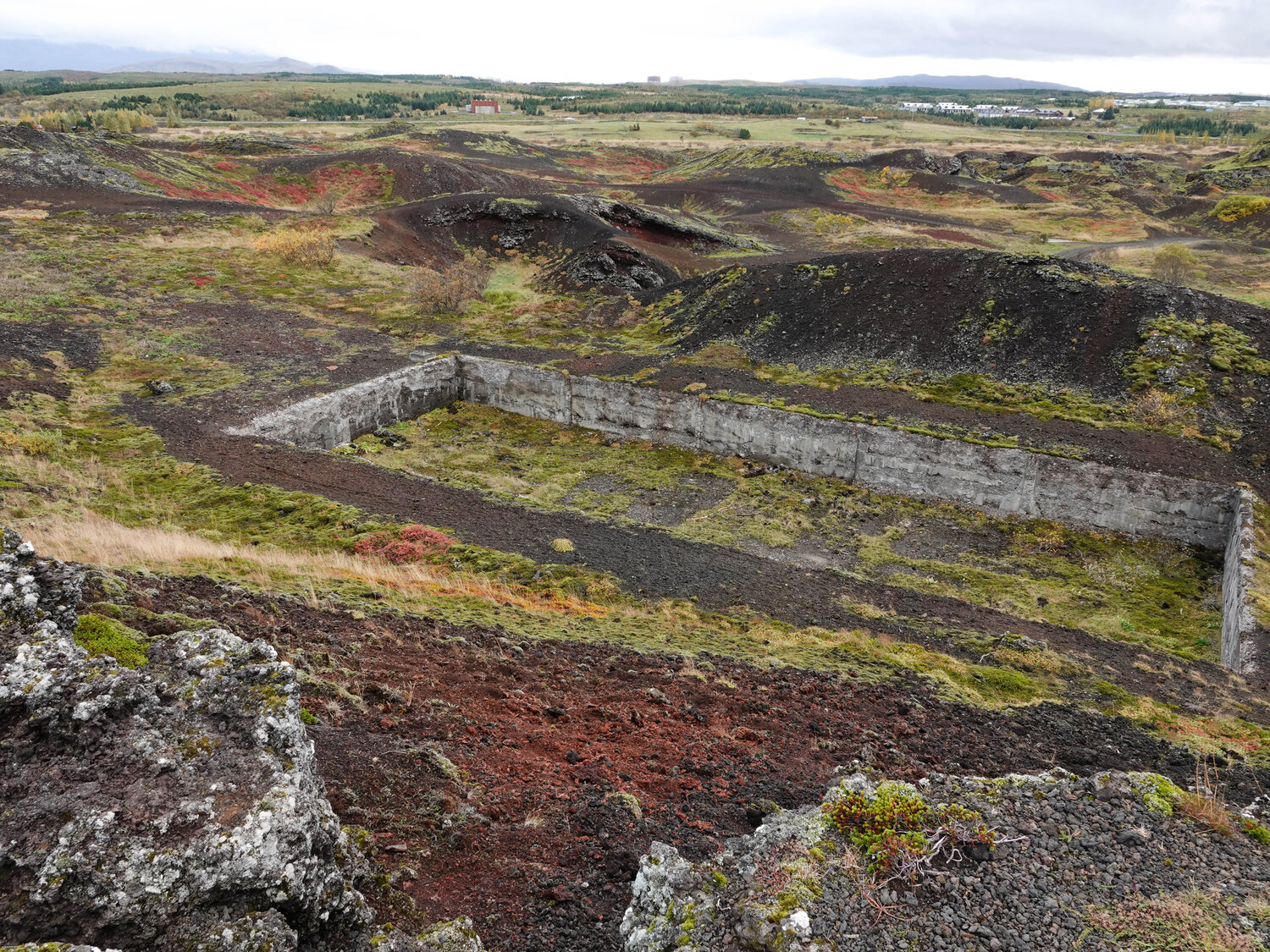
A completely surreal (though not unusual for Iceland) combination: a wild field of pseudocraters in shades of red, purple, brown, and black, covered with contrasting vegetation, with the suburbs of Reykjavík and cranes in the background.
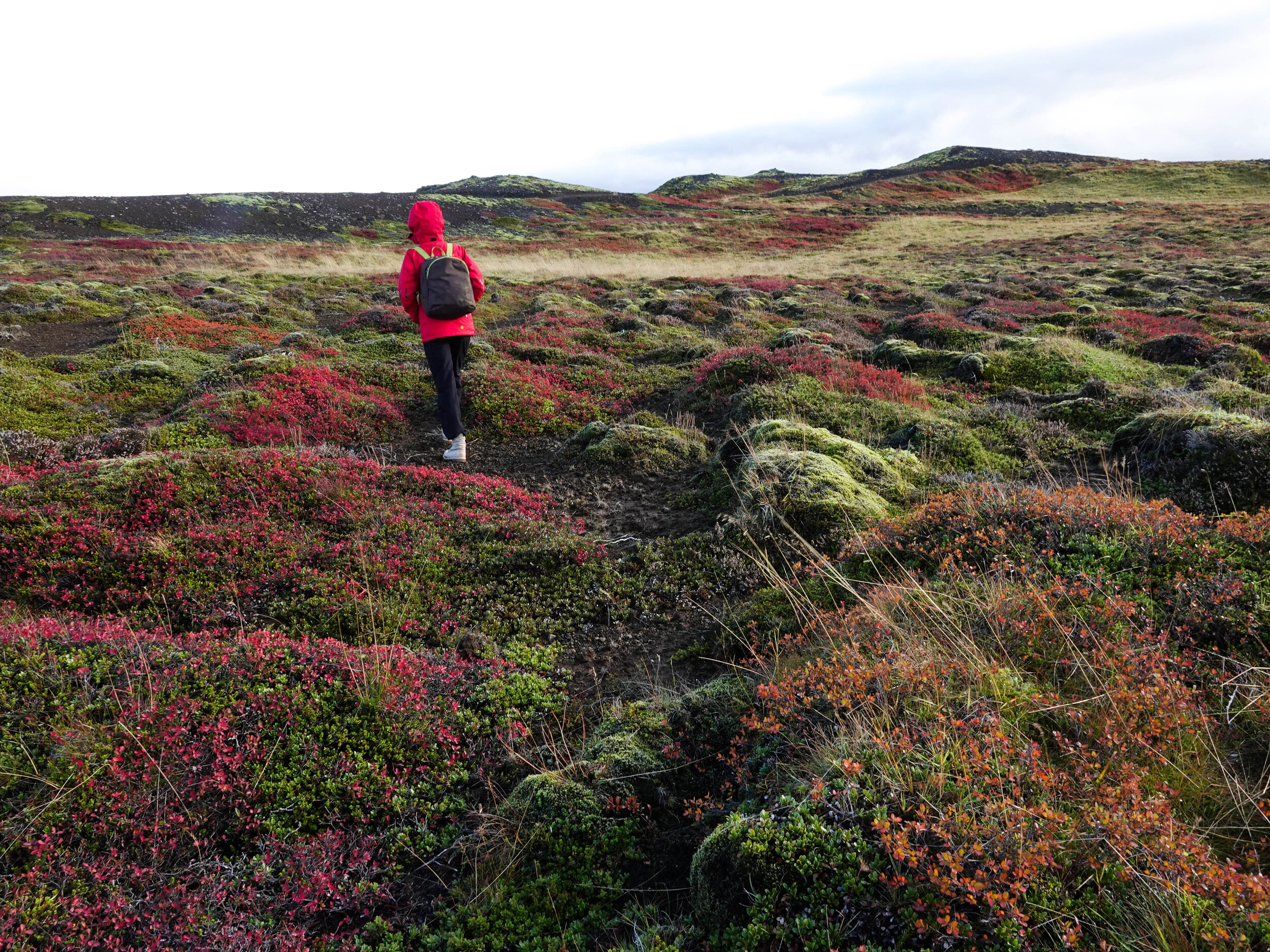
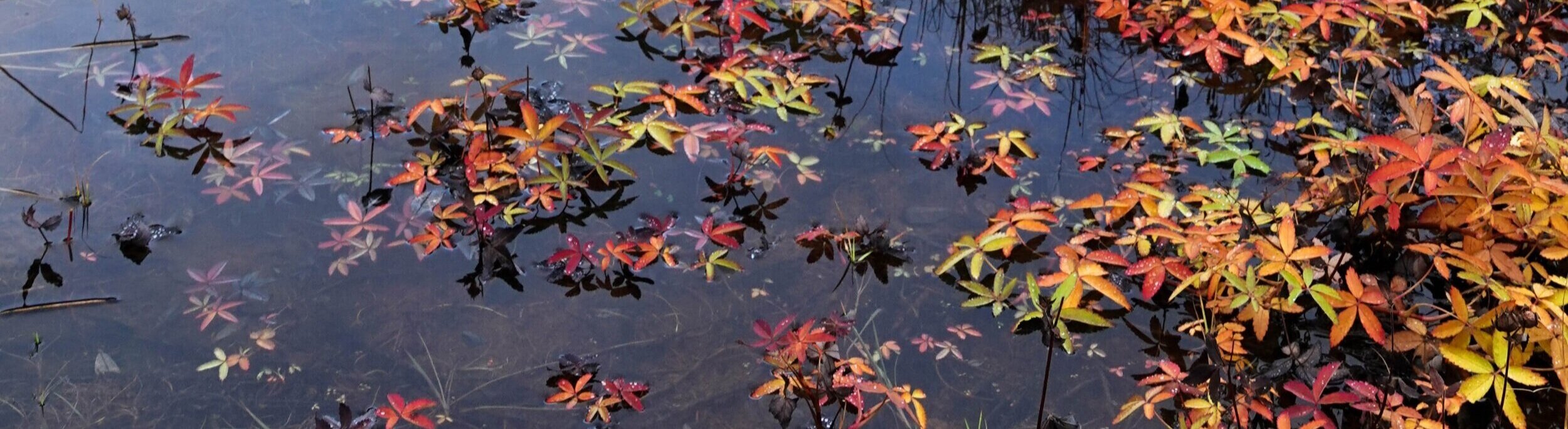
And it wasn’t just green vegetation—there were vibrant orange and red autumn colours from low shrubs, blending with the rare Icelandic sunshine to create an unbelievably stunning colour palette.
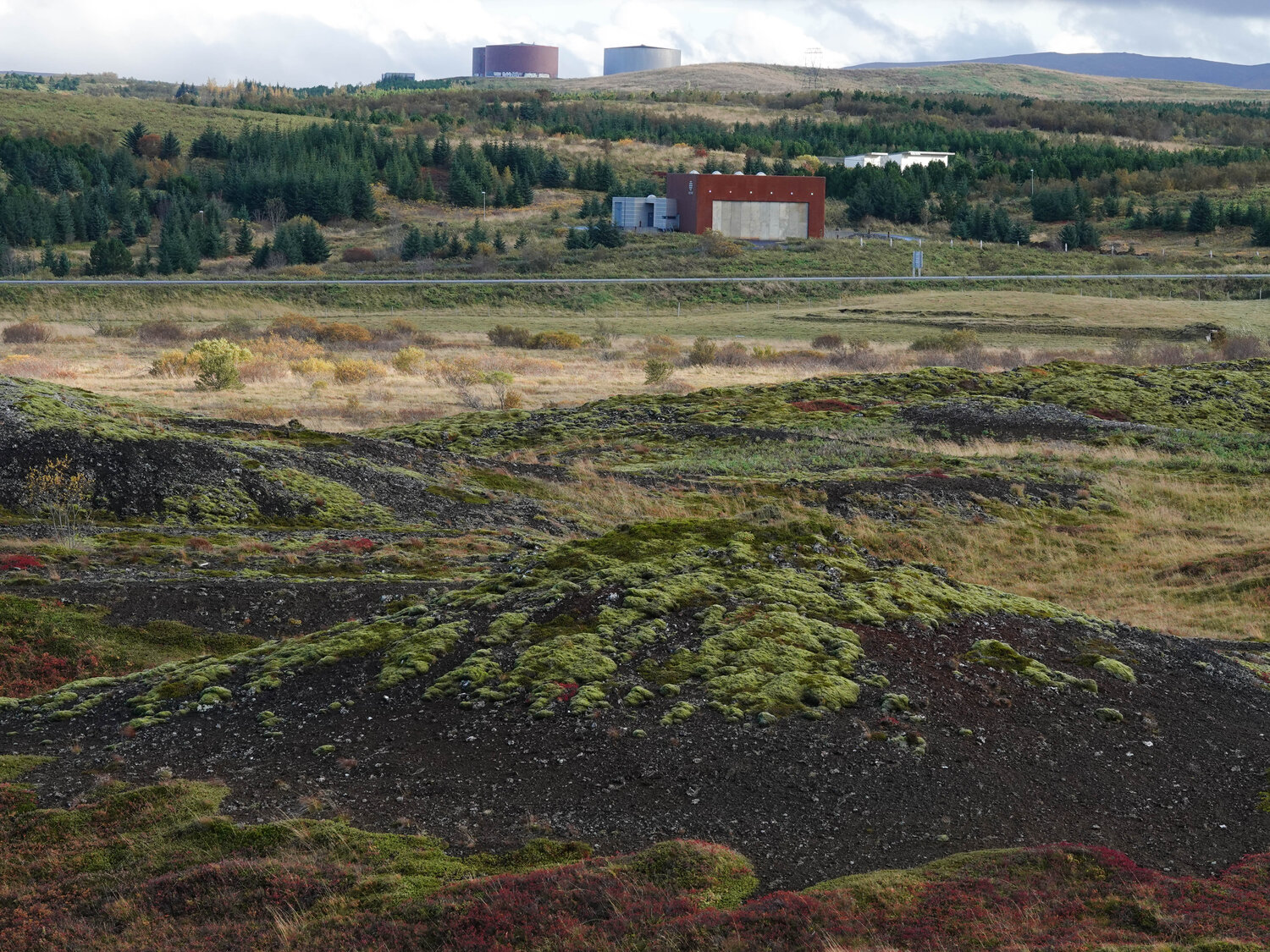
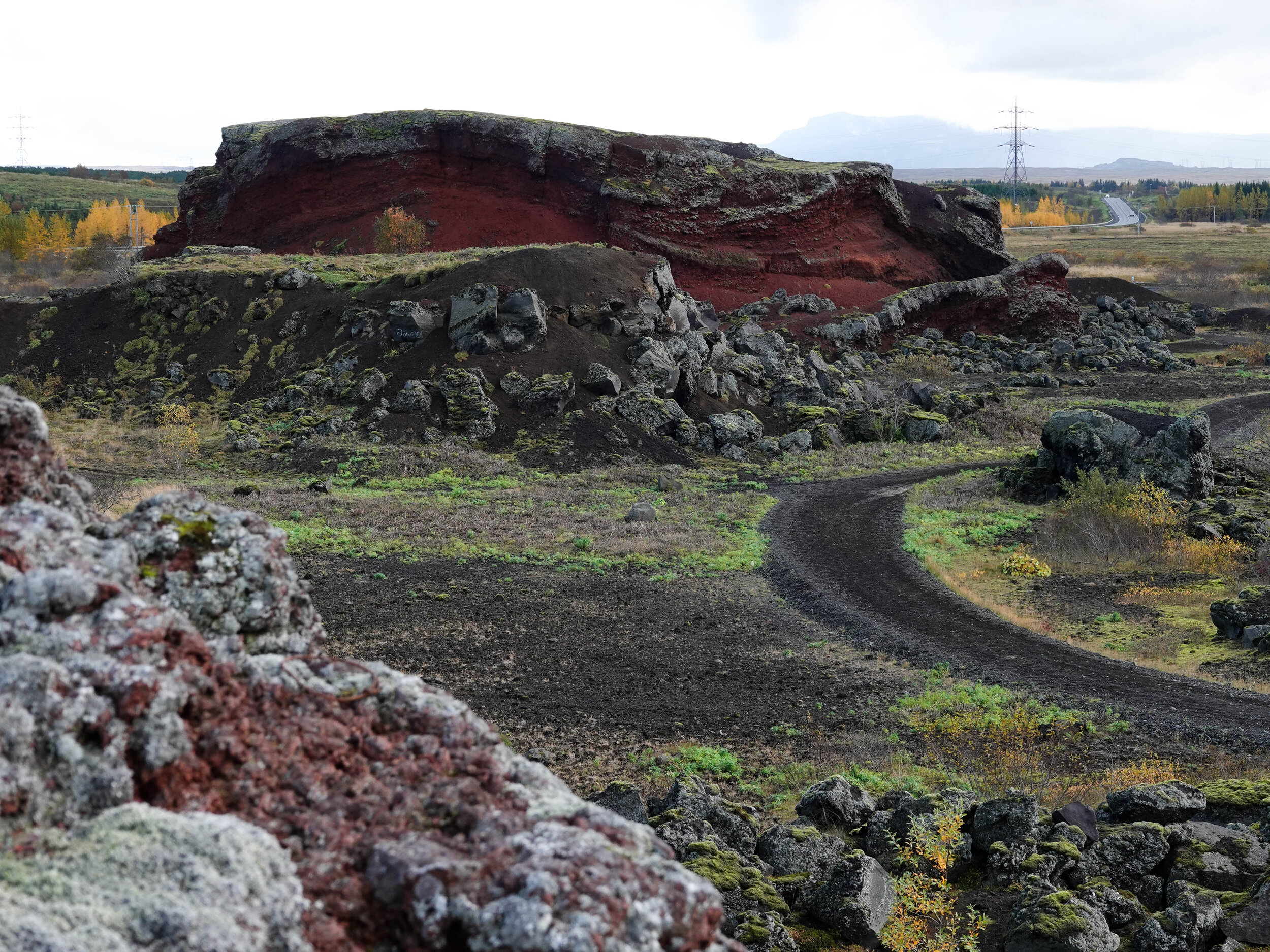
At the top of the photo, you can see a road. That’s Road 1—the 1,300 km-long highway that circles all of Iceland and serves as the starting point for most trips from Reykjavík.
For Icelandic standards, the number of trees in this photo is impressive. I can’t say for sure, but it’s likely that Icelanders would call this cluster of trees a “forest”—and they probably even have a special name for it.
We wondered about that rectangular stone structure in the ground. We didn’t find an answer, but we both agreed that a geothermally heated pool would fit perfectly here. *If you have any idea what it might be, drop a comment below. 😉
Before this area was declared a nature reserve, materials were extracted from here for construction—including for Reykjavík’s domestic airport.
NO FILTER! – Anywhere.
The colours are truly incredible, and I still don’t understand how Maja and I had this warm & sunny morning all to ourselves.
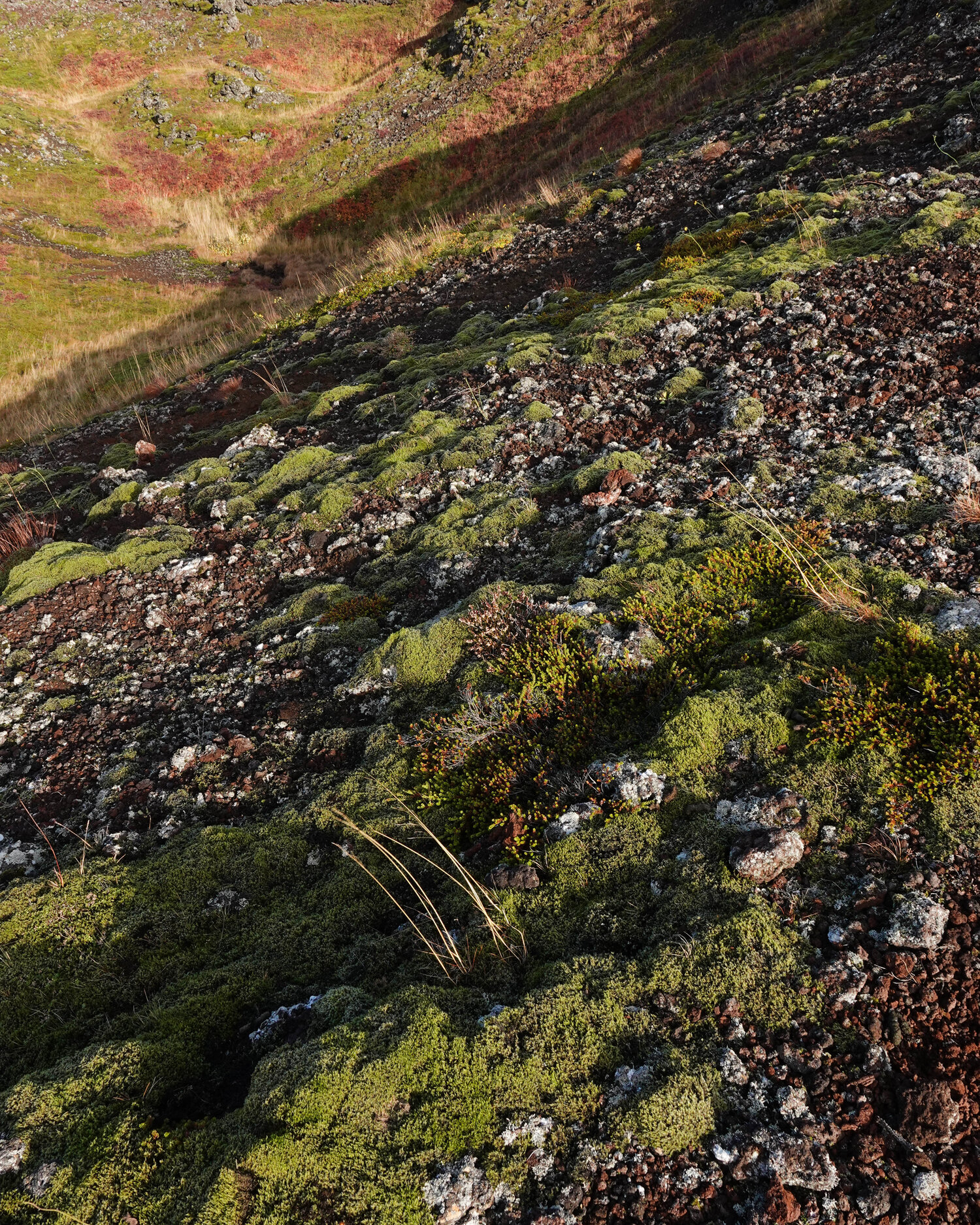
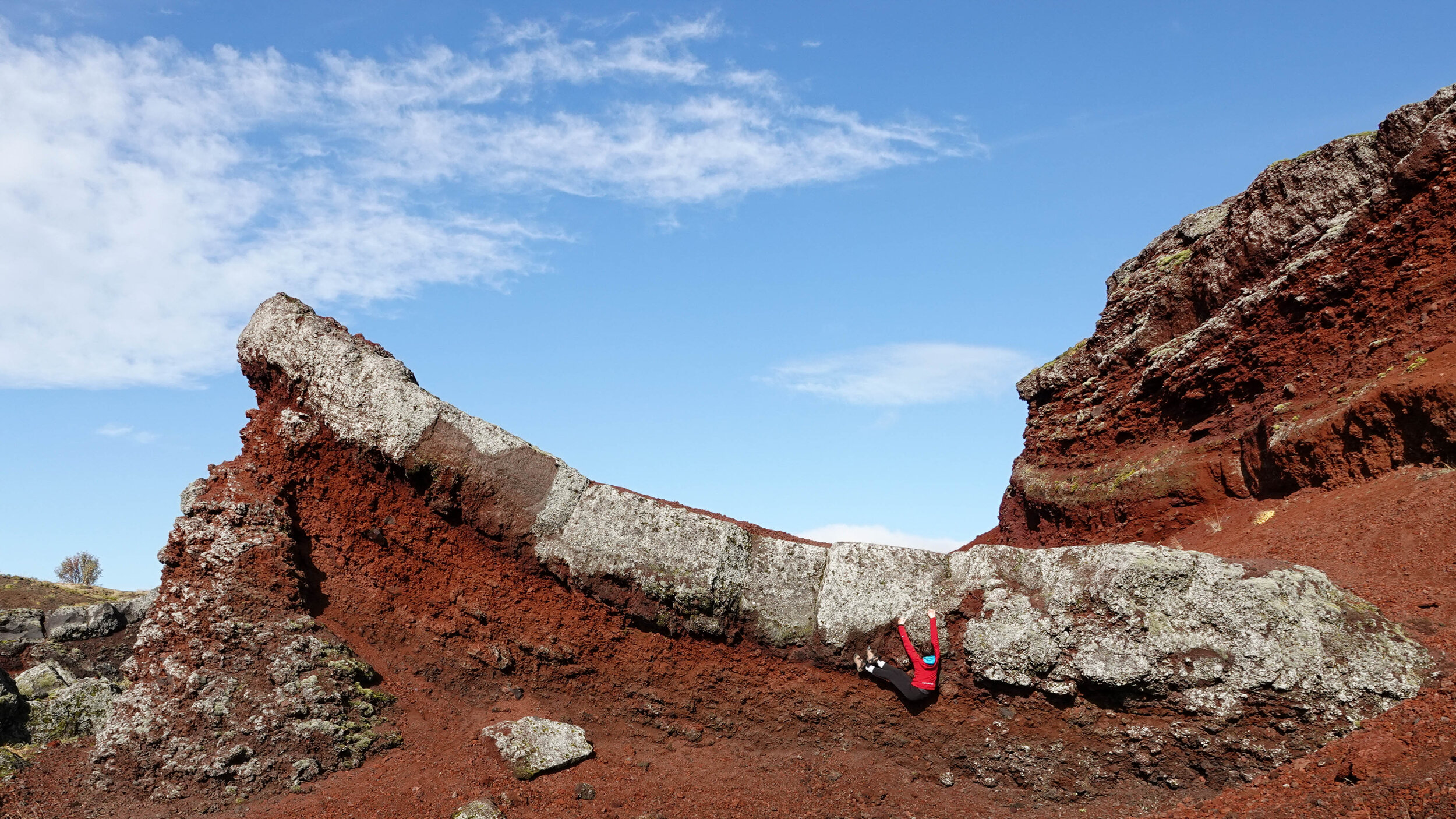
Are the stones really just one colour? Nope! There are so many different shades here!
They were a feast for my eyes—so light, like sugar candies melting on the tongue.
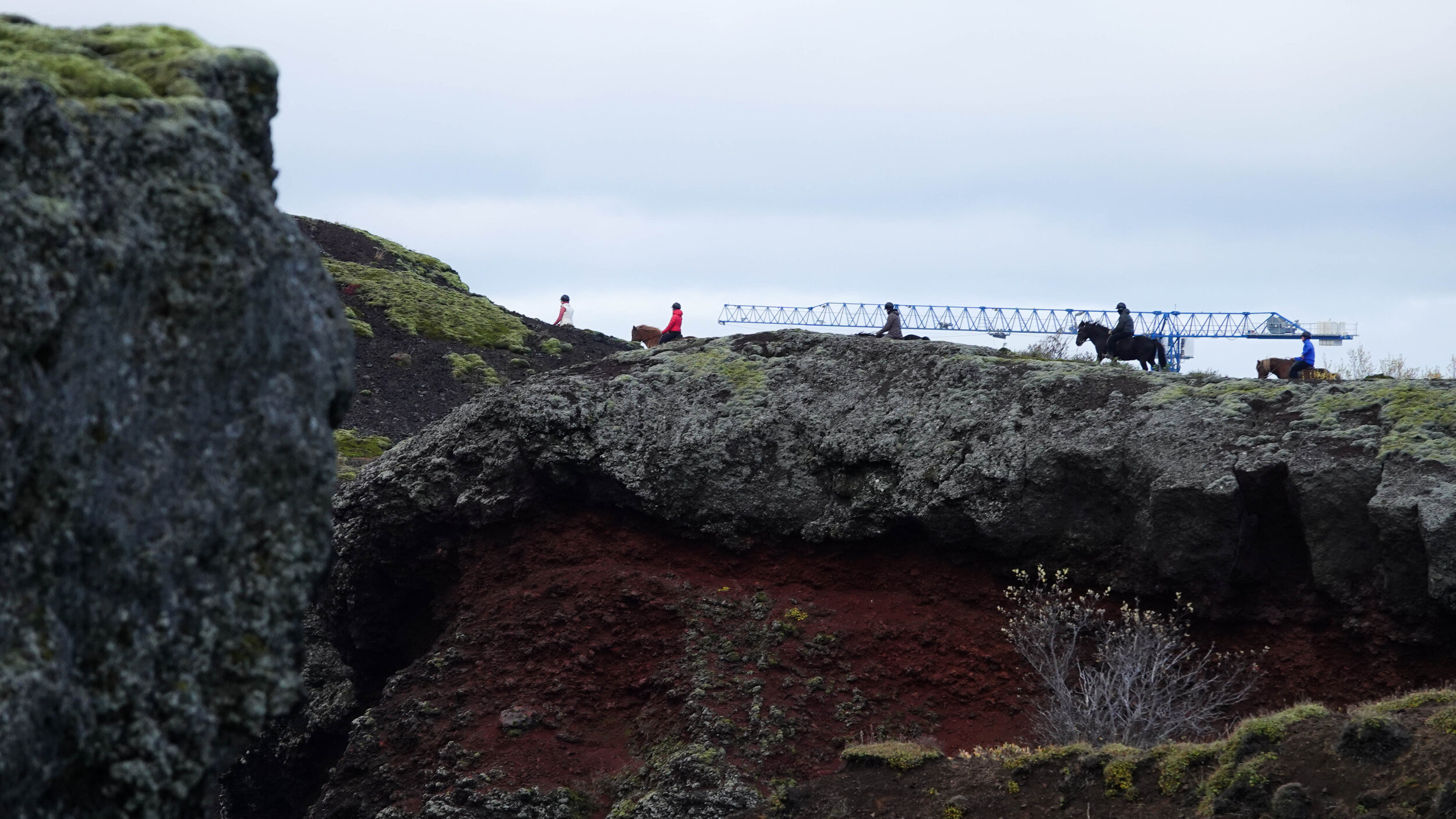
If I say that no human foot touched the ground while we were there, I’d be right. The only visitors were these riders—horseback riding is a very popular (mainly tourist) activity here. Icelanders have their own special breed—smaller, sturdier Icelandic horses.
Red = volcanic rock fragments rich in iron, which oxidise when exposed to the surface.
They say Rauðhólar is best visited in sunny weather. We were lucky to experience that firsthand.
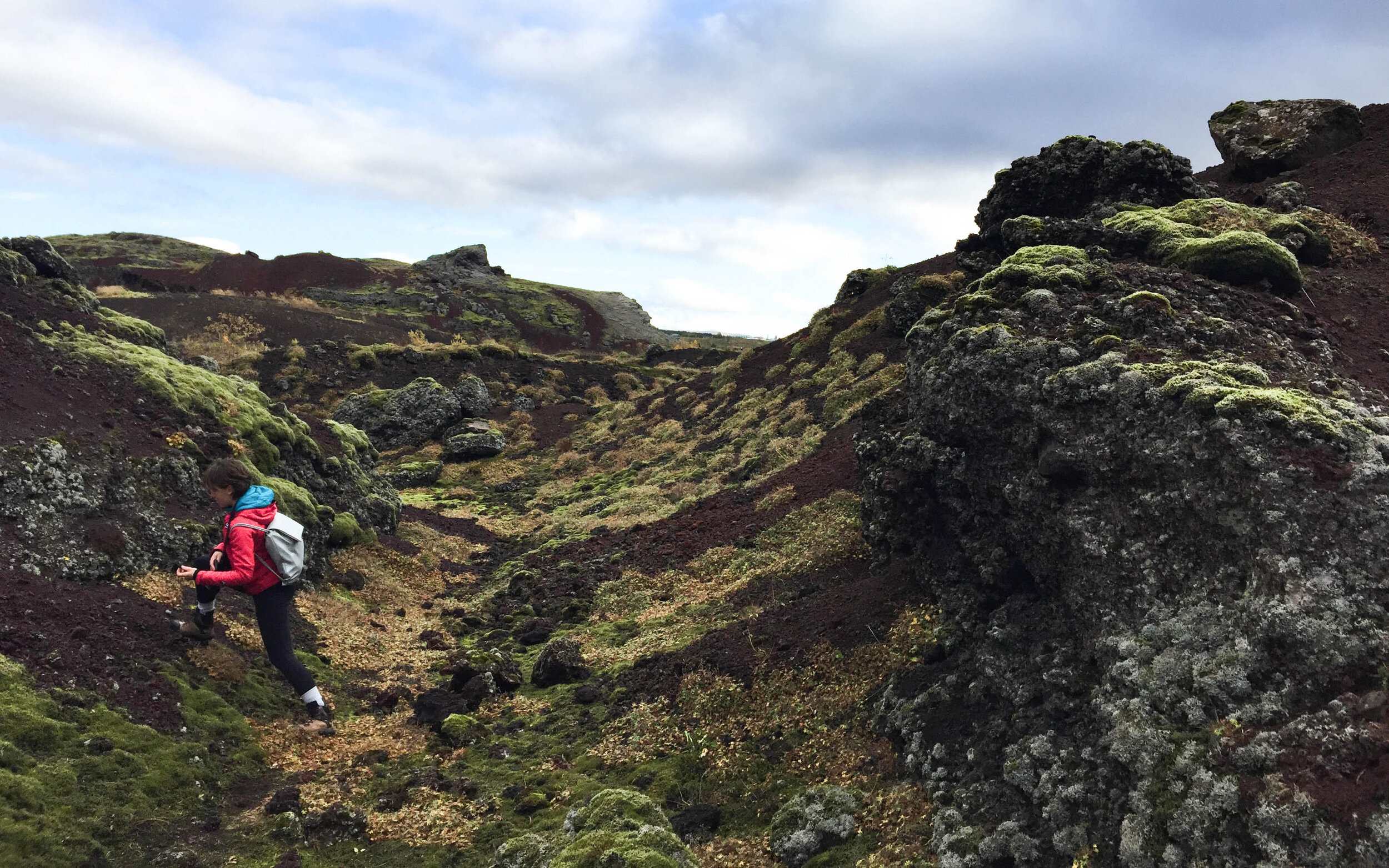
A trail like this winds through the entire area—probably made for horses. But exploring is way more fun if you do it the way we did—left, right, uphill, downhill, and back up again… Even though the area is small, you can easily spend three hours here seeing it all.
Maja calls this place Mars. And she’s not far off—most known pseudocraters exist on Iceland and Mars.
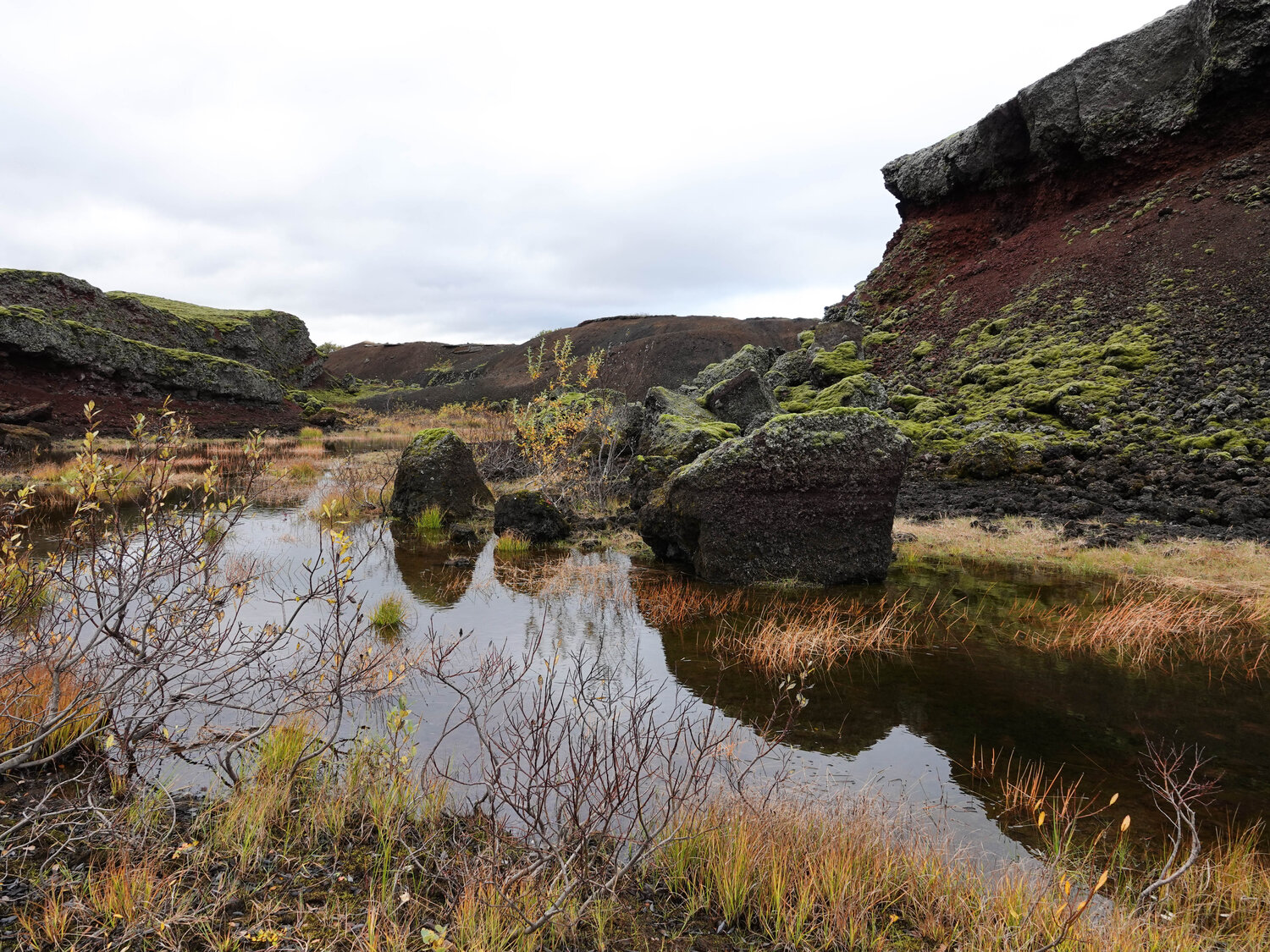
The little lake in the back on the left was initially part of our swimming plans. But after several hours of wandering around these colourful hills, the idea of taking a dip in algae-filled water, surrounded by people, instantly lost its appeal.
Reykjavík does have a climbing wall, and I even brought climbing gear to Iceland, but I never found the time to use it. At least I got to remember how good it feels to hold onto rock and hang from it!
Maja and I had two more days together—how we spent them, well… coming soon.