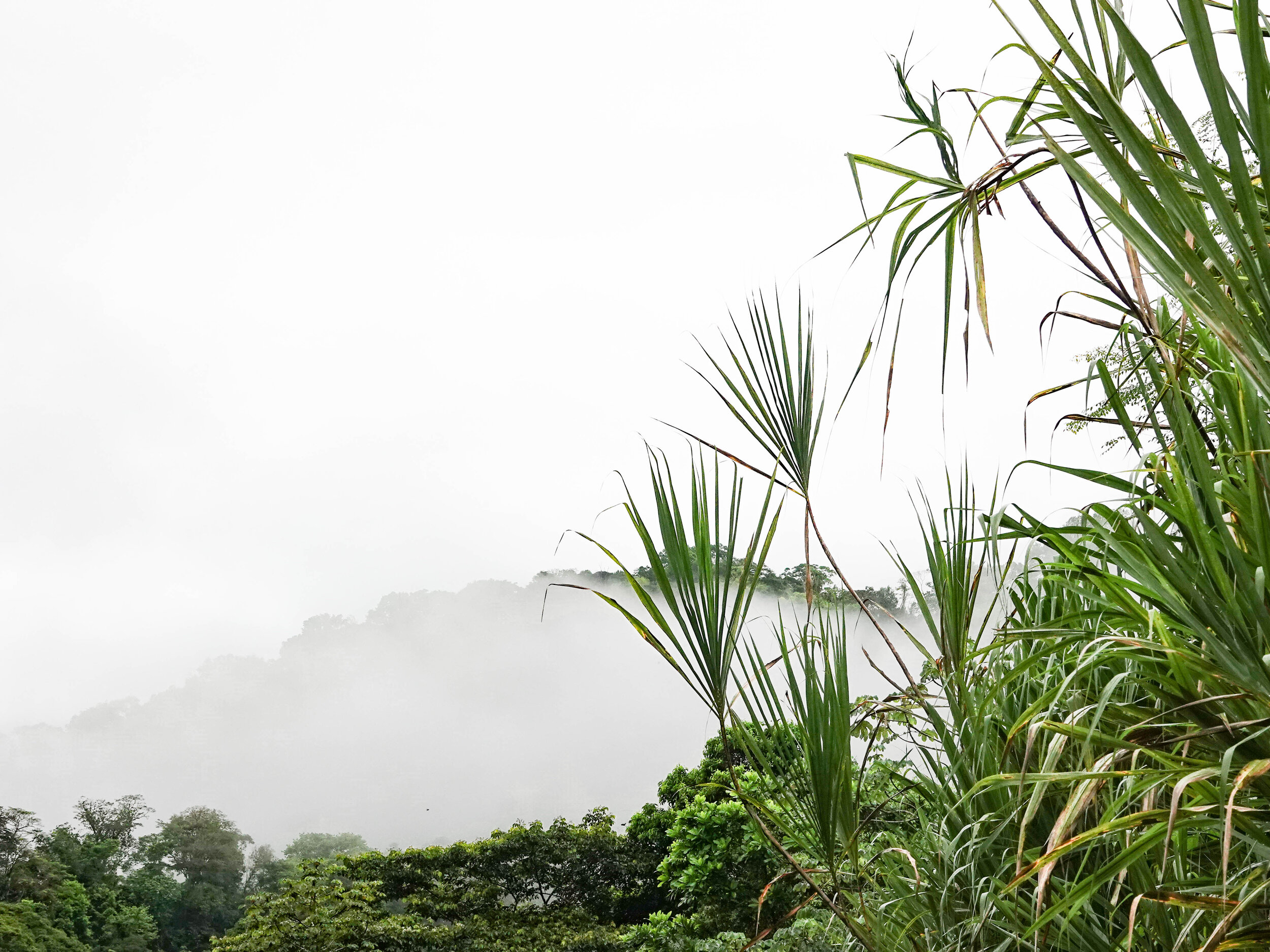
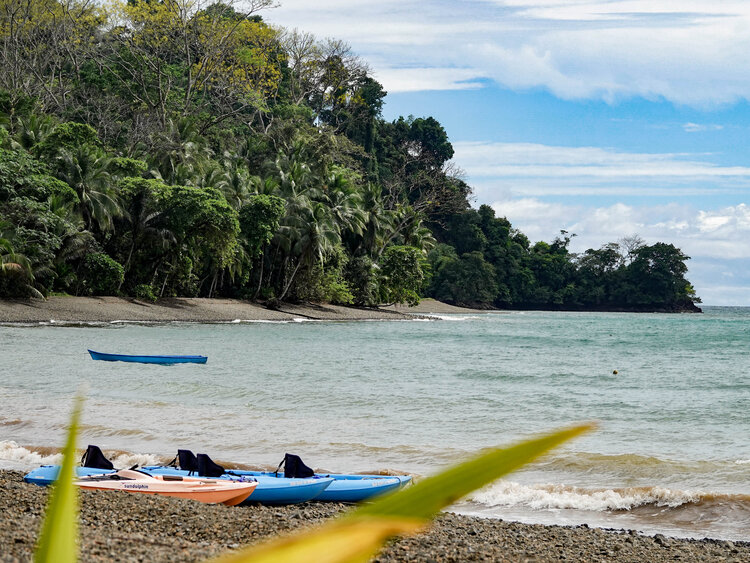
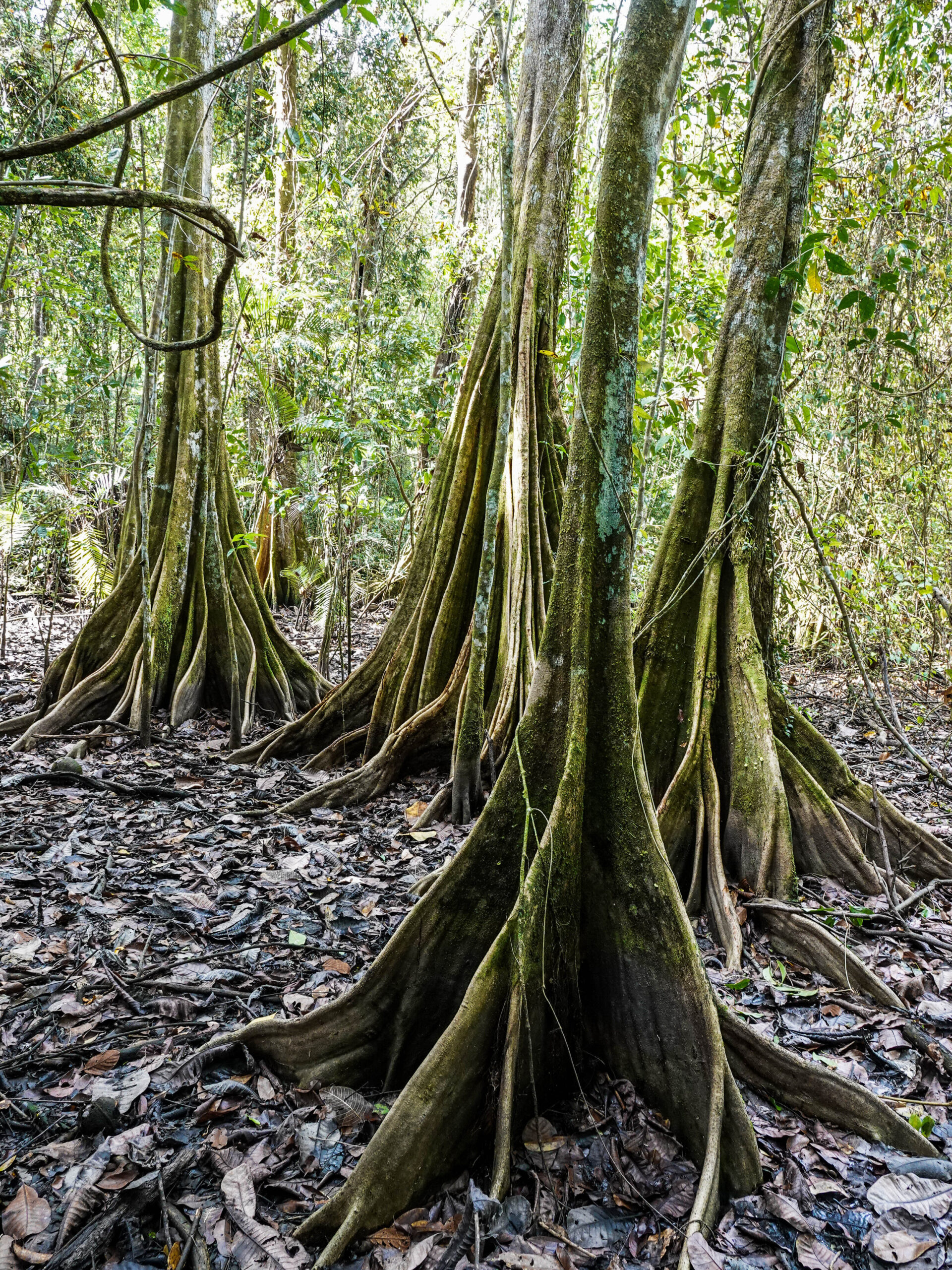
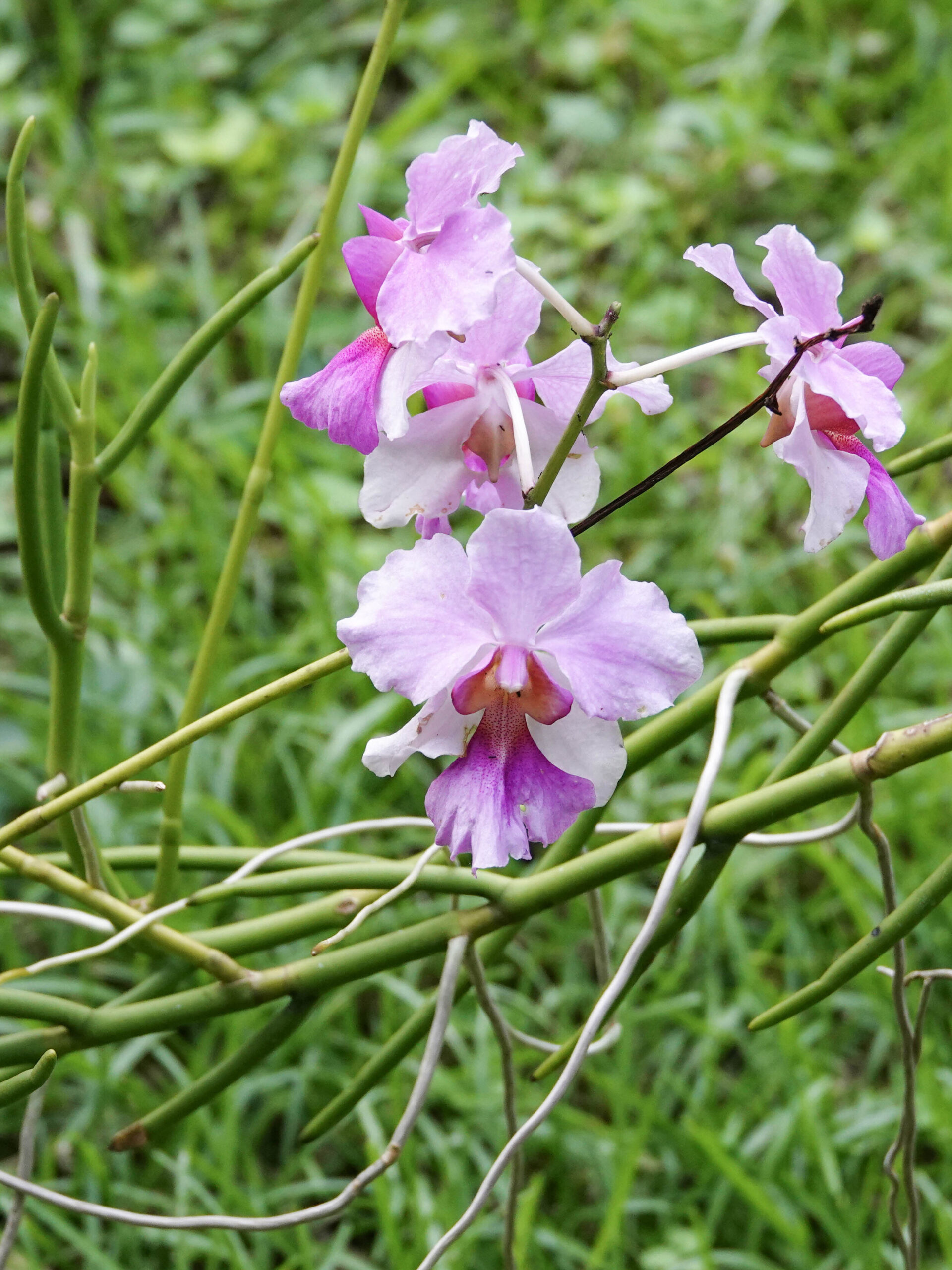
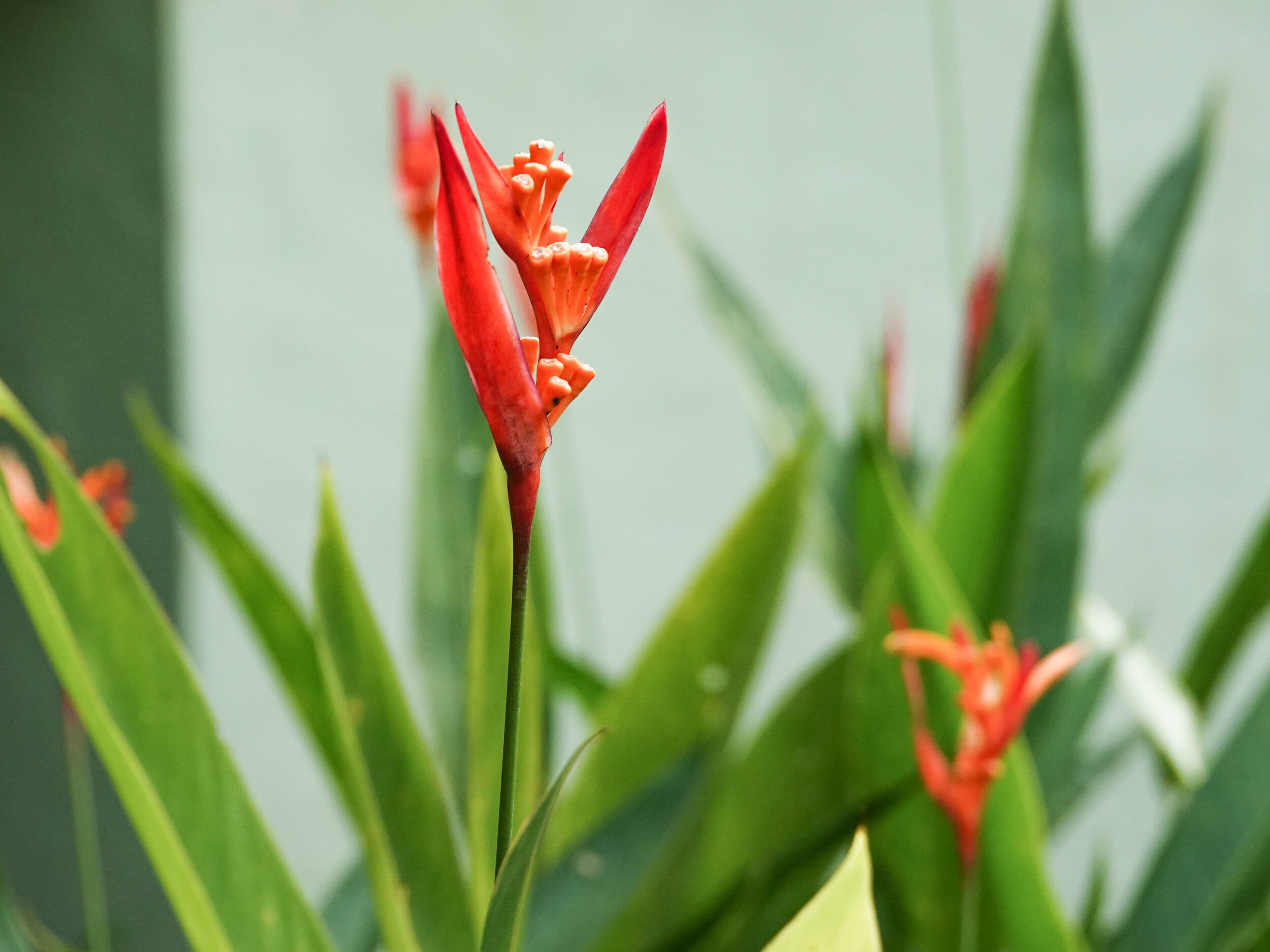
Not long ago, we embarked on a seven-hour trek from the tropical station to a stunning botanical garden by the coast. Along the way, we saw plenty—mainly flora from different altitudes, as our guide through Costa Rica was a botanist.
Personally, I’m always most excited about spotting wildlife. Most of the time, that means birds—large groups of people don’t always scare them off, so they feature in most of my photos.
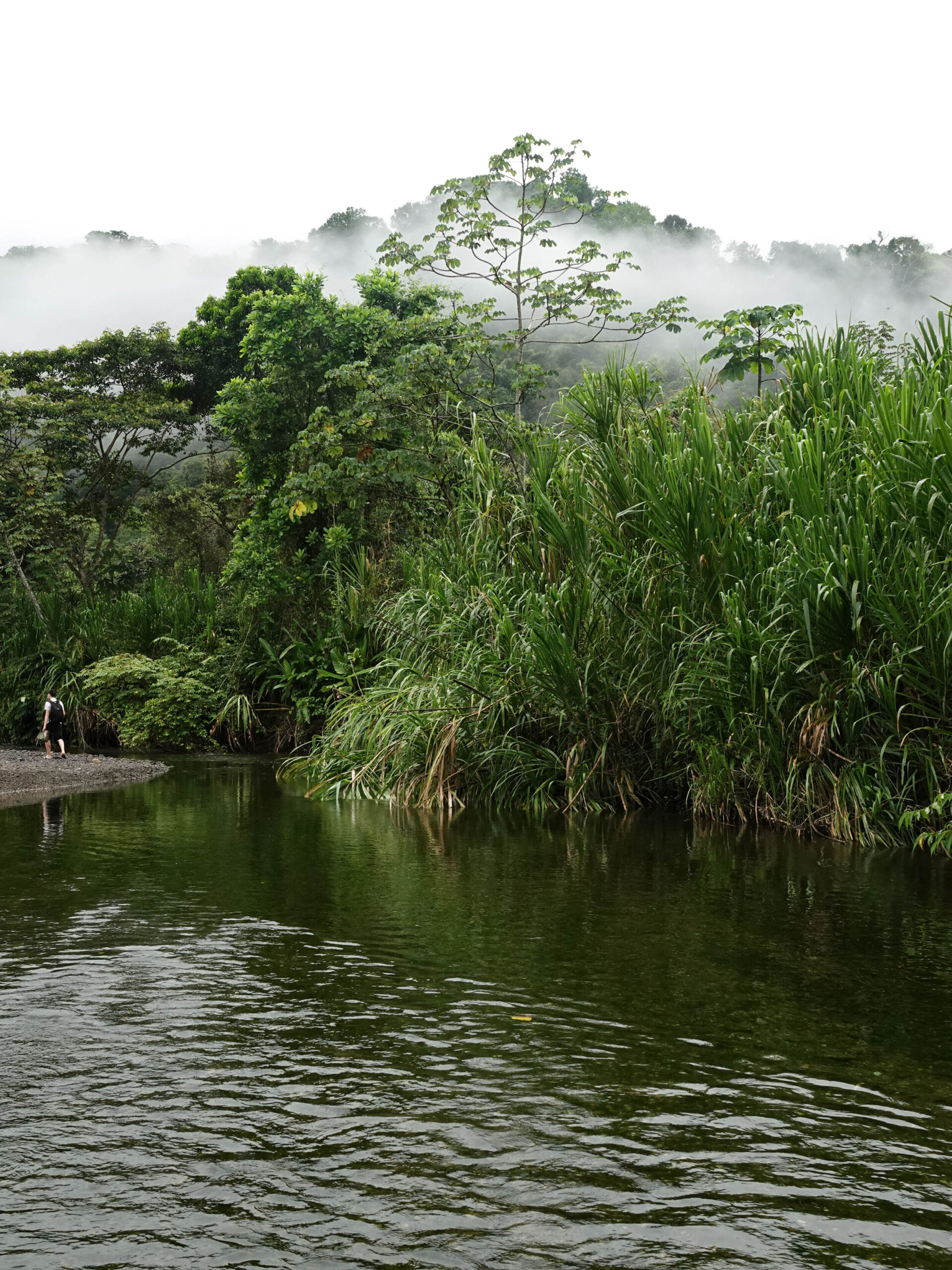
After a short hike up and down a hill, we reached the Río Bonito, where we waded upstream for nearly two hours. I was hoping for favourable weather—and luckily, we got it! It stayed cloudy almost all the way to the coast. Walking under the sun would have been exhausting…
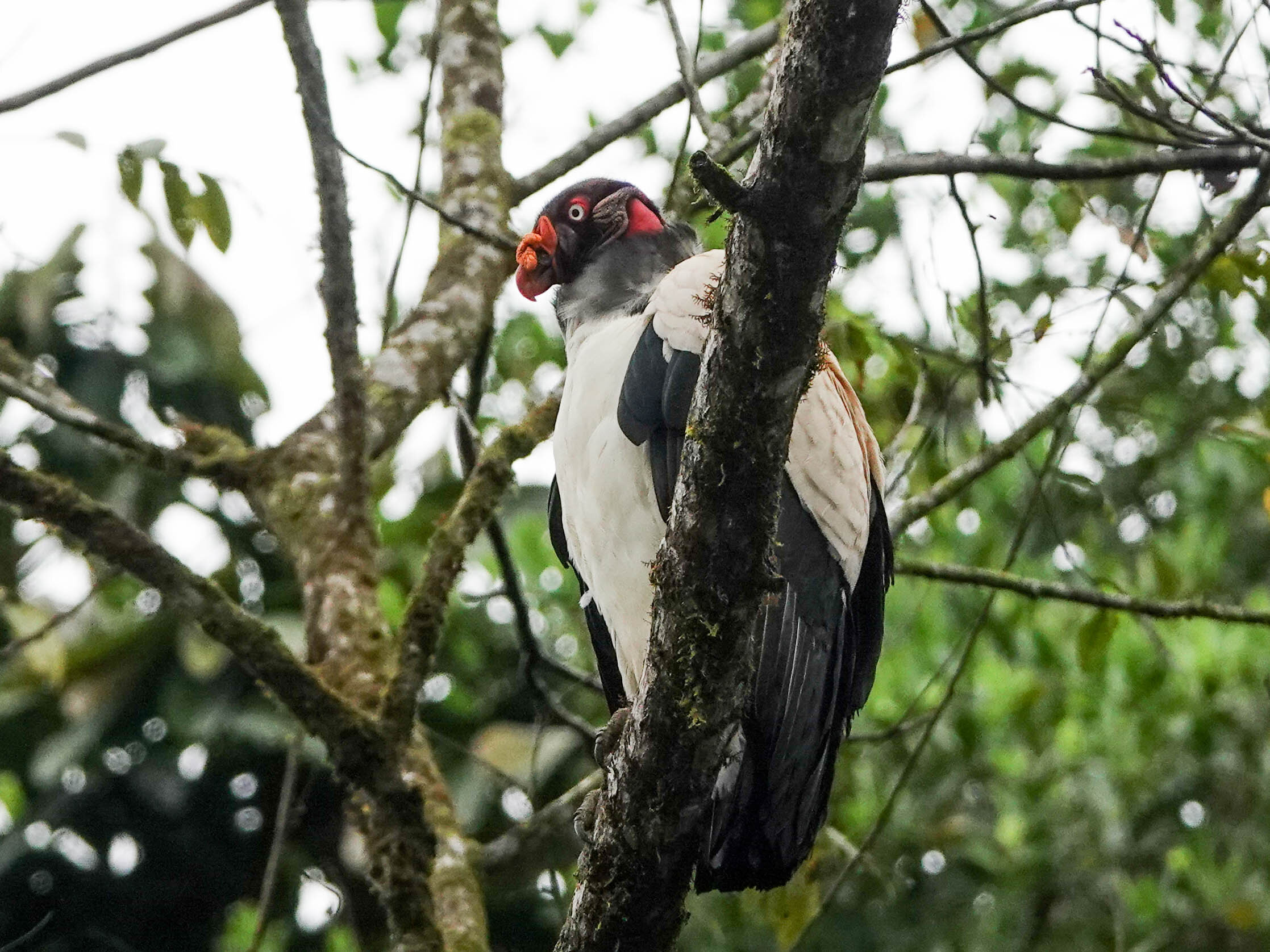
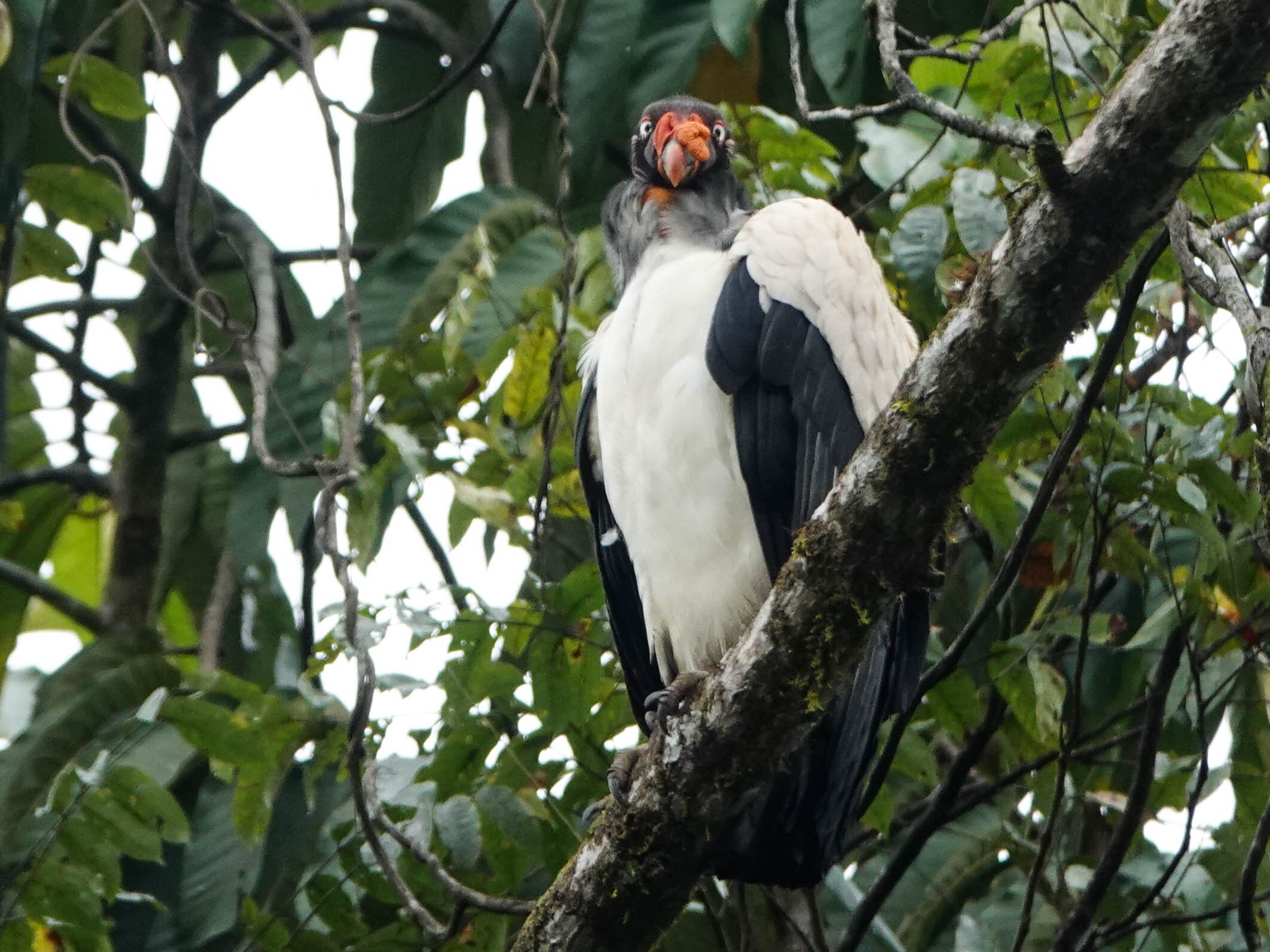
By the water, a king vulture was watching us. King? Or more like rooster? Either way, a fascinating and entertaining species.
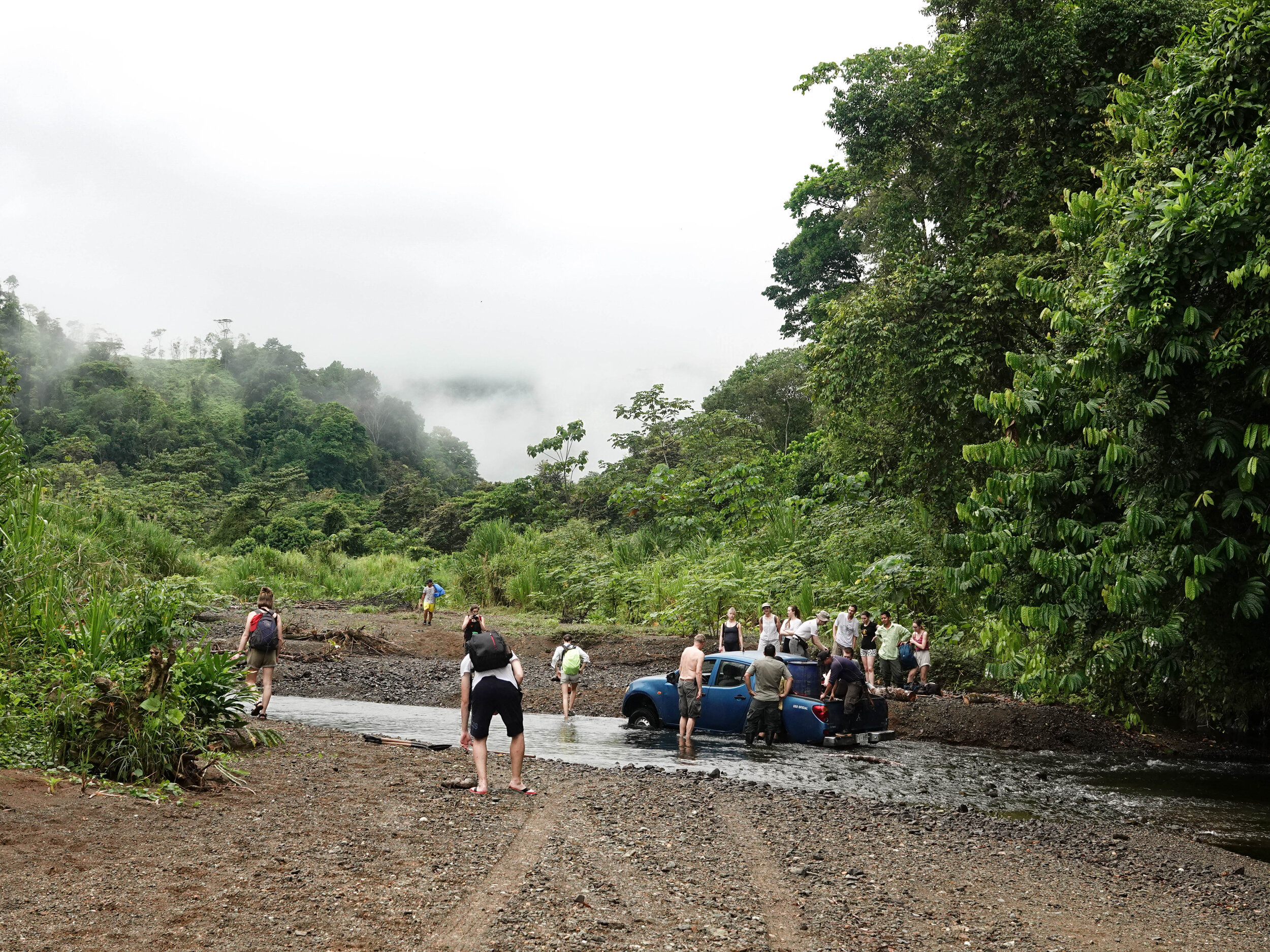
On our journey, we came across a group of Costa Ricans whose off-road vehicle had gotten stuck in the river—they were collecting water for their horses… Thanks to our intervention, everything turned out fine.
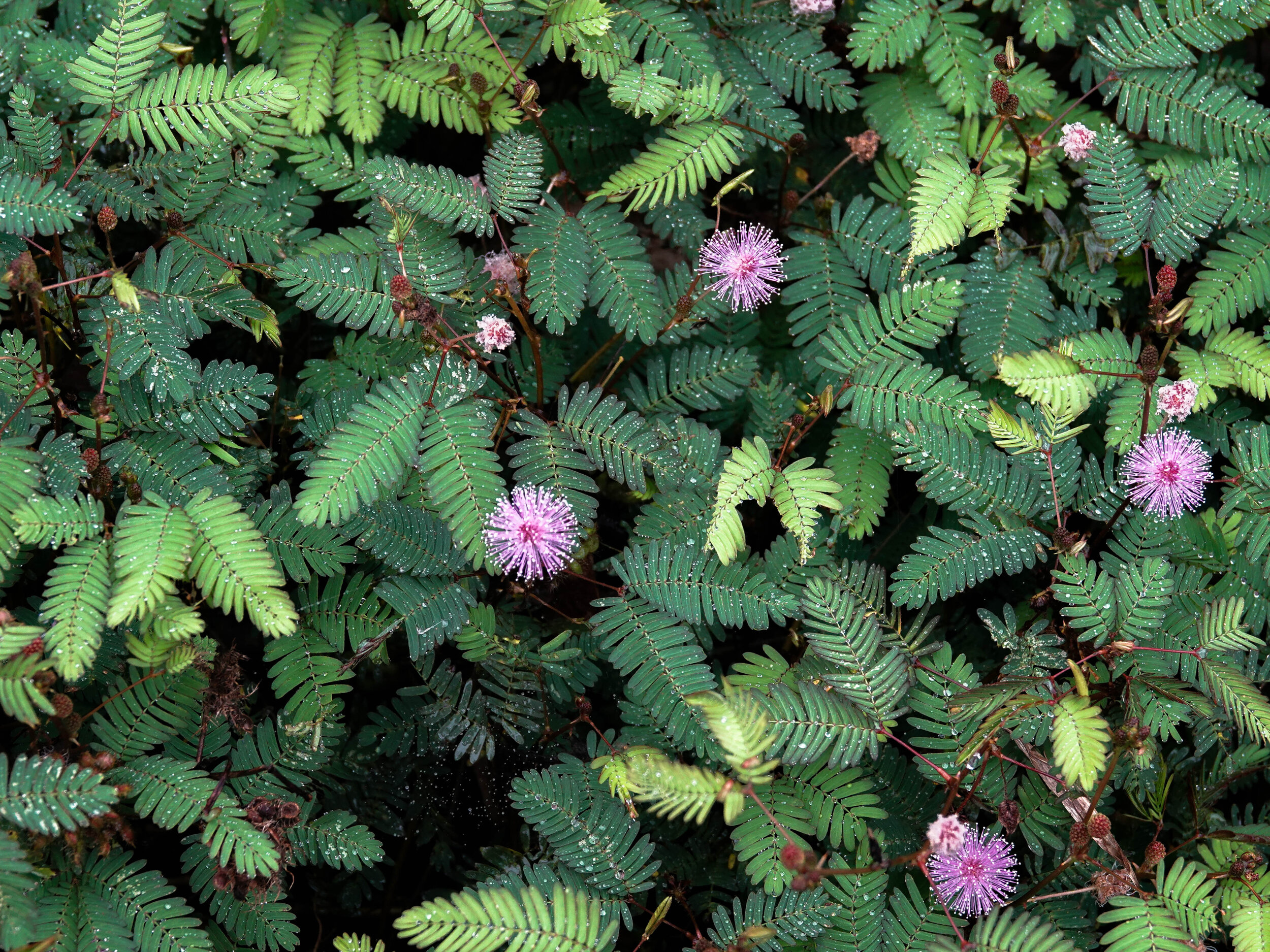
The well-known mimosa (Mimosa pudica)—a plant whose leaves close upon touch—pictured at the bottom right.
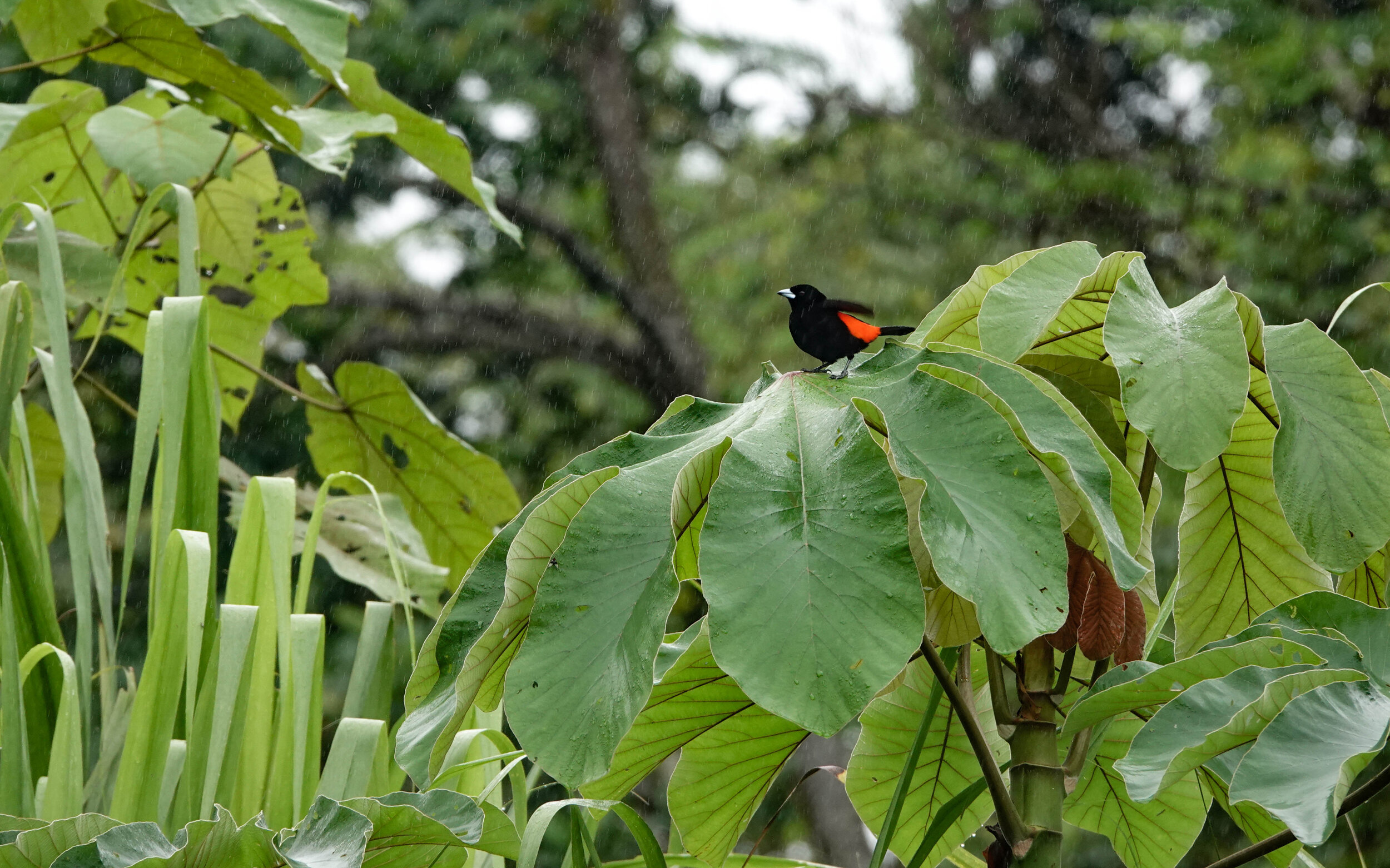
Ramphocelus passerinii—a regular visitor to the feeder at breakfast time at the tropical station. Yes, it was even drizzling a little then. So far, we’ve had only one rainy evening and a few rainy nights.
If you can easily overlook our red forest ants, you definitely won’t miss the leafcutter ants—they create highly visible trails as they carry bits of leaves to their nests. (More in the previous post)
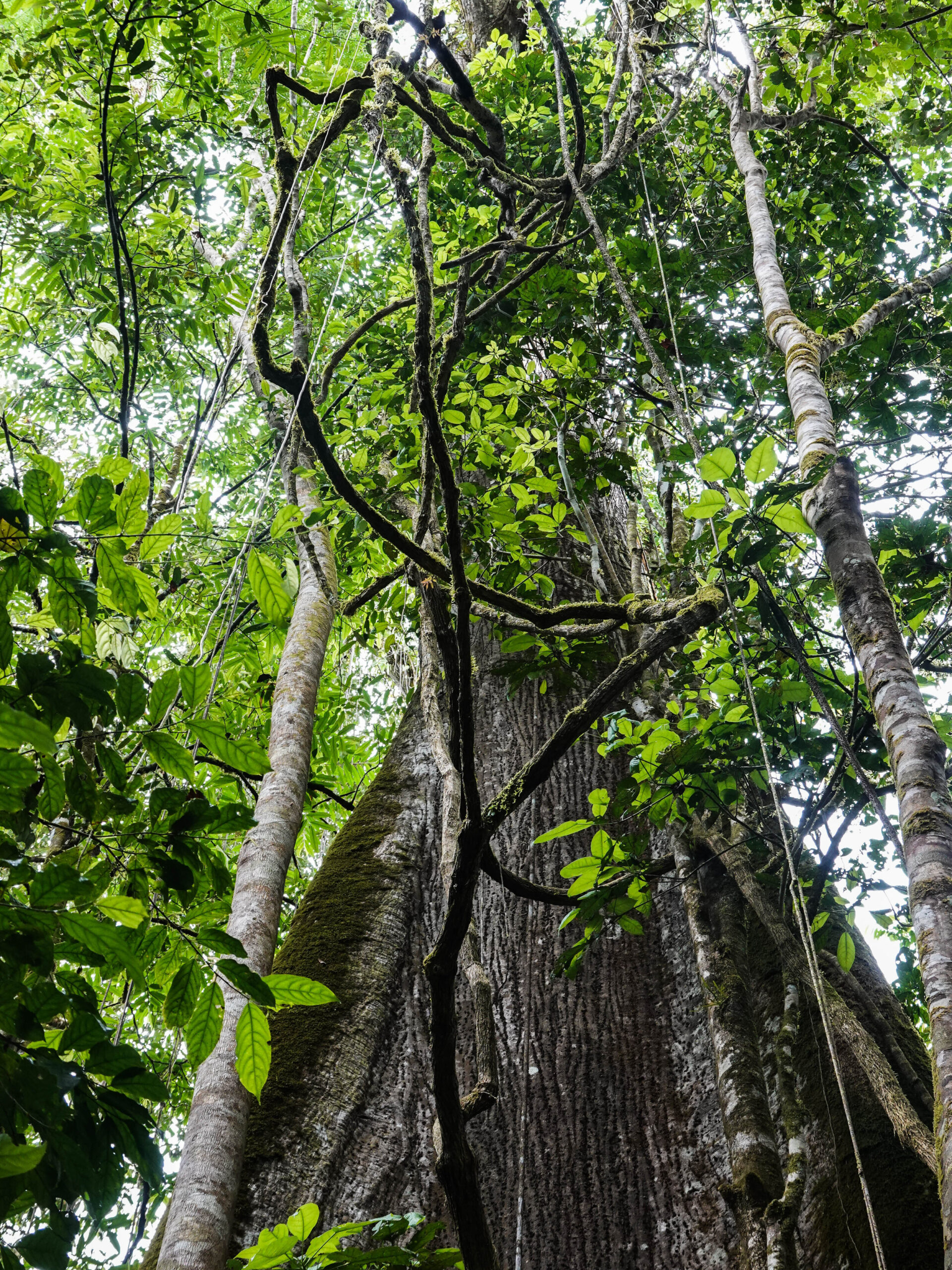
On our way, we saw an impressively tall and mighty tree—a kapok tree, known for producing waterproof fibres. Because of this property, they are sometimes used in life jackets. Such massive trees are quite rare in forests affected by human activity.
This area used to be a pasture where cattle grazed. The tree provided plenty of shade, so it was spared from being cut down. Additionally, the wood of such an old tree (around 300 years) is of poor quality, and the cost and effort of felling it would have been too high.
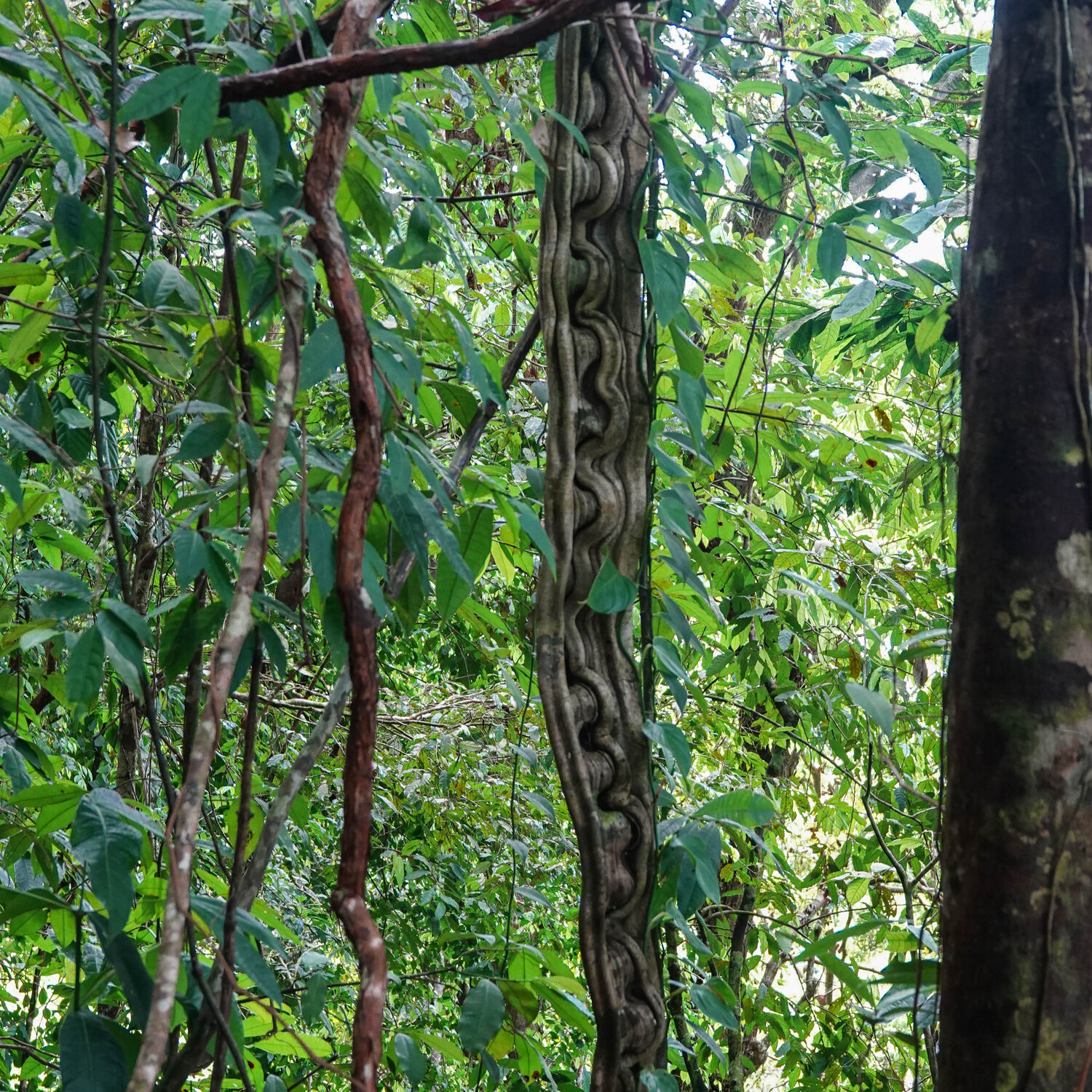
One of the many climbing plants—this one is also popular among monkeys. So far, we’ve seen capuchins and howler monkeys.
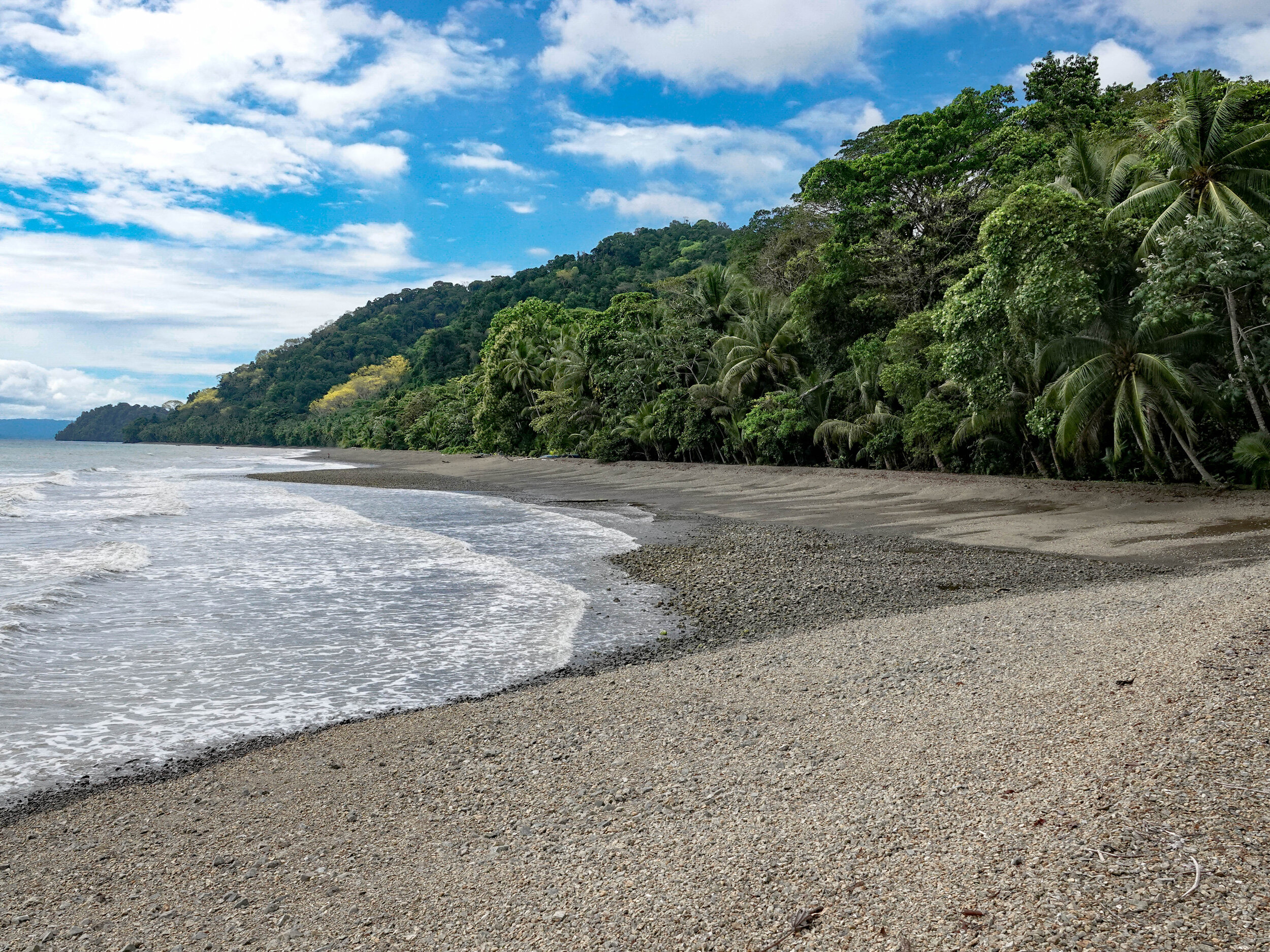
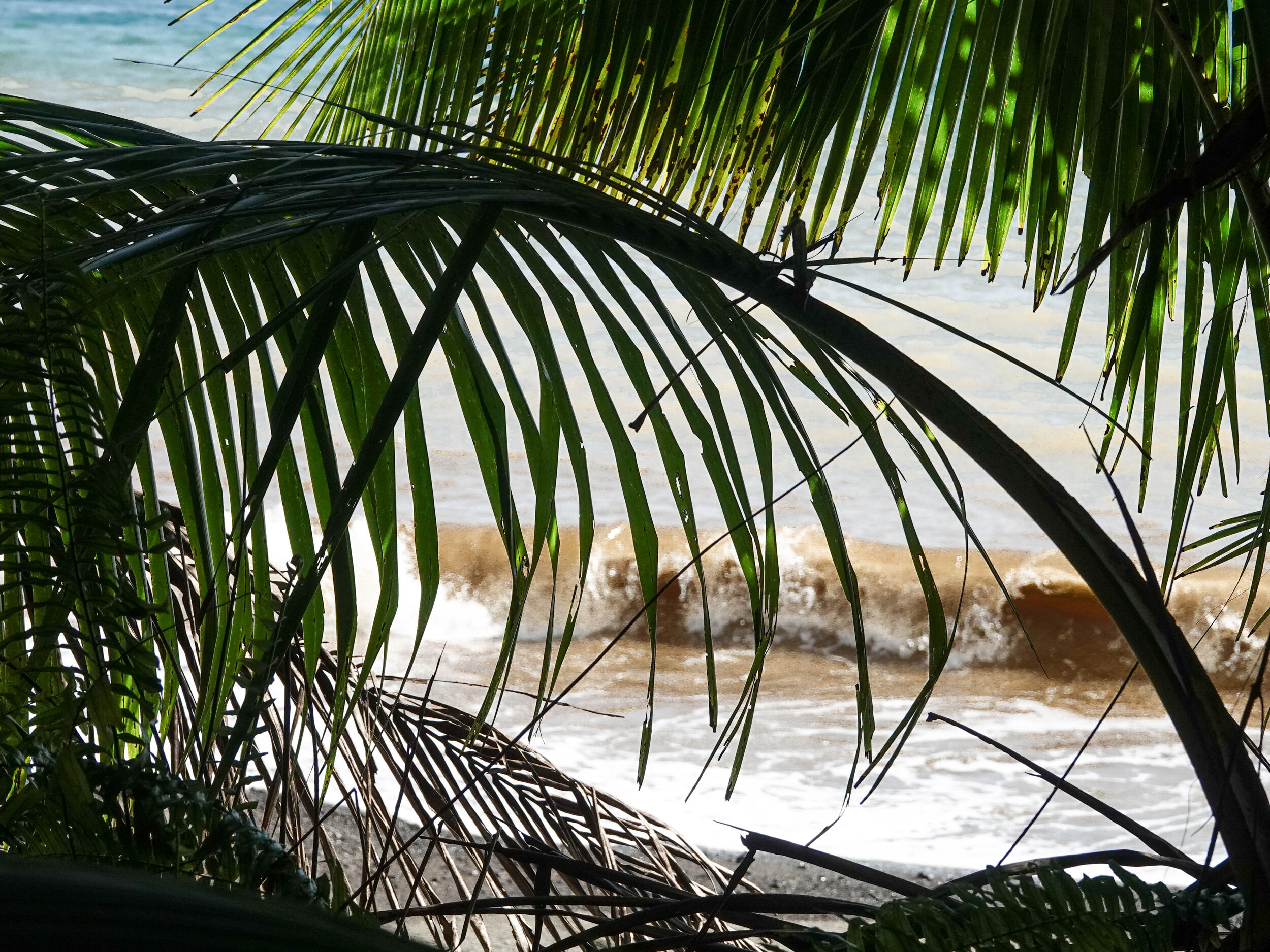
And… after seven hours of hiking in the humid air, slipping through orange mud and dense tropical forest, we finally caught our first glimpse of the Pacific coast! But this wasn’t our final destination—we continued along the beach for another hour. Mmm, that sea breeze…
one Caribbean moment
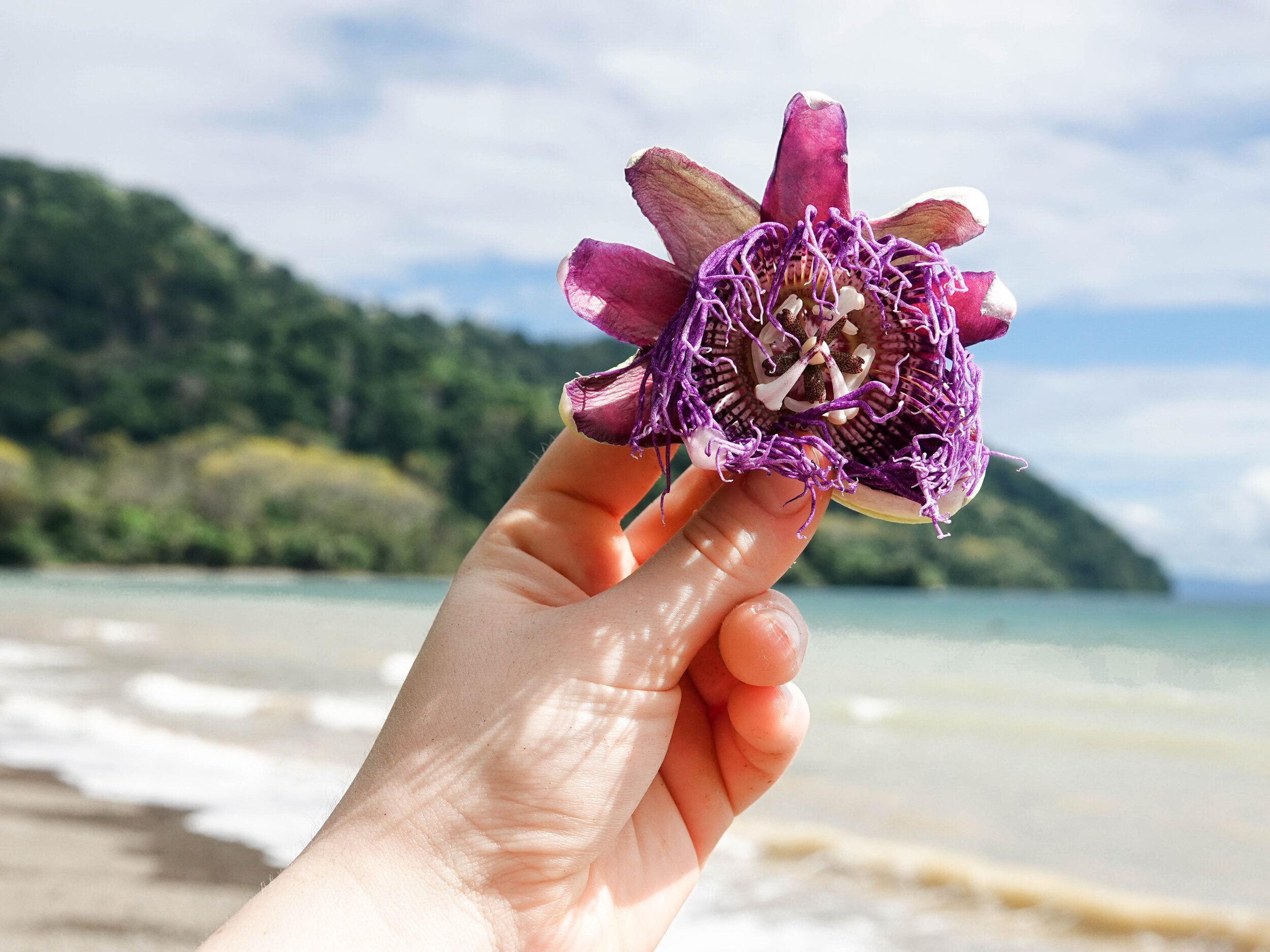
This is the flower of one of the many passionflowers in Costa Rica. They vary greatly—not only in flower colour and shape but also in leaf form, as they inhabit diverse habitats. We also tried their fruit—it tastes similar to passion fruit but is much more sour. I wonder how much sugar they add to passion fruit juices to make them taste so sweet.
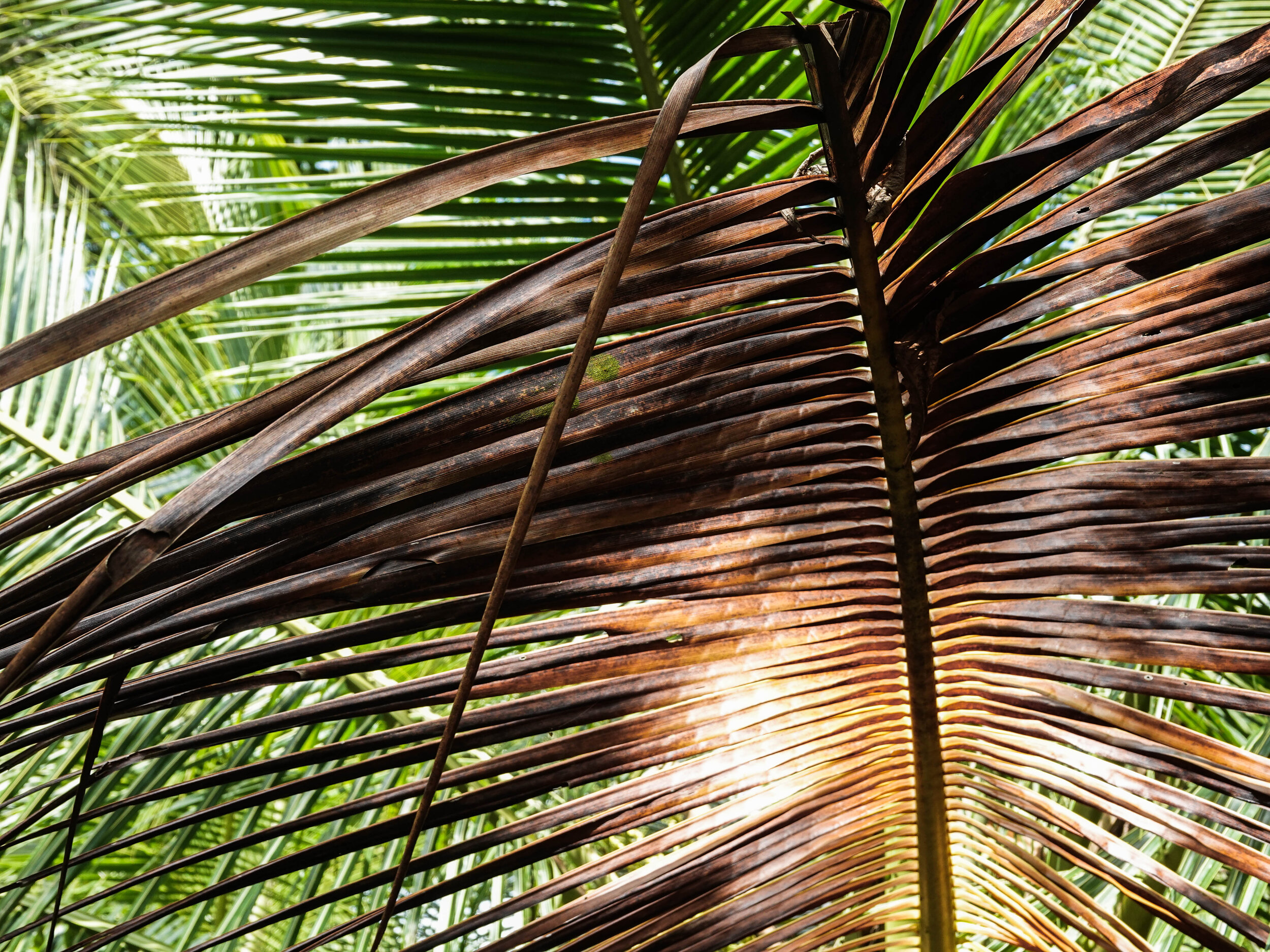
Ahhh, shade.
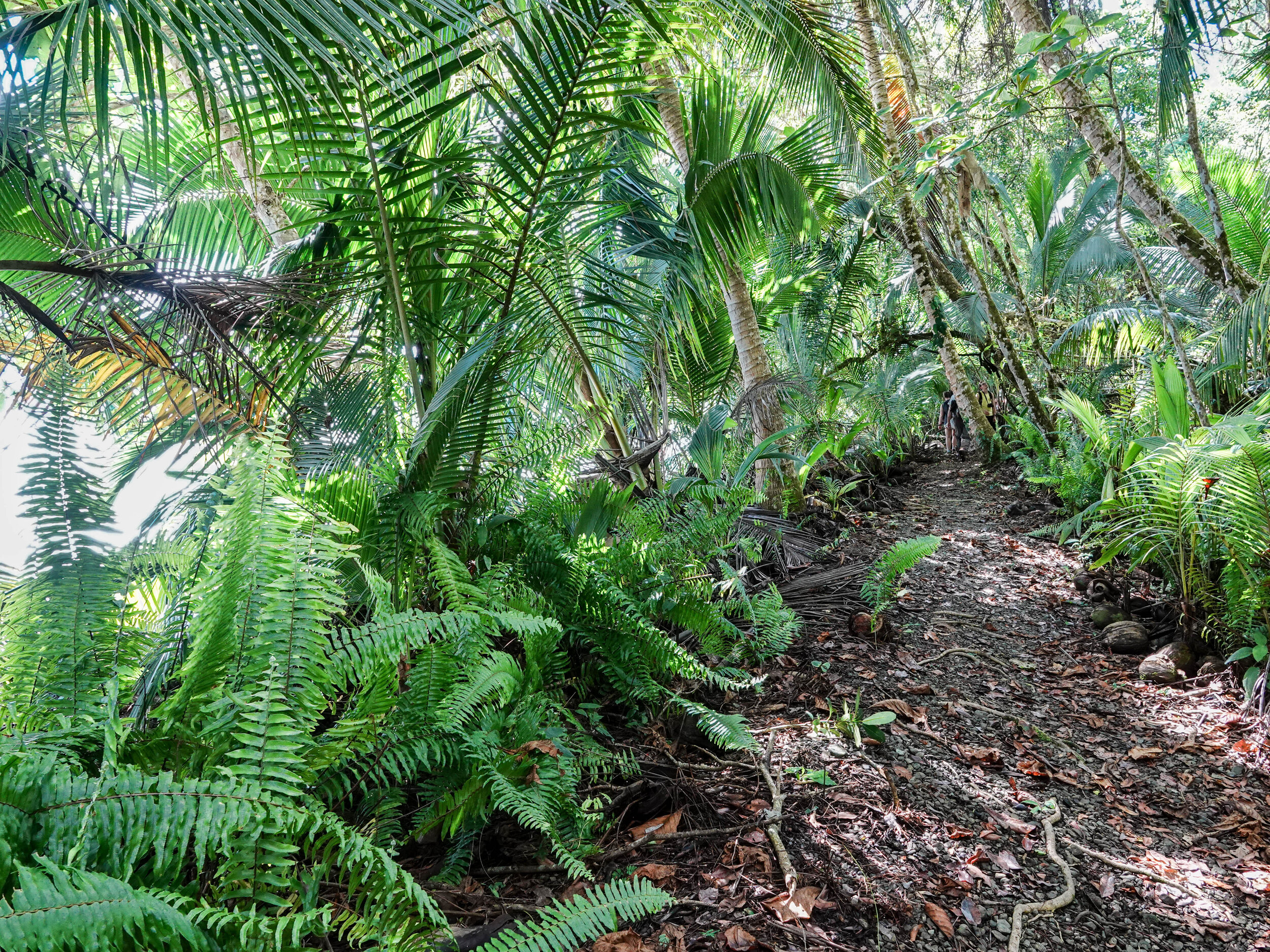
We walked along the coastal path towards our final destination—with the ocean on one side and…
…almost real mangroves on the other! These don’t have access to fresh water. I’ll show the real ones soon…
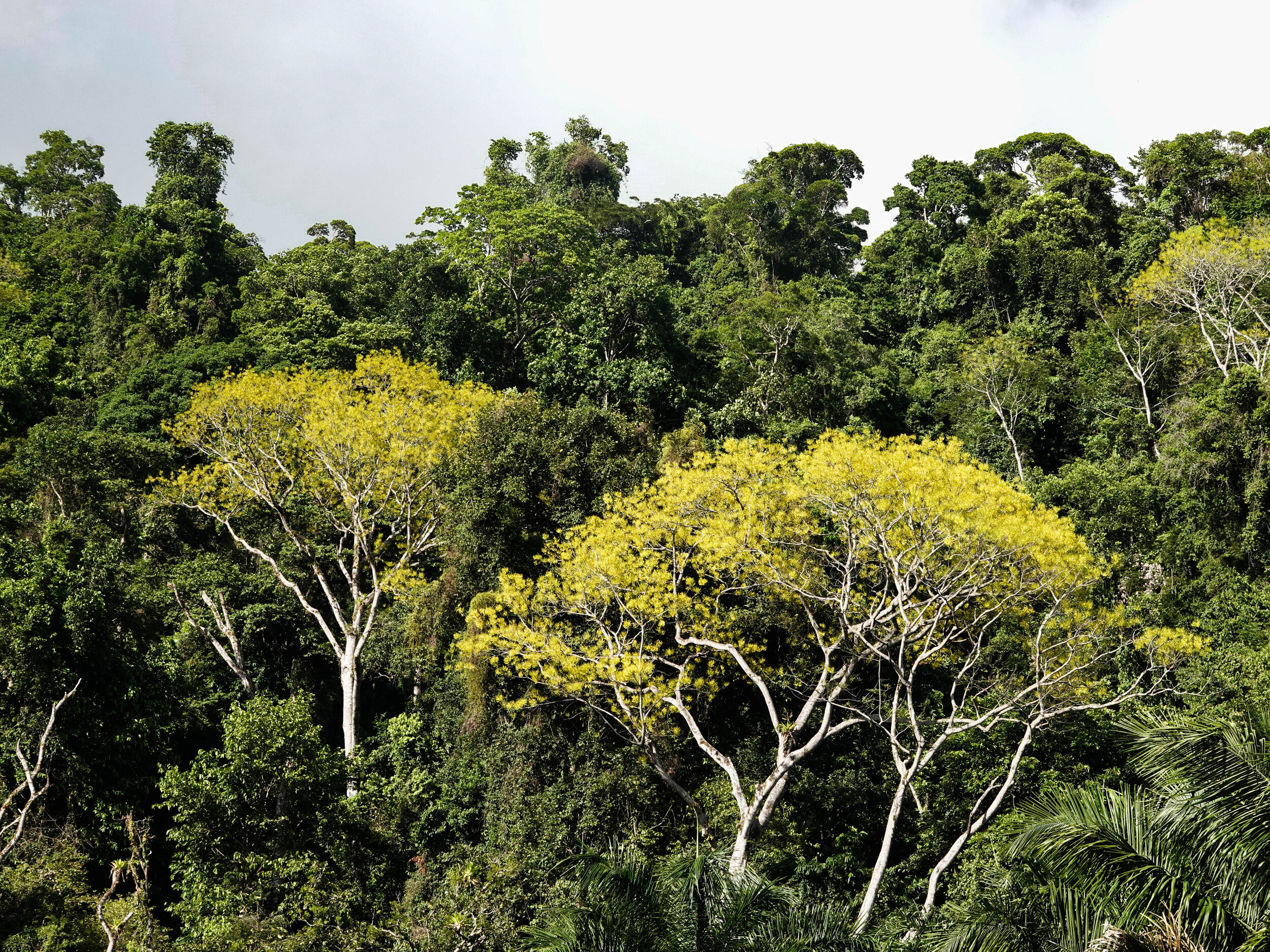
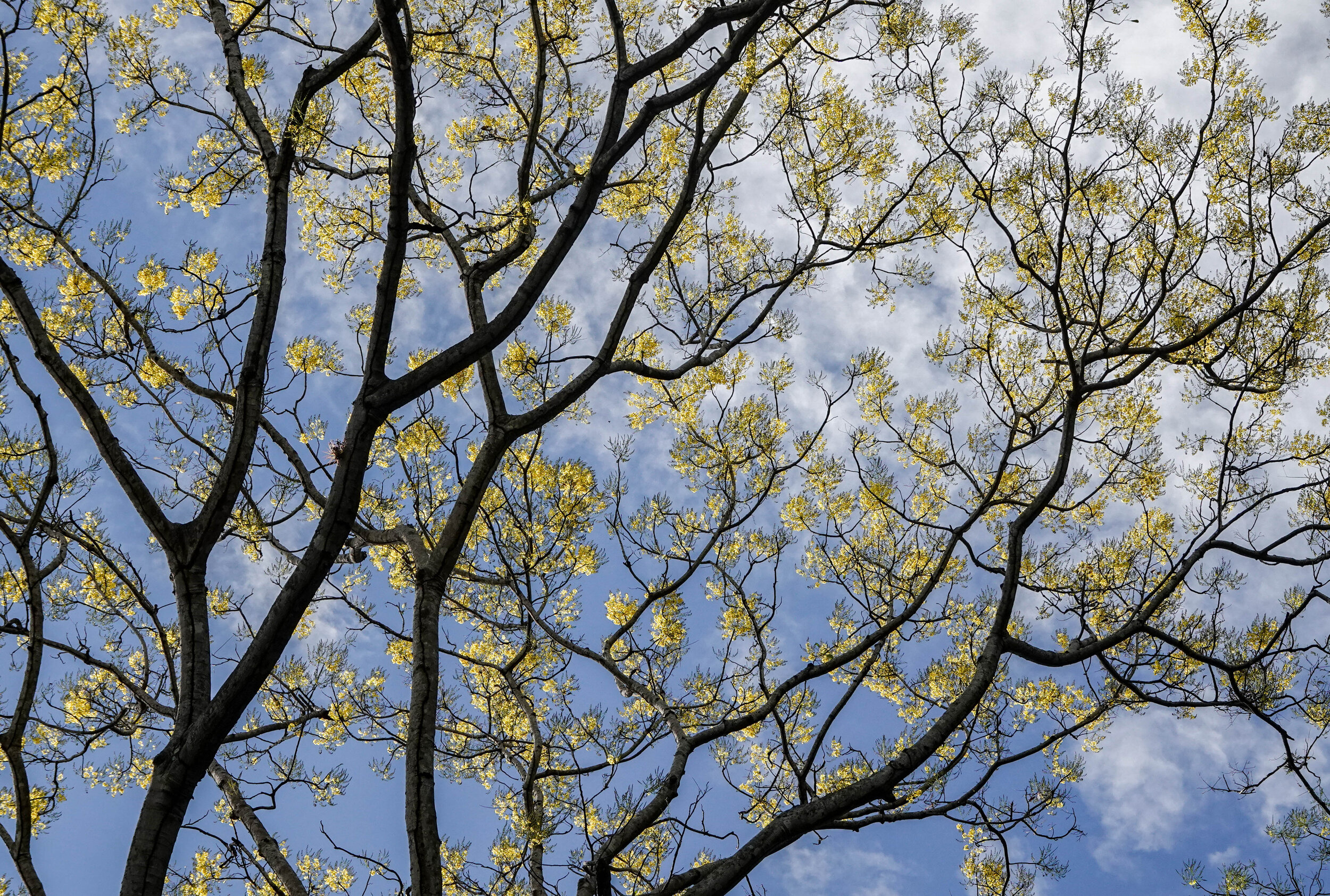
The ridges in the area were decorated with vibrantly coloured… flowers? Autumn-tinted leaves?
Flowers!
Botanical garden by the sea
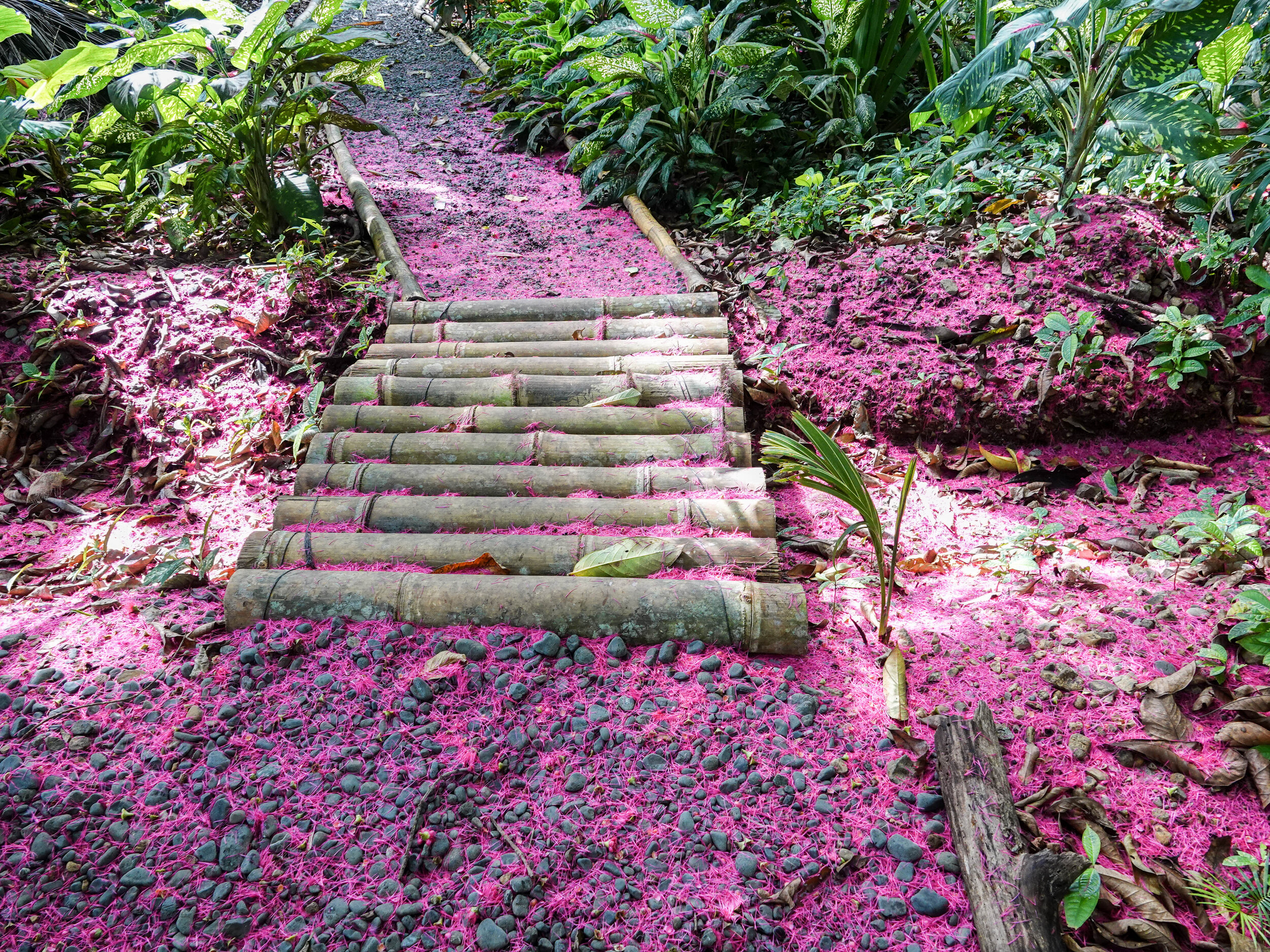
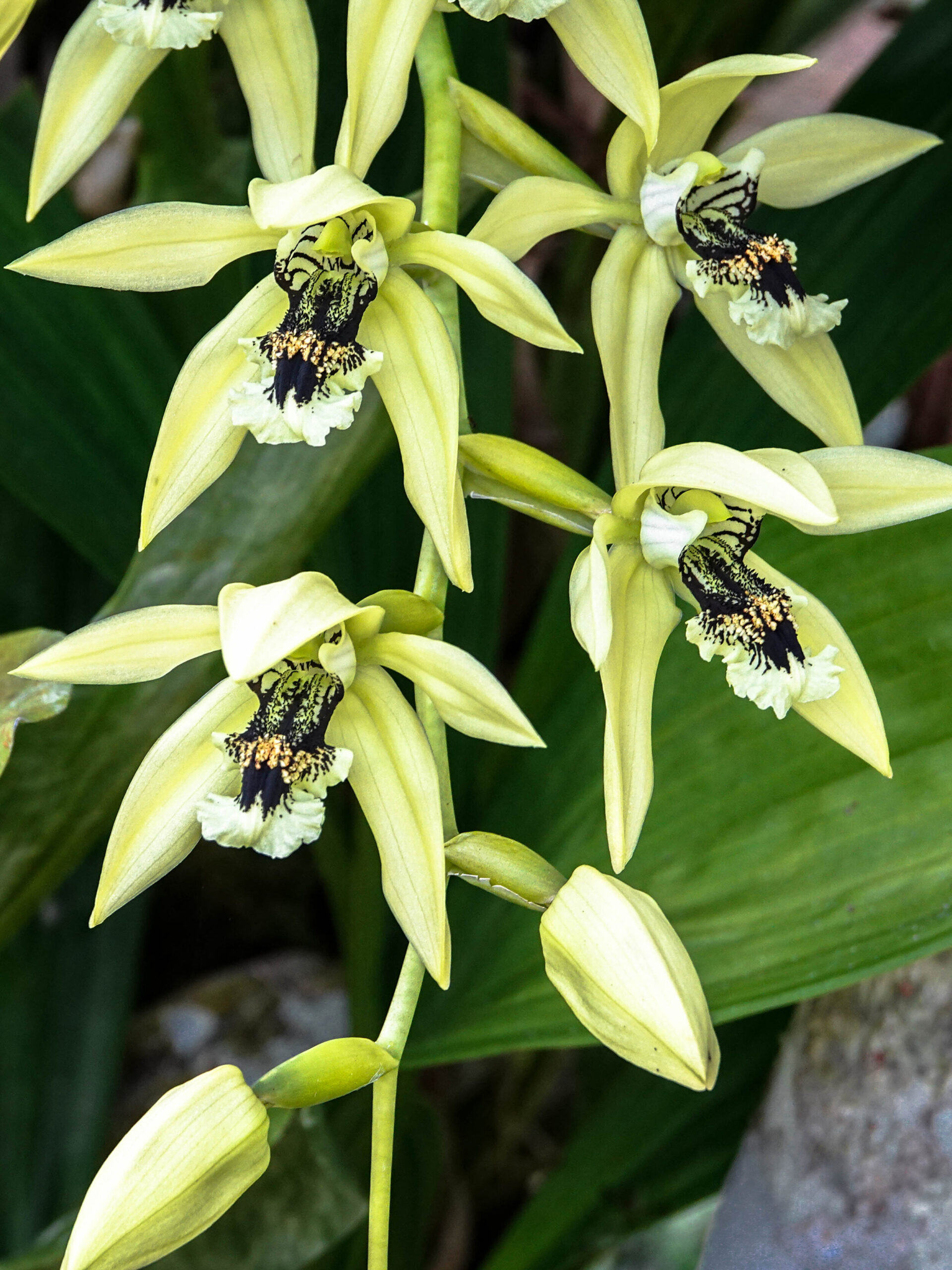
This was the sight that greeted us upon arrival at our destination—the “Casa Orquídeas” botanical garden, located by the coast. The pinkish hue? Completely natural—those are stamens from a nearby tree’s flowers, which all seem to fall at the same time.
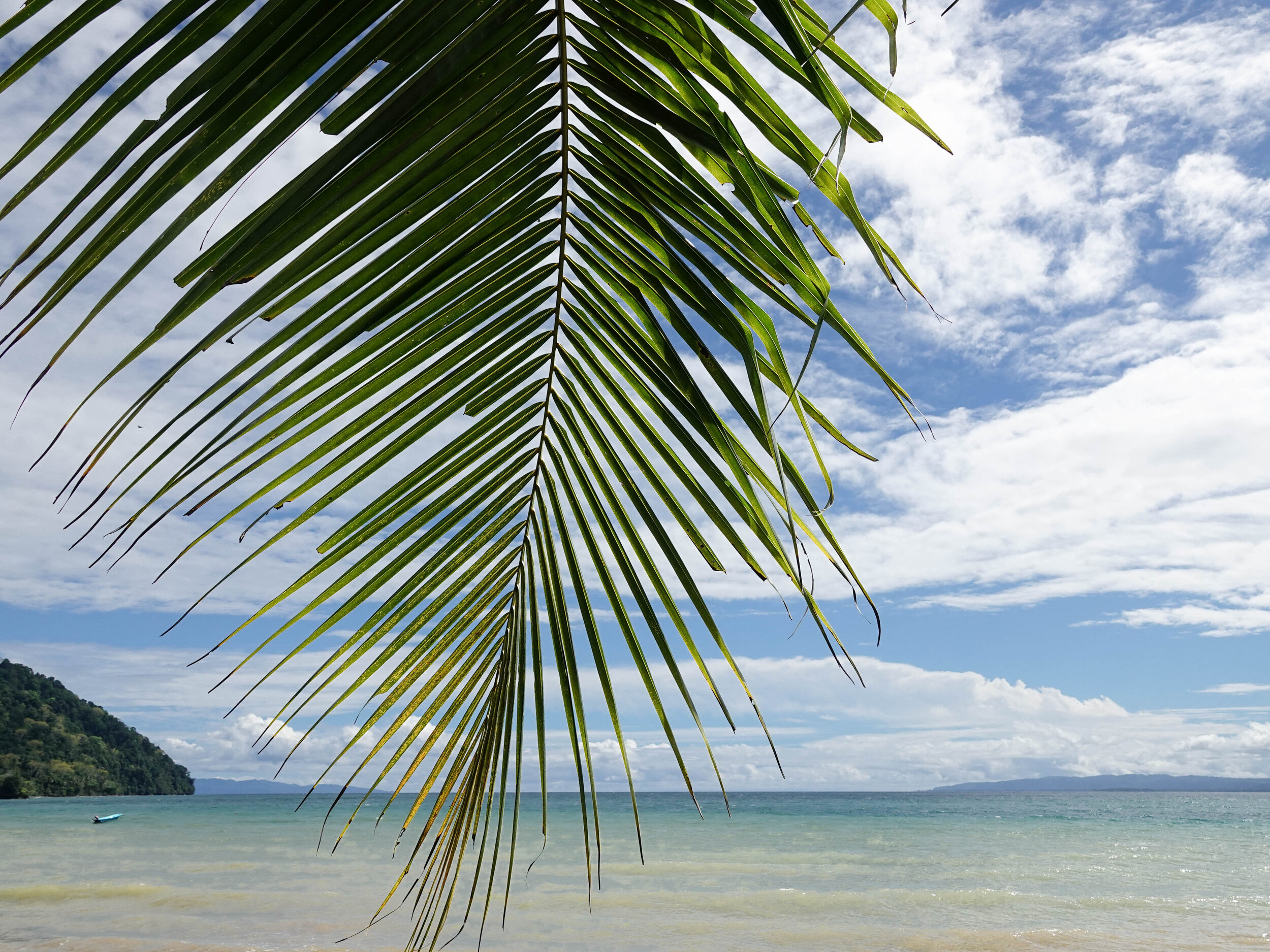
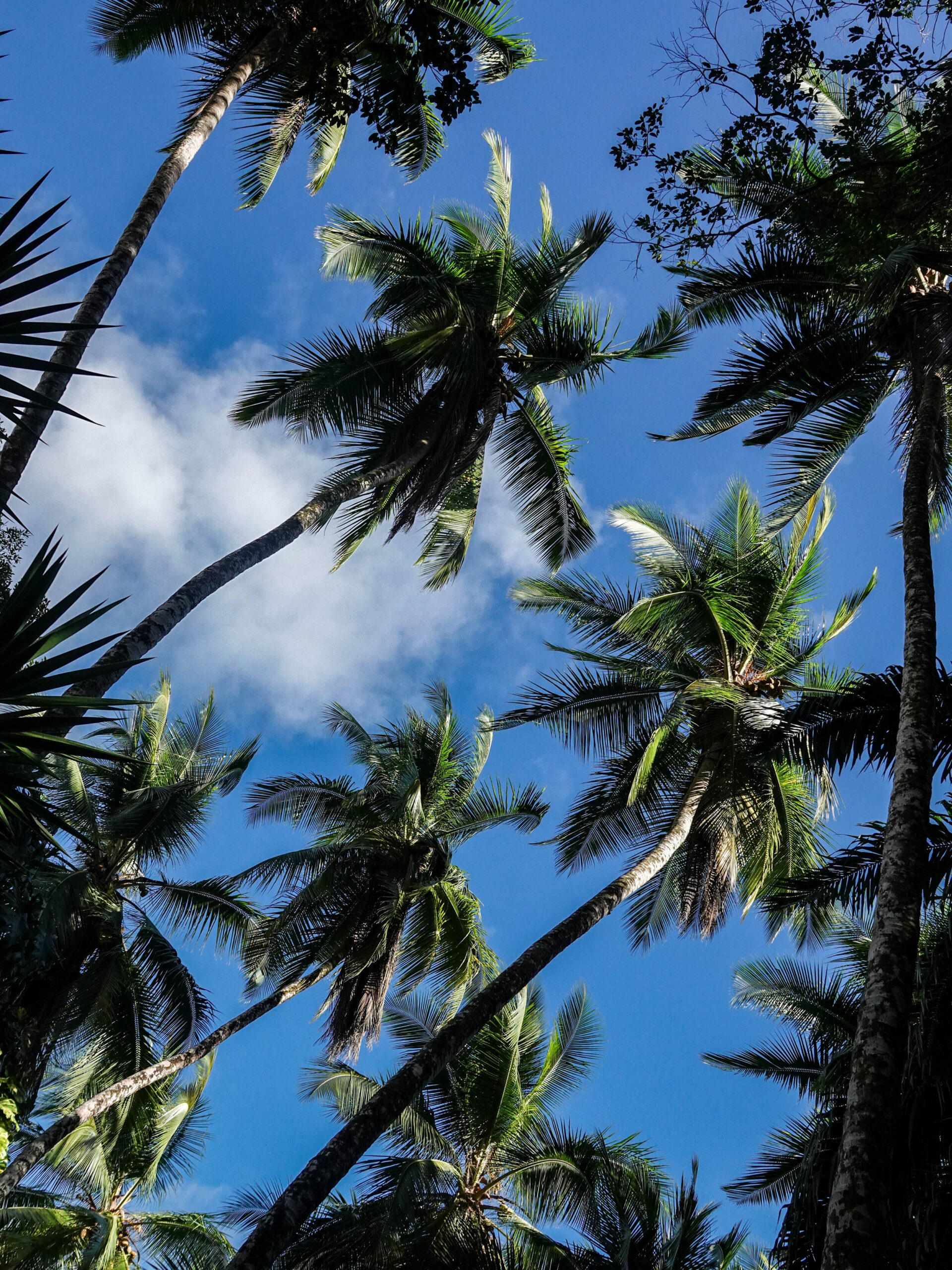
For the first time, I saw coconut palms in their natural environment.
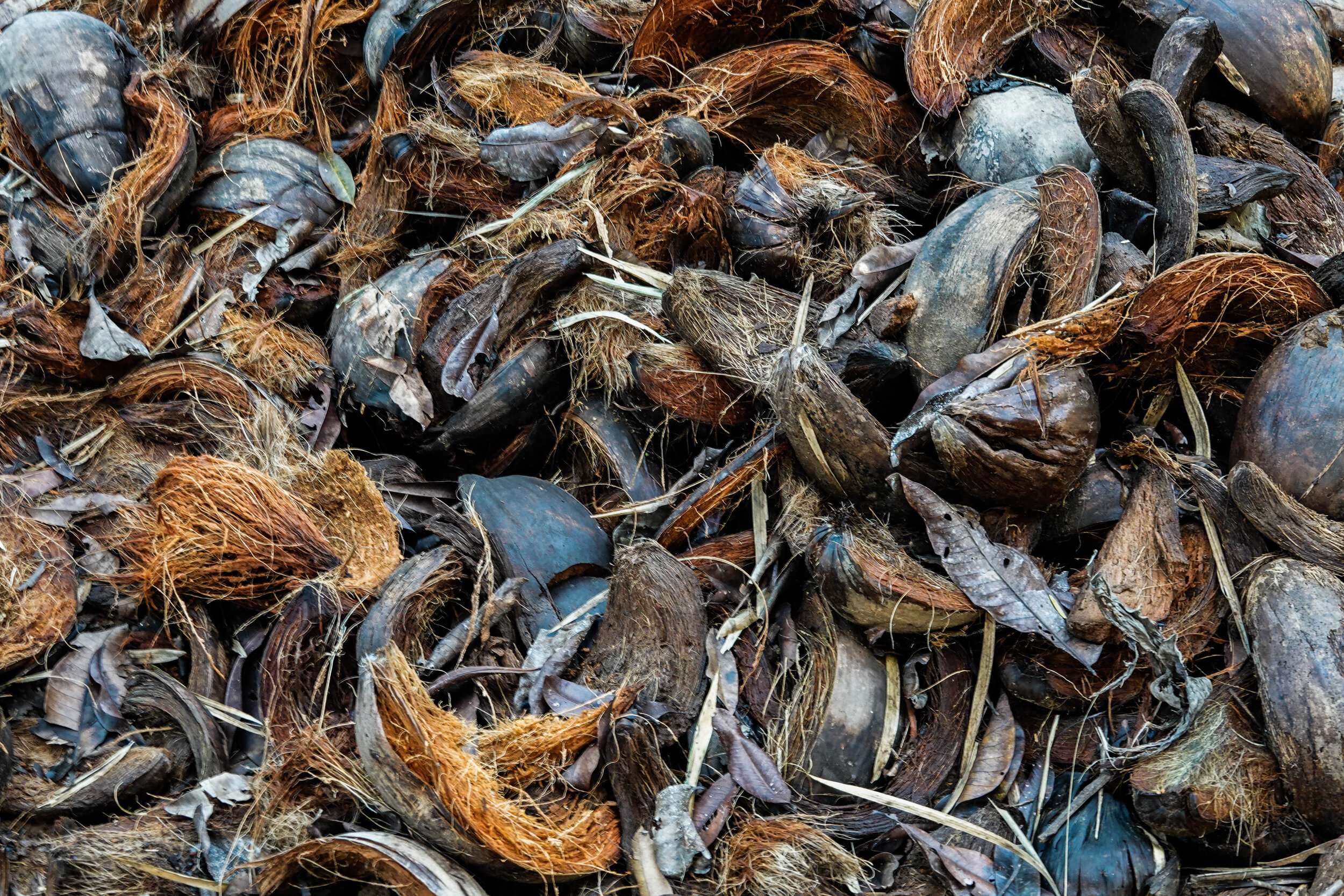
Getting to the edible part of a coconut is hard work—you first have to pierce through the fibrous outer shell, then struggle to remove the fibres before finally reaching the familiar coconut inside. You can make a hole to drink the coconut water, then split it open to scrape out the ultimate reward—the white flesh. Delicious!
Bananas are a staple in Costa Rican cuisine—from raw, fried for breakfast, caramelised, to those used in pastries. At one of the markets, we tasted six different types of bananas grown in northeastern Costa Rica.
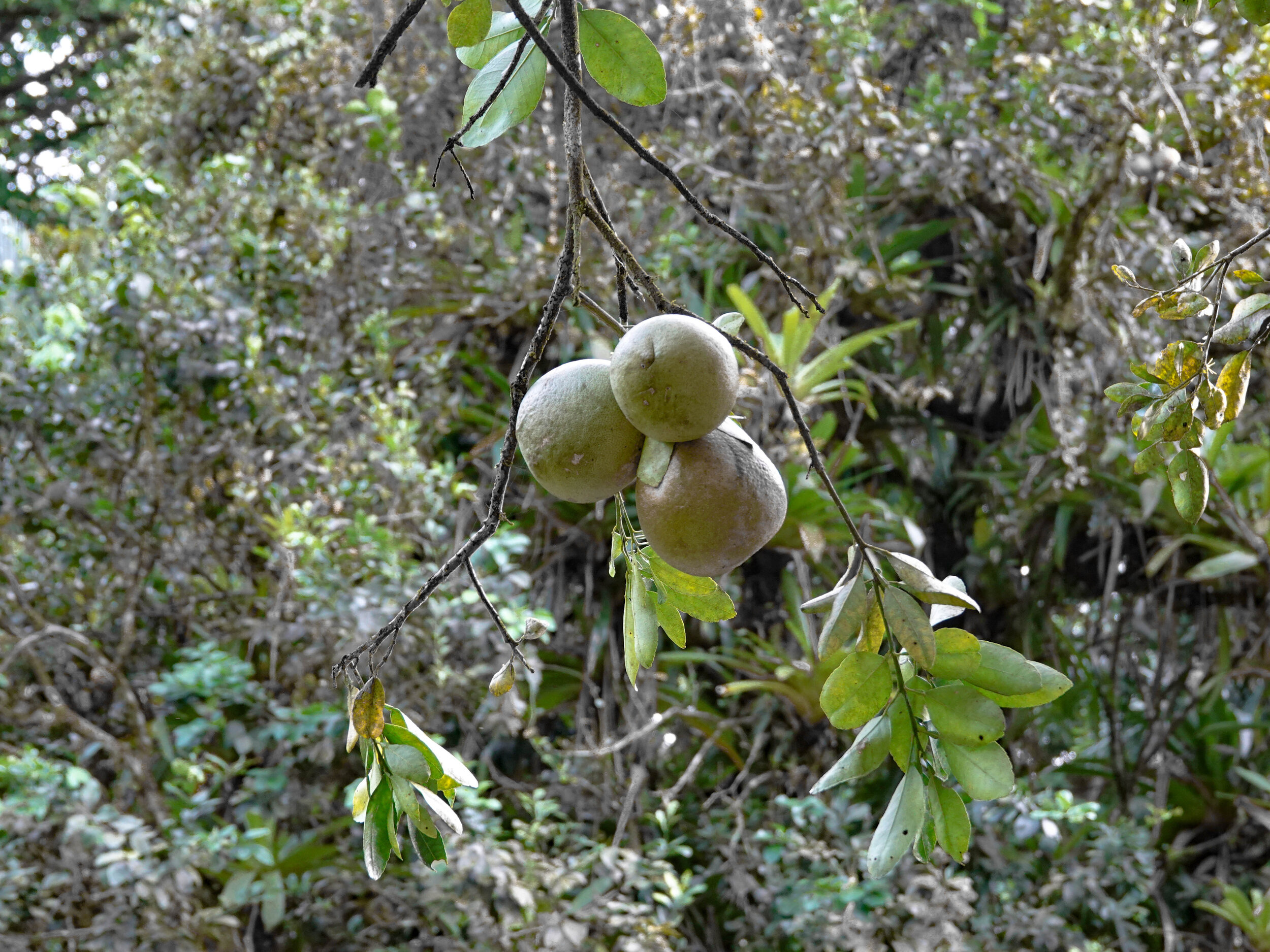
These citrus fruits were incredibly sour. After eating a miracle fruit (Synsepalum dulcificum), they suddenly tasted sweet!
They’re not just in the botanical garden—you can find plenty of similar ones in the wild.
Canna indica—locals use the seeds from its fruit to make rattles.
What am I doing at the tropical station in La Gamba? I’ll tell you more about that later.